
edwina@edwin-pump.com

View All Products
en
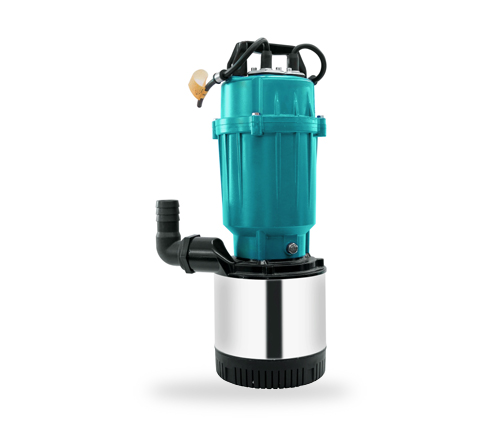
Submersible pumps are critical components in industrial, agricultural, and municipal water systems. From a manufacturer's perspective, producing a Submersible Pump involves a detailed process that ensures structural integrity, operational efficiency, and long-term durability. Achieving this requires careful material selection, precision machining, controlled assembly, and rigorous testing at every stage.
The foundation of a reliable submersible pump starts with materials. Pump casings, shafts, and impellers are typically made from stainless steel or corrosion-resistant alloys to withstand prolonged immersion in water. Bearings and mechanical seals must resist wear, pressure, and occasional debris. Manufacturers perform inspections to verify hardness, alloy composition, and surface quality. Many factories also conduct sample testing for corrosion resistance and thermal expansion to ensure the materials perform under different environmental conditions. By selecting and testing materials thoroughly, manufacturers ensure that each Submersible Pump can maintain performance under demanding conditions.
Precision machining is critical to ensure the parts fit and operate smoothly. CNC machines and lathes are used to create impellers, housings, and shafts with tight tolerances. Balancing of components reduces vibration and mechanical stress during operation. In many factories, semi-automated lines combine machine precision with skilled technician oversight to assemble parts consistently. Some manufacturers also use robotic arms for welding or segment assembly, ensuring uniformity across large production batches. These processes ensure that each Submersible Pump has components aligned accurately and operates with minimal friction or misalignment.
Manufacturers carefully design the hydraulic elements of the pump, including impeller shape, volute form, and diffuser placement. These decisions control flow rates, head pressure, and energy efficiency. Mechanical components are engineered to endure rotational stress and minimize heat generation. Simulation tools and prototype testing help refine designs, allowing each Submersible Pump to meet specifications for flow performance and reliability before full-scale production. Some factories also conduct computational fluid dynamics (CFD) simulations to predict performance under varying operational conditions, which helps optimize efficiency and reduce potential mechanical stress points.
Quality control is central to manufacturing. Each pump undergoes dimensional inspections, seal verification, and performance tests. Functional testing simulates real-world operating conditions, including continuous operation, load trials, and vibration assessment. Electrical testing ensures motor functionality, while pressure tests check the integrity of seals. Additionally, manufacturers may run thermal cycling tests to evaluate performance in extreme temperature conditions and conduct noise measurements to ensure operational consistency. Any defective components are corrected or discarded. These procedures guarantee that every Submersible Pump leaving the factory meets manufacturer standards for reliability and longevity.
Final assembly involves attaching the motor, cables, and protective features according to design specifications. Pumps are packaged securely with appropriate labeling and documentation, including assembly instructions and batch codes for traceability. Some manufacturers implement automated packaging lines to reduce handling errors and ensure uniformity across batches. Proper packaging safeguards the product during transportation and provides a record of production for quality assurance purposes. This allows manufacturers to track performance issues and maintain accountability across production cycles.
From a manufacturing perspective, producing a Submersible Pump requires precise material selection, accurate machining, careful hydraulic and mechanical design, and comprehensive quality control. Each stage, from raw material inspection to final packaging, is monitored to ensure the pump performs reliably in demanding industrial, agricultural, or municipal applications. The combination of advanced manufacturing techniques, process automation, and systematic testing enables manufacturers to deliver submersible pumps that provide dependable performance, durability, and operational efficiency over long service periods. Continuous improvement in production methods also allows factories to adapt to new materials and operational requirements without compromising quality.
edwina@edwin-pump.com
+86-13586290903 (WhatsApp)
Xuri Gongliang Cutting Tool Entrepreneurship Park, Wenqiao Town, Wenling City, Taizhou City, Zhejiang Province, China

High Performance Smart Pump Factory


 English