
edwina@edwin-pump.com

View All Products
en
Renting pumping equipment can help contractors control short-term project expenses, while purchasing creates a long-term asset for repeated operations. At Edwin Pump, we understand that this decision involves more than comparing a rental invoice with a purchase quotation. Project duration, operating hours, required flow rate, discharge head, transportation, and service arrangements all affect the actual cost.
A commercial submersible water pump may be used for construction site drainage, wastewater handling, industrial water transfer, or other commercial applications. Each project has different operating demands, so the right procurement strategy depends on how frequently the equipment will be used and how long the business expects to need it.
Our guide examines the financial and technical factors that purchasing managers, contractors, and equipment distributors should review before committing their budgets.
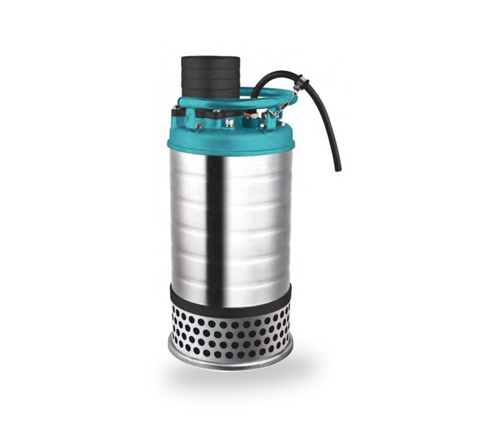
The main difference between renting and purchasing lies in the distribution of expenses. Rental arrangements spread equipment costs across a defined period, while ownership requires an initial investment followed by ongoing operating and service expenses.
Rental can be financially attractive for short assignments, emergency drainage, or projects with uncertain durations. However, repeated extensions and frequent equipment hire can gradually increase the total expenditure.
At Edwin Pump, we recommend evaluating the complete ownership cost rather than making a decision based solely on the initial quotation.
The following table summarizes the main financial and operational differences between these two procurement methods.
| Evaluation Factor | Rental | Purchase |
| Initial cash requirement | Generally lower | Higher upfront investment |
| Short project duration | Often suitable | Requires a resale or reuse plan |
| Frequent equipment use | Recurring rental charges accumulate | Costs can be spread across repeated projects |
| Maintenance responsibility | Depends on the rental agreement | Normally managed by the owner |
| Equipment availability | Depends on rental fleet stock | Available for scheduled in-house use |
| Model customization | Limited to available rental equipment | Can be specified during procurement |
| End-of-use value | No ownership or resale proceeds | Possible resale or redeployment value |
These differences are especially relevant to contractors managing several sites. Renting provides flexibility for temporary demand, whereas ownership offers greater control over equipment scheduling and configuration.
Project duration is an important part of the cost calculation, but it should be considered alongside the number of operating days. A pump required for three months of occasional drainage may have a different financial profile from equipment operating every day throughout the same period.
Rental may be appropriate for:
Renting allows the project manager to match equipment expenses with the duration of the work. The rental agreement should clearly state billing periods, equipment replacement arrangements, transport charges, and responsibilities for damage.
Purchasing deserves closer consideration under these circumstances:
Owned equipment can also be reassigned between sites, provided its condition, electrical requirements, and hydraulic capacity suit the new application. This flexibility may reduce the need to arrange separate rental contracts for recurring work.
A low rental rate or purchase price does not necessarily represent a low-cost solution. Equipment that cannot meet the site's hydraulic requirements may require additional units, longer operating periods, or replacement with a different model.
Flow rate describes the volume of liquid a pump moves over a specified period, commonly measured in cubic meters per hour (m³/h) or liters per minute (L/min). Total dynamic head accounts for the elevation difference and hydraulic losses that the pump must overcome.
Before requesting a quotation, our team recommends documenting:
For example, a pump rated at 20 m³/h under a specified operating condition should not automatically be expected to deliver that flow at every discharge head. Actual performance must be checked against the manufacturer's pump curve.
Commercial pumping applications may involve clean water, wastewater, or liquids containing abrasive particles. Cast iron, stainless steel, and other material options have different mechanical and chemical properties.
Purchasing teams should compare the following details:
A suitable specification can reduce the risk of premature component wear, unexpected repair expenses, and equipment mismatch. At Edwin Pump, we encourage buyers to provide actual site conditions before comparing quotations from different suppliers.
A simple financial model can help determine whether recurring rental charges justify an ownership investment. The calculation should cover the same operating period and include comparable equipment capabilities.
Total rental cost:
Total rental cost = Rental charges + Transport + Insurance and fees + Accessories and other additional expenses
Total ownership cost:
Total ownership cost = Purchase price + Installation + Financing costs + Operating costs + Maintenance and repairs + Storage and insurance - Estimated resale value
Taxes and accounting treatment should be assessed separately according to the buyer's location and financial arrangements.
Consider a hypothetical project requiring a comparable submersible pump. The following figures are examples for demonstrating the calculation, not actual Edwin Pump prices or market quotations.
| Cost Item | Rental Option | Purchase Option |
| Initial rental or purchase | $600 per month | $4,000 purchase price |
| Duration | 12 months | 12 months |
| Total rental charges | $7,200 | Not applicable |
| Installation and setup | $200 | $300 |
| Maintenance and repairs | Included under the assumed agreement | $400 |
| Operating expenses | $1,200 | $1,200 |
| Estimated resale value | $0 | $2,000 |
| Estimated total cost | $8,600 | $3,900 |
Under these assumptions, purchasing costs $3,900 after accounting for the estimated resale value, compared with $8,600 for renting over 12 months. The difference is $4,700.
However, the result would change if rental rates were lower, ownership expenses increased, or the pump remained idle for extended periods. A reliable comparison requires quotations and operating estimates that reflect the actual project.
Renting and purchasing do not have to be mutually exclusive. Businesses with predictable baseline demand may purchase equipment for routine operations and rent additional units during periods of peak demand.
This approach can be useful for:
A hybrid strategy requires clear equipment allocation, operating records, and cost tracking. Managers should also confirm that rental equipment is compatible with existing piping, control systems, and site safety procedures.
Before approving a rental agreement or purchase order, we recommend reviewing these practical questions with the project and procurement teams.
Clear answers make it easier to compare competing proposals and identify costs that may not appear in the initial quotation.
There is no universal answer to the rental-versus-purchase question. Rental can suit temporary assignments, uncertain workloads, and specialized applications. Purchasing may offer a stronger financial case for repeated use, stable operating requirements, and projects that extend across multiple years.
At Edwin Pump, we believe a sound procurement decision begins with accurate operating data and a clear understanding of the complete cost structure. Our team encourages commercial buyers to review flow rate, discharge head, liquid characteristics, power requirements, and service expectations before comparing available pump options.
Share your application details, expected operating hours, and project duration with Edwin Pump to discuss a suitable pumping configuration. A comparison based on your actual requirements can help your business plan equipment expenditure with greater confidence.
serieswatershortageprotectionvoltagestabilizationstainlesssteelverticalmultistagepump.jpg "EVR(S) Series Water Shortage Protection Voltage Stabilization Stainless Steel Vertical Multistage Pump")
edwina@edwin-pump.com
+86-13586290903 (WhatsApp)
Xuri Gongliang Cutting Tool Entrepreneurship Park, Wenqiao Town, Wenling City, Taizhou City, Zhejiang Province, China

High Performance Smart Pump Factory


 English