
edwina@edwin-pump.com

View All Products
en
Solar water pumping is moving beyond the basic combination of photovoltaic panels, a motor, and a pump. Modern systems increasingly depend on controllers, variable-speed drives, intelligent protection, and digital monitoring to respond to changing solar conditions. This shift is encouraging solar pump manufacturers to develop products that combine hydraulic equipment with increasingly sophisticated control technology.
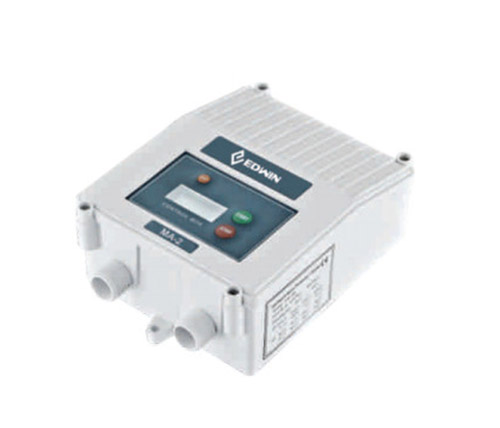
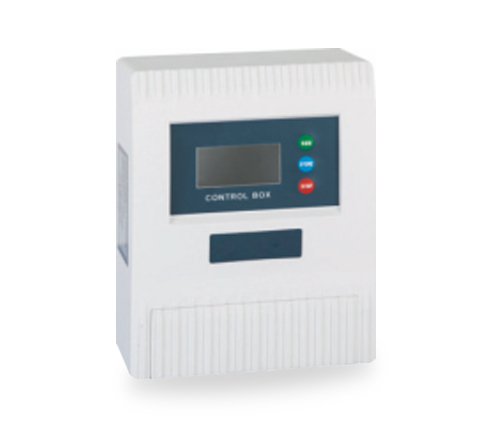
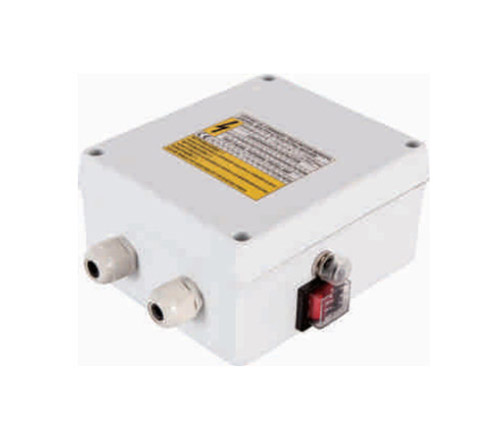
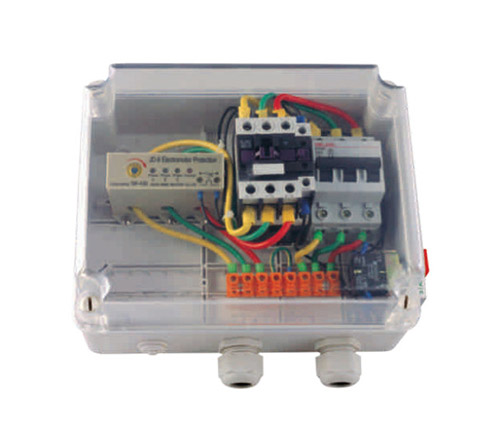
At Edwin Pump, we see the controller as an important part of the complete pumping solution. A solar pump needs to respond to changing sunlight, water demand, well conditions, and system requirements rather than operating at a fixed speed throughout the day.
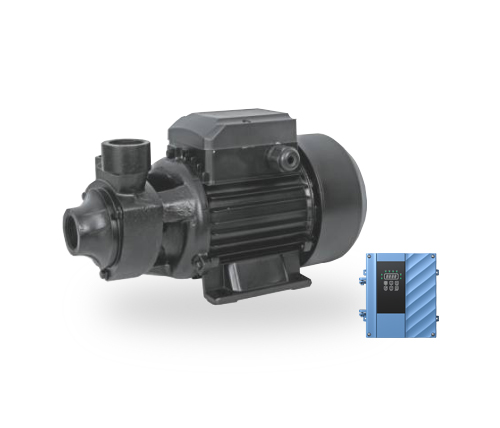
Solar panels do not produce the same electrical output throughout the day. Cloud cover, temperature, solar radiation, and panel conditions can change the available power. Maximum Power Point Tracking, commonly known as MPPT, allows the controller to adjust electrical operating conditions around the photovoltaic array's available power.
Recent research published in Scientific Reports has continued to examine MPPT strategies for photovoltaic water-pumping systems, highlighting the importance of control algorithms in extracting usable power from changing solar conditions.
| Technology | Role in Solar Pumping |
| MPPT | Tracks the photovoltaic array's useful power point |
| VFD | Adjusts motor speed according to operating requirements |
| Dry-Run Protection | Helps protect the pump during insufficient water conditions |
| PID Control | Supports automatic pressure or flow regulation |
| Remote Monitoring | Provides operating data and fault information away from the site |
A fixed-speed pump can provide a relatively simple pumping solution, but available solar power varies considerably during daylight hours. Variable-speed control allows the motor speed to respond to available electrical power and system demand.
Modern solar pump drives can support both AC induction motors and permanent-magnet synchronous motors. Some commercial controllers also combine MPPT with pump-specific functions such as water-flow estimation, pump unclogging, and dry-run protection.
Another noticeable development is remote monitoring. Instead of checking a pump controller directly at the installation site, connected systems can provide information about pump status, electrical parameters, faults, and water output through a web platform or mobile application.
Some current solar pumping platforms provide remote start/stop functions, live performance monitoring, GPS tracking, fault alerts, analytics, and firmware updates. Other systems monitor PV power, pump current and voltage, operating status, and cumulative water flow.
This information can be particularly useful for agricultural irrigation systems, remote water supply installations, and distributed pump fleets where frequent physical inspections are inconvenient.
Solar pumping does not always need to operate as a completely isolated system. Hybrid controllers can combine solar power with grid or generator input, allowing the pump to continue operating under conditions where photovoltaic output is insufficient.
Current solar drive solutions are available with AC-only, DC-only, or hybrid configurations. Some systems can also retrofit existing AC pumps for solar operation rather than requiring a completely new pump set.
| System Configuration | Typical Application |
| Solar DC | Remote wells and off-grid water supply |
| Solar + AC | Sites requiring backup power |
| Solar + Battery | Applications requiring stored electrical energy |
| Solar + Existing AC Pump | Retrofit projects using installed pump equipment |
Controller development is closely connected with motor technology. Permanent-magnet synchronous motors, BLDC motors, and conventional AC induction motors can be paired with different drive architectures depending on the application.
The choice affects the controller, operating speed, electrical characteristics, and system configuration. Some solar pump manufacturers are therefore developing motor and controller combinations rather than treating these components as completely separate products.
Solar pumping equipment may operate in remote agricultural fields, boreholes, livestock facilities, or rural water systems. A controller needs to respond to abnormal conditions without relying entirely on manual intervention.
Modern controller platforms already combine functions such as dry-well detection, PID control, tank-level management, automatic restart, and flow estimation.
The development of solar pumping technology is creating a broader definition of the pump itself. Hydraulic performance remains essential, but the surrounding electrical and digital architecture increasingly influences how the equipment operates.
At Edwin Pump, we pay attention to the relationship between pump capacity, motor characteristics, controller functions, PV input, and actual water requirements. A practical system may need to handle a 1–10 HP motor range, variable solar input, different well depths, and changing daily water demand depending on the project. Controller specifications should therefore be reviewed together with the pump curve rather than considered separately.
The development of solar pump manufacturers is increasingly reflected in the technology surrounding the pump. MPPT can respond to photovoltaic conditions, variable-speed drives can adapt motor operation, protection functions can react to abnormal conditions, and remote monitoring can bring operating information to users away from the installation site.
At Edwin Pump, we see these technologies as practical tools for building more adaptable pumping systems. The future of solar water pumping is not simply about adding more solar panels. It is about making the pump, motor, controller, and monitoring system work together as a coordinated unit.
edwina@edwin-pump.com
+86-13586290903 (WhatsApp)
Xuri Gongliang Cutting Tool Entrepreneurship Park, Wenqiao Town, Wenling City, Taizhou City, Zhejiang Province, China

High Performance Smart Pump Factory


 English