edwina@edwin-pump.com

View All Products
en
In fire protection, industrial water supply, pressure boosting, irrigation, cooling, heating, and general process service, the pump is often one of the most important pieces of rotating equipment in the system. A pump must deliver the required flow and pressure consistently, operate efficiently, withstand continuous service, and remain practical to inspect and maintain. When the application is safety-critical, reliability is not simply a desirable feature. It is an essential operating requirement.
The EA Series Horizontal End Suction Fire Centrifugal Pump is designed to meet these demanding expectations. It is a single-stage, foot-mounted centrifugal pump for clean water transfer and related duties. Its horizontal end suction and vertical top discharge arrangement makes it familiar to engineers, contractors, operators, and maintenance teams. Its true back-pull-out construction helps reduce service time, while its dimensional compatibility with established international pump standards can simplify replacement and integration projects.
Manufactured by Taizhou Edwin Electric Co., Ltd., the EA Series reflects the company’s experience in pump research, production, quality control, and global export. Edwin Pump has developed a broad product portfolio that includes deep well pumps, submersible pumps, domestic booster pumps, circulation pumps, solar water pumps, intelligent booster pumps, and commercial pumping equipment. This product range gives the company a broad understanding of water movement requirements across residential, agricultural, commercial, municipal, and industrial applications.
The EA Series is especially suited to customers who need a conventional horizontal end suction pump with modern maintenance advantages and flexible material options. It can be supplied in cast iron or stainless steel configurations, with additional material solutions available for more demanding environments. Mechanical seals, gland packing, dynamic sealing arrangements, different bearing lubrication options, and spacer coupling configurations can be selected according to the operating conditions and project requirements.
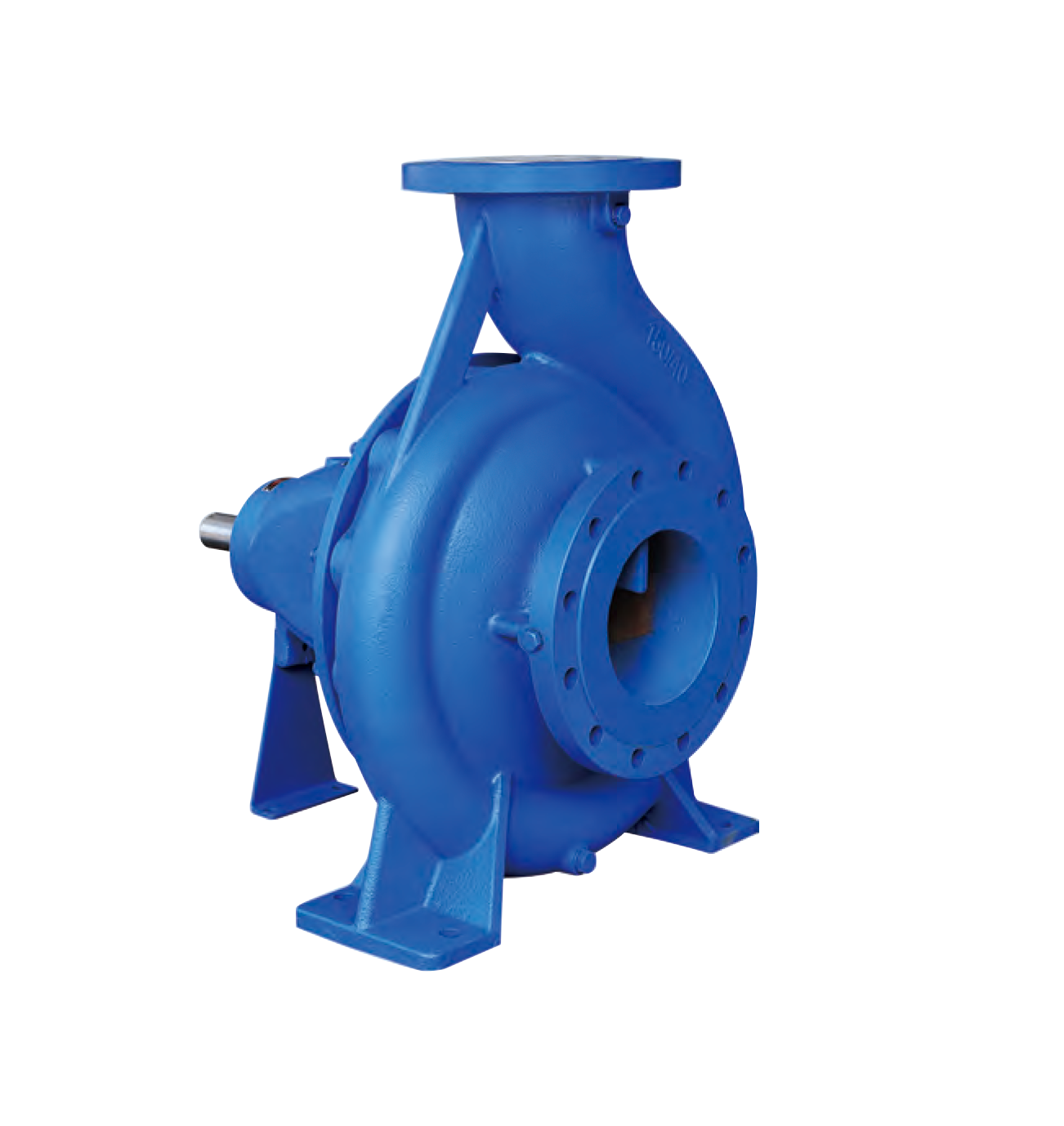
EA Series Reliable Performance Clean Water Horizontal End Suction Fire Centrifugal Pump
The EA Series is a horizontal end suction centrifugal pump intended primarily for clean water and liquids with characteristics similar to clean water. The pump uses centrifugal force generated by a rotating impeller to convert mechanical energy from the motor into hydraulic energy. Liquid enters axially through the suction connection, passes through the impeller, and leaves through the volute casing at the discharge connection.
The pump is arranged with a horizontal suction inlet and a vertical top discharge. This configuration is widely used in water supply systems because it provides a clear and practical piping layout. The suction line can approach the pump horizontally, while the discharge line rises vertically or connects to a vertical discharge header. The arrangement is suitable for pump rooms, fire pump installations, industrial utility systems, irrigation stations, cooling plants, and heating networks.
As a single-stage design, the EA Series uses one impeller to generate the required head. Single-stage construction has several practical benefits. It reduces the number of internal hydraulic components, simplifies inspection, and makes replacement parts easier to manage. For many clean-water applications, a single-stage pump provides an effective balance between hydraulic performance, operating efficiency, structural simplicity, and maintenance accessibility.
The pump is foot mounted, meaning that the casing and bearing housing are supported by a stable base arrangement. This design provides a firm connection to the foundation or common baseplate. A stable mounting structure helps maintain shaft alignment, reduces vibration risk, and supports long-term operation when the pump is correctly installed and aligned with the motor.
The EA Series conforms to DIN 24255 and BS EN 733 dimensional and design principles. This is particularly valuable for replacement and modernization projects. When existing pipework, foundations, and motor arrangements are based on recognized end suction pump dimensions, a compatible replacement can often be installed with fewer modifications. Actual interchangeability must always be verified against the selected model, flange standard, motor frame, shaft dimensions, duty point, and installation conditions.
The hydraulic arrangement of the EA Series supports straightforward installation and familiar system design. The end suction inlet allows liquid to enter directly into the impeller eye, while the top discharge outlet provides a natural upward flow path into a discharge pipeline. This configuration can save space compared with some alternative pump layouts and is easy for operators to understand during commissioning and troubleshooting.
The vertical top discharge also helps support orderly pipe routing in pump rooms. Discharge piping can rise toward a header, pressure vessel, sprinkler system, cooling circuit, or process line. In many installations, the arrangement reduces unnecessary bends and creates a compact connection between the pump and the main discharge system. Proper suction pipe design remains essential, including adequate pipe diameter, suitable reducers, correct support, and protection against air pockets.
One of the most important advantages of the EA Series is its true back-pull-out design. In a conventional maintenance operation, removing a complete pump from a pipe system can require disconnection of suction and discharge flanges, removal of foundation bolts, draining of the system, and realignment after reinstallation. These activities can consume considerable time and may interrupt critical services.
With a true back-pull-out arrangement, the back plate, bearing housing, shaft, impeller, and associated rotating assembly can be withdrawn from the casing through the rear side. The casing and connected pipework can remain in place. This reduces the amount of dismantling required during inspection or repair and can significantly shorten the maintenance window.
For fire protection systems, the back-pull-out concept is especially important. Fire pumps must be available when required, and maintenance teams need a practical way to inspect wear components without disturbing the complete installation. The design can also benefit industrial users who cannot afford extended production interruptions or extensive pipework removal.
The EA Series can be equipped with a spacer coupling when required. A spacer coupling creates additional clearance between the pump and motor coupling halves. This allows maintenance personnel to remove the pump rotating assembly and service the shaft seal, bearings, impeller, or bearing housing without moving the motor from its mounted position.
Keeping the motor in place can provide several benefits. It reduces the risk of disturbing motor alignment, limits the need for electrical disconnection, avoids unnecessary lifting operations, and helps preserve the original installation geometry. For large or heavily built motor arrangements, these benefits can lead to lower maintenance labor, faster restoration, and reduced risk during service work.
The EA Series follows recognized dimensions associated with DIN 24255 and BS EN 733 end suction pumps. This gives it a strong advantage in replacement markets where customers need to replace an existing pump without rebuilding the entire pumping station. Dimensional compatibility may include flange location, pump centerline, shaft arrangement, bearing housing dimensions, and other installation interfaces.
Edwin Pumps can also provide selected material and configuration options intended to interchange with equipment supplied by other manufacturers. This can be useful when a facility has standardized pipework or when an original pump is no longer available. The engineering team can review the original pump model, performance curve, flange rating, motor power, rotational speed, shaft dimensions, and material requirements before recommending a replacement.
Interchangeability is not limited to physical dimensions. A successful replacement must also meet the hydraulic duty. The required flow, total head, liquid temperature, suction condition, operating frequency, motor voltage, and duty cycle must all be considered. A pump that fits mechanically but does not match the duty point may operate inefficiently or experience premature wear.
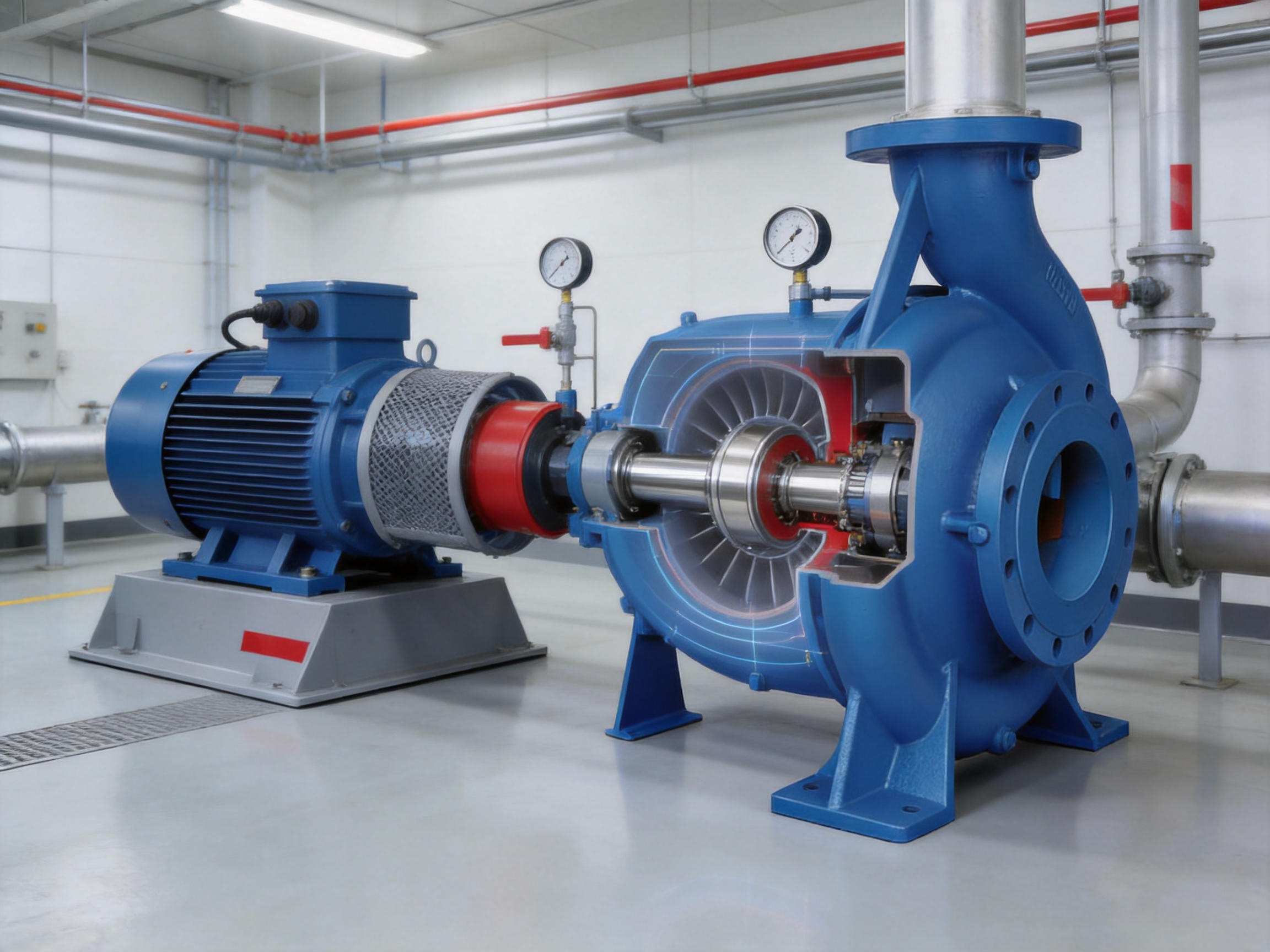
The casing is designed to contain the pressurized liquid and guide flow from the impeller toward the discharge outlet. The casing is open on the drive side, allowing the mechanical assembly to be removed from the rear. Mounting feet are integrated beneath the volute casing, providing stable support and helping maintain the pump’s position on the base.
The suction connection is axial, while the discharge connection is radial and directed upward. This arrangement supports the horizontal end suction configuration and provides a practical interface with industrial pipework. Casing materials include cast iron and stainless steel, with stainless steel grades such as SUS304 or SUS316 available for applications requiring improved corrosion resistance.
Flanges can be manufactured according to recognized standards, including PN16 configurations associated with ISO 2084 and relevant European dimensional practices. ANSI 150 and JIS 10K options can also be considered for projects using North American or Japanese piping standards. The flange standard must be confirmed before ordering because bolt-hole patterns, outside diameters, sealing surfaces, and pressure ratings vary between standards.
The casing cover is positioned between the volute casing and the bearing housing. It provides the structural interface for the rotating assembly and incorporates the housing required for the selected shaft sealing arrangement. The cover must maintain accurate alignment between the shaft, seal, and impeller while withstanding hydraulic pressure during operation.
During maintenance, the casing cover forms part of the assembly that can be withdrawn through the back of the casing. This supports the back-pull-out concept and helps maintenance personnel reach the internal components without removing the fixed casing from the piping system.
The EA Series uses a high-efficiency closed radial impeller. The impeller transfers energy to the liquid and is one of the main components determining pump flow, head, efficiency, and power consumption. The closed impeller includes back sealing features and balance holes designed to manage axial forces and internal pressure distribution.
Cast iron and stainless steel impeller options are available. Cast iron is suitable for many general clean-water services and offers a practical balance of strength, cost, and machinability. Stainless steel can be selected when greater resistance to corrosion, water chemistry variation, or specific process conditions is required.
The impeller can be trimmed according to the required flow and head. Impeller trimming is a useful method for matching the pump more closely to the customer’s duty point. When properly engineered, it can avoid excessive throttling, improve operating efficiency, and reduce unnecessary energy consumption. The final impeller diameter must be selected using the manufacturer’s performance data and verified against the actual system curve.
The pump shaft is oversized according to principles associated with ISO 5199. An appropriately sized shaft helps resist bending, supports stable operation, and contributes to longer mechanical seal life. Excessive shaft deflection can create uneven seal loading, vibration, coupling problems, and accelerated bearing wear. The oversized shaft design is therefore an important part of the pump’s reliability strategy.
A shaft sleeve can be used to protect the shaft in the sealing area. The sleeve provides a replaceable wear surface and helps prevent damage to the main shaft caused by sealing contact or corrosion. This can reduce the cost and complexity of future repairs because the sleeve may be replaced without replacing the complete shaft.
The EA Series uses a monobloc bearing housing with a support foot. The bearing housing is oversized and engineered to support the rotating assembly under the expected radial and axial loads. Deep-groove ball bearings guide the motor shaft and can be arranged for grease or oil lubrication depending on the pump configuration and operating requirements.
Oversized bearings can provide a useful service-life margin when the pump is correctly selected and operated. Bearing performance depends on alignment, lubrication quality, operating temperature, vibration, speed, and load. The bearing housing also incorporates a centrifugal deflector that helps prevent liquid leakage toward the bearing area.
NTN bearings are specified as an available bearing brand. The selection of a recognized bearing supplier supports parts consistency and helps maintenance teams identify replacement components. Bearing replacement should always follow the manufacturer’s instructions, including correct fitting force, cleanliness, lubrication quantity, and shaft alignment checks.
The standard shaft sealing arrangement is a single mechanical seal selected for the pumped liquid and operating conditions. Mechanical seals provide controlled sealing between the rotating shaft and stationary casing. When properly selected and installed, they minimize leakage during normal operation and generally do not require adjustment while the pump is running.
Gland packing and dynamic seal arrangements can also be considered for selected applications. The choice depends on liquid characteristics, temperature, pressure, environmental requirements, maintenance practices, and customer preference. Mechanical seal materials should be matched to the water chemistry and any additives present in the system.
Seal life is influenced by dry running, cavitation, abrasive particles, excessive shaft movement, incorrect installation, thermal shock, and operation outside the recommended range. Correct priming, adequate suction conditions, proper alignment, and clean liquid are therefore essential for reliable sealing performance.
The standard coupling is a semi-elastic coupling. It transfers torque from the motor to the pump while accommodating limited operational movement. Correct coupling alignment is essential. Angular or parallel misalignment can create vibration, increase bearing loads, damage the mechanical seal, and reduce the service life of the coupling.
A spacer coupling is available when maintenance access is a major priority. The spacer design supports the removal of the rotating assembly while leaving the motor in place. This is particularly valuable in large installations, fire pump rooms, industrial plants, and applications where electrical isolation and motor removal would create additional risk or delay.
Different pumping environments require different material solutions. Clean water may appear simple, but water chemistry can vary significantly according to temperature, treatment chemicals, dissolved oxygen, salinity, hardness, and contamination. The EA Series can be configured with material combinations intended to suit a broad range of clean-water and water-like applications.
Component |
Available or Standard Material |
Selection Consideration |
Pump body |
Cast iron or stainless steel |
General service, corrosion resistance, and system water chemistry |
Impeller |
Cast iron or stainless steel |
Required hydraulic duty, corrosion resistance, and operating environment |
Shaft |
Stainless steel |
Strength, sealing-area protection, and corrosion resistance |
Shaft seal |
Mechanical seal, gland packing, or dynamic seal |
Liquid properties, pressure, temperature, leakage requirements, and maintenance policy |
Bearing lubrication |
Grease life, grease, or oil |
Speed, duty cycle, bearing arrangement, and service conditions |
Bearing |
NTN |
Reliable rotating support and parts availability |
For more corrosive services, duplex stainless steel grades such as 2205 or 2507 may be considered when appropriate. These materials can offer improved resistance compared with standard stainless steel, but the final selection must be based on the actual liquid analysis, chloride level, temperature, pressure, and expected operating life.
Material flexibility gives the EA Series an advantage over pumps that are available only in one fixed construction. It allows the pump to be adapted to different project requirements without abandoning the basic installation concept. It also helps international customers align the pump with local water quality, industrial standards, and corporate material policies.
As standard, EA pumps are equipped with IM B3 electric motors. The IM B3 foot-mounted motor arrangement is widely used in industrial pump installations and is compatible with common baseplate and coupling arrangements. The motor must be selected according to the pump’s hydraulic duty, rotational speed, electrical supply, ambient conditions, starting method, and required operating margin.
The recommended motor power safety margins are as follows:
Required pump power range |
Recommended safety margin |
Up to 4 kW |
25 percent |
From 4 to 7.5 kW |
20 percent |
Above 7.5 kW |
15 percent |
These margins are intended to provide practical motor selection guidance. The final motor power should be confirmed using the pump performance curve, actual liquid density and viscosity, operating range, system resistance, starting conditions, and any applicable fire protection or industrial standards.
Oversizing the motor excessively is not always beneficial. A motor that is substantially larger than necessary can increase initial cost, starting current, electrical infrastructure requirements, and operation at inefficient load conditions. On the other hand, insufficient motor capacity may cause overload trips, overheating, reduced reliability, or failure to achieve the required performance. Proper selection requires a balance between operating margin and energy efficiency.
Choosing the correct EA Series model begins with understanding the system duty point. The required flow rate is normally determined by the process, fire protection demand, irrigation requirement, cooling load, or building water supply. The required head includes static elevation, pressure requirements at the destination, friction losses in pipes and fittings, equipment losses, and any required reserve.
The pump should operate near the best efficiency region whenever possible. Operation too far to the left of the performance curve can result in low flow, recirculation, increased radial forces, overheating, and unstable operation. Operation too far to the right can cause excessive flow, motor overload, low discharge pressure, cavitation risk, and reduced efficiency.
The EA Series performance chart should be used to identify the suitable model and impeller diameter. The selection process should include:
1. Determine the normal, minimum, and maximum required flow.
2. Calculate the total dynamic head at each relevant flow condition.
3. Confirm the liquid temperature, density, viscosity, and solids content.
4. Check the available suction pressure and calculate the net positive suction head available.
5. Compare the system curve with the pump performance curve.
6. Select the impeller diameter and motor power that provide the required operating margin.
7. Confirm flange standards, motor voltage, frequency, shaft dimensions, seal materials, and installation orientation.
For fire protection applications, the pump must be selected according to the applicable local fire code and project standard. The operating points, standby arrangements, controller requirements, pressure maintenance equipment, test facilities, and certification requirements must be reviewed separately. A general industrial pump should not be represented as a complete certified fire pump package unless the complete assembly and application meet the required regulations.
The EA Series can support municipal, commercial, agricultural, and industrial water supply systems. It may be used for transferring water from storage tanks, reservoirs, sumps, treatment facilities, or utility networks to distribution headers and process users. The horizontal arrangement is suitable for permanent pump rooms and skid-mounted systems.
Reliable water delivery is essential in fire fighting systems. The pump can be used in fire water transfer and fire protection arrangements where the selected model, motor, controls, and installation comply with the applicable project requirements. The back-pull-out design is valuable in this sector because maintenance teams need efficient access to rotating and sealing components.
Fire pump installations should include proper suction conditions, independent power or backup arrangements where required, suitable valves, test connections, pressure gauges, non-return protection, and control equipment. Routine inspection and testing are necessary to verify that the pump remains ready for service.
The EA Series can be installed in pressure boosting systems for buildings, industrial facilities, process lines, and water distribution networks. A pressure boosting system may use one pump or multiple pumps operating in parallel, depending on flow variation and redundancy requirements.
When multiple pumps are used, the control strategy should prevent frequent cycling and ensure that each pump operates within its recommended range. Variable speed drives may be considered where the application requires changing flow or pressure, but compatibility with the motor, control panel, minimum speed, cooling requirements, and pump curve must be confirmed.
Many industrial facilities require reliable movement of clean or lightly treated water. The EA Series can serve utility water, wash water, boiler feed pre-treatment systems, cooling water, equipment service water, and general process transfer. Stainless steel construction and alternative seal options can help adapt the pump to different industrial conditions.
Cooling plants and air-conditioning systems depend on stable circulation and heat transfer. The EA Series can be applied to cooling water transfer, condenser water service, chilled-water support systems, and related circulation duties when the operating temperature and water chemistry are within the selected pump’s design limits.
For HVAC systems, the pump must be evaluated for seasonal load changes, closed-loop pressure, air release, water treatment chemicals, expansion tank pressure, and available net positive suction head. Proper balancing of the system helps prevent a pump from operating at excessive flow.
Commercial heating networks and district heating systems may require reliable circulation or transfer of treated hot water. The pump selection must consider liquid temperature, seal materials, thermal expansion, insulation, start-up conditions, and bearing temperature. The pump must not be exposed to temperatures or pressures above its approved limits.
In irrigation systems, the pump may transfer water from tanks, canals, reservoirs, or collection basins to field distribution networks. Filtration and suction protection are important because suspended solids, leaves, sand, and other debris can damage the impeller or mechanical seal. The pump should be selected according to seasonal flow demand and the pressure required by sprinklers, drip systems, or other irrigation equipment.
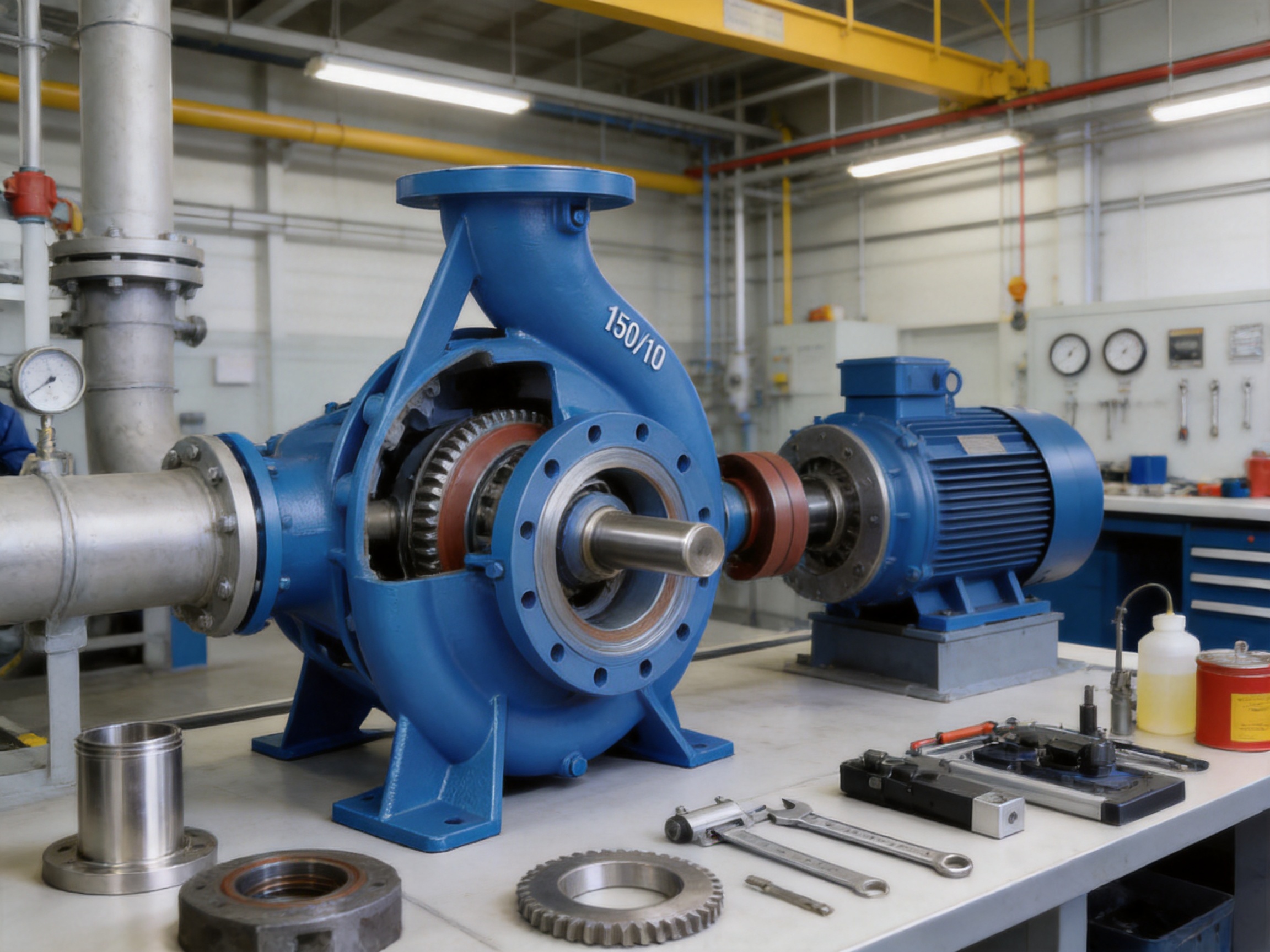
Taizhou Edwin Electric Co., Ltd. was founded in 2008 and operates as an integrated manufacturing enterprise with capabilities covering research and development, mass production, and global export. This integrated structure is important because product performance depends not only on design but also on material control, machining accuracy, assembly quality, testing discipline, and after-sales coordination.
The company’s product portfolio includes domestic and commercial water pumps, deep well pumps, submersible pumps, booster pumps, circulation pumps, solar water pumps, intelligent booster pumps, and related water treatment peripheral products. Experience across these product groups supports a broad understanding of motors, impellers, pressure systems, seals, controls, electrical protection, and water supply applications.
Advanced manufacturing is not limited to the use of modern machines. It also includes the consistency of the complete production process. For the EA Series, important manufacturing stages include engineering review, material selection, casting or component preparation, precision machining, shaft and impeller processing, dynamic balance, bearing installation, seal assembly, coupling alignment, motor integration, pressure inspection, and performance testing.
Before production, the pump design must be reviewed against the required operating range, structural loads, material requirements, and dimensional standards. Engineering teams evaluate the casing, impeller, shaft, bearing housing, seal chamber, flange dimensions, and motor connection. This helps ensure that the pump is not only capable of producing the required hydraulic performance but is also practical to manufacture and maintain.
Product development is strengthened when customer feedback, field experience, production data, and service information are returned to the engineering process. This creates a continuous improvement cycle. Issues such as seal life, vibration, installation difficulties, spare parts requirements, and operating efficiency can be considered when refining future production and configuration options.
Material control begins with selecting suitable grades for each component. The casing, impeller, shaft, sleeve, bearing housing, coupling, and seals each perform different functions and therefore require different material properties. Strength, corrosion resistance, machinability, dimensional stability, temperature resistance, and compatibility with the pumped liquid must be considered.
Reliable component sourcing is also essential. Bearings, mechanical seals, motors, fasteners, gaskets, and electrical parts must be consistent with the engineering specification. Standardized component records can improve traceability and make replacement and service support more efficient for international customers.
Precision machining affects casing alignment, shaft rotation, impeller clearance, seal performance, and coupling stability. Machined faces and bores must remain within appropriate tolerances so that components fit correctly during assembly. Accurate shaft machining is especially important because shaft runout can influence vibration and mechanical seal operation.
Flange dimensions must also be controlled carefully. A pump may have excellent hydraulic performance but still create installation problems if the flange outside diameter, bolt-hole pattern, centerline, or sealing face is inconsistent. Dimensional inspection helps protect interchangeability and supports easier integration into customer systems.
The impeller and rotating assembly should be checked for balance and alignment. Unbalanced rotating parts can create vibration, increase bearing loading, generate noise, and reduce service life. Proper balance is especially important at higher rotational speeds or when the pump operates for long periods.
During assembly, the shaft, impeller, shaft sleeve, mechanical seal, bearings, and coupling must be installed in the correct sequence. Clean working conditions help prevent contamination of seal faces and bearings. Assembly personnel must also confirm the correct direction of rotation and the proper tightening of fasteners.
Testing provides a practical confirmation that the manufactured pump performs according to its design intent. Depending on the project and product configuration, tests may include hydrostatic pressure testing, no-load running checks, vibration checks, noise observation, insulation testing, rotation verification, and performance testing at selected flow and head points.
Performance testing can help identify whether the pump reaches the expected duty, whether the motor power is appropriate, and whether the pump operates smoothly across the working range. Test records provide useful evidence for quality assurance and can support customer acceptance procedures.
Edwin Pump serves customers in international markets and has established supporting companies for procurement planning, order tracking, cross-border delivery, and foreign trade services. This broader service structure can be valuable for distributors, contractors, original equipment manufacturers, and industrial clients purchasing multiple pump categories.
One-stop support can include model selection, technical clarification, configuration confirmation, production coordination, packing, documentation, shipment planning, and spare parts communication. For projects involving several pump types, dealing with an experienced manufacturer that offers a broad portfolio can simplify procurement and reduce coordination between separate suppliers.
The EA Series competes with many standard end suction pumps available in the international market. Its advantages are not based on one isolated feature but on the combination of standardized dimensions, maintenance accessibility, material flexibility, industrial construction, and manufacturing support.
First, the true back-pull-out design can reduce maintenance work compared with pumps that require complete removal from the piping system. Less dismantling means fewer disturbed connections, shorter service periods, and lower risk of installation errors after maintenance.
Second, the spacer coupling option provides a further maintenance advantage. Keeping the motor in position can reduce alignment work and eliminate unnecessary motor removal. This is especially helpful when the motor is large, difficult to access, or connected to complex electrical infrastructure.
Third, dimensional interchangeability can reduce project disruption. A customer may be able to replace an existing pump while retaining much of the current pipework and foundation arrangement. This can reduce modification costs and simplify the transition from an older or unavailable pump model.
Fourth, the availability of cast iron, stainless steel, and higher-grade material options gives the EA Series greater application flexibility than a fixed-material pump. Customers can select a construction that better matches water chemistry, corrosion exposure, and expected service life.
Fifth, the pump incorporates a robust oversized shaft and bearing arrangement. This supports long-term mechanical stability when the pump is correctly selected, aligned, lubricated, and operated within its recommended range.
Sixth, the product is supported by a manufacturer with experience across several water pump categories. This provides customers with access to broader technical knowledge regarding pump selection, water supply systems, booster arrangements, solar pumping, submersible systems, and intelligent controls.
Finally, the EA Series is suitable for both new installations and replacement projects. Its conventional operating principle makes it easy for engineers and operators to understand, while its service-oriented construction provides practical advantages associated with modern industrial equipment.
Correct installation is essential for achieving the expected service life and performance. The foundation should be strong enough to support the pump, motor, baseplate, piping loads, and operating vibration. The pump should not be used to support the weight of the connected pipework. Suction and discharge pipes should be independently supported and aligned before the flanges are tightened.
The suction pipe should be as short and direct as practical. Sudden changes in direction, undersized pipework, excessive fittings, and high liquid velocity can increase friction losses and reduce the net positive suction head available. Eccentric reducers may be preferred in certain suction arrangements to prevent air pockets. The suction line should be properly sealed to avoid air entry.
Before starting the pump, the casing and suction line must be filled with liquid where required by the installation arrangement. The pump should not be operated dry because dry running can quickly damage the mechanical seal. Valves should be positioned according to the commissioning procedure, and the motor rotation should be checked before extended operation.
Coupling alignment should be verified after the pump and motor are fixed to the foundation and after the connected piping has been installed. Thermal growth, foundation settlement, and pipe strain can change alignment. A final alignment check before commissioning is recommended.
Pressure gauges should be installed where they can be read safely and used to verify the pump’s operating condition. Drain connections, casing vents, seal connections, and bearing lubrication points should remain accessible. Adequate space should be provided behind the pump if the back-pull-out assembly will need to be removed during maintenance.
A preventive maintenance program should be developed according to operating hours, liquid conditions, criticality, and local safety procedures. Routine inspections may include checking for unusual noise, vibration, leakage, bearing temperature, coupling condition, motor current, discharge pressure, suction pressure, and changes in flow.
Mechanical seal leakage should be observed carefully. A small amount of initial adjustment may be normal for some sealing arrangements, but continuous or increasing leakage may indicate seal wear, shaft movement, dry running, misalignment, or unsuitable operating conditions. The pump should be isolated and depressurized before seal inspection or replacement.
Bearings require correct lubrication. Too little lubricant can cause overheating and wear, while excessive grease can also raise temperature and damage the bearing. Oil-lubricated configurations require the correct oil grade, clean oil, and appropriate oil level. Lubrication intervals should follow the manufacturer’s recommendations and be adjusted for speed, temperature, and duty cycle.
The impeller and casing should be inspected if the pump experiences reduced flow, reduced pressure, increased power consumption, or unusual vibration. Blockage, erosion, corrosion, excessive clearance, or foreign objects can affect hydraulic performance. The suction strainer, if installed, should be cleaned regularly.
The back-pull-out design should be used with appropriate lifting equipment and safe isolation procedures. Before removing the rotating assembly, the pump must be stopped, electrically isolated, isolated from the pressure system, drained, and allowed to cool. Maintenance personnel should use suitable personal protective equipment and follow site-specific safety requirements.
Energy consumption is a major part of the total cost of ownership of a pump. A pump that operates close to its best efficiency point can reduce unnecessary electricity use over many years. Correct impeller selection, proper system design, suitable motor sizing, regular maintenance, and leak prevention all contribute to efficient operation.
The EA Series can help control lifecycle cost through its serviceable mechanical design. The back-pull-out arrangement may reduce labor and downtime during repairs. Replaceable seals, bearings, sleeves, and other service components can extend the useful life of the main casing and base arrangement. Material options also allow customers to choose a construction that reduces premature corrosion and replacement frequency.
Long service life is an important part of environmental responsibility. Replacing an entire pump prematurely consumes additional raw materials, manufacturing energy, packaging, transportation capacity, and labor. A durable pump that can be maintained and refurbished may provide a lower environmental impact over its operating lifetime.
Efficiency should always be evaluated together with reliability. The lowest initial purchase price may not produce the lowest long-term cost if the pump requires frequent seal replacement, consumes excessive energy, or causes repeated production interruptions. A properly selected EA Series pump can provide value through a combination of hydraulic efficiency, maintainability, standardization, and service support.
Customers seeking an EA Series pump should prepare as much application information as possible. The following details help the manufacturer recommend an appropriate model and configuration:
Required flow rate, including normal, minimum, and maximum conditions.
Required total head or discharge pressure.
Static suction level and discharge elevation.
Pipe sizes, lengths, fittings, valves, filters, and other system resistance information.
Liquid name, temperature, density, viscosity, pH, chloride content, and suspended solids.
Available suction pressure and estimated net positive suction head.
Motor voltage, frequency, phase, starting method, and ambient temperature.
Preferred flange standard, such as PN16, ANSI 150, or JIS 10K.
Required materials for casing, impeller, shaft, and seals.
Duty cycle, operating hours, standby requirements, and expected service life.
Available foundation dimensions and existing pump information for replacement projects.
Fire protection code, certification, inspection, and documentation requirements where applicable.
Complete information helps avoid over-selection, under-selection, incorrect materials, and installation incompatibility. For replacement applications, photographs, drawings, nameplate information, pump curves, flange measurements, and motor data can be particularly useful.
The EA Series is a horizontal end suction, single-stage, foot-mounted centrifugal pump with vertical top discharge. It is designed mainly for clean water and liquids with similar properties.
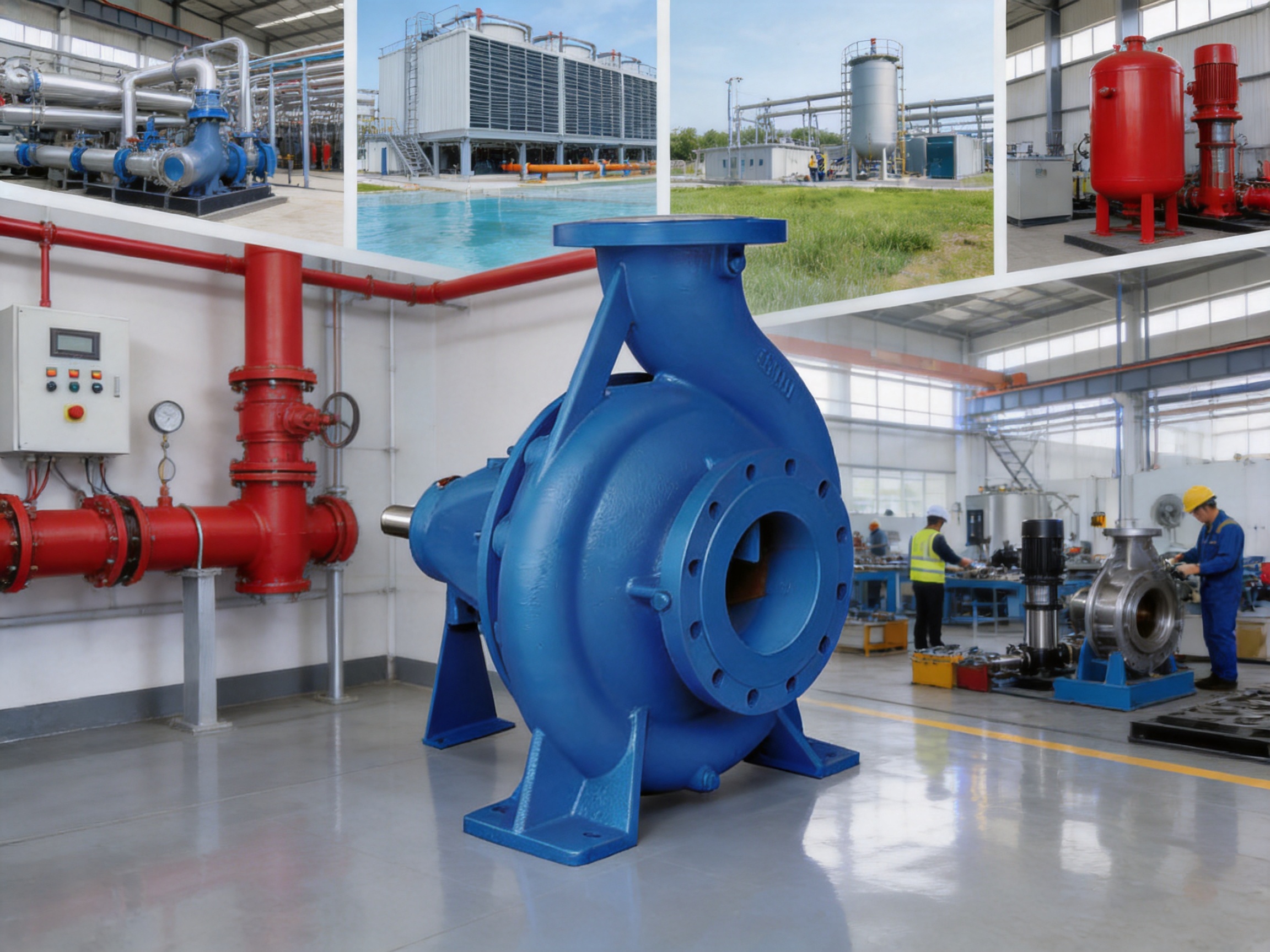
The pump can be used for water supply, fire fighting systems, pressure boosting, industrial process water transfer, irrigation, cooling plants, air-conditioning systems, heating systems, and commercial district heating applications.
True back-pull-out means that the back plate and rotating assembly can be removed from the rear side of the pump without disconnecting the main casing from the connected pipework. This can reduce maintenance time and service interruption.
When the pump is equipped with a suitable spacer coupling, the motor can remain in place while the pump rotating assembly is serviced. This reduces the need for motor removal and can help preserve alignment.
The EA Series conforms to dimensional and design principles associated with DIN 24255 and BS EN 733. Flange configurations can also be supplied according to applicable PN16, ANSI 150, or JIS 10K requirements.
The pump body and impeller can be supplied in cast iron or stainless steel. Stainless steel shaft construction is available, and higher-alloy materials such as duplex stainless steel may be considered for selected demanding applications.
The standard arrangement is a mechanical seal. Gland packing and dynamic seal options may also be considered according to the pumped liquid, pressure, temperature, leakage requirements, and maintenance policy.
EA pumps are normally equipped with IM B3 foot-mounted electric motors. Motor power should be selected according to the pump duty, performance curve, operating margin, electrical supply, and applicable project requirements.
The pump is designed for fire water and fire fighting applications, but the complete installation must comply with the applicable local fire protection code, certification requirements, control system requirements, and project specifications. The selected model must be verified for the required fire duty.
The EA Series may be suitable for replacement where dimensions and performance are compatible. The original pump model, flange standard, shaft dimensions, motor arrangement, duty point, and material requirements should be reviewed before confirming interchangeability.
Cavitation can be reduced by ensuring adequate suction pressure, correct pipe sizing, low suction-line resistance, proper liquid level, clean strainers, and operation within the recommended performance range. The available net positive suction head should exceed the pump’s required value with an appropriate margin.
The most useful information includes flow, head, liquid properties, temperature, voltage, frequency, flange standard, material preference, seal type, operating schedule, installation dimensions, and any required certifications or documentation.
Yes. Taizhou Edwin Electric Co., Ltd. manufactures and supplies a wide range of pumps, including deep well pumps, submersible pumps, domestic booster pumps, circulation pumps, solar water pumps, intelligent booster pumps, and commercial pumping equipment.
Maintenance accessibility helps reduce service interruption and allows wear components to be inspected or replaced efficiently. In critical systems, shorter maintenance periods can improve equipment availability and reduce operational risk.
The EA Series Horizontal End Suction Fire Centrifugal Pump is a practical and adaptable solution for clean water transfer and a wide range of industrial, commercial, agricultural, and fire protection duties. Its horizontal end suction and vertical top discharge arrangement provides familiar installation geometry, while its single-stage foot-mounted construction supports reliable operation and straightforward system integration.
The true back-pull-out design is one of its strongest advantages. By allowing the rotating assembly to be removed without disturbing the main casing and connected pipework, the pump can reduce maintenance labor, service time, and operational interruption. The spacer coupling option extends this advantage by allowing the motor to remain installed during many service operations.
Standardized dimensions, flexible flange options, cast iron and stainless steel materials, oversized shaft and bearing construction, adaptable sealing arrangements, and impeller trimming options make the pump suitable for both new installations and replacement projects. These features are supported by the manufacturing, engineering, testing, and global service capabilities of Taizhou Edwin Electric Co., Ltd.
For the best results, the pump must be selected according to the actual system curve and operating conditions. Correct hydraulic sizing, material selection, motor specification, installation, alignment, lubrication, and preventive maintenance are essential. When these factors are properly managed, the EA Series can provide dependable service, practical maintainability, and strong lifecycle value in demanding clean-water applications.
DIN 24255, End Suction Centrifugal Pumps: Dimensional and Technical Reference Principles.
BS EN 733, End Suction Centrifugal Pumps: Designation, Nominal Duty Point, and Dimensions.
ISO 5199, Technical Specifications for Centrifugal Pumps in Industrial Applications.
ISO 2084, Flanges for Pipes, Valves, and Pumps in Industrial Water Service.
General centrifugal pump hydraulic selection and system design practices.
Industrial pump installation, alignment, lubrication, and maintenance guidance.
Fire protection pumping system engineering and inspection principles.
Manufacturer technical information for the EA Series horizontal end suction centrifugal pump.
Manufacturer product and manufacturing information from Taizhou Edwin Electric Co., Ltd.
edwina@edwin-pump.com
+86-13586290903 (WhatsApp)
Xuri Gongliang Cutting Tool Entrepreneurship Park, Wenqiao Town, Wenling City, Taizhou City, Zhejiang Province, China

High Performance Smart Pump Factory


 English