edwina@edwin-pump.com

View All Products
en
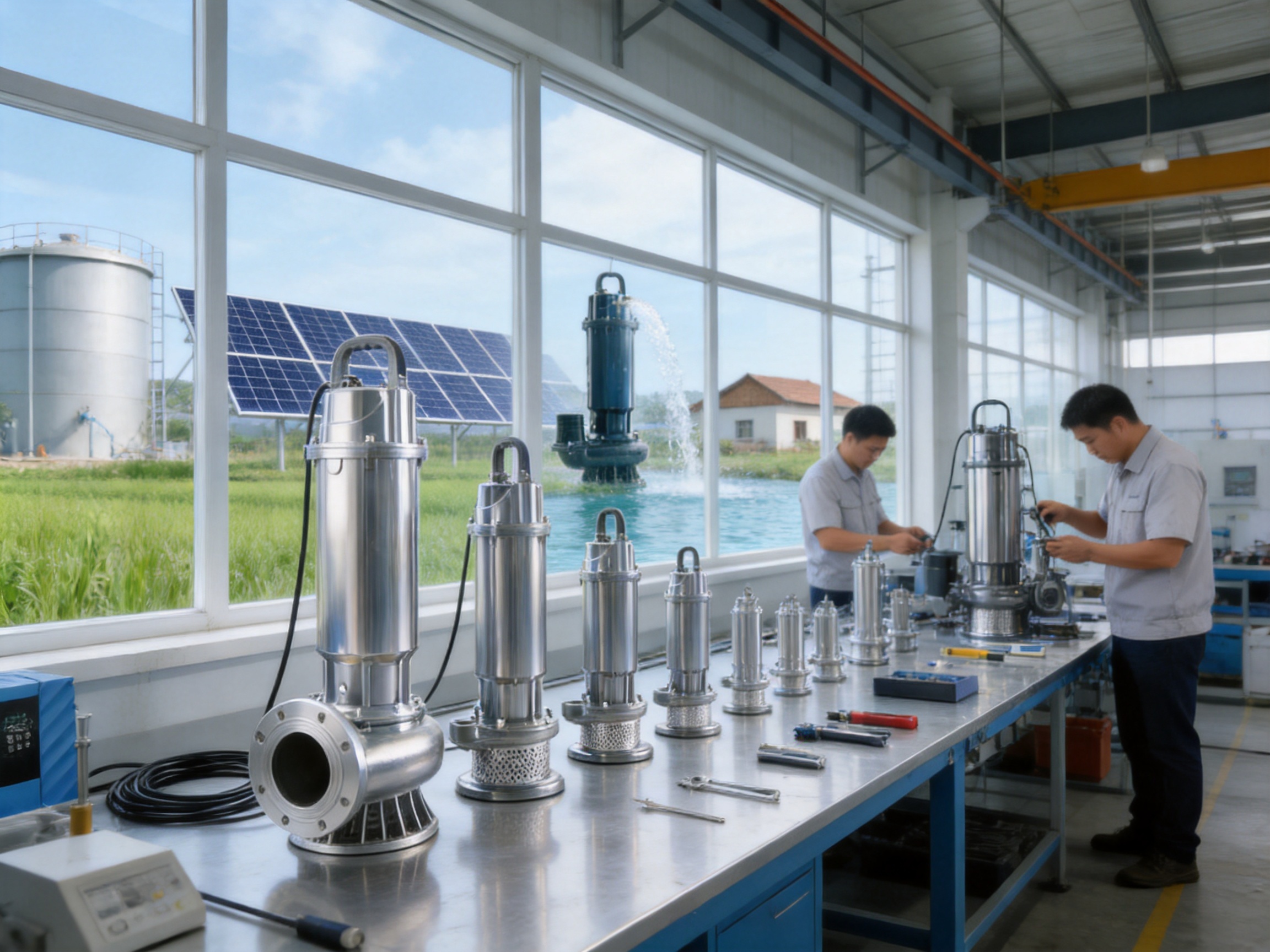
Reliable water access is one of the most important requirements for homes, farms, communities, and remote infrastructure. In locations where grid electricity is unavailable, unstable, or expensive to extend, solar-powered pumping provides a practical alternative. However, a solar pumping system must do more than move water. It must operate efficiently under changing sunlight, tolerate demanding installation conditions, simplify maintenance, and provide predictable performance for the user.
The HVQD Series wide-voltage brushless motor solar aluminum submersible pump is designed to address these requirements in one compact pumping solution. It combines a wide-voltage brushless direct-current motor, an aluminum pump body, and a closed impeller designed for clean-water applications. With several available power, flow, head, and outlet configurations, the series can serve household water supply, agricultural irrigation, storage-tank transfer, and other off-grid pumping projects.
Unlike a conventional pump that depends on a fixed electrical supply, this solar submersible pump is designed to work with variable photovoltaic input. Its wide operating range helps the pump continue functioning as solar conditions change during the day. The brushless motor supports efficient operation and reduces the maintenance associated with traditional brushed motor designs. At the same time, the submersible configuration keeps the pump close to the water source, reducing the need for complex surface installation and suction arrangements.
This article examines the pump’s design, operating advantages, performance options, application value, installation considerations, and the manufacturing strengths behind its development. It also explains how the product compares with common alternatives and how users can select a suitable model for their specific water delivery requirements.
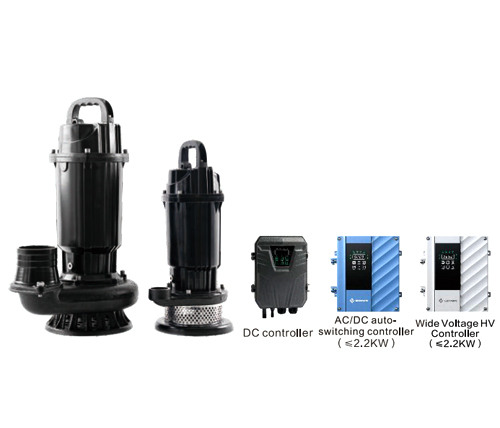
HVQD Seires Wide Voltage Brushless Motor Solar Aluminum Submersible Pump with Closed Impeller
Solar water pumping has become increasingly important in areas where water is available but reliable electrical infrastructure is limited. A borehole, well, reservoir, or storage tank may contain sufficient water, yet conventional pumping can remain difficult because of fuel costs, grid interruptions, or long cable runs. A solar pump converts available sunlight into useful hydraulic energy without requiring continuous fuel delivery or a permanent connection to the electrical grid.
A submersible pump is installed below the water level and pushes water upward through a delivery pipe. This arrangement offers several practical benefits. Because the pump is surrounded by water, it does not need to lift water through a long suction pipe before pumping begins. This helps avoid many priming problems associated with surface pumps. The submerged installation can also reduce noise and protect the pump from certain external environmental conditions.
For solar applications, however, the pump must be matched carefully with the photovoltaic array and the required water duty. Sunlight changes throughout the day because of cloud cover, morning and evening conditions, seasonal variation, and panel temperature. A pump designed only for a narrow voltage range may stop frequently or fail to use available solar energy effectively. The HVQD Series addresses this challenge through a wide-voltage motor design intended for variable solar input.
Solar pumping also supports more sustainable operating models. Once the equipment is installed, the energy source is available without regular fuel purchases. This can be particularly valuable for irrigation systems, livestock watering points, rural homes, remote construction sites, and community water projects. The pump can be integrated with a storage tank so that water is collected during periods of sunlight and used when pumping is not required.
The HVQD Series is a DC submersible solar pump fitted with a wide-voltage brushless motor and an aluminum pump body. The series includes models ranging from 750 watts to 1,500 watts, with maximum flow capacities from 7 cubic meters per hour to 50 cubic meters per hour and maximum head ratings from 10 meters to 30 meters, depending on the model.
The available configurations are intended to cover different combinations of flow and lifting requirements. A model with a higher maximum head is more appropriate where water must be lifted through a greater vertical distance or overcome more system resistance. A model with a larger maximum flow is more suitable for transferring substantial water volumes over a comparatively low head. The outlet sizes range from 1 inch to 3 inches, allowing the pump to be connected to different pipeline arrangements.
The principal product elements include:
• A wide-voltage brushless DC motor for stable operation under changing input conditions.
• An aluminum pump body that combines low weight with useful corrosion resistance and structural durability.
• A closed impeller designed to provide consistent hydraulic performance in clean-water applications.
• A compact submersible form suitable for wells, tanks, and reservoirs.
• A 5-meter cable supplied with each listed configuration.
• Compatibility with solar panels having an open-circuit voltage below 450 volts, according to the stated performance data.
• A recommended solar panel power of at least 1.3 times the pump power.
These features make the series suitable for users who need a dedicated solar pumping solution rather than a conventional pump combined with a complicated collection of external conversion components.
Solar panels do not provide a perfectly constant electrical output. Their voltage and available power change with sunlight intensity and operating temperature. When clouds pass over the array, the output can decrease quickly. At midday, the available energy may be much higher than it is in the early morning or late afternoon.
The HVQD Series is designed around a wide-voltage operating concept. The listed AC voltage range is 85 to 280 volts, while the optimum DC input voltage range is 100 to 350 volts, depending on the product data format and system configuration. This broad range gives system designers more flexibility when arranging photovoltaic panels and allows the motor to work with a wider variation in available electrical input.
A wide input range does not mean that every installation will produce identical flow at every time of day. Pump output still depends on available solar power, water level, pipe resistance, total dynamic head, and the selected model. The benefit is that the pump is better suited to variable solar conditions than a narrow-range motor that may frequently fall outside its usable operating window.
Brushless motors use electronic commutation rather than mechanical brushes to switch current through the motor windings. This removes brush wear as a routine maintenance concern and can improve long-term operating consistency. It also supports efficient motor operation, which is especially important in a solar system where every watt of available energy matters.
For remote pumping installations, reduced maintenance is a major advantage. A conventional brushed motor may require periodic brush inspection or replacement depending on its operating hours and environment. A brushless motor avoids that specific service task. The absence of brushes can also reduce mechanical friction and electrical arcing within the motor assembly.
The motor is therefore well suited to applications where access is inconvenient, labor costs are high, or the pump must operate for long periods without frequent intervention. Users still need to inspect the overall system, check the cable and pipework, and protect the pump from dry running or unsuitable water conditions, but the motor design reduces one common source of wear.
Energy efficiency is not simply an environmental preference in an off-grid system; it directly affects system size and operating cost. A more efficient pump can deliver the required amount of water with a smaller solar array, or it can deliver more water from the same array when conditions are favorable.
The HVQD Series is optimized for solar-powered environments through its brushless motor and wide-voltage configuration. The recommended solar panel power is at least 1.3 times the pump power. This recommendation provides a practical design margin so that the array can supply useful energy during less-than-ideal sunlight conditions. For example, a 750-watt pump is specified with a minimum recommended panel power of approximately 975 watts, while a 1,500-watt pump requires approximately 1,950 watts of panel capacity.
The actual array design should also consider panel tolerance, temperature, cable losses, shading, seasonal solar conditions, and the required daily water volume. The stated ratio should be treated as a baseline selection guide rather than a substitute for a complete solar assessment.
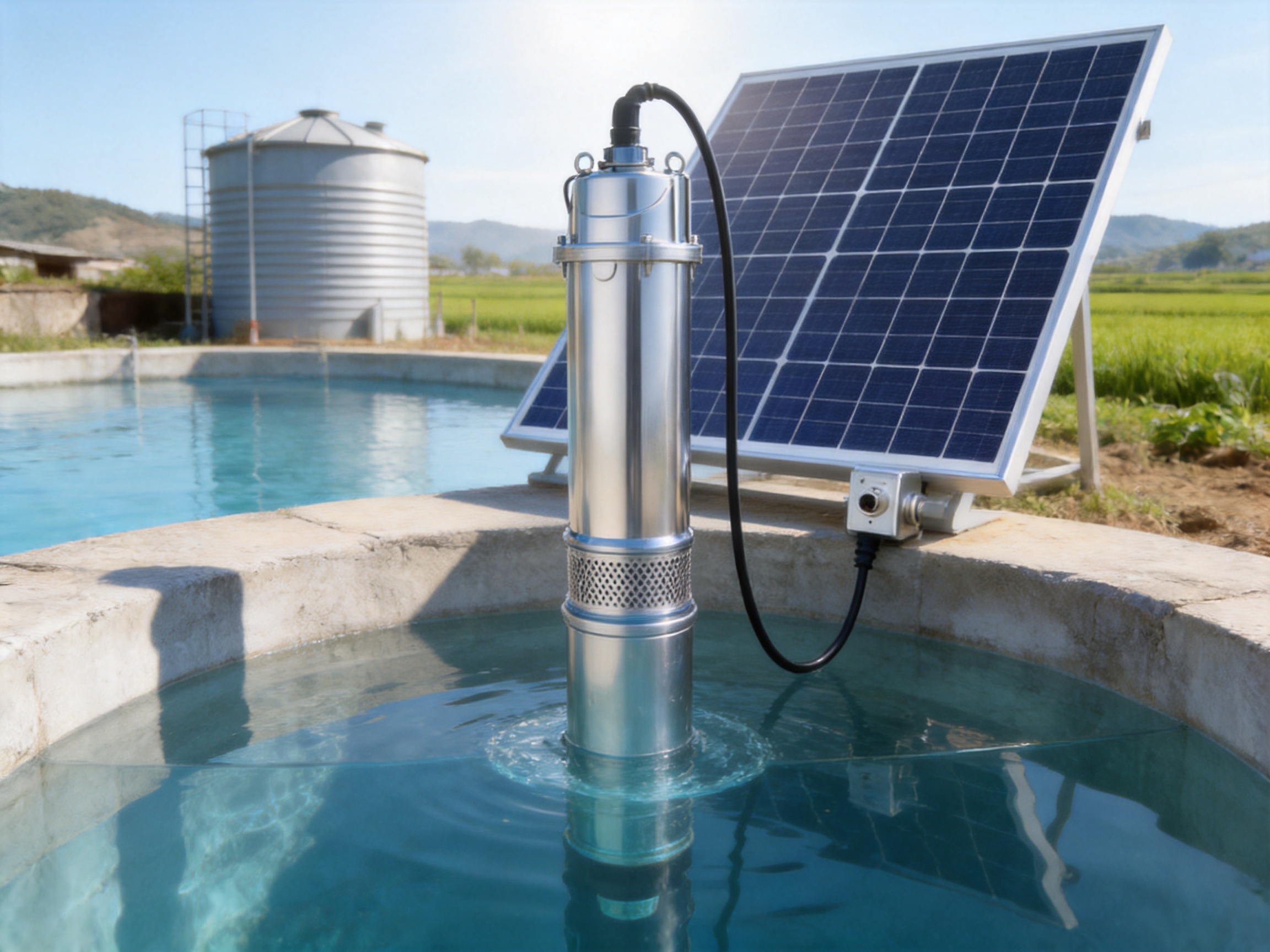
The pump body is made from aluminum, a material valued for its favorable balance between strength and weight. A lighter pump is easier to handle during installation, removal, inspection, and transport. This can be especially useful for agricultural systems, temporary installations, and remote projects where equipment must be carried over uneven ground.
Although lightweight, an aluminum pump body can provide the structural support needed for the motor and hydraulic components when properly designed and manufactured. The material is also suitable for applications where corrosion resistance is important. The pump is intended for clean-water service, so the operating environment should remain within the specified application conditions.
Water equipment is exposed to moisture continuously, and pumps installed in wells or tanks may remain submerged for long periods. A suitable pump body must resist deterioration while maintaining dimensional stability around the motor and impeller components. Aluminum offers useful resistance to many common environmental conditions and helps reduce the risk of premature external corrosion when properly selected and finished.
Material selection alone does not determine service life. Water chemistry, salinity, suspended solids, temperature, installation quality, and operating conditions all influence durability. For this reason, the HVQD Series is positioned for clean-water applications rather than heavily abrasive or highly contaminated liquids. Correct application matching remains essential to protect the pump and maintain performance.
The compact construction allows the pump to be placed in a well, tank, or reservoir without requiring a large surface equipment room. This can simplify projects where available space is limited. The pump can be connected to a rising pipe and submerged below the water level, allowing the hydraulic system to draw water directly from the source.
Submersible installation also reduces the exposure of the pump to external dust and weather. In agricultural or remote settings, keeping the main pumping unit below the water level can provide a cleaner and more organized installation. However, the electrical connection, support arrangement, and pipework must be installed carefully to prevent mechanical strain on the cable or pump outlet.
The HVQD Series uses a closed impeller. In a closed impeller, the vanes are enclosed between shrouds, creating a controlled hydraulic passage for water. This design is widely used where consistent flow and efficient pressure generation are required for relatively clean liquids.
A closed impeller can help maintain smooth water movement through the pump. Its enclosed geometry supports predictable hydraulic performance and can reduce the direct exposure of the vanes to loose debris compared with some open impeller arrangements. This makes the design appropriate for clean-water supply, household service, storage-tank transfer, and controlled irrigation systems.
At the same time, the closed impeller should not be interpreted as a guarantee that the pump can handle any type of water. Large solids, mud, sand, fibrous material, and abrasive particles can damage hydraulic components or reduce performance. If the water source contains sediment, the user should consider suitable screening, filtration, well development, or a different pump design intended for that condition.
The impeller must also be matched with the motor and hydraulic casing. A properly balanced impeller contributes to stable operation and helps limit unnecessary vibration. Consistent manufacturing accuracy is therefore important in the production of the impeller, shaft interface, and surrounding flow passages.
The series includes six listed configurations. The following table summarizes the available data supplied for the product line. Maximum flow and maximum head are reference ratings; actual operating points depend on the system curve and the performance curve for each model.
| Model | AC Voltage | Optimum DC Input Voltage | Power | Maximum Flow | Maximum Head | Outlet | Cable | Solar Panel VOC | Recommended Solar Panel Power |
|---|---|---|---|---|---|---|---|---|---|
| HVQD7-26-72-750 | 85–280 V | 100–350 V | 750 W | 7 m³/h | 26 m | 1 inch | 5 m | Below 450 V | At least 1.3 × pump power |
| HVQD12-30-110-1100 | 85–280 V | 110–350 V | 1,100 W | 12 m³/h | 30 m | 1.5 inches | 5 m | Below 450 V | At least 1.3 × pump power |
| HVQD25-25-110-1100 | 85–280 V | 110–350 V | 1,100 W | 25 m³/h | 25 m | 2 inches | 5 m | Below 450 V | At least 1.3 × pump power |
| HVQD30-28-110-1500 | 85–280 V | 110–350 V | 1,500 W | 30 m³/h | 28 m | 2 inches | 5 m | Below 450 V | At least 1.3 × pump power |
| HVQD35-20-110-1500 | 85–280 V | 110–350 V | 1,500 W | 35 m³/h | 20 m | 2.5 inches | 5 m | Below 450 V | At least 1.3 × pump power |
| HVQD50-10-110-1500 | 85–280 V | 110–350 V | 1,500 W | 50 m³/h | 10 m | 3 inches | 5 m | Below 450 V | At least 1.3 × pump power |
The model naming and specifications show that the range is not limited to one hydraulic profile. The 7 cubic meter per hour model offers a comparatively high head for its power class, while the 50 cubic meter per hour model is intended for high-volume, lower-head transfer. Intermediate models provide additional choices for systems requiring either moderate flow or greater lifting capability.
Selection should begin with the required flow rate and total dynamic head rather than pump wattage alone. Total dynamic head includes the vertical elevation between the water level and delivery point, pressure requirements at the outlet, pipe friction, fittings, valves, and changes in water level. Choosing a pump solely because it has a high maximum flow may lead to poor performance if the system requires more head than the pump can provide.
A narrow-voltage solar pump may operate effectively only within a limited photovoltaic input range. When the solar array voltage falls outside that range, the pump may stop, restart repeatedly, or operate below its useful capacity. The wide-voltage design of the HVQD Series provides more flexibility when panel conditions fluctuate.
This advantage can simplify system planning. Installers have greater freedom to configure the solar array within the specified limits, and users may experience more productive operating time across the day. The pump is still dependent on sufficient sunlight, but it is better aligned with the variable nature of solar generation.
Brushed motors rely on physical contact between brushes and a commutator. That contact creates wear over time and may require service. The brushless motor in the HVQD Series eliminates this particular wear mechanism, helping reduce routine maintenance requirements and supporting longer periods of unattended operation.
This is particularly valuable in remote wells, agricultural plots, and off-grid projects where service personnel may need to travel long distances. Fewer routine motor maintenance tasks can lower operating disruption and help users maintain more consistent water availability.
Surface pumps must draw water through an inlet pipe. Depending on the installation, they may require priming, foot valves, air-tight suction lines, and careful control of suction lift. If the water level falls too far, a surface pump may lose prime or encounter suction limitations.
A submersible pump is installed within the water source and pushes water to the destination. This configuration avoids many suction-side limitations and is well suited to deep wells, tanks, and reservoirs. It also keeps the pump closer to the water, which can make the installation more practical in situations where a surface pump would struggle.
Some traditional pump designs use heavier metal construction that can be difficult to handle during installation. The aluminum body of the HVQD Series helps reduce the physical burden on installers while offering a durable structure for the intended clean-water service.
Lower weight can reduce transportation requirements and make pump retrieval easier during maintenance. This advantage is especially meaningful for small farms, household systems, and remote locations without lifting equipment.
Open impellers are useful in certain wastewater and solids-handling applications, but they are not always the most appropriate choice for clean-water pumping where smooth flow and hydraulic consistency are priorities. The closed impeller of the HVQD Series is optimized for clean water and supports a controlled flow path.
For properly screened water, this design can provide a strong combination of efficiency, stable delivery, and compact construction. It should, however, be applied only where the water quality matches the pump’s intended service conditions.
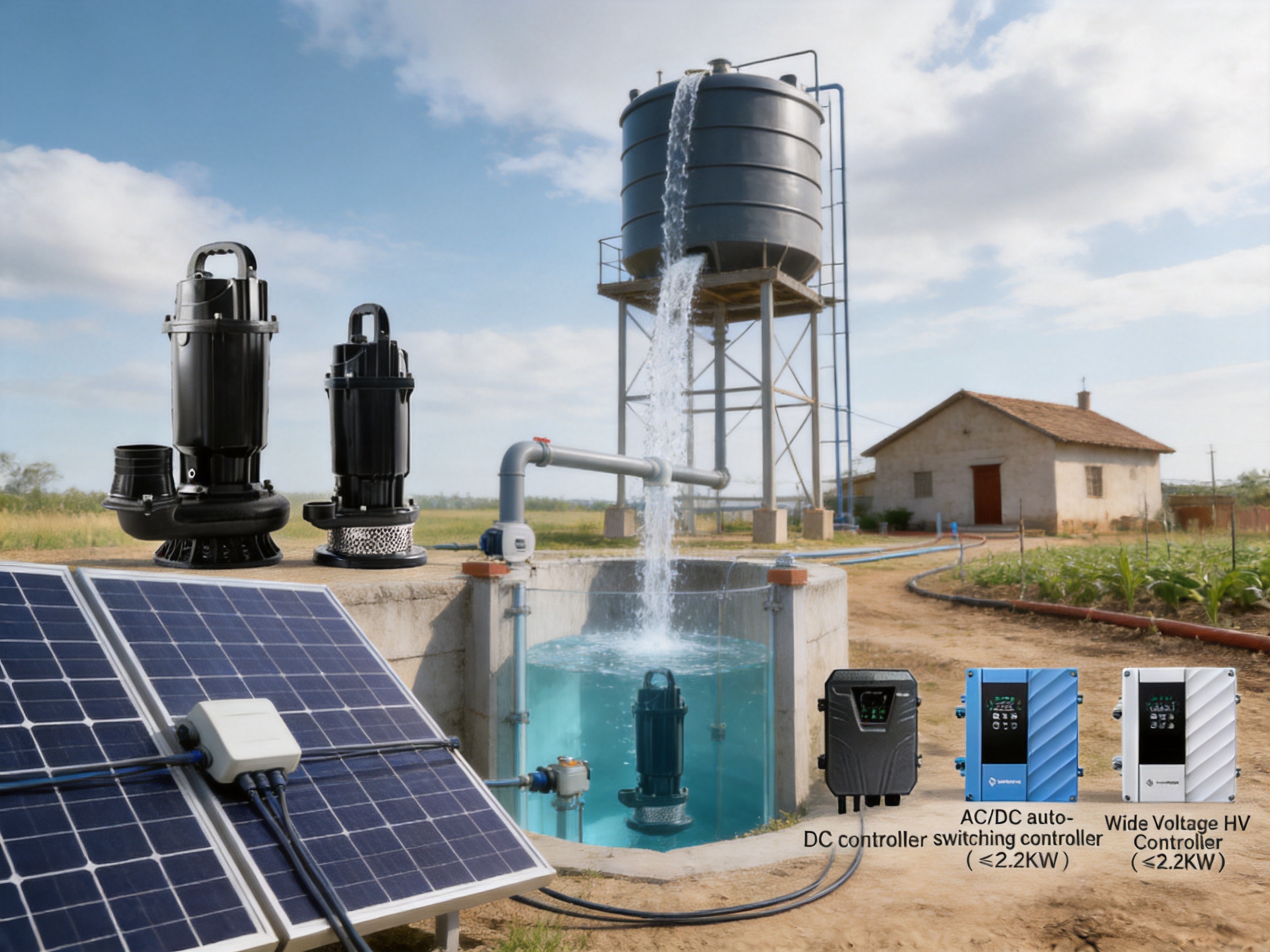
The manufacturer operates as an integrated enterprise focused on independent research and development, mass production, and global export. This structure is important because a pump is not simply a collection of unrelated components. The motor, hydraulic body, impeller, cable, electrical system, and installation requirements must work together as one product.
Independent product development allows the manufacturer to adapt pump designs to changing application requirements. In the HVQD Series, the combination of wide-voltage operation, brushless motor technology, aluminum construction, and closed-impeller hydraulics reflects an engineering approach directed at solar and off-grid use rather than a basic conversion of a conventional pump.
Research and development also support product range expansion. By offering several hydraulic configurations within the same series, the manufacturer can address different flow and head requirements while maintaining a recognizable product platform. This helps distributors, installers, and project buyers organize their product selections more efficiently.
Mass production provides practical advantages for commercial customers. Consistent production methods can help improve repeatability between units, support stable supply, and make it easier to fulfill larger orders. This is important for agricultural projects, residential development, municipal installations, and export distribution.
For a pump series, repeatability matters in several areas. The motor must be assembled consistently, the impeller must maintain suitable dimensional accuracy, sealing components must be installed correctly, and the electrical cable must be connected securely. A structured production system helps ensure that the same model delivers comparable characteristics across multiple production batches.
Mass production also supports purchasing planning. Buyers can select a model for a pilot project and later order additional units for expansion. A manufacturer with established production capability is better positioned to support this type of staged procurement than a workshop focused only on low-volume customization.
The manufacturer’s broader product portfolio includes deep well pumps, submersible pumps, domestic booster pumps, circulation pumps, and related water-pumping solutions. This experience gives the company a wider understanding of different hydraulic environments and customer requirements.
Knowledge gained from deep-well and submersible pump production can support the development of solar submersible equipment. Similarly, experience with booster and circulation pumps can contribute to a broader understanding of pressure management, household water supply, HVAC circulation, and integrated water systems.
A diversified portfolio also allows customers to source several types of pumps from one supplier. For contractors and distributors, this can simplify communication, product evaluation, procurement coordination, and after-sales support.
The company has developed a professional structure for procurement planning, order tracking, cross-border delivery, and foreign trade services. These capabilities are valuable for international buyers who need more than a product catalogue. Export projects often require coordination across technical selection, production schedules, packaging, documentation, shipment planning, and delivery.
One-stop procurement support can reduce the administrative burden on importers and project contractors. Instead of coordinating with separate manufacturers for each product category, customers may be able to combine solar pumps with other pump products or accessories through an established supply network.
International experience also helps a manufacturer understand the practical differences between markets. Voltage requirements, installation practices, climate, water sources, packaging expectations, and local distribution models can vary significantly. A company accustomed to global export is more likely to recognize these factors during order communication.
Although the supplied product information does not specify individual certifications or detailed factory inspection procedures, several quality considerations are central to producing a reliable solar submersible pump. These include material control, motor winding consistency, impeller balance, sealing integrity, electrical insulation, cable connection quality, and functional testing.
The aluminum pump body must be produced with consistent geometry so that the motor and hydraulic parts fit correctly. Variations in casting, machining, or finishing can affect alignment, sealing, and flow performance. Consistent material sourcing and process control help maintain the expected mechanical properties of the body.
The impeller and shaft interface also require careful control. An impeller that is not properly balanced may increase vibration, noise, and bearing stress. Accurate matching between the impeller and casing helps preserve the intended water passage and supports stable hydraulic operation.
A solar submersible pump depends on reliable electrical insulation and secure cable connections. The cable must be protected from water ingress and mechanical damage, and the motor assembly must be designed for submerged operation. Proper assembly practices are therefore essential for user safety and product durability.
Wide-voltage operation also requires attention to the electrical design. The motor and associated control components must operate within the specified voltage limits. Users and installers should follow the manufacturer’s wiring requirements and should not connect the pump to a solar array that exceeds the stated open-circuit voltage limitation.
Functional testing is an important part of pump manufacturing. Testing may include checking motor operation, electrical current, insulation behavior, hydraulic output, leakage resistance, and abnormal vibration. The purpose is to identify assembly problems before the pump reaches the customer.
For an international manufacturer, repeatable testing is particularly important because products may be transported over long distances and installed by technicians who were not involved in production. Reliable factory testing reduces the likelihood that an avoidable manufacturing issue will become an on-site installation problem.
The HVQD Series can support solar-powered household water systems where water must be transferred from a well, tank, or reservoir to a household storage tank. Once water is stored at an elevated point, it can be distributed later through gravity or a separate pressure system.
The system is especially useful for rural homes and remote residences where grid extension is costly. A properly sized solar array and storage tank can provide a practical daily water supply without requiring continuous generator operation.
Gardens, orchards, nurseries, and small agricultural plots often require regular water delivery but may not justify a large grid-connected pumping installation. The HVQD Series offers several flow and head choices for these applications.
High-flow, lower-head models can transfer water from a reservoir to an irrigation distribution line or holding tank. Higher-head models can move water through elevation changes or longer pipe networks. Irrigation designers should account for emitter pressure, pipe friction, filtration, and the required watering schedule before selecting a model.
Remote construction areas, field stations, rural service points, and temporary work sites may need water without access to stable utility power. Solar pumping can reduce fuel logistics and eliminate the need for a permanent generator during routine water transfer.
The brushless motor and submersible configuration are useful in these situations because they support low-maintenance operation and reduce the need for a large surface pump installation. A storage tank can help balance the variable nature of solar energy and provide water after sunset.
Small community water systems can use solar pumping to move clean water from a borehole or reservoir into a central storage tank. The appropriate model depends on the number of users, daily demand, well yield, elevation, and distribution pressure.
For community projects, system design should include protective measures such as dry-run prevention, suitable intake conditions, electrical isolation, overcurrent protection, and secure pump support. A reliable pump is only one part of a safe and sustainable water supply system.
Water transfer between tanks is often a lower-head application, especially when the source and destination are located near one another. The high-flow models in the HVQD Series can be considered where substantial volumes must be moved efficiently.
Tank-transfer installations should include level controls or an operating procedure that prevents the pump from running after the source tank is empty. The receiving tank should also be protected against overflow. These simple measures can significantly improve system reliability.
The first step is to identify the required flow rate and total dynamic head. Flow is the amount of water that must be delivered over a given period. Head represents the energy needed to raise and move the water, including elevation, friction, and outlet pressure.
For example, a garden irrigation system may require a moderate flow at a modest head, while a deep well supplying an elevated tank may require a lower flow at a higher head. The pump should be selected from its performance curve at the actual duty point rather than from the maximum-flow or maximum-head number alone.
The solar array should meet the specified voltage limits and provide at least the recommended power margin. The listed panel open-circuit voltage should remain below 450 volts, while the optimum DC input range should be considered during array configuration.
Installers should account for the difference between nominal panel voltage and actual open-circuit voltage. Cold temperatures can increase panel voltage, while cable losses and heat can reduce the voltage available at the pump. A qualified solar technician should verify the array configuration before commissioning.
Submersible pumps require adequate water around the intake and motor. Running without sufficient water can increase heat buildup and damage the pump. Wells and reservoirs may experience seasonal changes in water level, so the installation should include an appropriate water-level control or another form of dry-run protection.
The pump should not be placed directly on a muddy bottom where sediment can enter the hydraulic system. It should be suspended or positioned according to the installation requirements, with adequate clearance around the water inlet.
The outlet size provides an important reference for pipe selection, but the final pipe diameter should also consider flow rate, distance, elevation, and friction. An undersized pipe can create excessive resistance and reduce delivered flow. Sharp bends and unnecessary fittings should be minimized where possible.
All pipe connections should be sealed properly, and the rising pipe should be supported independently when necessary. The pump cable should not be used to carry the weight of the pump or pipe assembly. Mechanical strain on the cable can damage the insulation and create an electrical hazard.
The closed impeller is intended for clean-water applications. Before installation, the water source should be assessed for sand, gravel, mud, algae, fibrous matter, and other suspended materials. A suitable screen or filtration arrangement may be required depending on the source.
Regular inspection of the water source and intake area can help prevent blockages. If water quality changes significantly, the pump should be stopped and evaluated before continued operation.
The brushless motor and compact submersible design reduce routine maintenance, but no pump is maintenance-free. Preventive checks can help preserve performance and identify problems before they cause a complete shutdown.
Operators should inspect the solar array for shading, dirt, loose connections, and physical damage. Reduced panel output may appear as lower pump flow even when the pump itself is operating correctly. The cable should be checked for cuts, abrasion, or signs of water ingress.
The pipework should be inspected for leaks, damaged supports, blocked filters, and excessive vibration. A sudden drop in flow may indicate a blocked intake, damaged hydraulic component, low water level, insufficient sunlight, or increased pipe resistance.
If the pump is removed from service, it should be handled carefully to avoid impact damage to the aluminum body and outlet connection. The impeller and intake area should be checked for debris. Any electrical inspection should be performed by qualified personnel with the solar array isolated.
Maintenance intervals depend on water quality, operating hours, seasonal conditions, and the importance of the water supply. Clean water and correct installation generally reduce service requirements, while sandy or contaminated water can increase wear and blockage risk.
For distributors, the HVQD Series offers a practical range structure. Six models cover several combinations of flow, head, motor power, and outlet size. This allows distributors to present customers with a focused selection instead of an unmanageable catalogue of unrelated models.
The product’s solar specialization also responds to growing demand for off-grid and energy-efficient water systems. Customers may be seeking pumps for farms, household wells, rural water projects, or remote facilities. A dedicated solar pump can be easier to explain and install than a conventional pump requiring multiple external adaptations.
For project buyers, the manufacturer’s integrated capabilities can support larger procurement programs. The company combines research and development, mass production, international export, and foreign-trade coordination. This can be valuable when a project requires repeat orders, consistent model availability, organized shipping, and communication with a single industrial supplier.
The wider product portfolio is another commercial advantage. Buyers who need submersible pumps, deep well pumps, domestic booster pumps, circulation pumps, or related water equipment may be able to consolidate sourcing. This can reduce the time spent qualifying separate suppliers and coordinating different technical standards.
The main strength of the HVQD Series is the way its features support one another. The wide-voltage motor is suited to variable photovoltaic conditions. The brushless design reduces motor maintenance. The aluminum body lowers weight while providing a durable pump structure. The closed impeller supports smooth clean-water pumping. The submersible arrangement simplifies installation in wells, tanks, and reservoirs.
Competitor products may offer one or two of these features, but the combined package is particularly relevant for off-grid applications. A pump with an efficient motor but a narrow voltage range may not use solar energy effectively. A wide-voltage pump with a heavy body may be more difficult to install. A lightweight pump with an unsuitable impeller may not provide the desired clean-water performance.
The series also benefits from a practical range of hydraulic options. Customers can select a higher-head model for elevation and pressure requirements or a higher-flow model for rapid water transfer. This reduces the need to oversize a pump and helps align the equipment with the actual water system.
Backed by a manufacturer with experience in product development, mass production, and international supply, the series is positioned for both individual installations and commercial procurement. Its value lies not only in the pump’s specifications but also in the manufacturing and supply capabilities supporting the product.
The pump is intended for clean-water applications. Water containing large solids, heavy sediment, abrasive sand, fibrous material, or aggressive chemicals may damage the closed impeller and other components. The water source should be assessed before installation, and filtration or screening should be added when necessary.
The product is designed for solar-powered operation and uses a wide-voltage brushless motor. The solar array must be configured within the specified electrical limits. The stated panel open-circuit voltage should remain below 450 volts, and the recommended solar panel power is at least 1.3 times the pump power.
No. Maximum flow is a reference rating under suitable operating conditions. Actual flow depends on sunlight, total dynamic head, pipe resistance, water level, panel output, and the selected model. Flow normally changes as solar conditions vary throughout the day.
The HVQD50-10-110-1500 model has the listed maximum flow of 50 cubic meters per hour and a maximum head of 10 meters, making it suitable for high-volume, lower-head transfer when the system conditions match its performance curve. The final selection should consider actual pipe losses and required delivery head.
The HVQD12-30-110-1100 model has the listed maximum head of 30 meters, while the HVQD7-26-72-750 model has a maximum head of 26 meters. These figures are reference ratings. A selection should be made using the performance curve and the complete system head rather than the maximum-head value alone.
The aluminum body is lightweight, durable, and corrosion-resistant for the intended service environment. Its lower weight can simplify transportation and installation, especially in remote locations. Water chemistry and operating conditions should still be evaluated to ensure compatibility.
The closed impeller creates an enclosed hydraulic passage that supports smooth and consistent flow in clean-water applications. It is not intended to replace a solids-handling or wastewater impeller where the water contains significant debris.
The brushless motor eliminates brush replacement as a routine maintenance task, but the complete pumping system still requires inspection. Operators should check the solar array, cable, pipework, water level, intake area, and hydraulic performance at suitable intervals.
The pump is suitable for submersible installation in wells, tanks, and reservoirs. The installation must provide adequate water depth, suitable support, clean intake conditions, protected electrical connections, and pipework sized for the intended flow and head.
Yes. The series is suitable for small-scale irrigation in gardens, orchards, and similar agricultural applications. The model should be selected according to irrigation flow, elevation, pipe length, filtration requirements, and the operating schedule.
The pump is manufactured by Taizhou Edwin Electric Co., Ltd., an integrated enterprise involved in independent research and development, mass production, and global export. Its broader product range includes deep well pumps, submersible pumps, domestic booster pumps, circulation pumps, solar water pumps, and intelligent booster pumps.
A storage tank separates water availability from sunlight availability. The pump can fill the tank during productive solar hours, while users can draw water later in the evening, at night, or during temporary cloud cover. This often provides a more reliable solution than trying to pump only when water is immediately needed.
The HVQD Series wide-voltage brushless motor solar aluminum submersible pump is designed for efficient and dependable clean-water pumping in solar-powered environments. Its wide-voltage operation helps accommodate changing photovoltaic conditions, while the brushless motor supports reduced maintenance and efficient energy use. The aluminum pump body provides a lightweight and durable structure, and the closed impeller delivers controlled hydraulic performance for clean-water applications.
With models ranging from 750 watts to 1,500 watts, maximum flows from 7 to 50 cubic meters per hour, and maximum heads from 10 to 30 meters, the series offers practical flexibility for household water supply, agricultural irrigation, tank transfer, remote projects, and community clean-water systems.
Its advantages become more significant when considered together with the manufacturer’s integrated research and development, mass-production capability, broad pump portfolio, and global export experience. These strengths provide support for both individual users and commercial buyers seeking a consistent solar pumping product for repeated or large-scale procurement.
As with any pumping system, correct sizing and installation are essential. Users should evaluate the actual flow, total dynamic head, water quality, solar array voltage, panel power, pipework, and water-level protection before commissioning. When properly matched to its application, the HVQD Series provides a practical combination of solar compatibility, compact construction, low-maintenance operation, and reliable clean-water delivery.
1. Product specification sheet for the HVQD Series wide-voltage brushless motor solar aluminum submersible pump.
2. Manufacturer-provided performance data covering model power, maximum flow, maximum head, outlet size, cable length, voltage range, and photovoltaic requirements.
3. Manufacturer company profile describing research and development, mass production, global export, and water-pump product capabilities.
4. General engineering principles for centrifugal pump selection, total dynamic head calculation, pipe friction, and solar photovoltaic system sizing.
5. General technical guidance for submersible pump installation, clean-water intake protection, electrical safety, and preventive maintenance.
edwina@edwin-pump.com
+86-13586290903 (WhatsApp)
Xuri Gongliang Cutting Tool Entrepreneurship Park, Wenqiao Town, Wenling City, Taizhou City, Zhejiang Province, China

High Performance Smart Pump Factory


 English