edwina@edwin-pump.com

View All Products
en
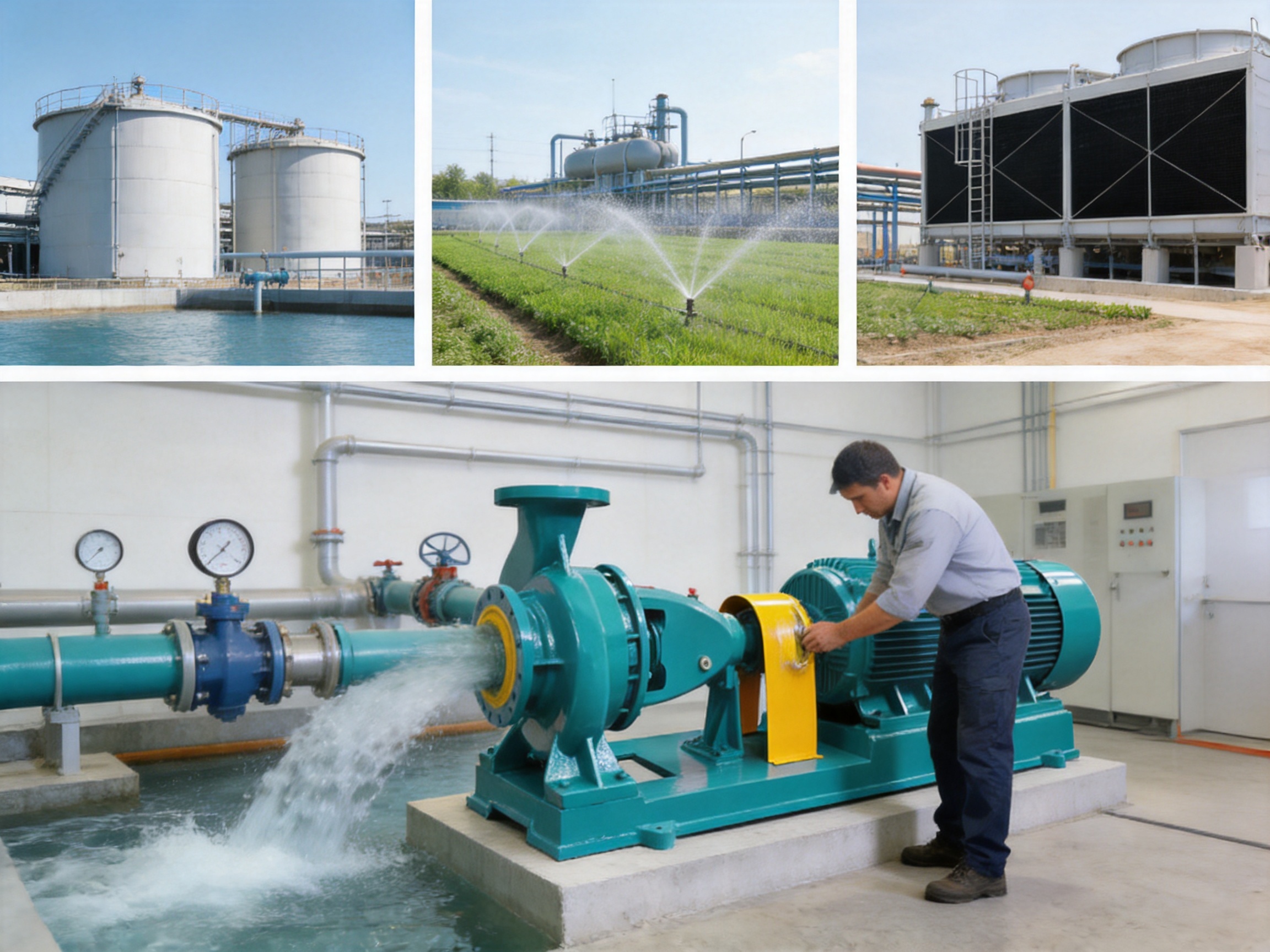
The IS Series low-maintenance single-stage end-suction centrifugal pump is designed for dependable clean-water transfer in industrial, municipal, agricultural, commercial, and general water-management applications. Combining a practical end-suction configuration with efficient hydraulic performance, robust construction, and simplified servicing, the series provides a flexible pumping solution for systems that require reliable flow, stable pressure, and controlled operating costs.
With motor powers from 0.22 kW to 110 kW, flow capabilities ranging from approximately 3.75 m³/h to 460 m³/h, and maximum heads from 4 m to 133 m, the IS Series covers a broad range of duties. Its available 2900 RPM and 1450 RPM operating options allow engineers and buyers to match pump speed, capacity, head, efficiency, noise level, and maintenance requirements to the specific application.
Unlike highly specialized pump designs intended for only one narrow duty, the IS Series is built around a versatile single-stage centrifugal platform. This makes it suitable for industrial water supply and drainage, municipal water management, agricultural irrigation, clean-liquid transfer, building services, and many other applications where a dependable general-purpose pump is required.
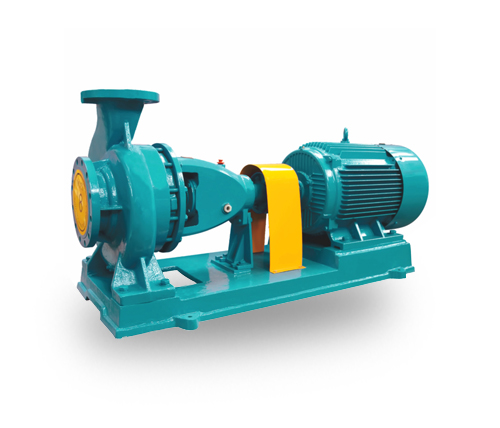
IS Series Low Maintenance Single Stage End Suction Centrifugal Pump
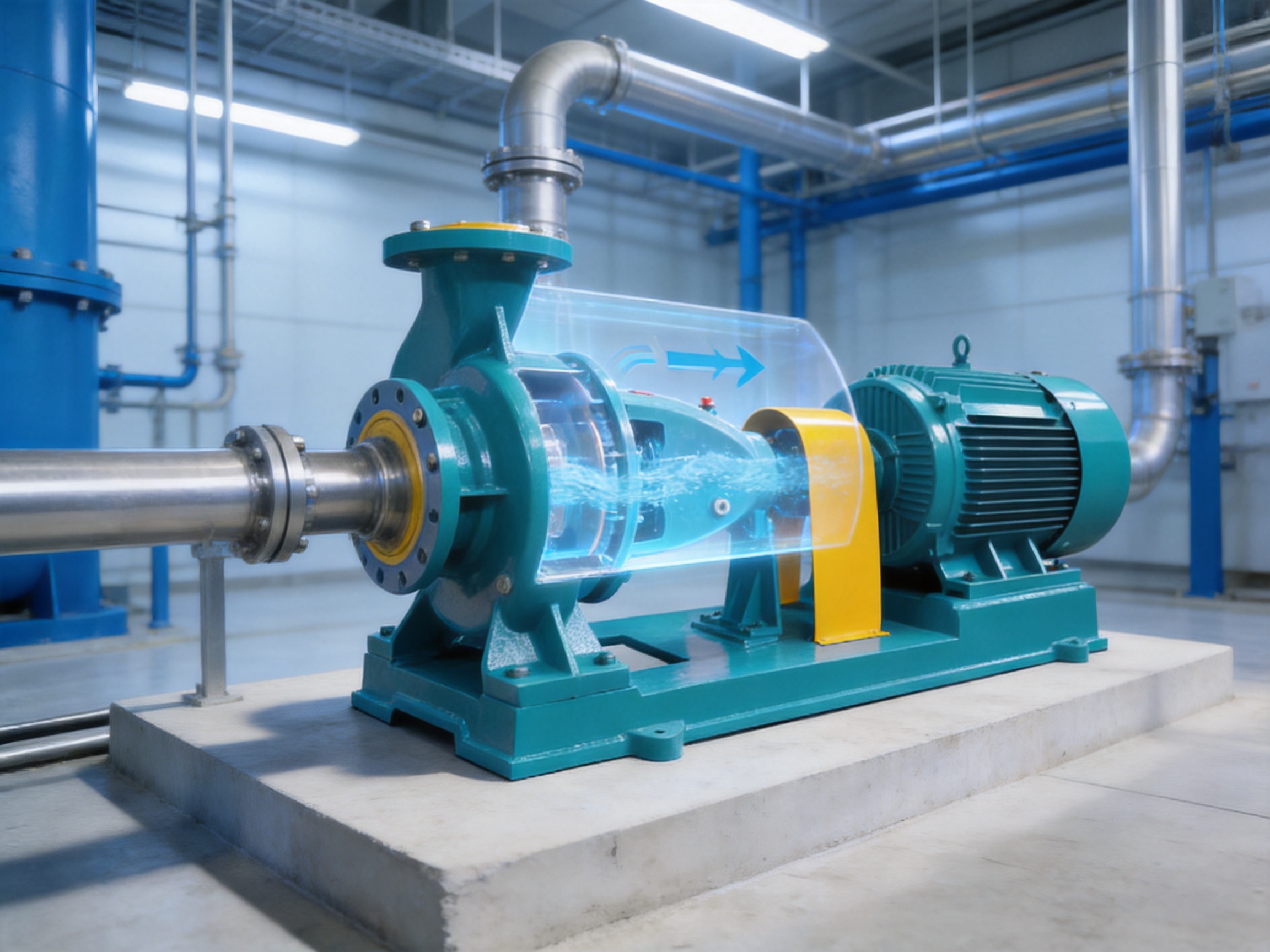
The IS Series is a horizontal, single-stage, end-suction centrifugal pump. In this configuration, liquid enters the pump axially through the suction connection and is accelerated by the rotating impeller. The liquid then moves outward through the impeller passages and into the pump casing, where part of the velocity energy is converted into pressure energy before the fluid leaves through the discharge outlet.
This arrangement has become one of the most widely used pump configurations in the world because it combines straightforward construction, accessible components, flexible installation, and efficient operation. The pump casing, cover, impeller, shaft, sealing elements, bearing assembly, and related components are arranged in a practical format that supports inspection and service without unnecessary complexity.
The IS Series was developed as an upgrade to traditional BA- and B-type pump designs. It retains the familiar advantages of conventional end-suction centrifugal pumps while improving hydraulic performance, operational flexibility, energy utilization, and maintenance convenience. The result is a modernized pump platform for customers who need dependable equipment without the cost and complexity of an excessively specialized system.
The series is intended primarily for clean water and liquids with physical and chemical properties similar to water. The final pump selection should consider liquid temperature, viscosity, solids content, corrosiveness, suction conditions, installation altitude, duty cycle, motor requirements, and applicable operating standards. Correct selection is essential for achieving the expected service life and hydraulic performance.
The broad technical range of the IS Series allows the same basic product family to serve small and large water systems. Low-power models can be used for relatively modest circulation, transfer, and irrigation requirements, while higher-power models are suitable for major industrial, municipal, agricultural, and commercial pumping duties.
Parameter |
IS Series Range |
Practical Significance |
Motor power |
0.22 kW to 110 kW |
Supports small, medium, and large installations |
Flow range |
Approximately 3.75 m³/h to 460 m³/h |
Suitable for low-volume transfer through high-capacity water movement |
Maximum head |
Approximately 4 m to 133 m |
Accommodates low-pressure circulation and higher-lift duties |
Operating speeds |
2900 RPM and 1450 RPM |
Provides flexibility in capacity, pressure, noise, and efficiency selection |
Suction diameter |
Approximately 50 mm to 200 mm |
Matches a wide variety of pipework and system layouts |
Pump type |
Single-stage end-suction centrifugal |
Offers a proven and service-friendly configuration |
Published performance values may vary according to the selected model, impeller diameter, rotational speed, operating point, and configuration. Some product data describes flow capability within a detailed range of approximately 36.3 m³/h to 400 m³/h and head capability up to approximately 125 m, while the broader series range extends to approximately 460 m³/h and 133 m. These figures should be understood as a model-family range rather than the performance of a single pump.
For an accurate selection, the required flow and total dynamic head should be identified first. The pump should then be selected so that the normal operating point is positioned in an efficient and stable region of the performance curve. A pump that is too large may consume unnecessary energy and operate away from its best efficiency point, while a pump that is too small may fail to meet system pressure or flow requirements.
The hydraulic efficiency of a centrifugal pump depends on the relationship between the impeller, casing, suction passage, discharge passage, rotational speed, and operating point. The IS Series uses a hydraulic design intended to provide an effective balance between flow delivery and pressure generation across a wide range of applications.
During operation, the impeller transfers mechanical energy from the motor to the liquid. Centrifugal force moves the liquid from the impeller eye toward the outer diameter. The pump casing collects the liquid and guides it toward the discharge outlet. A carefully matched hydraulic passage helps reduce unnecessary turbulence and supports stable performance.
Single-stage construction means that the pump uses one main impeller to generate the required pressure. Compared with multistage equipment, a single-stage pump generally has fewer hydraulic stages and fewer internal components. This can simplify inspection, reduce service complexity, and make replacement parts easier to manage.
The end-suction arrangement is particularly practical for systems where the suction pipe approaches the pump from the front or axial direction. It is commonly used in water-transfer systems, irrigation assemblies, cooling-water systems, industrial process services, and building utility installations. The standardized layout also makes the pump familiar to maintenance personnel in many industries.
Performance depends strongly on the system curve. The pump curve represents the head the pump can generate at different flow rates, while the system curve represents the pressure required by the pipework, valves, elevation changes, filters, fittings, and downstream equipment. The actual operating point is where these two curves intersect.
For this reason, pump selection should not be based on flow alone. Engineers should calculate static head, friction losses, required residual pressure, suction conditions, and expected future demand. Correct selection improves energy efficiency, reduces vibration, and helps prevent excessive wear of bearings, seals, and impeller passages.
One of the central advantages of the IS Series is its low-maintenance design. The pump is arranged around accessible and recognizable components, including the pump casing, pump cover, impeller, shaft, sealing ring, impeller nut, lock washer, muff, packing gland, packing ring, packing, and pendant bearing assembly.
A practical component layout helps maintenance teams identify wear items and perform inspections more efficiently. When service work is straightforward, the pump can spend more time in operation and less time awaiting complicated disassembly, diagnosis, or specialized intervention.
The pump casing and cover provide the main pressure-containing structure. The impeller is responsible for transferring energy to the liquid, while the shaft transmits mechanical power from the motor. Sealing components help control leakage around the shaft or other interfaces, and the bearing assembly supports smooth shaft rotation.
Because the pump uses a relatively uncomplicated single-stage structure, routine maintenance can focus on the components most likely to require attention during the service life of a centrifugal pump. These include seals, packing, bearings, gaskets, wear surfaces, coupling elements, and the impeller. Regular inspection can identify abnormal noise, vibration, leakage, overheating, or performance decline before these conditions become major failures.
Low maintenance does not mean maintenance-free operation. Every centrifugal pump requires proper installation, lubrication where applicable, alignment, clean operating conditions, and periodic inspection. The advantage of the IS Series is that these tasks are supported by a design that avoids unnecessary complexity and provides practical access to key components.
A pump that is easy to service offers several operational benefits. Maintenance personnel can complete inspections faster, spare-parts planning becomes more predictable, and training requirements are reduced. In facilities where multiple pumps are installed, the use of a standardized pump family can also simplify maintenance procedures across the site.
Shorter service activities can reduce production interruptions. This is especially important in municipal water systems, irrigation networks, cooling-water services, and industrial plants where a pump failure may affect several downstream processes. A low-maintenance design can therefore contribute to improved equipment availability and lower total ownership cost.
The use of corrosion-resistant materials or material options suited to the application can further extend service life. Material selection should always be matched to the pumped liquid and operating environment. Clean water, treated water, mildly corrosive liquids, and other fluids may require different material considerations for the casing, impeller, shaft, sealing components, and fasteners.
The IS Series offers several advantages over basic or outdated centrifugal pump alternatives. These advantages are not limited to initial purchase price. They include hydraulic flexibility, service accessibility, component familiarity, energy-conscious operation, and suitability for a broad range of systems.
A narrow pump range may force customers to use an oversized unit for a small duty or combine several pumps when one correctly selected unit would be sufficient. The IS Series provides a wide range of motor powers, flow rates, heads, suction diameters, and operating speeds. This supports more accurate selection and helps customers avoid unnecessary overcapacity.
Broad model coverage is also valuable for distributors, contractors, and system integrators. A single product family can address multiple customer requirements while reducing the need to manage unrelated pump designs. This simplifies product training, technical support, spare-parts planning, and project procurement.
Single-stage construction is advantageous when the required head can be achieved without multiple impeller stages. Compared with a more complicated multistage arrangement, a single-stage pump can provide easier access to internal components and fewer stage-specific parts. This can make inspection and repair more convenient.
The single-stage format is also well suited to general water-transfer duties where the system does not require extremely high pressure. It offers a sensible balance between mechanical simplicity and hydraulic capability, particularly in industrial supply, irrigation, drainage, and municipal water applications.
Energy consumption is a major part of the lifetime cost of a pump. The IS Series is engineered to consume less power while maintaining effective performance at the intended operating point. Hydraulic efficiency, motor matching, correct impeller selection, and suitable speed selection all contribute to controlling energy use.
Operating a pump near its best efficiency point is especially important. When the pump is correctly selected, hydraulic losses and recirculation can be reduced, and the motor is less likely to operate under inefficient conditions. A pump that delivers the required duty without excessive margin can help reduce long-term electricity costs.
Energy savings should be evaluated across the complete system. Pipe diameter, valve selection, filtration, control strategy, operating schedule, and elevation all influence the power required to move water. The IS Series provides a strong equipment foundation, but the best result is achieved when the pump is integrated into a well-designed hydraulic system.
Many facilities prefer equipment that can be maintained by their existing technical staff. The familiar end-suction format reduces the learning curve for operators and maintenance teams who already work with conventional centrifugal pumps. The pump’s accessible arrangement can support faster troubleshooting and more efficient replacement of service components.
This is a practical advantage over highly complex pump designs that may require specialized tools, extensive disassembly, or proprietary service procedures. For remote agricultural sites, small municipal facilities, and distributed industrial installations, service simplicity can be just as important as rated performance.
The availability of 2900 RPM and 1450 RPM options allows the pump to be matched to different operating priorities. Higher-speed models can provide strong pressure and compact equipment dimensions, while lower-speed options may be selected for applications that prioritize smoother operation, lower noise, reduced hydraulic stress, or different flow and head characteristics.
Speed selection must be based on the actual duty and system requirements. It affects pump head, flow, power consumption, vibration, noise, and suction performance. Selecting the correct speed at the beginning of a project can avoid later adjustments and improve the overall reliability of the installation.
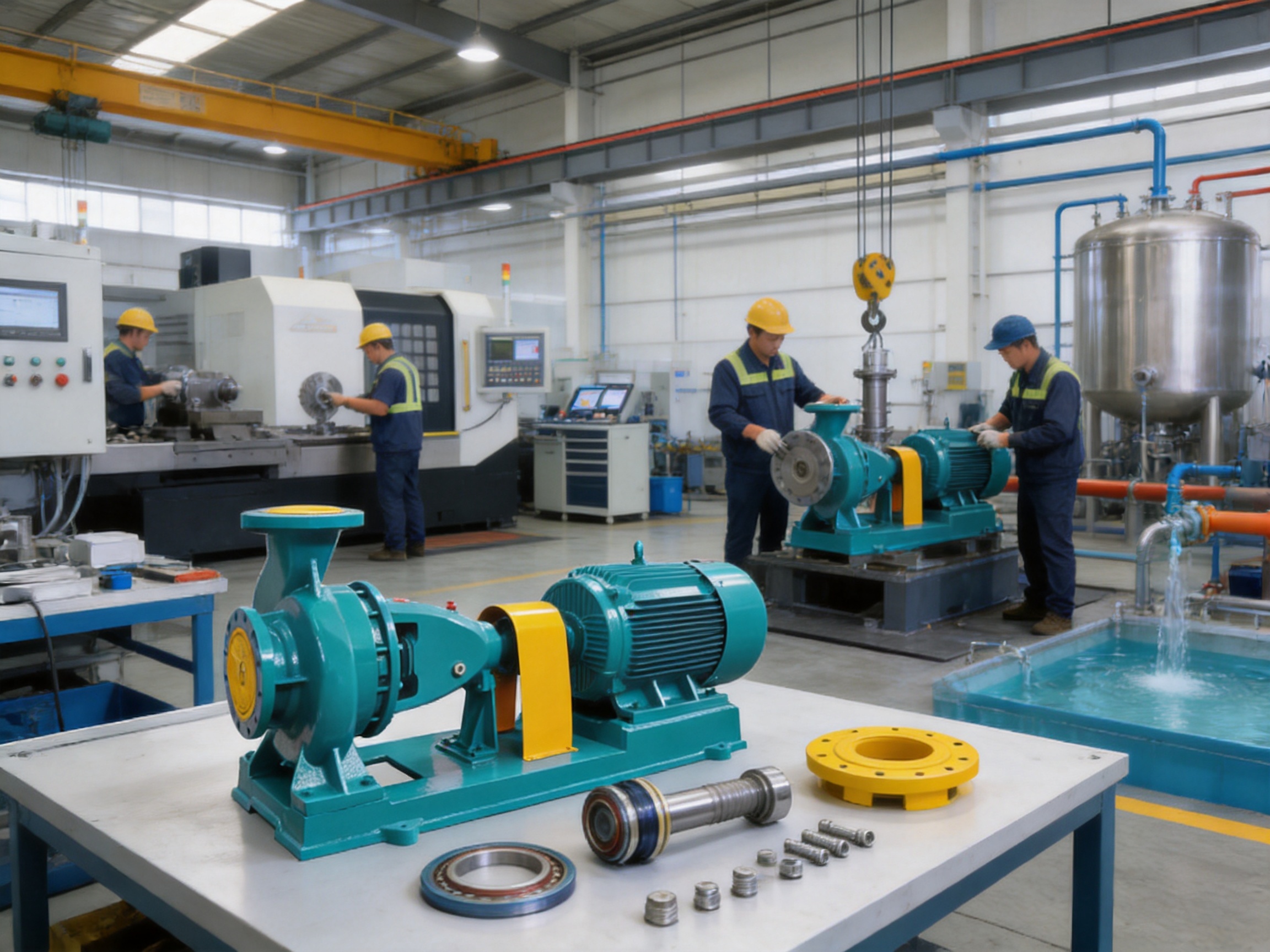
The IS Series is supported by an integrated manufacturing organization with experience in independent research and development, mass production, and international export. The manufacturer has operated since 2008 and has developed product capabilities across deep well pumps, submersible pumps, domestic booster pumps, circulation pumps, solar water pumps, intelligent booster pumps, and other water-pumping equipment.
This broader product background is valuable for the development of a general-purpose centrifugal pump. Experience with different hydraulic systems, motor designs, sealing arrangements, control technologies, and application environments helps a manufacturer understand how pump components perform in real installations.
Independent research and development enables the manufacturer to improve hydraulic passages, mechanical structures, materials, production methods, and product configurations in response to market requirements. Rather than relying only on a fixed legacy design, an organization with its own development capability can refine products for efficiency, reliability, maintainability, and application flexibility.
Mass-production experience also supports consistency. A pump may perform well in a single prototype, but commercial reliability depends on the ability to reproduce the design accurately across many production units. Controlled processes, repeatable assembly methods, inspection procedures, and component traceability all contribute to stable quality from one pump to the next.
The manufacturing process for a centrifugal pump normally begins with engineering design and material planning. Hydraulic components are selected according to the required flow, head, speed, and liquid characteristics. Mechanical parts are then manufactured or sourced according to defined dimensional and material requirements.
The pump casing and cover must provide reliable structural strength and dimensional accuracy. The impeller requires balanced geometry and consistent passage dimensions to support stable hydraulic performance. The shaft must maintain appropriate strength, surface quality, and alignment. Sealing and bearing components must be correctly matched to the rotating assembly.
Machining operations are important because small dimensional deviations can affect alignment, leakage, vibration, and efficiency. Critical mounting surfaces, shaft fits, seal locations, bearing seats, and coupling interfaces should be produced within appropriate tolerances. Accurate machining also improves interchangeability between compatible components.
Assembly is another key stage. The shaft, impeller, sealing parts, bearing assembly, casing, cover, and associated components must be installed in the correct sequence. Proper tightening, alignment, clearance control, and rotation checks help ensure that the finished unit operates smoothly.
Inspection and testing provide an important link between design intent and field performance. Depending on the model and order requirements, testing may include visual inspection, dimensional checks, insulation and electrical checks for motorized units, rotation verification, leakage inspection, vibration observation, and hydraulic performance testing.
A professional manufacturing system should also maintain clear documentation for specifications, production orders, inspection records, packing details, and export requirements. This is especially important for international customers purchasing pumps for projects with defined technical schedules and delivery milestones.
The manufacturer’s associated procurement and foreign-trade organizations provide additional support for overseas customers. Order tracking, procurement planning, cross-border delivery coordination, and export services can be valuable when pumps are purchased as part of a larger project or consolidated shipment.
International procurement involves more than producing the pump. Customers may require technical confirmation, model comparison, packaging coordination, spare-parts planning, documentation review, and delivery scheduling. An integrated supply structure helps reduce communication gaps between engineering, production, logistics, and the buyer.
For distributors and project contractors, this one-stop approach can improve purchasing efficiency. It allows buyers to evaluate several pump categories through one professional supply network, including centrifugal pumps, deep well pumps, submersible pumps, booster systems, circulation pumps, solar pumps, pump accessories, pipes, and valves.
The IS Series includes a defined component structure covering the main pressure, hydraulic, rotating, sealing, and support elements. Understanding these components helps users evaluate service requirements and select appropriate spare parts.
Number |
Component |
Primary Function |
1 |
Pump casing |
Contains and guides the pumped liquid |
2 |
Pump cover |
Closes the casing and supports the internal assembly |
3 |
Impeller |
Transfers mechanical energy to the liquid |
4 |
Shaft |
Transmits torque from the motor to the impeller |
5 |
Sealing ring |
Helps control internal leakage and maintain hydraulic efficiency |
6 |
Impeller nut |
Secures the impeller on the shaft |
7 |
Lock washer |
Helps retain and secure the rotating assembly |
8 |
Muff |
Supports the relevant shaft or sealing arrangement |
9 |
Packing gland |
Compresses and retains packing material |
10 |
Packing ring |
Supports the packing arrangement |
11 |
Packing |
Reduces leakage around the shaft area |
12 |
Pendant bearing assembly |
Supports shaft rotation and contributes to mechanical stability |
Material selection should be determined by the pumped liquid, temperature, pressure, installation environment, and expected operating life. Corrosion resistance is a stated design objective of the series, helping the pump operate in varied environments. However, corrosion resistance is application-specific. A liquid containing salts, chemicals, abrasive particles, or unusual contaminants may require a particular material combination or special seal arrangement.
Users should provide complete fluid information before ordering. Important data includes liquid name, temperature, concentration, pH value, viscosity, density, suspended solids, and whether the liquid is chemically aggressive. This information allows the pump configuration to be reviewed correctly rather than relying only on the general description of clean-liquid service.
Industrial plants use centrifugal pumps for raw-water transfer, process-water supply, equipment cooling, utility-water distribution, drainage, and general circulation. The IS Series can be applied where clean or clean-like liquids must be moved between tanks, pipelines, treatment sections, and production areas.
Its broad flow and head range allows the same pump family to serve both small utility systems and larger plant networks. The low-maintenance structure is useful in facilities where maintenance windows are limited and equipment availability affects production continuity.
Municipal water systems require pumps that can operate reliably over long periods and support predictable maintenance. The IS Series may be used for water transfer, drainage, distribution support, treatment-plant services, and other clean-water duties within municipal infrastructure.
Municipal installations often contain multiple pumps and extensive pipe networks. A standardized end-suction platform can simplify spare-parts management and maintenance training. The selected model should be matched to the actual demand profile, including peak flow, average flow, standby requirements, and future expansion.
Irrigation systems need dependable water movement across fields, greenhouses, orchards, and agricultural facilities. The IS Series can support water transfer from reservoirs, storage tanks, canals, wells, or treatment systems when the liquid conditions are appropriate for the pump.
Available speed and capacity options allow the pump to be selected for different irrigation zones. A properly sized unit can help reduce wasted energy and maintain stable pressure at sprinklers, drip-irrigation equipment, filtration units, or distribution manifolds.
In agricultural environments, installation should protect the pump from excessive sediment, debris, flooding, and unstable foundations. Suction strainers and filtration may be required depending on the water source. The pump should not be operated outside its intended liquid and suction conditions.
The IS Series is suitable for transporting clean water and similar liquids. Common duties may include tank filling, water transfer between process stages, cooling-water circulation, utility-water distribution, and general fluid movement in commercial or industrial facilities.
Clean-liquid service helps preserve hydraulic passages, seals, and impeller surfaces. When the liquid contains abrasive solids or fibrous materials, a different pump design may be more suitable. Technical review should be completed before applying the IS Series to any unusual fluid.
Commercial buildings, institutional facilities, and utility plants may use end-suction centrifugal pumps for water transfer, cooling systems, heating systems, general circulation, and drainage. The compact and familiar configuration can be integrated into mechanical rooms and packaged pumping systems.
Noise, vibration, access space, and maintenance scheduling are important considerations in these installations. The lower-speed 1450 RPM option may be considered where the system benefits from smoother operation or lower rotational speed, subject to hydraulic selection and motor compatibility.
Correct installation is essential for achieving the performance and service life expected from the IS Series. The pump should be installed on a rigid, level foundation capable of supporting the complete pump and motor assembly. The foundation should minimize movement and help preserve alignment during operation.
Suction piping should be designed to minimize air pockets, sharp flow disturbances, and unnecessary friction losses. The pipe diameter should be appropriate for the required flow, and the suction line should be as short and direct as practical. Any valves, strainers, reducers, or fittings should be selected and positioned to support stable flow into the pump.
Air entering the suction line can cause unstable operation, loss of prime, noise, vibration, and reduced performance. All suction-side joints should be sealed properly. The suction pipe should be supported independently so that its weight does not impose stress on the pump casing or flanges.
Discharge piping should also be supported independently. A suitable valve may be installed to regulate flow and isolate the pump for maintenance. The system should include appropriate pressure instrumentation where necessary, allowing operators to monitor performance and identify changes in operating conditions.
Alignment between the pump and motor is important for minimizing vibration and mechanical wear. Coupling alignment should be checked after installation and again after the foundation, pipework, or equipment has settled. Improper alignment can increase bearing loads, damage seals, and shorten the life of the shaft and coupling.
The pump should be filled and primed according to the installation arrangement before starting. Dry running can damage sealing components and may cause rapid overheating. The correct direction of rotation should be verified before extended operation.
Electrical installation should be performed by qualified personnel. Motor protection, overload protection, grounding, voltage compatibility, cable sizing, and control-panel requirements should be reviewed before commissioning. Local electrical codes and site safety procedures must be followed.
Before starting the pump, operators should confirm that the pump is correctly installed, the suction supply is available, the pump is filled with liquid, valves are in the appropriate position, and the motor is ready for operation. Unusual leakage, abnormal noise, excessive vibration, or unexpected pressure should be investigated immediately.
During normal operation, operators should monitor flow, discharge pressure, motor current, bearing temperature where applicable, seal or packing leakage, vibration, and sound. A gradual change in any of these indicators may signal wear, blockage, air ingress, misalignment, cavitation, or a change in system resistance.
Packing arrangements normally require appropriate adjustment rather than complete elimination of leakage. Excessive tightening may generate heat and accelerate shaft or sleeve wear, while insufficient tightening may produce unacceptable leakage. The correct procedure depends on the actual packing arrangement and maintenance instructions for the selected model.
Where mechanical seals or other specialized sealing arrangements are supplied, they should be handled carefully and replaced with compatible parts. Seal faces must remain clean and undamaged. The seal environment should be suitable for the pumped liquid and operating temperature.
Bearings should be inspected and lubricated according to the applicable maintenance schedule. Over-lubrication can be as harmful as insufficient lubrication. Any bearing noise, overheating, or increased vibration should be treated as a reason for investigation.
Impeller performance may decline if the impeller becomes worn, blocked, corroded, or damaged. A reduction in pressure or flow may result from impeller wear, internal leakage, an obstructed suction line, incorrect rotation, excessive system resistance, or operation outside the intended performance range.
Maintenance records should include operating hours, inspection dates, replaced components, measured vibration, pressure readings, motor current, and observed problems. A planned maintenance program is generally more economical than waiting for a failure that interrupts the entire water system.
Model selection should begin with the required flow rate. The flow may be expressed in cubic meters per hour, liters per second, or another unit, but all values should be converted consistently. If demand varies significantly, the designer should identify normal, minimum, and maximum operating conditions.
The next step is calculating total dynamic head. This includes static elevation, pipe friction, fittings, valves, filters, heat exchangers, pressure requirements, and any other resistance in the system. Selecting a pump based only on vertical lift can result in insufficient capacity because friction losses may represent a significant part of total head.
Suction conditions must also be reviewed. The available net positive suction head should exceed the pump’s required value with a suitable margin. Poor suction conditions can cause cavitation, which may create a characteristic crackling sound, vibration, surface damage to the impeller, and rapid performance deterioration.
Motor power should be selected based on the pump’s hydraulic duty, liquid density, efficiency, starting conditions, and operating margin. Oversizing the motor unnecessarily can increase purchase and operating costs, while undersizing may cause overload and unreliable operation.
Speed selection should consider the desired pressure and flow, noise requirements, mechanical conditions, suction performance, and available electrical supply. The 2900 RPM and 1450 RPM options offer different hydraulic characteristics and should not be treated as interchangeable without reviewing the pump curve.
Pipe diameter and connection dimensions should be checked against the existing system. The stated suction diameter range of approximately 50 mm to 200 mm provides flexibility, but the exact selected model must match the planned pipework and installation space.
Finally, the liquid and environmental conditions should be confirmed. Temperature, corrosiveness, solids, ambient conditions, outdoor exposure, and duty cycle can affect material and sealing requirements. A complete technical inquiry should include the duty point, liquid information, power supply, installation arrangement, and required delivery scope.
The purchase price is only one part of a pump’s total cost. Electricity, maintenance labor, replacement parts, downtime, system efficiency, and service life may account for a much larger share of the long-term expense. The IS Series is designed to support lower total ownership cost through efficient operation and practical maintenance.
Energy is often the largest operating expense for pumps that run continuously or for many hours each year. Correct hydraulic selection is therefore essential. A pump operating near its efficient range can reduce energy waste compared with an oversized or poorly matched pump.
Maintenance cost is influenced by component accessibility, service intervals, replacement-part availability, labor requirements, and the frequency of unexpected failures. The straightforward single-stage design can help make routine work more manageable, particularly where local maintenance teams service several types of equipment.
Downtime cost varies according to the application. In an irrigation system, a pump failure may interrupt watering during a critical period. In a municipal system, it may reduce water-delivery capacity. In an industrial plant, it may stop a cooling or process-water circuit. A dependable, service-friendly pump can reduce the operational consequences of these events.
Standardization can create additional savings. When a company uses related pump models across several sites, technicians become more familiar with the equipment, spare parts can be consolidated, and procurement can be simplified. The IS Series is well suited to this type of fleet-management approach because it covers a wide range of general water duties.
International customers often need more than a pump with a specified flow and head. They require dependable communication, coordinated production, export documentation, suitable packaging, delivery planning, and technical assistance during selection. An integrated manufacturer and export service structure can help address these requirements.
The manufacturer’s experience in independent development, mass production, and global export supports the needs of distributors, contractors, engineering companies, and industrial buyers. Its broader portfolio also allows customers to source different pump categories through one supply relationship.
For projects involving several pump types, a unified supplier may simplify technical coordination. A project could require end-suction centrifugal pumps, submersible pumps, deep well pumps, booster systems, circulation pumps, solar pumps, valves, pipes, or pump accessories. Consolidating procurement can reduce administrative effort and improve communication between the buyer and supplier.
International buyers should still define their technical requirements clearly. Purchase documents should identify the pump model, duty point, motor power, voltage, frequency, connection standard, materials, seal arrangement, accessories, packaging requirements, inspection expectations, and spare-parts needs. Clear specifications reduce the possibility of misunderstanding during production.
The IS Series can operate as an individual pump or as part of a larger water system. In a transfer installation, it may move water from one tank to another. In an irrigation system, it may feed a distribution header. In an industrial plant, it may supply cooling water or process utilities. In a municipal installation, it may support treatment or distribution infrastructure.
System integration should account for control requirements. Some applications operate at a fixed speed and use valves or scheduled operation to manage demand. Other systems may use variable-speed control, pressure sensors, level controls, or automatic sequencing with standby pumps. The control strategy should be selected according to the system’s flow variation and reliability requirements.
Parallel operation may be considered where demand changes significantly or where redundancy is required. If multiple pumps are installed, the pumps should be selected and controlled so that they operate stably across the expected combined performance range. Check valves, isolation valves, control logic, and starting sequences should be reviewed as part of the complete design.
Vibration isolation may be useful in sensitive locations. The type of foundation, coupling, pipe support, and flexible connection can influence operating noise and vibration. These details should be addressed during design rather than after commissioning.
The pump should also be protected against abnormal conditions. Depending on the installation, protection may include dry-run protection, overload protection, high-temperature monitoring, low-level switches, pressure controls, flow verification, and emergency shutdown functions. These controls can help prevent damage when the water supply or system conditions change unexpectedly.
Reliable pump manufacturing depends on the combination of sound engineering, suitable materials, controlled production, accurate assembly, inspection, and responsive technical support. No single feature can guarantee reliability by itself. The complete process must be managed from product design through delivery and after-sales service.
The manufacturer’s investment in new energy and intelligent technology since 2018 demonstrates an effort to expand beyond traditional pump categories. Although the IS Series is a conventional centrifugal pump, this broader innovation environment can support continued improvement in energy efficiency, controls, monitoring, and system integration.
Experience with solar water pumps and intelligent booster pumps is particularly relevant to modern water systems, which increasingly require energy optimization, automatic pressure management, remote monitoring, and flexible operation. These technologies may be integrated into broader product strategies even when a customer selects a fixed-speed end-suction pump.
Continuous improvement should be guided by field feedback. Pump performance in real installations can reveal opportunities to improve sealing, materials, hydraulic passages, packaging, documentation, and service procedures. A manufacturer with global customers receives application feedback from different climates, industries, water sources, and operating patterns.
For buyers, reliability should be evaluated through a combination of technical data, manufacturing capability, quality procedures, application experience, service support, and spare-parts planning. The IS Series provides a practical foundation for this evaluation because its design is clear, its application range is broad, and its component arrangement is familiar to many pump professionals.
The IS Series is a single-stage, end-suction centrifugal pump designed mainly for clean water and liquids with similar physical and chemical properties. It is suitable for general water supply, drainage, irrigation, municipal services, industrial utility systems, and clean-liquid transfer.
The stated motor power range is approximately 0.22 kW to 110 kW. The correct motor size depends on the selected pump model, flow, head, liquid properties, efficiency, and operating conditions.
The overall product-family range is approximately 3.75 m³/h to 460 m³/h for flow and approximately 4 m to 133 m for maximum head. Detailed model data may describe a narrower performance range, such as approximately 36.3 m³/h to 400 m³/h and head up to approximately 125 m. The exact values depend on the selected model and operating point.
The series is available in 2900 RPM and 1450 RPM options. Speed selection affects flow, head, motor power, noise, vibration, suction performance, and efficiency, so it should be based on the complete system requirement.
The series is primarily intended for clean water and similar liquids. Water containing abrasive solids, large debris, fibrous material, or aggressive chemicals may require another pump type or a specially selected material and sealing configuration. The liquid should be reviewed before purchase.
A single-stage pump is often preferred when the required head can be achieved with one impeller. It generally offers a simpler internal arrangement, easier maintenance, and fewer stage-specific components. A multistage design may be more suitable when a significantly higher pressure is required.
Maintenance normally includes checking leakage, vibration, noise, bearing condition, alignment, coupling condition, packing or seal performance, impeller condition, and electrical operation. The exact schedule should be based on operating hours, liquid conditions, duty cycle, and the instructions for the selected configuration.
Yes. The IS Series can be used for agricultural irrigation when the water quality and required flow and head are suitable. The system should include appropriate filtration or straining if the water source contains sediment, debris, or other contaminants.
Selection should be based on required flow, total dynamic head, suction conditions, liquid characteristics, motor power, speed, pipe dimensions, electrical supply, operating schedule, and installation environment. A complete duty point should be provided for technical confirmation.
No. Low maintenance means that the design is intended to simplify routine inspection and servicing. Correct installation, alignment, lubrication, sealing, priming, monitoring, and scheduled maintenance remain necessary for safe and reliable operation.
Yes. Depending on the selected motor and control arrangement, the pump may be integrated with pressure controls, level controls, overload protection, dry-run protection, variable-speed drives, or automatic sequencing. The control system should be designed according to the application.
Buyers should provide the required flow, total head, liquid type, liquid temperature, solids content, installation arrangement, motor voltage, frequency, operating speed preference, connection requirements, quantity, and any documentation or inspection requirements.
The IS Series low-maintenance single-stage end-suction centrifugal pump is a versatile solution for clean-water movement across industrial, municipal, agricultural, commercial, and general utility applications. Its broad technical range, practical construction, accessible components, and available speed options make it suitable for both standard and customized water-system requirements.
Compared with basic conventional alternatives, the series offers a stronger combination of hydraulic flexibility, energy-conscious operation, service simplicity, and model coverage. The single-stage end-suction format remains familiar to maintenance teams, while the upgraded design supports modern expectations for efficiency, reliability, corrosion resistance, and reduced downtime.
The product is also supported by a manufacturing organization with experience in research and development, mass production, international export, and a broad portfolio of water-pumping technologies. This combination gives customers access to both a proven pump configuration and a supplier capable of supporting wider procurement and engineering needs.
To achieve the best result, the pump must be selected according to the complete duty point and installed as part of a properly designed hydraulic system. When correctly matched to the flow, head, liquid, speed, motor, and operating environment, the IS Series can provide dependable service, manageable maintenance, and efficient long-term water movement.
1. Manufacturer-provided IS Series product specifications and performance information.
2. Manufacturer-provided IS Series component and materials table.
3. General principles of centrifugal pump selection, installation, operation, and maintenance.
4. Hydraulic engineering practices for clean-water supply, drainage, irrigation, and municipal water systems.
5. Industrial guidance concerning pump alignment, suction conditions, cavitation prevention, bearing inspection, and mechanical sealing.
edwina@edwin-pump.com
+86-13586290903 (WhatsApp)
Xuri Gongliang Cutting Tool Entrepreneurship Park, Wenqiao Town, Wenling City, Taizhou City, Zhejiang Province, China

High Performance Smart Pump Factory


 English