edwina@edwin-pump.com

View All Products
en
Water systems depend on stable pressure, dependable switching, and accurate control. Whether a pump is installed in a household water-supply system, a commercial building, an irrigation network, a filtration installation, or an industrial utility line, the pressure-control component has a direct effect on operating efficiency and equipment protection. A pressure switch is responsible for monitoring hydraulic pressure and controlling the electrical operation of the pump. When properly selected and adjusted, it helps the pump start when pressure falls and stop when the required pressure is restored.
The ERS-2.5 Series Silver Plated Contact Sealed Case Pressure Switch for Water Systems is designed for this essential function. It combines a sealed protective case, silver-plated electrical contacts, configurable pressure settings, and compatibility with common hydraulic connections. The product is available with rated currents of 4.0 A and 10.0 A, a rated voltage range of 110–240 V, and a power frequency of 50/60 Hz. These specifications make it suitable for a broad range of water-pump control applications.
Unlike a basic pressure-control component that may offer limited adjustment or insufficient environmental protection, this series is developed as a professional mechanical pressure controller for demanding water-system use. Its construction focuses on reliable switching, practical installation, flexible configuration, and long-term serviceability. The sealed case helps shield the internal mechanism from external moisture and contaminants, while the silver-plated contact is intended to support stable electrical conduction during repeated pump-starting and pump-stopping cycles.
This article examines the product’s operating role, technical characteristics, application advantages, installation considerations, quality strengths, manufacturing capabilities, customization options, and suitability for international water-system projects. It also explains how a specialized pump manufacturer can support the pressure switch with coordinated product development, production control, inspection, order management, and global supply services.
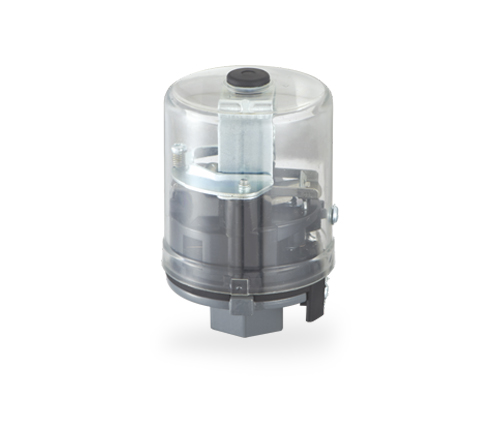
ERS-2.5 Series Silver Plated Contact Sealed Case Pressure Switch for Water Systems
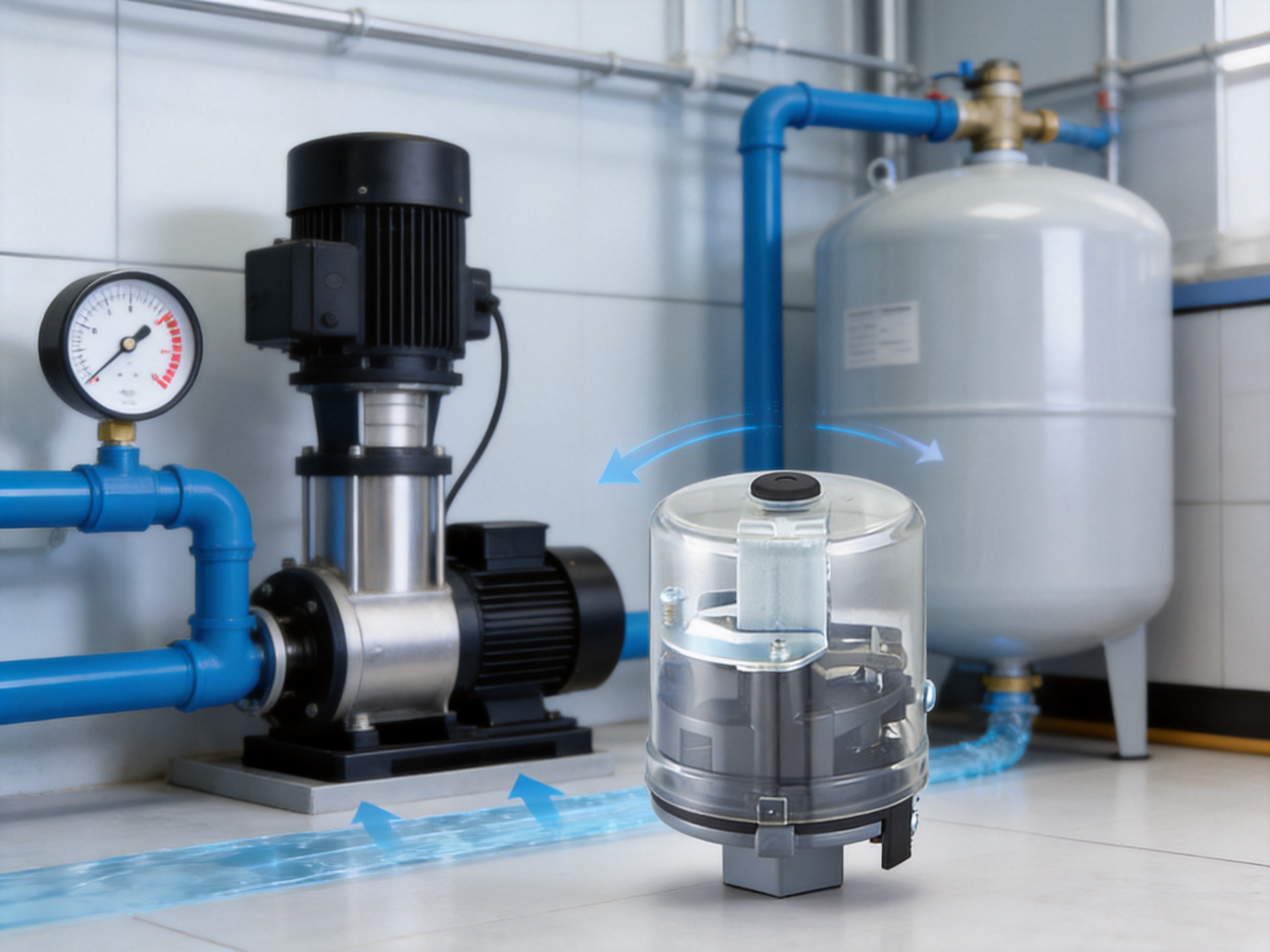
A water pump does not normally need to run continuously. Continuous operation can increase energy consumption, accelerate mechanical wear, and create unnecessary pressure in pipes, tanks, and connected equipment. A pressure switch provides an automatic control point between the hydraulic system and the pump motor. It responds to pressure changes and sends an electrical signal that starts or stops the pump according to preset limits.
When water is consumed, pressure in the system gradually decreases. Once the pressure reaches the configured cut-in value, the pressure switch closes its electrical circuit and allows the pump to start. As the pump supplies water and pressure rises, the switch remains engaged until the cut-out value is reached. At that point, it interrupts the pump circuit and stops the motor. This basic sequence gives the water system automatic pressure maintenance without requiring constant manual operation.
The difference between the cut-in and cut-out pressures is commonly called the pressure differential. A carefully selected differential prevents excessive cycling while ensuring that users receive an adequate water supply. The ERS-2.5 Series supports pressure settings according to customer requirements, with a stated pressure range of 1.1–1.8 bar according to requirements. Its listed minimum cut-in value is 0.5 bar, and its maximum cut-out value is 3.5 bar.
Pressure control is particularly important in systems that include storage tanks, booster pumps, filtration units, domestic water outlets, irrigation equipment, and other pressure-sensitive components. If the pump starts too late, the system may deliver insufficient water pressure. If it stops too late, the pump may consume unnecessary power or create excessive pressure. A correctly adjusted pressure switch creates a balanced operating cycle.
The ERS-2.5 Series is designed to automatically start and stop the water pump according to configured pressure settings. This feature improves user convenience because the pump does not need to be switched manually every time water is required. It also supports a more orderly operating pattern for the pump and can help reduce unnecessary running time.
In a domestic booster system, for example, opening a faucet causes system pressure to fall. The pressure switch detects the reduction and activates the pump. When the faucet is closed and the pressure rises again, the switch disconnects the pump. In an irrigation system, the same principle can be used to respond to water demand from a valve or distribution line. In a commercial water system, the switch can provide straightforward mechanical control for a pump serving a tank, building, or auxiliary supply line.
The product belongs to the mechanical pressure controller category. Its hydraulic sensing function responds to pressure changes, while its electrical contacts control the pump circuit. This arrangement provides a direct and practical solution for systems that need automatic control without relying on a complex digital controller.
Mechanical pressure switches are valued for their clear operating principle, relatively simple service requirements, and compatibility with many conventional pump installations. The ERS-2.5 Series adds a sealed case and silver-plated contact structure to improve protection and electrical reliability within its intended operating conditions.
The product is engineered around several features that matter to pump installers, system designers, distributors, and maintenance teams. These features include a sealed case, silver-plated contact, multiple current ratings, broad voltage compatibility, flexible hydraulic connection options, adjustable pressure settings, and a compact mechanical-control format.
The electrical contact is silver plated. Silver is widely used in electrical switching applications because it offers excellent electrical conductivity. In a pressure switch, the contact must repeatedly open and close as the pump responds to changing water demand. A conductive contact helps support efficient current transfer and stable switching performance.
The silver-plated design is especially relevant for pump systems that experience frequent operating cycles. Every start and stop places electrical and mechanical demands on the switching assembly. A properly manufactured contact can help provide consistent operation during these repeated cycles. The actual service life of any pressure switch will depend on the connected motor, current, switching frequency, installation quality, and operating environment, but the contact material is an important part of the product’s reliability design.
The contact and operating mechanism are enclosed within a sealed case. Water-system components may be installed in pump rooms, utility areas, equipment cabinets, plant rooms, or other locations where humidity, splashing, dust, and environmental contamination may be present. A protective case helps reduce the exposure of internal components to external conditions.
The product has an IP20 protection class. This rating should be considered carefully during system design. IP20 provides protection against solid objects of a specified size but does not represent water-ingress protection. The switch should therefore be installed in a suitable location and protected from direct water spray, immersion, condensation, and other conditions outside its rated application. The sealed case is a construction feature that supports internal protection, while the complete installation must still follow appropriate electrical and environmental practices.
The ERS-2.5 Series is specified for 110–240 V operation and 50/60 Hz power frequency. This broad rated-voltage range supports use in different electrical markets and helps distributors serve customers with varied regional power standards. Before installation, the actual supply voltage, motor type, wiring configuration, and applicable local electrical requirements must be confirmed.
A pressure switch should never be selected only by voltage. The installer must also verify the motor’s rated current, starting characteristics, control method, system pressure, and the need for additional motor protection. The product is offered in rated-current versions of 4.0 A and 10.0 A. Selection between these options should be based on the pump motor and the complete electrical design.
Providing 4.0 A and 10.0 A current options gives the product practical flexibility for different pump sizes and control requirements. A lower-current version may be suitable for smaller water pumps, while the higher-current version can serve applications with greater electrical demand within its specified limits.
Motor starting current can be higher than normal running current. For this reason, the rated current of the pressure switch must be evaluated in relation to the motor’s starting behavior and the manufacturer’s electrical instructions. In applications that exceed the direct-switching capacity, an appropriate relay, contactor, overload protector, or other control device may be required. The pressure switch can then be used as the control signal rather than as the direct switching device for the motor.
The product supports hydraulic connection options including a 1/4-inch male connection and a 3/8-inch female connection. The technical information also lists female screw sizes of 1/4 inch and 3/8 inch, with hydraulic connections available according to customer needs. This flexibility helps the pressure switch fit different piping layouts and installation preferences.
Connection selection should match the pump outlet, manifold, tank fitting, pipe thread standard, and sealing method. Thread compatibility is essential. Installers should avoid forcing mismatched threads, over-tightening the connection, or applying sealing material in a way that blocks the pressure-sensing passage. A clean, correctly sealed hydraulic connection is necessary for accurate pressure response.
The pressure setting can be customized according to customer requirements. This is an important advantage because water systems do not all operate at the same pressure. A small household booster installation, an irrigation line, and a commercial water-supply system may require different start and stop values.
Customization allows distributors and system integrators to order pressure switches that are closer to the intended application. It can reduce field adjustment work and help maintain consistency across a larger project. Even when factory settings are requested, the installer should verify actual system pressure after installation and confirm that the pump, tank, pipes, valves, and outlets operate within their permitted limits.
The following table summarizes the principal technical data available for the ERS-2.5 Series pressure switch. These values should be reviewed together with the pump motor data, system design, installation environment, and applicable electrical requirements.
| Technical Item | Specification |
|---|---|
| Product type | Mechanical pressure controller |
| Application | Water systems and pump control |
| Rated voltage | 110–240 V |
| Power frequency | 50/60 Hz |
| Rated current options | 4.0 A / 10.0 A |
| Minimum cut-in pressure | 0.5 bar |
| Maximum cut-out pressure | 3.5 bar |
| Typical pressure range | 1.1–1.8 bar, according to customer requirements |
| Base materials | Aluminum or plastic |
| Contact arrangement | Single contact |
| Hydraulic connection options | 1/4-inch male and 3/8-inch female options |
| Female screw sizes | 1/4 inch and 3/8 inch |
| Protection class | IP20 |
| Maximum working temperature | 55°C |
| Warranty | One year |
Technical specifications should not be interpreted in isolation. The listed current rating indicates the intended switching capacity under appropriate conditions, but the actual motor circuit may require additional protection. Similarly, the maximum working temperature applies to the product’s operating environment and should not be confused with the temperature of the pumped water unless otherwise specified.
Many pressure switches are available in the water-pump market, but their practical value depends on the combination of electrical materials, pressure adjustment, protection, connection compatibility, manufacturing consistency, and after-sales support. The ERS-2.5 Series offers several characteristics that distinguish it from a basic, minimally configured pressure controller.
A silver-plated contact provides a higher-value contact material than an ordinary untreated contact. In repeated switching service, contact quality affects electrical stability, heat generation, and resistance to performance deterioration. The silver-plated structure is therefore a meaningful advantage for pump systems that operate regularly throughout the day.
Although contact material alone cannot guarantee performance in every application, it demonstrates that the product has been designed with the electrical switching function in mind. This is important because a pressure switch is not merely a hydraulic sensor; it is also part of the pump’s electrical control circuit.
The sealed case offers a more protected internal arrangement than an exposed or loosely covered mechanism. Water-system installations often involve humidity and environmental contamination. Protecting the contact and pressure mechanism helps preserve the intended operating structure and reduces the chance that external conditions will interfere with normal movement.
The IP20 rating establishes the boundary of use and encourages correct installation. Compared with an unprotected component, a pressure switch with a dedicated case is easier to integrate into a professional control assembly, provided it is installed away from direct water exposure and within the stated environmental limits.
The availability of customized pressure settings is a strong practical advantage. A standard product with one fixed setting may require extensive adjustment or may not match the system’s operating requirements. The ERS-2.5 Series can be configured according to customer needs, including hydraulic connection options and pressure settings.
This feature is valuable for original equipment manufacturers, pump assemblers, project contractors, and distributors. It allows a single product family to support several water-system designs while retaining a consistent sourcing relationship.
The 110–240 V, 50/60 Hz rating makes the pressure switch adaptable to different market requirements. International pump distributors often serve regions with different electrical standards. A product that supports a broad voltage and frequency range can simplify product planning, subject to confirmation of local requirements and the connected motor’s specifications.
The product is specifically designed for water-system pressure control rather than general-purpose switching. Its stated applications include pumps, tanks, and filtration systems. This specialization helps align the product with the practical needs of water-pump installers and system designers.
A pressure controller intended for water systems must respond predictably to hydraulic pressure, provide suitable connection options, withstand repeated cycling, and operate within common pump-control arrangements. The ERS-2.5 Series addresses these requirements in a compact mechanical product.
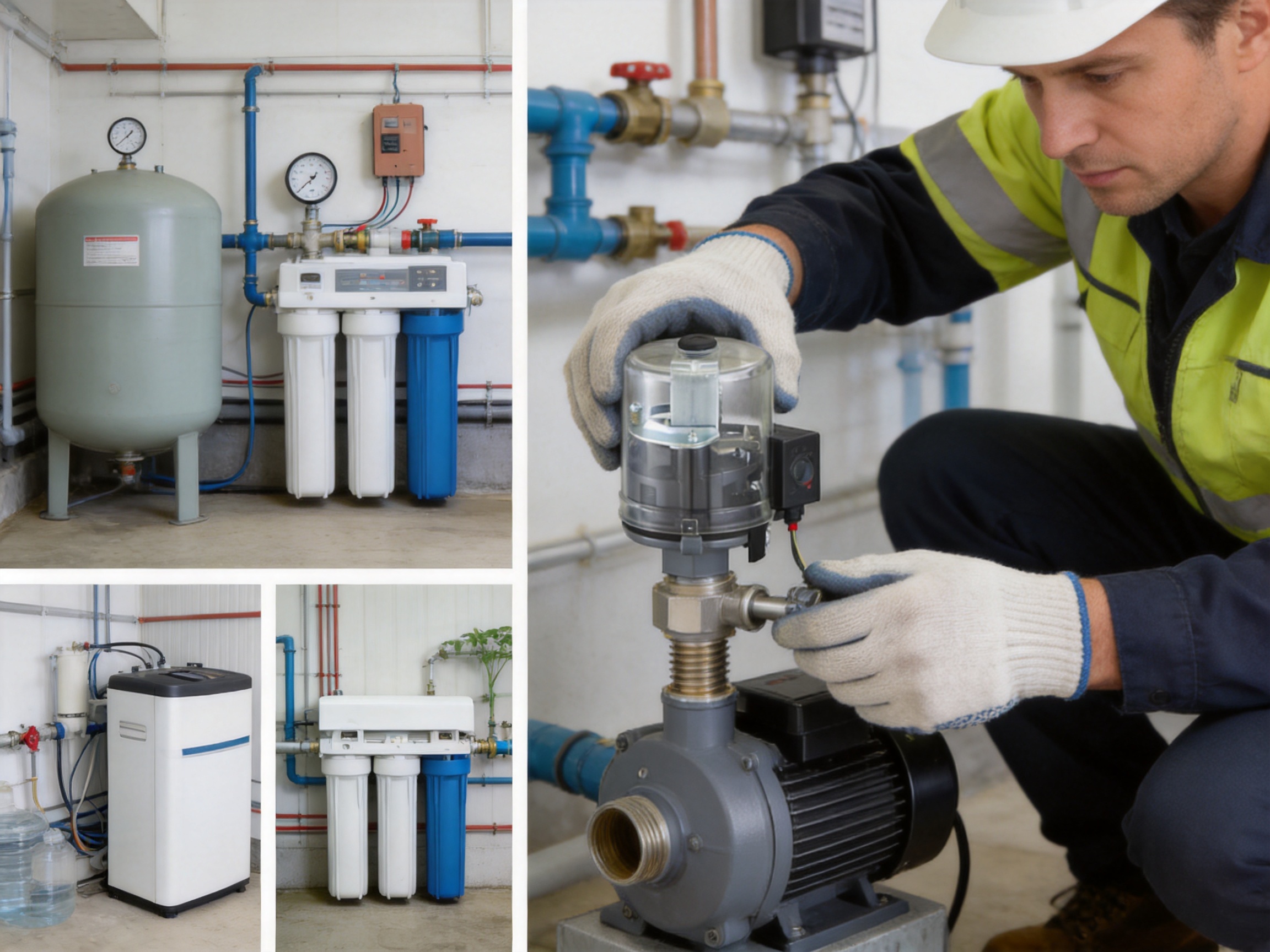
Domestic booster systems are used to improve water pressure in houses, apartments, small buildings, and private water-supply installations. In these applications, users generally expect the pump to start automatically when a faucet or shower is opened and stop when demand ends.
The ERS-2.5 Series can be used as a pressure-control component in such systems when the pump’s electrical and hydraulic requirements match the product specifications. Its configurable pressure range can help installers adapt the switch to different tank sizes, pipe layouts, and user-pressure expectations.
Water tanks often require automatic pump control to maintain a usable pressure level. A pressure switch can activate a pump when tank-system pressure falls and stop it after the pressure returns to the desired level. The switch should be installed with appropriate safety measures to prevent dry running, overpressure, or operation when the tank is empty.
The pressure switch itself does not replace all protection devices. Depending on the system, a low-water-level sensor, non-return valve, pressure gauge, relief valve, thermal protector, or overload device may also be required.
Filtration equipment may include booster pumps that need to operate within a controlled pressure range. A pressure switch can help coordinate pump operation with water demand downstream of the filtration assembly. The installer should verify that the pressure settings are compatible with the filter housing, membrane, valves, and rated pressure of the complete system.
Because filters can become blocked over time, the pressure across the system may change. Regular inspection remains necessary. A pressure switch should be viewed as one part of a complete water-treatment control arrangement rather than as a replacement for filter maintenance.
Garden pumps and small irrigation systems often experience intermittent demand. Automatic pressure control can reduce the need for manual pump operation and provide convenient response when irrigation valves or spray equipment are opened.
In these applications, the pressure switch must be selected with consideration for pipe length, elevation, valve timing, pump flow, and water-source conditions. Long pipe runs and fluctuating demand can cause pressure variation or rapid cycling. A suitable pressure tank and correctly adjusted pressure differential may help create a smoother operating cycle.
Commercial buildings, workshops, agricultural facilities, and light industrial sites may use pressure switches for auxiliary water supplies, equipment washing, process water, or local booster systems. The ERS-2.5 Series can be considered where the pressure and electrical requirements fall within its stated specifications.
For larger commercial systems, multiple pumps, higher current motors, or advanced control logic may require a contactor, control panel, variable-frequency drive, or programmable controller. In such installations, the pressure switch can serve as a mechanical pressure signal or local control element, subject to engineering review.
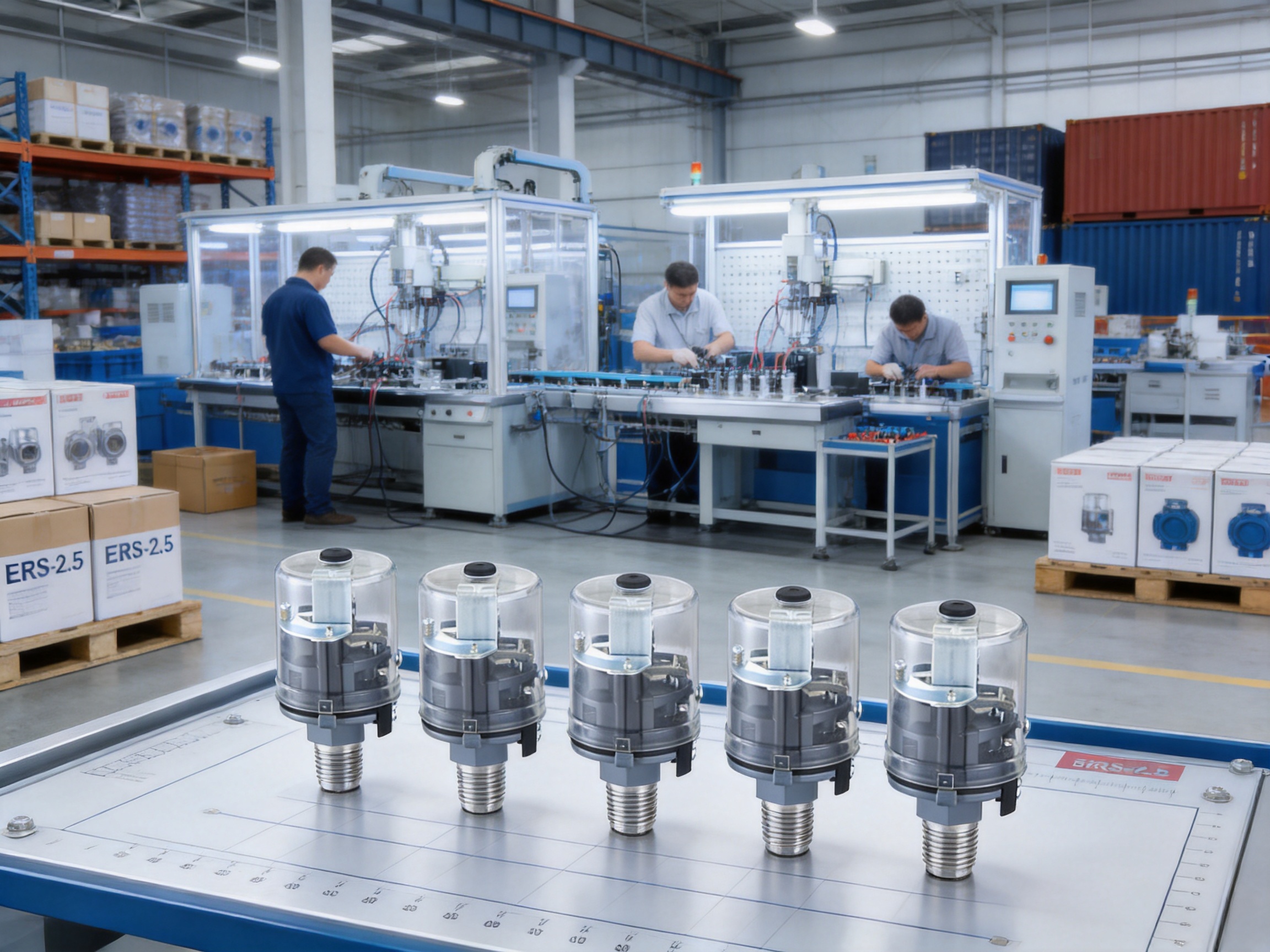
The quality of a pressure switch depends not only on its published specifications but also on the manufacturing system behind it. Taizhou Edwin Electric Co., Ltd. was founded in 2008 and operates as an integrated manufacturing enterprise specializing in independent research and development, mass production, and global export. This background is important for customers seeking a stable source of pump controls and related water-system products.
An integrated manufacturer can coordinate product design, component selection, assembly, testing, packaging, and export preparation within one broader operating structure. This may provide better control over product consistency than a trading-only supply model. It also makes it easier to communicate technical changes, manage customized specifications, and coordinate pressure-switch supply with pump orders.
The company’s core product lines include deep well pumps, submersible pumps, domestic booster pumps, and circulation pumps. It also supplies solar water pumps, intelligent booster pumps, and other water-pump and water-treatment peripheral products. This product breadth gives the pressure-switch business a direct connection to the equipment that the switch is designed to control.
A manufacturer that understands pump hydraulics and motor operation is better positioned to evaluate pressure-switch applications. It can consider the relationship between pump head, flow, motor current, pressure settings, tank behavior, and user demand. This product-system perspective is useful for distributors and project buyers who need more than an isolated component.
Independent research and development supports product improvement and customization. The ERS-2.5 Series includes configurable hydraulic connections and pressure settings, demonstrating a product approach that can respond to different customer requirements rather than relying only on one fixed configuration.
Research and development in this field may involve pressure-response design, contact selection, case construction, connection layout, assembly methods, and compatibility with different pump systems. Continued development is especially relevant as water systems become more automated and as customers request products suitable for solar pumping, intelligent boosting, energy-efficient operation, and integrated water management.
Mass production is important for distributors and equipment manufacturers that need repeatable supply. A pressure switch used in pump assemblies must maintain consistent dimensions, electrical characteristics, connection quality, and pressure settings from one production batch to the next.
A structured mass-production process can support production scheduling, material planning, assembly standardization, inspection records, and batch traceability. For large projects, this consistency helps reduce installation variation and simplifies spare-parts management.
The product is positioned as a professional-grade pressure switch with a silver-plated contact, protective case, adjustable settings, and a one-year warranty. These elements indicate an emphasis on dependable function and commercial suitability. Quality control should cover incoming materials, contact components, case parts, threaded connections, assembly, electrical continuity, pressure response, and final appearance.
Testing pressure switches requires attention to both the hydraulic and electrical sides of the product. The switch should respond at the intended pressure thresholds, maintain stable contact behavior, and remain within the specified working-temperature and current conditions. Consistent inspection helps identify assembly variation before products are shipped to customers.
The company has developed export-oriented services through related import and export organizations. These services include procurement planning, order tracking, cross-border delivery, and foreign-trade support. For international buyers, these capabilities can be as important as the product itself.
Global customers often require product customization, technical confirmation, packaging coordination, documentation, shipping arrangements, and after-sales communication. An experienced export team can help organize these steps and reduce misunderstandings between the factory, distributor, installer, and end user.
Efficiency in a water system involves more than reducing the purchase price of an individual component. It includes reliable operation, straightforward installation, suitable configuration, reduced downtime, manageable maintenance, and compatibility with other equipment. The ERS-2.5 Series contributes to these objectives through its practical mechanical design.
Automatic pressure-based starting and stopping reduces the need for users to operate the pump manually. This is convenient for domestic systems and useful in commercial applications where water demand changes throughout the day. Automatic control can also prevent the pump from running when no water is being used, provided the system is correctly designed and free from leaks.
Pressure customization allows the switch to be matched to the expected operating range. This helps avoid a one-size-fits-all approach in which the pump starts too early, stops too late, or cycles too frequently. The ability to choose hydraulic connection options also supports more efficient integration into different pipe assemblies.
A mechanical pressure switch is relatively understandable to service personnel. The pump’s starting and stopping behavior can be checked against a pressure gauge, and the hydraulic connection can be inspected for leakage. If the system develops abnormal cycling, a technician can evaluate pressure settings, tank precharge, leakage, valve condition, pump performance, and switch operation in a logical sequence.
Routine maintenance should include checking electrical connections, examining the case for damage, inspecting the hydraulic fitting, verifying pressure response, and ensuring that the operating environment remains within the product’s limits. The one-year warranty provides a defined support period, while correct installation and regular inspection help protect service life beyond the warranty period.
Installation should be performed by qualified personnel who understand both pump hydraulics and electrical safety. Before work begins, isolate the electrical supply, release system pressure, and confirm that the pump cannot start unexpectedly. The pressure switch should be installed in a position where the pressure-sensing connection receives a representative system pressure.
Select the appropriate 1/4-inch or 3/8-inch connection according to the piping arrangement. Confirm that the mating thread is compatible and clean. Use a suitable sealing method without allowing sealant, tape, or debris to enter the pressure passage. Tighten the fitting carefully. Excessive force may damage the connection or the switch body.
The switch should not be installed where it will be subjected to direct water spray, flooding, vibration beyond its intended application, or excessive heat. Since the listed protection class is IP20, a suitable enclosure or installation location may be needed when the surrounding environment is humid or exposed to splashing.
Verify the supply voltage and frequency before connecting the switch. Confirm that the motor’s rated current is within the selected 4.0 A or 10.0 A product option and evaluate the motor’s starting current. Use appropriate wiring, grounding, overcurrent protection, and isolation devices in accordance with local regulations.
Where motor current or starting conditions exceed the direct-switching capability, connect the pressure switch to a suitable contactor or control relay. The complete circuit should include appropriate overload protection. The pressure switch should not be treated as a substitute for all electrical safety devices.
After the hydraulic and electrical connections have been completed, inspect the system for leaks and confirm that all valves are in the correct position. Start the pump under controlled conditions and observe the pressure gauge. Check the cut-in and cut-out behavior against the intended settings.
If adjustment is required, it should be performed carefully according to the product instructions and system design. The pressure must remain within the allowable limits of the pump, tank, pipes, fittings, filters, valves, and end-use equipment. Excessive adjustment may produce unstable operation or pressure levels that are unsafe for connected components.
During commissioning, open and close a water outlet several times to confirm automatic starting and stopping. Listen for abnormal electrical noise, mechanical chatter, or rapid cycling. Check that the pump stops when the required pressure is reached and that it restarts when pressure falls to the configured cut-in value.
Rapid cycling may indicate a leaking pipe, insufficient tank precharge, incorrect pressure settings, an undersized pressure tank, a blocked pressure passage, or a pump that is too large for the system. These issues should be diagnosed before the installation is placed into normal service.
The pressure switch is one part of a complete pump system, and its performance is influenced by the condition of the surrounding equipment. Proper maintenance begins with keeping the system clean, dry, correctly wired, and within its operating limits.
If the pump does not start when water is used, check the power supply, circuit protection, wiring, pressure level, and switch contacts. Confirm that the pressure has fallen below the cut-in setting. Inspect the hydraulic connection for blockage and ensure that the pressure-sensing passage is not obstructed.
If the electrical contacts do not close, the switch may require adjustment or replacement. Before any inspection, isolate the electrical supply and follow safe working procedures.
If the pump continues running after the system pressure rises, check whether the pressure reaches the configured cut-out value. A leak, open valve, insufficient pump performance, blocked pipe, incorrect pressure setting, or damaged contact mechanism may be responsible.
The switch should not be repeatedly forced or adjusted beyond its specified pressure range. If the system cannot reach the cut-out pressure, the cause may be hydraulic rather than electrical.
Frequent starts and stops can result from a small or incorrectly charged pressure tank, a leaking non-return valve, a pipe leak, an unsuitable pressure differential, or unstable water demand. Frequent cycling increases stress on the motor and the pressure-switch contacts. The complete system should be inspected rather than simply replacing the pressure switch without identifying the cause.
Contact wear is affected by current, starting frequency, motor type, voltage, load conditions, and installation quality. The silver-plated contact is designed to support reliable switching, but no contact can compensate for an overloaded circuit or incorrect wiring. If there are signs of overheating, discoloration, burning odor, or intermittent operation, disconnect the system and investigate immediately.
Purchasing a pressure switch from a company with broad pump manufacturing experience offers several potential benefits. The supplier can understand the application from the perspective of the pump, motor, hydraulic system, and control component together. This can improve product selection and reduce the risk of mismatched specifications.
An integrated pump manufacturer can also provide one-stop procurement for customers who need pumps, pressure controllers, valves, pipes, booster equipment, circulation products, solar pumps, or other water-system components. This simplifies purchasing for distributors and project contractors and can help coordinate technical information across product groups.
The company’s product categories include solar pumps, deep well pumps, submersible pumps, surface pumps, booster pumps, circulation pumps, garden pumps, pool and spa pumps, commercial multistage pumps, pump accessories, end-suction pumps, pipes and valves, and intelligent booster pumps. The ERS-2.5 Series pressure switch fits into this broader water-system portfolio as a control accessory for suitable pump applications.
For international customers, a broad portfolio also creates opportunities to standardize components across several projects. A distributor may source a pressure switch for domestic booster pumps, pump accessories for agricultural applications, and intelligent or solar pumping equipment from the same supply network. This can reduce the number of separate vendor relationships required for water-system procurement.
Customization is available for hydraulic connections and pressure settings. Buyers should provide complete application information when requesting a customized configuration. Useful information includes the pump model, motor voltage, running current, starting conditions, desired cut-in pressure, desired cut-out pressure, connection size, water temperature, ambient temperature, installation location, and expected operating cycle.
For original equipment manufacturers, the product can be considered as part of a standardized pump assembly. The selected pressure setting can be coordinated with the pump curve, pressure tank, and intended use. Consistent factory configuration can simplify final assembly and reduce the need for adjustment at the customer’s site.
For distributors, it is useful to define standard versions for common markets while reserving customized versions for larger projects. The 4.0 A and 10.0 A current options, 110–240 V voltage range, and 1/4-inch or 3/8-inch connection choices provide a practical starting point for product planning.
Buyers should also clarify packaging, labeling, inspection documentation, spare-parts requirements, warranty handling, and shipment schedules. These details help create a complete purchasing specification rather than focusing only on the product title.
The maximum working temperature is listed as 55°C. The switch should be installed in an environment that remains within this limit. High ambient temperature can affect electrical components, seals, pressure behavior, and the service life of the complete control assembly.
The product is intended for water-system applications. Compatibility with the pumped medium should be considered if the system contains chemicals, abrasive particles, unusual additives, or water-treatment agents. The pressure switch should not be applied to a medium or environment that exceeds the materials, temperature, pressure, or electrical conditions established for the product.
The IP20 protection class means that installation planning is important. The component should be kept away from direct water jets and protected from accidental splashing. If the pump room is wet, the pressure switch may need to be installed inside a suitable electrical enclosure or in a protected position while maintaining access for inspection and adjustment.
For distributors, the ERS-2.5 Series offers a product that can be positioned as a professional pressure-control accessory rather than a generic low-cost switch. Its silver-plated contact, sealed case, configurable settings, multiple connection options, and broad voltage specification provide clear points for technical comparison.
For project buyers, the product can support standardized pressure control across suitable pump installations. The ability to specify settings according to customer requirements may help reduce commissioning time and improve consistency among equipment packages.
For pump assemblers, the component can be integrated into booster sets, domestic water units, tank systems, filtration equipment, garden-pump assemblies, and other suitable applications. Its mechanical operating principle is familiar to many technicians, while the available configuration options support adaptation to different designs.
For maintenance companies, the product provides a practical replacement option when an existing water-pump pressure switch reaches the end of its service life. Before replacement, the technician should compare voltage, current, thread size, pressure range, working temperature, contact arrangement, and installation conditions.
The pressure switch automatically starts and stops a water pump according to configured hydraulic pressure settings. It closes the pump-control circuit when pressure falls to the cut-in point and opens the circuit when pressure rises to the cut-out point.
The rated voltage is 110–240 V, and the rated power frequency is 50/60 Hz. The actual electrical installation must still be checked against the pump motor, local regulations, and the complete control-circuit design.
The stated rated-current options are 4.0 A and 10.0 A. Selection should be based on the pump motor’s running and starting characteristics. A contactor or relay may be required when the motor load exceeds the direct-switching capability.
The listed minimum cut-in pressure is 0.5 bar, and the listed maximum cut-out pressure is 3.5 bar. The typical pressure range is 1.1–1.8 bar according to customer requirements. Final settings must remain compatible with every component in the water system.
Yes. Hydraulic connections are available according to customer needs. The stated options include a 1/4-inch male connection and a 3/8-inch female connection, with female screw sizes of 1/4 inch and 3/8 inch listed in the technical data.
Yes. Pressure settings can be configured according to customer requirements. Buyers should provide the required cut-in and cut-out values and confirm that the proposed settings match the pump, tank, pipework, and connected equipment.
Silver plating supports high electrical conductivity and is intended to improve the reliability of repeated electrical switching. Actual service life depends on current, motor starting conditions, switching frequency, installation, and operating environment.
The stated protection class is IP20. It should not be treated as a waterproof component or exposed to direct water spray, immersion, or flooding. Correct installation in a dry and protected position is required.
The maximum working temperature is listed as 55°C. The installation environment should remain within this limit, and the product should not be applied to a water or ambient condition that exceeds its specified rating.
It is designed for water systems and can be considered for domestic booster applications when the pump’s electrical, hydraulic, and pressure requirements match the product specifications. Professional installation and commissioning are recommended.
It can be considered for suitable garden or irrigation pump systems. The installer should evaluate flow, pressure, pipe length, valve operation, tank capacity, water source, and motor current before selecting the switch.
No. The pressure switch is a pressure-control component. Separate overcurrent, overload, grounding, isolation, dry-run, and other protective devices may be required depending on the complete pump system and local regulations.
The technical data lists aluminum and plastic base options. The appropriate version may depend on the product configuration, application, and customer requirement.
The product information states a one-year warranty. Warranty conditions should be confirmed with the supplier and are normally subject to correct installation, appropriate application, and compliance with operating limits.
An integrated pump manufacturer can coordinate pressure-switch supply with pumps, accessories, and other water-system products. Its experience in research and development, mass production, export, order tracking, and technical product coordination can support more efficient procurement.
The ERS-2.5 Series Silver Plated Contact Sealed Case Pressure Switch for Water Systems is a practical mechanical controller for automatic pump operation. Its key features include silver-plated electrical contacts, a protective case, 110–240 V rated voltage, 50/60 Hz frequency, 4.0 A and 10.0 A current options, customizable pressure settings, flexible hydraulic connections, and a one-year warranty.
Its main advantage is the combination of hydraulic responsiveness and electrical switching reliability in a product designed specifically for water-system applications. Compared with a basic pressure switch, it offers more deliberate contact construction, configurable installation options, and a professional product platform suitable for domestic, agricultural, commercial, and selected industrial water systems.
The product is supported by a manufacturer with experience in pump research and development, mass production, global export, and integrated water-product supply. This background can benefit customers who need consistent quality, customized pressure settings, coordinated procurement, and international order support.
Correct product selection remains essential. Installers must verify voltage, current, pressure, connection size, temperature, protection requirements, and compatibility with the complete water system. When properly selected, installed, and maintained, the ERS-2.5 Series can provide convenient automatic pump control and contribute to stable, dependable water-system performance.
1. Product technical information for the ERS-2.5 Series Silver Plated Contact Sealed Case Pressure Switch for Water Systems.
2. Manufacturer-provided specifications for rated voltage, frequency, current, pressure range, connection options, protection class, and working temperature.
3. General principles of mechanical pressure-switch operation in domestic, commercial, agricultural, and industrial water systems.
4. General electrical safety practices for pump motors, pressure-control devices, relays, contactors, overload protection, and grounding.
5. General installation and maintenance practices for water pumps, pressure tanks, filtration systems, piping, valves, and automatic pump-control assemblies.
serieswatershortageprotectionvoltagestabilizationstainlesssteelverticalmultistagepump.jpg "EVR(S) Series Water Shortage Protection Voltage Stabilization Stainless Steel Vertical Multistage Pump")
edwina@edwin-pump.com
+86-13586290903 (WhatsApp)
Xuri Gongliang Cutting Tool Entrepreneurship Park, Wenqiao Town, Wenling City, Taizhou City, Zhejiang Province, China

High Performance Smart Pump Factory


 English