edwina@edwin-pump.com

View All Products
en
Reliable water pressure is essential in modern homes, agricultural properties, workshops, and small commercial facilities. Washing machines, water heaters, dishwashers, showers, irrigation outlets, and cleaning equipment all perform better when the water supply is stable. However, many properties experience low pressure, intermittent flow, long suction distances, or difficult installation conditions. A practical solution is a compact self-priming jet pump equipped with a pressure tank and designed for dependable daily operation.
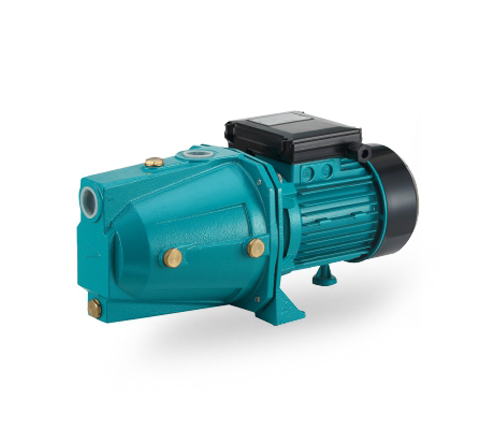
The JBP-PT Series Portable Brass Impeller Easy Installation Self-priming JET Pump is designed for these requirements. It combines a portable structure, brass impeller, high pump head, automatic pressure control, corrosion-resistant water-contact components, and a compact pressure tank. The result is a versatile pumping unit for residential water boosting, small water distribution systems, garden applications, and other light-duty water supply tasks.
Unlike a basic standalone centrifugal pump, this type of integrated jet pump can support automatic operation and more consistent pressure. Unlike many low-cost pumps that rely heavily on plastic or lightly protected metal components, the JBP-PT Series uses a brass impeller, stainless steel shaft, treated cast iron structural parts, copper motor windings, and a stainless steel pressure tank. These design choices help improve durability, restart reliability, and overall service value.
Manufactured by Taizhou Edwin Electric Co., Ltd., the series reflects the company’s experience in independent research and development, mass production, pump assembly, international export, and one-stop procurement services. The company’s broader product portfolio includes deep well pumps, submersible pumps, domestic booster pumps, circulation pumps, solar water pumps, intelligent booster pumps, and other water-system products.
seriesportablebrassimpellereasyinstallationself-primingjetpump.jpg)
JBP-PT Series Portable Brass Impeller Easy Installation Self-priming JET Pump
A self-priming jet pump is designed to move water from a source to a destination while creating useful pressure for distribution. The pump can draw water from a tank, shallow well, storage vessel, or other source and deliver it to household outlets or small irrigation networks. The self-priming function is especially useful where the pump is installed above the water level and must remove air from the suction line during startup.
In a conventional surface pump, air trapped in the suction pipe can prevent the impeller from developing sufficient suction. The system may require repeated manual priming, and incorrect startup can cause poor performance or dry running. A self-priming jet pump uses a carefully designed hydraulic passage, including a venturi tube and diffuser, to assist air evacuation and maintain the pumping process after the initial filling procedure.
The JBP-PT Series is particularly suitable for water supply systems that need more than simple water transfer. Its pressure tank and press switch help the pump respond automatically to changes in demand. When a tap is opened, pressure falls and the pump starts. When the tap is closed and the pressure reaches the appropriate level, the pump stops. This operating pattern reduces the need for manual control and supports convenient household water use.
The pump is also capable of handling a maximum suction height of 8 meters under appropriate installation conditions. Actual performance depends on pipe diameter, pipe length, elevation, fittings, water temperature, valve selection, and the condition of the suction line. Nevertheless, the stated suction capacity makes the pump suitable for many shallow-well and above-ground water-source applications.
The JBP-PT Series is a portable, compact, self-priming jet pump with an integrated pressure tank. It is available in multiple configurations, including JBP-2PT, JBP-3PT, JBP-2PTZ, and JBP-3PTZ. The available power ratings are 0.6 kW and 0.75 kW, corresponding to approximately 0.8 HP and 1 HP. All listed models use 1-inch inlet and outlet connections and provide a maximum head of 38 meters.
The maximum flow rates are 50 liters per minute for the 0.6 kW models and 60 liters per minute for the 0.75 kW models. These ratings make the series appropriate for domestic water boosting, garden water supply, small workshops, light irrigation, water transfer between tanks, and other applications that do not require the capacity of a large commercial multistage system.
The portable design offers practical advantages during installation and maintenance. A compact pump can be positioned close to the water source, moved between service areas, or installed in locations where a larger booster package would be impractical. The integrated pressure tank reduces the number of separate components that must be purchased and assembled, helping installers save time and reduce the risk of incorrect component matching.
The principal product features include:
Portable construction for flexible installation and easier handling.
Brass impeller for improved corrosion resistance and stable hydraulic performance.
Easy installation with integrated pressure-control components.
Stainless steel bearing and stainless steel water-contact shaft design.
Self-priming jet hydraulics for shallow suction applications.
Pressure tank for smoother automatic water delivery.
Press switch for automatic starting and stopping.
Built-in thermal protection for the single-phase motor.
Class F insulation and IP44 protection for dependable operation in suitable environments.
Maximum liquid temperature of 60°C and maximum ambient temperature of 40°C.
The impeller is one of the most important hydraulic components in a centrifugal or jet pump. It transfers energy from the motor to the water and directly influences flow, pressure, efficiency, vibration, and service life. Material selection is therefore a major consideration when comparing pumps.
The JBP-PT Series uses a brass impeller. Brass offers a useful combination of mechanical strength, corrosion resistance, dimensional stability, and compatibility with general water applications. Compared with ordinary unprotected steel, brass is less vulnerable to corrosion in many water environments. Compared with lower-grade plastic components, brass can provide greater rigidity and better resistance to deformation when exposed to temperature changes or mechanical stress.
A brass impeller is also beneficial when the pump has been inactive for an extended period. The product design specifically emphasizes smooth restarting after long periods of inactivity, supported by the brass impeller and rust-free copper inserts. This is valuable for seasonal homes, garden systems, backup water supply equipment, and applications where the pump is not operated every day.
Many entry-level pumps compete mainly on initial purchase price. They may use simplified materials and fewer protective features. While such products can perform adequately under ideal conditions, they may be more sensitive to corrosion, long idle periods, or inconsistent maintenance. The brass impeller of the JBP-PT Series represents a stronger focus on long-term reliability and stable operation rather than only low initial cost.
Brass does not eliminate the need for correct installation. Water quality, abrasive particles, excessive temperature, chemical contamination, and dry running can still damage any impeller. A properly installed inlet strainer, clean water source, suitable pipework, and regular inspection are important for achieving the expected service life.
The pump body and support are made from HT200 cast iron and receive special anti-rust treatment. Cast iron provides a strong structural foundation for the hydraulic assembly and motor support. It can withstand the mechanical loads generated during operation and helps maintain alignment between the pump and motor components.
The use of treated cast iron is important because surface corrosion can affect appearance, fasteners, assembly interfaces, and long-term serviceability. Anti-rust treatment adds a layer of protection for ordinary operating environments. The pump should still be installed in a reasonably dry, ventilated location and protected from prolonged exposure to rain, flooding, or aggressive chemicals.
The AISI 304 stainless steel shaft is designed to protect water-contact areas from rust. Stainless steel is widely used in pump shafts because it combines corrosion resistance with the strength needed to transmit motor torque to the impeller. A rust-resistant shaft can also help protect the mechanical seal and bearings from contamination caused by corrosion products.
The mechanical seal uses a carbon and ceramic combination. Mechanical seals are designed to prevent water from escaping along the rotating shaft while allowing the shaft to turn with limited friction. Carbon and ceramic are widely used seal-face materials because they can provide suitable wear resistance and sealing performance in clean-water applications when the pump is operated within its specified conditions.
The pressure tank is made from stainless steel. This contributes to corrosion resistance and provides a durable vessel for supporting automatic pressure regulation. The motor case is aluminum, helping reduce weight while allowing effective heat dissipation. The motor cover is cast iron, providing a robust protective structure for the motor assembly.
Other listed components include a PPO venturi tube, PPO diffuser, polypropylene fan, PC terminal board, copper wiring, capacitor, stator, rotor, bearings, fan cover, and terminal cover. Each material is selected for its function within the complete pump system. The combination of structural metal, corrosion-resistant hydraulic components, engineered polymers, and protected electrical parts supports a balanced design for household and light commercial use.
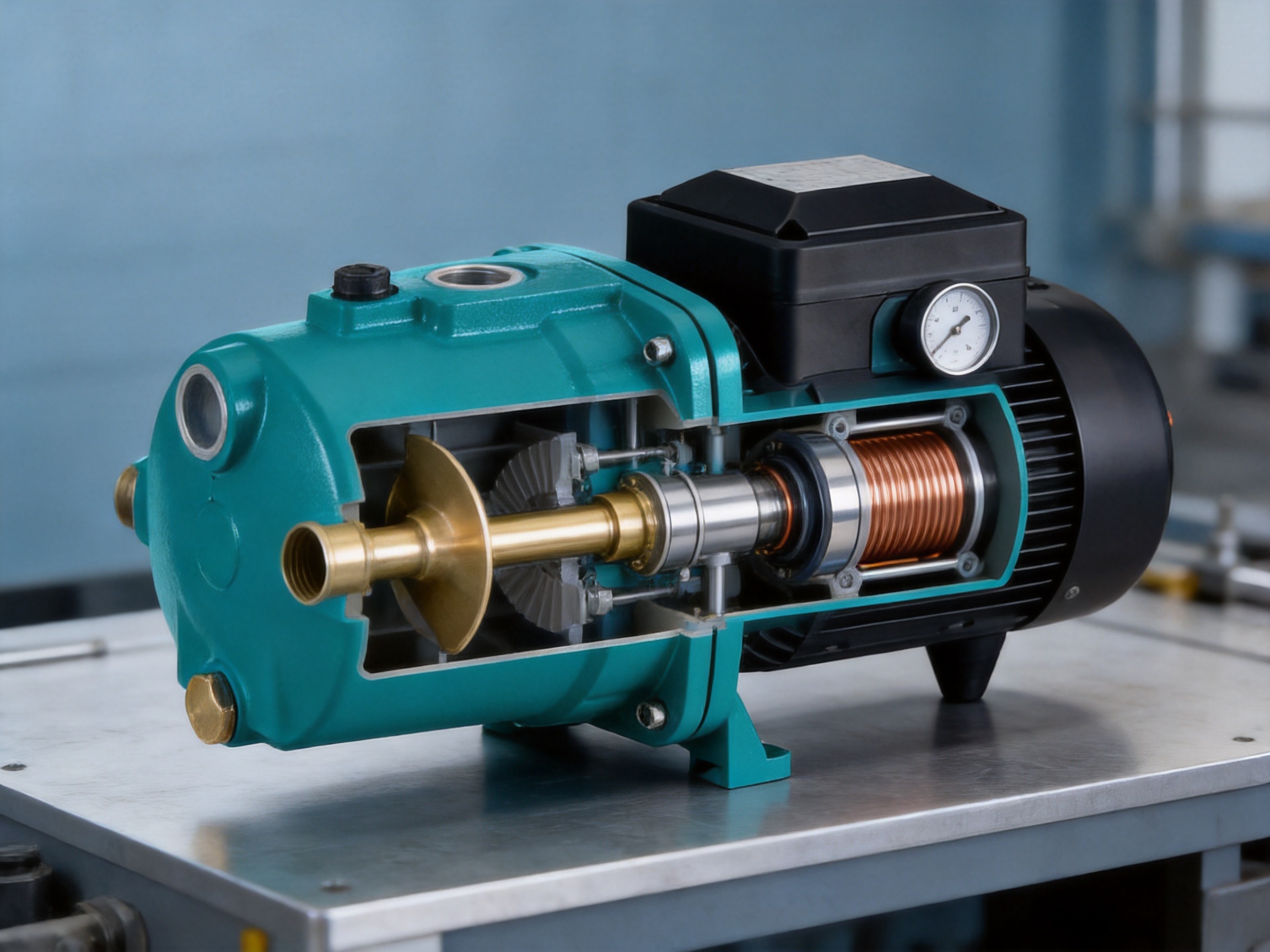
The maximum head of the listed models is 38 meters. Pump head describes the energy the pump can provide to the water, expressed as an equivalent vertical height. It is not exactly the same as the height of a building because friction losses in pipes, elbows, valves, filters, and fittings must also be considered.
For example, a system may need to lift water vertically by 15 meters while also supplying several outlets through a long pipe run. The pump must overcome the 15-meter elevation difference and the additional friction losses. If the pipe is too narrow or contains too many restrictive fittings, the actual available flow will be lower than the nominal maximum flow shown in the product data.
The 0.6 kW JBP-2PT and JBP-2PTZ models provide a maximum flow of 50 liters per minute. The 0.75 kW JBP-3PT and JBP-3PTZ models provide a maximum flow of 60 liters per minute. The higher-power models may be preferred where the system has greater demand, longer pipe runs, more simultaneous outlets, or a stronger pressure requirement.
Maximum flow is normally measured under conditions that do not represent the full resistance of a completed installation. Buyers and installers should therefore select a model based on the required operating point, not only the highest number in a catalogue. A pump specialist can evaluate the expected flow, total dynamic head, suction conditions, pipe diameter, and pressure requirements before final selection.
The 1-inch inlet and outlet connections offer a useful balance between compactness and flow capacity. Correct pipe sizing is essential. The suction pipe should be short, straight where possible, and free of air leaks. A suction pipe that is too small or poorly sealed may reduce performance, increase noise, and prevent reliable self-priming.
| Model | Power | Power | Inlet/Outlet | Maximum Flow | Maximum Head | Maximum Suction |
| Model | kW | HP | Connection | L/min | m | m |
| JBP-2PT | 0.60 | 0.8 | 1 x 1 inch | 50 | 38 | 8 |
| JBP-3PT | 0.75 | 1.0 | 1 x 1 inch | 60 | 38 | 8 |
| JBP-2PTZ | 0.60 | 0.8 | 1 x 1 inch | 50 | 38 | 8 |
| JBP-3PTZ | 0.75 | 1.0 | 1 x 1 inch | 60 | 38 | 8 |
The PT and PTZ versions share the technical values listed in the supplied product information. Buyers should confirm the exact configuration, electrical specification, packaging contents, and ordering code with the supplier before placing a large order.
A major advantage of the JBP-PT Series is the inclusion of a pressure tank and press switch. A standalone surface pump may require separate controls, a separate tank, additional valves, and more installation work. An integrated pressure package provides a more coordinated solution for users who need automatic water supply rather than simple manual transfer.
The pressure tank stores a limited volume of pressurized water. When a small amount of water is used, the system may deliver it from the tank without immediately starting the motor. This can reduce unnecessary motor cycling and provide smoother operation for small, intermittent demands. When the pressure falls to the switch-start setting, the pump operates to restore the pressure.
Automatic control is useful for households where different appliances operate at different times. A washing machine may require a steady supply during filling. A water heater may need consistent inlet pressure. A dishwasher, shower, or outdoor tap may create changing demand. The pressure tank and press switch help the pump respond to these changes without requiring the user to start and stop the motor manually.
Correct pressure-switch adjustment is important. The start and stop pressures must be suitable for the pump, tank, pipework, and connected appliances. Excessive cycling may indicate an incorrectly charged tank, a leak, an unsuitable pressure setting, or a system that is too small for the demand. Installation and adjustment should be performed by a qualified technician or according to the supplier’s technical instructions.
The integrated approach can also simplify procurement. Instead of sourcing a pump, pressure vessel, switch, and compatible fittings from different suppliers, a buyer can purchase a matched product family. This may reduce compatibility problems and make spare-parts planning more straightforward for distributors and project contractors.
The motor is designed with durable copper wiring. Copper conductors provide good electrical conductivity and support efficient conversion of electrical energy into mechanical output. Proper winding quality is particularly important in pump motors because they may operate repeatedly during the day and can be exposed to heat generated by both electrical resistance and hydraulic load.
The listed motor uses high-efficiency C&U bearings. Smooth bearings reduce mechanical friction, support shaft alignment, and help control vibration and operating noise. Bearing quality is directly related to motor life, especially when the pump is installed in a demanding environment or operates for long periods.
A built-in thermal protector is provided for the single-phase motor. Thermal protection helps disconnect or protect the motor when temperature rises excessively because of overload, blocked ventilation, abnormal voltage, frequent cycling, or other operating conditions. The protector is an important safety feature, but it does not replace correct installation, appropriate circuit protection, or proper pump selection.
The motor insulation rating is Class F. This rating indicates that the winding insulation system is designed for a higher temperature capability than lower insulation classes. In actual service, keeping the motor within its rated load and ambient conditions remains essential. The maximum ambient temperature is listed as 40°C.
The IP44 protection rating provides protection against solid objects of specified size and splashing water from various directions. It is intended for suitable protected installations and should not be interpreted as permission to submerge the motor or expose it to direct high-pressure water. The electrical connection should be made in accordance with local regulations and by a qualified electrician.
Electrical supply details such as voltage, frequency, phase, current, cable size, and overload protection should be confirmed for the destination market. These values may vary according to the specific order configuration. Proper earthing, a suitable circuit breaker, and protection against abnormal voltage are essential for safe operation.
The JBP-PT Series is designed for comparatively straightforward installation. A typical system includes the water source, suction pipe, appropriate foot valve or check valve where required, discharge pipe, electrical supply, and water outlets. The pump should be placed on a stable, level foundation in a well-ventilated location that is protected from flooding and excessive weather exposure.
Before startup, the suction line and pump chamber should be filled according to the installation instructions. The purpose of priming is to remove air from the pump and provide the water necessary for the jet system to begin operating. Operating a pump without sufficient water can damage the mechanical seal, cause overheating, and lead to poor performance.
All suction-side joints must be airtight. Even a small air leak can prevent the pump from developing the required vacuum. Thread sealant, suitable gaskets, and correctly tightened fittings should be used. The suction pipe should not have unnecessary high points where air can collect. Where the source contains sediment, a suitable strainer or filter should be installed without creating excessive flow resistance.
The discharge pipe should be supported independently so that its weight is not transferred to the pump casing. Isolation valves may be installed to assist maintenance, but valves should be positioned and operated carefully to avoid restricting flow during normal operation. A pressure gauge can help installers understand system behavior and identify pressure fluctuations.
After electrical connection, the pump should be tested for correct rotation where applicable, leakage, automatic start and stop behavior, abnormal noise, vibration, and pressure stability. The technician should observe whether the pump reaches its stop pressure and whether it restarts when a tap or outlet is opened. Any repeated failure to prime or excessive cycling should be investigated before continuous use.
The most direct application is residential water supply. Homes with low municipal pressure, elevated storage tanks, shallow wells, or long internal pipe runs can use a self-priming jet pump to improve the delivery of water to taps and appliances. The pressure tank is particularly useful where demand varies throughout the day.
The pump can support washing machines, water heaters, dishwashers, showers, kitchen taps, toilets, and general household outlets. It is important to understand that the pump is intended to improve supply pressure and transfer water; it is not a water purification device. If the source water requires filtration or treatment, those systems should be selected separately and installed with suitable flow capacity.
Garden irrigation is another practical application. The pump can draw from a storage tank or shallow water source and supply sprinklers, hoses, and small irrigation lines. The required flow depends on the number of sprinklers and their operating pressure. A larger irrigation network may require multiple zones or a higher-capacity pump.
Small agricultural properties can use the pump for water transfer, livestock water supply, greenhouse washing, and limited irrigation. In these environments, users should pay special attention to water cleanliness, cable protection, frost exposure, and protection from dust or moisture. If the water contains sand or abrasive particles, additional filtration may be required.
Workshops and small commercial buildings can use the series for utility water, cleaning, equipment supply, and pressure boosting. The compact structure helps where space is limited. However, demanding commercial processes, large buildings, fire systems, high-temperature applications, and continuous industrial duties should be evaluated separately to ensure that the pump’s flow, head, materials, and duty cycle are appropriate.
The pump may also be useful as part of a temporary or backup water system. Its portable form allows it to be moved between locations when required. For temporary use, the operator should still provide stable pipe connections, appropriate electrical protection, and secure placement to prevent vibration or accidental movement.
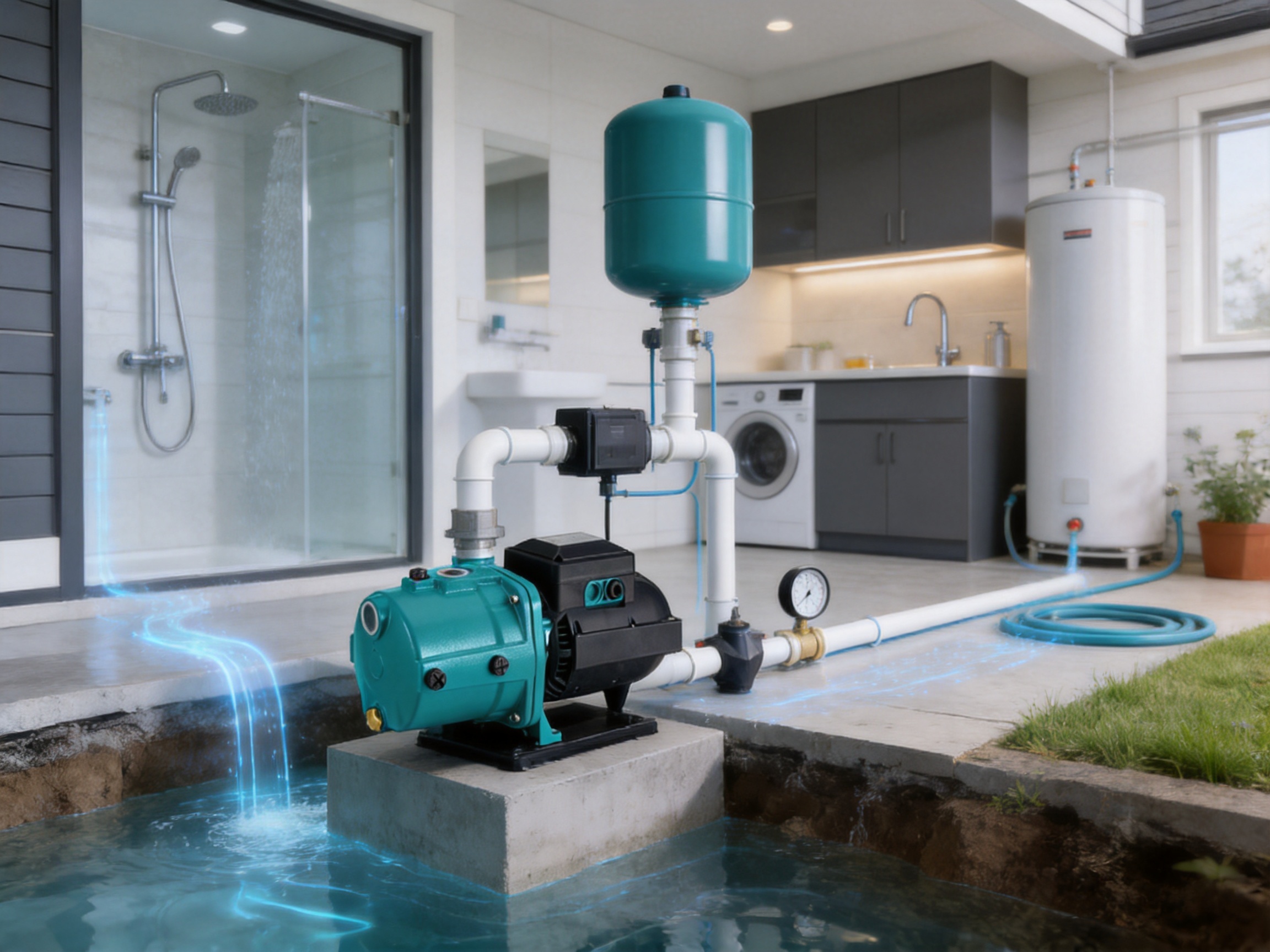
The JBP-PT Series competes effectively by combining several features in one compact package. Its advantages are not based on one component alone; they come from the interaction between the hydraulic design, pressure-control system, material selection, motor protection, and portable format.
Compared with a basic surface pump that only transfers water when manually switched on, the integrated pressure tank and press switch support automatic household water supply. This creates a more convenient user experience and can reduce unnecessary motor operation during small water demands.
The brass impeller provides a stronger material option than many entry-level plastic-impeller pumps. It is suitable for users who value resistance to corrosion, stable mechanical properties, and reliable restarting after periods of inactivity.
A maximum head of 38 meters gives the series useful pressure capability for residential and small commercial installations. The compact format allows this performance to be delivered without the footprint of a large multistage booster assembly.
The use of a treated cast iron body, AISI 304 stainless steel shaft, stainless steel pressure tank, brass impeller, copper motor winding, and carbon/ceramic mechanical seal shows that durability has been considered across the complete system rather than in only one component.
Purchasing a matched pump and pressure package can simplify project planning. Distributors can offer a clearer product solution, while installers can reduce the time spent selecting compatible accessories. This is particularly valuable for residential contractors, hardware wholesalers, and regional pump dealers.
The 0.6 kW and 0.75 kW options allow users to select a model according to expected demand. The lower-power models may be suitable for smaller homes and shorter pipe runs, while the higher-power versions can support greater flow requirements within the same general product family.
The company behind the product was founded in 2008 and operates as an integrated manufacturing enterprise focused on independent research and development, mass production, and global export. This combination is important because a pump manufacturer must manage more than product design. It must also control material purchasing, component consistency, assembly, testing, packaging, documentation, and after-sales support.
Independent research and development allows the manufacturer to adapt products to changing market needs. Household water systems, agricultural projects, new energy installations, and intelligent booster applications often require different hydraulic characteristics and control methods. Experience across multiple pump categories can help engineers understand how motor selection, impeller geometry, pressure control, sealing, and installation conditions interact.
Mass production provides another advantage. When a product is manufactured repeatedly in an organized production environment, the manufacturer can establish standardized assembly procedures and improve process repeatability. Repeated production also supports more efficient procurement of materials, better planning of spare parts, and more consistent delivery schedules for distributors and project customers.
The company’s product range includes deep well pumps, submersible pumps, domestic booster pumps, circulation pumps, solar water pumps, intelligent booster pumps, and other water-related equipment. This broad portfolio indicates experience with different hydraulic environments, including shallow suction, submerged operation, household pressure boosting, circulation, and renewable-energy applications.
Manufacturing quality begins with correct material selection. For this product, the listed materials include HT200 cast iron, brass, AISI 304 stainless steel, aluminum, PPO, PP, PC, carbon, ceramic, copper wiring, and stainless steel for the pressure tank. Each material must be matched to the relevant mechanical, electrical, thermal, and water-contact requirement.
Assembly accuracy is also important. The impeller, shaft, mechanical seal, bearings, motor rotor, stator, pump body, and pressure-control components must be installed in the correct relationship. Poor alignment can increase vibration, noise, seal wear, and bearing load. A structured manufacturing process helps reduce these risks.
Electrical assembly requires equal attention. Copper windings, terminal boards, capacitors, thermal protectors, insulation systems, and terminal covers must be fitted correctly. Proper electrical assembly supports starting performance, thermal behavior, and safe operation. Final testing should verify that the completed pump starts correctly, runs smoothly, and responds to its pressure-control system.
The company also established related import and export service organizations to support procurement planning, order tracking, cross-border delivery, and foreign trade services. For international buyers, this is a practical strength. Product quality is important, but reliable communication, order coordination, packaging, documentation, and shipment management are also essential to a successful purchase.
International pump buyers often source several categories at the same time. A distributor may need domestic booster pumps, submersible pumps, solar pumps, circulation pumps, valves, pipes, pressure accessories, and intelligent control equipment. Working with a manufacturer that offers a broad product range can simplify supplier management.
Edwin Pump’s product portfolio supports this one-stop approach. The company serves markets connected with household water supply, agricultural irrigation, municipal engineering, construction, mining, HVAC systems, and new energy projects. A buyer can discuss multiple pump requirements with one professional team and coordinate product selection, order quantities, packaging, and shipping more efficiently.
For distributors, a broad product family can help create a more complete local catalogue. The JBP-PT Series can serve residential and small commercial users, while other pump families may serve wells, deep-water sources, solar applications, or larger pressure systems. This makes it easier for a dealer to match different customers with appropriate products instead of forcing one pump type into every application.
For project contractors, supplier coordination can be especially important. A single manufacturing partner may help reduce differences in documentation, spare-parts identification, product terminology, and technical communication. Buyers should still request current drawings, electrical details, performance curves, packaging specifications, and applicable compliance documents for each order.
Regular maintenance begins with observing the pump during normal operation. Changes in sound, vibration, pressure, flow, starting frequency, or leakage can indicate a developing problem. Early investigation is usually less costly than continued operation after a seal, bearing, impeller, or motor problem has become severe.
The suction line should be checked periodically for air leaks, loose connections, damaged hoses, clogged strainers, and valve problems. A suction-side restriction can cause poor priming and reduce flow. If the water source contains sediment, the strainer should be cleaned at suitable intervals.
The pump should never be allowed to run dry. Dry running can overheat the mechanical seal and damage components that depend on water for cooling or lubrication. If the pump loses prime, the cause should be identified before restarting. Possible causes include a low water level, a leaking suction pipe, a blocked foot valve, an incorrectly positioned valve, or an air pocket.
The pressure tank should be inspected according to the manufacturer’s instructions. Tank pre-charge, pressure-switch settings, and system pressure must be compatible. A waterlogged or improperly charged tank can lead to rapid cycling, which places additional stress on the motor, switch, and pressure system.
Electrical connections should be inspected by qualified personnel. Loose terminals, unsuitable cables, poor earthing, water exposure, and incorrect voltage can cause unsafe operation. The IP44 rating is intended for suitable installation conditions and does not remove the need for a dry, protected electrical connection.
Before seasonal storage, the pump should be protected from freezing temperatures. Water remaining in the pump or pipework can expand when frozen and damage the casing, seal, or fittings. Where the pump is used only occasionally, a clean and correctly primed system will generally provide more reliable restarting than a neglected installation.
The JBP-2PT and JBP-2PTZ models are rated at 0.6 kW and 0.8 HP, with a maximum flow of 50 liters per minute. They may be suitable for smaller homes, limited outlet demand, shorter pipe runs, and applications where moderate water pressure is sufficient.
The JBP-3PT and JBP-3PTZ models are rated at 0.75 kW and 1 HP, with a maximum flow of 60 liters per minute. They may be preferred when the system has more outlets, longer pipework, greater elevation, or a higher expected demand.
All four listed models have a maximum head of 38 meters and a maximum suction height of 8 meters. Because the supplied data shows the same main performance figures for the PT and PTZ variants, buyers should confirm the exact differences between the codes before ordering. Differences may relate to configuration, market requirements, packaging, electrical options, or other product details not specified in the available information.
Model selection should consider the complete water system rather than only the pump motor. Important questions include: How far is the water source from the pump? What is the vertical lift? How many outlets may operate simultaneously? What is the pipe diameter? Is the water clean? Will the pump operate continuously or intermittently? Is the source level stable throughout the year?
Providing accurate answers to these questions helps the supplier recommend the correct model and reduces the risk of selecting a pump that is too small, too large, or unsuitable for the installation conditions.
The JBP-PT Series is designed for clean-water applications within the stated temperature limits. The maximum liquid temperature is 60°C, while the maximum ambient temperature is 40°C. The pump should not be used for corrosive chemicals, fuel, heavily abrasive slurry, seawater, or liquids with properties outside the product design unless the manufacturer has specifically approved the application.
The maximum suction height of 8 meters should not be treated as a guaranteed value under every condition. Atmospheric pressure, water temperature, pipe friction, altitude, air tightness, and pump condition affect suction performance. In practical installations, a shorter suction lift and larger, well-sealed suction pipe can improve reliability.
The pressure tank and press switch are intended to support automatic water supply, but the system must be sized for the actual demand. A pump that is continuously forced to operate at its limit may experience greater thermal and mechanical stress. If a building requires very high flow, multiple simultaneous outlets, or continuous industrial duty, a larger booster system may be more appropriate.
Installation should comply with local plumbing and electrical regulations. Qualified professionals should handle electrical wiring, pressure adjustment, and any connection to a permanent building water system. Safe operation depends on both product design and correct installation practice.
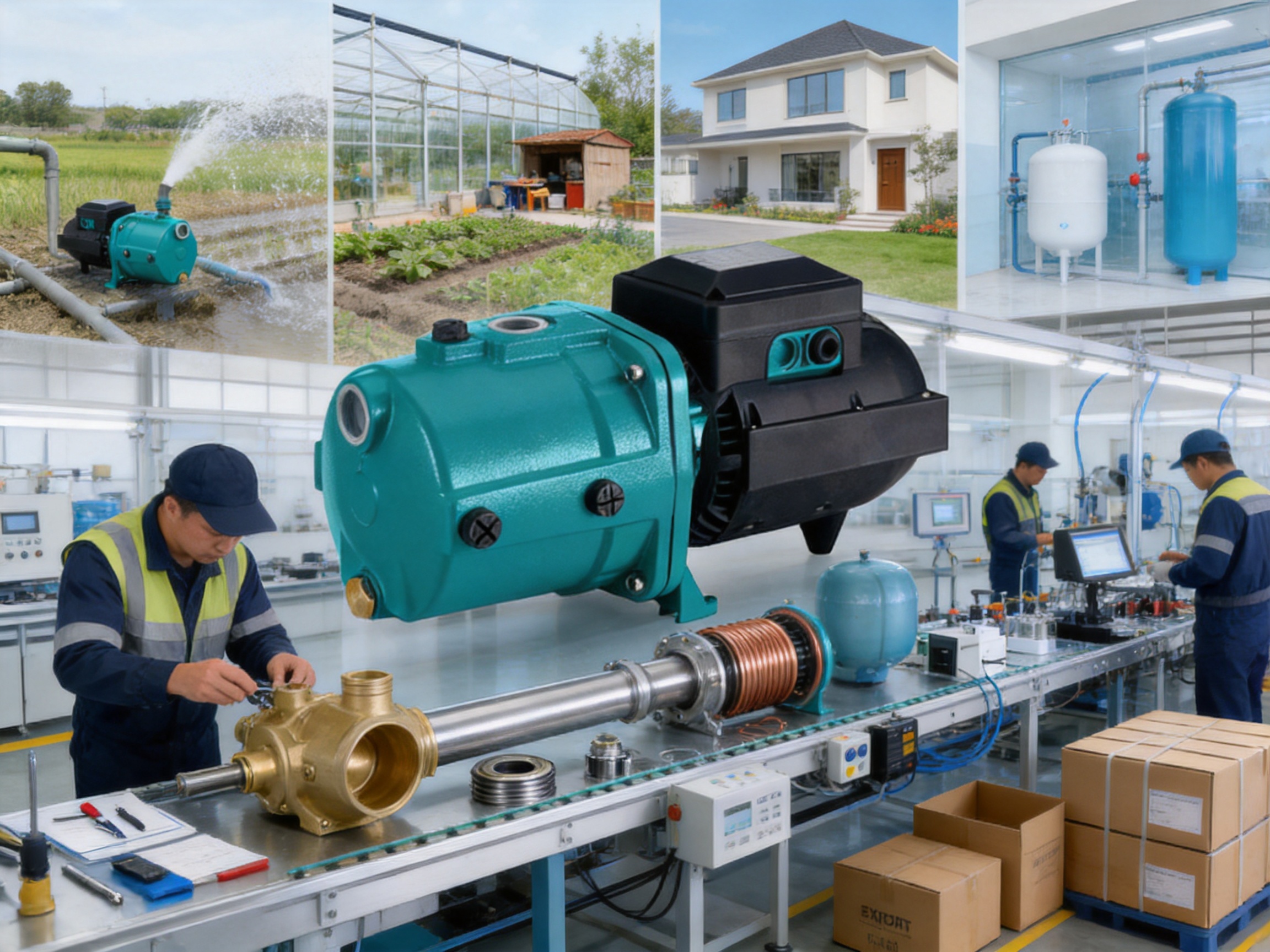
Distributors need products that are understandable, practical, and easy to position in the market. The JBP-PT Series has a clear application story: it is a compact self-priming jet pump with a pressure tank, brass impeller, automatic pressure operation, and useful head performance. These features are easy to communicate to household users and installation professionals.
The presence of four related models also supports product segmentation. A distributor can offer a lower-power option for smaller installations and a higher-power option for users who need additional capacity. Keeping the same basic product concept across the range can simplify training, sales materials, spare-parts planning, and technical support.
The product is also suitable for OEM and project-oriented purchasing where buyers require a dependable pump platform for regional branding or system integration. Before finalizing an OEM order, the buyer should confirm branding requirements, packaging, electrical specifications, minimum order quantities, inspection procedures, documentation, warranty terms, and spare-parts support.
The manufacturing company’s experience in global export can assist buyers who need international order coordination. Its related foreign-trade organizations support procurement planning, order tracking, cross-border delivery, and export services. This is valuable for customers who want to reduce the administrative burden associated with international purchasing.
The water-pump market is changing as customers seek higher energy efficiency, easier control, renewable-energy compatibility, and more complete water-system solutions. A manufacturer with experience across conventional and intelligent pump categories is better positioned to respond to these expectations.
Since 2018, the company has invested in new energy and intelligent technology, including solar water pumps and intelligent booster pumps. These initiatives complement the conventional JBP-PT Series. While the portable jet pump is designed for direct electrical operation and automatic pressure boosting, the broader portfolio allows the manufacturer to support customers moving toward solar-powered pumping, digital control, and integrated water management.
Its involvement in new energy projects, agricultural irrigation, municipal engineering, mining, construction, HVAC systems, and household water supply provides exposure to different operating requirements. Each sector emphasizes different factors: corrosion resistance, energy consumption, pressure stability, installation flexibility, continuous operation, or ease of maintenance.
The company’s focus on high-performance water pumps and one-stop procurement services is relevant to international customers that prefer a long-term supplier relationship. A reliable supplier should be able to discuss not only the pump itself but also the system conditions, accessories, replacement parts, packaging, delivery schedule, and technical support required for successful field use.
Before purchasing the JBP-PT Series, buyers should identify the required flow and pressure at the actual operating point. Maximum flow and maximum head are different ends of the pump’s performance range, and the pump will normally operate somewhere between them.
The water source should be evaluated for depth, seasonal level changes, cleanliness, temperature, and accessibility. The suction pipe should be designed to limit air leakage and friction. If the source contains sand or suspended particles, filtration and maintenance requirements should be discussed with the supplier.
The electrical supply should be confirmed, including voltage, frequency, phase, rated current, cable length, and protection devices. Buyers purchasing for export markets should ensure that the selected motor configuration matches the destination country.
The installation environment should also be considered. The pump requires protection from flooding, freezing, excessive dust, direct weather exposure, and high ambient temperatures. Although the pump has an IP44 rating, an enclosed or sheltered location is generally preferred.
For commercial orders, buyers should request the latest technical data sheet, dimensional drawing, performance information, spare-parts list, operating instructions, packaging details, and applicable quality or inspection documents. These materials support professional installation and after-sales service.
The series is designed to supply and boost clean water for residential, garden, agricultural, workshop, and light commercial applications. It combines a self-priming jet pump with a pressure tank and press switch for automatic water delivery.
Self-priming means the pump is designed to remove air from the suction line and begin pumping after the pump and suction system have been correctly filled and installed. It does not mean the pump can operate indefinitely without water or without initial priming.
The listed maximum suction height is 8 meters. Actual performance depends on water temperature, altitude, pipe length, pipe diameter, air tightness, valves, fittings, and the condition of the water source.
The listed maximum head for the JBP-2PT, JBP-3PT, JBP-2PTZ, and JBP-3PTZ models is 38 meters. The usable head at a particular flow rate should be confirmed from the manufacturer’s performance information.
The 0.6 kW models have a listed maximum flow of 50 liters per minute, while the 0.75 kW models have a listed maximum flow of 60 liters per minute. The higher-power option may be more suitable for greater demand or more difficult pipe conditions.
Brass provides good mechanical strength, corrosion resistance, and dimensional stability for general water applications. It can offer a more durable alternative to basic plastic impellers and supports reliable restarting after periods of inactivity.
The listed maximum liquid temperature is 60°C. The pump should not be used above this limit, and the complete system, including seals, pipes, valves, and connected appliances, must also be suitable for the operating temperature.
The maximum suction height is 8 meters, so the product is intended for shallow suction applications. Deep wells generally require a submersible pump or another pump designed specifically for the well depth.
The pressure tank and press switch are designed to support automatic starting and stopping as system pressure changes. Correct adjustment, adequate water supply, and proper installation are still required for reliable automatic operation.
The single-phase motor includes a built-in thermal protector. The motor also has Class F insulation and IP44 protection. External circuit protection, proper earthing, suitable cabling, and compliant installation remain necessary.
No. Dry running should be avoided because it can damage the mechanical seal, increase temperature, and reduce service life. The pump must be correctly primed and supplied with water before operation.
Maintenance includes checking for leakage, monitoring noise and vibration, inspecting the suction line, cleaning filters or strainers, checking pressure behavior, protecting the pump from freezing, and having electrical connections inspected by qualified personnel.
The supplied technical information lists the same primary performance values for the PT and PTZ models. Buyers should ask the supplier to confirm the exact distinction, including electrical configuration, accessories, packaging, or regional specifications.
The series is suitable for light commercial and utility applications when the required flow, head, temperature, and duty cycle are within its specifications. Heavy industrial, high-temperature, abrasive, chemical, or continuous-duty applications require separate technical evaluation.
Buyers should provide the intended application, water source, suction height, required flow, required pressure, pipe size and length, electrical supply, expected operating hours, destination market, quantity, packaging requirements, and any branding or documentation needs.
The JBP-PT Series Portable Brass Impeller Easy Installation Self-priming JET Pump is a practical solution for users who need stable water pressure, convenient automatic operation, and flexible installation in a compact format. Its principal strengths include a brass impeller, stainless steel water-contact shaft, treated cast iron structure, stainless steel pressure tank, copper motor winding, thermal protection, self-priming hydraulic design, and a maximum head of 38 meters.
The integrated pressure tank and press switch distinguish the series from basic manual surface pumps. They support automatic household water supply and can help reduce unnecessary motor cycling during small water demands. The portable form and 1-inch connections make the pump suitable for a wide range of residential, garden, shallow-well, and light commercial installations.
For buyers comparing competing products, the most important advantages are the balanced combination of materials, pressure-control functionality, motor protection, high-head capability, and product-family flexibility. Instead of focusing only on motor power or maximum flow, the series addresses the complete user requirement: reliable water movement, practical pressure management, easier installation, and long-term serviceability.
The manufacturing company adds value through independent research and development, mass-production capability, global export experience, a broad pump portfolio, and one-stop procurement support. Its experience in conventional pumps, intelligent booster systems, solar water pumps, and other water technologies enables it to serve different market segments and project requirements.
Correct model selection and installation remain essential. Buyers should evaluate the complete hydraulic system, confirm electrical details, protect the pump from unsuitable environments, and follow proper priming and maintenance procedures. When applied within its stated limits, the JBP-PT Series provides a strong combination of convenience, durability, pressure performance, and procurement value for modern water-supply applications.
1. Manufacturer-supplied product information for the JBP-PT and JBP-PTZ Series self-priming jet pumps.
2. Manufacturer-supplied materials table for pump bodies, impellers, shafts, seals, pressure tanks, motor components, and electrical parts.
3. Manufacturer-supplied technical data for model power, flow, head, suction height, and inlet/outlet dimensions.
4. General principles of centrifugal pump selection, suction-line design, pressure-tank operation, and pump maintenance.
5. General guidance on electric motor insulation classes, enclosure protection ratings, thermal protection, and safe pump installation.
edwina@edwin-pump.com
+86-13586290903 (WhatsApp)
Xuri Gongliang Cutting Tool Entrepreneurship Park, Wenqiao Town, Wenling City, Taizhou City, Zhejiang Province, China

High Performance Smart Pump Factory


 English