edwina@edwin-pump.com

View All Products
en
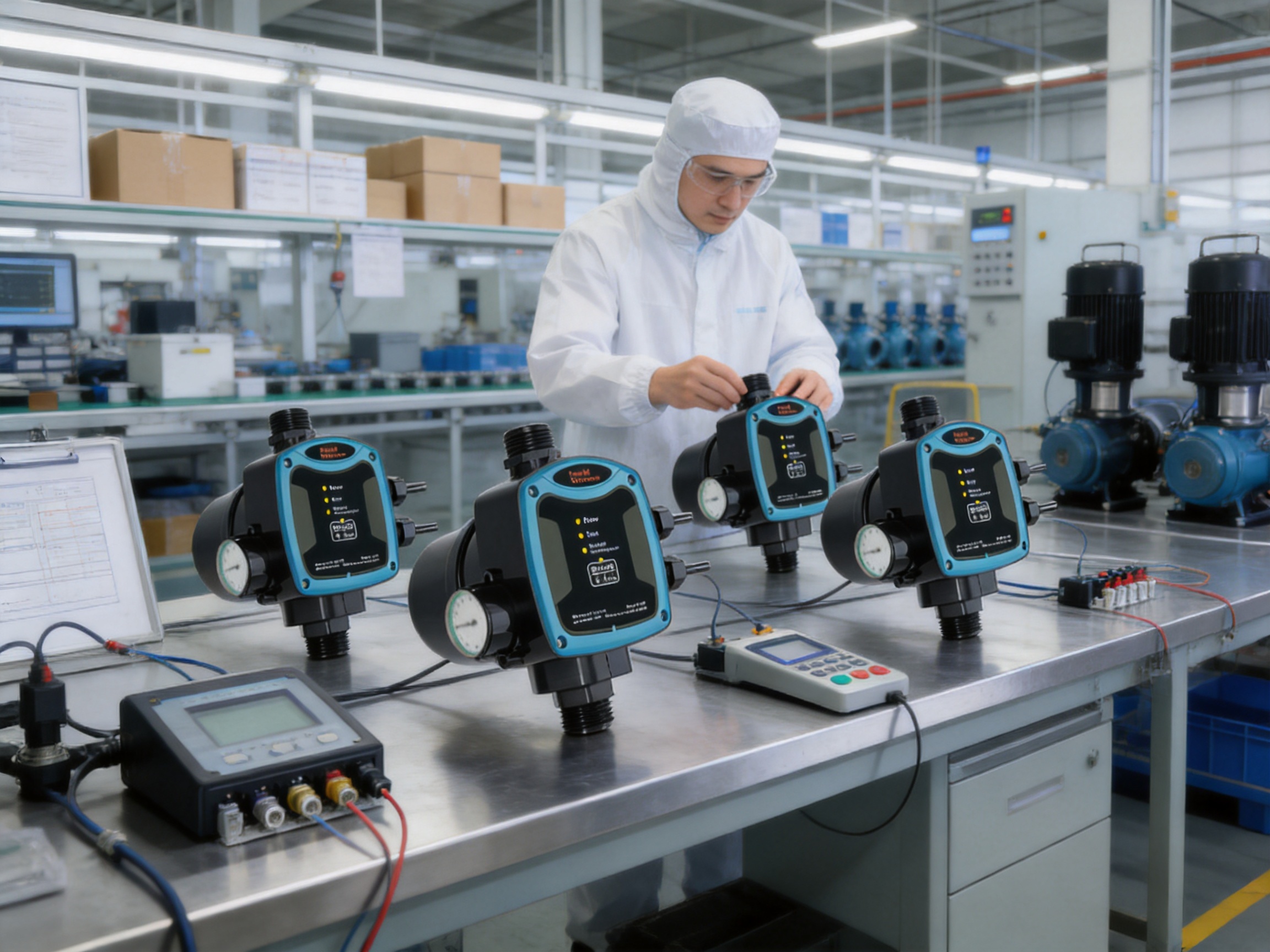
Modern water systems require more than a pump alone. A pump must start at the right moment, maintain suitable pressure, respond to changing demand, and stop safely when water flow ends or a dry-running condition occurs. In residential water supply, irrigation, industrial equipment, deep-well applications, and commercial facilities, an unsuitable control method can cause unstable pressure, unnecessary energy consumption, frequent motor starts, seal damage, overheating, or premature pump failure.
The FU3-P Series Pressure Gauge Auto-check Plug and Play Adaptive Timing Function Controller is designed to address these challenges. It combines pressure monitoring, automatic starting-pressure adjustment, adaptive timing, flow-switch operation, dry-run protection, and a convenient plug-and-play installation concept in one compact controller. The series is suitable for various pump types and supports a broad operating range, making it a practical control solution for installers, equipment manufacturers, distributors, and end users.
Unlike a basic pressure switch that responds only to a fixed pressure value, this controller is designed to observe pump operating conditions and adapt its behavior accordingly. Its auto-check function helps identify the pump’s maximum pressure, while the automatic mode can configure the starting pressure according to a designated percentage of the detected peak pressure. This reduces the need for complicated manual commissioning and makes the controller more adaptable to different pumps and installation conditions.
The product is manufactured by Taizhou Edwin Electric Co., Ltd., an integrated enterprise specializing in pump research and development, mass production, and international export. The company’s wider product portfolio includes deep well pumps, submersible pumps, domestic booster pumps, circulation pumps, solar water pumps, intelligent booster pumps, and pump accessories. This broad product knowledge gives the manufacturer a practical understanding of pump hydraulics, motor behavior, water supply requirements, and control-system compatibility.
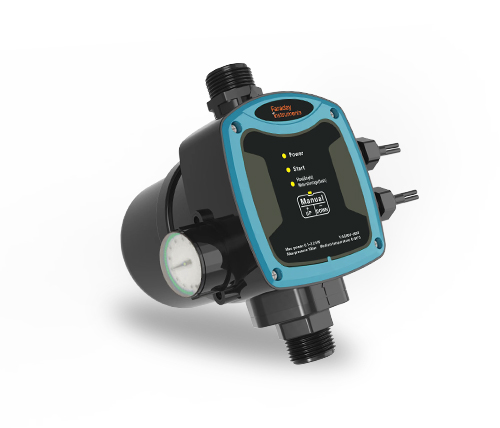
FU3-P Series Pressure Gauge Auto-check Plug and Play Adaptive Timing Function
A pump controller is the operating link between the electrical supply, the pump motor, and the water system. It determines when the pump should start, how long it should continue running, and when it should stop. In a conventional installation, these functions may require separate components, including a pressure switch, pressure gauge, relay, dry-run protection device, timer, and control cabinet. Each additional component introduces more wiring, more installation work, and more possible points of failure.
The FU3-P Series integrates several of these functions into a single controller. The built-in pressure gauge gives users a direct indication of system pressure. The auto-check function helps evaluate pump performance. The adaptive timing function supports automatic priming and operating protection. The flow-switch logic helps identify water demand and allows the pump to stop when the water outlet is closed.
This integrated approach is particularly valuable where space is limited or where a simple, fast installation is preferred. It can reduce the number of separate devices required around the pump discharge line and simplify the overall water-control arrangement. For installers, fewer components can mean less labor. For users, a simpler system can make troubleshooting and routine observation easier.
The controller is designed for use with various pumps rather than one narrowly defined pump model. It can be applied to deep-well submersible pumps, surface pumps, booster pumps, and other compatible pump systems within its electrical and hydraulic limits. The product’s broad voltage range and adjustable starting pressure further improve its suitability for different operating environments.
One of the most important advantages of the FU3-P Series is its ability to detect the maximum pressure of the connected pump and establish an initiating pressure based on a designated percentage of that peak value. In automatic mode, the user does not necessarily need to determine the initial pressure through repeated manual adjustment.
This feature can be useful when the controller is installed on a pump whose actual pressure performance differs from the nominal value stated on a label. Pump performance may change according to well depth, pipe length, elevation, water demand, voltage conditions, valve resistance, and other installation factors. An automatic pressure-recognition process can help the controller respond to the real system rather than relying only on theoretical specifications.
Automatic pressure configuration also reduces the possibility of setting the start pressure too high or too low. A starting pressure that is too high may prevent the pump from starting when water is needed. A starting pressure that is too low may cause delayed response, insufficient pressure, or repeated cycling. By using the pump’s detected operating capability as a reference, the controller can offer a more practical initial setting.
The plug-and-play design is intended to make installation straightforward. After the controller is correctly connected to the pump, pipework, power supply, and water system, the device can detect the operating conditions and apply its control logic. This approach is especially useful for replacement projects, domestic water-supply upgrades, small irrigation systems, and distributor-supplied pump packages.
A simple installation does not mean that technical precautions can be ignored. The installer must still verify that the voltage, current, motor power, pipe connection, grounding, water quality, and system pressure are suitable. Electrical connections should be completed by qualified personnel, and the pump must be protected from conditions outside the controller’s rated limits. The advantage of plug-and-play design is that it reduces unnecessary complexity after the correct installation conditions have been confirmed.
The controller includes an adaptive timing function for pump initialization and abnormal water conditions. When the pump starts, the system allows a self-priming period of approximately 3 minutes and 20 seconds. This timing gives the pump an opportunity to establish water flow, particularly in applications where air may be present in the suction line or where the pump needs additional time to fill the delivery pipe.
The initial timing can be customized before the product leaves the factory, according to the requirements of a particular application. This capability may be useful for original equipment manufacturers and system integrators that build the controller into a defined pump package. Different pumps, pipe layouts, and water sources may require different startup behavior, so a configurable timing period can improve application flexibility.
When water is unavailable, the pump can continue operating for the configured protection period and then stop automatically. This behavior helps limit the risk of prolonged dry running. Dry operation can cause excessive heat, mechanical seal deterioration, impeller damage, and motor problems. While the controller is not a substitute for correct pump selection or adequate water-source design, its timing-based protective response adds an important layer of operational security.
The operating principle includes flow-switch control. The pump may be activated when pressure falls below the starting pressure or when the flow switch opens during a water-use event. When the water outlet is closed and the flow switch returns to its stopping condition, the pump can stop automatically.
This arrangement supports automatic water delivery without requiring the user to start and stop the pump manually. In a household application, opening a faucet can create the demand signal. In an irrigation system, opening a valve can initiate pump operation. In a small commercial system, the controller can react to pressure and flow changes as water is consumed.
Flow-based operation can also reduce unnecessary running time. The pump does not need to operate continuously when no water is being used. Automatic stopping helps reduce electricity consumption, noise, heat generation, and mechanical wear. It also supports more convenient operation in systems where water demand varies throughout the day.
The starting pressure can be adjusted using the positive and negative buttons. This gives installers and users a practical way to adapt the controller to different operating conditions. For example, a high-rise water-supply installation may need a different pressure response from a garden irrigation system. A deep-well application may also require different settings from a short suction-line surface pump.
Adjustability is a major advantage over fixed-value control devices. A fixed pressure switch may operate correctly only within a narrow range of system conditions. If the water demand changes or the pump is replaced, the switch may require mechanical adjustment or complete replacement. A controller with convenient electronic adjustment can make future system changes easier.
The FU3-P Series is specified for a voltage range of 90 V to 260 V and a frequency of 50/60 Hz. This broad operating range supports use in different electrical environments and international markets. The maximum current rating is 30 A, while the applicable pump power range is listed as 0.1 kW to 2.2 kW.
These figures allow the controller to serve a wide variety of small and medium pump applications. However, users should always confirm the actual motor current, starting characteristics, connection method, and local electrical requirements before installation. A product rating should not be interpreted as permission to operate every motor at the maximum value without considering duty cycle, ambient temperature, wiring size, protective devices, and installation conditions.
The controller has an IP65 protection grade. This indicates a design intended to resist dust ingress and water projected from typical directions when the product is properly installed. Such protection is beneficial in pump rooms, utility spaces, agricultural installations, and other locations where moisture and airborne particles may be present.
Correct installation remains essential. Cable entries, connectors, pipe interfaces, and mounting positions must be arranged so that water cannot accumulate around electrical parts. The controller should not be submerged unless the product documentation specifically permits submersion. Protection performance depends on the condition of the enclosure, the correct sealing of connections, and compliance with the installation instructions.
The following table summarizes the principal technical information supplied for the FU3-P Series. The three listed model configurations share the same basic power, voltage, current, and frequency range, while the model codes identify different functional arrangements.
| Model | Power Range | Voltage | Maximum Current | Frequency | Medium Temperature | Maximum Pressure | Protection Grade | Interface Thread |
|---|---|---|---|---|---|---|---|---|
| FU3-ASP | 0.1–2.2 kW | 90–260 V | 30 A | 50/60 Hz | 0–80°C | 10 bar | IP65 | 1 inch |
| FU3-MSP | 0.1–2.2 kW | 90–260 V | 30 A | 50/60 Hz | 0–80°C | 10 bar | IP65 | 1 inch |
| FU3-MP | 0.1–2.2 kW | 90–260 V | 30 A | 50/60 Hz | 0–80°C | 10 bar | IP65 | 1 inch |
The application lift range is stated as 0–100 m. The maximum medium temperature is 80°C, and the maximum pressure is 10 bar. These limits should be treated as selection references rather than targets. A reliable installation should operate within suitable safety margins and consider pressure surges, water temperature changes, pump startup current, pipe friction, altitude, and long-term duty conditions.
The model notes explain the principal code distinctions. “A” indicates intelligent adjustment of starting pressure. “S” indicates a tank-related configuration. “M” indicates adjustable starting pressure. “P” indicates a pressure gauge. These designations help distributors and users identify the control arrangement required for a particular pump system.
The FU3-ASP configuration is associated with intelligent adjustment of starting pressure. It is a suitable choice for applications where automatic pressure recognition and simplified commissioning are priorities. This configuration may be attractive for installers who want the controller to evaluate the pump’s pressure performance instead of relying entirely on a manually selected initial value.
It can be considered for domestic water supply, deep-well pump installations, small irrigation systems, and pump packages where operating conditions may vary. Before selection, the installer should verify that the automatic mode is appropriate for the pump type and that the system has enough water during the pressure-recognition process.
The FU3-MSP configuration includes the tank-related “S” designation and adjustable pressure functions. It may be considered for systems that use a pressure tank or require a pressure-storage arrangement. A tank can reduce the frequency of pump starts in some installations and help stabilize pressure during short periods of water demand.
The controller, tank volume, check valve, pipework, and pump capacity must be selected as a complete system. A tank that is too small may not reduce cycling effectively, while a tank that is improperly precharged may cause unstable operation. The controller provides the control function, but overall performance depends on the correct hydraulic design.
The FU3-MP configuration is associated with adjustable starting pressure and a pressure gauge. It can be useful when the installer wants direct visual monitoring and manual adaptation of the starting value. The pressure gauge provides an immediate reference during commissioning and routine inspection.
This model may be suitable for replacement projects where users want a clear indication of operating pressure. It can also be helpful in systems where demand, elevation, or pipe resistance changes over time. The ability to view pressure and adjust the starting point makes troubleshooting more convenient than with an unmonitored control component.
Deep-well submersible pumps often operate under demanding conditions. The pump may be installed far below ground level, the water level can change seasonally, and the delivery pipe may be long. Automatic pressure checking and timed startup can help simplify operation in these systems.
The controller can detect the pressure behavior of the pump and use it to establish a practical initiating pressure. If the water source becomes unavailable, the timed protective response can stop the pump after the configured period. This is especially important for wells that experience intermittent recovery or seasonal depletion.
Installation design must still include suitable cable protection, correct pump submergence, adequate cooling conditions, appropriate check valves, and protection against sediment. The controller can support safe operation, but it cannot correct an incorrectly sized pump or a physically unsuitable well.
Surface pumps may require additional time to remove air from the suction line and establish stable water flow. The self-priming period supported by the controller gives the pump time to complete this process. This is useful in domestic supply, rainwater collection, garden irrigation, and small agricultural installations.
For reliable priming, the suction pipe should be airtight, the foot valve should function correctly, and the pump casing should be filled according to the pump manufacturer’s instructions. If air continues to enter the system, extending the timer alone will not solve the problem. The controller should be combined with good pipework practice and proper maintenance.
Booster pumps are used to increase pressure in buildings, homes, workshops, and commercial facilities. Water demand may change sharply, with short periods of high flow followed by long periods of inactivity. Automatic start and stop control can make a booster system more convenient and energy-conscious.
The pressure gauge allows users to monitor whether the system is providing the expected pressure. Adjustable starting pressure helps the installer coordinate the controller with building height, terminal fixtures, storage tanks, and downstream pressure requirements. A correct setting can help prevent nuisance starts and improve user comfort.
Irrigation systems may include several valves, sprinklers, hoses, and long pipe runs. When a valve opens, the controller can respond to the pressure or flow change and start the pump. When the valve closes, the pump can stop automatically.
This arrangement is convenient for small farms, gardens, nurseries, and landscape systems. It can also help reduce the likelihood that a pump will be left running after watering is completed. In larger irrigation networks, the controller should be integrated with the irrigation automation system and selected according to the actual flow and pressure demand.
Small industrial processes may need reliable water pressure for cleaning, cooling, equipment supply, or auxiliary operations. The FU3-P Series can serve as a compact control component where the pump power and pressure remain within its rated range.
Commercial users may benefit from the controller’s broad voltage compatibility, visible pressure indication, and adjustable operating parameters. However, industrial applications often require additional safeguards, such as control-panel isolation, alarm outputs, redundant pumps, high-temperature materials, or formal electrical certification. The controller should be evaluated as part of the complete system rather than treated as a universal industrial control cabinet.
Pool and spa equipment may use circulation or auxiliary pumps that require automatic operation. The controller can be considered for compatible pump systems where pressure, flow, and water temperature fall within the specified limits. The medium temperature range of 0–80°C provides flexibility for many water applications, but the actual chemical composition of pool or spa water must also be considered.
Water containing disinfectants, salts, or other chemicals may affect seals, fittings, and metal components. System designers should confirm material compatibility and ensure that the controller is installed in a dry, accessible location outside direct splash zones.
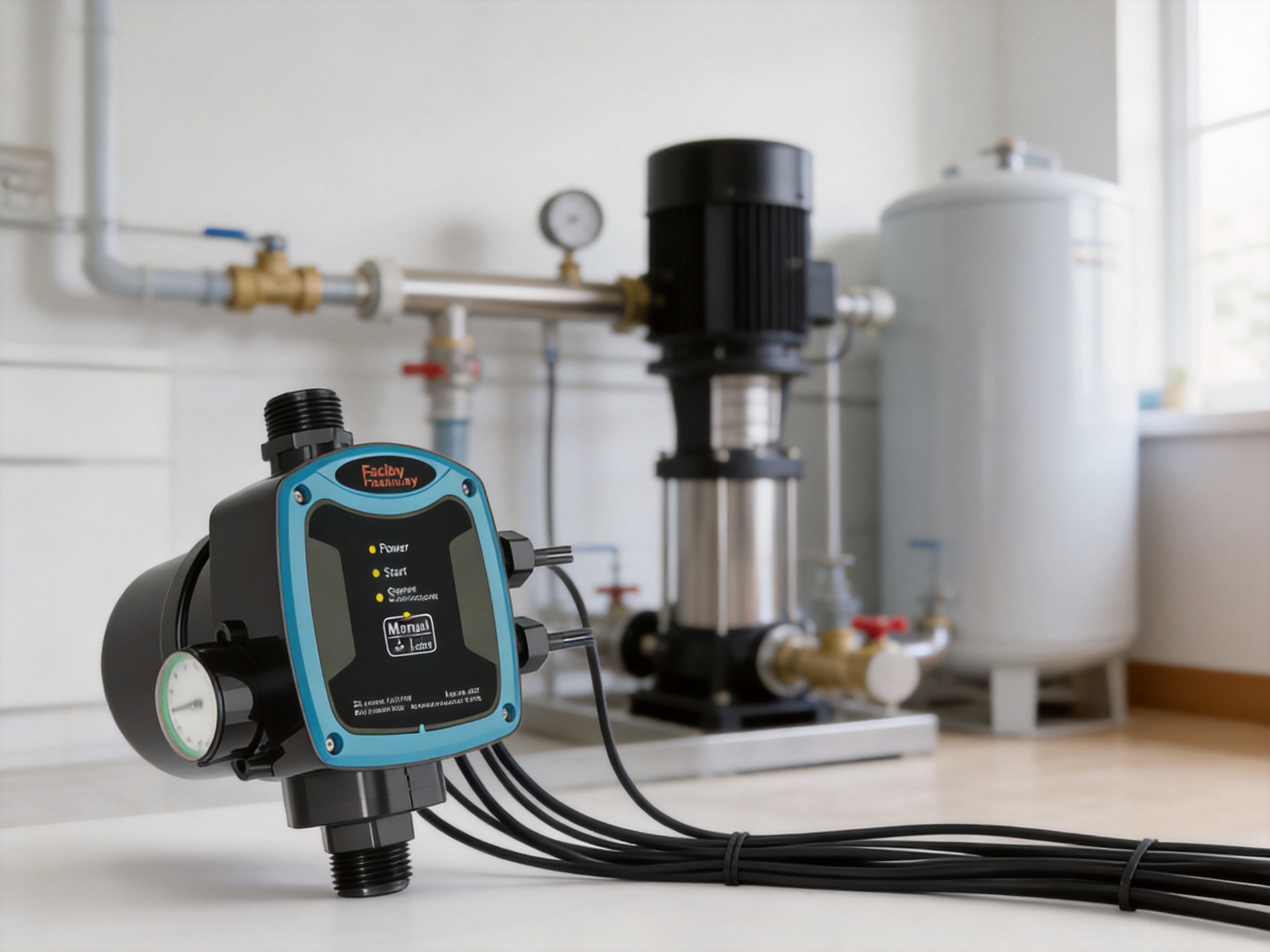
The controller’s operating sequence can be understood as a series of automatic decisions. First, the system monitors pressure and flow conditions. When pressure falls below the starting threshold or the flow switch opens during a demand event, the pump receives a start command.
After startup, the controller allows the pump to operate during the initial self-priming or initialization period. The default timing described for the product is approximately 3 minutes and 20 seconds, although the timing may be customized before ex-works delivery. During this stage, the pump has an opportunity to establish stable flow.
If the system reaches normal operating conditions, the pump continues to supply water as required. The pressure gauge provides a visual indication of the operating pressure, while the controller continues to respond to pressure and flow changes.
When the water outlet is closed, the flow switch changes state and the controller stops the pump automatically. This prevents the pump from running continuously without useful water delivery. If water scarcity prevents normal operation, the controller allows the configured protection period and then stops the pump to limit dry-running exposure.
The starting pressure can be changed through the positive and negative buttons. The correct setting depends on the pump, building, pipe network, required service pressure, and desired operating behavior. Any adjustment should be performed gradually while observing pressure stability and checking for repeated cycling.
A traditional control arrangement may use a pressure switch, a separate pressure gauge, a timer, a dry-run protection device, and additional relays. The integrated design of the FU3-P Series can reduce the number of components required for compatible applications. This may simplify panel space requirements and lower wiring complexity.
Traditional pressure switches often require manual adjustment of mechanical springs or pressure screws. Incorrect adjustment can lead to unstable operation or difficult troubleshooting. The FU3-P Series provides electronic adjustment and automatic pressure recognition, helping make commissioning more systematic.
A fixed controller may perform well with one pump but poorly with another. Pump pressure changes according to motor power, impeller design, well depth, pipe resistance, and water level. The auto-check function is intended to recognize the actual performance of the connected pump, allowing a more flexible response than a one-value control method.
The pressure gauge makes system behavior easier to observe. Users can see whether the pump reaches the expected pressure, whether pressure falls during demand, and whether a change occurs after maintenance. Visual feedback is valuable because many pump faults first appear as pressure abnormalities.
Basic pressure switches may continue to energize a pump when the water source is empty. The timed stop function provides an additional response to water scarcity. It can help protect the pump from prolonged operation without sufficient water, particularly in wells, storage tanks, and seasonal water sources.
Water systems are not always static. A property may be extended, a pipe may be replaced, a well level may change, or a pump may be upgraded. Adjustable starting pressure allows the controller to be adapted to the new conditions without necessarily replacing the entire control device.
The manufacturer, Taizhou Edwin Electric Co., Ltd., was established in 2008 and operates as an integrated manufacturing enterprise. Its capabilities include independent research and development, mass production, and global export. This combination is important for intelligent pump controllers because successful product development requires knowledge of both electronic control and real-world pump operation.
The company’s product range covers deep-well pumps, submersible pumps, domestic booster pumps, circulation pumps, solar water pumps, intelligent booster pumps, and pump accessories. Manufacturing and developing these product categories creates opportunities to evaluate controllers alongside different motor types, hydraulic designs, installation conditions, and customer requirements.
In practical manufacturing terms, a reliable controller depends on disciplined processes at several stages. Product development begins with application analysis, electrical design, interface planning, and compatibility evaluation. Prototype testing can then be used to examine starting behavior, pressure response, timing, current loading, enclosure performance, and user adjustment functions.
Mass production requires repeatable assembly procedures. Electrical parts must be correctly positioned, terminals must be securely connected, seals must be properly installed, and pressure interfaces must be checked for leakage. Consistent production methods help reduce variation between units and support dependable field performance.
Functional inspection is also essential. A controller should be checked for power-up behavior, pressure indication, button response, flow-switch response, start and stop logic, timing operation, and protective shutdown. Products intended for international customers must also be packed and labeled carefully so that model information, electrical ratings, and installation guidance remain clear throughout logistics and distribution.
The company’s experience in global export and its associated procurement and foreign-trade service organizations support a one-stop supply approach. International buyers may require product selection, order tracking, packaging coordination, shipment planning, and after-sales communication. Combining manufacturing with export-service capability can make procurement more efficient for distributors and project suppliers.
The company also invests in new energy and intelligent technology. Its development of solar water pumps and intelligent booster pumps reflects a broader movement toward automated, efficient, and application-specific water systems. This background is relevant to the FU3-P Series because intelligent control is becoming increasingly important as users seek improved convenience, lower operating costs, and better protection of pumping equipment.
Before installation, confirm that the controller is suitable for the pump power, voltage, current, frequency, pressure, water temperature, and pipe connection. Verify that the pump itself is appropriate for the water source and that the system does not exceed the maximum pressure or lift conditions.
Install the controller in an accessible position where the pressure gauge can be read easily. Protect the unit from unnecessary mechanical impact, direct flooding, excessive vibration, and conditions outside the stated IP65 application environment. Pipe connections should be sealed properly without applying excessive force that could damage the interface.
Electrical wiring must follow the applicable national and local requirements. Correct grounding, circuit protection, cable sizing, isolation, and motor connection are essential. The rated current of the controller should not be used as the only basis for wiring selection. Starting current, ambient temperature, cable length, installation method, and duty cycle must also be considered.
For a surface pump, fill the pump and suction line as required before starting. Inspect the foot valve, suction pipe, and joints for air leakage. For a submersible pump, confirm sufficient water coverage, correct cable installation, and proper check-valve arrangement.
After startup, observe the pressure gauge and listen for abnormal noise. Check whether the pump establishes flow within the expected time. Open and close the water outlet several times to confirm automatic starting and stopping. If the pump cycles too frequently, inspect the pressure setting, tank arrangement, flow switch, check valve, and pipework.
When commissioning a system with an automatic pressure-recognition function, make sure the pump has a stable water supply. An interrupted water source during the learning or checking stage may lead to an unsuitable pressure reference. If required, use the adjustment buttons to refine the operating point after the initial automatic setup.
Routine maintenance should include visual inspection of the enclosure, pipe connections, pressure gauge, wiring, and surrounding environment. Look for water leakage, corrosion, loose terminals, damaged cables, unusual pressure readings, and repeated pump cycling.
If the pump does not start, check the power supply, motor connection, pressure condition, flow-switch position, starting-pressure setting, and possible protective shutdown. If the pump starts but does not build pressure, inspect the water source, priming condition, suction pipe, valves, impeller, and pump direction where applicable.
If the pump does not stop, check whether the outlet is fully closed, whether the flow switch is obstructed, whether there is a downstream leak, and whether the pump can reach the stopping pressure. A leaking toilet valve, irrigation pipe, faucet, or check valve can create a continuous demand signal.
If the pump stops after the timing period, investigate possible water scarcity, blocked suction lines, incorrect pump installation, a closed valve, or air entering the system. Repeated dry-run protection events should not simply be bypassed. They indicate that the water supply or hydraulic arrangement requires attention.
Pressure-gauge accuracy should be considered when diagnosing a system. If the gauge reading appears inconsistent with actual performance, the gauge, pipe connection, or pressure sensing path may require inspection. Any electrical repair should be carried out by qualified technicians with the power isolated.
For distributors, the FU3-P Series offers a compact product category that complements a wide range of pumps. A distributor can supply the controller with deep-well pumps, submersible pumps, surface pumps, and booster pumps, creating a more complete water-system package.
For original equipment manufacturers, the ability to customize the initial timing before ex-works delivery can support application-specific product configurations. A pump package for a particular market may require a defined startup period, pressure behavior, or model combination. Factory-level configuration can help reduce field adjustments and improve product consistency.
For system integrators, the broad voltage range, visible pressure indication, adjustable starting pressure, and automatic protection functions provide useful design flexibility. The controller can be incorporated into domestic, agricultural, commercial, and light industrial equipment where the electrical and hydraulic requirements are compatible.
The carton data also supports logistics planning. The listed packing quantity is 12 pieces per carton for each model. The single-unit and 12-piece outer-box dimensions allow buyers to estimate warehouse requirements, transport volume, and distribution costs. Accurate packaging information is especially important for international procurement and mixed-container planning.
| Model | Pieces per Carton | Single-Unit Outer Box Size | 12-Piece Outer Box Size |
|---|---|---|---|
| FU3-ASP | 12 | 210 × 168 × 190 mm | 520 × 435 × 400 mm |
| FU3-MSP | 12 | 210 × 168 × 190 mm | 520 × 435 × 400 mm |
| FU3-MP | 12 | 210 × 168 × 112 mm | 520 × 435 × 245 mm |
Pump efficiency is influenced not only by the motor and impeller but also by operating control. A pump that runs when no water is needed consumes electricity without delivering useful flow. A pump that starts too frequently experiences additional electrical and mechanical stress. A pump that operates during water shortage may suffer avoidable damage.
By responding to pressure and flow, the FU3-P Series helps align pump operation with actual demand. Automatic stopping reduces idle running. Adjustable starting pressure helps match the controller to the system. Timing-based protection limits operation during abnormal water conditions. Together, these functions can support a more efficient and dependable pumping cycle.
Energy savings will depend on the complete installation. Pipe diameter, leakage, pump sizing, elevation, water demand, and valve selection all affect energy use. The controller cannot compensate for a severely oversized pump or a system with excessive hydraulic resistance. Its value comes from improving the control of a properly designed pump system.
The controller should be applied only within its specified limits. The maximum pressure is stated as 10 bar, the medium temperature range is 0–80°C, the lift range is 0–100 m, and the power range is 0.1–2.2 kW. Operating beyond these values may create unsafe or unreliable conditions.
Users should also consider the chemical properties of the pumped medium. The product is intended for compatible water applications, but aggressive chemicals, abrasive particles, high sediment loads, or unusual fluids may require special materials and a different control solution.
Pressure surges must be considered in long pipe systems, fast-closing valves, and high-elevation installations. A pressure controller should not be used as the only protection against water hammer or excessive system pressure. Additional valves, tanks, relief devices, or engineering controls may be necessary.
In critical applications, such as fire protection, medical facilities, major industrial processes, or systems where pump failure creates serious risk, the controller should be part of a professionally engineered design with appropriate redundancy and alarms.
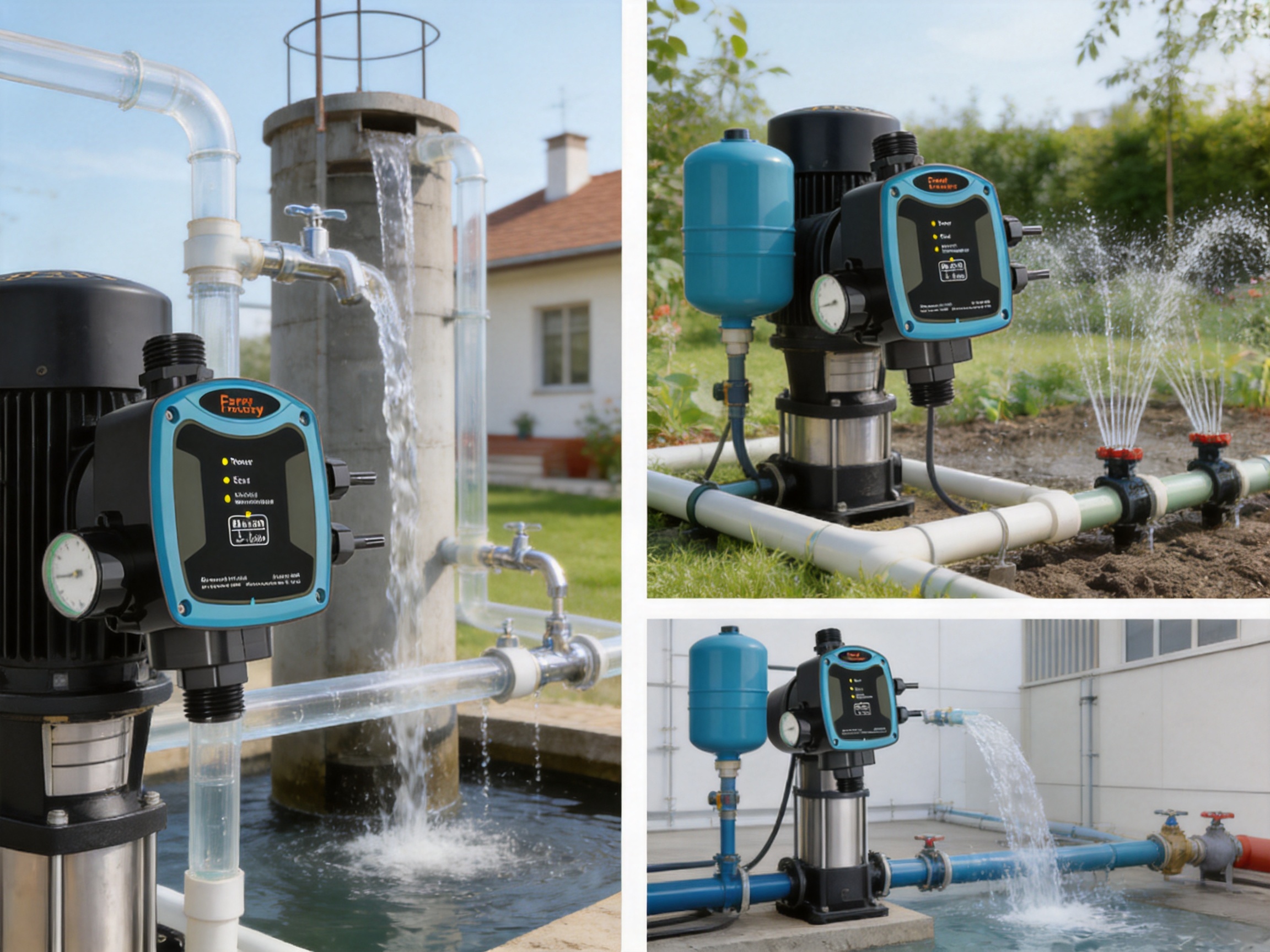
It is an automatic pressure controller for compatible pumps. It combines a pressure gauge, automatic pressure checking, adjustable starting pressure, flow-switch operation, adaptive timing, and protection against prolonged operation during water scarcity.
Yes, the product information identifies deep-well submersible pumps among its compatible applications. The pump power, current, voltage, pressure, lift, water temperature, and installation conditions must remain within the specified limits.
The auto-check function monitors the pump’s pressure performance and can detect the maximum pressure. In automatic mode, the controller uses a designated percentage of the peak pressure as the initiating or starting pressure, reducing the need for manual initial setup.
Yes. The starting pressure can be adjusted with the positive and negative buttons. The exact setting should be selected according to the pump, pipe network, elevation, water demand, and required service pressure.
The stated initialization or self-priming period is approximately 3 minutes and 20 seconds. The timing can be customized before ex-works delivery for suitable application requirements.
If water scarcity prevents normal operation, the pump can continue for the configured protection period and then stop automatically. This helps reduce the risk of prolonged dry running. The cause of the water shortage should still be investigated before restarting the system.
The model codes identify different functions. “A” indicates intelligent starting-pressure adjustment, “S” indicates a tank-related configuration, “M” indicates adjustable starting pressure, and “P” indicates a pressure gauge. The appropriate model should be selected according to the system design and required control method.
The listed voltage range is 90–260 V, with a frequency of 50/60 Hz and a maximum current of 30 A. The compatible pump power range is 0.1–2.2 kW. Actual installation suitability must be confirmed using the motor nameplate and local electrical requirements.
The maximum pressure is specified as 10 bar. The system should be designed with an appropriate safety margin and should account for pressure surges and abnormal operating conditions.
The IP65 protection grade supports resistance to dust and water projection when the controller is correctly installed. It should still be protected from flooding, direct submersion, severe weather exposure, and poorly sealed cable connections.
No. It is designed for compatible pump applications within its ratings. Large industrial systems, high-power motors, critical facilities, fire systems, and applications requiring advanced alarms or redundancy may need a more comprehensive control system.
Check for open faucets, leaking pipes, defective check valves, flow-switch problems, insufficient pressure, incorrect settings, and pump damage. Continuous operation may indicate a real water demand or a hydraulic fault rather than a controller fault.
Inspect the water source, priming condition, suction pipe, valves, pump installation, pressure setting, and flow-switch operation. If the controller detects water scarcity, it may stop after the configured timing period to reduce dry-running risk.
A pressure gauge provides direct visual feedback. It helps users observe startup pressure, operating pressure, pressure loss, and abnormal changes. This information can make commissioning and maintenance faster and more accurate.
Installers, pump distributors, OEMs, system integrators, agricultural users, residential water-system operators, and light commercial facilities can benefit from the controller when their pump systems match the specified electrical and hydraulic requirements.
The FU3-P Series Pressure Gauge Auto-check Plug and Play Adaptive Timing Function Controller provides a practical approach to automatic pump management. Its principal strengths are integrated pressure monitoring, automatic pressure recognition, adjustable starting pressure, flow-switch control, self-priming timing, dry-run response, wide voltage compatibility, and an IP65 enclosure design.
Compared with a traditional fixed pressure switch, the controller offers greater adaptability and more operating information. Compared with a system built from several separate control devices, it can simplify installation and reduce component complexity. Its compatibility with deep-well submersible pumps, surface pumps, booster pumps, irrigation systems, and other suitable applications makes it useful for a broad range of water-management projects.
The product is supported by a manufacturer with experience in pump research and development, mass production, global export, and intelligent water technology. Its wider pump portfolio provides a strong foundation for understanding the complete relationship between pump hydraulics, motor operation, pressure control, and customer requirements.
For the best results, the controller should be selected as part of a complete system. Correct pump sizing, reliable pipework, adequate water supply, proper electrical protection, suitable pressure settings, and regular maintenance remain essential. When these conditions are met, the FU3-P Series can help improve convenience, protect compatible pumps, stabilize water delivery, and support efficient operation across residential, agricultural, commercial, and light industrial applications.
1. Product technical information for the FU3-P Series Pressure Gauge Auto-check Plug and Play Adaptive Timing Function Controller.
2. Manufacturer-provided model specifications for FU3-ASP, FU3-MSP, and FU3-MP configurations.
3. Manufacturer company information concerning pump research and development, mass production, export services, and intelligent water-pump technology.
4. General principles of pump pressure control, flow-switch operation, self-priming, and dry-running protection.
5. General guidance for electrical installation, pump-system commissioning, pressure monitoring, and preventive maintenance.
serieswatershortageprotectionvoltagestabilizationstainlesssteelverticalmultistagepump.jpg "EVR(S) Series Water Shortage Protection Voltage Stabilization Stainless Steel Vertical Multistage Pump")
edwina@edwin-pump.com
+86-13586290903 (WhatsApp)
Xuri Gongliang Cutting Tool Entrepreneurship Park, Wenqiao Town, Wenling City, Taizhou City, Zhejiang Province, China

High Performance Smart Pump Factory


 English