edwina@edwin-pump.com

View All Products
en
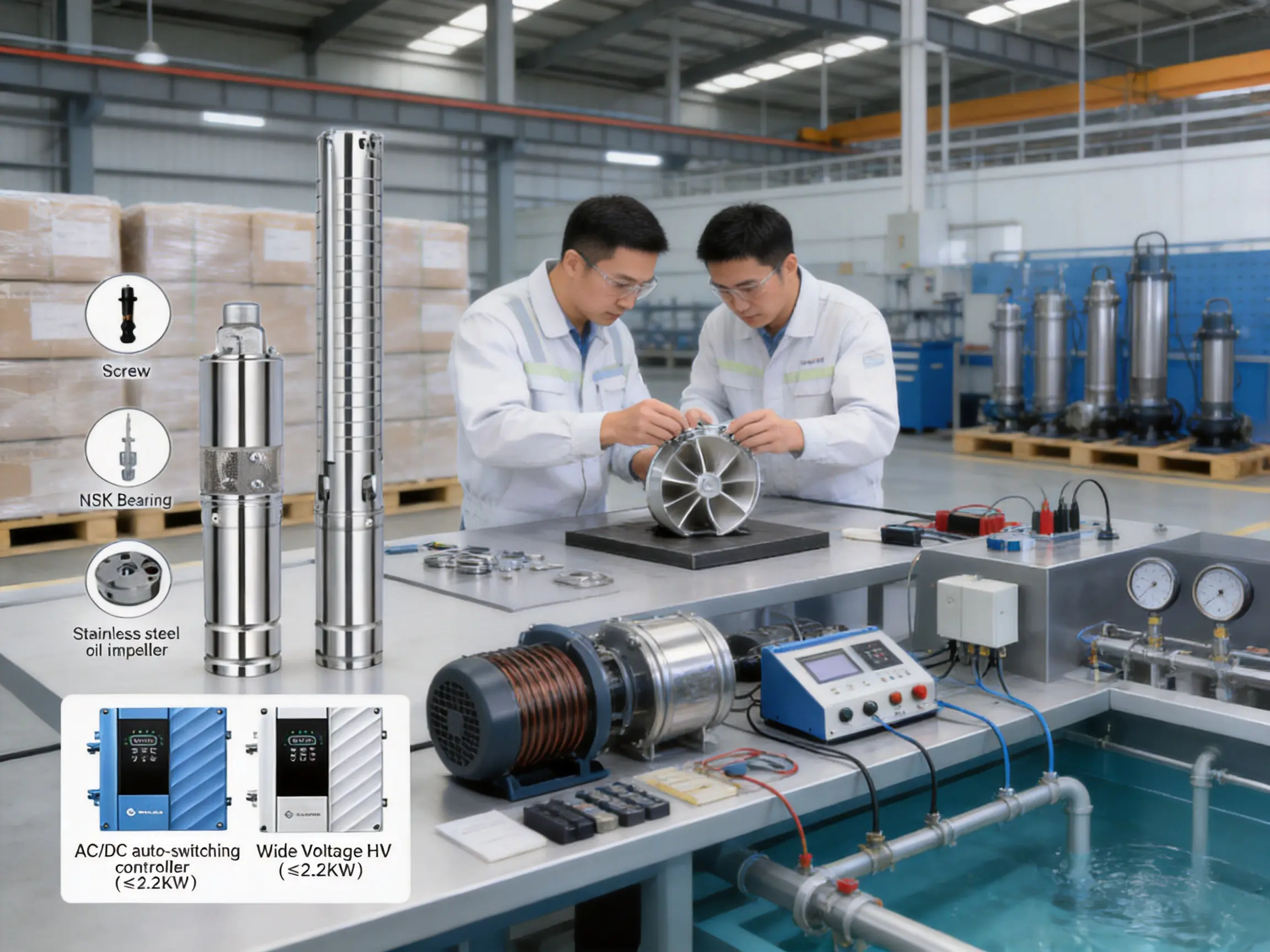
Reliable access to water is essential for agriculture, livestock production, rural communities, industrial facilities, and off-grid development. In many locations, however, water must be lifted from deep wells where conventional surface pumps cannot provide sufficient suction, while grid electricity may be unstable, unavailable, or too expensive to use continuously. Solar pumping technology addresses these challenges by converting renewable energy into a dependable water supply. The 3ADSC AC/DC Stainless Steel Impeller Solar Deep Well Pump is designed for this purpose, combining deep-well pumping capability, hybrid electrical operation, corrosion-resistant construction, and energy-efficient motor technology in one integrated solution.
This pump is developed for users who require more than a basic solar water pump. Its AC/DC hybrid design enables operation from solar-generated direct current or conventional alternating current. When sunlight is available, the system can use solar energy to reduce operating costs and dependence on the electrical grid. When solar output is insufficient, AC power can support continued operation. This flexibility is particularly valuable for irrigation systems, livestock farms, rural water projects, storage tank filling, and other applications where water availability must not depend entirely on weather conditions.
The pump is available in several configurations, with power ratings from 750 W to 1,500 W, maximum flow rates from 4.8 to 6 cubic meters per hour, and maximum heads from 60 to 135 meters. These options allow system designers to select a suitable model according to well depth, required discharge pressure, pipeline length, elevation difference, and daily water demand. The product’s 1.25-inch outlet, two-meter cable, high-voltage DC input range, and compatible solar panel requirements further support practical installation in a broad range of water supply projects.
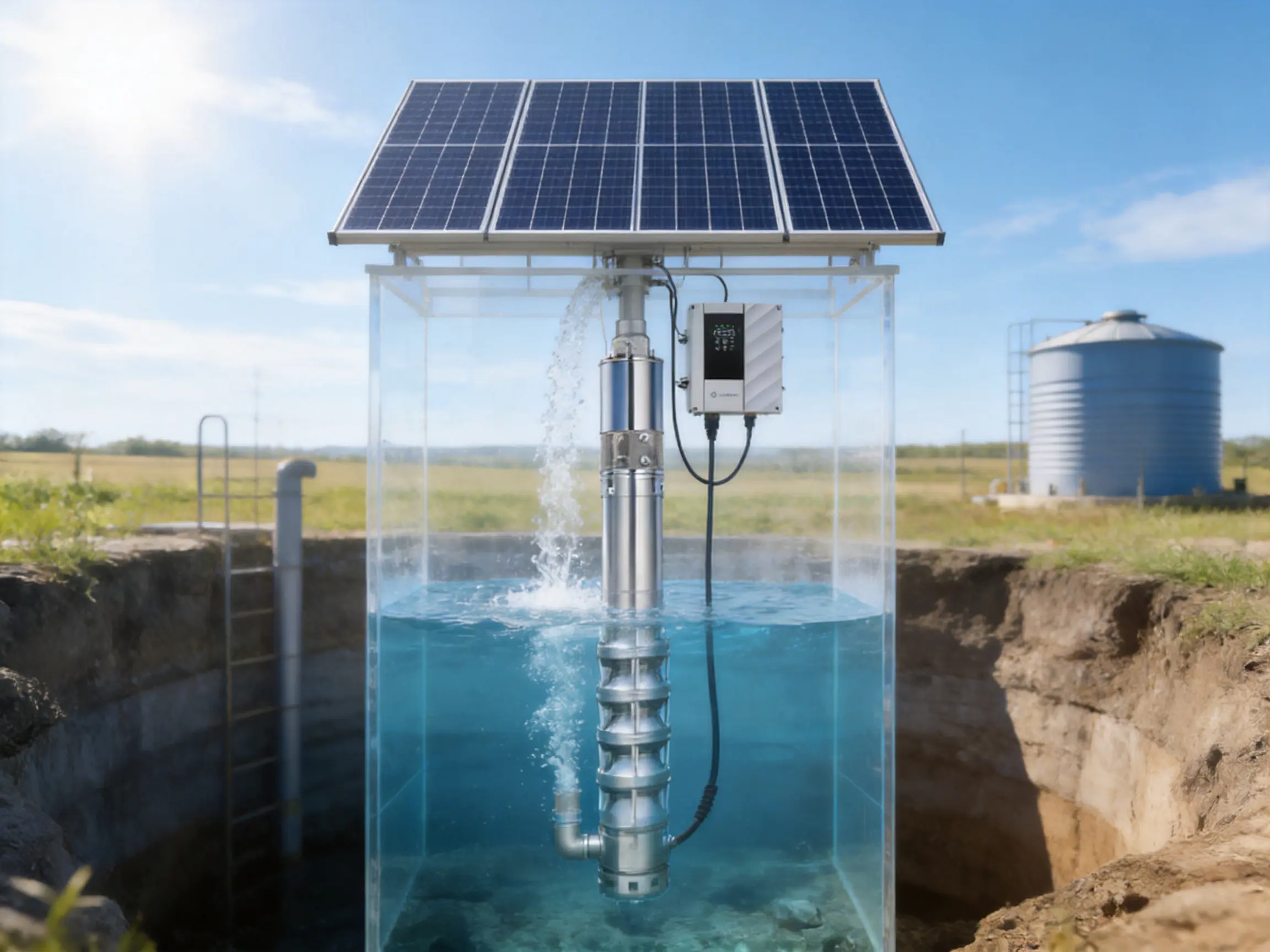
The 3ADSC series is a submersible deep well pump designed to operate below the water level. Unlike a surface pump, which must draw water through a suction line and is limited by atmospheric pressure, a submersible pump pushes water upward from inside the well. This arrangement improves performance in deep wells and reduces the risk of suction loss, priming problems, and cavitation caused by excessive suction lift.
The pump’s main hydraulic components are installed in a compact submersible structure. The motor drives a multistage pumping assembly that generates the pressure required to raise water through a deep well and deliver it to an irrigation network, elevated tank, reservoir, or distribution point. Because the pump is positioned close to the water source, energy is used more effectively for vertical lifting rather than for overcoming long suction distances.
The product is categorized as an AC/DC hybrid submersible solar pump because it can accept either solar DC power or AC electricity. The listed AC operating range is 85 V to 280 V, while the optimum DC input range is either 110 V to 350 V or 150 V to 350 V depending on the model. Solar panel open-circuit voltage must remain below 450 V, and the recommended solar array power is at least 1.3 times the rated pump power. These requirements provide a practical basis for designing a compatible solar power system.
The hybrid arrangement provides an important advantage over solar-only pumps. A solar-only system may stop when sunlight is weak, during heavy cloud cover, or after sunset unless a battery bank or water storage system is added. The AC/DC pump can instead use grid or generator power when needed. This helps maintain water supply continuity while still allowing the owner to obtain significant energy savings during periods of strong solar production.
One of the most important features of the 3ADSC pump is its stainless steel impeller. The impeller is the rotating hydraulic component that transfers energy from the motor to the water. It operates continuously under high speed and pressure, making its material selection critical to pump life, efficiency, and maintenance requirements.
Stainless steel provides strong resistance to corrosion compared with many ordinary carbon steel or lower-grade metal alternatives. This is especially valuable in deep well applications, where water may contain dissolved minerals, salts, suspended particles, or other substances that gradually attack unprotected components. A corrosion-resistant impeller helps maintain hydraulic geometry and reduces the risk of surface deterioration that can lower flow performance over time.
The stainless steel construction also supports long-term reliability in agricultural and rural installations where routine maintenance may be difficult. When a pump is installed deep underground, removing it for repair can require specialized equipment and significant labor. Improving the durability of the impeller helps reduce the frequency of such interventions and can lower the total cost of ownership over the pump’s service life.
Compared with pumps using less durable impeller materials, the stainless steel configuration is better suited to demanding operating environments. It offers a balance of mechanical strength, resistance to rust, and dependable hydraulic performance. This is a significant competitive advantage for customers who prioritize long service intervals and stable operation rather than only the initial purchase price.
The ability to use both AC and DC power gives this pump a level of operational flexibility that is not available with many conventional solar pumps. A solar-only product may offer low operating costs but can require additional investment in batteries, backup generators, or large water storage tanks. A standard AC pump, on the other hand, may depend on a stable grid connection and may be unsuitable for remote locations.
The hybrid pump combines the advantages of both approaches. Solar energy can serve as the primary power source for daytime pumping, while AC electricity can be used as backup or as the main source when solar energy is unavailable. The arrangement is suitable for farms that operate during changing weather conditions, remote water systems connected to a small generator, and facilities that want to reduce grid consumption without sacrificing reliability.
Hybrid operation also improves planning flexibility. A user can begin with a solar array and later connect an AC source if the water demand grows. Alternatively, a system can be connected to the grid first and gradually incorporate solar panels as part of an energy-saving upgrade. This adaptability helps protect the customer’s investment and allows the pump to remain useful as site conditions change.
Deep-well pumping requires sufficient head pressure to overcome the vertical distance from the water level to the delivery point, as well as friction losses in the pipe and fittings. The 3ADSC series includes models with maximum heads ranging from 60 meters to 135 meters. This makes the product appropriate for wells and water transfer projects where a standard low-head pump would be inadequate.
The higher-head models are suitable for deep agricultural wells, elevated storage tanks, hillside irrigation areas, and systems with long discharge pipelines. The lower-head models can be used where the well is less deep or where the water only needs to be delivered to a nearby tank or irrigation network. Selecting the correct model is important because maximum head and maximum flow are not normally achieved at the same operating point. A professional system design should evaluate the actual total dynamic head and the required flow rate.
By providing several flow and head combinations, the series allows distributors, engineers, and installers to match pump selection more accurately to the project. This is preferable to using one general-purpose model for every installation, since an incorrectly sized pump may consume unnecessary energy, deliver insufficient water, or experience excessive wear.
The pump uses a brushless motor design intended to reduce mechanical wear and energy consumption. Traditional brushed motors rely on physical brushes and commutators that experience friction and gradually wear. Brushless technology replaces these components with electronic commutation, reducing contact-related losses and eliminating the need for periodic brush replacement.
For solar pumping applications, efficiency is particularly important because available solar power varies throughout the day. A more efficient motor can produce useful water output from a smaller solar array or continue operating for a longer period under weaker sunlight. Reduced electrical losses also help limit heat generation within the motor, supporting better durability when the pump is used for extended operating cycles.
The brushless structure is beneficial in remote installations because it reduces routine maintenance. There are fewer wear parts inside the motor, and the absence of brushes avoids problems caused by brush dust, sparking, and commutator deterioration. These characteristics make the technology well suited to farms, wells, and off-grid facilities where technical service may not be immediately available.
Deep well pump maintenance can be more complicated than surface pump maintenance because the equipment is installed inside the well. Every removal operation may require workers, lifting tools, and interruption of the water supply. The 3ADSC pump addresses this challenge through durable materials, a sealed submersible design, a brushless motor, and a corrosion-resistant impeller.
Lower maintenance does not mean that the pump can be installed without professional care. Proper cable protection, correct suspension, adequate water submergence, clean electrical connections, and suitable pipe sizing remain essential. However, the product’s design reduces the number of components that normally require frequent service. When the pump is correctly selected and installed, users can benefit from dependable operation and fewer unexpected interruptions.
Long service potential is also connected to the quality of manufacturing processes. Consistent component dimensions, accurate motor assembly, reliable sealing, controlled electrical testing, and performance verification all contribute to stable field operation. A pump’s durability is therefore not determined by material selection alone; it depends on the complete production and quality-control system behind the product.
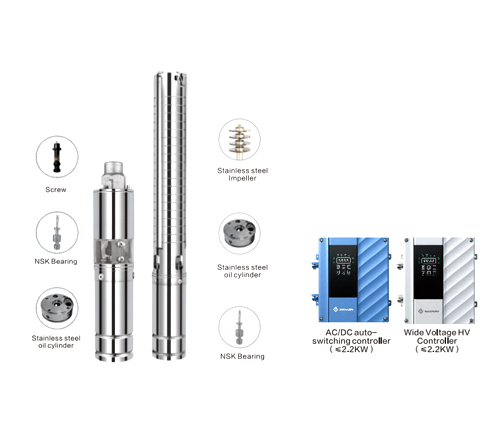
3ADSC AC/DC Stainless Steel Impeller Solar Deep Well Pump
The 3ADSC series includes six documented models. Three models provide maximum flow rates close to 5 cubic meters per hour, while the other three provide up to 6 cubic meters per hour. The maximum head ranges from 60 meters to 135 meters, and the rated power ranges from 750 W to 1,500 W.
| Model | AC Voltage | Optimum DC Input | Power | Maximum Flow | Maximum Head | Outlet | Cable | Maximum Solar VOC | Recommended Solar Power |
|---|---|---|---|---|---|---|---|---|---|
| 3ADSC4.8-95-110-750 | 85–280 V | 110–350 V | 750 W | 4.8 m³/h | 95 m | 1.25 in | 2 m | Below 450 V | At least 1.3 times pump power |
| 3ADSC5-112-110-1100 | 85–280 V | 110–350 V | 1,100 W | 5 m³/h | 112 m | 1.25 in | 2 m | Below 450 V | At least 1.3 times pump power |
| 3ADSC5-135-150-1500 | 85–280 V | 150–350 V | 1,500 W | 5 m³/h | 135 m | 1.25 in | 2 m | Below 450 V | At least 1.3 times pump power |
| 3ADSC6-60-110-750 | 85–280 V | 110–350 V | 750 W | 6 m³/h | 60 m | 1.25 in | 2 m | Below 450 V | At least 1.3 times pump power |
| 3ADSC6-85-110-1100 | 85–280 V | 110–350 V | 1,100 W | 6 m³/h | 85 m | 1.25 in | 2 m | Below 450 V | At least 1.3 times pump power |
| 3ADSC6-115-150-1500 | 85–280 V | 150–350 V | 1,500 W | 6 m³/h | 115 m | 1.25 in | 2 m | Below 450 V | At least 1.3 times pump power |
The model name provides a useful indication of the basic performance class. For example, the 3ADSC6-60-110-750 model is designed for approximately 6 cubic meters per hour of maximum flow, a maximum head of 60 meters, an optimum DC voltage beginning at 110 V, and a rated power of 750 W. The 3ADSC5-135-150-1500 model is intended for higher lifting requirements, with a maximum head of 135 meters and a rated power of 1,500 W.
Maximum values should not be interpreted as guaranteed operating values under every installation condition. Pump flow typically decreases as total head increases. In a real project, the actual discharge depends on the well’s water level, pipe size, pipe length, elevation, valves, filters, irrigation equipment, and available electrical input. Performance curves should therefore be consulted during final selection.
The first step is to determine the required daily water volume. Agricultural irrigation, livestock watering, and domestic supply systems may have very different demand patterns. A farm may require a large volume during a limited pumping window, while a household may need a smaller and more consistent supply. The daily requirement should be converted into an approximate hourly flow based on the number of hours the pump is expected to operate.
The second step is to calculate total dynamic head. This includes the vertical distance from the dynamic water level in the well to the discharge point, the elevation of the storage tank or irrigation area, and friction losses in the pipe. The water level should be measured while the well is pumping rather than only when the well is static, because the operating water level can fall under sustained demand.
The third step is to evaluate the solar resource and electrical configuration. The solar array must provide suitable voltage and enough power for the selected pump. The open-circuit voltage must remain below 450 V, while the operating voltage must remain within the pump’s specified DC range. The recommended solar array power is at least 1.3 times the pump’s rated power, which allows a reasonable margin for temperature, sunlight variation, wiring losses, and real-world operating conditions.
Finally, the installer should determine whether AC backup is required. A project that supplies drinking water or livestock may need continuous availability even during extended periods of cloud cover. In such cases, an AC connection, generator, or additional water storage may be used as a backup strategy.
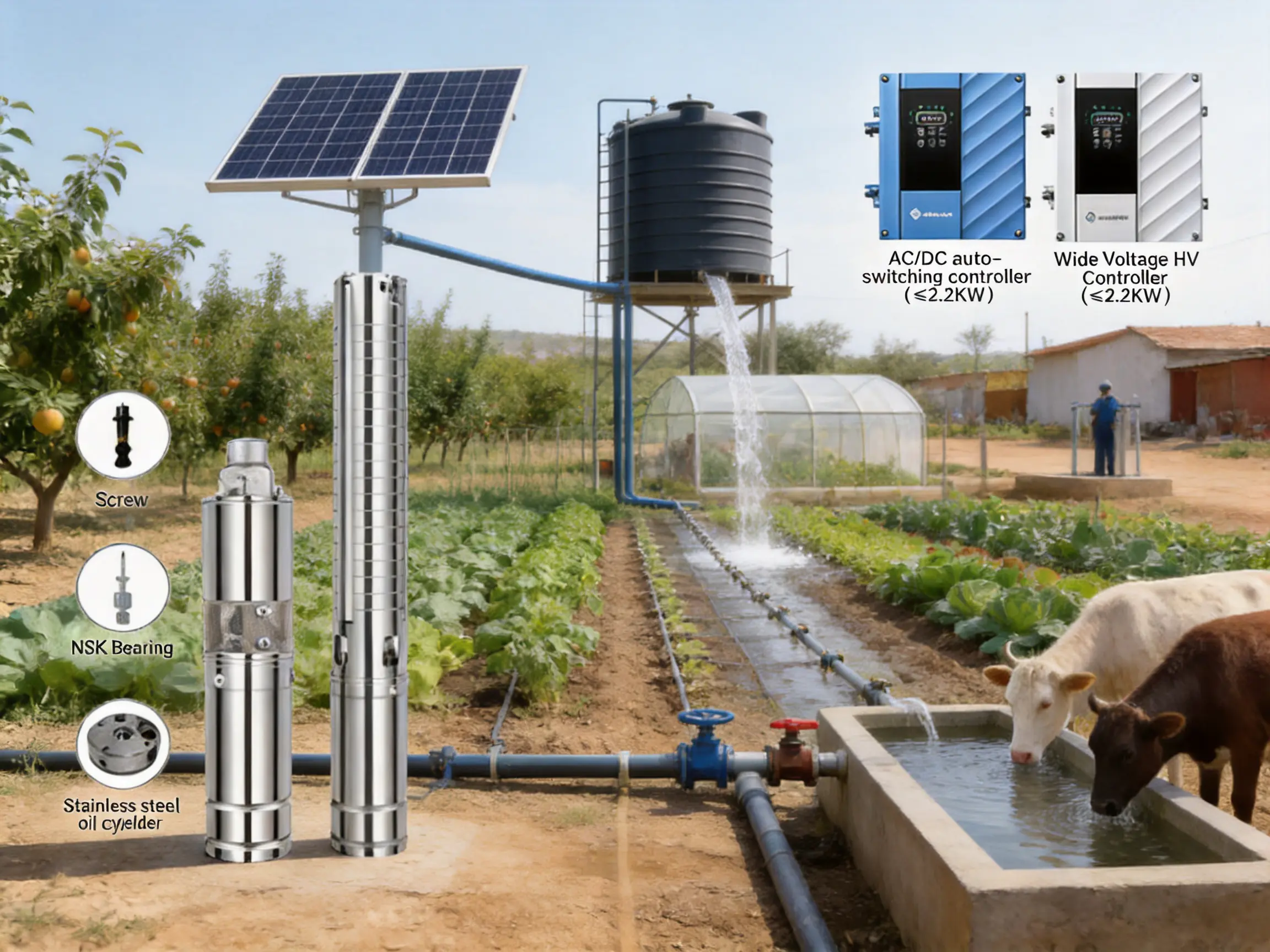
Solar deep well pumping is well suited to farmland and orchards because irrigation demand often occurs in locations where grid infrastructure is limited. The 3ADSC pump can lift groundwater from a deep well and deliver it to drip irrigation systems, sprinklers, holding tanks, or open channels. During periods of strong sunlight, the system can operate using renewable energy and reduce fuel or electricity costs.
For orchards, the pump may fill an elevated storage tank during the day, allowing irrigation to continue through a controlled distribution system. This approach separates water collection from water application and can help stabilize pressure. In greenhouse projects, the pump can supply tanks that feed drip lines, misting equipment, or climate-control systems.
The stainless steel impeller is advantageous in agricultural environments where groundwater composition varies from one location to another. Although water quality should always be tested before installation, corrosion-resistant hydraulic components provide additional protection against mineral-related deterioration.
Reliable drinking water is essential for cattle, sheep, goats, poultry, and other livestock. Farms may be located far from distribution networks, making solar pumping an economical alternative to extending grid power or transporting water manually. The pump can transfer water from a deep well to troughs, storage tanks, or automated drinking systems.
The hybrid AC/DC design offers additional security for livestock operations. Solar energy can provide normal daytime pumping, while AC power can be used when water demand remains high during poor weather. Proper tank sizing can further reduce the need for continuous pump operation and provide a reserve for periods of low solar output.
In rural communities, deep wells may be the most practical source of drinking water and domestic water. A submersible solar pump can move water to an elevated tank, from which it can be distributed by gravity or a separate booster system. This arrangement can reduce the complexity of household plumbing and provide water access to several buildings.
For community systems, the pump should be selected based on the number of users, peak demand, well yield, storage capacity, and required treatment equipment. Water quality treatment, filtration, disinfection, and local regulatory requirements must be considered separately from the pump itself. The pump’s role is to provide reliable water movement from the source to the designated storage or distribution point.
Many water projects do not require immediate direct delivery. Instead, the pump fills a reservoir, elevated tank, or ground-level storage basin. This is a practical way to use solar energy because pumping can take place whenever sunlight is available, while the stored water can be used later.
Storage-based systems are particularly helpful in regions with variable solar radiation. The pump does not need to run at night if enough water has been collected during daylight hours. A float switch, level sensor, or control system can stop the pump when the tank is full and protect it from unnecessary operation.
The performance of a deep well pump depends heavily on manufacturing consistency. A pump may contain precisely matched hydraulic components, electrical windings, seals, bearings, cable assemblies, and control elements. Small variations in dimensions or assembly quality can influence vibration, efficiency, noise, temperature, and service life. An experienced manufacturer therefore needs a controlled process that covers design, material purchasing, production, assembly, testing, and after-sales support.
Taizhou Edwin Electric Co., Ltd. was established in 2008 and operates as an integrated manufacturing enterprise with independent research and development capabilities, mass production, and global export experience. This integrated structure allows the company to develop products according to market needs rather than relying solely on standardized third-party designs.
Independent research and development is especially important for hybrid solar pumps because the product must coordinate hydraulic performance with electrical characteristics. Motor efficiency, voltage range, solar array compatibility, control behavior, thermal management, and protection functions all influence the final operating result. Product development teams must consider these elements together rather than treating the pump and power system as unrelated components.
Experience in deep well pumps, submersible pumps, domestic booster pumps, and circulation pumps also provides a broad technical foundation. Knowledge gained in one product category can support improvements in another. For example, motor sealing experience from submersible equipment can inform the design of solar deep well pumps, while hydraulic development from booster products can help improve pressure stability.
A dependable manufacturing process begins with appropriate raw materials and components. For the 3ADSC pump, the stainless steel impeller is a key performance component. Material consistency, dimensional accuracy, surface finish, and balance are all important. An impeller that is not properly balanced can increase vibration and place additional stress on bearings, seals, and motor components.
Other important areas include motor winding materials, insulation systems, shaft quality, mechanical seals, protective housings, cable jackets, and fasteners. Components intended for submerged operation must be compatible with water exposure and must maintain their mechanical and electrical properties over time.
Effective component control includes supplier evaluation, incoming inspection, batch identification, and traceability. These procedures help manufacturers detect deviations before parts enter production. They also make it easier to identify the source of a problem if a field issue is reported.
Assembly quality affects both efficiency and durability. The motor, impeller, diffuser, shaft, bearings, seals, and housing must be installed with correct alignment and tolerances. Excessive clearance can reduce hydraulic efficiency, while insufficient clearance can cause friction or blockage. Poor shaft alignment may increase vibration and shorten bearing life.
Electrical assembly requires equal attention. Windings must be properly formed and insulated, connections must be secure, and cable exits must be protected against water penetration. Submersible equipment must maintain effective sealing throughout operation, including during temperature changes and pressure variations.
A structured assembly process can include work instructions, calibrated tools, operator training, inspection points, and production records. These methods reduce variation between units and support repeatable performance for both standard orders and larger international shipments.
Before a submersible pump leaves the factory, electrical checks should verify insulation resistance, winding continuity, operating current, and basic motor behavior. Testing helps identify short circuits, incorrect connections, insulation damage, or abnormal electrical consumption.
For an AC/DC hybrid product, testing should also consider the different input modes. The pump must be compatible with the specified AC voltage range and the appropriate DC input range. Testing under representative conditions helps confirm that the motor and control system can transition between available power sources as intended.
Electrical testing is also connected to safety. Correct grounding, cable integrity, insulation quality, and protective measures help reduce the risk of electric shock, equipment damage, and premature failure. Final installation must still follow local electrical regulations and be completed by qualified personnel.
Hydraulic testing is used to confirm that the pump produces expected flow and head characteristics. A test bench can measure discharge, pressure, current, and power consumption at selected operating points. The results can be compared with the product’s performance curve and technical specifications.
Performance verification is particularly valuable for deep well pumps because field conditions are difficult to reproduce after installation. Testing before shipment provides a controlled opportunity to identify problems with impeller geometry, motor speed, internal clearances, or assembly alignment.
Manufacturers serving international customers must also maintain consistent product documentation. Clear model identification, accurate technical data, correct cable specifications, and reliable packaging help distributors and installers select and deploy the equipment correctly.
Edwin Pump has developed a professional export and procurement service structure through associated companies established in 2012. This organization supports procurement planning, order tracking, cross-border delivery, and foreign trade services. Such capabilities are important for international buyers who require more than a product catalog; they need predictable communication, documentation, packaging, and shipment coordination.
The company’s products are used in new energy projects, agricultural irrigation, municipal engineering, mining, construction, HVAC systems, and household water supply. Serving these diverse industries requires attention to different technical standards, project schedules, packaging requirements, and customer expectations.
Since 2018, the company has invested in new energy and intelligent technology, including solar water pumps and intelligent booster pumps. This direction supports the development of products that combine energy efficiency, automation, and practical water management. It also positions the manufacturer to respond to the growing demand for renewable-energy pumping in areas where conventional infrastructure is limited.
A standard AC deep well pump may deliver strong performance when a stable grid connection is available. However, it can be expensive to operate continuously and may not be practical in remote agricultural or rural locations. The AC/DC hybrid pump offers the same basic compatibility with AC power while adding the ability to use solar energy.
This flexibility can lower energy costs and provide a path toward renewable operation. It also reduces the risk of total dependence on a single energy source. In areas with frequent grid interruptions, solar generation combined with storage tanks or AC backup can create a more resilient water supply system.
Solar-only pumps can be highly efficient during sunny conditions, but their operation may be limited by weather and daylight. They may require batteries, oversized storage tanks, or a backup generator to meet demand during low-sun periods. Batteries also add cost, maintenance requirements, and eventual replacement needs.
The AC/DC hybrid design allows users to reduce or avoid dependence on a large battery bank. Water storage may still be recommended, but the AC input provides an additional method of maintaining supply. This makes the product suitable for applications where water availability is more important than operating exclusively from renewable energy.
Surface pumps are easier to access for maintenance, but they are limited by suction conditions. When the water level is deep, a surface pump may lose efficiency, require frequent priming, or fail to lift water effectively. A submersible pump operates within the well and pushes water upward, making it more suitable for deep water sources.
The submersible arrangement can also reduce noise at the surface and protect the pump from some environmental exposure. Correct installation remains essential, including adequate water depth, safe cable routing, suitable pipe support, and protection against dry running.
Professional installation is essential for achieving the advertised performance. Before installation, the well should be evaluated for depth, diameter, static water level, dynamic water level, yield, water quality, and sediment content. The pump must be selected so that its operating point is compatible with the well’s sustainable yield.
The pump should not be operated in a way that causes the well to run dry. If the water level falls below the pump’s safe operating limit, overheating or mechanical damage may occur. A water-level sensor, low-water protection device, or suitable control system can help prevent this condition.
The discharge pipe should be sized to limit unnecessary friction loss. A pipe that is too small can reduce flow, increase energy consumption, and force the pump to operate at a less efficient point. Valves, filters, check valves, elbows, and fittings should also be selected with the total hydraulic system in mind.
The two-meter cable supplied with the listed models must be connected and extended using appropriate waterproof methods where additional length is required. Cable joints must be protected against water penetration and mechanical stress. The suspended pump should be supported using a suitable pipe or lifting line rather than relying on the electrical cable.
The solar array must be designed within the specified electrical limits. The open-circuit voltage must remain below 450 V, and the working voltage must fit the model’s recommended DC input range. Panels should be arranged to provide sufficient voltage and power under actual site conditions, including temperature effects and seasonal sunlight changes.
AC installation should include suitable protection, isolation, grounding, and overload control according to local electrical requirements. The AC and DC sources should be integrated through an appropriate control arrangement so that the pump receives a stable and properly managed input.
Although the pump is designed for low maintenance, regular system inspection is recommended. Operators should check water output, unusual noise, vibration, electrical current, cable condition, tank level controls, and signs of leakage. A gradual reduction in flow may indicate a change in the well water level, clogged piping, sediment accumulation, impeller wear, or a power supply issue.
Solar panels should be kept reasonably clean because dust, leaves, bird deposits, and other contamination can reduce energy production. Electrical connections should be inspected for heat damage, corrosion, or loose terminals. The pump should not be operated beyond its voltage and power limits.
Where water contains significant sand or suspended solids, a well development program, suitable filtration, or a sand-tolerant system design may be required. Excessive abrasive particles can wear hydraulic components even when the impeller is made from stainless steel. Water testing can help determine whether additional treatment or material selection is necessary.
Seasonal inspections are useful in agricultural applications. Before the irrigation season, the operator can verify the pump, panels, cables, storage tanks, valves, and control equipment. At the end of the season, the system can be inspected for sediment, frost exposure, pipe damage, and changes in the well condition.
The expected service life of any pump depends on operating conditions, installation quality, water chemistry, daily operating hours, and maintenance. The durable design of the 3ADSC series supports long-term use, but no pump should be treated as maintenance-free. Preventive inspection is generally less expensive than emergency removal and repair.
Solar pumping can reduce long-term energy costs by using sunlight as a freely available energy source. The greatest savings are often achieved in applications that require frequent daytime pumping, such as irrigation and livestock watering. The hybrid configuration increases economic value by allowing solar operation without eliminating access to conventional AC power.
Reduced diesel generator use can lower fuel expenses, noise, exhaust emissions, and maintenance requirements. In remote areas, avoiding regular fuel transportation can be a major operational benefit. Solar water pumping can also support agricultural development without requiring immediate expansion of grid infrastructure.
The environmental value extends beyond energy consumption. Reliable water access can improve irrigation efficiency, support food production, and reduce the labor required to transport water. When combined with drip irrigation, smart controls, and storage tanks, the pump can be part of a broader water-conservation strategy.
Energy savings should be evaluated over the complete system life rather than only by comparing the pump purchase price. Solar panels, mounting structures, electrical controls, installation, backup power, maintenance, and replacement components should all be included in the project calculation. A properly selected pump can produce better value by operating near its efficient range and avoiding unnecessary oversizing.
The pump is designed to lift water from deep wells and transfer it to irrigation systems, livestock facilities, rural water networks, storage tanks, reservoirs, and other water-use points. It can use solar DC electricity or conventional AC electricity.
Yes. The AC/DC hybrid design allows the pump to operate from an AC power source within the specified 85 V to 280 V range. Solar panels are required only when the user wants to operate the pump from solar DC power.
Depending on the model, the maximum listed head is between 60 meters and 135 meters. The 3ADSC5-135-150-1500 model has the highest listed maximum head of 135 meters. Actual flow at a particular head must be determined from the performance curve.
The listed models provide maximum flow rates of approximately 4.8 cubic meters per hour, 5 cubic meters per hour, or 6 cubic meters per hour. Actual flow depends on total dynamic head, pipe resistance, water level, power input, and system design.
A stainless steel impeller offers improved resistance to corrosion and provides durable hydraulic performance in deep well environments. It is particularly useful where groundwater contains dissolved minerals or other substances that may attack less resistant materials.
The listed specification recommends solar panel power of at least 1.3 times the rated pump power. For example, a 750 W pump should generally be paired with a solar array of at least approximately 975 W, subject to the actual voltage, sunlight, controller, installation, and local design requirements.
The solar panel open-circuit voltage should remain below 450 V. The array’s operating voltage must also fall within the recommended DC input range of the selected model.
It can be used in rural household and community water systems when correctly sized and installed. Drinking water applications may require filtration, disinfection, water-quality testing, and compliance with local regulations.
A battery is not necessarily required. The system can pump directly from solar power during suitable sunlight conditions, while AC electricity can provide backup. A storage tank is often a practical alternative to batteries for storing the water produced during the day.
It can run at night when connected to an appropriate AC power source. If the system is intended to operate only from solar energy, night operation would require a battery system or water stored in a tank or reservoir.
The installer should confirm well depth, dynamic water level, required flow, total dynamic head, pipe length, elevation, water quality, solar voltage, solar array power, AC availability, and the required daily water volume.
A low-water sensor, well-level control, suitable controller, or other dry-run protection device can be used. The pump should always remain sufficiently submerged and should not be operated when the well cannot provide the required water volume.
The product is manufactured by Taizhou Edwin Electric Co., Ltd., also known as Edwin Pump. The company has operated since 2008 and specializes in deep well pumps, submersible pumps, booster pumps, circulation pumps, solar water pumps, and related water equipment.
The 3ADSC AC/DC Stainless Steel Impeller Solar Deep Well Pump is a practical solution for deep-well water extraction where energy flexibility, durability, and reliable water delivery are important. Its stainless steel impeller provides corrosion resistance, while the brushless motor supports efficient operation and reduced maintenance. The AC/DC hybrid power design allows users to take advantage of solar energy without losing the security of conventional AC operation.
With models covering 750 W to 1,500 W, maximum flows of 4.8 to 6 cubic meters per hour, and maximum heads of 60 to 135 meters, the series can serve a variety of agricultural, livestock, rural, and water-transfer projects. Correct model selection and professional system design remain essential because actual performance depends on total head, pipe resistance, water level, solar conditions, and electrical configuration.
The manufacturing strengths behind the product are equally important. Independent research and development, experience in several pump categories, controlled component sourcing, precision assembly, electrical testing, hydraulic verification, and international export support provide a foundation for consistent product quality. These capabilities help distinguish the pump from lower-cost alternatives that may not offer the same combination of hybrid operation, deep-well performance, corrosion resistance, and manufacturing support.
For farms, rural communities, water contractors, and renewable-energy projects, the pump represents more than a single mechanical device. It is a component of a complete water-management system that can reduce energy dependence, support sustainable development, and provide reliable access to water in locations where conventional pumping solutions are limited.
1. Product technical data for the 3ADSC AC/DC Stainless Steel Impeller Solar Deep Well Pump.
2. Manufacturer information concerning Taizhou Edwin Electric Co., Ltd., its product categories, manufacturing activities, and export services.
3. General principles of submersible pump selection, total dynamic head calculation, and solar water pumping system design.
4. General engineering guidance on stainless steel hydraulic components, brushless motor technology, and preventive maintenance for deep well pumps.
5. General agricultural irrigation and rural water-supply system design practices.
edwina@edwin-pump.com
+86-13586290903 (WhatsApp)
Xuri Gongliang Cutting Tool Entrepreneurship Park, Wenqiao Town, Wenling City, Taizhou City, Zhejiang Province, China

High Performance Smart Pump Factory


 English