edwina@edwin-pump.com

View All Products
en
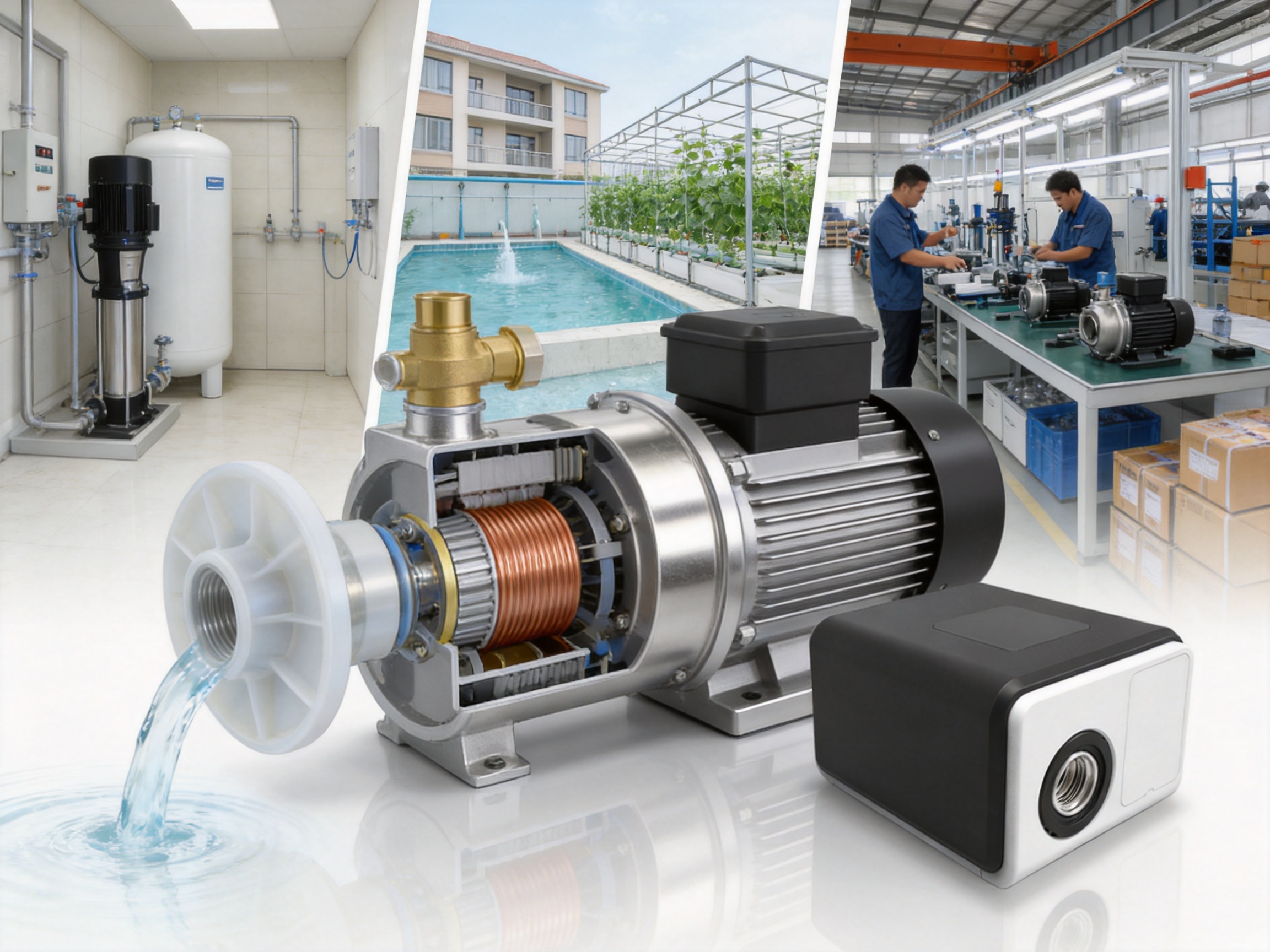
Reliable water pressure is essential in modern homes, commercial buildings, agricultural facilities, and industrial installations. As buildings become taller, water systems become more complex, and users demand quieter and more energy-efficient equipment, traditional fixed-speed pumps are increasingly being replaced by intelligent variable-frequency booster systems. The HGZ15/20EA Series 200W WiFi water-cooled motor low-noise intelligent variable-frequency booster pump is designed for this changing environment.
This compact booster pump combines a 200W motor, water-cooled construction, intelligent variable-frequency control, WiFi connectivity, and low-noise operation below 45 dB. With a maximum head of 20 meters, a rated flow of 2.2 m³/h, and a 1-inch connection, it is suitable for domestic water supply, pressure boosting, small commercial systems, clean-water circulation, and other applications that require stable pressure in a compact format.
Unlike a conventional booster pump that generally operates at a fixed speed whenever it is running, this intelligent model can adjust motor speed according to the actual demand for water. This approach helps maintain a more consistent pressure while reducing unnecessary energy consumption, hydraulic shock, mechanical stress, and operating noise. Its WiFi function also provides a modern way to monitor and manage the pump system.
The pump is manufactured by Taizhou Edwin Electric Co., Ltd., an integrated enterprise with experience in research and development, mass production, export, and one-stop procurement services. The company’s broader product portfolio includes deep well pumps, submersible pumps, domestic booster pumps, circulation pumps, solar water pumps, and intelligent pumping equipment. This product expertise supports the development of a compact pressure-boosting solution for customers seeking practical performance and modern control functions.
Water pressure requirements vary throughout the day. A residential system may experience low demand when only one faucet is open, moderate demand when a shower and kitchen tap operate together, and high demand when several bathrooms, appliances, or irrigation outlets are used at the same time. A commercial building can have even greater variation due to changing occupancy, scheduled cleaning, process requirements, or peak usage periods.
A fixed-speed pump normally delivers a relatively constant operating output. If the system demand is lower than the pump’s capacity, excess pressure may be created and energy may be wasted. If demand rises above the pump’s useful operating range, the pressure may fall and users may experience weak water flow. Frequent starting and stopping can also shorten the service life of electrical and mechanical components.
A variable-frequency booster pump addresses these challenges by controlling motor speed. The pump can operate at a lower speed when demand is limited and increase speed when more water is required. This provides a more flexible relationship between water demand, motor output, and system pressure. The result is a system that can respond more naturally to real operating conditions.
The HGZ15/20EA Series is designed for users who need these benefits without installing a large commercial pumping package. Its 200W power rating and compact 1-inch connection make it appropriate for smaller systems where space, noise, energy consumption, and installation convenience are important considerations.
The HGZ15/20EA Series 200W model provides a balanced combination of hydraulic performance and intelligent control. The rated flow is 2.2 m³/h, while the rated head is 12 meters. Under suitable conditions, the maximum head reaches 20 meters. The rated power is 200W, equivalent to approximately 0.3 HP.
| Specification | HGZ15/20EA Series |
| Product type | Water-cooled multistage intelligent booster pump |
| Model | HGZ15/20EA |
| Power | 200W |
| Approximate horsepower | 0.3 HP |
| Connection size | 1 inch |
| Rated flow | 2.2 m³/h |
| Rated head | 12 m |
| Maximum head | 20 m |
| Maximum system pressure | 10 bar / 1 MPa |
| Maximum inlet pressure | 3 bar / 0.3 MPa |
| Liquid temperature range | 2–95°C |
| Ambient temperature range | 2–40°C |
| Protection class | X4D, suitable for outdoor installation according to the stated specification |
| Suitable liquid | Clean water |
| Noise level | Below 45 dB |
| Connectivity | WiFi function |
These figures should be considered together rather than individually. The maximum head is not the same as the rated head, and actual flow depends on pipe length, pipe diameter, fittings, elevation, valves, inlet conditions, and the operating point of the system. Professional users should review the performance curve and complete a hydraulic calculation before selecting the pump for a specific installation.
The stated liquid temperature range of 2–95°C gives the pump flexibility for clean-water applications that may involve relatively warm water. However, the pump should not be used with corrosive liquids, abrasive fluids, contaminated water, chemical solutions, or liquids containing suspended solids unless the manufacturer has specifically approved the application.
One of the most important advantages of the HGZ15/20EA Series is its intelligent variable-frequency control. A variable-frequency drive changes the frequency supplied to the motor, allowing the motor speed to be adjusted. Because pump performance is closely related to motor speed, speed regulation can be used to control pressure and flow more effectively than simple on-off operation.
When water consumption is low, the pump can reduce its operating speed. When demand increases, it can raise the speed to provide additional flow and pressure. This operating pattern helps avoid the inefficient situation in which a fixed-speed pump runs at full output even when the system only needs a small amount of water.
Variable-frequency operation can also reduce pressure fluctuations. A conventional pump may start suddenly at full speed, creating an abrupt pressure rise in the pipe network. Intelligent speed control allows a smoother response, which can help reduce water hammer and improve comfort at taps, showers, and other outlets.
For building owners, the main benefit is improved system adaptability. A pump does not need to be selected only for the highest possible demand and then operated in the same way during every other period. Instead, the system can respond to changing conditions. This may help reduce electricity consumption and operating costs, although actual savings depend on the duty cycle, system design, control settings, and local electricity price.
For equipment operators, variable-frequency control can simplify pressure management. The pump can be configured to support a target pressure or operating condition instead of relying only on manual valve adjustment. This is particularly useful in systems where demand changes frequently throughout the day.
The WiFi function adds a layer of convenience that is not normally available on basic mechanical booster pumps. When properly connected to a compatible network and control interface, the pump can support remote monitoring and management through a smartphone, tablet, or computer.
Remote access can be useful in residential properties, rental buildings, commercial facilities, equipment rooms, and small industrial sites. An operator may be able to review operating information, adjust settings, identify abnormal conditions, or check whether the pump is running without standing beside the equipment.
WiFi connectivity can also support more efficient maintenance planning. Instead of waiting until users report a pressure problem, an operator can use available operating information to identify changes in pump behavior. Any alarms, status information, or application functions should be confirmed with the supplier’s current control system and user documentation before commissioning.
It is important to understand that WiFi is a control and communication feature, not a replacement for correct hydraulic design. The pump still requires suitable pipework, appropriate electrical supply, proper inlet conditions, and correct installation. Network security should also be considered. Users should apply secure passwords, restrict access to authorized personnel, and follow the control system’s recommended cybersecurity practices.
Compared with a traditional pump that offers no remote information, a connected booster pump can improve visibility. This is especially valuable where the pump is installed in a basement, utility room, rooftop plant area, agricultural building, or other location that is not visited frequently.
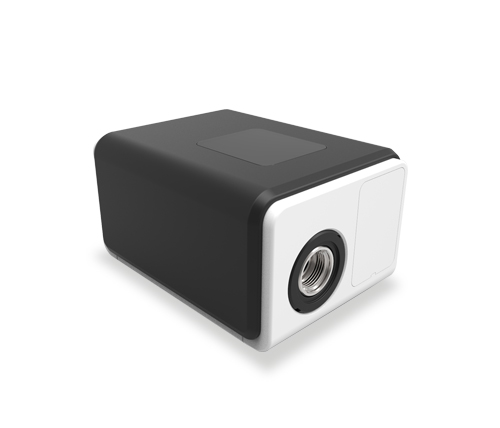
HGZ15/20EA Series 200W WIFI Water Cooled Motor Low Noise Intelligent Variale Frequency Booster Pump
The HGZ15/20EA Series uses a water-cooled motor. In a water-cooled design, the surrounding water helps carry heat away from the motor area during operation. Effective heat dissipation helps maintain suitable operating temperatures and can support stable performance over the working life of the pump.
Motor temperature has a direct relationship with reliability. Excessive heat can accelerate insulation aging, affect bearing lubrication, increase electrical losses, and place additional stress on internal components. By using water as part of the cooling process, the pump can reduce dependence on external air movement and remain compact.
Water cooling is also associated with quieter operation in many compact pump designs. The product is specified to operate below 45 dB, making it suitable for installations near living spaces, offices, utility areas, and other locations where excessive mechanical noise would be disruptive.
Correct operating conditions remain essential. The pump must be filled and operated according to the manufacturer’s instructions, and dry running should be avoided. The water-cooled motor depends on suitable fluid conditions for heat transfer. Operation without sufficient water, with blocked passages, or outside the specified temperature range may cause abnormal heating and reduce service life.
The water-cooled structure is therefore not simply a comfort feature. It forms part of the pump’s thermal management strategy. Combined with intelligent speed control, it helps the pump match output to demand while supporting a compact design.
Noise is an important selection factor for booster pumps. A pump installed beside a bedroom, kitchen, office, hotel room, apartment, or retail area can create complaints if it produces noticeable vibration or mechanical sound. The HGZ15/20EA Series is specified at below 45 dB, positioning it as a low-noise option for pressure-boosting applications.
Low noise is supported by several design factors. The water-cooled motor helps manage thermal conditions without requiring a large external cooling fan. Variable-frequency operation can reduce the need for continuous full-speed running. The compact multistage construction can provide the required head without relying on an oversized pump body.
Installation quality is equally important. Even a quiet pump can become noisy if it is mounted on an unstable base, connected to misaligned pipes, operated with air in the system, or installed with unsuitable valves. Flexible connectors, proper pipe supports, correct priming, and adequate ventilation around associated electrical equipment can help achieve the expected acoustic performance.
In residential applications, the low-noise design can improve comfort during nighttime operation. In commercial buildings, it can help maintain a more pleasant environment for employees and customers. In equipment rooms, it may make routine inspection and communication easier for maintenance personnel.
The HGZ15/20EA Series is categorized as a water-cooled multistage intelligent booster pump. Multistage pumps use multiple impeller stages to develop higher pressure than a single-stage pump of comparable compact size. This makes the design suitable for applications where the required head is more important than very high flow.
The rated head of 12 meters and maximum head of 20 meters make the pump appropriate for many small pressure-boosting duties. Potential examples include increasing pressure in upper-floor apartments, improving shower performance, supporting small domestic water systems, supplying clean water to a modest commercial property, or assisting selected outlets in a low-pressure network.
Multistage construction can also provide a practical balance between size and performance. Instead of using a physically larger single-stage pump, the hydraulic work is divided across several stages. This can help maintain a relatively compact product footprint while providing useful pressure.
Users should distinguish between pressure boosting and water lifting. A pump with a maximum head of 20 meters may be able to support elevation and system resistance within that limit, but the available flow decreases as total system head increases. Pipe friction, elbows, filters, check valves, faucets, and other components all consume pressure. A correctly sized system must consider the combined static and dynamic requirements.
The listed materials show that the pump incorporates corrosion-resistant and application-specific components. The pump body is made from SUS 304 stainless steel. Stainless steel is widely used in clean-water equipment because it provides useful corrosion resistance, a durable surface, and a clean appearance suitable for domestic and commercial environments.
The impeller is made from PPO, a technical polymer commonly selected for its combination of low weight, dimensional stability, and resistance to many water-service conditions. Polymer impellers can also reduce rotating mass, which may support efficient motor operation and smooth response during speed changes.
The check valve is made from brass. A properly designed check valve helps prevent reverse flow when the pump stops. This can protect system pressure, reduce reverse rotation, and improve the stability of automatic operation. Brass is frequently used for valve components because of its machinability and suitability for many clean-water installations.
The stator winding uses copper wire combined with silicon steel sheet. Copper provides good electrical conductivity, while silicon steel is used in motor magnetic circuits to support efficient electromagnetic performance. The rotor is listed as ceramic plus silicon steel sheet, providing a material combination suited to the pump’s compact motor design.
| Component | Specified material | Functional contribution |
| Stator winding | Copper wire and silicon steel sheet | Electrical conductivity and magnetic performance |
| Rotor | Ceramic and silicon steel sheet | Rotating performance and compact motor construction |
| Pump body | SUS 304 stainless steel | Clean-water compatibility and corrosion resistance |
| Impeller | PPO | Low weight and stable polymer construction |
| Check valve | Brass | Reverse-flow prevention and valve durability |
Material selection should always be matched to the actual fluid. SUS 304 stainless steel and the other listed materials are intended for the stated clean-water application. Users handling aggressive chemicals, saltwater, abrasive water, or heavily contaminated fluids should request a compatibility review before purchase.
Taizhou Edwin Electric Co., Ltd. was founded in 2008 and operates as an integrated manufacturing enterprise. Its activities include independent research and development, mass production, and global export. This combination is important because pump quality depends not only on a product concept but also on the company’s ability to translate engineering designs into consistent production.
Independent research and development allows the manufacturer to work directly on hydraulic structures, motor systems, intelligent controls, product materials, and application requirements. For an intelligent booster pump, these areas must function together. The pump, motor, sensors, control logic, communication functions, and protective systems need to operate as one integrated product.
Mass production experience can support process standardization. Repeated production provides opportunities to establish consistent procedures for component inspection, assembly, electrical testing, pressure testing, performance verification, and final packaging. Standardized processes help reduce variation between units and make it easier to maintain stable production quality.
A specialized pump manufacturer also benefits from experience across multiple product categories. Edwin Pump’s product lines include deep well pumps, submersible pumps, domestic booster pumps, circulation pumps, solar water pumps, and other pumping equipment. Knowledge gained in different applications can contribute to better understanding of motors, impellers, seals, control systems, hydraulic performance, and installation conditions.
The company has also developed associated import and export service organizations to support procurement planning, order tracking, cross-border delivery, and foreign trade services. For international buyers, this structure can be valuable because purchasing a pump involves more than selecting a model. Customers may need help with product documentation, production coordination, packaging, shipment planning, and communication across different time zones and markets.
Since 2018, the company has invested in new energy and intelligent technology, including solar water pumps and intelligent booster pumps. This direction reflects the changing requirements of the global water-pump industry. Energy efficiency, remote management, automation, and integration with modern water systems are becoming increasingly important for both residential and industrial customers.
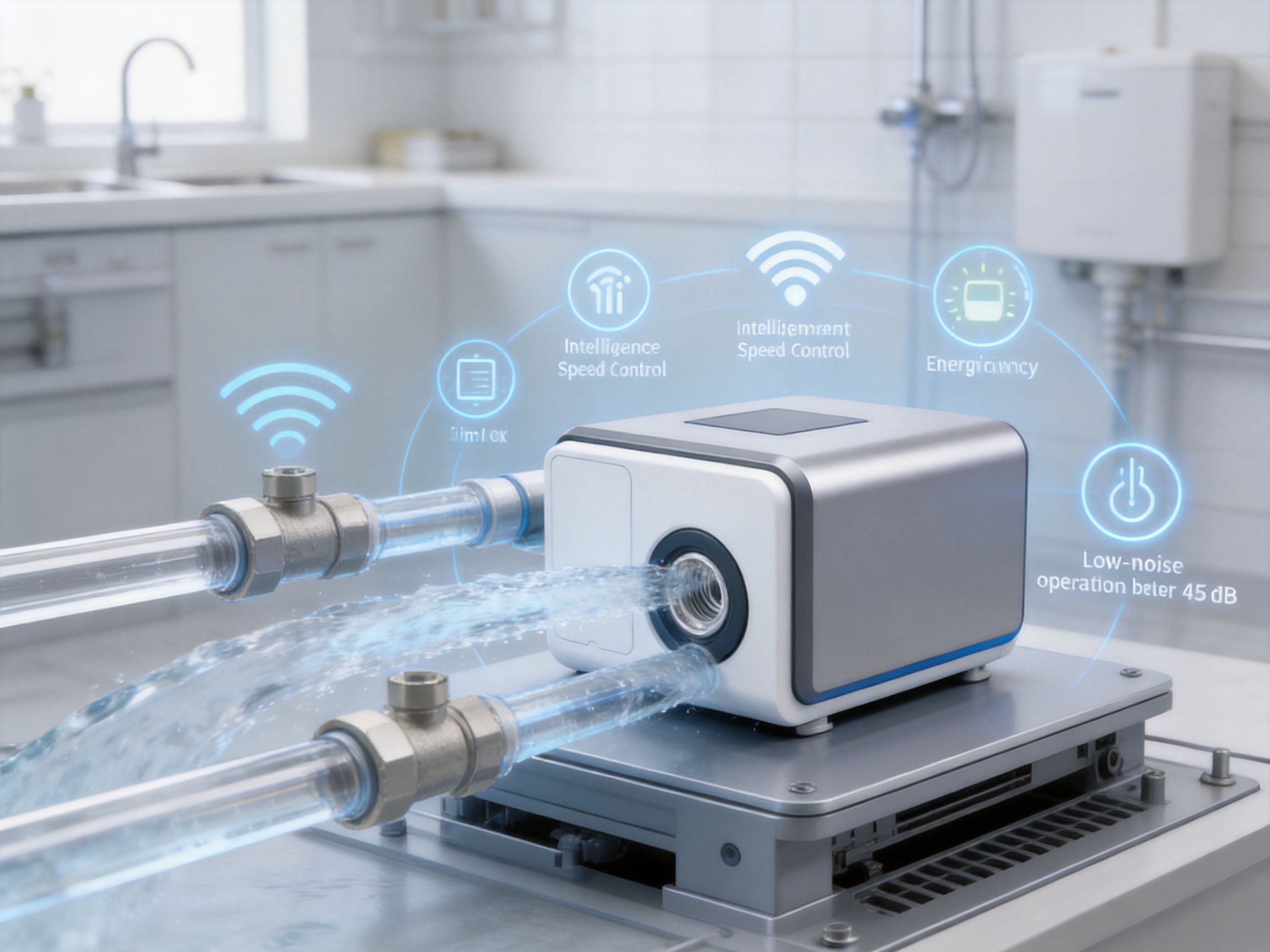
The first major advantage is intelligent speed adjustment. A conventional fixed-speed booster pump generally has fewer operating modes and may run at full output whenever it is active. The HGZ15/20EA Series can adjust its speed according to demand, which may improve pressure stability and reduce wasted energy.
The second advantage is remote connectivity. Basic pumps usually require local inspection and manual adjustment. WiFi functionality can allow users to monitor or control the system remotely, providing more convenience and potentially improving response time when operating conditions change.
The third advantage is low-noise operation. A specified noise level below 45 dB is beneficial for homes, offices, apartments, and other noise-sensitive environments. A quiet pump can be installed closer to occupied spaces with less disruption, provided the installation is completed correctly.
The fourth advantage is compact water-cooled construction. Water cooling supports heat dissipation while helping maintain a compact motor arrangement. This can be useful where installation space is limited or where a large external ventilation system would be inconvenient.
The fifth advantage is material selection. The SUS 304 stainless-steel pump body, PPO impeller, brass check valve, copper winding, and silicon-steel components provide a practical combination for clean-water service. These materials are selected to support durability, hydraulic operation, and motor efficiency within the stated working conditions.
The sixth advantage is application flexibility. The product can serve residential water boosting, small commercial water systems, selected agricultural clean-water duties, and other installations requiring moderate flow and pressure. The 1-inch connection and 200W power rating make it accessible for smaller installations than many larger commercial booster packages.
The pump can be used to improve water pressure in houses, apartments, villas, and similar properties. It may be suitable where municipal pressure is insufficient, where upper-floor outlets receive weak flow, or where simultaneous water use causes noticeable pressure reduction.
The low-noise specification is particularly useful in homes. A pump that operates below 45 dB can provide pressure support without creating the level of disturbance associated with louder mechanical equipment. WiFi access may also allow homeowners or service personnel to review the pump’s status without entering a restricted utility area.
Offices, guesthouses, small hotels, restaurants, clinics, and retail buildings may require a compact booster pump for clean-water distribution. Variable-frequency control can help the pump respond to changing occupancy and water-use patterns.
Before installation, the designer should verify the number of outlets, the peak flow demand, the required pressure, the available inlet pressure, and the building height. If the demand exceeds the rated capacity, a larger pump or a coordinated multi-pump system may be necessary.
Small agricultural buildings, nurseries, greenhouse facilities, and farm residences may use the pump for clean-water pressure boosting. It can support selected taps, washing points, and modest distribution systems where the required head and flow remain within its performance range.
Water quality must be carefully considered in agricultural environments. The product is specified for clean water, so water containing sand, mud, fibers, or heavy suspended solids may require filtration or a different pump design.
The stated liquid temperature range extends up to 95°C, which gives the pump potential flexibility in suitable warm-water applications. However, high-temperature operation requires careful review of the complete system, including pipe material, seals, pressure rating, expansion control, and safety devices.
The pump should only be used for a warm-water application after confirming compatibility with the manufacturer’s technical requirements. Temperature, pressure, fluid chemistry, and operating schedule all influence service life.
The pump may also be considered for clean-water utility systems in workshops, service areas, and small process installations. Its compact size, 1-inch connection, remote function, and variable-speed control can simplify integration where moderate pressure support is required.
Correct installation is essential for achieving the expected performance. The pump should be installed by qualified personnel who understand electrical safety, hydraulic systems, and local regulations. The pipework should be clean, correctly supported, and free from excessive strain on the pump connections.
The inlet pipe should be sized and arranged to provide suitable water supply conditions. Excessive restriction, undersized piping, clogged filters, or an unsuitable suction arrangement can reduce flow and cause unstable operation. The stated maximum inlet pressure is 3 bar or 0.3 MPa, and this limit should not be exceeded.
The total system pressure must also remain within the stated maximum of 10 bar or 1 MPa. A pressure relief strategy may be required in systems where thermal expansion, closed valves, or external pressure sources could increase system pressure.
The pump should be protected from conditions that may cause dry running. Air in the system can create noise, reduce hydraulic performance, and affect cooling. Priming and venting procedures should follow the manufacturer’s instructions. The check valve should be installed and maintained correctly so that reverse flow does not disturb operation.
Although the product is listed with an X4D protection classification and is indicated as suitable for outdoor installation, outdoor placement still requires attention to weather exposure, drainage, cable protection, flooding risk, direct sunlight, and local electrical rules. The control and electrical connections should be protected from water ingress beyond the specified level.
Electrical installation should include suitable grounding, correctly rated protection, and a power supply compatible with the product nameplate. A qualified electrician should verify voltage, frequency, current protection, isolation, and cable sizing before commissioning.
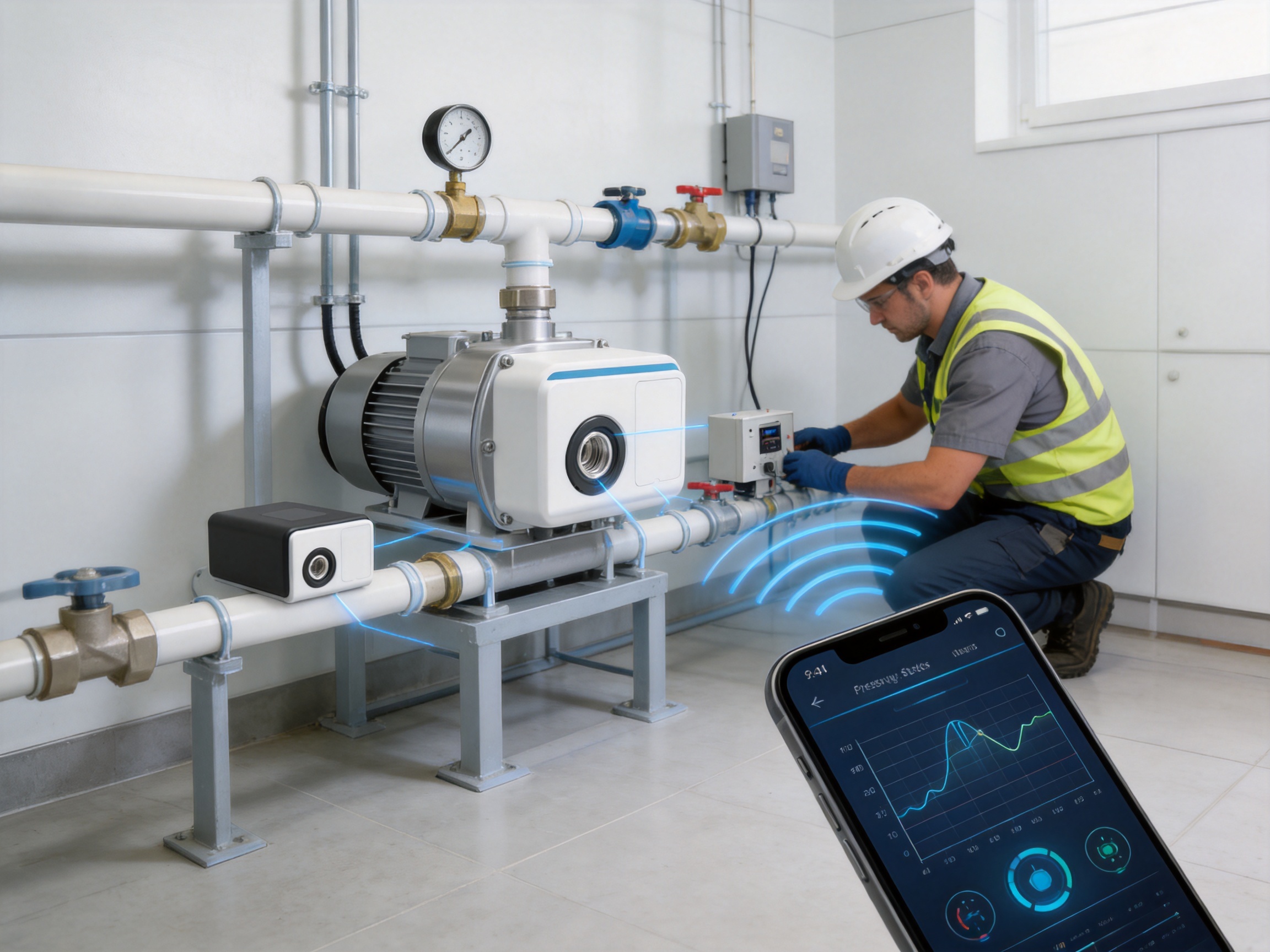
Routine maintenance begins with observation. Users should monitor pressure stability, sound, vibration, starting behavior, leakage, and the condition of connected pipework. Any sudden change may indicate air ingress, blockage, a valve problem, bearing wear, electrical issues, or a change in the water supply.
The inlet filter, if installed, should be inspected and cleaned at appropriate intervals. A blocked filter can restrict flow and cause the pump to work under unfavorable conditions. In areas with hard water, sediment, or mineral deposits, inspection may need to be more frequent.
The pump should not be operated outside its specified liquid temperature, ambient temperature, pressure, or fluid conditions. It should also be protected from freezing. Frozen water can damage pump chambers, valves, and pipework even when the electrical motor is not running.
WiFi functions should be checked after installation to confirm stable communication. The network should be secured, and access credentials should not be shared unnecessarily. If the pump is installed in a commercial or industrial environment, the owner should define who is authorized to change operating parameters.
Maintenance records can improve long-term reliability. A simple log may include installation date, operating hours where available, filter cleaning, alarm events, pressure checks, and service work. This information can help technicians identify trends and plan replacement parts before a failure affects the water supply.
The 200W rating indicates that the pump is designed for relatively low electrical power compared with larger booster systems. The variable-frequency function can further improve efficiency by allowing the motor to operate at a speed appropriate to the current demand.
Energy consumption depends on more than the nameplate power. A pump running continuously at 200W will consume more energy than the same pump operating intermittently or at reduced speed. Pipe friction, pressure settings, leakage, valve selection, and water demand also affect total consumption.
By reducing unnecessary full-speed operation, an intelligent pump may lower electricity use over time. It may also reduce the mechanical stress associated with repeated abrupt starts. These benefits should be evaluated over the entire life cycle, including purchase price, installation, energy use, maintenance, downtime, and replacement costs.
A reliable pump can provide value even when its initial price is not the lowest in the market. Low-noise operation, remote monitoring, water cooling, intelligent control, and appropriate materials may reduce inconvenience and service requirements. Buyers should compare complete system value rather than looking only at motor wattage or initial purchase cost.
The HGZ15/20EA Series is a compact pump with a maximum head of 20 meters and a rated flow of 2.2 m³/h. It is important to confirm that these specifications match the project’s actual hydraulic requirement.
The first step is to determine the required flow rate. This should be based on the number of outlets, expected simultaneous use, appliance requirements, and any process demand. Selecting a pump solely by pipe size can result in poor performance because a 1-inch connection does not by itself define the required flow.
The second step is to calculate total head. This includes vertical elevation, the pressure required at the outlet, friction losses in pipes, and losses through valves, filters, elbows, meters, and other fittings. The pump’s operating point should be checked against its performance curve rather than relying only on the maximum-head figure.
The third step is to verify inlet conditions. The available inlet pressure should remain within the maximum stated limit. The water supply should be clean and sufficiently stable, and the inlet pipe should not create excessive restriction.
The fourth step is to consider environmental conditions. The ambient temperature should remain between 2°C and 40°C, and the liquid temperature should remain between 2°C and 95°C. The installation area should also be reviewed for moisture, flooding, dust, sunlight, freezing, and access for maintenance.
The fifth step is to evaluate control requirements. If remote monitoring and variable-speed pressure management are important, the intelligent WiFi model may offer advantages over a basic fixed-speed pump. If the application requires a more complex automation system, the buyer should confirm communication functions and integration options in advance.
International pump buyers often require dependable communication throughout the purchasing process. Product selection is followed by technical confirmation, quotation, order placement, production scheduling, inspection, packaging, shipment, customs coordination, and after-sales communication.
Taizhou Edwin Electric Co., Ltd. supports a global customer base through its manufacturing and export structure. The company has established related organizations for procurement planning, order tracking, cross-border delivery, and foreign trade services. This one-stop approach can be useful for importers, distributors, project contractors, wholesalers, and OEM customers.
Product range is another advantage for buyers managing multiple categories. A supplier that offers deep well pumps, submersible pumps, surface pumps, circulation pumps, solar water pumps, booster pumps, commercial multistage pumps, accessories, pipes, and valves may simplify procurement. Customers can coordinate related products through one technical and commercial channel rather than managing many unrelated suppliers.
For distributors, the intelligent booster pump can complement more traditional pump products. It gives a product line a modern option for customers interested in smart functions, lower operating noise, and pressure automation. For contractors, the compact design can provide an alternative for smaller water-pressure projects.
Buyers should request current technical documents, installation instructions, packaging details, warranty terms, spare-parts information, and applicable testing records before placing an order. These documents help ensure that the selected product matches local regulations and project requirements.
Compared with a basic fixed-speed booster pump, the HGZ15/20EA Series offers more advanced control. The fixed-speed model may have a simpler purchase price and control structure, but it generally provides less flexibility when water demand changes. The intelligent variable-frequency model is more suitable where pressure comfort, energy management, and remote access are priorities.
Compared with a large commercial multistage pump, the HGZ15/20EA Series is more compact and uses a lower 200W power rating. It is therefore better suited to smaller systems. A large commercial pump remains more appropriate for high flow, high head, large buildings, or demanding industrial processes.
Compared with a traditional air-cooled motor arrangement, the water-cooled motor can support a compact design and quiet operation. However, water-cooled pumps require suitable water conditions and must not be allowed to run dry.
Compared with a non-connected pump, the WiFi model provides improved convenience and visibility. Nevertheless, the value of WiFi depends on the user’s willingness to configure and maintain the connection. Customers who do not require remote management may prefer a simpler product, while smart-building projects can benefit significantly from connectivity.
It is a water-cooled multistage intelligent booster pump with variable-frequency control and WiFi functionality. It is designed to increase and manage clean-water pressure in suitable residential, commercial, and small utility applications.
The stated rated power is 200W, equivalent to approximately 0.3 HP. Actual energy consumption varies according to motor speed, operating time, pressure demand, pipe resistance, and system settings.
The maximum stated head is 20 meters. The rated head is 12 meters, and the rated flow is 2.2 m³/h. The actual operating point should be confirmed using the performance curve and a complete hydraulic calculation.
The listed connection size is 1 inch. The connected pipework, valves, filters, and fittings should be selected to avoid unnecessary pressure loss.
Yes. The specified noise level is below 45 dB. Actual sound levels also depend on installation, pipe vibration, mounting, air in the system, and the condition of the water supply.
The WiFi function can support remote monitoring and control through a compatible smartphone, tablet, or computer interface. The exact functions depend on the supplied control platform and configuration.
The stated pump liquid is clean water. Water containing sand, mud, fibers, abrasive particles, or heavy suspended solids may damage the hydraulic components or cause blockage. A different pump type or suitable filtration may be required.
The product information lists an X4D protection class and indicates outdoor installation suitability. Outdoor installations must still include proper drainage, cable protection, weather exposure control, grounding, and compliance with local electrical requirements.
The maximum system pressure is listed as 10 bar or 1 MPa. The maximum inlet pressure is listed as 3 bar or 0.3 MPa. These limits should be respected during design and operation.
The stated liquid temperature range is 2–95°C. The complete installation must also be suitable for the selected temperature, pressure, and fluid conditions.
It may be suitable for a limited pressure-boosting duty within its 20-meter maximum-head range, but it is not automatically suitable for an entire high-rise building. The project’s elevation, flow demand, pressure requirement, and pipe losses must be calculated first.
The pump body is made from SUS 304 stainless steel, the impeller is PPO, and the check valve is brass. The stator winding uses copper wire and silicon steel sheet, while the rotor uses ceramic and silicon steel sheet.
It allows the motor speed to change according to water demand. When demand is low, the pump may operate at reduced speed instead of running continuously at full output. Actual savings depend on system design and usage patterns.
A qualified plumbing and electrical professional should install and commission the pump. Correct hydraulic sizing, grounding, pressure protection, priming, and control configuration are essential for safe operation.
The HGZ15/20EA Series 200W WiFi water-cooled motor low-noise intelligent variable-frequency booster pump is designed for modern clean-water pressure applications that require more than simple on-off pumping. Its combination of 200W power, 2.2 m³/h rated flow, 12-meter rated head, 20-meter maximum head, 1-inch connection, WiFi connectivity, water-cooled motor, and noise below 45 dB makes it a practical option for compact residential and commercial systems.
Its principal advantages over conventional booster pumps are intelligent speed adjustment, improved pressure responsiveness, remote access, low-noise operation, compact water-cooled construction, and carefully selected materials. These features can help improve comfort, operating convenience, energy management, and long-term system value when the pump is correctly sized and installed.
The manufacturer’s experience in research and development, mass production, global export, and multiple pump categories provides a strong foundation for serving international customers. Its investment in intelligent and new-energy pumping technologies reflects the direction of the industry, where efficiency, connectivity, and reliable water management are becoming increasingly important.
For the best results, buyers should evaluate the complete application rather than selecting the pump only by its maximum head or motor power. Flow demand, total head, inlet pressure, water quality, temperature, ambient conditions, installation location, electrical supply, and control requirements should all be confirmed before purchase. When these factors are properly matched, the HGZ15/20EA Series can provide a quiet, intelligent, and efficient approach to water pressure boosting.
1. Product technical information for the HGZ15/20EA Series 200W WiFi water-cooled intelligent variable-frequency booster pump.
2. Manufacturer-provided specifications for pump operating conditions, materials, dimensions, and performance data.
3. General engineering principles for centrifugal and multistage pump selection.
4. General guidance on variable-frequency motor control and energy-efficient water-pressure systems.
5. General installation and maintenance practices for clean-water booster pump systems.
6. General principles of hydraulic head, flow calculation, pipe friction, and pressure-loss evaluation.
aseriesnoisereductiondesignacid-baseverticalsurfacepump-1.jpg "EV(F)A Series Noise Reduction Design Acid-base Vertical Surface Pump")
serieswatershortageprotectionvoltagestabilizationstainlesssteelverticalmultistagepump.jpg "EVR(S) Series Water Shortage Protection Voltage Stabilization Stainless Steel Vertical Multistage Pump")
edwina@edwin-pump.com
+86-13586290903 (WhatsApp)
Xuri Gongliang Cutting Tool Entrepreneurship Park, Wenqiao Town, Wenling City, Taizhou City, Zhejiang Province, China

High Performance Smart Pump Factory


 English