edwina@edwin-pump.com

View All Products
en
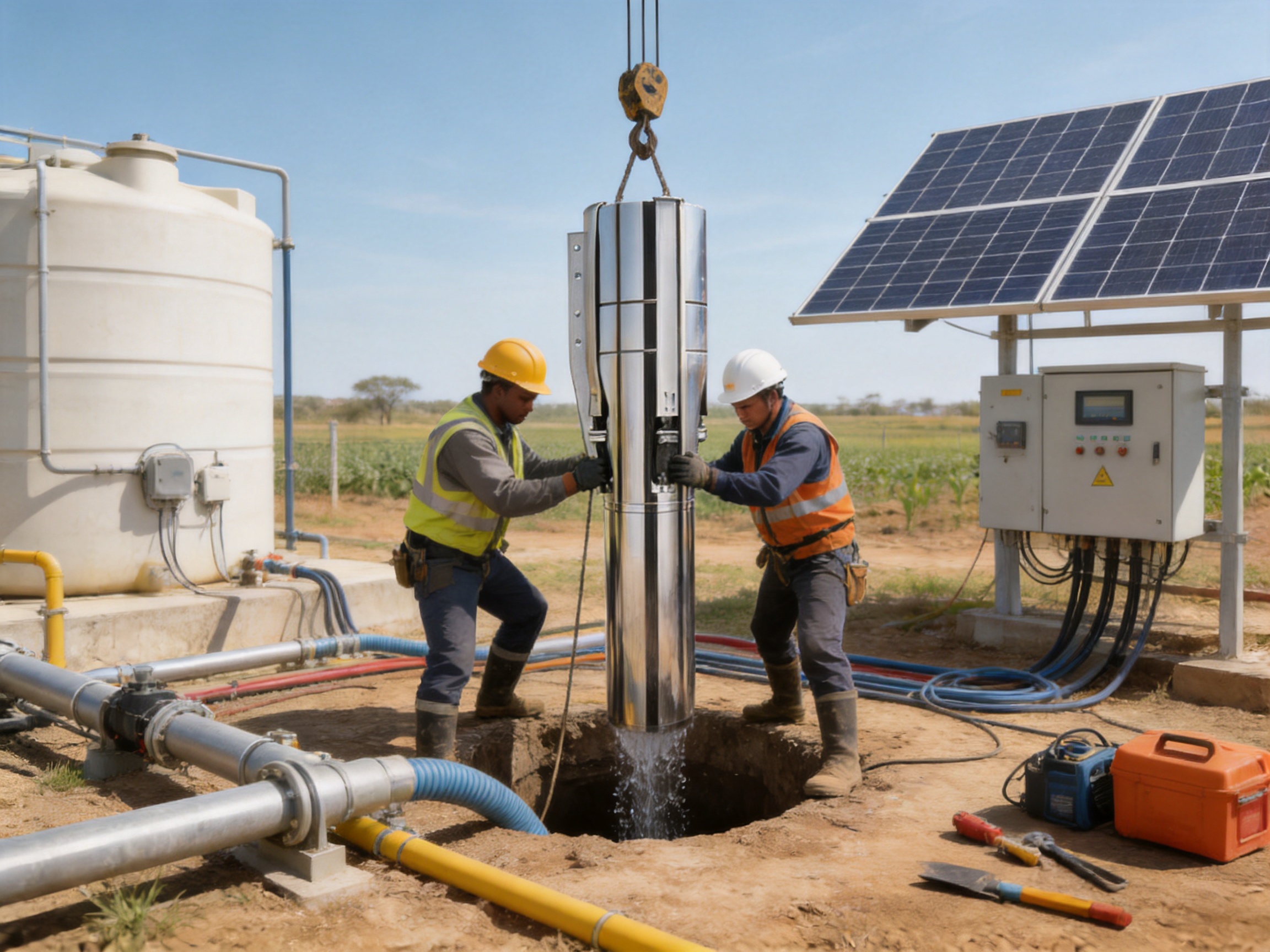
Reliable access to water is essential for agriculture, livestock production, rural communities, industrial facilities, and remote infrastructure. In locations where grid electricity is unstable or unavailable, solar pumping provides a practical way to move groundwater without depending entirely on diesel generators or conventional utility power. However, a solar pumping system must do more than operate during bright sunshine. It should also manage changing solar conditions, protect the motor and pump, simplify installation, and provide dependable performance over many years.
The 4/6ADFSW AC/DC Water-Filled Solar Deep Well Pump with Built-in Controller is designed for these requirements. It combines a brushless AC/DC motor, a water-filled submersible construction, a stainless steel hydraulic assembly, and an integrated intelligent controller in one deep well pumping solution. The system can accept either solar-generated DC power or compatible AC power, allowing users to prioritize renewable energy while retaining a backup or alternative power source.
With 4-inch and 6-inch bore compatibility, multiple power options from 1100 W to 2200 W, maximum flow rates up to 36 m³/h, and maximum heads up to 38 m, this pump series is intended for a broad range of medium-capacity water supply and irrigation projects. It is especially suitable for farms, orchards, greenhouses, rural homes, livestock systems, and remote installations where energy efficiency and operational flexibility are important.
Traditional deep well pumps are often powered by single-phase or three-phase grid electricity. Where the grid is unavailable, diesel generators are commonly used. Both approaches can be effective, but they also introduce limitations. Grid power may be unreliable or expensive, while generators require fuel storage, regular maintenance, oil changes, transportation, and noise control.
Solar energy offers a lower-operating-cost alternative. Once the solar array has been installed, the system can produce pumping power without consuming fuel. Nevertheless, solar radiation changes throughout the day and across seasons. Cloud cover, temperature, panel orientation, and shading can all affect available voltage and power. A pump that can only operate from a narrow electrical range may stop frequently or fail to use the available solar energy efficiently.
An AC/DC hybrid pump addresses this challenge by accepting energy from both solar panels and an AC supply. During periods of strong sunlight, the pump can operate from the solar array. When solar output is insufficient, a suitable AC source can provide continuity. This approach is particularly valuable for domestic water supply, livestock watering, greenhouse irrigation, and other applications where water availability cannot depend entirely on weather conditions.
The 4/6ADFSW series is built around this flexible operating concept. The A/D versions support an AC input range of 85 V to 280 V and a DC input range of 80 V to 430 V. The HV versions are designed for DC operation from 80 V to 430 V. These broad input ranges provide system designers with greater freedom when configuring solar arrays and selecting an appropriate backup source.
The pump is a submersible deep well unit intended to be installed below the water level in a suitable borehole or well. Submersible installation places the hydraulic equipment close to the water source, reducing the need for surface suction and helping the pump push water upward through the discharge pipe.
Its water-filled motor design uses the surrounding water for internal cooling and lubrication support. Unlike an air-cooled surface motor, a water-filled submersible motor is surrounded by the pumped medium, allowing heat to be transferred away from the motor during operation. Proper installation, clean water conditions, correct submergence, and appropriate protection against dry running remain essential for safe and long-term service.
The pump incorporates a brushless motor. Brushless technology eliminates the mechanical brushes and commutators found in conventional brushed motors. This reduces a common source of wear, limits electrical arcing, and supports efficient operation with reduced routine maintenance. The integrated controller manages the relationship between the power source and motor, helping the pump respond to changing electrical conditions.
The series is available in configurations identified by 4/6 bore designations. This makes it suitable for compatible 4-inch and 6-inch well installations, subject to actual pump dimensions, well casing measurements, water conditions, and installation requirements. Before ordering, users should confirm the borehole diameter, pump outside diameter, available water level, well yield, pipe size, and required delivery point.
One of the main advantages of the pump is its ability to operate from both AC and DC sources in the A/D configuration. A conventional solar pump may require a separate inverter or may only operate when the solar array supplies the correct DC voltage. An AC/DC hybrid design reduces dependence on a single power source and can simplify the overall system architecture.
Solar panels can be connected for daytime operation, while an AC supply may be used during low solar production, emergency conditions, or commissioning. This is useful in regions with seasonal cloud cover, changing agricultural demand, or irregular grid service. The hybrid arrangement can also reduce the need to install an oversized battery bank, because water can be pumped when energy is available and stored in a tank for later use.
The DC input range of 80 V to 430 V gives system planners significant flexibility. Solar panels can be arranged in series and parallel combinations to create a suitable operating voltage and power level. The open-circuit voltage of the solar array must remain below 430 V, as specified for the series. This requirement is especially important in cold weather, when panel open-circuit voltage can increase.
A wide voltage range can help the pump continue operating through changing solar conditions. The actual performance will still depend on the solar array, irradiance, cable losses, controller behavior, water head, and hydraulic demand. However, the broad allowable input range gives the system a larger operating window than many fixed-voltage pump arrangements.
The integrated intelligent controller is a central part of the product design. It supports automatic start and stop, soft start, AC/DC switching, and MPPT solar operation. Combining these functions within the pump system can reduce the number of external components and simplify commissioning.
Automatic start and stop can allow the pump to respond to system requirements such as water level controls, tank signals, or configured operating conditions. Soft start helps reduce the sudden current demand associated with direct motor starting. This can place less stress on the power source, reduce voltage disturbance, and support smoother mechanical acceleration.
AC/DC switching allows the pump to use available power intelligently, subject to the specific installation configuration and controller settings. MPPT, or maximum power point tracking, is designed to help extract usable power from a solar array as sunlight changes. Solar panels do not produce a constant voltage and current under all conditions. MPPT control adjusts the electrical operating point so that the array can contribute power more effectively during variable irradiance.
The brushless water-filled motor combines two useful design principles. Brushless operation reduces wear associated with mechanical electrical contacts, while water filling supports heat transfer in a submersible environment. This combination is well suited to solar pumping, where the available electrical power may fluctuate and the motor may need to start and stop in response to changing solar conditions.
Water-filled motors are commonly selected for deep well applications because they can operate in a compact submersible format. They do require careful attention to water quality, cooling conditions, and installation depth. The pump should not be operated outside its intended submergence conditions, and users should prevent prolonged dry running or operation in a well with insufficient yield.
The ceramic-coated SS304 rotor shaft is designed to provide a durable working surface in a wet operating environment. Stainless steel 304 offers useful corrosion resistance for many clean-water applications, while the ceramic coating can improve surface hardness and wear resistance. The coating also helps reduce friction at critical contact areas when used with compatible bearings and seals.
Material selection is especially important in a submersible pump. The rotor shaft is exposed to continuous rotation, water contact, hydraulic vibration, and possible suspended particles. A corrosion-resistant base material combined with a wear-resistant surface treatment can help extend service life and preserve mechanical accuracy.
Graphite bearings are used to support the rotating assembly and reduce friction. In a water-filled motor, bearing material must be compatible with the operating environment and able to function under continuous movement. Graphite can provide self-lubricating characteristics and is suitable for applications where conventional oil lubrication is not appropriate.
Correct water conditions remain important. Abrasive sand, excessive sediment, or chemically aggressive water can accelerate wear in any pump. Where groundwater contains significant suspended solids, the well should be evaluated and suitable filtration, settling, or maintenance procedures should be considered.
The stainless steel impeller is designed for corrosion resistance and reliable hydraulic performance. The impeller transfers motor energy into water flow and pressure, making its geometry and surface condition important to overall efficiency. Stainless steel construction is beneficial in clean-water pumping because it can withstand long-term contact with water better than many ordinary carbon steel alternatives.
A stainless steel hydraulic assembly can also provide a strong solution for agricultural and rural applications where the pump may operate for extended periods. The appropriate water chemistry should still be confirmed before installation. The pump is intended for suitable clean-water or compatible groundwater applications rather than highly corrosive chemical liquids unless specifically approved for such service.
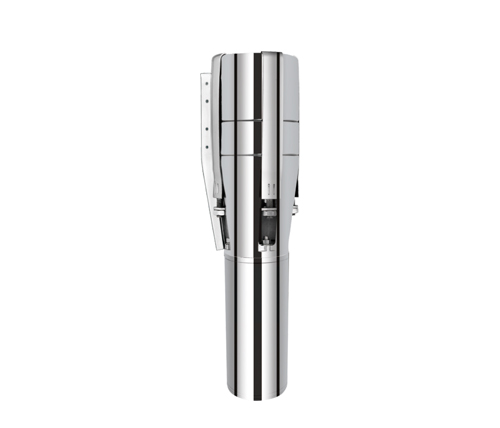
4/6ADFSW AC/DC Water Filled Solar Deep Well Pump with Built-in Controller
The 4/6ADFSW series includes several combinations of flow, head, and motor power. The listed maximum power options are 1100 W, 1500 W, and 2200 W. Maximum flow values range from 30 m³/h to 36 m³/h, while maximum head values range from 19 m to 38 m.
Maximum flow and maximum head are not normally achieved at the same operating point. Actual flow depends on total dynamic head, pipe length, pipe diameter, fittings, elevation, water level, and system resistance. A pump selection should therefore be based on the required duty point rather than on maximum figures alone.
| Model | AC Voltage | DC Voltage | Power | Maximum Flow | Maximum Head | Outlet | Cable | Maximum Solar Array VOC | Recommended Solar Power |
|---|---|---|---|---|---|---|---|---|---|
| 4/6DFSW30-19-150-1100-A/D | 85–280 V | 80–430 V | 1100 W | 30 m³/h | 19 m | 3 in | 2 m | Below 430 V | At least 1.3 × pump power |
| 4/6DFSW30-19-150-1100-HV | Not applicable | 80–430 V | 1100 W | 30 m³/h | 19 m | 3 in | 2 m | Below 430 V | At least 1.3 × pump power |
| 4/6DFSW36-22-200-1500-A/D | 85–280 V | 80–430 V | 1500 W | 36 m³/h | 22 m | 3 in | 2 m | Below 430 V | At least 1.3 × pump power |
| 4/6DFSW36-22-200-1500-HV | Not applicable | 80–430 V | 1500 W | 36 m³/h | 22 m | 3 in | 2 m | Below 430 V | At least 1.3 × pump power |
| 4/6DFSW30-31-200-1500-A/D | 85–280 V | 80–430 V | 1500 W | 30 m³/h | 31 m | 3 in | 2 m | Below 430 V | At least 1.3 × pump power |
| 4/6DFSW30-31-200-1500-HV | Not applicable | 80–430 V | 1500 W | 30 m³/h | 31 m | 3 in | 2 m | Below 430 V | At least 1.3 × pump power |
| 4/6DFSW36-38-300-2200-A/D | 85–280 V | 80–430 V | 2200 W | 36 m³/h | 38 m | 3 in | 2 m | Below 430 V | At least 1.3 × pump power |
| 4/6DFSW36-38-300-2200-HV | Not applicable | 80–430 V | 2200 W | 36 m³/h | 38 m | 3 in | 2 m | Below 430 V | At least 1.3 × pump power |
The 1100 W models are suited to lower-power pumping requirements where the required head is comparatively modest. The 1500 W models provide two different hydraulic options: one emphasizes higher flow at a lower head, while the other provides a higher head with a lower maximum flow. The 2200 W models are intended for the highest listed head and flow combination in this series.
For solar array planning, the listed recommendation is a solar power capacity of at least 1.3 times the pump power. This gives the array additional capacity to compensate for real-world losses and changing solar conditions. It does not mean that every installation will produce the rated pump output at all times. Panel temperature, dust, orientation, shading, cable size, controller efficiency, and local solar resource must all be evaluated.
A single-source solar pump depends entirely on solar input or on a dedicated external conversion system. This can be effective in areas with strong, predictable sunlight and water storage capacity. However, it may be less convenient where water demand is continuous or where weather conditions change quickly.
The AC/DC hybrid configuration offers an alternative by allowing compatible AC power to supplement solar energy. This can reduce downtime, support emergency operation, and provide more consistent water availability. The built-in controller also reduces the need to coordinate several separate electrical devices.
Diesel pumps are independent of the grid and can produce high output, but operating costs may become substantial over time. Fuel prices, transportation, storage, engine servicing, noise, and exhaust emissions all affect the total cost of ownership. A solar pump has higher initial system planning requirements, but it can significantly reduce routine energy expenses after installation.
The submersible design also avoids some of the noise and surface vibration associated with a diesel engine. This is beneficial near homes, animal enclosures, schools, and environmentally sensitive areas. An AC backup can be used when solar energy is unavailable, without requiring an engine and fuel supply.
Brushed motors rely on physical contact between brushes and a commutator. These parts gradually wear and may require replacement. A brushless motor removes this contact-based switching arrangement and is therefore better suited to long-duration operation with fewer routine wear components.
The brushless design also works effectively with electronic control. Soft starting, variable electrical management, and MPPT functions are more naturally integrated with a brushless motor and intelligent controller than with a basic fixed-speed motor.
Some solar pumping systems require a pump, external inverter, motor controller, switching device, and separate protection equipment. Such arrangements can be highly configurable, but they also require more wiring, cabinet space, engineering coordination, and troubleshooting.
The built-in controller of the 4/6ADFSW series integrates key operating functions into the pump solution. This can simplify procurement and installation, particularly for projects where rapid deployment and compact system design are priorities. External disconnects, protection devices, sensors, and appropriate isolation equipment may still be required according to local electrical codes and project conditions.
Taizhou Edwin Electric Co., Ltd. is an integrated manufacturing enterprise founded in 2008. Its stated capabilities include independent research and development, mass production, and global export. This combination is important for buyers who need more than a single pump shipment. A manufacturer with product development and production capabilities can support model refinement, technical coordination, batch supply, and application-specific communication.
The company’s product portfolio includes deep well pumps, submersible pumps, domestic booster pumps, circulation pumps, solar water pumps, and intelligent booster pumps. This broad product base allows the manufacturer to understand different pumping conditions, from household pressure boosting to agricultural irrigation and commercial water movement.
Manufacturing quality begins with product architecture. The 4/6ADFSW pump integrates the motor, hydraulic section, material selection, and controller as a coordinated system. The use of a ceramic-coated SS304 rotor shaft, graphite bearings, stainless steel impeller, and water-filled motor reflects attention to the components that influence wear, corrosion resistance, thermal behavior, and operating stability.
Mass production also requires repeatable processes. Consistent component dimensions, controlled assembly procedures, electrical testing, sealing inspection, and performance verification are essential for submersible pumps. While exact factory inspection procedures may vary by model and order, professional pump manufacturing generally depends on documented production standards and repeatable quality checkpoints rather than visual inspection alone.
Independent research and development provides another advantage. Solar pumping is not simply a matter of attaching panels to a standard pump. The controller must manage changing input conditions, motor starting, power tracking, protection logic, and compatibility between the hydraulic load and electrical source. Continued investment in intelligent and new-energy technology helps manufacturers develop products that better address these system-level requirements.
The company has also established dedicated import and export service organizations to support procurement planning, order tracking, cross-border delivery, and foreign trade services. For international buyers, these capabilities can be as important as the product itself. Clear communication, documentation, production coordination, and shipping support help reduce project delays and improve purchasing efficiency.
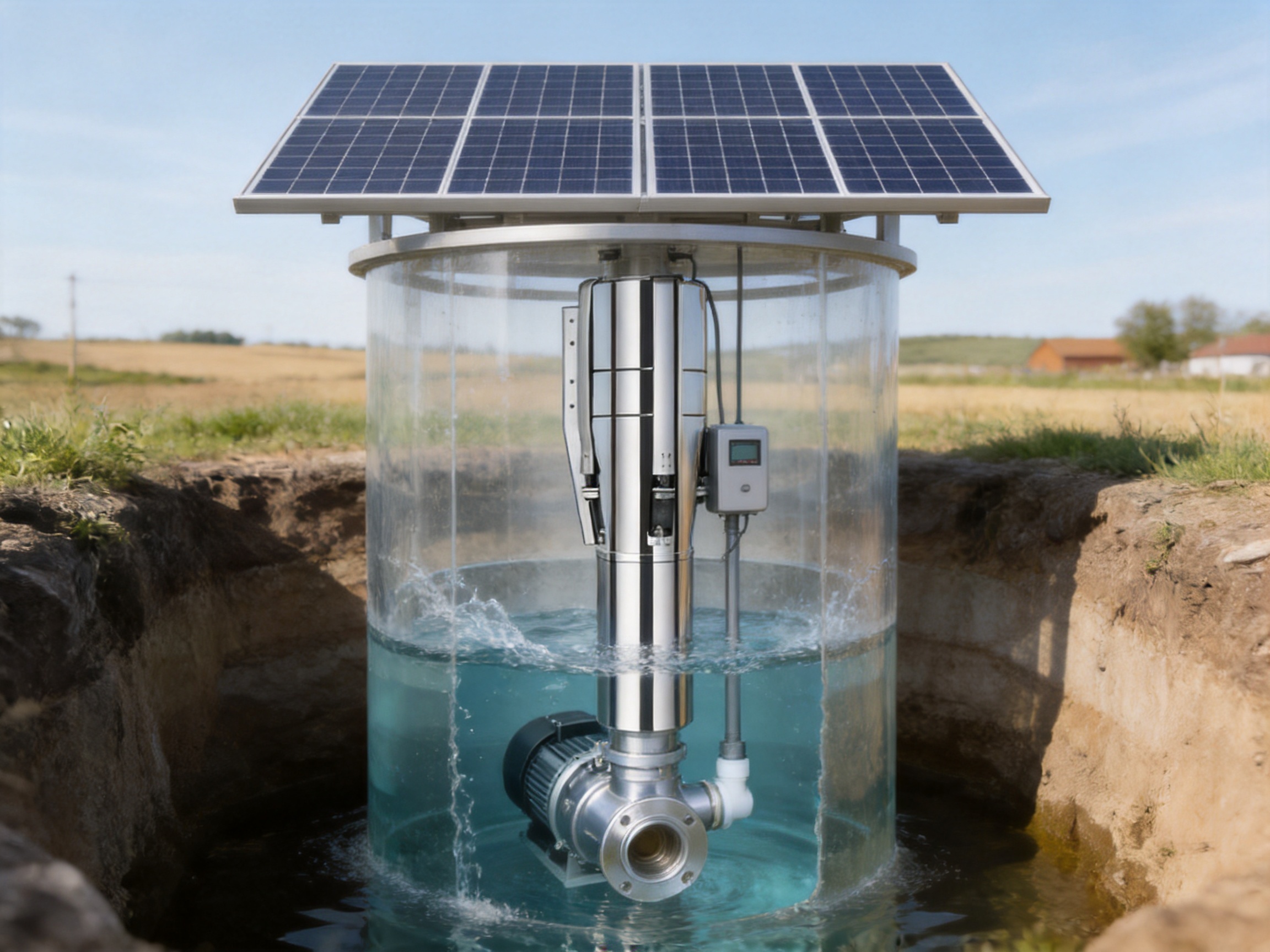
Agricultural irrigation often occurs in locations where grid extension is expensive or where power quality is unreliable. Solar deep well pumping can provide water for fields, orchards, nurseries, and greenhouses while reducing dependence on fuel. The 4/6ADFSW series provides several model options so that users can match output to the required irrigation zone and elevation.
For farms with a storage reservoir, the pump can operate during available sunlight and fill the tank. Water can then be distributed through gravity irrigation, drip systems, sprinklers, or a separate pressure booster. This approach allows the pump to work according to solar availability while irrigation continues according to crop requirements.
Greenhouse operators may benefit from the pump’s automatic control functions. Water demand can change according to temperature, crop stage, and irrigation scheduling. When paired with suitable level sensors and system controls, the pump can contribute to an automated water management arrangement.
For orchard irrigation, the required duty point should include the height difference between the water level and the highest irrigation point, pipe friction, filtration losses, and emitter or sprinkler pressure. Choosing a pump solely by maximum flow can result in inadequate pressure or unnecessary energy consumption. A professional system calculation is recommended.
Remote communities often need a reliable water source without the cost of constructing a new electrical connection. A solar deep well pump can draw groundwater and deliver it to an elevated storage tank, treatment system, community tap, or household distribution network.
The AC/DC function is valuable in rural water projects because it allows solar energy to serve as the primary source while an available utility supply or generator provides backup. This arrangement can improve resilience during cloudy weather, seasonal changes, maintenance, or unusual demand.
Livestock and pasture systems are another practical application. Water can be pumped from a borehole to troughs located away from buildings or grid connections. By using a storage tank and level control, the system can maintain water availability while minimizing unnecessary pump cycling.
In all rural projects, the water quality and well yield should be checked before selecting equipment. A pump that can theoretically deliver a high flow may lower the water level too quickly if the well is not capable of replenishing at that rate. Sustainable well operation protects the pump and preserves the water resource.
The well casing must be large enough for the selected pump and must provide adequate clearance for installation and cooling. The bore should be straight enough for safe lowering and retrieval. The static water level, dynamic water level, total well depth, recovery rate, and sediment content should be recorded.
The pump should remain adequately submerged during operation. If the water level falls below the required position, the motor may not receive sufficient cooling and the pump may suffer damage. A low-water sensor or suitable protection strategy should be included where the well yield is uncertain.
Total dynamic head includes the vertical lift from the pumping water level to the delivery point, discharge pressure requirements, friction loss in the pipe, and losses through valves, filters, elbows, and other fittings. The selected model should meet the required flow at this combined head.
The 3-inch outlet listed for the series should be connected to a correctly sized discharge pipe. A long or undersized pipe can create excessive friction loss and reduce the delivered flow. Increasing pipe diameter may reduce energy loss in long irrigation or water supply lines, although the final selection should consider cost, installation conditions, and required performance.
The solar array should provide at least 1.3 times the rated pump power according to the product specifications. For a 1100 W pump, this corresponds to a minimum nominal solar capacity of approximately 1430 W. For a 1500 W pump, the corresponding minimum is approximately 1950 W. For a 2200 W pump, the corresponding minimum is approximately 2860 W.
These figures are planning references rather than guarantees of continuous rated output. The array must also be configured so that its maximum open-circuit voltage remains below 430 V. The actual operating voltage must fall within the controller’s usable range. Panel selection should account for the local climate, minimum ambient temperature, maximum module voltage, shading, cable losses, and installation orientation.
Solar cables should be selected for outdoor exposure, ultraviolet resistance, current capacity, and voltage drop. Connectors must be correctly matched and protected from moisture. The array should include appropriate disconnecting and overcurrent protection in accordance with local electrical standards.
For A/D models, the AC source must remain within the specified 85 V to 280 V range. The electrical installation should include suitable isolation, grounding, circuit protection, and service access. AC and DC sources must be connected according to the manufacturer’s wiring instructions. Unapproved switching arrangements can cause equipment damage or create a serious safety hazard.
The pump cable and discharge pipe should be supported during installation so that the pump cable is not exposed to excessive tension. The cable should not be used as a lifting rope. The pump must be lowered carefully to avoid striking the casing or damaging the motor cable.
All cable joints below ground or in wet areas should use suitable waterproof connection methods. Cable size should be selected based on current, run length, allowable voltage drop, installation temperature, and applicable standards. A qualified electrician or pump technician should complete electrical connections.
One of the advantages of the brushless, water-filled design is reduced routine maintenance compared with engine-driven pumping equipment. Even so, a deep well pump is not maintenance-free. Preventive checks help protect the investment and preserve system performance.
Operators should monitor water output, operating sound, system pressure, solar input, and controller status. A gradual decline in flow may indicate a blocked intake, worn hydraulic parts, pipe obstruction, falling groundwater level, or reduced solar power. Unusual noise or vibration should be investigated rather than ignored.
The well should be checked periodically for sand, sediment, and water-level changes. If the pump is installed in a newly drilled well, initial development and cleaning may be necessary before normal operation. Excessive sand can damage bearings, impellers, and other hydraulic surfaces.
Solar panels should be kept reasonably clean and free from shading. Dust, bird deposits, leaves, and nearby vegetation can reduce the available energy. Inspection should be carried out with the electrical system isolated and by personnel who understand photovoltaic safety.
If the pump is used seasonally, the system should be inspected before restarting after a long period of inactivity. Pipework, valves, cable connections, tank controls, and protection devices should be checked. If freezing conditions are possible in exposed pipework, the system should be designed or winterized accordingly.
Initial purchase price is only one part of pump economics. Energy consumption, maintenance, downtime, replacement parts, labor, fuel, and water delivery reliability all influence the total cost of ownership. A solar pump with an intelligent controller can provide savings by using renewable energy and reducing the need for engine fuel.
Efficiency also depends on correct system sizing. A high-power pump operating far from its intended duty point may waste energy or produce unsatisfactory water delivery. The pump, solar array, pipework, storage tank, and irrigation equipment should be designed as one system.
The built-in MPPT function can improve the use of available solar energy, particularly when sunlight varies during the day. Soft start can reduce electrical stress during startup, while automatic control can prevent unnecessary operation when a storage tank is full or the water source is unavailable, provided suitable external sensors and control signals are used.
Durable materials can support long-term value. The stainless steel impeller resists corrosion in suitable water applications, the ceramic-coated rotor shaft is designed for improved wear resistance, and graphite bearings support low-friction operation in the water-filled motor environment. These features do not eliminate the need for correct installation, but they can reduce the risk of premature component wear.
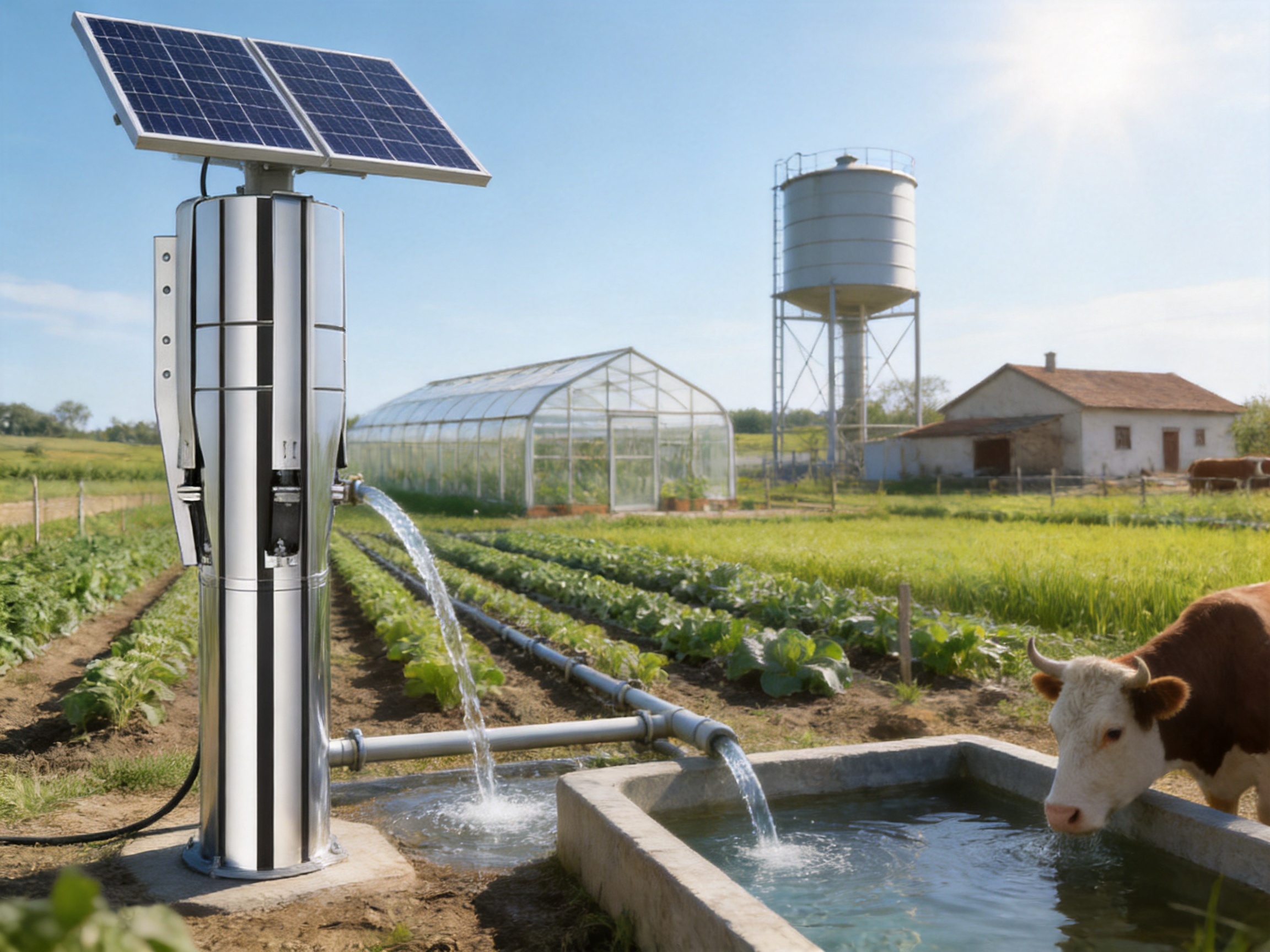
Solar pumping can reduce the carbon emissions associated with diesel fuel consumption and can make water infrastructure more practical in remote areas. It is particularly useful where a water storage tank can separate pumping time from water use time. During the day, solar energy fills the tank; later, the stored water supplies households, animals, or crops.
The environmental value of solar pumping depends on responsible groundwater management. A renewable energy source does not make unlimited water extraction sustainable. Well yield, seasonal recharge, local regulations, and water conservation practices must be considered. Efficient irrigation methods such as drip systems, appropriate scheduling, and leak control can improve the benefit of the complete installation.
The pump’s AC/DC flexibility can also support energy resilience. A project can begin with solar as the primary source and retain AC compatibility for future expansion or backup. This reduces the risk that the system becomes unusable when local power conditions change.
International buyers should prepare a clear technical specification before requesting a quotation. Important information includes the well diameter, installation depth, static and dynamic water levels, required flow, total head, pipe length, water quality, solar resource, desired AC backup, and expected daily operating hours.
Model selection should be based on the actual duty point. Buyers should request the relevant performance information, electrical requirements, wiring guidance, dimensional data, and recommended protection devices for the selected model. It is also useful to confirm packaging, spare parts, documentation, inspection arrangements, lead time, and shipping requirements before placing a production order.
Taizhou Edwin Electric Co., Ltd. serves international customers through an integrated manufacturing and export structure. Its associated procurement and foreign trade service capabilities are intended to support order coordination, cross-border delivery, and one-stop purchasing. This can be useful for distributors, engineering contractors, agricultural equipment suppliers, and project developers who need consistent communication throughout the supply process.
The manufacturer’s broader product portfolio can also support package procurement. A customer working on agricultural irrigation, building water supply, or renewable-energy infrastructure may require more than one pump type. Access to deep well pumps, submersible pumps, booster pumps, circulation pumps, and related accessories can simplify supplier management and improve product compatibility across a project.
First, determine the required water volume per day and the desired pumping schedule. A system that fills a storage tank during daylight may require a different flow rate from a system that supplies water continuously under pressure.
Second, measure or estimate the total dynamic head. Include the lowest expected pumping water level, elevation to the delivery point, pressure requirements, pipe friction, filtration, and fittings.
Third, compare the duty point with the available model options. The 1100 W, 1500 W, and 2200 W versions provide different combinations of flow and head. Avoid selecting only by the largest maximum flow or maximum head.
Fourth, design the solar array within the controller’s electrical limits. The array power should be at least 1.3 times pump power, and the open-circuit voltage must remain below 430 V. Confirm both voltage and current under local temperature and irradiance conditions.
Fifth, determine whether an A/D or HV configuration is more appropriate. The A/D models support both the listed AC and DC input ranges. The HV models are intended for the listed high-voltage DC range and should not be treated as AC-compatible models.
Finally, plan protection and maintenance. Include suitable dry-run protection, low-water control, overload protection, grounding, disconnects, surge protection where appropriate, and secure mechanical support. The final installation should comply with local electrical, water, construction, and occupational safety requirements.
It is an AC/DC hybrid submersible solar deep well pump with a water-filled brushless motor and built-in intelligent controller. The series is designed for compatible 4-inch and 6-inch bore applications.
The A/D versions are designed to support both DC solar input from 80 V to 430 V and AC input from 85 V to 280 V. The HV versions listed in the specifications are DC-only models with an input range of 80 V to 430 V.
MPPT means maximum power point tracking. It helps the controller adjust the electrical operating point of the solar array so that available solar power can be used more effectively as sunlight and panel conditions change.
The listed recommendation is a solar power capacity of at least 1.3 times the pump’s rated power. This means approximately 1430 W for a 1100 W pump, 1950 W for a 1500 W pump, and 2860 W for a 2200 W pump. The array must also remain within the specified voltage limit.
Depending on the model, maximum flow is listed as 30 m³/h or 36 m³/h, and maximum head is listed as 19 m, 22 m, 31 m, or 38 m. These are maximum ratings at different hydraulic conditions and should not be assumed to occur simultaneously.
The listed outlet size for the models in this series is 3 inches. The connected pipe should be selected according to the required flow, length, friction loss, installation conditions, and local standards.
A water-filled submersible motor is surrounded by water during operation, which supports heat transfer in the submerged environment. It provides a compact arrangement for deep well installation. Correct submergence, clean operating conditions, and protection against dry running are still necessary.
The SS304 shaft provides corrosion resistance for suitable water applications, while the ceramic coating is intended to improve surface hardness, wear resistance, and friction performance in the rotating assembly.
The pump is intended for suitable clean-water or compatible groundwater applications. Excessive sand, abrasive particles, or aggressive chemicals can cause premature wear. Water quality and well conditions should be evaluated before installation.
No. The integrated controller provides important operating functions, but the complete installation may still require disconnects, grounding, circuit protection, surge protection, sensors, low-water protection, and other equipment required by the project and local regulations.
Select the model according to the required flow at the total dynamic head, not only according to the maximum advertised flow or head. Well yield, pipe losses, elevation, delivery pressure, solar conditions, and daily water demand should all be considered.
Typical users include agricultural producers, greenhouse operators, rural households, livestock owners, irrigation contractors, remote community projects, water-system integrators, and distributors seeking a flexible AC/DC solar pumping solution.
The 4/6ADFSW AC/DC Water-Filled Solar Deep Well Pump provides a practical combination of renewable-energy compatibility, backup power flexibility, intelligent control, durable wet-end materials, and submersible deep well performance. Its brushless motor, ceramic-coated SS304 rotor shaft, graphite bearings, stainless steel impeller, soft start, automatic control, AC/DC switching, and MPPT solar operation address several of the challenges commonly associated with solar water pumping.
The available models cover power ratings from 1100 W to 2200 W, maximum flow ratings up to 36 m³/h, and maximum head ratings up to 38 m. This range allows the pump to serve different irrigation and water supply requirements, provided that the selected model is matched to the actual duty point.
Its greatest advantage over a basic single-source pump is operating flexibility. Solar energy can reduce operating costs, while AC compatibility in the A/D models can improve water availability when solar conditions are poor. Compared with diesel pumping, the system can reduce fuel dependence, noise, and routine engine maintenance. Compared with a conventional brushed motor, the brushless design is better suited to long-term electronically controlled operation.
Supported by a manufacturer with experience in independent research and development, mass production, international export, and intelligent pump technology, the series is positioned for professional use in agricultural, rural, commercial, and remote water projects. With correct sizing, proper solar array design, careful installation, and regular inspection, it can contribute to efficient and dependable groundwater pumping for many applications.
1. Product technical information for the 4/6ADFSW AC/DC Water-Filled Solar Deep Well Pump with Built-in Controller.
2. Manufacturer-provided model specifications for the 4/6DFSW pump series, including voltage, power, flow, head, outlet, cable, and solar array requirements.
3. General engineering principles for submersible pump selection, total dynamic head calculation, and solar photovoltaic system sizing.
4. General technical guidance on maximum power point tracking in photovoltaic pumping systems.
5. General principles of water-filled submersible motor cooling, brushless motor operation, and pump material selection.
6. Company information concerning integrated research and development, mass production, export services, and new-energy pump technology.
serieswatershortageprotectionvoltagestabilizationstainlesssteelverticalmultistagepump.jpg "EVR(S) Series Water Shortage Protection Voltage Stabilization Stainless Steel Vertical Multistage Pump")
edwina@edwin-pump.com
+86-13586290903 (WhatsApp)
Xuri Gongliang Cutting Tool Entrepreneurship Park, Wenqiao Town, Wenling City, Taizhou City, Zhejiang Province, China

High Performance Smart Pump Factory


 English