
edwina@edwin-pump.com

View All Products
en
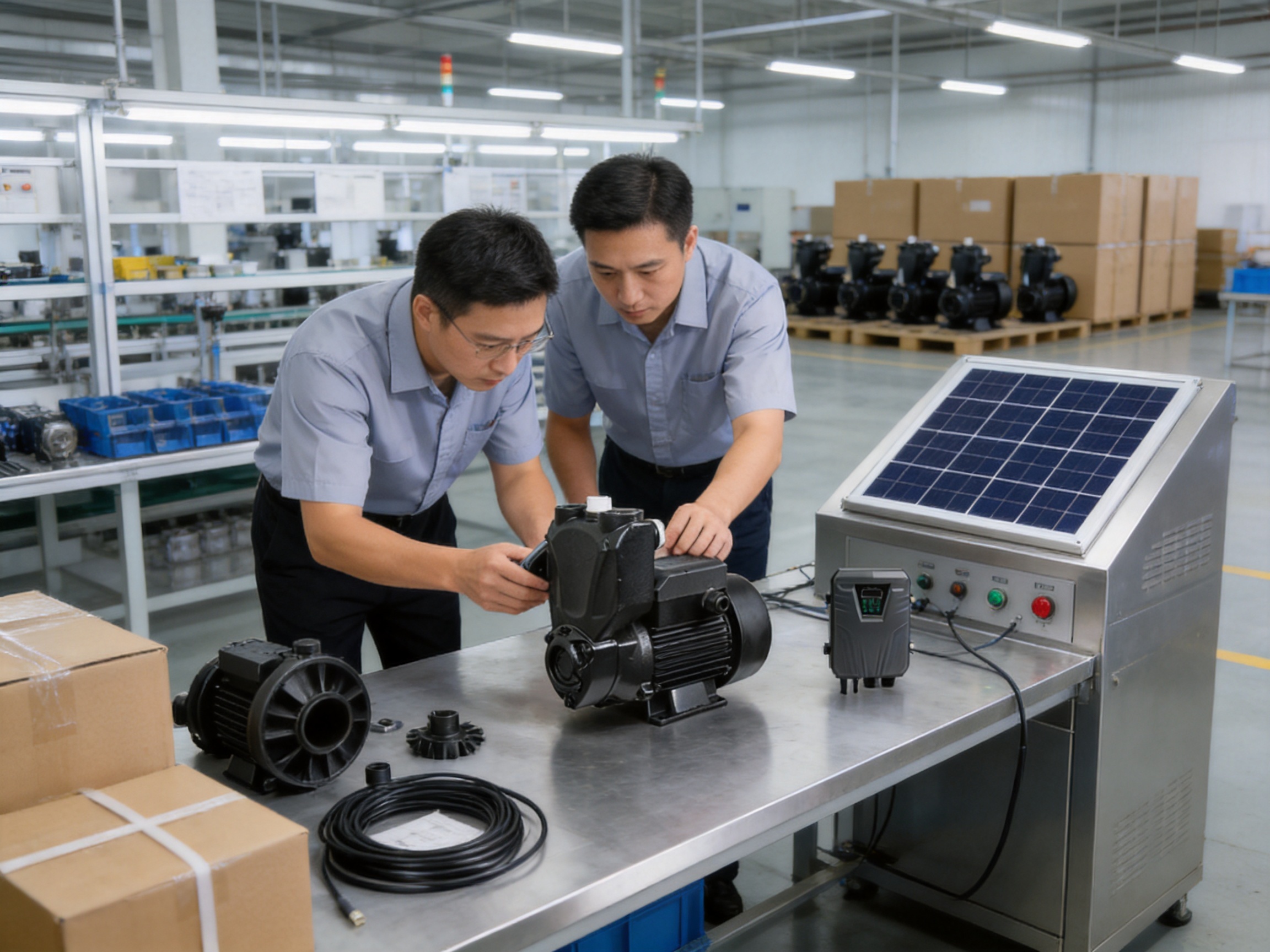
Reliable access to water is essential for households, farms, gardens, remote facilities, and small commercial sites. However, many locations do not have stable grid electricity, and extending utility infrastructure can be expensive or impractical. Solar-powered pumping provides a practical alternative by converting available sunlight into useful hydraulic energy. Within this growing field, the EZB Series DC Brushless Motor Solar Self-Priming Pump is designed to deliver efficient, convenient, and dependable water transfer without relying on conventional AC power.
The pump combines a DC brushless motor, self-priming capability, compact construction, and compatibility with photovoltaic power systems. This combination addresses several common challenges associated with small solar pumping installations. It reduces dependence on batteries, simplifies startup, supports remote operation, and minimizes routine maintenance. The series is suitable for household water supply, garden irrigation, small agricultural projects, off-grid transfer systems, and portable solar water applications.
Unlike conventional pumps that may require manual priming or a separate electrical inverter, a suitable DC solar pump can be connected to a properly designed photovoltaic system and operate directly from its available DC input. The EZB Series is available in several voltage and power configurations, allowing users to select a model according to required flow, lifting height, solar array characteristics, and application conditions.
The EZB Series is a DC surface solar pump equipped with a brushless motor and a self-priming hydraulic design. As a surface pump, it is installed above the water source rather than submerged in the well or tank. This arrangement makes inspection, servicing, and installation more accessible than with many permanently submerged systems.
The self-priming function is especially important for surface-mounted equipment. A conventional surface pump may require manual filling of the pump chamber and suction line before startup. If air enters the suction pipe, the pump may lose its prime and stop transferring water. A self-priming design is intended to create suction automatically, helping the pump start more conveniently and recover more effectively after normal interruptions.
The pump is designed for use in solar-powered systems where the available input voltage varies according to sunlight intensity, panel temperature, wiring, and array configuration. The listed optimum DC input ranges provide guidance for selecting an appropriate solar panel arrangement. Users should also observe the specified open-circuit voltage limit and install suitable protective equipment for the complete system.
The product range includes 24 V, 48 V, and 72 V versions. Power ratings range from 210 W to 750 W, while maximum listed flow ranges from 2 cubic meters per hour to 3 cubic meters per hour. Maximum head values range from 25 meters to 65 meters, depending on the model. These options allow the same product family to serve relatively small domestic systems as well as higher-head irrigation or water transfer installations.
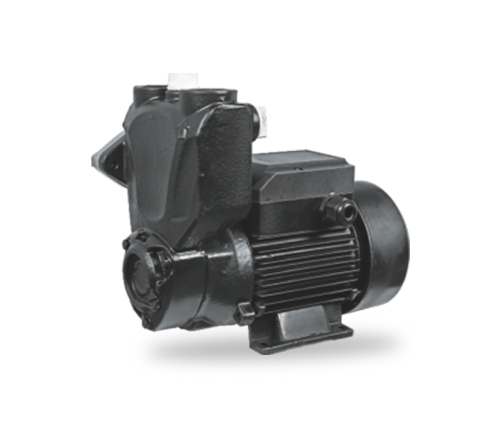
EZB Series DC Brushless Motor Solar Self-Priming Pump
A solar pumping system begins with photovoltaic panels that produce direct-current electricity when exposed to sunlight. The electrical output is supplied to the pump motor through the system wiring and, where required, a suitable controller or protection device. The brushless motor converts electrical energy into rotational movement, which drives the pump impeller and produces water flow.
Solar power is naturally variable. Cloud cover, morning and evening conditions, seasonal changes, panel orientation, and shading all affect the available electrical input. The pump must therefore be selected with a realistic understanding of both hydraulic demand and solar conditions. A system designed only around the motor’s rated wattage may perform poorly if the photovoltaic array cannot supply sufficient voltage and power during the intended operating period.
The self-priming mechanism supports the suction process when the pump is installed above the water level. After the pump casing and suction line have been prepared according to the installation instructions, the pump can create the pressure difference required to draw water into the system. This reduces the need for repeated manual priming and makes day-to-day operation more convenient.
Although the pump is designed to support automatic suction, correct pipe installation remains essential. The suction line should be airtight, appropriately sized, and as short and direct as practical. Leaks, excessive bends, damaged seals, or an improperly positioned intake can reduce performance and prevent successful priming. Self-priming capability improves convenience, but it does not eliminate the need for sound hydraulic installation practices.
Brushless DC motors eliminate the mechanical brushes and commutators used in traditional brushed motor designs. By reducing brush friction and electrical contact losses, the motor can operate efficiently over a broad range of conditions. This is particularly valuable in solar applications, where every watt generated by the photovoltaic array affects the amount of water delivered.
Higher motor efficiency can help users obtain more useful pumping output from a given solar array. It may also reduce the required panel capacity for a specified duty, although the final panel selection must account for head, pipe losses, sunlight availability, and operating objectives. In remote installations, efficient energy conversion can improve daily water production without increasing the size of every system component.
Mechanical brushes gradually wear during operation and may create dust, electrical noise, or contact instability. A brushless motor avoids this specific wear mechanism. With fewer routine wear components in the motor, the pump can provide a lower-maintenance solution for locations where regular service visits are inconvenient.
Reduced maintenance is especially useful for remote farms, isolated homes, temporary field installations, and water systems installed on rooftops or in areas with limited technical support. Users still need to inspect the pump, wiring, pipework, seals, and intake periodically, but the motor itself does not require brush replacement as part of normal operation.
Brushless motor technology supports electronically controlled operation and avoids the brush noise associated with traditional brushed motors. The resulting system can be more suitable for residential environments, garden applications, and small facilities where excessive mechanical or electrical noise would be undesirable.
Actual sound levels depend on installation conditions, pipe vibration, mounting surfaces, water flow, and operating load. Even so, the brushless configuration provides a solid foundation for smooth operation and helps the pump serve applications where comfort and low disturbance matter.
DC motors are naturally compatible with photovoltaic generation because solar panels produce direct current. A DC pump can reduce the need for an inverter that would otherwise convert DC power into AC power before driving a conventional AC motor. Fewer conversion stages can simplify the system and reduce energy losses, provided that the pump voltage and the solar array are correctly matched.
Eliminating an inverter may also reduce equipment count, wiring complexity, installation space, and potential points of failure. Inverter-based systems still have important applications, particularly where AC compatibility or advanced control is required, but a direct DC solar pump can be an efficient choice for dedicated off-grid water pumping.
Self-priming is one of the most practical features of the EZB Series. Surface pumps are often installed above a tank, reservoir, collection basin, or shallow water source. Without self-priming capability, trapped air in the suction line can prevent the impeller from moving water. The operator may need to refill the pump casing manually after every loss of prime.
An automatic suction function reduces this inconvenience. It can help the pump begin operation after a normal shutdown, temporary water interruption, or controlled restart, as long as the suction conditions remain within the product’s practical operating limits. This is useful in solar systems because the pump may stop each evening when sunlight disappears and restart the following morning.
Self-priming also supports more flexible installation. The pump can be positioned in a convenient, protected location instead of being placed directly at the water source. This may simplify access for inspection and reduce exposure to sediment, flooding, or direct contact with the pumped water.
However, self-priming should not be misunderstood as permission to run the pump indefinitely without water or with a completely dry suction system. The pump should be installed according to the manufacturer’s instructions, and the system should be protected against dry running, blocked intake conditions, extreme suction lift, and prolonged operation outside the recommended range.
The EZB Series includes four listed models. The following data summarizes the principal specifications supplied for the product family.
| Model | Rated Voltage | Optimum DC Input | Power | Maximum Flow | Maximum Head | Outlet | Cable Length | Maximum Solar Panel VOC | Recommended Solar Panel Power |
|---|---|---|---|---|---|---|---|---|---|
| EZB2-25-24-210 | 24 V | 30–48 V | 210 W | 2 m³/h | 25 m | 1 × 1 inch | 2 m | Below 60 V | At least 1.3 times pump power |
| EZB2-30-24-280 | 24 V | 30–48 V | 280 W | 2 m³/h | 30 m | 1 × 1 inch | 2 m | Below 60 V | At least 1.3 times pump power |
| EZB3-50-48-550 | 48 V | 60–90 V | 550 W | 3 m³/h | 50 m | 1 × 1 inch | 2 m | Below 120 V | At least 1.3 times pump power |
| EZB3-65-72-750 | 72 V | 90–120 V | 750 W | 3 m³/h | 65 m | 1 × 1 inch | 2 m | Below 170 V | At least 1.3 times pump power |
Maximum flow and maximum head are not normally achieved at the same operating point. A pump may reach its maximum head at very low or zero flow, while the highest flow figure generally applies at low resistance. Actual performance depends on total dynamic head, pipe diameter, pipe length, fittings, elevation, water temperature, source conditions, and available solar power.
The 24 V models are appropriate for smaller systems with comparatively modest head requirements. The EZB2-25-24-210 offers a listed maximum head of 25 meters, while the EZB2-30-24-280 extends the listed head to 30 meters. The 48 V model increases the maximum listed head to 50 meters, and the 72 V model reaches a listed maximum head of 65 meters.
Higher-voltage models can offer practical advantages in systems requiring greater head or longer cable runs. For the same power level, higher voltage generally means lower current, which can reduce voltage drop and allow more manageable cable sizing. Nevertheless, higher-voltage DC systems require careful attention to insulation, disconnect devices, grounding, photovoltaic open-circuit voltage, and electrical safety.
Brushed DC pumps can be attractive because of their simple electrical design and often low initial cost. However, brushes and commutators are wear components. Their service life may be affected by operating hours, load, dust, moisture, and switching conditions. The brushless motor in the EZB Series is designed to avoid this particular maintenance requirement, making it more suitable for installations where long-term convenience is a priority.
The brushless arrangement also supports more refined electronic control and efficient operation. In a solar environment, this can help the pump make better use of fluctuating photovoltaic input. The practical advantage is not merely a lower parts count; it is the combination of efficient energy use, reduced mechanical wear, and suitability for unattended operation.
An AC pump connected to solar panels generally requires an inverter or solar pump controller that converts the panels’ direct-current output into alternating current. This can be an effective solution, but it introduces another major component, another conversion stage, and additional installation requirements.
A dedicated DC solar pump can simplify a small off-grid water system by matching the motor to the electrical nature of the photovoltaic source. Fewer components may mean easier installation, reduced conversion loss, and simpler troubleshooting. The best choice still depends on the site. AC pumps may be preferable when an existing AC distribution system is available or when one inverter must serve several loads.
Submersible pumps are often the preferred solution for deep wells and boreholes because they operate below the water surface and push water upward. A surface pump such as the EZB Series is not intended to replace a deep-well pump in every situation. Instead, it is advantageous where the water source is accessible from the surface and the required suction conditions are suitable.
Surface installation makes the motor and pump easier to reach for inspection. It can also prevent the electrical motor from being permanently immersed and may simplify removal, seasonal storage, or system modification. For tanks, reservoirs, rainwater collection systems, shallow sources, and transfer applications, these advantages can be more important than the deep-lift capability of a submersible unit.
A standard non-self-priming surface pump may require frequent manual intervention if the suction line contains air. This can be inconvenient for household users and difficult for remote irrigation installations. The self-priming function of the EZB Series improves operational convenience and makes automatic daily cycling more practical.
Self-priming does not remove the need for correct pipework, but it provides an important margin of convenience. In systems that start and stop according to sunlight availability, the ability to recover suction without repeated manual filling can significantly improve the user experience.
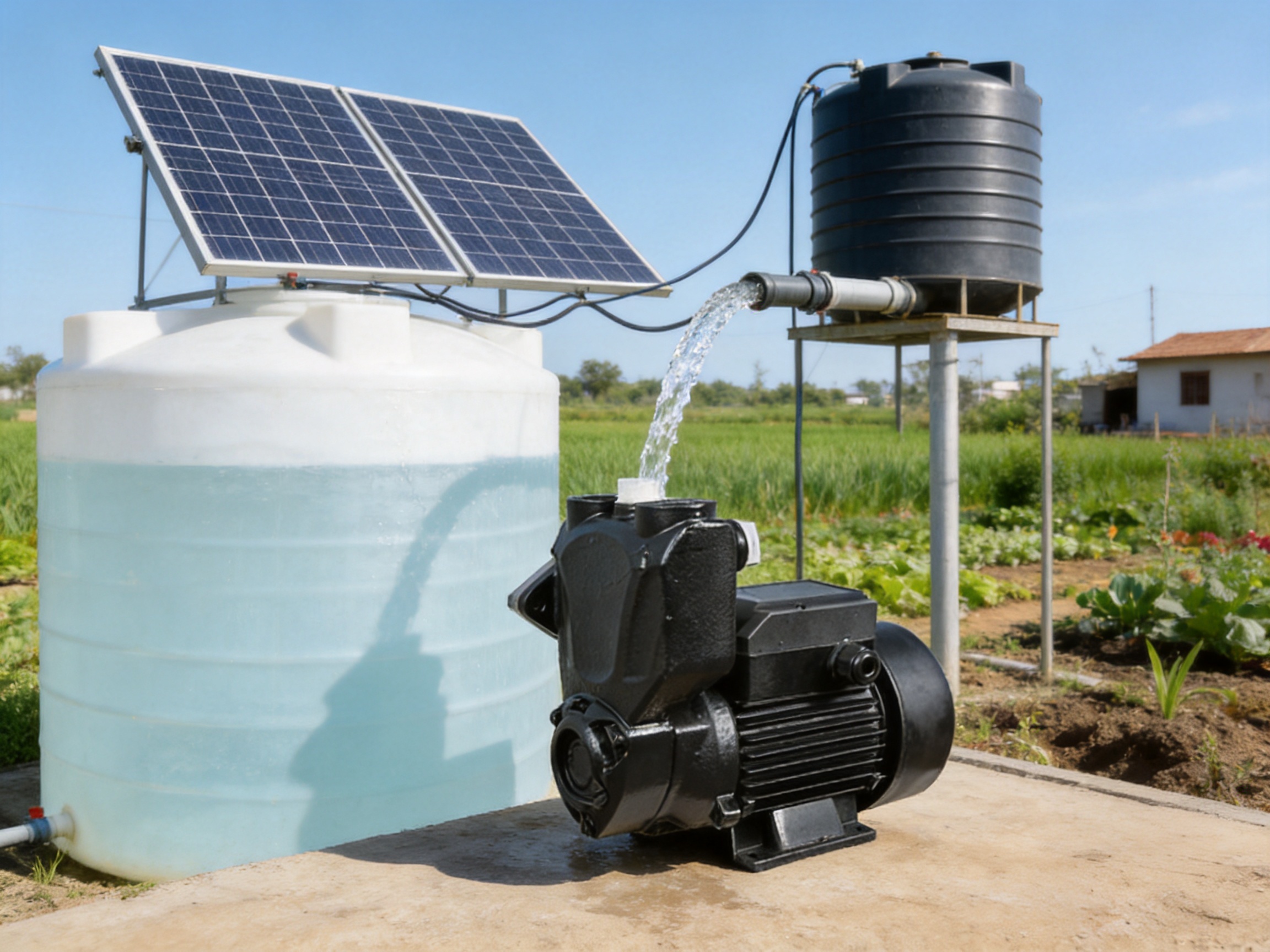
The pump can support solar-powered household water supply where water must be transferred from a storage tank, collection reservoir, or shallow source to a point of use. It may be used for filling an elevated tank, supplying outdoor taps, transferring rainwater, or supporting low-volume domestic water distribution.
For a home system, the pump should be selected according to the required daily volume rather than only the maximum instantaneous flow. A household may need water at several times of the day, while solar generation is concentrated around daylight hours. A storage tank can bridge this difference by allowing the pump to collect water during sunlight hours for later use.
A properly designed residential system may include a solar array, DC protection, a pump controller if required, non-return valves, a suction strainer, storage capacity, float switches, and protection against dry running or overflow. These components are not all integrated into the pump itself, but they can improve the performance and reliability of the complete installation.
The compact format of the EZB Series is beneficial in homes with limited equipment space. It may be mounted near a tank or on a protected platform, provided that the location is dry, ventilated, accessible, and suitable for the pump’s environmental conditions. Correct anchoring can reduce vibration and protect pipe connections from mechanical stress.
Gardens, orchards, nurseries, and small farms often require water transfer without the expense of a permanent grid connection. A solar surface pump can move water from a pond, storage tank, rainwater container, or collection basin to drip lines, sprinklers, or distribution tanks.
The 24 V models may be suitable for smaller garden systems with moderate elevation and limited irrigation zones. The higher-power models can support greater lifting requirements, although the final result depends on the irrigation design. Drip irrigation usually requires different pressure and flow characteristics from sprinklers, so users should compare the pump curve with the actual system resistance before purchasing.
Solar pumping can also support timed or water-level-based irrigation. A float switch can stop the pump when a destination tank is full, while a source-level sensor can prevent operation when the water level becomes too low. These control devices can reduce waste, protect the pump, and make the installation more autonomous.
In agricultural environments, filtration is important. Sand, leaves, algae, and other debris may enter the suction line and affect the impeller or seals. A correctly sized strainer can protect the pump while avoiding excessive restriction. The strainer should be accessible for cleaning, particularly during periods of heavy irrigation or after storms.
Remote locations often face a combination of limited grid access, high fuel costs, difficult maintenance conditions, and long distances between equipment and service personnel. Solar pumping can address these challenges by using a locally available energy source and reducing the need for fuel deliveries.
The EZB Series may be used for remote cabins, field stations, construction support, livestock watering, temporary camps, and isolated storage systems. Its compact design supports portable or semi-permanent installations, while the brushless motor reduces the need for routine motor maintenance.
For remote applications, system simplicity is a major advantage. A properly matched photovoltaic array, pump, pipe network, and storage tank can operate with limited operator involvement. Water storage is often preferable to battery storage because storing water can be more economical and simpler than storing large amounts of electrical energy. The pump can work during sunlight hours, and the stored water can be used when the sun is unavailable.
Even in remote areas, installation quality should not be compromised. Solar panels need secure mounting and appropriate orientation. Cables should be protected from ultraviolet exposure, abrasion, animals, and standing water. The pump should be protected from flooding, extreme weather, and unauthorized access. A clearly labeled disconnect can make emergency isolation easier.
The supplied performance data recommends solar panel power of at least 1.3 times the pump power. This means the recommended minimum array power is approximately 273 W for the 210 W model, 364 W for the 280 W model, 715 W for the 550 W model, and 975 W for the 750 W model.
This recommendation provides a practical margin because photovoltaic panels rarely deliver their rated output continuously. Panel temperature, sunlight angle, dust, shading, cable losses, and manufacturing tolerances can reduce real-world output. A larger array may help the pump reach useful operating conditions for more hours of the day.
Voltage limits are equally important. The two 24 V models specify an optimum DC input range of 30–48 V and a solar panel open-circuit voltage below 60 V. The 48 V model specifies an optimum range of 60–90 V and an open-circuit voltage below 120 V. The 72 V model specifies an optimum range of 90–120 V and an open-circuit voltage below 170 V.
Open-circuit voltage is the voltage produced by a solar array when it is not under load. It can rise in cold conditions, so designers should not check only the nominal operating voltage. The array must remain below the specified limit under the lowest expected panel temperature. A qualified installer should verify series and parallel connections, maximum current, conductor ratings, fuse selection, isolator ratings, and grounding requirements.
The phrase “optimum input voltage” should also be distinguished from the panel’s nominal voltage. A panel arrangement may have a nominal rating that appears compatible while producing an operating voltage outside the pump’s preferred range under real conditions. Performance should be evaluated using the array’s voltage at the expected operating temperature and load.
The suction line is critical for a surface self-priming pump. It should be airtight and connected using suitable fittings and seals. Even a small air leak can prevent the pump from developing adequate suction. The intake should remain below the minimum water level and should be positioned away from heavy sediment or floating debris.
A suction strainer or foot valve may be used where appropriate, but each additional component creates resistance. The designer should balance protection against pressure loss. Undersized suction pipework can restrict the pump, increase noise, reduce flow, and make priming more difficult.
The discharge line should be sized according to the desired flow and total length. Narrow pipes, unnecessary elbows, partially closed valves, and clogged filters increase friction losses. These losses add to the vertical lifting height and can substantially reduce the actual flow available at the outlet.
Where water is pumped to an elevated tank, the total dynamic head includes the vertical elevation difference as well as friction losses. If the water must pass through drip emitters, sprinklers, filters, or pressure regulators, the resistance of those devices must also be considered.
The pump should be installed on a stable, level support. Proper mounting helps prevent vibration and avoids placing excessive force on the inlet and outlet connections. The installation area should allow access to the pump, cable, fittings, and any protective devices.
Although the pump is intended for outdoor and off-grid applications, the complete assembly should be protected from direct flooding and avoidable weather exposure. Solar panels, cable glands, junction boxes, and controllers must be selected for the environmental conditions of the site. Electrical connections should be kept dry and installed according to local regulations.
Before the first startup, the pump and suction system should be prepared according to the operating instructions. The operator should confirm that the suction line is connected, the water source is available, valves are correctly positioned, and the discharge path is open or configured for startup.
If the pump does not prime, the cause may be an air leak, excessive suction lift, blocked strainer, incorrect rotation or wiring, insufficient solar input, a closed valve, or an unsuitable water level. Repeated dry operation should be avoided while troubleshooting.
The manufacturer, Taizhou Edwin Electric Co., Ltd., was founded in 2008 and operates as an integrated enterprise covering independent research and development, mass production, and global export. This integrated structure is important for a specialized solar pump because product performance depends on the coordination of motor design, hydraulic components, electrical compatibility, assembly, testing, and customer support.
Independent research and development allows the company to adapt product designs to changing application requirements. The introduction of solar water pumps and intelligent booster pumps since 2018 demonstrates a strategic focus on new energy and intelligent water technology. This direction is relevant to customers seeking more efficient and autonomous pumping systems rather than conventional fixed-speed equipment alone.
Mass production provides another important strength. Repeatable production processes can support consistent component selection, assembly procedures, inspection routines, and packaging. For distributors, contractors, and international project buyers, manufacturing capacity is essential because project schedules often depend on stable supply and reliable order fulfillment.
An integrated manufacturing model can also improve communication between engineering and production teams. Feedback from production, field applications, and customer service can be used to identify recurring issues and refine future designs. This is particularly valuable for solar pumps because installations vary significantly by region, water source, climate, and photovoltaic configuration.
The company’s broader product portfolio includes deep well pumps, submersible pumps, domestic booster pumps, circulation pumps, and other water pumping products. This range gives buyers access to different pumping technologies through one supply network. A customer whose project includes a shallow solar transfer stage, a deep-well extraction stage, and a domestic pressure-boosting stage may be able to coordinate product sourcing more efficiently.
Manufacturing strength is not limited to machinery or production volume. It also includes technical documentation, model standardization, order tracking, export coordination, packaging, and after-sales communication. Through affiliated import and export service companies established in 2012, the business developed capabilities in procurement planning, order tracking, cross-border delivery, and foreign trade services.
These capabilities can reduce the administrative burden for international buyers. A pump project may require model confirmation, electrical data review, shipping coordination, spare parts planning, and documentation. A supplier able to support these steps as part of a one-stop procurement process can provide value beyond the hardware itself.
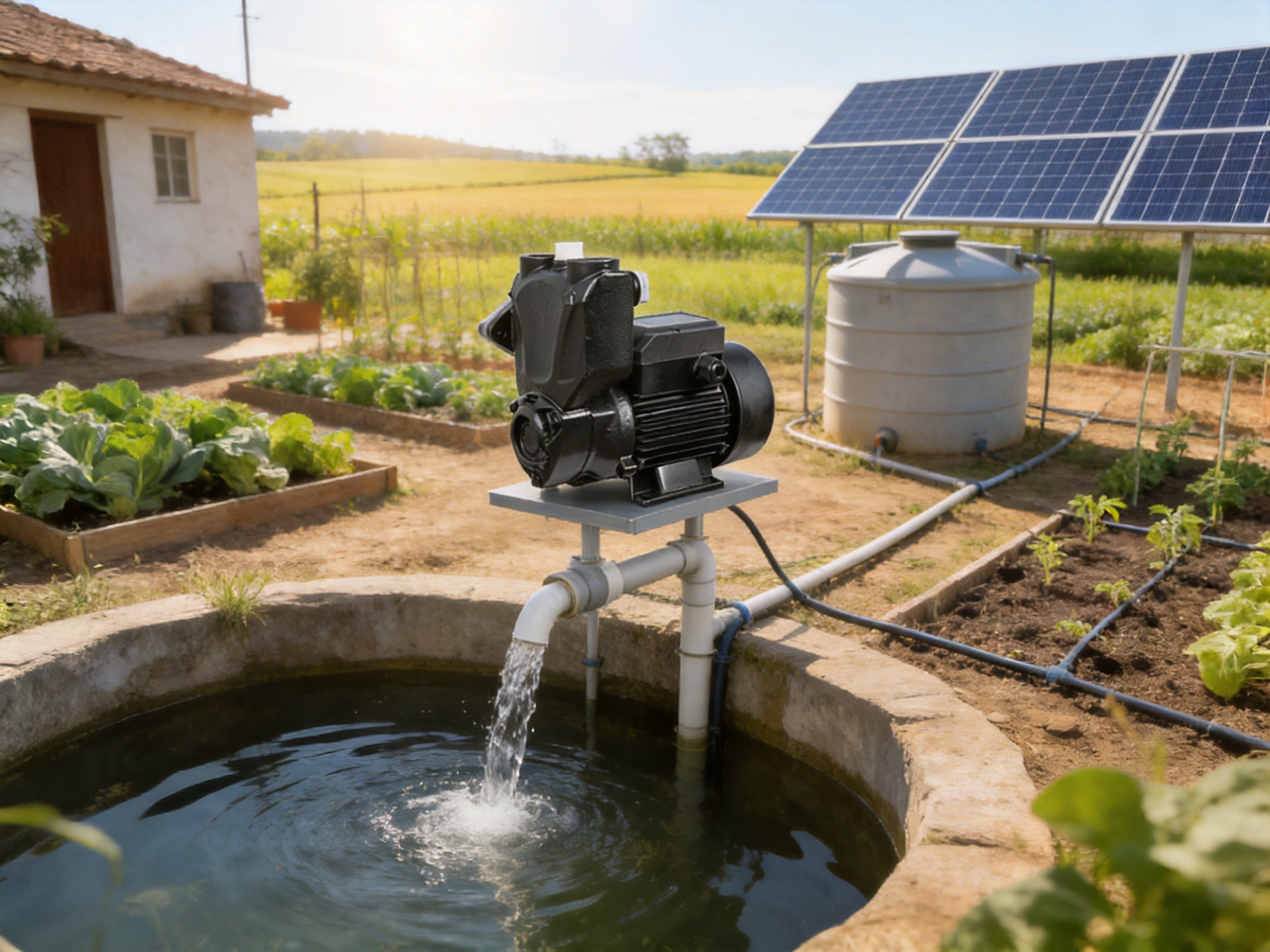
The manufacturing process begins with product planning and engineering review. Designers must define the intended voltage range, motor power, hydraulic performance, outlet configuration, cable arrangement, and operating environment. For a solar pump, these parameters must be considered together rather than separately.
The motor must produce suitable torque under changing DC input conditions. The hydraulic section must provide useful flow and head without imposing excessive load. The enclosure and electrical connections must support the intended installation environment. Product planning therefore establishes the technical foundation for later assembly and testing.
Component selection affects efficiency, durability, and consistency. Motor parts, impellers, housings, seals, bearings, connectors, cables, and fastening elements must be compatible with the pump’s operating conditions. Water quality, temperature, pressure, vibration, and electrical load all influence the suitability of individual components.
Using standardized model specifications helps organize component procurement and production. It also makes it easier for distributors and customers to identify replacement parts and compare the differences between models. The four listed EZB configurations provide a clear progression in voltage, power, flow, and head capability.
Assembly requires accurate alignment between the motor and hydraulic components. Correct fit between the motor shaft, impeller, seals, and pump casing supports efficient energy transfer and reduces vibration. Fasteners must be tightened consistently, and sealing surfaces must be clean and properly prepared.
Brushless motor assembly also requires attention to electronic connections and insulation. The motor control arrangement must be protected against incorrect wiring, abnormal input conditions, and excessive operating stress within the intended system design. Cable routing and strain relief are important because movement or tension at the cable connection can eventually damage electrical components.
Quality control should include visual inspection, dimensional checks, electrical verification, leak inspection, and functional testing. Performance testing can help confirm that the pump starts correctly, operates smoothly, and produces results consistent with the intended model range.
Because the EZB Series is designed for solar input, verification should consider DC operating behavior rather than only conventional AC testing. Input voltage, current, startup response, motor stability, hydraulic output, and abnormal operating conditions should be evaluated within appropriate test procedures.
Consistent testing is particularly important for export products. Pumps may be installed by different contractors in different climates, and customers often need confidence that the supplied units conform to the ordered specifications. Documented inspection and standardized packaging can help reduce transport damage, specification errors, and installation delays.
Edwin Pump serves applications in new energy projects, agricultural irrigation, municipal engineering, mining, construction, HVAC systems, and household water supply. This breadth of experience is useful because it exposes the organization to different performance requirements and operating environments.
A household buyer may prioritize compact size, low noise, and simple installation. An agricultural customer may focus on daily water volume, head, filtration, and seasonal reliability. A project contractor may require model consistency, documentation, delivery coordination, and replacement planning. A global distributor may need product breadth and dependable communication across multiple orders.
The company’s combination of pump manufacturing and foreign trade support is intended to address these different purchasing priorities. Rather than treating the pump as an isolated item, the supply process can include product selection, procurement planning, order tracking, and international delivery coordination.
For professional buyers, this can support more efficient project management. A supplier that understands both technical products and export procedures can help reduce misunderstandings concerning voltage, performance data, packaging, shipping terms, and installation requirements. Customers should still conduct their own technical review, but responsive supplier communication can make that review faster and more effective.
The brushless motor reduces one common maintenance requirement, but regular inspection remains important. Operators should periodically check the suction strainer, intake condition, pipe joints, cable connections, mounting bolts, and visible seals. Any unusual noise, vibration, reduced output, or repeated loss of prime should be investigated promptly.
Solar panels should be kept reasonably clean and free from shading. Dust, bird deposits, leaves, and nearby vegetation can reduce energy production. Even partial shading may affect the output of an array depending on its configuration. Panel mounting should be checked after severe weather, and cable insulation should be inspected for damage.
Water quality can influence service life. Abrasive sand may wear hydraulic components, while corrosive or chemically aggressive water may affect materials. If the pump is used with water containing sediment, the system should include suitable filtration and a maintenance schedule based on actual conditions.
Seasonal systems should be prepared for periods of freezing, long-term shutdown, or reduced water availability. Where freezing is possible, water should not be left in vulnerable components unless the system has been designed for those conditions. In agricultural installations, operators may need to remove, drain, or protect the pump during the off-season.
Preventive maintenance is generally less expensive than emergency repair. A simple inspection routine can identify blocked filters, loose fittings, damaged cables, or reduced panel output before these issues cause a complete loss of water service.
Consider a small orchard requiring water to be transferred from a collection tank to an elevated irrigation reservoir. The installer first calculates the vertical elevation difference and adds estimated friction losses from the suction pipe, discharge pipe, valves, filter, and tank inlet. This total becomes the approximate dynamic head requirement.
If the required duty is below the practical capability of a 24 V model and the installation has a relatively short pipe run, one of the EZB2 configurations may be appropriate. If the tank is substantially higher or the irrigation line creates greater resistance, the 48 V or 72 V model may provide a better starting point for evaluation.
The installer then determines the desired daily water volume. The solar array is sized not only for the pump’s rated power but also for local sunlight conditions, panel temperature, seasonal availability, and system losses. The supplied recommendation of at least 1.3 times pump power provides a baseline, but additional capacity may be justified where sunlight is inconsistent or water demand is high.
Finally, the system is equipped with an intake strainer, suitable pipework, a water-level control, a destination float switch, electrical isolation, and protection against abnormal operating conditions. The finished installation is tested under different sunlight levels to confirm that the pump primes, runs smoothly, and delivers water to the intended location.
Buyers should begin with the application rather than the product name. Important questions include the water source, source-to-pump distance, suction lift, vertical elevation, required flow, daily water volume, water quality, solar operating hours, and whether the system needs storage or direct delivery.
The pump model should be selected only after the total hydraulic requirement has been estimated. A model with a higher maximum head is not automatically the best choice if the application requires high flow at a low elevation. Conversely, a small model may not provide satisfactory service when long pipes, filters, or sprinklers create substantial resistance.
Electrical compatibility must be confirmed before an order is placed. The buyer should check the rated voltage, optimum input voltage, maximum open-circuit voltage, array power, cable length, controller requirements, and local electrical standards. If the pump will be installed by a third party, these specifications should be shared with the installer in advance.
For large or repeated purchases, buyers may also evaluate manufacturing capacity, quality management, packaging, spare parts availability, lead times, export experience, and technical communication. The manufacturer’s experience in independent R&D, mass production, and global export can be important when a project requires consistent supply over multiple orders.
Product portfolio breadth is another consideration. A supplier able to provide surface solar pumps, deep-well pumps, submersible pumps, booster pumps, circulation pumps, accessories, and related water equipment may help customers standardize sourcing across several projects.
The EZB Series is a DC surface solar pump with a brushless motor and self-priming design. It is installed above the water source and is intended for solar-powered water transfer, household supply, garden irrigation, small agricultural use, and off-grid applications.
The pump is designed for DC solar input, so a conventional AC inverter is not necessarily required for a dedicated photovoltaic installation. The exact system may require a suitable controller, disconnect, protection devices, or other electrical components depending on the installation design.
The listed models are EZB2-25-24-210, EZB2-30-24-280, EZB3-50-48-550, and EZB3-65-72-750. They operate at 24 V, 48 V, or 72 V and provide listed maximum heads from 25 meters to 65 meters.
The listed maximum flow is 2 cubic meters per hour for the two EZB2 models and 3 cubic meters per hour for the EZB3 models. Actual flow depends on head, pipework, fittings, water conditions, and available solar power.
The basic solar-powered configuration is intended to operate when adequate photovoltaic energy is available. Night operation requires an additional energy source, such as a suitable battery system or another compatible DC supply. Many installations use a storage tank to provide water after sunset instead of adding batteries.
The EZB Series is a surface pump and is not a universal replacement for a deep-well submersible pump. It should be used where the source depth and suction conditions are suitable. Deep wells generally require a pump designed specifically for submerged operation.
No. Self-priming helps the pump create suction and recover operation more conveniently, but prolonged dry running can damage pump components. The system should include appropriate water-level protection and should be installed with a properly prepared suction line.
The supplied data recommends solar panel power of at least 1.3 times the pump power. This corresponds to approximately 273 W for the 210 W model, 364 W for the 280 W model, 715 W for the 550 W model, and 975 W for the 750 W model. Actual sizing should also account for local sunlight, temperature, shading, wiring losses, and daily water requirements.
Open-circuit voltage, or VOC, is the voltage produced by the panel array when it is not supplying current to a load. The array must remain below the pump’s specified VOC limit, including possible voltage increases during cold weather. This calculation should be completed by a qualified installer.
The brushless motor does not require routine brush replacement. Nevertheless, users should inspect the pump, intake, strainer, pipework, seals, mounting, electrical connections, and solar panels. Maintenance requirements also depend on water quality and environmental conditions.
The EZB Series is manufactured by Taizhou Edwin Electric Co., Ltd., an integrated pump enterprise established in 2008 with capabilities in independent research and development, mass production, and global export.
The company’s products are used in new energy projects, agricultural irrigation, municipal engineering, mining, construction, HVAC systems, and household water supply. Its portfolio includes deep well pumps, submersible pumps, domestic booster pumps, circulation pumps, solar water pumps, and intelligent booster pumps.
The EZB Series DC Brushless Motor Solar Self-Priming Pump provides a practical combination of solar compatibility, efficient motor technology, automatic suction, compact construction, and low-maintenance operation. Its four listed configurations cover a useful range of voltage, power, maximum head, and flow requirements for residential, agricultural, garden, portable, and off-grid water systems.
Its strongest advantages over basic alternatives are the brushless motor’s reduced wear, the direct suitability for DC photovoltaic systems, and the convenience of self-priming operation. These features can simplify installation and reduce the frequency of user intervention, especially where the pump starts and stops according to sunlight availability.
Successful performance depends on selecting the correct model and designing the complete system carefully. Solar array voltage, open-circuit limits, panel power, suction conditions, pipe sizing, filtration, water storage, and protection devices must all be considered. Maximum head and maximum flow should be treated as reference limits rather than guaranteed simultaneous operating values.
The manufacturer’s integrated capabilities in research and development, mass production, product diversification, and global export provide additional value for distributors, contractors, and international project buyers. With experience across multiple pump categories and support for procurement and cross-border delivery, the company is positioned to serve both individual applications and broader water-system programs.
For locations seeking dependable water transfer without a permanent grid connection, a properly matched DC self-priming solar pump can reduce operating complexity while making productive use of renewable energy. The EZB Series is designed around that practical objective: delivering useful water pumping performance in a compact, accessible, and energy-conscious package.
1. Product technical information for the EZB Series DC Brushless Motor Solar Self-Priming Pump, including model ratings, voltage ranges, flow data, head data, outlet specifications, cable length, and solar panel recommendations.
2. General principles of photovoltaic water pumping system design, including solar array sizing, open-circuit voltage evaluation, energy storage through elevated water tanks, and variable solar resource management.
3. General engineering guidance for centrifugal surface pumps, self-priming systems, suction pipe design, hydraulic losses, filtration, and total dynamic head calculation.
4. General technical literature on brushless DC motors, electronic commutation, electrical efficiency, motor wear reduction, and maintenance planning.
5. Company information supplied for Taizhou Edwin Electric Co., Ltd., including its history, research and development activities, manufacturing operations, product portfolio, and global export services.
edwina@edwin-pump.com
+86-13586290903 (WhatsApp)
Xuri Gongliang Cutting Tool Entrepreneurship Park, Wenqiao Town, Wenling City, Taizhou City, Zhejiang Province, China

High Performance Smart Pump Factory


 English