edwina@edwin-pump.com

View All Products
en
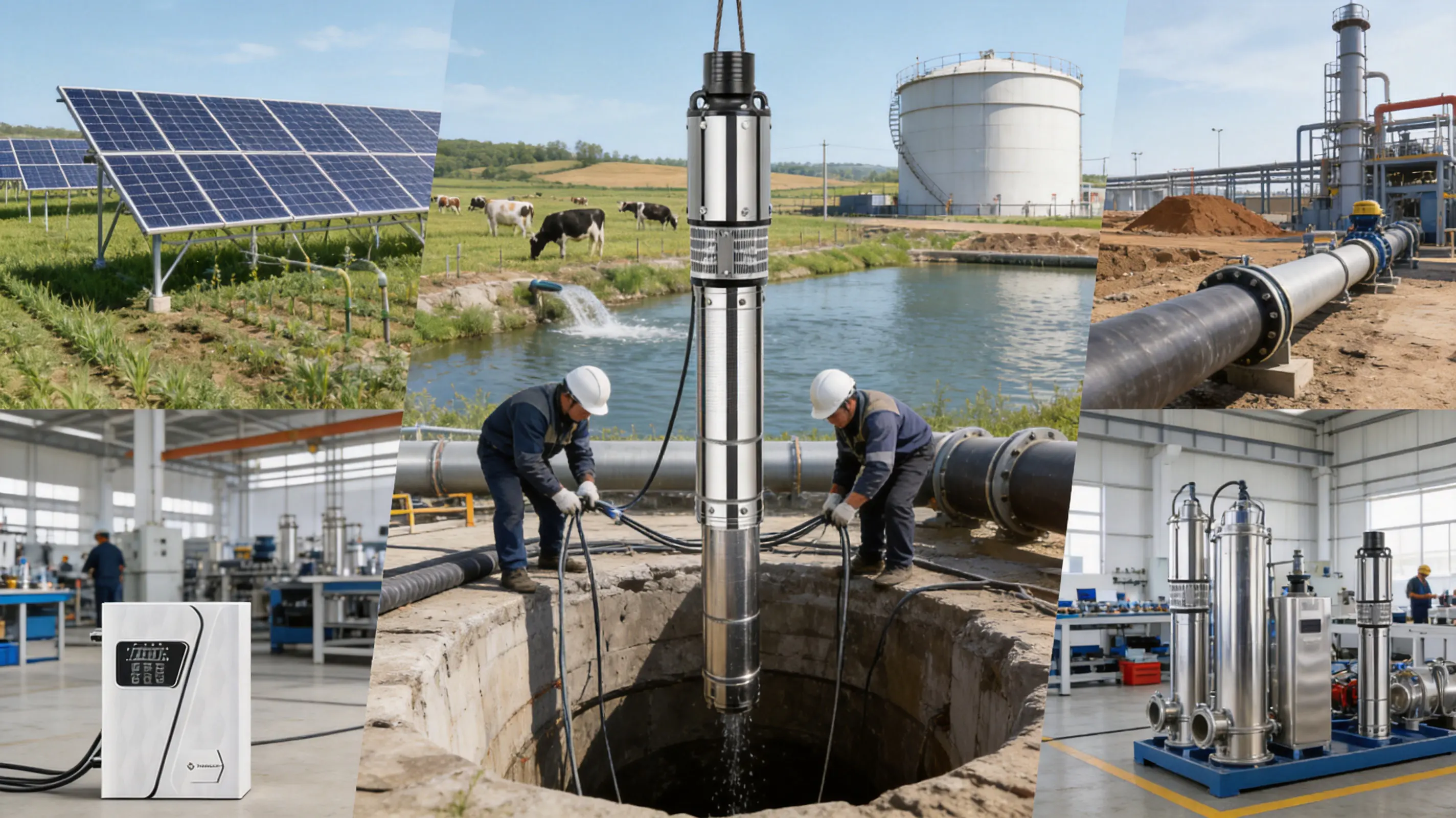
Reliable water access is essential for agriculture, livestock management, industrial production, rural development, construction, and many other applications. In locations where grid electricity is unstable, expensive, or unavailable, solar pumping provides an attractive alternative. However, solar-only pumping systems may experience reduced output when sunlight is weak, while conventional electric pumps can increase operating costs and depend entirely on the local power network. The 6/8ADPC AC/DC Hybrid Brushless Motor Solar Deep Well Pump addresses both challenges by combining solar DC operation with conventional AC power in one high-performance submersible pumping solution.
Designed for deep-well water supply, this pump uses a brushless motor and a hybrid power architecture to provide dependable operation across changing energy conditions. It can use solar energy when available and work with AC electricity when solar input is insufficient. This operating concept supports continuous water delivery during daylight, nighttime, cloudy weather, and seasonal changes.
The product is suitable for demanding systems requiring considerable water flow and lifting capability. Available configurations provide a maximum flow of up to 135 cubic meters per hour and a maximum head of up to 150 meters, depending on the selected model. With stainless steel construction, wide voltage adaptability, controller compatibility, and a low-maintenance brushless motor, the pump is intended for users seeking long-term performance rather than a basic pumping unit.
The 6/8ADPC is an AC/DC hybrid submersible solar pump developed for deep-well and large-scale water transfer applications. Unlike a conventional solar pump that relies exclusively on photovoltaic power, this model accepts both DC input from a solar system and AC input from the electrical grid. The hybrid arrangement helps reduce interruptions caused by changing sunlight and gives system designers more flexibility when planning water infrastructure.
The pump is equipped with a high-efficiency brushless motor. Brushless motor technology eliminates the mechanical brushes used in traditional brushed motors. As a result, the motor can operate with reduced friction, lower wear, and less routine maintenance. The design also supports smoother operation and improved electrical efficiency, which are particularly valuable in remote systems where inspection and repair may be difficult.
As a submersible deep-well pump, the unit is installed below the water level and pushes water upward through the discharge pipe. This configuration avoids many of the priming limitations associated with surface-mounted suction pumps. It is well suited to boreholes, wells, reservoirs, agricultural water sources, and other installations where the water level is significantly below the ground surface.
The pump is designed around a precision-engineered hydraulic structure. Its hydraulic components are intended to generate strong water flow and lifting performance while maintaining stable operation. The available models cover several power and head combinations, allowing an installer to select a configuration that matches the required pipe distance, elevation, pressure, and water demand.
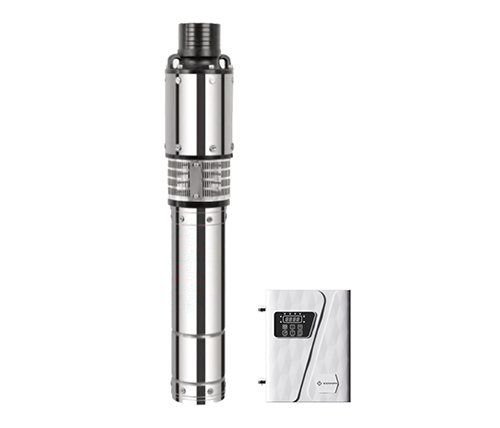
6/8ADPC AC/DC Hybrid Brushless Motor Solar Deep Well Pump
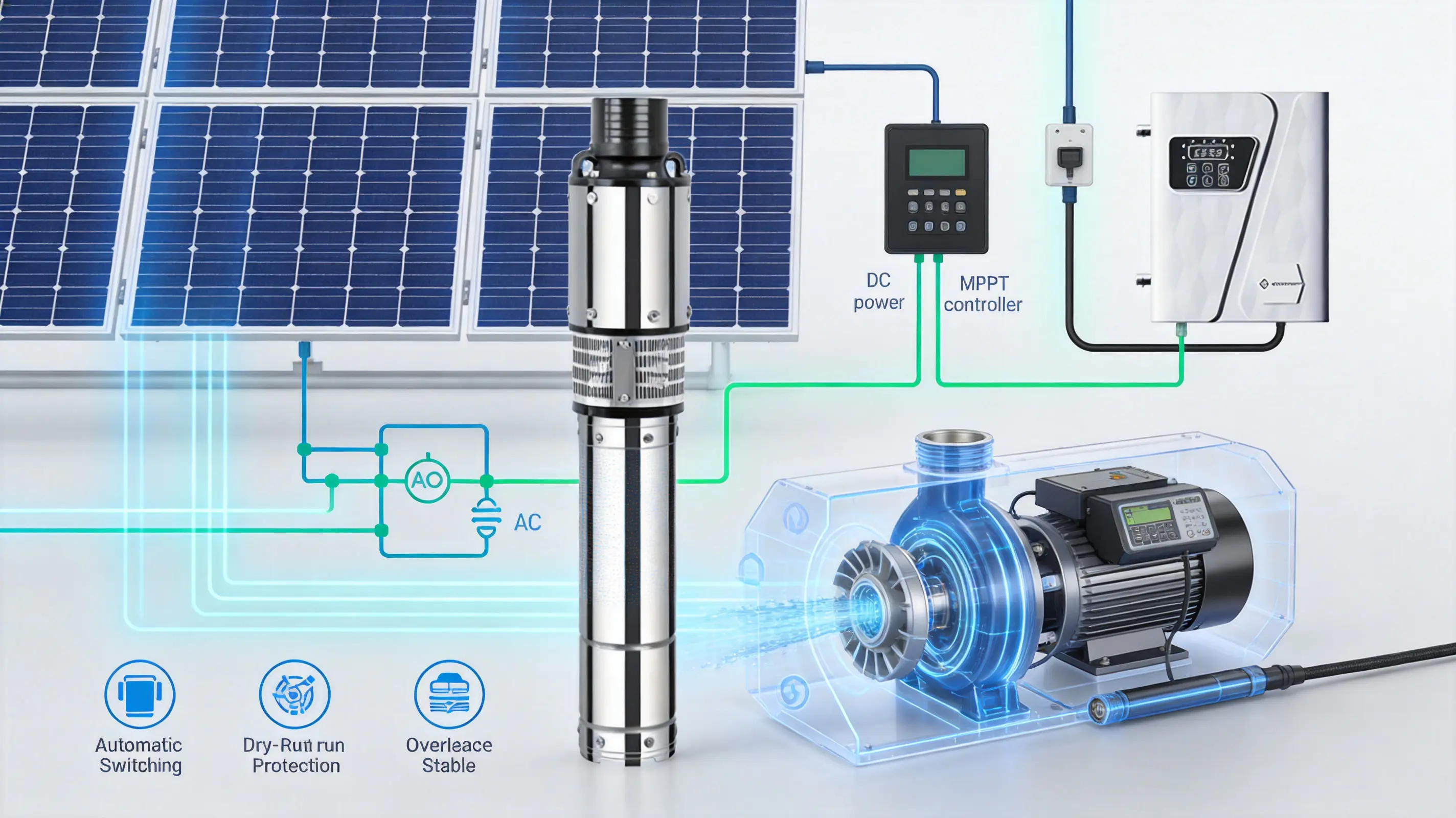
The central advantage of the 6/8ADPC series is its ability to operate from two different power sources. Solar panels supply DC electricity during periods of adequate sunlight. When solar power is unavailable or falls below the required operating level, the system can use AC electricity from the grid or another suitable source. Automatic switching between the power sources helps maintain water supply without requiring the operator to manually reconfigure the pump each time weather conditions change.
During bright daytime conditions, the pump can use available solar energy to reduce dependence on grid electricity. This may help lower operating expenses, particularly in regions with high electricity prices or large daily irrigation requirements. Solar operation also reduces the need for fossil-fuel-powered generators and supports lower-carbon water management.
At night or during prolonged cloudy conditions, the AC input provides a backup energy source. This capability is especially useful for livestock facilities, industrial processes, municipal water systems, and residential water supply, where water demand may continue regardless of sunlight. Rather than stopping whenever solar output decreases, the system can continue operating through the alternative power input.
A hybrid system also offers practical advantages during seasonal changes. Solar radiation varies between summer and winter, and many agricultural or industrial applications require predictable water delivery throughout the year. AC backup gives the system greater operational consistency than a solar-only installation sized for average conditions.
The hybrid architecture can also reduce the need to oversize the solar array solely to cover periods of poor sunlight. System designers may balance panel capacity, expected water demand, storage requirements, and available AC infrastructure. The final configuration should always be selected according to the pump controller specifications, site conditions, electrical regulations, and professional engineering recommendations.
The brushless motor is one of the most important technical features of the pump. Traditional brushed motors use physical brushes and a commutator to transfer electrical energy to the rotating assembly. These components gradually wear during operation and may generate friction, heat, electrical noise, and maintenance requirements. A brushless motor uses electronic commutation instead, reducing the number of mechanical wear components inside the motor.
Reduced mechanical wear can contribute to a longer service life when the pump is correctly installed and operated. This is particularly important for deep-well equipment because removing a submersible pump for service can require considerable labor, lifting equipment, and downtime. A motor designed to minimize wear can therefore provide a practical advantage over basic brushed alternatives.
The brushless design also supports smooth rotation. Smooth motor operation can help reduce vibration and noise, which benefits residential, agricultural, and commercial installations located near occupied areas. Lower vibration may also reduce stress on connected piping and mounting components, although the complete system must still be properly aligned and supported.
Motor efficiency is another important consideration. Reduced energy loss means a greater portion of the input power can be converted into useful pumping work. In a solar application, efficient power conversion helps make better use of the available photovoltaic energy. In an AC application, it can contribute to lower electricity consumption over the operating life of the pump.
The motor is intended for demanding duty, but efficiency depends on the entire pumping system. Pipe diameter, static water level, dynamic water level, friction loss, water quality, voltage stability, pump selection, controller settings, and operating schedule all influence real-world performance. A high-efficiency motor cannot compensate for an incorrectly sized pipe or a pump selected for a head requirement outside its suitable range.
The 6/8ADPC series is designed to provide strong water delivery from deep wells and other applications requiring substantial vertical lifting. The maximum head rating describes the highest theoretical lifting capability under specified conditions. Actual flow decreases as the required head increases, so users should consult the performance curve and select the model according to the required operating point rather than choosing a pump solely by its maximum flow or maximum head.
The available configurations include models with a maximum flow of 135 cubic meters per hour. Maximum head options listed for the series include 35 meters, 75 meters, 113 meters, and 150 meters. These variations make the product family suitable for different combinations of well depth, elevation, pipe distance, irrigation layout, and pressure requirements.
For example, a low-head water transfer project may prioritize high flow at a moderate lifting height. A deep-well irrigation system may require a higher head to move water from the well to elevated fields, storage tanks, or long-distance distribution pipelines. Selecting the correct hydraulic model helps prevent underperformance, excessive energy consumption, and unnecessary mechanical stress.
Performance should be evaluated using the total dynamic head rather than well depth alone. Total dynamic head includes the vertical distance between the water source and the discharge point, changes in water level while pumping, pressure requirements at the outlet, and friction losses through pipes, valves, filters, bends, and other accessories. A professional installer should calculate these factors before final model selection.
The pump’s 4-inch outlet provides a practical connection size for high-volume water transfer. However, the complete discharge system must be designed to maintain suitable flow velocity and minimize avoidable pressure loss. Undersized pipes may restrict flow and increase energy demand, while improperly selected valves may cause additional resistance or water hammer.
| Model | Voltage | Optimum DC Input Voltage | Power | Maximum Flow | Maximum Head | Outlet | Cable | Solar Panel Open-Circuit Voltage | Solar Panel Power |
| 6/8ADPC135-35-380/520-7500 | AC380/DC520V | 520V–650V | 7,500 W | 135 m³/h | 35 m | 4 inches | 2 m | <900 V | At least 1.3 times pump power |
| 6/8ADPC135-75-380/520-15000 | AC380/DC520V | 520V–650V | 15,000 W | 135 m³/h | 75 m | 4 inches | 2 m | <900 V | At least 1.3 times pump power |
| 6/8ADPC135-113-380/520-22000 | AC380/DC520V | 520V–650V | 22,000 W | 135 m³/h | 113 m | 4 inches | 2 m | <900 V | At least 1.3 times pump power |
| 6/8ADPC135-150-380/520-37000 | AC380/DC520V | 520V–650V | 22,000 W as listed | 135 m³/h | 150 m | 4 inches | 2 m | <900 V | At least 1.3 times pump power |
The final model selection should be confirmed against the manufacturer’s current technical documentation. In particular, the listed power designation and power value for the 150-meter model should be verified before purchase and installation. Electrical professionals should also confirm DC voltage limits, open-circuit photovoltaic voltage, controller compatibility, cable sizing, grounding, protection devices, and local compliance requirements.
A conventional AC-only pump depends on grid electricity or a generator. If the grid is unavailable, water delivery stops unless a backup system is installed. A solar-only pump, by contrast, depends on the availability of photovoltaic power and may experience reduced output during cloudy weather or at night. The 6/8ADPC hybrid design combines the strengths of both approaches, allowing solar operation when conditions are favorable and AC operation when additional reliability is needed.
Remote agricultural and construction sites often use diesel generators when grid electricity is unavailable. Although generators can provide high output, they require fuel storage, regular maintenance, engine servicing, and exhaust management. Solar-assisted pumping can reduce generator operating hours or eliminate the need for a generator in suitable applications. AC backup remains available without making fuel logistics the foundation of the water supply system.
The brushless motor has fewer mechanical wear components than a brushed motor. This can reduce the frequency of motor-related maintenance and improve reliability during long operating periods. For submersible applications, lower maintenance requirements are particularly valuable because access to the equipment may be difficult after installation.
Many basic solar pumps stop when sunlight falls below the minimum operating threshold. That limitation can be acceptable for some daytime irrigation systems, but it is unsuitable for applications requiring water around the clock. The AC/DC hybrid arrangement provides a way to maintain operation during darkness and poor weather, supporting more dependable water delivery for livestock, industry, domestic use, and municipal facilities.
The available performance range distinguishes the 6/8ADPC series from small solar pumps intended only for household gardens or light-duty irrigation. With listed maximum flow of 135 cubic meters per hour and head options up to 150 meters, the series can address larger agricultural, commercial, and infrastructure projects. Users can select a configuration based on the required duty point instead of adapting a large installation around the limited capacity of a small pump.
The stainless steel housing is intended to withstand outdoor and underground environments where moisture and corrosion may affect ordinary materials. Stainless steel construction can be beneficial in well installations, agricultural sites, and water transfer systems exposed to condensation, soil moisture, and changing weather conditions. Material suitability should still be evaluated against the specific water chemistry, including salinity, acidity, suspended solids, and corrosive contaminants.
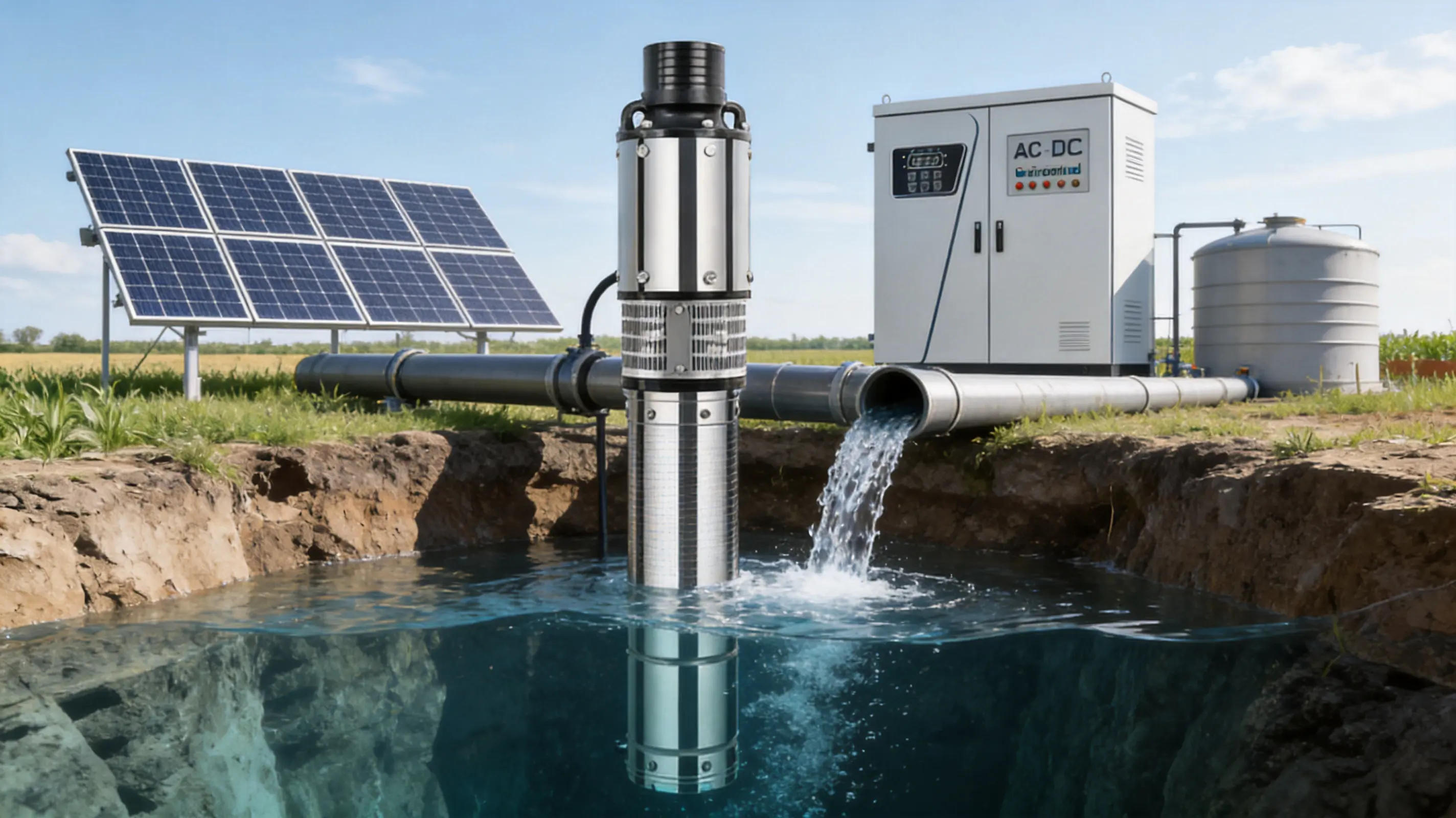
The pump is designed to work with intelligent control systems and maximum power point tracking technology. An MPPT controller adjusts the electrical operating point of the solar array to make more effective use of changing sunlight conditions. Solar panel voltage and current vary throughout the day, so an appropriate controller can help extract useful energy as irradiance changes.
Controller compatibility also supports system protection functions. Depending on the selected controller and system configuration, protection may include overload protection, dry-run protection, overvoltage protection, undervoltage protection, overcurrent protection, overheating protection, and abnormal operating-condition detection. The exact protection functions depend on the controller model and should be confirmed before installation.
Dry-run protection is particularly important for well pumps. If the water level drops below the pump intake, continued operation without sufficient cooling and lubrication can damage the equipment. A suitable sensor or controller function can stop the pump when water availability is inadequate and restart it after safe conditions return.
Electrical protection must be designed for both the DC and AC sides of the system. Photovoltaic arrays can produce hazardous voltage even when the grid supply is disconnected. Correct isolators, fuses, surge protection devices, grounding, cable routing, and enclosure ratings are essential. Installation should be performed by qualified personnel who understand high-voltage DC systems and three-phase AC equipment.
Smart controls can also improve operating convenience. A system may be configured to prioritize solar energy, use AC backup only when necessary, maintain a storage tank at a programmed level, or coordinate pumping with irrigation schedules. Automation reduces the need for constant manual supervision and can help match water production to actual demand.
The pump is manufactured by Taizhou Edwin Electric Co., Ltd., an integrated enterprise established in 2008. The company focuses on research and development, mass production, and global export. Its product portfolio includes deep-well pumps, submersible pumps, domestic booster pumps, circulation pumps, solar water pumps, and intelligent booster pumps.
An integrated manufacturing structure can provide advantages throughout the product lifecycle. Product design, component evaluation, assembly, testing, packaging, and export coordination can be managed through connected internal processes. This helps improve consistency between engineering requirements and production execution, especially for specialized products such as AC/DC hybrid solar pumps.
Independent research and development allows the manufacturer to adapt pump structures and control solutions to changing market requirements. The combination of solar energy, brushless motor technology, and intelligent control reflects a focus on higher-efficiency pumping systems rather than conventional fixed-speed products alone.
Mass production capability is also important for distributors, contractors, and project purchasers. Commercial customers may require repeated deliveries, consistent specifications, replacement units, spare parts, and documentation. A manufacturer with established production experience is better positioned to support larger orders and ongoing supply requirements than a small workshop producing isolated units.
The company’s manufacturing experience extends across multiple pump categories. This broader product knowledge can support the selection of complementary equipment, including domestic booster pumps, circulation pumps, submersible products, and pumping accessories. For customers managing several types of water systems, access to a broader product range may simplify procurement and technical coordination.
Quality should be assessed through a complete manufacturing and verification process rather than by material claims alone. Important practices include incoming inspection of electrical and mechanical components, dimensional checks, winding and insulation verification, assembly control, hydraulic testing, electrical testing, leakage inspection, vibration monitoring, and final performance evaluation. The precise tests applied to each model should be confirmed in the manufacturer’s quality documentation.
A hybrid pump requires careful coordination between the motor, hydraulic section, controller, switching logic, sensors, cables, and protective devices. Manufacturing accuracy is therefore important at both the mechanical and electrical levels. The motor must be correctly matched to the hydraulic load, and the controller must be able to manage the specified DC and AC input conditions.
Precision machining and controlled assembly help maintain alignment between rotating and stationary components. Proper alignment can reduce vibration, improve mechanical efficiency, and support stable operation. Hydraulic passages must also be produced consistently so that different units within the same model range deliver comparable performance.
Electrical assembly requires attention to insulation, terminal quality, sealing, grounding, cable protection, and resistance to moisture. Submersible equipment operates in a demanding environment, and small installation or assembly defects may become significant over time. Robust production controls can reduce the risk of premature failure.
In addition to manufacturing, the company provides export-oriented services through associated import and export organizations. These services include procurement planning, order tracking, cross-border delivery, and foreign trade support. Such capabilities are valuable for overseas distributors, engineering contractors, agricultural project developers, and industrial buyers.
International projects often require more than a product shipment. Customers may need model confirmation, packing information, technical data, spare parts planning, shipping coordination, and communication across different time zones. A supplier experienced in global export can help organize these requirements and reduce avoidable purchasing delays.
The company reports applications across new energy projects, agricultural irrigation, municipal engineering, mining, construction, HVAC systems, and household water supply. This range of applications indicates experience with different water demand profiles and installation environments. Nevertheless, every project should still receive an independent technical evaluation before the pump is specified.
The pump is suitable for field irrigation, orchard irrigation, greenhouse water supply, and large-scale agricultural distribution. Solar operation can reduce daytime energy expenses, while AC backup helps maintain irrigation schedules when sunlight is insufficient. The pump can feed storage tanks, sprinkler systems, drip irrigation networks, pivot systems, or pressurized distribution pipelines when correctly matched to the hydraulic requirements.
For irrigation projects, designers should consider crop water demand, irrigation timing, well recovery rate, seasonal water levels, filtration, pipe distance, and pressure requirements. A pump that is too large may create unnecessary energy consumption and excessive pressure. A pump that is too small may fail to deliver sufficient water during critical irrigation periods.
Livestock facilities require dependable water for drinking, cleaning, cooling, and pasture management. A hybrid pump can continue operating when solar power decreases, reducing the risk of empty storage tanks or interrupted supply. Automated level control can be used to fill tanks according to demand while protecting the pump from dry running.
Water quality should be evaluated before installation. Suspended sand, abrasive particles, mineral deposits, or aggressive chemical content can affect pump wear and material life. Appropriate filtration and regular inspection may be required in wells with high sediment levels.
Remote homes, schools, clinics, villages, and community facilities may lack stable grid electricity. Solar power can provide the primary energy source, while an available AC generator or local grid connection serves as backup. This arrangement supports water access without requiring the entire system to depend on fuel-based generation.
Storage tanks are often beneficial in off-grid projects. Water can be pumped when solar energy is available and stored for use during the evening or during temporary interruptions. The size of the tank should be based on daily demand, expected solar conditions, well yield, and emergency requirements.
Industrial sites may use the pump for process water, construction water, equipment cooling, dust suppression, mining support, or water treatment feed systems. The combination of high flow and high head options allows the series to serve applications larger than ordinary domestic pumping.
Industrial users should evaluate duty cycle, water temperature, chemical compatibility, solids content, motor protection, installation depth, and required redundancy. For critical processes, two or more pumps may be installed in duty-and-standby arrangements so that production can continue if one unit requires service.
Construction projects often need water transfer from wells, pits, reservoirs, or temporary collection areas. Mining and earthwork projects may require water for dust control, processing, drainage support, or site services. A robust submersible pump can be useful in these environments, but abrasive or contaminated water requires careful material and filtration evaluation.
Temporary installations should include suitable lifting arrangements, cable protection, secure discharge piping, and protection against impact from vehicles or moving equipment. The pump should not be allowed to rest directly on sediment or operate in conditions outside its design limits.
Correct installation is essential for obtaining the expected performance and service life. Before installation, confirm the well diameter, pump diameter, static water level, dynamic water level, well yield, water quality, discharge pipe size, cable length, and available electrical supply. The pump must remain adequately submerged during operation and should not be installed in a position where it can draw air or excessive sediment.
The well should be developed and cleaned before the pump is commissioned. Newly drilled wells may contain sand, drilling debris, and other particles that can damage hydraulic components. If the water contains abrasive material, the installer should consider suitable filtration, settling, or a pump design specifically approved for the water conditions.
The discharge pipe must be able to withstand the operating pressure and should be supported independently where necessary. The electrical cable should be protected from abrasion, sharp edges, excessive tension, and chemical exposure. Cable joints and connections must be sealed according to the installation environment.
Electrical connections require special caution because the listed DC input range is high voltage. The photovoltaic open-circuit voltage must remain below the specified limit, including the effects of low ambient temperature, which can increase panel voltage. The AC supply must also match the required voltage, phase, frequency, and protection arrangement.
Before startup, verify that valves are positioned correctly, the pump is fully submerged, the controller is programmed correctly, and all protective devices are active. The first operating test should confirm current draw, voltage, flow, pressure, vibration, noise, and water clarity. Any abnormal condition should be investigated immediately rather than allowing the pump to continue operating.
Routine maintenance should include checking electrical connections, inspecting the controller for alarms, observing changes in flow and pressure, checking for unusual vibration or noise, and reviewing the well water level. A gradual reduction in performance may indicate pipe blockage, filter obstruction, well drawdown, wear, voltage problems, or a change in system demand.
Purchasers should begin with a clear duty point. The duty point combines the required flow and total dynamic head. It should be calculated from actual water demand rather than estimated only from the pump outlet size. The performance curve should then be used to determine whether the selected model can deliver the required flow at the required head.
The available electrical supply is equally important. The product information lists AC380V and DC520V, with an optimum DC input range of 520V to 650V and a solar panel open-circuit voltage below 900V. These values must be interpreted together with the controller requirements and local electrical regulations. The photovoltaic array should be configured by a qualified professional to ensure that operating voltage, open-circuit voltage, current, and power remain within allowable limits.
The recommended solar panel capacity is listed as at least 1.3 times the pump power. This specification should be used as a planning reference and verified with the selected controller and expected site conditions. Actual solar availability varies with location, season, panel orientation, shading, temperature, dust, and system losses.
Users should also consider whether the well can continuously supply the required flow. A pump may be capable of delivering a high flow rate, but the groundwater source may recover more slowly. Over-pumping can lower the water level, cause dry running, draw sediment into the system, or damage the well. A well yield test is recommended for deep-well projects.
Water storage can improve the overall system. A storage tank allows the pump to operate during favorable solar periods while supplying users at a different time. It can also reduce frequent starting and stopping, which may support longer equipment life. Float switches, pressure sensors, and controller logic can be integrated according to the application.
Buyers should request the latest technical documents, performance curves, wiring diagrams, controller compatibility information, installation instructions, warranty terms, and spare-parts availability. For commercial projects, it is also advisable to confirm factory test procedures, packaging standards, inspection options, and documentation requirements before placing an order.
Commercial and project buyers often evaluate more than purchase price. They consider energy cost, service intervals, water delivery reliability, compatibility with existing infrastructure, replacement availability, and long-term operating risk. The 6/8ADPC series addresses these priorities through its hybrid power supply, brushless motor, high-flow design, stainless steel construction, and controller readiness.
Compared with a basic AC submersible pump, the product can use solar energy and may reduce grid consumption during suitable periods. Compared with a basic solar-only pump, it provides AC backup for continued operation when sunlight is inadequate. Compared with a brushed-motor design, it offers reduced mechanical wear and lower maintenance potential. Compared with small domestic solar pumps, it provides configurations intended for larger flow and head requirements.
The manufacturer’s experience in pump research, production, and international supply can also benefit commercial customers. A project supplier should be able to communicate specifications clearly, coordinate production, manage documentation, and support shipping arrangements. These capabilities are especially important when pumps are being purchased for multiple sites or distributed through overseas dealer networks.
Although the product provides several competitive advantages, proper selection remains essential. No pump is suitable for every well, water source, or power system. The strongest results are achieved when the pump, controller, solar array, AC supply, piping, storage, and protection devices are designed as one complete system.
The 6/8ADPC is designed to supply water from deep wells and other submerged water sources. It is suitable for agricultural irrigation, livestock water supply, rural projects, industrial water transfer, construction, mining support, and hybrid solar pumping systems.
Yes. The pump supports AC power in addition to solar DC power. When solar energy is unavailable or insufficient, a suitable AC supply can provide backup operation. The exact switching method depends on the compatible controller and system configuration.
Not necessarily. A system may operate directly from a properly designed photovoltaic array through a suitable solar controller. Batteries may be added for specific energy-storage requirements, but they are not automatically required for every installation. A storage tank is often a practical alternative for storing pumped water.
A brushless motor uses electronic commutation instead of mechanical brushes. This reduces brush wear, friction, and maintenance requirements. It can also support smoother, quieter, and more efficient operation when the pump is correctly matched to the system.
The listed maximum flow rate for the supplied models is 135 cubic meters per hour. The actual flow depends on total dynamic head, pipe resistance, water level, controller settings, and other system conditions.
The listed model options include maximum heads of 35 meters, 75 meters, 113 meters, and 150 meters. Maximum head is not the same as the operating head at maximum flow. Buyers should use the performance curve and calculate the complete system requirement before selecting a model.
The product information lists AC380V and DC520V. The optimum DC input range is listed as 520V to 650V, and the solar panel open-circuit voltage is specified as below 900V. Because these are high-voltage systems, final electrical design and installation should be completed by qualified professionals.
The stainless steel housing provides corrosion resistance, but suitability depends on the complete water chemistry and the specific stainless steel grades and internal materials used. Salinity, acidity, chlorides, temperature, and suspended solids should be evaluated before purchase. The manufacturer should confirm compatibility for unusual water conditions.
Yes. The pump is intended for agricultural irrigation, including field, orchard, greenhouse, and other large-scale applications. The irrigation system should be designed around the required flow, pressure, crop demand, well yield, and pipe network.
The pump should be paired with a controller or sensor system that provides dry-run protection. Operating without adequate water can cause overheating, loss of cooling, hydraulic damage, or premature failure. The well yield and dynamic water level should be assessed before commissioning.
The supplied information recommends solar panel power of at least 1.3 times the pump power. This is a design reference, not a substitute for a complete solar assessment. Panel voltage, open-circuit voltage, current, temperature, shading, site irradiance, controller limits, and expected seasonal performance must all be considered.
Buyers should verify the required flow and head, model power, voltage, outlet size, cable length, controller compatibility, solar array requirements, water quality, well dimensions, protection functions, documentation, warranty terms, and delivery requirements. The listed power for the 150-meter model should also be confirmed with the manufacturer before purchase.
The 6/8ADPC AC/DC Hybrid Brushless Motor Solar Deep Well Pump is designed for users who need reliable water delivery together with greater energy flexibility. Its hybrid AC/DC architecture allows solar operation during favorable conditions and AC backup when sunlight is unavailable. This reduces the limitations of both solar-only and grid-only pumping systems.
The brushless motor supports efficient, smooth, and low-maintenance operation, while the stainless steel construction is intended for demanding outdoor and submerged environments. High-flow configurations, lifting capabilities up to the listed 150-meter maximum head, a 4-inch outlet, MPPT controller readiness, and intelligent protection compatibility make the series suitable for agricultural, industrial, rural, commercial, and utility applications.
The product is supported by a manufacturer with experience in pump research, mass production, export, and multiple water-pump categories. Its integrated manufacturing approach and international procurement services provide a useful foundation for distributors, contractors, and project buyers seeking coordinated supply.
For the best result, the pump should be treated as part of a complete engineered water system. Correct model selection, well assessment, solar-array design, controller matching, pipe sizing, electrical protection, installation, and commissioning are all essential. When these factors are properly addressed, the 6/8ADPC series can provide an efficient and dependable solution for modern hybrid water pumping.
1. Product technical information for the 6/8ADPC AC/DC Hybrid Brushless Motor Solar Deep Well Pump, including model specifications and application data.
2. Manufacturer information concerning brushless motor technology, hybrid solar pumping systems, intelligent control, and stainless steel pump construction.
3. General engineering principles for calculating total dynamic head, friction loss, flow requirements, and pump duty points.
4. General photovoltaic system design practices covering MPPT operation, array sizing, open-circuit voltage, electrical protection, and solar energy variation.
5. General submersible pump installation practices concerning well yield, dry-run protection, cable sealing, discharge piping, grounding, and commissioning.
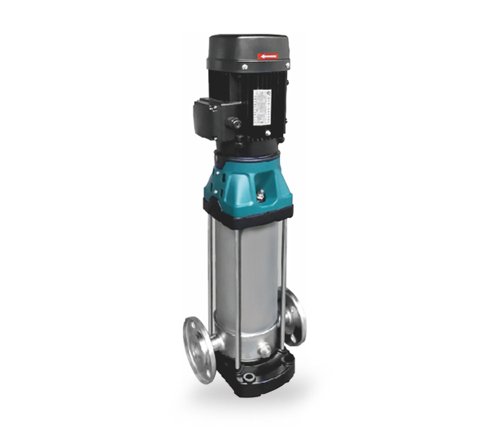
serieswatershortageprotectionvoltagestabilizationstainlesssteelverticalmultistagepump.jpg "EVR(S) Series Water Shortage Protection Voltage Stabilization Stainless Steel Vertical Multistage Pump")
edwina@edwin-pump.com
+86-13586290903 (WhatsApp)
Xuri Gongliang Cutting Tool Entrepreneurship Park, Wenqiao Town, Wenling City, Taizhou City, Zhejiang Province, China

High Performance Smart Pump Factory


 English