edwina@edwin-pump.com

View All Products
en
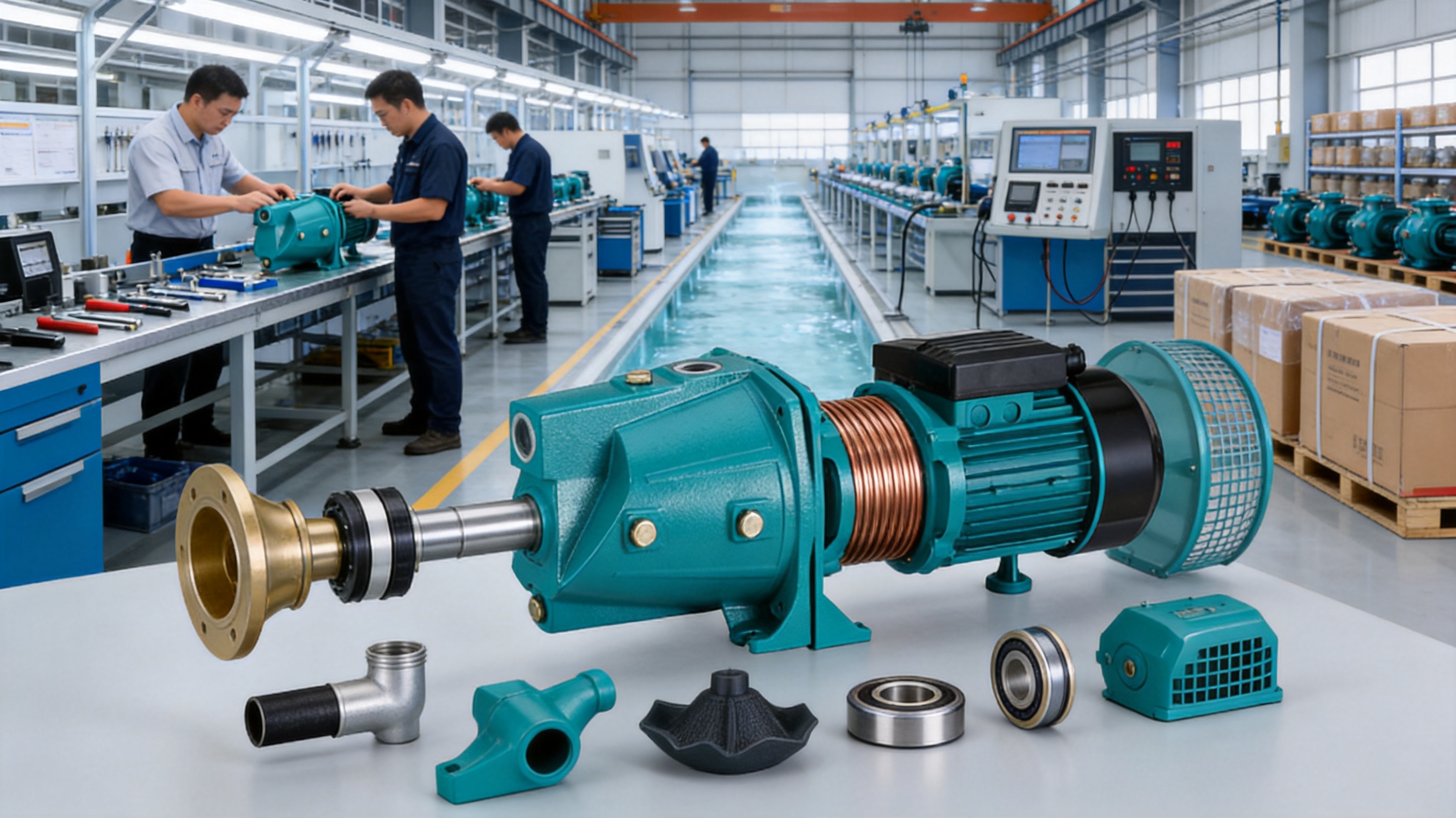
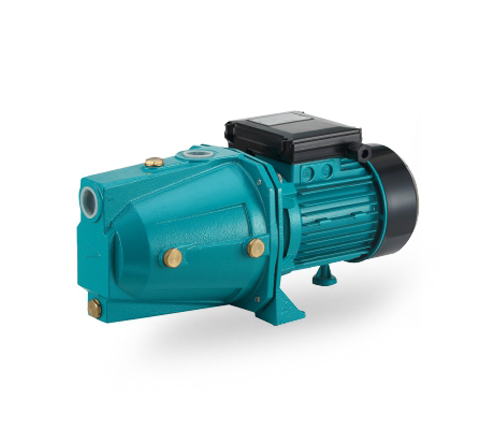
Reliable water movement is essential in homes, gardens, small farms, workshops, commercial buildings, and many light-duty civil applications. When a water source is below the pump, when the suction line may contain air, or when a system requires more pressure than a conventional surface pump can provide, a self-priming jet pump can offer an effective and practical solution. The JSP Series High Flow Rate and High-Lift Self-priming JET Pump is designed for these operating conditions, combining strong lifting capability, automatic priming performance, durable materials, and a compact motor-pump structure.
The JSP Series is developed for clean water and liquids with physical and chemical properties similar to water. Its applications include domestic water distribution, garden irrigation, allotment irrigation, water tank transfer, well-water lifting, water tower supply, automatic irrigation systems, and a variety of supporting equipment. With models ranging from 0.45 kW to 1.5 kW, the series provides several capacity options for users who need to match pump performance to a specific installation.
At the heart of the design is a combination of high-flow hydraulic performance and high-lift capability. Depending on the model, maximum flow reaches 85 L/min and maximum head reaches 65 m. The maximum suction height is 8 m across the listed range. These characteristics allow the JSP Series to serve applications where ordinary garden pumps or basic surface pumps may not provide sufficient pressure or reliable suction performance.
The pump is manufactured by Taizhou Edwin Electric Co., Ltd., an integrated pump enterprise with experience in research and development, mass production, and global export. Through its product portfolio, manufacturing organization, and one-stop procurement services, the company supports customers looking for dependable water pumps for household, agricultural, municipal, construction, HVAC, mining, and new-energy applications.
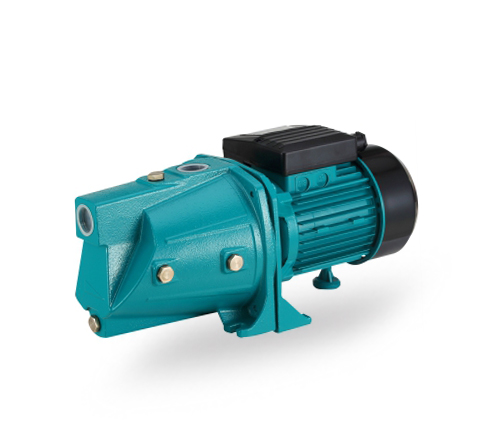
JSP Series High Flow Rate and High-lift Self-priming JET Pump
A self-priming jet pump is a surface-mounted centrifugal pump equipped with a jet or ejector arrangement that helps generate suction and remove air from the suction line. This design is particularly useful when the pump is installed above the water level or when air may enter the pipe during operation. After the pump casing has been filled with water during initial commissioning, the self-priming mechanism can help the pump restart more conveniently after normal interruptions.
The JSP Series uses a jet-pump hydraulic structure that combines a pump body, nozzle, venturi, diffuser, and impeller. These parts work together to increase suction performance and deliver pressurized water to the discharge line. The venturi and nozzle arrangement supports the creation of a high-velocity flow region, while the diffuser helps convert velocity into pressure. This structure allows the pump to handle suction conditions that may be challenging for a simple centrifugal surface pump.
Self-priming capability does not mean that installation requirements can be ignored. The pump should be correctly installed, the casing should be filled according to the commissioning instructions, the suction line should be airtight, and the suction height should remain within the stated maximum of 8 m. A foot valve or check valve may be appropriate in many installations to help retain water in the suction pipe during shutdown.
The JSP Series is intended for clean water or similar liquids. It is not designed for abrasive slurry, heavily contaminated drainage water, corrosive chemicals, flammable liquids, or liquids containing large solid particles. Selecting the correct liquid is essential for protecting the mechanical seal, impeller, internal passages, and motor-pump assembly.
The series is engineered to move meaningful volumes of water through domestic and light commercial systems. The listed maximum flow rates reach up to 85 L/min, depending on model selection and operating conditions. This capacity is useful for transferring water from tanks, supplying irrigation lines, filling elevated storage tanks, and supporting small pressure systems.
A high maximum flow rate can reduce the time required for routine water-transfer tasks. For example, users may fill a tank more quickly, distribute water to several garden zones, or supply multiple consumption points with less waiting time. Actual flow depends on pipe diameter, total pipe length, fittings, elevation, pressure requirements, and the operating point on the pump curve. Therefore, the maximum rating should be treated as a reference rather than a guaranteed flow at every installation condition.
The JSP Series is also designed for high-lift performance. Maximum head ranges from 40 m on the JSP-60 to 65 m on the JSP-200. This provides useful pressure potential for installations with elevation differences, long pipe runs, sprinklers, domestic pressure sets, and elevated water storage.
High head is a major advantage over many entry-level garden pumps, which may provide adequate flow but lose pressure quickly when water must be lifted or pushed through a long pipeline. The JSP Series gives users the option to select a stronger model when a system requires additional pressure. The JSP-150 and JSP-200, for example, provide higher maximum head ratings than the smaller models and are suitable for more demanding water distribution conditions.
One of the most important advantages of the series is its ability to work in applications where air or water may be present in the pumped system. Conventional centrifugal pumps can lose prime when air enters the suction line. Re-establishing operation may require manual filling and repeated attempts to remove trapped air. A self-priming jet pump is designed to simplify this process.
The jet assembly supports the removal of air from the suction pipe during startup. This makes the pump particularly suitable for drawing water from tanks, wells, and underground sources where the pump is installed above the liquid level. It also improves convenience in seasonal irrigation systems and domestic water installations that may experience intermittent operation.
Correct pipe installation remains critical. Small air leaks on the suction side can prevent stable priming even when the pump itself is functioning correctly. For best results, the suction pipe should be appropriately sized, securely connected, as short and direct as practical, and protected from unnecessary bends or high points where air can accumulate.
The JSP Series includes five models with different motor powers and performance levels. This range helps customers avoid using an unnecessarily large pump for a small installation or an undersized pump for a high-demand system. Selecting the right model can improve energy use, reduce operating stress, and provide more stable water pressure.
| Model | Power | Motor Power | Inlet/Outlet | Maximum Flow | Maximum Head | Maximum Suction |
|---|---|---|---|---|---|---|
| JSP-60 | 0.45 kW | 0.6 HP | 1 x 1 in | 40 L/min | 40 m | 8 m |
| JSP-80 | 0.60 kW | 0.8 HP | 1 x 1 in | 45 L/min | 45 m | 8 m |
| JSP-100 | 0.75 kW | 1 HP | 1 x 1 in | 50 L/min | 50 m | 8 m |
| JSP-150 | 1.10 kW | 1.5 HP | 1.25 x 1 in | 80 L/min | 55 m | 8 m |
| JSP-200 | 1.50 kW | 2 HP | 1.25 x 1 in | 85 L/min | 65 m | 8 m |
The table summarizes the stated maximum performance values. In real operating conditions, flow and head are related. As discharge head increases, available flow generally decreases. Professional selection should therefore consider the required duty point, not only the maximum values shown in a product table.
The pump body and support are made from HT200 cast iron. This material provides a robust structural foundation for the hydraulic assembly and motor connection. Cast iron is widely used in pump construction because it offers good mechanical strength, dimensional stability, and resistance to ordinary operating loads.
The product information also specifies a special anti-rust treatment for the cast iron body and support. Surface treatment helps protect the exterior and improve durability in normal installation environments. The pump should nevertheless be installed in a suitable location, protected from prolonged exposure to standing water, corrosive atmospheres, and severe weather unless the installation design provides appropriate protection.
A strong pump body helps maintain alignment between the impeller, shaft, mechanical seal, and motor assembly. Stable alignment is important for reducing vibration, supporting smooth rotation, and extending the service life of wear components. Compared with lightweight housings used in some basic consumer pumps, the HT200 structure can provide a more substantial platform for repeated operation.
The impeller is made from brass. Brass is valued in pump applications for its good corrosion resistance in clean-water service, strength, machinability, and ability to maintain a smooth hydraulic surface. The impeller is one of the most important components in determining pump performance because it transfers motor energy into water velocity and pressure.
The JSP Series also uses rust-free copper inserts in the hydraulic assembly according to the provided product information. This feature supports smoother restarting after periods of inactivity. A pump that remains unused for a long time can be affected by corrosion, deposits, or sticking components. Material choices that limit rust formation can improve practical reliability during seasonal or intermittent use.
The shaft is manufactured from AISI 304 stainless steel. The shaft is in a critical position between the motor and impeller, and it must withstand rotational loads, hydraulic forces, and contact with the surrounding sealing area. Stainless steel helps protect the shaft from rust and supports cleaner water-contact conditions.
The use of AISI 304 stainless steel is especially valuable in domestic water systems, garden irrigation, and tank-transfer applications where users expect a clean and stable water path. It also complements the brass impeller and carbon/ceramic mechanical seal, forming a material combination suitable for general clean-water service.
The mechanical seal uses a carbon and ceramic combination. Mechanical seals prevent water from moving along the rotating shaft into the motor area. The seal faces must maintain controlled contact while the shaft rotates, which makes material compatibility and manufacturing accuracy important.
Carbon and ceramic are commonly used for clean-water mechanical seals because they provide suitable sliding and sealing characteristics under normal operating conditions. The seal can be affected by dry running, abrasive particles, excessive temperature, chemical incompatibility, or incorrect installation. For this reason, the pump should never be operated without water in the hydraulic chamber, and the pumped liquid should remain within the intended application range.
The motor uses copper windings. Copper has strong electrical conductivity, which supports efficient conversion of electrical energy into mechanical power. A copper-winding motor can help maintain stable operating performance and contributes to a long working life when the pump is correctly selected and operated.
Motor performance depends on several factors, including supply voltage, frequency, ambient temperature, load, ventilation, and installation quality. The pump should be connected to an appropriate power supply by qualified personnel. Voltage fluctuation, loose connections, undersized cables, or repeated overload conditions can reduce motor life even when the motor itself is well constructed.
The pump is equipped with C&U bearings. Bearings support the rotating shaft and help maintain smooth movement between the rotor and stationary motor components. Good bearing quality contributes to lower friction, controlled noise, reduced vibration, and dependable continuous operation.
Proper operating conditions remain important for bearing life. Excessive vibration may indicate a misaligned pipe, an unstable foundation, impeller interference, bearing wear, or operation outside the intended hydraulic range. Routine inspection can identify unusual sound, overheating, or vibration before these issues develop into more serious failures.
The single-phase motor includes a built-in thermal protector. This device helps protect the motor from overheating caused by abnormal operating conditions. Thermal protection is an important safety feature for domestic and small-equipment applications, where the pump may be exposed to overload, blocked flow, repeated starting, or inadequate ventilation.
Thermal protection should not be considered a substitute for correct system design. If the protector repeatedly interrupts operation, the cause should be investigated. Possible causes include insufficient voltage, a blocked suction line, a closed discharge valve, excessive head, an impeller obstruction, poor ventilation, or a mechanical problem.
The motor uses Class F insulation. This insulation rating supports reliable electrical separation within the motor winding system and provides an appropriate thermal margin for many ordinary pump applications. The motor also has an IP44 protection rating, which indicates protection against solid objects of a specified size and splashing water from typical directions.
IP44 does not mean that the motor is waterproof or suitable for submersion. The pump should be installed in a dry, ventilated location where direct flooding, heavy spray, and standing water are prevented. A suitable electrical enclosure, grounding arrangement, overcurrent protection, and disconnecting device should be provided in accordance with local regulations.
The stated maximum ambient temperature is +40°C. In hot climates or enclosed pump rooms, ventilation should be considered carefully. High ambient temperature can increase motor operating temperature and reduce the available thermal margin.
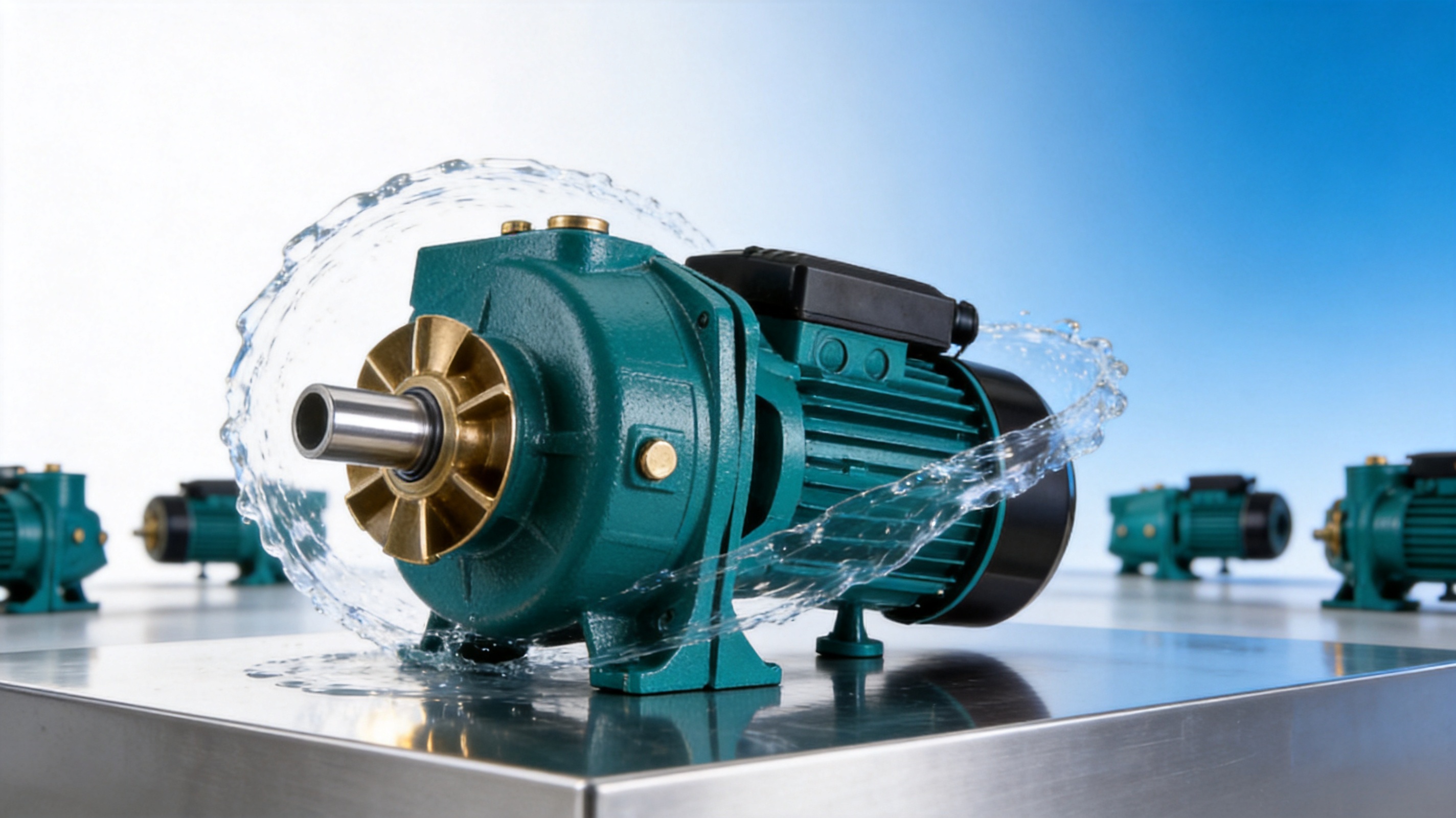
The JSP Series can be used to distribute clean water in homes and small residential buildings. It may support water transfer from a ground-level tank, supply a small pressure set, or lift water from a well or storage vessel. The high-head design is helpful where the pump must overcome both elevation and the pressure required at taps or appliances.
For domestic installations, the system should include appropriate valves, filters, pressure controls, and protection against dry running where necessary. Pipe sizing should be selected to avoid excessive friction losses. A pump that is correctly matched to the household demand can deliver better pressure stability and reduce unnecessary cycling.
Garden irrigation is one of the natural applications for a self-priming jet pump. The pump can draw water from a tank, reservoir, or well and deliver it to hoses, sprinklers, drip systems, and irrigation zones. The JSP-60, JSP-80, and JSP-100 may be suitable for smaller gardens, while the JSP-150 and JSP-200 can support greater flow or longer pipelines when the system design requires additional capacity.
Because irrigation layouts vary considerably, users should calculate the combined flow of sprinklers or emitters, the elevation difference, the pipe friction, and the required terminal pressure. A pump should not be selected solely by horsepower. Hydraulic requirements provide a more reliable basis for selection.
The pump can transfer clean water between storage tanks, cisterns, and elevated containers. Its self-priming structure is useful when the source tank is below the pump. A suitable suction strainer can help prevent debris from entering the pump, although the liquid should still be clean and free from damaging solids.
Tank-transfer installations should include level controls or a clear operating procedure to prevent the pump from running after the source tank has emptied. Although the pump includes thermal protection, dry running can damage the mechanical seal and should be prevented.
The maximum suction height of 8 m makes the series suitable for certain shallow-well and well-water lifting applications. The actual practical suction height may be lower depending on altitude, water temperature, pipe losses, fittings, water level fluctuation, and the condition of the suction line.
The suction pipe should be airtight and strong enough to resist collapse under suction. A foot valve can help retain water in the line and reduce the time required for restarting. If the well is deep beyond the practical suction limit, a submersible pump or deep-well pump would be more appropriate than a surface-mounted jet pump.
Water towers and elevated storage tanks often require pumps capable of overcoming elevation while maintaining useful flow. The high-head characteristics of the JSP Series can support smaller water tower supply arrangements, provided that the required duty point is within the selected model's capability.
Control systems may include float switches, pressure switches, non-return valves, or automatic controls. These components should be selected and installed to prevent backflow, excessive cycling, and operation against a closed system.
The pump may also be integrated into small equipment systems that require clean-water circulation or transfer. Examples include compact pressure units, light-duty washing systems, small irrigation machines, and supporting equipment for buildings or workshops.
The series is not positioned as a replacement for heavy industrial process pumps. Its strength lies in practical clean-water service, compact surface installation, high lifting ability, and flexible use across domestic and small civil applications.
Many basic surface centrifugal pumps work well when the water source is flooded at the inlet, but their performance can become unstable when air enters the suction pipe. The jet-pump arrangement in the JSP Series is designed specifically to assist with air removal and self-priming. This gives it a practical advantage in installations where water levels change or suction conditions are less than ideal.
The maximum head ratings of up to 65 m make the upper JSP models suitable for applications requiring more pressure than a typical low-cost garden pump can provide. This is valuable for long pipe runs, elevated tanks, multi-point water distribution, and sprinkler systems with higher pressure requirements.
The combination of HT200 cast iron, brass, AISI 304 stainless steel, and carbon/ceramic sealing materials provides a robust construction for clean-water work. Some inexpensive pumps rely heavily on lighter materials and may be more vulnerable to wear, deformation, or rust in demanding conditions. The JSP Series is designed with component materials selected for structural strength, water contact, shaft protection, and sealing performance.
The five-model range allows distributors, installers, and end users to select a capacity appropriate to the installation. This improves purchasing flexibility and supports standardization across different projects. A supplier can offer the same general pump concept for small domestic requirements and larger garden or civil systems without changing to an entirely different product family.
Copper windings, C&U bearings, Class F insulation, IP44 protection, and built-in thermal protection contribute to a dependable motor package. These features do not eliminate the need for correct installation, but they provide a stronger foundation for safe and stable operation than a motor with minimal protective design.
The quality of a pump depends not only on its visible materials but also on the engineering and manufacturing system behind it. Taizhou Edwin Electric Co., Ltd. was founded in 2008 and operates as an integrated manufacturing enterprise focused on independent research and development, mass production, and global export.
Independent research and development supports the ability to design products around real application requirements. For the JSP Series, this includes the integration of the jet hydraulic structure, high-lift impeller design, motor configuration, sealing system, and material selection into one coordinated product.
Product development also involves adapting pump ranges to different markets. Domestic water supply, agricultural irrigation, municipal projects, HVAC systems, construction sites, and new-energy installations can have different expectations regarding flow, head, motor power, control, and installation. A company with multiple pump categories can use application experience across product families to improve product planning and customer support.
Mass production provides advantages in component repeatability, supplier coordination, production planning, and order fulfillment. It also allows commonly used parts and manufacturing processes to be organized efficiently. For customers purchasing multiple units, stable production capacity can be as important as individual pump performance.
Consistent production is particularly valuable for distributors and project contractors. They may need identical models for replacement programs, irrigation packages, domestic pressure systems, or equipment integration. A structured manufacturing organization helps reduce unnecessary variation between orders and supports more predictable procurement.
The JSP Series includes several material types that must work together accurately. The cast iron body and support provide mechanical strength, the PPO nozzle, venturi, and diffuser form the jet assembly, the brass impeller provides hydraulic energy transfer, the mechanical seal protects the motor area, and the stainless shaft supports rotation and water-contact durability.
These components must be dimensionally compatible. Clearances around the impeller, alignment between the shaft and seal, fit between the pump body and support, and assembly accuracy all influence pump reliability. A coordinated manufacturing process helps ensure that material advantages are supported by correct geometry and assembly practice.
The company serves customers in international markets and has developed a broader organization for procurement planning, order tracking, cross-border delivery, and foreign-trade services. This is valuable for overseas customers because pump purchasing often involves more than the product itself. Documentation, packaging, model confirmation, shipment coordination, spare-parts planning, and communication can affect the success of a project.
Through affiliated trade and service organizations, the company aims to provide one-stop procurement support. This can simplify sourcing for distributors and industrial clients that purchase several pump categories or related water-treatment products from one supplier.
The company’s core product lines include deep-well pumps, submersible pumps, domestic booster pumps, circulation pumps, solar water pumps, intelligent booster pumps, and other water-pump products. This broad portfolio gives customers access to different solutions when a self-priming surface pump is not the ideal choice.
For example, a deep source may require a deep-well or submersible pump, while a heating or HVAC loop may require a circulation pump. A household requiring automatic pressure management may benefit from an intelligent booster pump. The JSP Series occupies a clear position within this portfolio as a surface-mounted, self-priming solution for clean-water suction, transfer, and pressure applications.
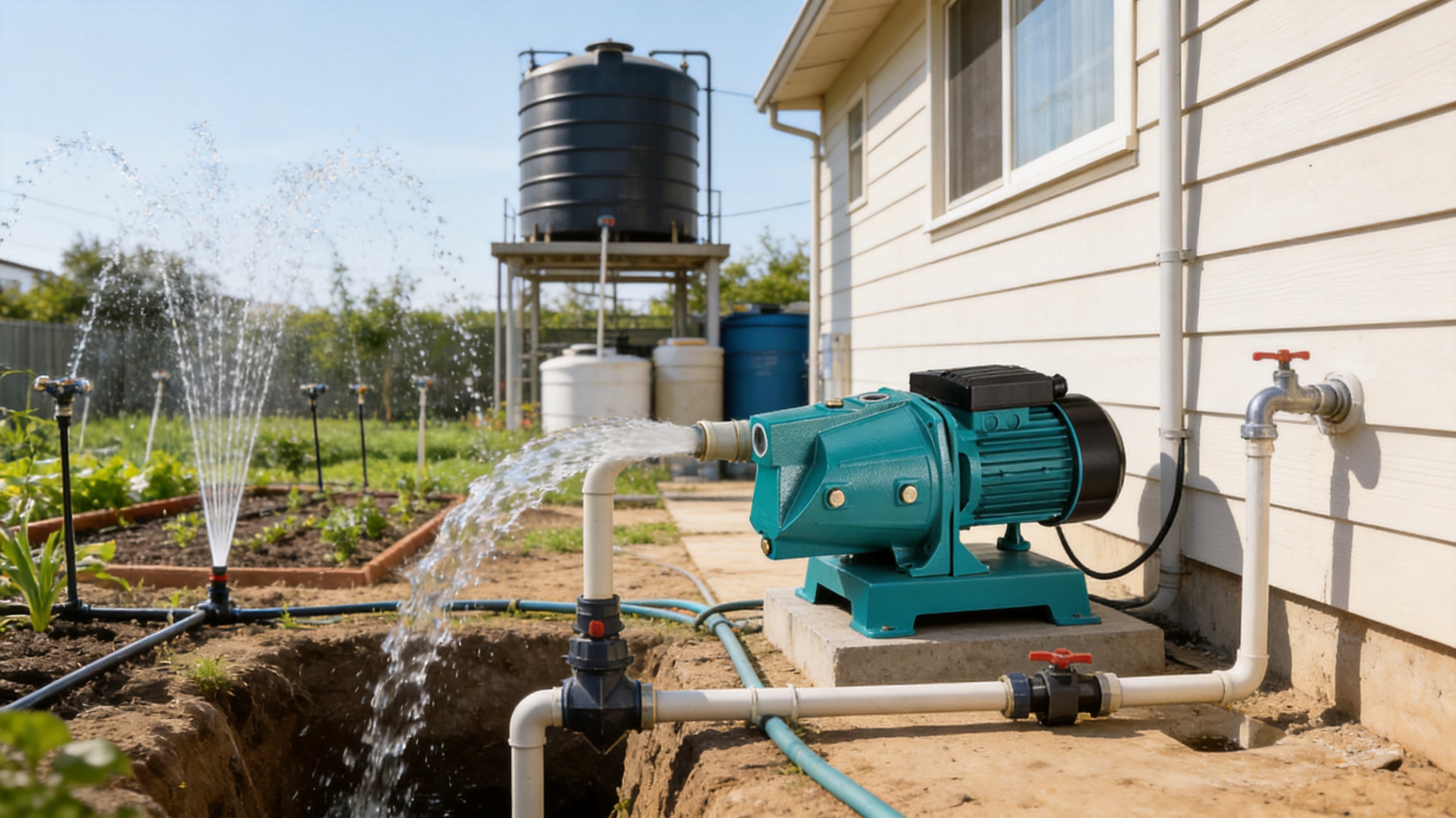
The pump should be mounted on a firm, level base that can support its weight and limit vibration. The location should be dry, well ventilated, and accessible for inspection and maintenance. Avoid locations subject to flooding, direct rain, excessive dust, corrosive vapors, or temperatures beyond the specified ambient range.
The suction line is one of the most important parts of a self-priming installation. It should be airtight, properly supported, and sized to avoid excessive friction loss. Unnecessary elbows, sharp bends, high points, and long horizontal runs should be minimized. Connections should be sealed without allowing sealing material to enter the pipe and obstruct the impeller or jet assembly.
The suction pipe should generally rise continuously toward the pump where practical, preventing air pockets from forming. A foot valve or check valve can help maintain water in the line after shutdown. If a strainer is used, it should be selected for low resistance and cleaned regularly.
Before the first startup, the pump casing should be filled with clean water according to the operating instructions. The suction line should be checked for leaks, and the discharge system should be arranged to allow air to escape safely. Starting a pump without sufficient water can cause dry running and damage the mechanical seal.
After the initial commissioning, observe the pump during operation. Check whether water delivery is stable, whether the motor becomes excessively hot, and whether unusual noise or vibration is present. If the pump fails to prime, switch it off and inspect the suction line, foot valve, water level, casing fill, and connections.
Electrical installation should be performed by a qualified professional. The power supply must match the motor requirements, and the system should include proper grounding, overcurrent protection, isolation, and wiring sized for the load and cable length. Outdoor installations require additional attention to weather protection and safe enclosure of electrical connections.
Routine maintenance can extend pump life and preserve performance. Before servicing, isolate the electrical supply and release system pressure. Do not open the pump or motor while energized.
Inspect the suction strainer and foot valve if the pump becomes slow to prime or loses flow. Check for clogged pipes, damaged seals, loose fittings, and changes in the water source. A small suction leak may not produce visible water leakage because air can enter while the pump is operating.
Monitor the mechanical seal area for signs of leakage. A small amount of moisture during certain conditions may require observation, while continuous leakage indicates that inspection or replacement may be necessary. The mechanical seal should be replaced with a compatible part and installed using correct procedures.
Keep the motor ventilation area clear. Dust and obstructions can reduce cooling and increase operating temperature. Listen for changes in bearing noise and check for abnormal vibration. Persistent vibration should be investigated rather than ignored.
For seasonal installations, drain the pump and exposed pipework where freezing conditions may occur. Water that freezes inside the pump body can expand and cause serious damage. When returning the pump to service, inspect all connections, refill the pump, and confirm that the suction line remains airtight.
Model selection should begin with the required flow rate and total dynamic head. Total dynamic head includes vertical elevation, the pressure required at the outlet, and friction losses in pipes, valves, filters, elbows, and other fittings.
The JSP-60 provides a compact option with 0.45 kW power, a maximum flow of 40 L/min, and a maximum head of 40 m. It may be appropriate for smaller domestic transfer, light irrigation, and short distribution lines.
The JSP-80 increases power to 0.60 kW and provides a maximum flow of 45 L/min with a maximum head of 45 m. It can offer additional capacity for small residential or garden systems.
The JSP-100 uses 0.75 kW and reaches a maximum flow of 50 L/min with a maximum head of 50 m. This model provides a balanced option for users requiring more pressure and flow than the smaller models.
The JSP-150 uses 1.10 kW and has a larger 1.25 x 1 in connection arrangement. Its maximum flow is 80 L/min, and its maximum head is 55 m. This model is suitable for more demanding irrigation, tank-transfer, and water distribution systems.
The JSP-200 is the highest-capacity model in the listed range. With 1.50 kW power, a maximum flow of 85 L/min, and a maximum head of 65 m, it is intended for applications requiring the greatest lifting and flow capability within the series.
Users should request the applicable performance curve and confirm the operating point with a qualified pump professional when system requirements are complex. A model that is too small may fail to deliver sufficient pressure, while a model that is too large may cause unnecessary energy use, excessive cycling, or difficult control.
For professional buyers, product value includes more than the purchase price. A pump should provide predictable performance, appropriate materials, repeatable availability, manageable installation, and supplier support. The JSP Series addresses these requirements through a clear model range, documented component materials, self-priming capability, high-head performance, and a motor designed for reliable clean-water operation.
Distributors can use the range to serve several customer groups with a consistent product family. Installers can select a suitable power level without changing to a different pump design. Equipment manufacturers can integrate the pump into small water systems where compact size, high lift, and surface installation are important.
The manufacturer’s wider product portfolio can also support customers with more complex requirements. A client may need self-priming jet pumps for shallow-water applications, submersible pumps for deep wells, booster pumps for pressure systems, circulation pumps for HVAC, and solar pumps for off-grid installations. A supplier capable of supporting these categories can reduce procurement complexity.
The pump is intended for clean water and liquids with physical and chemical properties similar to water. It should not be used for abrasive slurry, heavily contaminated water, corrosive chemicals, flammable liquids, or liquids containing large solids unless the manufacturer has specifically approved the application.
The stated maximum suction height is 8 m. Actual performance depends on altitude, water temperature, pipe diameter, pipe length, fittings, water-level changes, and the airtightness of the suction line. The system should be designed conservatively rather than operating continuously at the absolute limit.
Yes. The pump casing should be filled with clean water before startup according to the operating instructions. Self-priming capability helps the pump remove air during operation, but it does not eliminate the need for correct initial commissioning.
No. Dry running can damage the mechanical seal and may cause overheating or other failures. The built-in thermal protector helps protect the single-phase motor from overheating, but it is not a substitute for a water-level control, dry-run protection, or proper operating procedure.
The JSP-200 has the highest listed maximum head at 65 m. It also provides the highest listed maximum flow at 85 L/min. The actual operating point must still be checked against the system’s required flow and total dynamic head.
The stated maximum liquid temperature is +60°C. The pump should not be used for liquids above this limit without specific approval and a suitable application review.
The motor has IP44 protection, which provides protection against specified solid objects and splashing water. It is not designed for submersion. Outdoor installation should include suitable shelter, drainage, electrical protection, and protection from direct heavy rain or flooding.
Class F is a motor insulation classification that indicates the thermal capability of the winding insulation system. It supports reliable operation within the motor’s design limits. Correct voltage, ventilation, loading, and ambient temperature remain necessary for long service life.
The choice depends on the number of sprinklers or irrigation zones, required flow, pipe length, elevation, and desired pressure. Smaller systems may use the JSP-60, JSP-80, or JSP-100, while larger systems may require the JSP-150 or JSP-200. A duty-point calculation is recommended.
The pump can be used for shallow well-water lifting within the maximum suction limit of 8 m. For deeper wells, a deep-well or submersible pump is generally more appropriate because surface-mounted suction pumps cannot practically lift water beyond their allowable suction range.
Check whether the pump casing contains water, whether the suction pipe has air leaks, whether the foot valve is functioning, whether the water level is adequate, and whether the suction pipe is blocked. Also check for excessive suction height, incorrect pipe routing, and an open or properly configured discharge path.
The JSP Series combines a self-priming jet structure, high-head hydraulic performance, brass impeller, AISI 304 stainless steel shaft, carbon/ceramic mechanical seal, cast iron construction, copper motor winding, thermal protection, and a multi-model range. These features make it suitable for more demanding clean-water lifting and pressure applications.
The JSP Series is manufactured by Taizhou Edwin Electric Co., Ltd., a Chinese pump enterprise established in 2008. The company focuses on independent research and development, mass production, global export, and a broad range of water-pump products.
The JSP Series High Flow Rate and High-Lift Self-priming JET Pump is a practical solution for clean-water applications that require dependable suction, strong lifting capability, and durable construction. Its self-priming jet design helps address air in suction lines, while the maximum suction height of 8 m supports a wide range of shallow-source installations.
The product range covers five motor sizes from 0.45 kW to 1.5 kW, with maximum flow rates from 40 L/min to 85 L/min and maximum heads from 40 m to 65 m. This range allows users to select a model according to system size and performance requirements.
Material selection is another important strength. The HT200 cast iron body and support provide structural durability, the brass impeller supports reliable hydraulic operation, the AISI 304 stainless steel shaft resists rust in water-contact areas, and the carbon/ceramic mechanical seal supports controlled sealing. The copper-winding motor, C&U bearings, thermal protector, Class F insulation, and IP44 protection complete a motor-pump package designed for stable service.
Backed by a manufacturer with experience in product development, mass production, export, and multiple pump categories, the JSP Series is suitable for distributors, installers, equipment manufacturers, and end users seeking a dependable self-priming surface pump. With correct model selection, installation, electrical protection, and maintenance, it can provide reliable service in domestic water supply, irrigation, tank transfer, shallow-well lifting, water tower supply, and small civil applications.
Taizhou Edwin Electric Co., Ltd. Product information for the JSP Series High Flow Rate and High-Lift Self-priming JET Pump.
Taizhou Edwin Electric Co., Ltd. Materials table and technical data for JSP-60, JSP-80, JSP-100, JSP-150, and JSP-200 models.
General principles of centrifugal and self-priming jet pump operation for clean-water applications.
General guidance on electric motor insulation classes, enclosure protection ratings, thermal protection, and pump installation practice.
General engineering references for pump selection based on flow rate, total dynamic head, suction lift, pipe friction, and system operating conditions.
aseriesnoisereductiondesignacid-baseverticalsurfacepump-1.jpg "EV(F)A Series Noise Reduction Design Acid-base Vertical Surface Pump")
edwina@edwin-pump.com
+86-13586290903 (WhatsApp)
Xuri Gongliang Cutting Tool Entrepreneurship Park, Wenqiao Town, Wenling City, Taizhou City, Zhejiang Province, China

High Performance Smart Pump Factory


 English