
edwina@edwin-pump.com

View All Products
en
Water pump systems depend on accurate pressure control to deliver water consistently, protect equipment, and maintain comfortable operating conditions. Whether a pump is installed in a household water supply, an agricultural irrigation network, a commercial building, or an industrial process, the pressure switch is one of the key components responsible for automatic operation. It monitors system pressure and controls the electrical circuit that starts or stops the pump according to preset pressure values.
The ERS-5 Series Zinc Alloy Bottom Antifatigue Pressure Switch for water pumps is designed to provide dependable automatic pressure management in a wide range of pump applications. Its construction combines a durable zinc alloy body, a bottom-mounted configuration, multiple hydraulic connection options, adjustable pressure settings, and electrical compatibility with common pump systems. These features make it a practical choice for users who require stable pump control without unnecessary complexity.
Unlike a basic mechanical switch designed only for occasional operation, the ERS-5 Series is developed for repeated pressure cycles. Water pumps may start and stop many times during a normal day, especially in domestic booster systems, small irrigation systems, and building water networks. The antifatigue design is intended to support consistent performance during repeated cycling, helping the switch maintain reliable operation over a longer service period.
This article examines the product’s working principle, construction, technical characteristics, application value, manufacturing strengths, customization options, installation considerations, and advantages compared with ordinary pressure switches. It also explains how an experienced pump manufacturer can support the entire purchasing process, from product selection and engineering communication to production, inspection, packaging, and international delivery.
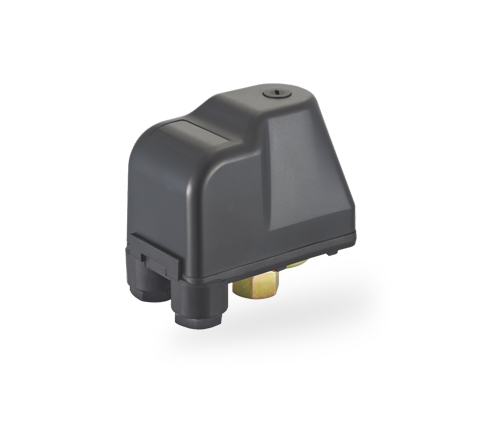
ERS-5 Series Zinc Alloy Bottom Antifatigue Pressure Switch for Water Pumps
A pressure switch is an automatic control device that responds to changes in hydraulic pressure. It is normally connected to the discharge side or pressure line of a pump system. When the pressure falls below the selected cut-in value, the switch closes or changes its electrical contact position, allowing the pump motor to start. As the pump raises the pressure, the switch detects that the upper cut-out value has been reached and disconnects the pump motor.
This automatic sequence allows the pump to operate only when water demand requires it. For example, when a user opens a faucet, pressure in the pipe network begins to decrease. Once the pressure reaches the cut-in setting, the pressure switch activates the pump. The pump then supplies water and restores pressure. When the faucet is closed and the system pressure rises to the cut-out setting, the switch stops the pump.
The difference between the cut-in and cut-out pressures is commonly called the pressure differential. In the ERS-5 Series, available pressure settings include 20–40 psi, 30–50 psi, and 40–60 psi. These options allow the pressure switch to serve different system requirements. A lower setting may be appropriate for a smaller domestic water installation, while a higher setting may be preferred for a larger building or a system requiring stronger water pressure.
A correctly selected pressure switch can provide several benefits. It reduces the need for manual pump operation, prevents unnecessary continuous running, supports stable water delivery, and helps protect the pump from operating outside the intended pressure range. It also simplifies the user experience because the pump responds automatically to changing water demand.
The main advantage of mechanical pressure control is its direct relationship with actual system pressure. Instead of relying on a separate electronic command or a fixed operating schedule, the switch responds to the hydraulic condition inside the pipeline. This makes it useful in applications where water consumption changes throughout the day.
In a household booster application, for example, water use may vary from a single tap to several outlets operating at the same time. The pressure switch allows the pump to start when pressure falls and stop when the system is restored. In an irrigation installation, pressure can change when different zones are opened or closed. In small commercial systems, the switch helps coordinate pump activity with fluctuating demand.
A pressure switch is not a substitute for every type of pump protection device. It should be used together with appropriate electrical protection, dry-run protection, check valves, pressure tanks, and other components required by the specific installation. Nevertheless, it plays an important role in preventing prolonged operation after the pressure target has been reached.
By stopping the pump at the selected cut-out pressure, the pressure switch helps limit unnecessary energy consumption and reduces the possibility of over-pressurizing connected pipes or equipment. Its value is especially clear in systems where the pump would otherwise continue running after water demand has ended.
The ERS-5 Series Zinc Alloy Bottom Antifatigue Pressure Switch is a mechanical pressure controller designed specifically for water pump systems. The product is mounted at the bottom of the pump or at the corresponding hydraulic connection point, depending on the system configuration. This bottom-mounted structure can help create a compact connection arrangement and may be suitable for pump assemblies where space around the upper housing is limited.
The body is made from zinc alloy. Zinc alloy is widely used in mechanical control components because it can provide a useful combination of strength, dimensional stability, corrosion resistance, and manufacturing flexibility. For a pressure switch exposed to water-system vibration, pressure changes, and repeated electrical operation, the material of the housing is important to overall product durability.
The product supports a pressure range from 15 to 100 psi, with standard pressure settings of 20–40 psi, 30–50 psi, and 40–60 psi. The listed minimum cut-in value is 15 psi, while the maximum cut-out value is 100 psi. These parameters provide flexibility for different water pump designs and operating requirements.
The ERS-5 Series is rated for 110–240 V and 400 V applications, with a power frequency of 50/60 Hz and a rated current of 16(8) A. Its protection class is IP44, and its maximum working temperature is 55°C. These specifications make the switch suitable for a broad range of standard pump installations, subject to correct system design and electrical verification.
Parameter | Specification |
Product type | Mechanical pressure controller |
Application | Water pumps and water supply systems |
Housing material | Zinc alloy |
Mounting configuration | Bottom-mounted design |
Rated voltage | 110–240 V / 400 V |
Power frequency | 50/60 Hz |
Rated current | 16(8) A |
Minimum cut-in | 15 psi |
Maximum cut-out | 100 psi |
Available pressure settings | 20–40 psi, 30–50 psi, and 40–60 psi |
Protection class | IP44 |
Maximum working temperature | 55°C |
Female screw options | 1/4 inch and 3/8 inch |
Male screw option | 1/4 inch |
Warranty | 1 year |
The available female hydraulic connections include 1/4-inch and 3/8-inch options, while a 1/4-inch male connection is also available. These connection choices allow distributors, pump assemblers, and system integrators to select a configuration that matches their existing pipework and pump outlet arrangement.
The pressure switch housing is more than a protective cover. It contributes to the mechanical stability of the complete switch assembly. The body must hold the hydraulic connection securely, protect the internal operating parts, provide a stable mounting surface, and withstand the vibration produced by pump motors.
Zinc alloy is particularly suitable for this type of product because it can be formed with accurate dimensions and complex external features. A well-produced zinc alloy housing can provide a solid base for threads, terminals, covers, and adjustment components. Its rigidity also helps reduce movement of the switch during pump operation.
Water pump installations are often exposed to challenging conditions. A pump may be installed in a utility room, plant room, garage, irrigation cabinet, equipment enclosure, or semi-outdoor location. Even where the switch is not directly exposed to rain, it may experience humidity, condensation, splashing water, vibration, and changing temperatures. The durable metal body of the ERS-5 Series is designed to provide greater mechanical robustness than a lightweight plastic-only construction in applications where physical strength is important.
Corrosion resistance is another valuable characteristic. The product is intended for use in water pump systems, where the surrounding environment may contain moisture for long periods. Proper surface treatment, careful assembly, and correct installation remain important, but the zinc alloy structure provides a strong material foundation for long-term use.
Plastic pressure switches can be useful in selected low-load applications, but they may not provide the same physical feel and structural rigidity as a metal-bodied controller. A zinc alloy housing can offer better resistance to impact, mounting stress, and vibration. This can be beneficial for distributors serving professional installers who expect a pressure switch to tolerate demanding handling and regular service conditions.
The metal construction can also give the product a more professional appearance. For pump manufacturers and wholesalers, product presentation is important because installers and end users often associate a robust housing with dependable engineering. The ERS-5 Series is therefore suitable not only for direct replacement requirements but also for new pump assemblies seeking a stronger mechanical control component.
Pressure switches in water systems may be activated repeatedly. Every operating cycle can produce mechanical movement inside the switch, electrical contact operation, and changes in hydraulic loading. Over time, components that are not designed for repeated cycling may experience wear, loss of adjustment stability, or inconsistent switching behavior.
The antifatigue feature of the ERS-5 Series is intended to address this operating condition. The switch is designed to handle repeated pressure changes without quickly losing its functional performance. This is particularly important in domestic booster systems, where users may open and close taps many times each day, and in commercial facilities where water demand can fluctuate continuously.
Antifatigue performance should be understood as part of the entire product design. It depends on the quality of the pressure-sensing mechanism, the stability of the spring and adjustment components, the reliability of electrical contacts, the accuracy of assembly, and the suitability of the selected pressure setting. A strong manufacturing process is therefore essential to ensuring that the intended design characteristics are reflected in the finished product.
Pressure in a pump system does not always change smoothly. Water demand may start suddenly, valves may close quickly, and pressure tanks may create short-term fluctuations. A reliable mechanical controller must respond consistently while avoiding unnecessary switching caused by minor pressure changes.
The selected pressure differential helps create a practical operating range. For example, a 30–50 psi setting allows the pump to start when pressure falls to the lower point and stop when pressure rises to the upper point. This gap reduces the likelihood of immediate repeated switching during small fluctuations. The correct setting will depend on the pump, pressure tank, pipework, fixtures, and required water pressure.
For replacement applications, installers generally prefer a pressure switch that can be integrated without extensive modification. A durable and stable design can reduce service calls associated with premature switching problems. The available thread options and pressure settings also make it easier for distributors to stock products for different pump configurations.
Because the ERS-5 Series is available with customized housing, hydraulic connections, and pressure settings, it can also be adapted for specific original equipment requirements. This is valuable to pump manufacturers that want to standardize a pressure-control component across multiple models while retaining the ability to meet different market specifications.
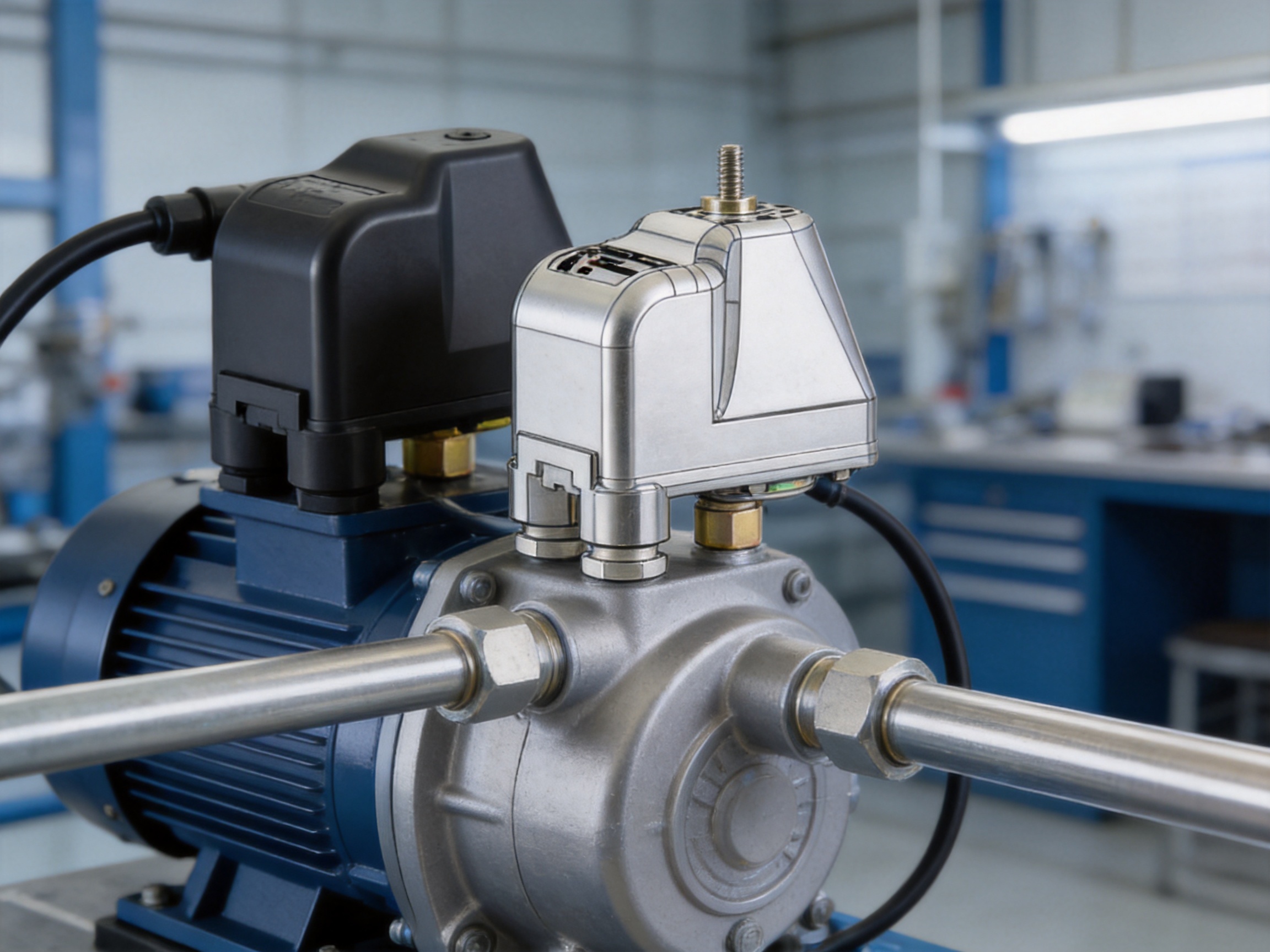
The bottom-mounted design is one of the defining characteristics of this pressure switch. The location of the hydraulic connection can influence the overall arrangement of a pump assembly. In some installations, a bottom connection allows the pressure switch to align more naturally with the pump outlet, manifold, pressure tank, or pipework.
A bottom-mounted switch may also help keep the upper area of the pump assembly clear. This can be useful where the equipment is installed in a compact enclosure or where access to the top of the pump is needed for other components. The final installation should always be checked for sufficient clearance, service access, cable routing, and protection from excessive vibration.
The ERS-5 Series offers several screw configurations. Female screw sizes include 1/4 inch and 3/8 inch, and a 1/4-inch male version is also available. Connection selection should be based on the pump outlet, adapter arrangement, pipe diameter, sealing method, and local installation practice.
A pressure switch should never be forced into a connection that does not match its thread type or size. Incorrect matching may cause leakage, thread damage, mechanical stress, or unreliable pressure transmission. Installers should confirm whether the pump or manifold requires a male or female connection and whether the thread standard is compatible with the switch and the rest of the system.
Thread sealant or sealing tape should be applied according to the installation requirements, while care should be taken not to allow sealing material to enter the hydraulic passage. Excessive tightening should also be avoided because it may damage the connection or place unnecessary stress on the switch body.
One of the product’s commercial advantages is the ability to customize the casing, hydraulic connection, and pressure setting according to customer requirements. Customization can support different pump models, regional installation preferences, private-label product programs, and specific system pressure targets.
For an original equipment manufacturer, the ability to discuss connection geometry and pressure settings with the manufacturer can reduce the need for multiple adapters. For a distributor, a selection of standard configurations can help serve different customers without changing the core product family. For a project supplier, customized settings may simplify procurement when many pump units must be installed with consistent operating parameters.
The ERS-5 Series is specified for 110–240 V and 400 V applications, with a power frequency of 50/60 Hz. This broad electrical range supports use in different markets and pump system designs. However, the actual electrical installation must be checked by a qualified person to confirm compatibility with the pump motor, starting current, wiring method, protective devices, and applicable local requirements.
The rated current is listed as 16(8) A. The meaning of a dual current notation should be evaluated in relation to the motor load and the manufacturer’s technical instructions. Pump motors can have starting currents higher than their normal running currents, and the switch must be selected and installed with attention to the actual electrical characteristics of the connected load.
The IP44 protection class indicates a defined level of protection against solid objects and water splashing from particular directions. It does not mean that the switch is suitable for immersion or uncontrolled outdoor exposure. A correct enclosure, cable gland, mounting position, and installation environment remain necessary.
The maximum working temperature is specified as 55°C. This limit should be considered when selecting the installation position. The switch should not be placed close to an excessive heat source or in an environment where the surrounding temperature exceeds the rated operating condition.
Water temperature, motor heat, ambient temperature, and enclosure ventilation can all influence the actual operating environment. Maintaining the switch within its rated temperature range supports more stable mechanical and electrical performance.
Before installation or maintenance, the power supply should be disconnected and secured against accidental reconnection. Wiring should be carried out according to the pump manufacturer’s circuit diagram and local electrical regulations. The pressure switch should not be used as a replacement for a circuit breaker, overload protector, grounding system, or other required safety device.
Where the pump motor has a high power rating or challenging starting characteristics, an appropriate contactor or motor control arrangement may be required. A professional installer should verify whether the pressure switch can directly control the motor or should operate an intermediate control device.
A pressure switch may appear compact, but its performance depends on many manufacturing details. The housing, pressure-sensing mechanism, adjustment components, electrical contacts, terminals, seals, and connection threads must work together accurately. A manufacturer with experience in pumps and pump accessories can better understand how the pressure switch will perform in real hydraulic systems.
Taizhou Edwin Electric Co., Ltd. was founded in 2008 and operates as an integrated manufacturing enterprise focused on independent research and development, mass production, and global export. Its main product lines include deep well pumps, submersible pumps, domestic booster pumps, circulation pumps, solar water pumps, intelligent booster pumps, and related water-treatment peripheral products.
This broader product background is important for the ERS-5 Series because pressure switches are not isolated components. Their value is connected to pump selection, pressure requirements, pipework, motor performance, and the complete water supply system. A manufacturer that understands these relationships can provide more practical technical communication than a supplier focused only on a single generic electrical component.
Independent research and development enables a manufacturer to adjust product design according to customer feedback and application requirements. For the ERS-5 Series, this can include discussions about housing configuration, hydraulic connection type, pressure settings, and compatibility with different pump assemblies.
Research and development also supports continuous improvement. Feedback from residential, agricultural, commercial, municipal, and industrial applications can reveal opportunities to improve ease of installation, mechanical strength, adjustment stability, packaging, and product consistency.
Mass production is valuable for customers who require stable supply rather than occasional spot purchases. A structured production system can support repeat orders, consistent product configuration, and more predictable delivery planning. This is particularly important for pump manufacturers that use pressure switches as part of regular assembly operations.
Production capability must be supported by effective process control. Metal housing production, machining, finishing, component assembly, wiring, adjustment, testing, and packaging should follow clear procedures. Consistency at each stage helps reduce variation between batches and supports reliable field performance.
The company has developed business structures for procurement planning, order tracking, cross-border delivery, and foreign trade services. These capabilities can be useful to overseas customers purchasing pressure switches together with pumps or other accessories.
International buyers often require more than a product quotation. They may need technical confirmation, packaging information, order updates, documentation, shipping coordination, and communication across different time zones. A supplier with experience in global export can help coordinate these requirements and provide a more complete purchasing service.
A reliable pressure switch should be evaluated at multiple stages rather than only at final packaging. The production process can begin with incoming inspection of zinc alloy housings, electrical components, springs, seals, terminals, and connection parts. Materials and components should be checked for dimensions, visible defects, surface quality, and conformity with the required specification.
During housing production, attention should be given to dimensional accuracy, thread quality, mounting surfaces, and surface treatment. A connection thread that is not formed correctly can create installation difficulties or leakage. A housing with uneven surfaces may affect assembly or reduce the protection provided by the cover.
During assembly, internal components should be positioned correctly and tightened according to suitable process requirements. Electrical terminals must be secure, and wires or contact components should not be damaged during installation. Sealing elements should be fitted correctly to support the intended protection level.
Pressure testing is a central part of pressure switch quality control. Each selected pressure range should be checked to confirm that the switch responds at or near the intended cut-in and cut-out points. Testing may involve applying controlled hydraulic pressure, observing contact operation, and recording the switching values.
Adjustment accuracy is important because an incorrect setting can cause the pump to start too early, stop too late, cycle excessively, or fail to provide the required water pressure. Standard settings such as 20–40 psi, 30–50 psi, and 40–60 psi provide clear product options, while customized settings may be arranged for specific customer requirements.
Electrical inspection may include checking terminal continuity, switching behavior, insulation condition, and suitability for the stated voltage and current range. Testing procedures should be selected according to the product design and applicable internal quality requirements.
Mechanical and electrical tests are complementary. A pressure switch may pass an electrical continuity test but still have an incorrect hydraulic switching point. Similarly, a switch may respond at the correct pressure but have a loose terminal. Comprehensive inspection helps identify these different types of potential failure.
Final inspection should also examine the zinc alloy body, labels, connection threads, cover, adjustment components, and overall assembly. Packaging should protect the pressure switch from impact, moisture, dust, and abrasion during storage and transport.
For international shipments, packaging quality is especially important because products may pass through several handling stages before reaching the customer. Clear product identification can also reduce errors when different pressure ranges or connection types are included in the same order.
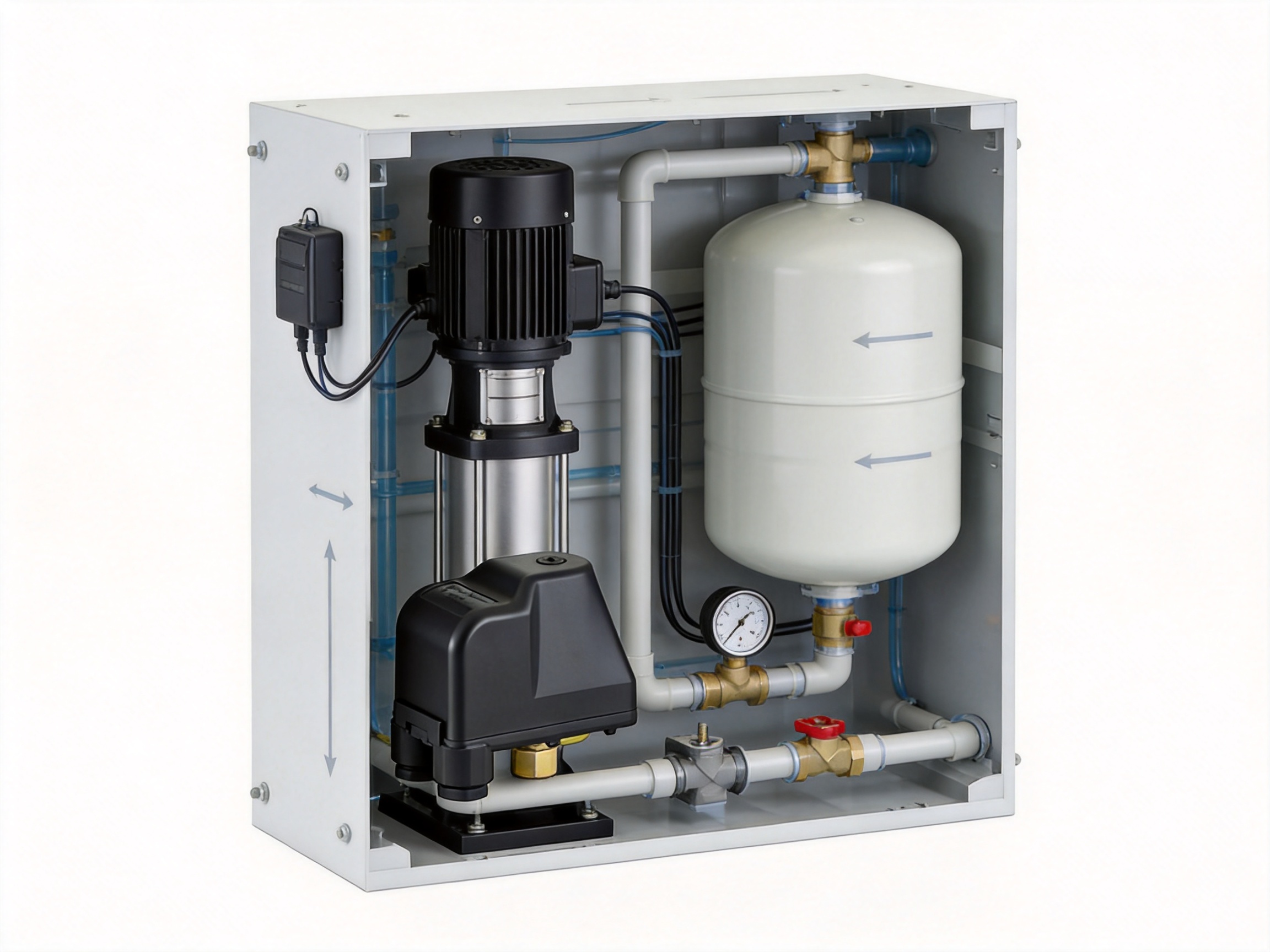
The ERS-5 Series competes with ordinary mechanical pressure switches by combining several practical features in one product family. Its advantages are related not only to the material of the housing but also to the available configuration options, intended cycling performance, pump-specific application focus, and manufacturer support.
The zinc alloy housing provides a robust foundation for the switch. Compared with a basic lightweight construction, it can offer greater resistance to mounting stress, vibration, and handling damage. This is useful for professional pump installations and replacement markets where installers expect a strong component.
The antifatigue design is intended for repeated pump operation. It supports applications where pressure changes occur frequently and where a switch must perform consistently over many cycles. This can provide an advantage over low-cost products that are optimized primarily for initial purchase price.
The availability of 20–40 psi, 30–50 psi, and 40–60 psi settings allows the same product series to serve different applications. Customers can select a setting based on the required system pressure rather than adapting every installation to a single factory configuration.
The 1/4-inch and 3/8-inch female options, together with the 1/4-inch male option, support different installation arrangements. This reduces the need for additional conversion parts and helps distributors meet varied customer requirements.
The 110–240 V / 400 V rating and 50/60 Hz frequency specification support use across different market environments. The actual application must still be checked carefully, but the product family is not limited to one narrow regional electrical standard.
The bottom-mounted configuration offers an alternative to conventional top or side connection arrangements. It can help integrate the switch into compact pump assemblies and may make the hydraulic layout more convenient for particular models.
Options for customized casing, hydraulic connection, and pressure setting provide additional value to original equipment manufacturers, importers, and project suppliers. Customization can help align the product with a company’s pump range, installation standards, and target market.
The product is offered with a one-year warranty. A defined warranty period gives buyers a clear framework for after-sales support and demonstrates the manufacturer’s commitment to product responsibility. Warranty terms should be confirmed during the purchasing process, including the conditions, documentation, and scope of coverage.
Residential buildings often experience fluctuating water demand. A pressure switch can automatically start a booster pump when a tap, shower, washing machine, or other water outlet reduces system pressure. Once demand ends, the pump can stop at the selected upper pressure.
The ERS-5 Series is suitable for domestic booster pump applications where a compact mechanical controller, dependable cycling, and selectable pressure settings are required. Its 20–40 psi or 30–50 psi options may be considered for many household systems, subject to the pump and pressure tank design.
Irrigation systems may operate with changing zones, valves, sprinklers, and pipelines. Pressure requirements vary according to the layout and equipment. A pressure switch can provide automatic control when the irrigation network requires pump assistance.
In agricultural environments, the switch should be installed in a protected location that limits exposure to dirt, direct weather, flooding, and excessive temperature. Proper filtration, pipework design, and electrical protection are also important for reliable operation.
Small commercial buildings, workshops, offices, retail premises, and service facilities may require stable water pressure without a complex control system. A mechanical pressure switch can be used in suitable pump assemblies to automate the basic start-and-stop function.
Where the water demand is large or the pump motor is powerful, the pressure switch should be integrated with appropriate control equipment. The pressure switch may control a contactor or other electrical device rather than directly switching the complete motor load.
Industrial facilities may use pumps for cleaning, equipment supply, utility water, cooling support, or process-related applications. The ERS-5 Series can be considered for systems that fall within its pressure, temperature, protection, and electrical ratings.
Industrial users should conduct a full engineering review before selection. Chemical compatibility, water quality, pump duty, duty cycle, motor current, ambient conditions, and required safety functions may exceed the scope of a standard mechanical pressure switch in some processes.
Water supply projects and engineering installations often require dependable components that can be sourced in repeat quantities. A pressure switch with standard pressure ranges and multiple connection options can support project standardization and maintenance planning.
The manufacturer’s broader experience with pumps for municipal engineering, construction, agricultural irrigation, mining, HVAC systems, and household water supply provides useful application context when discussing project requirements.
Selecting a pressure switch should begin with the complete pump-system requirement rather than the switch alone. Buyers should identify the pump type, motor voltage, operating pressure, desired cut-in and cut-out values, connection size, installation location, water temperature, ambient conditions, and expected cycling frequency.
The selected pressure range must suit the pump’s performance curve and the system’s required operating pressure. A pump must be capable of reaching the chosen cut-out pressure under actual flow conditions. If the cut-out value is too high for the pump, the motor may run continuously without achieving the stop point.
Similarly, the cut-in value should be appropriate for the water outlets and pressure tank. If it is set too low, users may experience inadequate pressure before the pump starts. If it is set too high, the pump may start too frequently or fail to maintain a practical operating cycle.
The switch rating must be compared with the pump motor’s electrical requirements. Voltage, frequency, running current, starting current, phase arrangement, and control method should all be reviewed. When there is uncertainty, an electrical professional should determine whether direct switching is suitable or whether an intermediate contactor is needed.
Buyers should specify the required male or female connection and the correct size. The 1/4-inch and 3/8-inch female options and the 1/4-inch male option provide flexibility, but the exact configuration should be confirmed before ordering.
The IP44 rating and 55°C maximum working temperature should be considered during installation planning. The switch should be protected from immersion, heavy water jets, excessive dust, direct heat, and unsuitable outdoor exposure. If the application requires a higher protection class or more severe environmental resistance, a different product specification may be necessary.
Installers should ensure that the pressure switch remains accessible for inspection, adjustment, and replacement. The switch should not be buried behind permanent structures or mounted where electrical terminals cannot be safely reached. A well-planned installation can reduce service time and improve long-term system reliability.
Before installing the ERS-5 Series, confirm that the pump and system are depressurized and that electrical power has been disconnected. Inspect the switch, threads, sealing surfaces, and terminals for visible damage. Verify that the product configuration matches the purchase order and system design.
Install the switch in the intended bottom-mounted position using a suitable connection method. Avoid applying excessive force to the housing. The switch should be supported by the correct connection and should not be used as a structural support for heavy pipework.
After the hydraulic connection has been completed, inspect for leakage while gradually pressurizing the system. Electrical connections should be made according to the appropriate wiring diagram. Ensure that cable entry points are protected and that conductors are firmly secured.
The pump should then be operated under controlled conditions. Observe the pressure at which the pump starts and stops, check for unwanted cycling, and inspect the complete assembly for leakage, vibration, unusual noise, or overheating. If the switching points require adjustment, adjustments should be made carefully and verified with a pressure gauge.
The pressure tank, if installed, should be checked because incorrect tank pre-charge can cause rapid cycling even when the pressure switch is functioning correctly. A pressure switch cannot compensate for every system design problem. Correct pump sizing, pipework, check valves, storage capacity, and pressure-tank settings all contribute to system performance.
Routine inspection can help identify developing problems before they cause a pump shutdown. Maintenance personnel should examine the switch housing, connection point, wiring, terminals, and surrounding pipework. Signs of leakage, corrosion, loose wires, damaged insulation, or abnormal vibration should be investigated promptly.
If the pump does not start when pressure falls, possible causes may include a disconnected power supply, incorrect wiring, a pressure setting that is too low, blocked hydraulic passages, damaged contacts, or a pump fault. The system should be isolated safely before any electrical inspection.
If the pump continues operating after water demand has ended, possible causes may include an excessively high cut-out setting, insufficient pump pressure, a leaking pipeline, an open valve, a damaged check valve, or a pressure switch problem. The pump’s ability to reach the selected cut-out pressure should be confirmed before replacing the switch.
Rapid cycling may be caused by a small pressure differential, an incorrectly adjusted pressure tank, insufficient storage volume, water leakage, or an unstable hydraulic system. The pressure switch setting should be checked together with the pressure tank and pipework rather than evaluated in isolation.
Leakage may result from an incorrect thread type, damaged thread, unsuitable sealing material, inadequate tightening, over-tightening, or pipe stress. The switch should be depressurized and removed before correcting the connection. Using the wrong adapter or forcing incompatible threads can permanently damage the product.
Purchasing a pressure switch from a company that also manufactures water pumps can provide practical advantages. The supplier is familiar with pump starting and stopping behavior, system pressure requirements, motor loads, installation environments, and common field problems. This experience can improve communication during product selection.
For customers purchasing deep well pumps, submersible pumps, surface pumps, booster pumps, circulation pumps, garden pumps, commercial multistage pumps, end suction pumps, or intelligent booster pumps, a pump-focused supplier can help coordinate related accessories. This may simplify procurement and reduce the need to manage multiple unrelated vendors.
A one-stop supply structure can also support project efficiency. Customers may request pressure switches together with pumps, pipes, valves, pump accessories, and other water-treatment peripheral products. Consolidating product sourcing can help reduce administrative work, coordinate packaging, and simplify shipment planning.
The company’s investment in solar water pumps and intelligent technology since 2018 also indicates an effort to expand beyond traditional pump products. Although the ERS-5 Series is a mechanical pressure controller, its role remains relevant in many conventional and hybrid water systems where simple, direct pressure-based control is preferred.
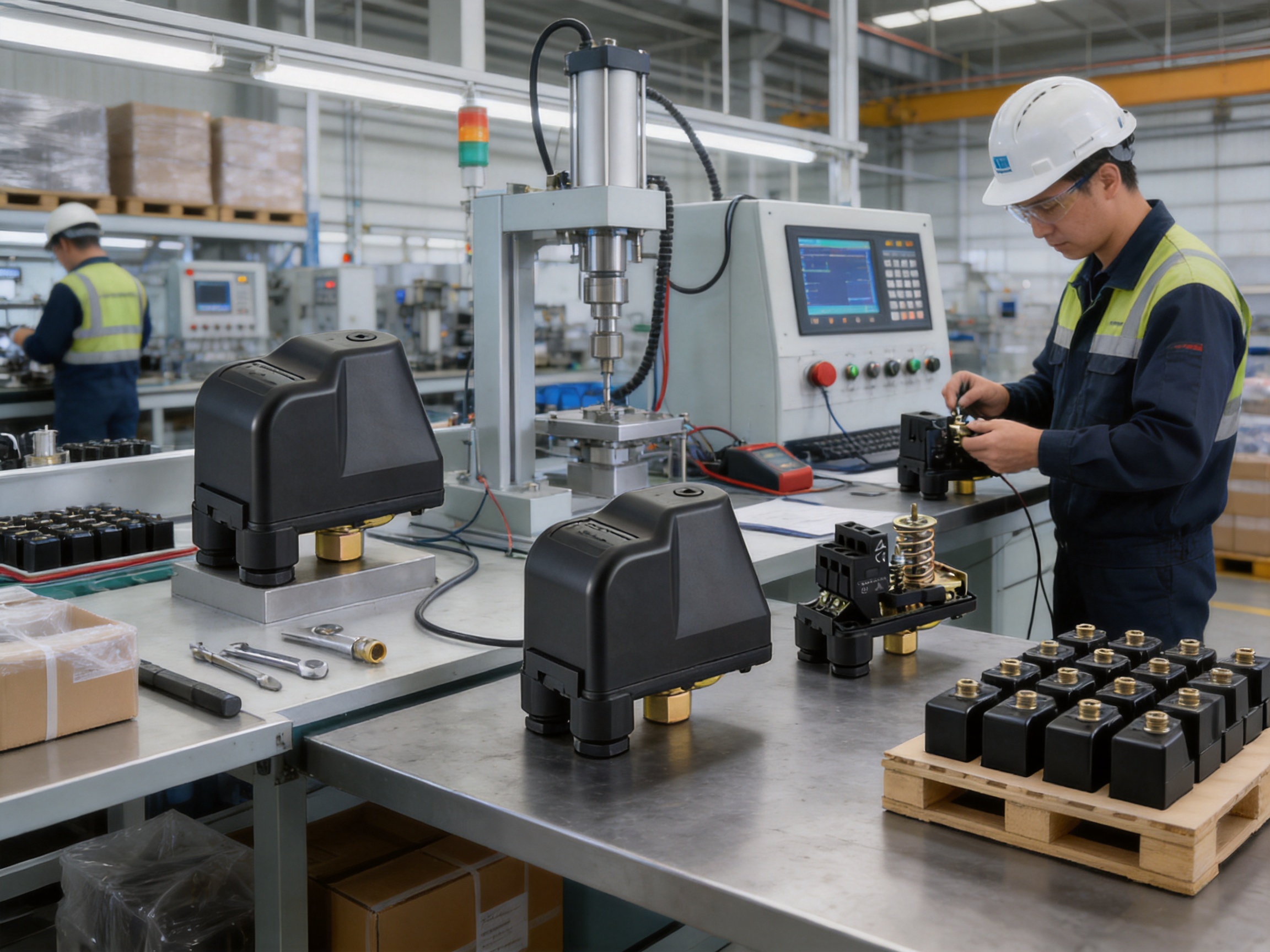
The ERS-5 Series can serve several types of customers. Pump manufacturers may use it as an original equipment component. Importers and distributors may stock standard versions for replacement and new installations. Engineering companies may specify customized settings for project applications. Service companies may purchase multiple connection types to support different field requirements.
For OEM customers, technical discussions should include the desired pressure range, cut-in and cut-out settings, connection type, casing requirements, electrical load, product labeling, packaging, and expected annual volume. Early confirmation of these details helps reduce misunderstanding during sampling and production.
For distributors, inventory planning can focus on the most frequently requested pressure settings and connection sizes. Maintaining a selection of 20–40 psi, 30–50 psi, and 40–60 psi models can help serve different domestic and commercial requirements. Clear labeling is important when several similar-looking products are stored together.
For project buyers, the product should be evaluated against the project’s technical documents and installation standards. The supplier can provide information about the available configurations, rated parameters, warranty, and production arrangements so that the pressure switch can be incorporated into the equipment schedule.
Repeat buyers benefit from stable specifications. Once a product configuration has been approved, future orders should identify the same pressure setting, connection type, electrical rating, labeling, and packaging requirements. Maintaining accurate purchase records helps support consistent replenishment.
Before shipment, customers should confirm quantities, model details, pressure settings, connection types, carton information, and shipping documents. This is especially important when an order includes customized versions. Clear communication reduces the risk of receiving a product that is technically correct but unsuitable for the intended installation.
A pressure switch contributes to efficient pump operation by allowing the pump to run in response to actual water demand. When correctly selected and adjusted, it can prevent the pump from continuing to operate after the system has reached the required pressure. Reduced unnecessary running can support lower energy consumption and reduce mechanical wear.
Operational efficiency also depends on avoiding excessive pump cycling. A correctly selected pressure differential and properly adjusted pressure tank can help create a more practical operating pattern. The pressure switch should therefore be treated as part of a complete pressure-control system rather than as an independent energy-saving device.
The zinc alloy housing may also support product longevity by resisting the mechanical stresses associated with installation and operation. A longer service life can reduce the frequency of replacement, maintenance interruptions, and disposal of failed components. Actual service life will depend on water quality, pressure conditions, electrical loading, installation quality, and maintenance.
Every pressure switch has operating limits. The ERS-5 Series should be used within its stated pressure range, electrical rating, protection class, and maximum working temperature. It is not intended to replace a complete pump-control panel in every application, and it should not be selected without checking the motor and hydraulic system.
The IP44 rating does not authorize immersion. The product should not be installed in a location where it can be flooded or exposed to continuous water jets. If the system contains aggressive chemicals, unusually hot water, abrasive particles, or special process fluids, material and compatibility requirements should be reviewed before use.
Pressure switches also do not automatically provide dry-run protection. A pump may continue running if the system pressure remains below the cut-out point because of a lack of water, a damaged pipe, or insufficient pump capacity. Where dry running is possible, a suitable dry-run protection method should be added.
Correct installation remains essential. Even a well-designed pressure switch can fail prematurely if it is exposed to excessive vibration, incorrectly wired, installed with incompatible threads, subjected to motor current beyond its rating, or adjusted without a reliable pressure gauge.
The ERS-5 Series is a mechanical pressure controller for water pump systems. It automatically starts the pump when pressure falls below the selected cut-in point and stops the pump when pressure reaches the selected cut-out point.
The zinc alloy housing provides a durable and mechanically stable structure. It is suitable for a component exposed to mounting stress, vibration, moisture, and repeated operating cycles.
The antifatigue design is intended to support reliable operation during repeated pressure changes and pump start-stop cycles. It is particularly useful in systems with frequent daily water demand.
Standard pressure settings include 20–40 psi, 30–50 psi, and 40–60 psi. The listed minimum cut-in is 15 psi, and the maximum cut-out is 100 psi. Customized settings may be discussed for specific requirements.
Female screw options are available in 1/4-inch and 3/8-inch sizes. A 1/4-inch male screw option is also available. The correct option should be selected according to the pump and pipework configuration.
Yes. The product offering includes options for customizing the casing, hydraulic connection, and pressure setting according to customer needs. Technical details should be confirmed before production.
The listed rated voltage is 110–240 V / 400 V, with a power frequency of 50/60 Hz. The actual motor load and switching method must be verified before installation.
No. The pressure switch must be matched to the motor’s voltage, current, starting characteristics, and control circuit. Larger or more demanding motors may require a contactor or other intermediate control device.
The product is specified as IP44. It should be installed in a suitable location and should not be immersed or exposed to conditions beyond the protection level.
The maximum working temperature is specified as 55°C. The surrounding environment, water temperature, enclosure, and nearby heat sources should all be considered.
Yes. It is designed for water pump applications and can be used in suitable residential booster systems when the pressure, electrical, connection, and environmental requirements are satisfied.
It can be considered for suitable irrigation systems. The switch should be protected from severe environmental exposure, and the complete pump, valve, pressure tank, and electrical arrangement should be properly designed.
No. A separate dry-run protection solution may be required where the pump could operate without sufficient water. The pressure switch should not be considered a complete substitute for all pump-protection functions.
The product is offered with a one-year warranty. Buyers should confirm the applicable warranty terms and after-sales procedures during the order process.
Buyers should confirm the pressure setting, male or female connection, thread size, rated voltage, pump motor current, installation position, quantity, packaging, labeling, and any customization requirements.
The ERS-5 Series Zinc Alloy Bottom Antifatigue Pressure Switch is a practical solution for automatic pressure control in water pump systems. Its durable zinc alloy body, bottom-mounted configuration, antifatigue design, selectable pressure ranges, multiple connection options, broad electrical specification, IP44 protection class, and 55°C maximum working temperature make it suitable for many residential, agricultural, commercial, and industrial applications.
Its main competitive advantage is the combination of robust mechanical construction and configuration flexibility. Instead of offering only one fixed connection and pressure setting, the product family can be adapted to different pump assemblies and system requirements. The antifatigue design further supports applications where the pump starts and stops repeatedly throughout the day.
The manufacturing background of Taizhou Edwin Electric Co., Ltd. adds value because the company develops and produces a broad range of water pumps and related products. Experience in pump engineering, independent research and development, mass production, quality control, export coordination, and customized supply enables the pressure switch to be supported as part of a complete water-system solution.
For buyers, the most important step is to match the pressure switch with the complete system. Pressure range, connection type, motor load, temperature, environmental exposure, pressure tank, wiring, and protection devices must all be reviewed. When correctly selected and installed, the ERS-5 Series can help provide dependable automatic pump control and support the long-term performance of modern water supply equipment.
1. Product technical information for the ERS-5 Series Zinc Alloy Bottom Antifatigue Pressure Switch for Water Pumps.
2. Manufacturer-provided specifications for rated voltage, frequency, current, pressure range, protection class, temperature, and hydraulic connections.
3. General principles of mechanical pressure-switch operation in automatic water pump systems.
4. General water pump installation and maintenance practices for residential, commercial, agricultural, and industrial applications.
5. General electrical safety principles for motor-control components and pump installations.
6. General engineering guidance concerning hydraulic pressure control, pressure differentials, pressure tanks, and pump cycling.
edwina@edwin-pump.com
+86-13586290903 (WhatsApp)
Xuri Gongliang Cutting Tool Entrepreneurship Park, Wenqiao Town, Wenling City, Taizhou City, Zhejiang Province, China

High Performance Smart Pump Factory


 English