edwina@edwin-pump.com

View All Products
en
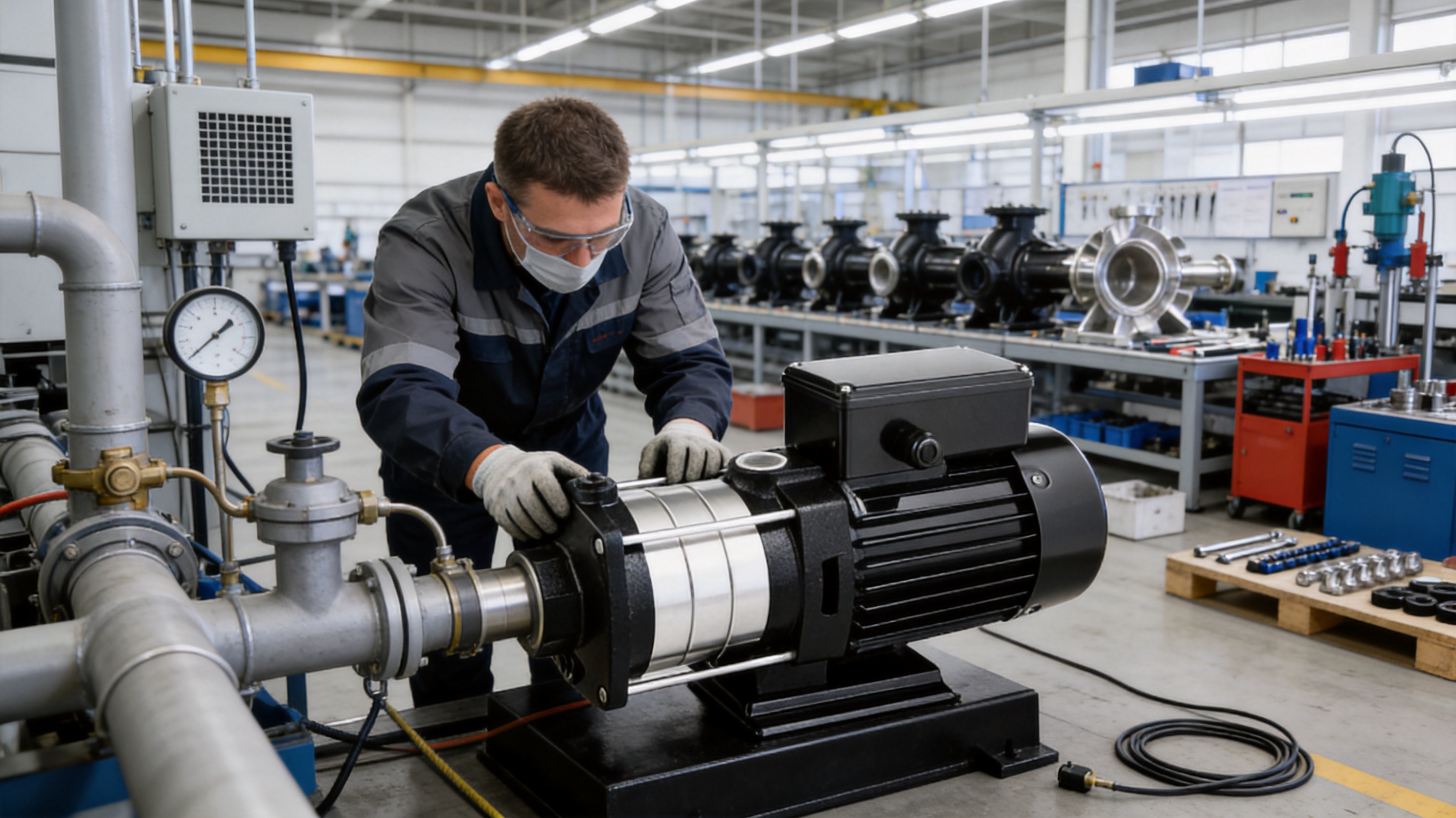
Reliable water movement is essential in agriculture, building services, industrial production, municipal systems, and household water supply. A pump must do more than move water from one location to another. It must provide stable pressure, reasonable energy consumption, dependable operation, straightforward installation, and serviceability throughout its working life. The SRM Series Anti-Corrosion End-Suction Efficiency Water Surface Centrifugal Pump is designed to address these requirements through a practical end-suction configuration, corrosion-resistant components, efficient hydraulic performance, and a user-friendly structure.
The SRM Series is suitable for clean water and liquids that are not chemically aggressive toward the materials used in the pump. It can also handle water in applications where air may be present, provided the operating conditions remain within the stated limits. This makes the pump a versatile choice for water supply, irrigation, equipment support, industrial processes, and general fluid transfer.
Available in multiple models, the series covers power ratings from 0.37 kW to 1.5 kW, maximum flow rates of 60 L/min to 135 L/min, and maximum heads from 26 m to 58 m. The maximum suction lift is listed as 8 m, while the maximum liquid temperature is 40°C. These specifications allow users to select a configuration that closely matches the required flow and pressure rather than relying on one oversized pump for every application.
Manufactured by Taizhou Edwin Electric Co., Ltd., the SRM Series reflects the company’s experience in pump research and development, mass production, export, and water-system applications. Since its establishment in 2008, the company has developed a broad portfolio that includes deep well pumps, submersible pumps, domestic booster pumps, circulation pumps, solar water pumps, intelligent booster pumps, and other water-treatment-related products.
The SRM Series is an end-suction surface centrifugal pump. In this arrangement, water enters through the suction port and is accelerated by the rotating impeller before leaving through the discharge port. The design is widely used because it offers a direct hydraulic path, compact installation, accessible components, and a familiar operating principle for pump technicians.
The pump body and support are manufactured from HT200 cast iron and receive special anti-rust treatment. The impeller is made from stainless steel, while the shaft is specified as AISI 304 stainless steel. These material selections balance mechanical strength, corrosion resistance, cost control, and suitability for clean-water applications.
The pump also uses a carbon/ceramic mechanical seal. This type of seal is widely applied in general-purpose centrifugal pumps because it provides a dependable barrier against leakage between the rotating shaft and stationary pump body. The seal is particularly important in surface pumps, where continuous operation and repeated starting may place demands on the sealing system.
The motor is designed for continuous S1 service, with insulation class B and protection class IP44. Single-phase models include a thermal protector. These features are valuable for domestic, agricultural, and light commercial users who need a pump capable of regular operation without complex external protection equipment.
Although the product data identifies the series as an end-suction water surface centrifugal pump, the model range provides several pressure levels through different hydraulic stages and configurations. The SRM203 to SRM206 models are listed with a maximum flow of 60 L/min, while the SRM403 to SRM406 models reach 105 L/min and the SRM603 to SRM606 models reach 135 L/min.
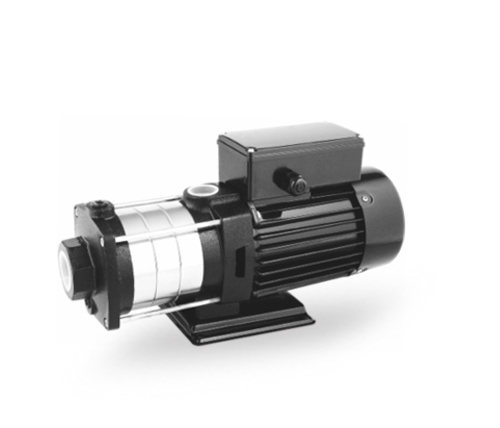
SRM Series Anti-corrrison End-suction Efficiency Water Surface Centrifugal Pump
The end-suction configuration is one of the most widely recognized centrifugal pump designs in the world. Its simplicity helps reduce installation complexity and makes routine service easier. Water enters from the front or suction side, passes through the impeller, and is discharged through the outlet. This direct arrangement can reduce unnecessary pipe routing and makes the unit suitable for compact pump rooms, outdoor installations, irrigation stations, and equipment platforms.
The SRM Series is designed to deliver useful flow and pressure while limiting unnecessary energy consumption. The available power options enable users to choose a motor that is appropriate for the duty point. Selecting the correct model is important because an oversized pump can increase electricity consumption, create excessive pressure, and operate away from its best efficiency range.
Compared with less carefully matched general-purpose pumps, the SRM Series offers a more organized range of models. The user can compare power, connection size, maximum flow, and maximum head within one product family. This simplifies project planning and helps distributors recommend a model based on actual system requirements.
Water quality, humidity, fertilizer residue, outdoor exposure, and long periods of storage can contribute to corrosion. The SRM Series addresses this concern with stainless steel components in important wetted or rotating areas and anti-rust treatment on the cast-iron pump body and support.
The AISI 304 stainless steel shaft offers improved resistance to corrosion compared with ordinary carbon-steel shaft materials. The stainless steel impeller also supports longer service life in clean-water applications. While the pump is not intended for every aggressive chemical liquid, its material combination provides a practical level of protection for normal water supply, irrigation, and general process-water duties.
Corrosion resistance also contributes to maintenance efficiency. A component that resists rust is less likely to seize, deform, or become difficult to remove during inspection. This can reduce the time required for disassembly and improve the likelihood of successful component replacement.
The SRM Series can be used in water supply systems, agricultural irrigation, industrial processes, equipment circulation, tank transfer, and general clean-water movement. It is suitable for users who need a surface-mounted pump rather than a pump installed inside a well or water tank.
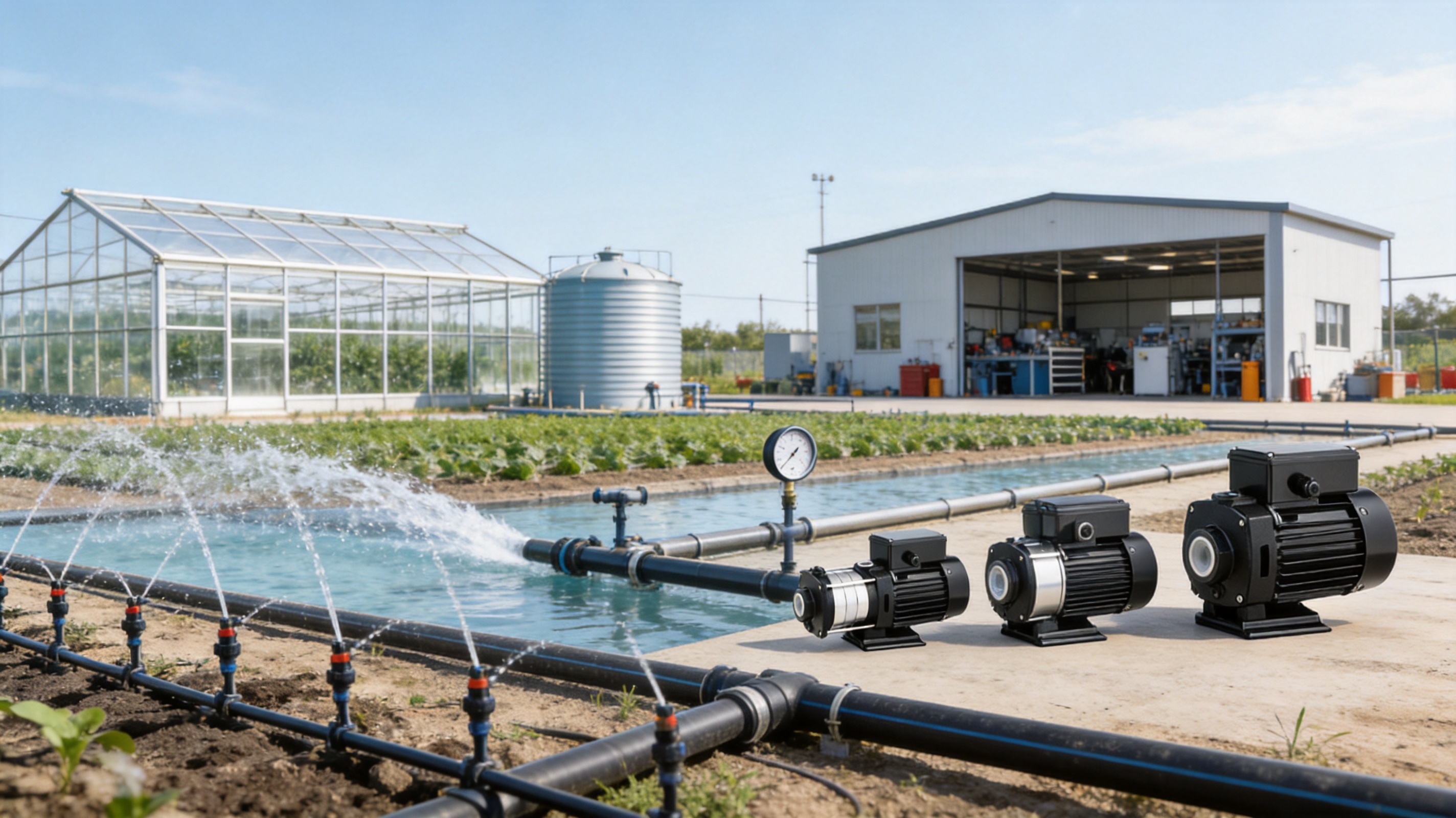
In agricultural settings, the pump can support small irrigation networks, greenhouse watering systems, water transfer between storage tanks, and localized sprinkler or drip irrigation systems. In residential and commercial settings, it can assist with garden irrigation, rainwater transfer, building water supply, and pressure support where the system demand is within the pump’s performance range.
Industrial users may apply the pump to non-aggressive process water, washing systems, cooling support, equipment filling, and circulation duties. The maximum liquid temperature of 40°C should be respected, and the chemical compatibility of the pumped fluid should be confirmed before use.
A pump is valuable only when it can be installed, operated, and maintained efficiently. The SRM Series has been designed with a straightforward configuration that supports easy connection to standard suction and discharge pipework. The inlet and outlet connection listed for the models is 1.25 inches by 1 inch.
The accessible end-suction layout allows technicians to understand the hydraulic path quickly. Routine checks can focus on suction conditions, pipe sealing, electrical connections, mechanical-seal performance, bearing condition, and motor ventilation. This familiarity is an advantage over highly specialized pump systems that require proprietary service procedures.
The cast-iron pump body and support provide a solid mounting structure. Correct installation on a stable base can reduce vibration and help maintain alignment between the motor and hydraulic assembly. Good piping practice, including adequate suction-pipe diameter and protection against air leakage, is equally important for reliable operation.
The motor is rated for continuous S1 operation. This means the motor is intended to operate continuously at a steady load under suitable conditions. Such a rating is useful for irrigation cycles, water transfer, circulation duties, and other applications where the pump may run for extended periods.
Insulation class B provides a defined level of thermal protection for the motor winding system. The IP44 protection class helps protect the motor against solid objects of certain sizes and water splashing from different directions. The pump should still be installed in a location appropriate for the environmental conditions, and it should not be exposed to flooding or direct high-pressure water jets.
For single-phase versions, the integrated thermal protector helps reduce the risk of motor damage caused by excessive temperature. Thermal protection is particularly useful when pumps are installed in small facilities where sophisticated motor-control systems may not be available.
Choosing the correct pump requires more than comparing the maximum head or maximum flow shown in a catalog. Actual performance depends on the operating point, pipe length, elevation difference, fittings, valves, water temperature, suction conditions, and required pressure at the outlet. The maximum values are reference points and should not be interpreted as simultaneous operating values.
| Model Group | Maximum Flow | Connection | Maximum Head Range | Maximum Suction |
|---|---|---|---|---|
| SRM203–SRM206 | 60 L/min | 1.25 in x 1 in | 26–52 m | 8 m |
| SRM403–SRM406 | 105 L/min | 1.25 in x 1 in | 28–55 m | 8 m |
| SRM603–SRM606 | 135 L/min | 1.25 in x 1 in | 29–58 m | 8 m |
The SRM203 to SRM206 family provides a maximum flow of 60 L/min. Maximum head increases from 26 m on the SRM203 to 52 m on the SRM206. Motor power increases from 0.37 kW to 0.92 kW across the group, allowing users to select a higher-pressure model when the application includes greater elevation or resistance.
The SRM403 to SRM406 group provides a maximum flow of 105 L/min. The maximum head ranges from 28 m to 55 m, and the available power ranges from 0.55 kW to 1.1 kW. This group is appropriate when the system requires greater flow than the SRM2 models while maintaining a similar compact connection size.
The SRM603 to SRM606 group reaches a maximum flow of 135 L/min. Maximum head ranges from 29 m to 58 m, with power options from 0.75 kW to 1.5 kW. This group provides the highest listed flow and motor power in the series.
| Model | Power kW | Power HP | Maximum Flow L/min | Maximum Head m | Maximum Suction m |
|---|---|---|---|---|---|
| SRM203 | 0.37 | 0.50 | 60 | 26 | 8 |
| SRM204 | 0.55 | 0.75 | 60 | 35 | 8 |
| SRM205 | 0.75 | 1.0 | 60 | 43 | 8 |
| SRM206 | 0.92 | 1.25 | 60 | 52 | 8 |
| SRM403 | 0.55 | 0.75 | 105 | 28 | 8 |
| SRM404 | 0.75 | 1.0 | 105 | 37 | 8 |
| SRM405 | 0.92 | 1.25 | 105 | 46 | 8 |
| SRM406 | 1.1 | 1.5 | 105 | 55 | 8 |
| SRM603 | 0.75 | 1.0 | 135 | 29 | 8 |
| SRM604 | 0.92 | 1.25 | 135 | 38 | 8 |
| SRM605 | 1.0 | 1.5 | 135 | 48 | 8 |
| SRM606 | 1.5 | 2.0 | 135 | 58 | 8 |
The table shows an important advantage of the series: users can select performance within clearly defined groups. If the application requires high flow but moderate pressure, a lower-head model may be sufficient. If the system includes a long discharge line, elevated storage tank, or high static lift, a higher-head model may be more suitable.
Centrifugal pumps convert mechanical energy from the motor into hydraulic energy through the impeller. As the impeller rotates, water is drawn into its center and moved outward by centrifugal force. The hydraulic casing then guides the fluid toward the discharge outlet while converting part of the fluid velocity into pressure.
The efficiency of this process depends on the relationship between the impeller geometry, casing passages, motor speed, flow rate, head, and system resistance. A pump normally operates most effectively near its intended duty point. Operating far below the recommended flow can cause heat accumulation, internal recirculation, and unstable hydraulic behavior. Operating far above the intended flow can increase motor load and reduce pressure.
The SRM Series is designed as a practical water pump for stable operation within its intended performance envelope. The stainless steel impeller provides a durable rotating hydraulic element, while the cast-iron body supplies structural support and a defined flow passage. This combination is commonly preferred in general-purpose water pumps because it offers a balance between durability and economical production.
The end-suction arrangement also provides a clear suction path. However, the suction pipe should be installed carefully. Air leaks on the suction side can prevent priming, reduce flow, create noise, and cause unstable operation. The pipe should be properly sealed, supported independently from the pump, and arranged to avoid unnecessary high points where air can collect.
Where the pump draws water from a tank, a foot valve or suitable non-return valve may be used to help retain water in the suction pipe during shutdown. The pump should be filled and primed according to the installation procedure before starting. Dry running can damage the mechanical seal and should be avoided.
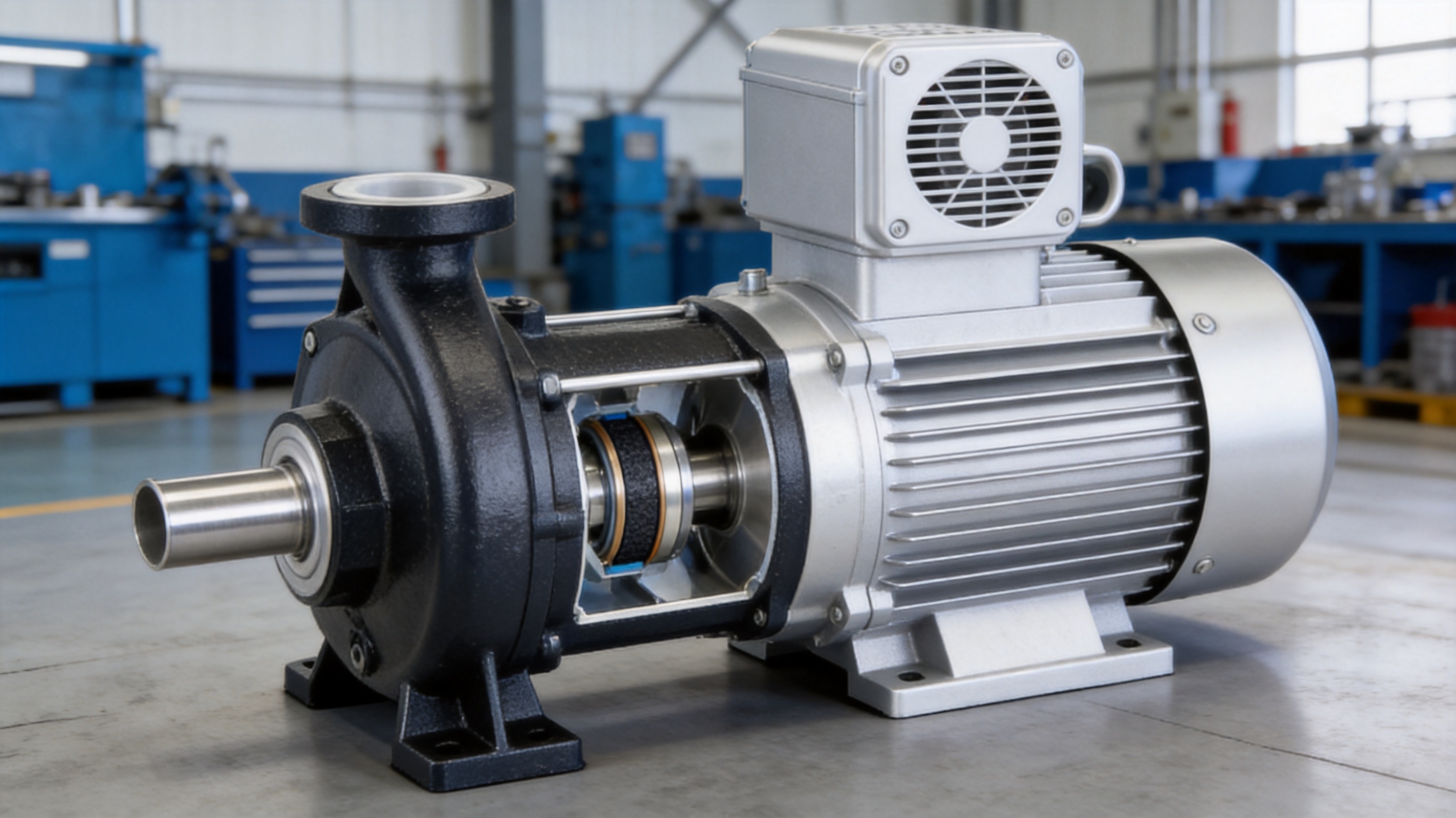
The component materials listed for the SRM Series demonstrate a deliberate approach to pump construction. The pump body is made from HT200, a cast-iron material commonly used for pump housings because of its strength, rigidity, vibration-damping ability, and suitability for machining. The support is also specified as HT200, creating a stable structural connection between the hydraulic and motor sections.
The impeller is made from stainless steel. The impeller is exposed to water and experiences continuous rotation, so material strength and corrosion resistance are important. Stainless steel can help reduce surface deterioration and maintain hydraulic geometry over time in appropriate clean-water conditions.
The AISI 304 shaft provides reliable resistance to ordinary water-related corrosion. It also offers a robust rotating surface for the mechanical seal and bearing arrangement. The shaft and rotor assembly must remain correctly balanced and aligned to minimize vibration and protect the seal and bearings.
The mechanical seal uses carbon and ceramic faces. These materials are selected for their wear resistance and ability to create a controlled sealing interface. Proper water conditions, correct alignment, and avoidance of dry running are essential to achieving long seal life.
The fan is made from polypropylene, while the capacitor holding box is made from ABS. The motor case is aluminum, which can support heat dissipation while keeping the motor structure relatively compact. The fan cover protects the cooling fan and helps guide air across the motor casing.
| No. | Component | Specified Material |
|---|---|---|
| 1 | Pump body | HT200 |
| 2 | Shaft sleeve | Not specified |
| 3 | O-ring | Not specified |
| 4 | Diffuser | Not specified |
| 5 | Impeller | Stainless steel |
| 6 | Mechanical seal | Carbon/Ceramic |
| 7 | Support | HT200 |
| 8 | Fan cover | Not specified |
| 9 | Fan | PP |
| 10 | Motor cover | Cast iron |
| 11 | Shaft and rotor | Not specified |
| 12 | Ball bearing | Not specified |
| 13 | Motor case | Aluminum |
| 14 | Capacitor holding box | ABS |
| 15 | Capacitor | Not specified |
Taizhou Edwin Electric Co., Ltd. operates as an integrated manufacturing enterprise with capabilities covering independent research and development, mass production, and international export. This structure is significant because it allows product design, manufacturing planning, quality control, and customer support to be coordinated within one organization.
Independent research and development gives a pump manufacturer the ability to refine hydraulic structures, motor configurations, materials, sealing arrangements, and product ranges according to market requirements. Instead of relying only on external designs, an integrated manufacturer can adjust products for different water systems, regional standards, voltage requirements, and application conditions.
Mass production supports consistency when properly managed. Repeated manufacturing processes allow production teams to establish standard procedures for casting, machining, component assembly, winding, electrical testing, hydraulic testing, painting, packaging, and final inspection. Consistent procedures can reduce variation between units and help maintain stable performance across a product series.
The SRM Series illustrates the advantages of modular product development. A common pump platform can be configured with different power levels and hydraulic performance ranges. This approach helps simplify spare-parts planning, training, assembly operations, and distributor support while still giving customers a choice of models.
Quality begins with material selection. Cast-iron bodies and supports must meet the required dimensional and structural standards. Stainless steel shafts and impellers must be formed and machined accurately. Mechanical seals, bearings, capacitors, and motor components must be inspected for compatibility and reliability. A pump’s service life depends on the combined performance of all these parts rather than on one component alone.
Precision machining is particularly important in the pump body, impeller, shaft, seal seat, and mounting surfaces. Dimensional accuracy helps maintain proper clearances and alignment. If internal clearances are too large, hydraulic efficiency may decline. If alignment surfaces are inaccurate, vibration and seal wear may increase. Controlled machining therefore contributes to both energy performance and operating reliability.
Motor manufacturing also requires careful control. Stator windings must be properly formed and insulated. Rotor balance must be maintained. Bearings must be installed correctly, and electrical connections must be secure. The stated continuous S1 service rating indicates that the motor design is intended for sustained operation under suitable load and environmental conditions.
Testing is another important part of an advanced manufacturing process. A responsible pump production system may include electrical insulation checks, winding resistance checks, rotation checks, leakage inspections, vibration observations, noise evaluation, and hydraulic performance testing. The supplied product information states that curve tolerance follows ISO 9906, providing a recognized reference for pump performance evaluation.
ISO 9906-based evaluation is useful because it establishes a structured method for comparing measured pump performance with declared performance. Buyers can therefore assess products using a recognized engineering framework rather than relying only on general marketing claims. Actual test procedures and acceptance grades should be confirmed with the manufacturer for a specific order.
International export experience also strengthens manufacturing and supply capabilities. Edwin Pump has developed supporting companies for procurement planning, order tracking, cross-border delivery, and foreign-trade services. This one-stop structure can be valuable for overseas buyers who need coordinated communication from quotation through production, inspection, shipment, and after-sales support.
The market includes many low-cost centrifugal pumps, but purchase price alone does not determine overall value. A pump can become expensive if it consumes excessive electricity, requires frequent seal replacement, suffers from corrosion, or is difficult to obtain as a replacement. The SRM Series is positioned as a balanced product that combines practical pricing considerations with materials and construction intended for dependable service.
One advantage is the availability of several power and pressure choices within one series. Competing products may offer only a few fixed configurations, forcing users to choose between insufficient performance and unnecessary oversizing. The SRM range provides several steps within each flow group, making selection more precise.
A second advantage is the combination of a cast-iron structure with stainless steel hydraulic and shaft components. Some low-cost pumps may rely heavily on ordinary steel or less durable materials in wetted areas. The SRM material arrangement is better suited to users who want greater resistance to normal water-related deterioration while retaining the rigidity and cost benefits of cast iron.
A third advantage is service familiarity. End-suction centrifugal pumps are widely understood by installers and maintenance teams. Standard operating principles, accessible connection points, common seal technology, and a conventional motor arrangement can reduce training requirements and make troubleshooting more efficient.
A fourth advantage is continuous-duty motor capability. Some small pumps are intended primarily for intermittent household use. The SRM Series includes an S1 continuous service rating, which makes it more appropriate for applications requiring longer operating periods, provided that the pump is correctly selected and installed.
The series also provides flexibility for international buyers. Through research, production, and export capabilities, the manufacturer can support different customer groups, including distributors, equipment integrators, irrigation suppliers, building-service contractors, and industrial procurement teams. This is important for buyers who need consistent supply across multiple projects.
These advantages do not mean that the SRM Series is suitable for every pumping duty. It is intended for clean water and compatible liquids, not abrasive slurries, highly corrosive chemicals, combustible liquids, or fluids outside the temperature range. Product selection should always be based on the complete operating environment.
The SRM Series can support water transfer from storage tanks, reservoirs, or low-level sources to points of use. It can be used in small buildings, workshops, agricultural facilities, and utility installations where the flow and head requirements match the selected model.
For water-supply applications, users should calculate static elevation, pipe friction, required terminal pressure, and possible simultaneous demand. The selected pump should have sufficient head at the required flow, not merely a high maximum head under zero-flow conditions.
Irrigation systems often require a combination of flow, pressure, and dependable operation. The pump may be used with sprinklers, hoses, drip systems, greenhouse lines, or water-transfer arrangements. The correct model depends on the number of outlets, pipe length, elevation, filter resistance, and irrigation method.
When used outdoors, the motor should be protected from flooding, direct rainfall where appropriate, mud, dust accumulation, and excessive heat. Suction water should be screened if debris is present, but the screen must be maintained to prevent excessive suction resistance.
Industrial facilities can use the pump for non-aggressive process water, equipment washing, cooling support, circulation, and tank filling. The stainless steel impeller and shaft provide useful resistance for ordinary water service, while the cast-iron structure provides mechanical strength.
Before industrial use, the fluid should be checked for chemical compatibility, suspended solids, temperature, viscosity, and gas content. If the liquid is chemically aggressive or contains abrasive particles, a different pump construction may be required.
Garden irrigation and landscape watering often require a compact pump with simple controls. The SRM Series can provide water from tanks or shallow sources to hoses, sprinklers, or small irrigation networks. Its relatively compact connection arrangement can simplify integration into a garden water system.
The pump may also support water movement in small commercial buildings, workshops, equipment rooms, and service facilities. It can be used for water transfer, pressure assistance, and general circulation where the application remains within the flow, head, temperature, and fluid-compatibility limits.
Correct installation is essential to achieving the performance and service life expected from any centrifugal pump. The pump should be mounted on a firm, level foundation capable of supporting its weight and resisting vibration. Soft or unstable mounting surfaces can increase noise and may contribute to alignment or connection problems.
The suction pipe should be as short and direct as practical. It should be adequately sized and should not include unnecessary bends, restrictions, or sharp changes in direction near the pump inlet. All suction connections must be airtight. Even a small air leak can cause loss of prime and unstable performance.
The suction line should be arranged to avoid trapped air. If the source is below the pump, the pipe should rise continuously toward the pump where practical. If the source is above the pump, the pipe should be arranged to prevent air pockets and excessive pressure on the pump casing.
The discharge pipe should be supported independently. Pipe weight should not be carried by the pump casing. Isolation valves, non-return valves, pressure gauges, and other accessories may be installed as required by the system design. A discharge valve can be used during commissioning to adjust the operating point, but the pump should not be operated against a closed valve for an extended period.
The pump must be filled with water before starting if the installation requires priming. The mechanical seal depends on liquid for cooling and lubrication. Running the pump dry, even briefly, can cause rapid seal damage. Any foot valve or check valve should be inspected to ensure that water remains in the suction line during shutdown.
Electrical installation should be completed by qualified personnel. The supply voltage, frequency, phase, grounding, cable size, and protective devices must match the motor requirements and local regulations. Single-phase models with thermal protection still require appropriate electrical protection and safe isolation during service.
Ventilation around the motor should be maintained. Dirt, foliage, insulation materials, or nearby walls should not block the cooling airflow. Excessive ambient temperature can reduce motor life and may activate thermal protection more frequently.
Routine maintenance begins with observation. Operators should monitor unusual noise, excessive vibration, reduced flow, unstable pressure, increased starting difficulty, visible leakage, and abnormal motor temperature. Early detection can prevent a minor issue from becoming a major failure.
The suction system should be checked periodically for air leaks, blocked strainers, damaged foot valves, or insufficient water levels. A restricted suction line can cause cavitation-like noise, loss of performance, and increased stress on the pump. The discharge side should also be inspected for closed valves, blocked filters, or unexpected changes in system resistance.
Mechanical-seal leakage should be addressed promptly. A small amount of moisture during initial operation may require evaluation, but continuous or increasing leakage indicates that the seal, shaft, alignment, or operating conditions should be inspected. Continued operation with a damaged seal can allow water to reach motor or bearing areas.
Bearings should be monitored for noise and temperature. The pump uses ball bearings, and their service life depends on correct installation, alignment, load, contamination control, and operating speed. Bearings should be replaced using suitable procedures and components that match the original specifications.
Electrical terminals should be kept secure and dry. Loose connections can create resistance heating and voltage drop. The motor casing, fan cover, and ventilation passages should be kept clean. Before opening the capacitor box or motor area, the power supply must be disconnected and the capacitor handled safely.
Seasonal storage requires additional care. If the pump will not be used for an extended period, it should be drained where appropriate, protected from freezing, and stored in a dry environment. Water left inside the pump can freeze and cause casing damage. Outdoor installations should be inspected after periods of heavy rain, frost, or long inactivity.
Energy efficiency is determined by more than motor rating. A properly selected pump reduces unnecessary electrical consumption by operating close to the required duty point. If a pump is significantly oversized, the operator may throttle the discharge flow, creating avoidable energy losses. If the pump is undersized, it may run continuously without meeting the required pressure.
The SRM Series supports more efficient selection by offering multiple power levels within different flow groups. Users can compare the required head and flow with available models instead of automatically purchasing the largest motor. This approach can reduce operating costs over the pump’s lifetime.
Pipe design also affects energy use. An undersized pipe increases friction losses and forces the pump to work harder. Smooth, appropriately sized piping, limited bends, clean filters, and properly selected valves can improve system efficiency. Regular maintenance is therefore part of energy management.
Long-term value should include the purchase price, electricity consumption, maintenance, seal replacement, downtime, spare parts, and expected service life. A pump with better materials and a dependable motor may provide a lower total cost of ownership than an inexpensive unit that requires frequent replacement.
Product quality and customer support are closely connected. A technically capable manufacturer can assist with model selection, performance interpretation, electrical configuration, packaging, documentation, order tracking, and after-sales communication. This is especially important for international buyers who may purchase pumps for distribution or integration into larger systems.
Taizhou Edwin Electric Co., Ltd. has developed a business structure that combines manufacturing with export and procurement services. The company’s associated organizations support procurement planning, order tracking, cross-border delivery, and foreign-trade services. This can help customers coordinate larger orders and reduce communication gaps between production and logistics.
The company’s wider product portfolio also provides a one-stop sourcing advantage. Customers requiring several pump categories, such as deep well pumps, submersible pumps, booster pumps, circulation pumps, solar water pumps, and accessories, may be able to coordinate their purchasing through one experienced supplier rather than managing multiple unrelated sources.
For project buyers, this can simplify technical communication and improve consistency. A supplier familiar with different pump categories may better understand how a surface centrifugal pump should work alongside tanks, valves, booster units, solar systems, or irrigation equipment.
The SRM Series is an end-suction surface centrifugal pump designed for clean water and liquids that are not chemically aggressive toward the pump materials. It is intended for water supply, irrigation, industrial processes, transfer, and other general-purpose applications.
The listed maximum suction is 8 m. Actual suction performance depends on water temperature, altitude, pipe size, pipe length, air tightness, source conditions, and the specific installation. A shorter and properly sealed suction line generally provides better operating reliability.
The stated maximum liquid temperature is 40°C. The pump should not be used with hotter liquids unless the manufacturer has specifically approved the application and confirmed the suitability of the seal, motor, and materials.
The pump is suitable for clean water and liquids that are not chemically aggressive toward its construction materials. Highly corrosive chemicals, solvents, seawater, abrasive slurries, and fluids with unknown compatibility should not be pumped without a detailed materials review.
The SRM603 to SRM606 models have the highest listed maximum flow of 135 L/min. Their maximum head ranges from 29 m to 58 m, depending on the model.
The SRM606 provides the highest listed maximum head at 58 m. Its rated motor power is 1.5 kW, or 2.0 HP, and its maximum flow is listed as 135 L/min.
The motor is specified for continuous S1 service. However, continuous operation still requires correct model selection, adequate cooling, sufficient water supply, proper priming, and operation within the pump’s intended performance range.
IP44 indicates protection against solid objects of certain sizes and water splashing from different directions. It does not mean that the motor is waterproof or suitable for submersion. The installation environment should protect the motor from flooding and direct high-pressure water exposure.
Thermal protection is specified for single-phase versions. Users should still provide appropriate electrical protection, grounding, isolation, and installation according to local electrical requirements.
The pump body and support are specified as HT200 cast iron, while the impeller is made from stainless steel. The shaft is specified as AISI 304 stainless steel, and the mechanical seal uses carbon and ceramic materials.
The pump should be filled with water before starting when priming is required. The suction line should remain full, and a suitable foot valve or check valve may be used where appropriate. Operators should verify the water level and inspect the suction line for air leaks.
Users should consider required flow, total head, elevation, pipe friction, suction lift, water temperature, liquid compatibility, electrical supply, operating duration, and installation environment. The maximum flow and maximum head should not be treated as simultaneous operating values.
Yes. The series can be used for suitable irrigation systems, including garden watering, greenhouse irrigation, small sprinkler systems, drip systems, and water transfer. The selected model must match the pressure and flow requirements of the irrigation network.
The main competitive strengths are the end-suction configuration, multiple power and performance options, stainless steel shaft and impeller, anti-rust-treated cast-iron structure, continuous-duty motor design, thermal protection on single-phase versions, ISO 9906 curve tolerance reference, and support from an integrated manufacturer with international export experience.
The SRM Series End-Suction Centrifugal Pump is a practical solution for clean-water movement across agricultural, residential, commercial, and industrial applications. Its design combines a familiar end-suction hydraulic arrangement with a durable material selection, including HT200 cast iron, stainless steel, AISI 304 shaft material, and a carbon/ceramic mechanical seal.
The series provides a useful range of models, from 0.37 kW compact units to 1.5 kW higher-capacity models. Maximum flow options extend from 60 L/min to 135 L/min, while maximum head values reach up to 58 m. This range helps users select equipment more accurately and avoid the energy and installation disadvantages of excessive oversizing.
Its continuous S1 motor rating, IP44 protection, insulation class B, thermal protection on single-phase models, and user-friendly service structure make it suitable for regular operation when correctly installed. The pump is not intended for every fluid or environment, but within its specified operating conditions it offers a balanced combination of performance, reliability, serviceability, and cost control.
The manufacturing strengths of Taizhou Edwin Electric Co., Ltd. further support the product. Independent research and development, mass production, international export experience, product testing, and coordinated procurement and logistics services provide a solid foundation for distributors, contractors, system integrators, and industrial buyers.
For users seeking a dependable surface pump for water supply, irrigation, equipment support, and non-aggressive industrial water service, the SRM Series deserves consideration as a versatile and efficient option. Correct sizing, proper suction design, secure electrical installation, regular maintenance, and suitable fluid selection remain essential to achieving the best results.
1. ISO 9906, Rotodynamic Pumps: Hydraulic Performance Acceptance Tests, Grades 1, 2, and 3.
2. Hydraulic Institute, Rotodynamic Pump Standards and Application Guidelines.
3. International Electrotechnical Commission, Rotating Electrical Machines: Rating and Performance Principles.
4. General engineering guidance for centrifugal pump installation, priming, suction-pipe design, and maintenance.
5. SRM Series product specifications and materials information supplied for this article.
6. Manufacturer information concerning pump research and development, production, export, and application support.
edwina@edwin-pump.com
+86-13586290903 (WhatsApp)
Xuri Gongliang Cutting Tool Entrepreneurship Park, Wenqiao Town, Wenling City, Taizhou City, Zhejiang Province, China

High Performance Smart Pump Factory


 English