
edwina@edwin-pump.com

View All Products
en
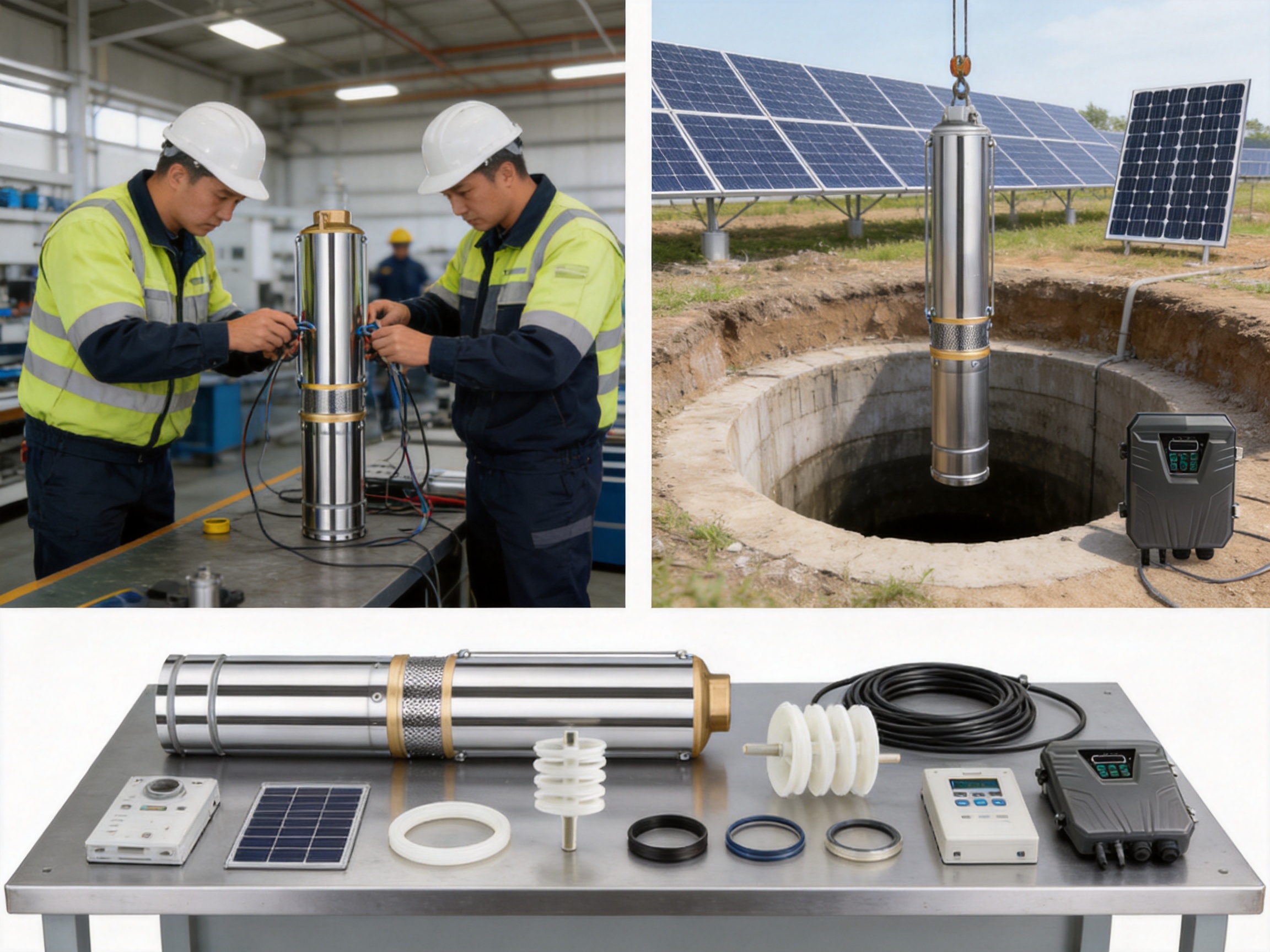
Reliable access to water is essential for agriculture, livestock, rural communities, greenhouse production, household use, and public infrastructure. In locations where grid electricity is unavailable, unstable, or expensive, solar-powered pumping provides an efficient alternative. The 3EPC DC Motor Plastic Impeller Solar Deep Well Pump is designed for these conditions, combining direct-current motor technology, solar compatibility, a corrosion-resistant plastic impeller, and a range of flow and head configurations.
Unlike conventional pumps that depend continuously on utility electricity or fuel-powered generators, a solar deep well pump can convert available sunlight into useful water delivery. This reduces operating costs, limits dependence on fuel, and makes water systems more practical in remote areas. The 3EPC series is especially suitable for installations that require deep-well pumping, steady output, quiet operation, and flexible voltage selection.
The product is manufactured by Taizhou Edwin Electric Co., Ltd., a pump manufacturer with experience in research and development, mass production, international export, and one-stop procurement services. Since its establishment in 2008, the company has developed product lines covering deep well pumps, submersible pumps, domestic booster pumps, circulation pumps, solar water pumps, and intelligent booster pumps.
This article examines the design, performance, applications, manufacturing strengths, installation considerations, and competitive advantages of the 3EPC DC Motor Plastic Impeller Solar Deep Well Pump.
The 3EPC is a DC submersible solar pump intended for deep-well and off-grid water supply applications. It uses a high-efficiency brushless DC motor and a plastic impeller to transfer water from underground sources to storage tanks, irrigation networks, livestock watering points, or domestic distribution systems.
The series is available in several voltage and power combinations. The listed models range from 200 W to 1,500 W, with rated voltage options of 24 V, 48 V, 72 V, and 110 V. Depending on the model, maximum flow ranges from 3.5 cubic meters per hour to 8 cubic meters per hour, while maximum head ranges from 25 meters to 180 meters.
This range allows system designers to select a pump according to well depth, required delivery pressure, daily water demand, available solar array, pipe length, and elevation difference. A small 24 V model may be suitable for a modest rural water system, while a 110 V, 1,500 W model can support higher-head applications where water must be lifted over a substantial vertical distance.
The pump is designed to operate with solar panels through a suitable DC controller. The product information specifies optimum DC input voltage ranges for each configuration and recommends solar panel power of at least 1.3 times the pump power. The solar panel open-circuit voltage must also remain below the specified limit for the selected model.
Because the pump is submerged during operation, the motor and hydraulic components are placed close to the water source. This arrangement reduces the need for priming, helps maintain suction reliability, and is well suited to deep wells where surface-mounted pumps may have difficulty lifting water.
The 3EPC series uses a brushless DC motor. Compared with brushed motors, brushless designs eliminate mechanical brushes and commutators that can wear during operation. This reduces a common source of maintenance and can extend service life when the pump is correctly selected and installed.
A brushless DC motor also supports smooth rotation and efficient energy conversion. This is particularly valuable in solar applications because the available power from photovoltaic panels varies throughout the day. A motor that uses available energy efficiently can produce more useful water output from the same solar array.
The absence of brushes can also reduce electrical arcing and noise. For rural water supply, garden irrigation, livestock systems, and residential installations, quieter operation improves the user experience and reduces disturbance near homes or work areas.
The motor is intended for submersible operation and must be installed according to the manufacturer’s requirements. Proper submergence, cooling, cable connection, water quality, and protection against dry running are essential for achieving reliable performance.
The pump uses a plastic impeller designed to provide a practical combination of low weight, corrosion resistance, and hydraulic performance. Plastic components are not affected by rust in the same way as ordinary ferrous materials, making them useful for outdoor and water-handling equipment.
A lightweight impeller can reduce the rotating mass inside the hydraulic assembly. This may contribute to easier starting and lower mechanical stress during operation. It can also simplify handling during installation and servicing, especially when equipment is transported to remote wells or agricultural sites.
The plastic impeller is suitable for many ordinary water conditions, including clean groundwater and irrigation water. However, the pump should not be used with abrasive sand, corrosive chemicals, seawater, or liquids outside the stated application range unless the manufacturer confirms compatibility.
Compared with some metal impeller pumps, the plastic impeller configuration can offer a lower equipment weight and strong resistance to common forms of water-related corrosion. Compared with low-quality plastic pumps, the value of the design depends on correct material selection, dimensional accuracy, impeller balance, motor matching, and quality control during assembly.
The 3EPC series is designed for direct use with solar power systems. A photovoltaic array supplies DC energy to a compatible pump controller, which regulates the input and provides protection for the motor and pump.
Solar operation is particularly beneficial where grid extension is expensive or impossible. A properly designed solar pumping system can operate without regular fuel deliveries, reducing recurring expenses and simplifying maintenance. It is also appropriate for projects that aim to lower carbon emissions or use renewable energy for agricultural and community development.
During periods of strong sunlight, the pump can deliver higher output within its performance limits. In weaker sunlight, water delivery may decrease. This operating behavior is normal for solar pumping and should be considered when sizing the storage tank and daily water supply system.
A water storage tank is often more economical than installing a large battery bank. The pump can operate during available sunlight and store water for use in the evening, at night, or during temporary periods of cloud cover. Batteries may still be used when continuous pressure or nighttime pumping is required, but many irrigation and livestock systems can function effectively with water storage instead.
The 3EPC pump can be paired with an optional intelligent controller using maximum power point tracking, commonly known as MPPT. Solar panels do not produce a fixed voltage and current under all weather conditions. Their electrical output changes with solar intensity, temperature, shading, and panel configuration.
An MPPT controller helps draw usable energy from the solar array by adjusting the operating point of the system. It can also assist with automatic voltage management and system protection. Depending on the controller design, protection functions may include overvoltage protection, undervoltage protection, overload protection, overcurrent protection, dry-run protection, and abnormal operating protection.
The controller must be matched to the pump voltage, input voltage range, power rating, solar array open-circuit voltage, and installation environment. Using an incompatible controller may cause unstable operation or damage to the pump and electrical equipment.
The submersible design allows the pump to be positioned inside a well or water source. Because the pump pushes water upward rather than relying on surface suction, it is suitable for greater lifting depths than many surface-mounted suction pumps.
Submersible installation also helps reduce noise at the surface. The pump is surrounded by water, and the well structure can further limit sound transmission. This is useful in household water supply, rural community projects, and locations near livestock or residential areas.
The pump must remain adequately submerged while operating. If the water level falls below the permitted level, the motor may lose cooling and the pump may run dry. A water-level sensor, controller protection function, or external monitoring system should be considered in wells with seasonal water-level changes.
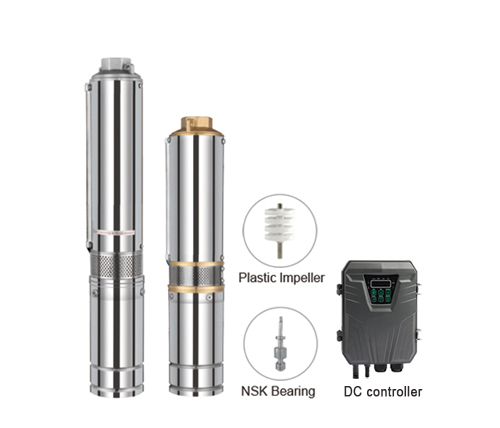
3EPC DC Motor Plastic Impeller Solar Deep Well Pump
The 3EPC product family is organized around different flow, head, voltage, and power combinations. The maximum values in the product data should not be interpreted as simultaneous operating points. Actual flow depends on total dynamic head, pipe resistance, fittings, water level, voltage, solar conditions, and system design.
| Model Group | Voltage Options | Power Range | Maximum Flow Range | Maximum Head Range | Outlet Size |
| 3EPC3.5 / 3EPC3.8 | 24 V, 48 V, 72 V, 110 V | 200 W–1,500 W | 3.5–3.8 m³/h | 25–180 m | 1.25 in |
| 3EPC5 / 3EPC5.2 | 48 V, 72 V, 110 V | 500 W–750 W | 5.0–5.2 m³/h | 45–75 m | 1.5 in |
| 3EPC5.5 / 3EPC6 | 72 V, 110 V | 750 W–1,500 W | 5.5–6.0 m³/h | 65–125 m | 1.5 in |
| 3EPC7 / 3EPC8 | 72 V, 110 V | 750 W–1,500 W | 7.0–8.0 m³/h | 46–90 m | 1.5 in |
The 3EPC3.5 and 3EPC3.8 models are suited to applications requiring moderate flow and a broad range of lifting heights. The 3EPC3.8-180-110-1500, for example, is listed with a maximum head of 180 meters, making it suitable for high-lift system designs when the actual operating point falls within the pump curve.
The 3EPC5 and 3EPC5.2 models provide approximately 5 cubic meters per hour of maximum flow. They can be considered for medium-volume irrigation, greenhouse supply, livestock water systems, and tank-filling applications.
The 3EPC7 and 3EPC8 models are oriented toward higher flow. Their maximum listed outputs reach 7 cubic meters per hour and 8 cubic meters per hour respectively. These models may be suitable for larger irrigation zones, commercial agricultural systems, and applications that need faster tank replenishment.
Total dynamic head is more than the vertical depth of the well. It includes the difference in elevation between the water surface and the discharge point, the required pressure at the outlet, and friction losses in the pipe, valves, elbows, filters, and other fittings.
For example, a well may have a water level 40 meters below ground, while the storage tank is located 10 meters above ground. The static lifting requirement is approximately 50 meters. If the system also requires pressure at the tank inlet and contains long or narrow pipes, the actual required head may be significantly higher.
Correct model selection requires the operating flow and total dynamic head to be considered together. A pump with a high maximum head may deliver little flow at that head, while a high-flow model may not generate enough pressure for a tall building or elevated tank.
Each model has a specified rated voltage and optimum DC input voltage range. For example, the 24 V models list an optimum input voltage of 30 V to 48 V, while 48 V models list 60 V to 90 V. The 72 V models list 90 V to 120 V, and 110 V models list 110 V to 150 V.
The solar array must be designed so that its operating voltage falls within the controller and pump requirements. The open-circuit voltage of the solar panel array must remain below the stated maximum. The product data lists limits of less than 60 V, less than 110 V, less than 170 V, or less than 220 V depending on the model.
Solar panel power should be at least 1.3 times the pump power according to the supplied performance information. This provides a minimum design reference, but actual array sizing may need to be higher in regions with weak sunlight, high temperatures, seasonal cloud cover, shading, or demanding daily water requirements.
Traditional electric submersible pumps can provide reliable performance where grid electricity is stable. However, extending a power line to a remote well can involve high construction costs, long approval periods, and ongoing utility charges. A solar pump avoids the need for a dedicated grid connection in many locations.
The 3EPC series can therefore reduce infrastructure requirements for remote farms, rural households, construction sites, and community water projects. Its DC architecture is especially appropriate for direct photovoltaic operation, avoiding unnecessary conversion from solar DC to AC and then back to a motor-compatible supply.
Diesel and gasoline pumps are useful for temporary or emergency applications, but they require fuel transportation, engine servicing, oil changes, exhaust management, and regular manual supervision. Fuel costs can become significant when water must be pumped every day.
A solar pump uses sunlight as its primary energy source. After the initial installation, routine costs may be lower because there is no daily fuel purchase. The system also produces no combustion exhaust at the pump location and can operate quietly compared with an internal combustion engine.
The brushless DC motor does not use replaceable carbon brushes. This can reduce maintenance compared with brushed motor designs. The plastic impeller also resists rust and can be lighter than a conventional metal impeller.
Maintenance is not eliminated. Solar panels should be kept clean, electrical connections should be inspected, the well should be checked for sediment, and the pump should be monitored for unusual noise, reduced output, or repeated controller faults. However, the overall service routine may be simpler than that of a fuel-powered pump.
Some competing solar pumps are offered in only one or two voltage ratings. The 3EPC range provides multiple voltage classes and power ratings, allowing integrators to work with different solar array sizes and cable lengths.
Higher system voltage can help reduce current for a given power level. Lower current may reduce voltage drop in long cables, although cable size, insulation, controller rating, and local electrical standards must still be considered carefully.
The availability of several flow and head combinations also helps distributors and engineering contractors configure systems for different water sources. A small household well does not need the same capacity as a commercial irrigation network, and a shallow tank-filling system does not need the same head capability as a high-elevation pipeline.
The plastic impeller supports a lighter pump structure and offers resistance to common forms of corrosion. This can be an advantage in humid agricultural environments, areas with mineral-rich groundwater, and outdoor installations where equipment is exposed to moisture.
While material compatibility must always be verified, a corrosion-resistant hydraulic component can provide a longer useful service life than untreated metal exposed to aggressive water conditions. It may also reduce handling effort during installation and replacement.
Submerged operation and brushless motor technology contribute to quiet operation. This is advantageous for residential water supply, livestock facilities, gardens, and projects where noise may interfere with nearby activities.
Noise levels are also affected by the pipe system, check valves, mounting arrangements, water turbulence, and controller operation. Correct installation remains important, but the pump’s basic configuration is suitable for low-noise pumping requirements.
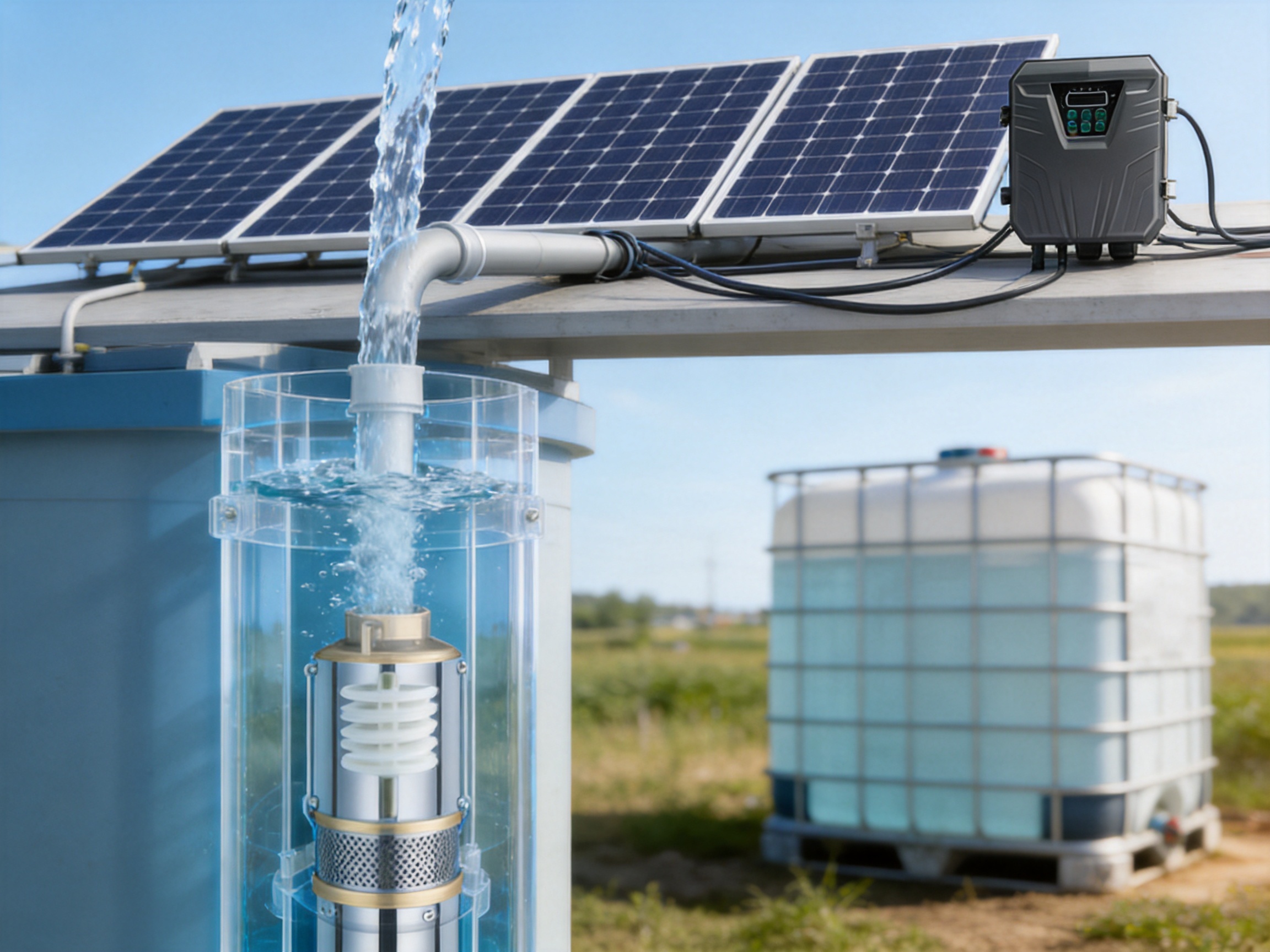
Agricultural irrigation often takes place in areas where fields are far from electrical infrastructure. Solar pumping allows water to be lifted from wells, reservoirs, or underground sources and delivered to drip irrigation, sprinkler networks, storage tanks, or open channels.
The 3EPC series can support different irrigation scales through its range of flow and head options. Lower-flow models may serve vegetable plots, orchards, or greenhouse zones. Higher-flow models can replenish tanks or supply larger irrigation areas when the solar array and piping are properly designed.
Water storage is an important part of agricultural system design. Farmers can pump during sunny hours and distribute the stored water according to crop requirements. This helps separate the timing of energy production from the timing of irrigation.
Livestock farms require dependable water for cattle, sheep, goats, poultry, and other animals. A solar deep well pump can fill elevated tanks or troughs in locations where grid electricity is unavailable.
Automatic float valves and level sensors can be used to control tank filling. A controller with dry-run protection can help protect the pump if the well water level drops. Proper filtration may also be necessary where the water contains sand or suspended particles.
Remote homes and small communities may use the pump to deliver groundwater to a storage tank. The water can then be filtered, treated, and distributed for approved domestic purposes.
The pump itself is a water transport device and does not make untreated groundwater safe to drink. Water quality testing, filtration, disinfection, and local regulatory compliance are required for potable applications. The pump should be selected according to the well construction, daily demand, vertical lift, and pressure requirements.
Greenhouses and gardens benefit from consistent irrigation because plant growth depends on controlled water delivery. The pump can be integrated with timers, irrigation controllers, drip lines, misting systems, or storage tanks.
For greenhouse systems, accurate flow control is often more important than maximum pump capacity. Oversizing the pump can produce excessive pressure and unnecessary energy consumption. A suitable controller, pressure regulation device, and zoned irrigation layout can help match water delivery to crop needs.
Government agencies, nongovernmental organizations, and development contractors often install solar pumping systems for rural water projects. These projects may require equipment that is easy to transport, simple to operate, resistant to outdoor conditions, and supported by stable manufacturing and export capabilities.
The 3EPC series provides multiple configurations for different well depths and community water requirements. The use of solar energy can reduce the long-term financial burden on communities that may otherwise struggle to purchase fuel or pay monthly electricity charges.
Temporary construction sites, mining areas, and remote facilities may need water for dust suppression, equipment use, worker services, or site development. Where the project has sufficient sunlight and a suitable water source, a solar pump can reduce the need for fuel logistics.
Industrial applications require careful review of water quality, operating hours, sediment concentration, discharge pressure, and environmental conditions. The pump should be used only within the manufacturer’s stated limits, especially where water contains abrasive particles or chemicals.
A solar deep well pump is a system product rather than a single isolated component. Its reliability depends on the motor, impeller, pump casing, seals, cable, controller compatibility, assembly accuracy, electrical testing, and packaging. A manufacturer with integrated research, production, and export capabilities can coordinate these elements more effectively than a trading operation that sources unrelated components from different suppliers.
Taizhou Edwin Electric Co., Ltd. focuses on independent research and development as part of its manufacturing operation. This capability is important because solar pumps must be designed around changing electrical input conditions, efficient motor operation, reliable hydraulic performance, and controller integration.
Research and development allows the manufacturer to refine the relationship between motor power, impeller geometry, hydraulic stages, outlet size, operating voltage, and application requirements. It also supports the development of new product categories, including solar water pumps and intelligent booster pumps.
For international customers, an active technical development program can make it easier to discuss customized voltage ranges, packaging requirements, controller arrangements, project documentation, and regional application needs.
The 3EPC design combines a brushless DC motor and plastic impeller. These components must be matched carefully. Motor speed, torque, electrical input, impeller diameter, hydraulic passage, and pump head all affect final performance.
Component coordination helps prevent problems such as excessive current, unstable starting, poor flow, overheating, vibration, and inefficient solar energy use. A pump manufacturer that controls the product design can evaluate the complete assembly rather than optimizing each component independently.
The company operates as an integrated manufacturing enterprise with mass production capability. This is valuable for distributors, engineering contractors, agricultural equipment suppliers, and project developers that need repeated deliveries rather than one-off purchases.
Mass production can support more consistent component sourcing, standardized assembly procedures, repeatable testing, and improved production planning. It also helps the manufacturer provide multiple models within the same product family, allowing customers to standardize on a familiar design while selecting different power and head ratings.
Production scale must always be accompanied by quality control. Standardized work instructions, incoming material inspection, assembly checks, electrical testing, and final performance verification are important steps in maintaining consistency across large production batches.
Pump testing should verify that the motor, controller interface, impeller, seals, and electrical connections operate correctly. Hydraulic testing can be used to assess flow and head behavior across representative operating points. Electrical testing can verify input voltage, current, insulation, starting performance, and protection functions.
Because the 3EPC series includes several voltage classes, testing procedures must be appropriate for each model. A 24 V, 200 W model and a 110 V, 1,500 W model have different electrical requirements and should be evaluated using suitable test equipment and safety procedures.
Performance curves are especially important for system design. The supplied product information includes performance curve references, while the performance data provides maximum flow and maximum head values. Buyers should request the relevant curve for the exact model before finalizing a project, because the actual operating point is determined by the intersection of the pump curve and system curve.
The 3EPC series uses recognizable model naming that identifies key performance characteristics. For example, a model designation may indicate approximate flow class, head, voltage, and power. This supports easier communication between the manufacturer, distributor, installer, and end user.
Standard outlet sizes of 1.25 inches for the 3EPC3.5 and 3EPC3.8 groups and 1.5 inches for the larger flow groups simplify system planning. Standardized cable length, listed as 2 meters in the performance data, also provides a clear reference for installation planning, although the complete cable routing and extension arrangement should be confirmed for each project.
The company has established related import and export service organizations to support procurement planning, order tracking, cross-border delivery, and foreign trade services. This is a practical advantage for international buyers, especially when projects involve multiple pump models, controllers, spare parts, accessories, and shipping destinations.
One-stop procurement can reduce communication delays and make it easier to coordinate product selection, technical confirmation, packaging, documentation, and delivery schedules. It may also help project buyers source additional water pump categories from the same supplier, including domestic booster pumps, circulation pumps, deep well pumps, and pump accessories.
The company’s products are used in new energy projects, agricultural irrigation, municipal engineering, mining, construction, HVAC systems, and household water supply. Exposure to different applications can improve the manufacturer’s understanding of varied operating conditions, installation practices, and customer expectations.
A supplier that serves several sectors may also be better positioned to recommend a complete pumping solution rather than treating every request as a simple catalog sale. The final selection should still be verified by the project engineer or installer, but application experience can improve the initial technical discussion.
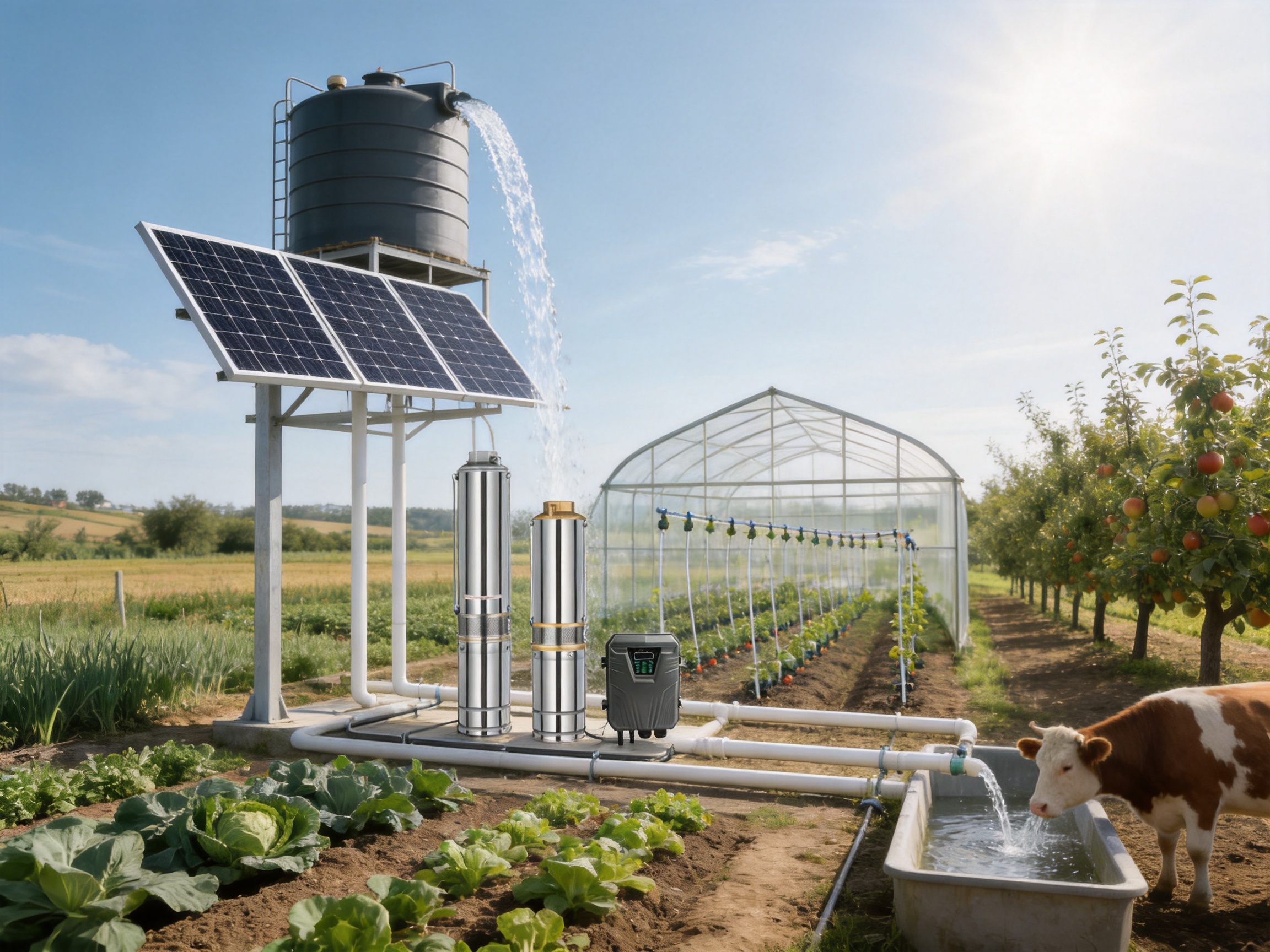
Before installation, the well yield and water level should be measured. The pump should not exceed the sustainable yield of the well. If pumping lowers the water level too far, the pump may draw air, operate without sufficient cooling, or cause sediment to enter the hydraulic system.
Water quality should also be checked. Sand, silt, minerals, and chemicals can affect impeller life, seals, valves, and pipework. The 3EPC plastic impeller provides corrosion resistance for many ordinary water conditions, but it is not a universal solution for abrasive or chemically aggressive liquids.
Required flow depends on the number of users, irrigation area, crop type, livestock population, tank volume, and operating schedule. A system should be designed around realistic demand rather than the pump’s maximum flow rating.
For irrigation, the designer should calculate the flow required by each zone and determine how many zones will operate at once. For domestic or community water supply, daily consumption and peak demand should be considered. For livestock systems, the designer should account for animal population, climate, and reserve capacity.
Total head includes static lift, pressure requirements, and friction losses. Pipe diameter has a major influence on friction. Using a pipe that is too small can reduce delivered flow, increase energy consumption, and create unnecessary pressure loss.
Long pipelines may require larger pipe diameters, fewer sharp bends, and correctly sized valves. Check valves can help prevent reverse flow, but they also create pressure loss and should be selected appropriately.
The supplied product data recommends solar panel power of at least 1.3 times the pump power. This is a minimum reference rather than a complete design rule. The array may need additional capacity to compensate for non-ideal conditions, including high panel temperature, dust, partial shading, low winter sun, cable losses, controller efficiency, and local weather patterns.
The array voltage must remain within the selected model’s input and open-circuit voltage limits. Series and parallel connections should be planned by a qualified installer. The use of a suitable DC isolator, overcurrent protection, grounding arrangement, and weather-resistant enclosure is also important.
The pump is listed with a 2-meter cable in the performance data. If additional cable is required, the extension must be correctly sized and professionally connected. Voltage drop can reduce performance, especially in low-voltage systems and long cable runs.
All electrical connections must be protected from moisture and mechanical damage. Cable joints should not be left exposed to groundwater unless they are designed and certified for submersible use. A qualified electrician or solar installer should verify the complete electrical system.
Dry running is one of the most serious risks for a submersible pump. The water around the motor provides cooling, while the pumped liquid supports the hydraulic components. If the water level falls too low, damage may occur.
Dry-run protection can be provided by a controller, water-level probe, float switch, well sensor, or properly configured monitoring system. In seasonal wells, the protection system should be tested before the dry season begins.
The pump should be suspended using suitable support equipment rather than relying on the electrical cable. The discharge pipe and suspension arrangement must support the pump weight and resist movement caused by starting, stopping, water flow, or changing water levels.
The pump should be positioned away from excessive sediment at the bottom of the well. The exact clearance depends on the well design and manufacturer instructions. A clean, properly developed well can reduce the risk of abrasive particles entering the pump.
Solar pumps are often promoted as low-maintenance systems, but reliable performance still depends on routine inspection. The solar array should be checked for dirt, leaves, shading, cracked modules, and loose mounting hardware. Clean panels generally receive more sunlight and produce more usable energy.
The controller should be inspected for fault codes, overheating, water ingress, and abnormal sound. Ventilation openings must remain clear. Electrical terminals should be checked for corrosion or looseness by qualified personnel with the system safely isolated.
Water output should be monitored. A gradual reduction in flow may indicate falling groundwater level, blocked intake, sediment accumulation, pipe leakage, valve restriction, panel soiling, cable voltage drop, or pump wear. Early diagnosis can prevent more serious damage.
Where the pump is used seasonally, it should be checked before the irrigation season begins. Where freezing conditions are possible, exposed pipes, valves, and storage tanks should be protected or drained according to local conditions.
Service life depends on operating hours, water quality, installation quality, electrical stability, and maintenance. The brushless motor and corrosion-resistant impeller support long-term use, but no pump can compensate for severe sand abrasion, dry running, overvoltage, blocked discharge, or operation beyond its rated limits.
For commercial buyers, the product is more than a pump body and motor. Procurement decisions often include technical support, model availability, production capacity, documentation, packaging, delivery coordination, and after-sales communication.
The manufacturer’s broad product portfolio allows buyers to discuss multiple pumping requirements with one supplier. A project may require solar deep well pumps for remote fields, booster pumps for buildings, circulation pumps for HVAC systems, and accessories for valves and piping. Coordinating these categories can simplify purchasing and logistics.
The company’s experience in global export is also relevant for overseas buyers. International projects may require careful coordination of product specifications, shipping marks, packing lists, invoices, inspection documents, and delivery schedules. A supplier familiar with cross-border orders can help reduce avoidable administrative problems.
Customers should provide complete technical information when requesting a quotation. Useful details include well depth, static and dynamic water levels, desired flow, total head, pipe length, water quality, daily operating hours, solar radiation conditions, panel configuration, destination country, and installation environment.
Providing this information helps the manufacturer recommend the correct model rather than selecting only by maximum flow or maximum head. It also makes it easier to identify the correct controller and solar array requirements.
The main competitive strength of the 3EPC series is its balance of solar compatibility, model flexibility, brushless motor technology, lightweight hydraulic construction, and deep-well capability.
Against fuel-powered pumps, it can reduce fuel dependence, emissions, noise, and engine maintenance. Against conventional grid-powered pumps, it can operate where electrical infrastructure is limited. Against basic solar pumps with narrow product ranges, it offers several voltage, power, flow, and head configurations.
Its plastic impeller provides a practical alternative to heavier or more corrosion-sensitive metal components in suitable water conditions. Its brushless DC motor helps reduce mechanical wear associated with brushes and supports efficient operation from variable solar input.
The availability of MPPT controller compatibility is another advantage. Solar pumping performance is strongly affected by the quality of the power-management system. A suitable controller can improve the use of available sunlight while protecting the pump from common electrical and operating faults.
The product also benefits from the manufacturer’s integrated business model. Research and development, production, export coordination, and a broad pump portfolio provide a foundation for serving both standard orders and larger engineering projects.
First, identify the water source and confirm whether the well can provide the required volume. Second, calculate the daily and peak water demand. Third, determine the total dynamic head, including elevation, pressure, and friction losses.
Next, compare the required operating point with the performance curve of the available 3EPC models. Do not rely only on the maximum flow or maximum head listed in a catalog table. The selected pump should provide the desired flow at the actual system head.
After selecting the hydraulic model, confirm rated voltage, optimum DC input voltage, solar panel open-circuit voltage, recommended panel power, controller compatibility, cable length, and protection devices.
Finally, review installation conditions, water quality, well diameter, pump dimensions, pipe connections, support method, maintenance access, and local electrical and construction requirements. A technically correct pump can still perform poorly if the system around it is undersized or incorrectly installed.
The 3EPC is a DC submersible solar deep well pump. It uses a brushless DC motor and a plastic impeller and is intended for pumping water from wells and other suitable water sources in off-grid or solar-powered systems.
Yes. The pump is designed to operate with a suitable solar panel system and compatible DC controller. It can be used in remote locations where grid electricity is unavailable, provided that the solar array, controller, wiring, and protection equipment are correctly designed.
The listed 3EPC models range from 200 W to 1,500 W. The appropriate rating depends on required flow, total head, well conditions, solar availability, and daily water demand.
Depending on the model, the listed maximum flow ranges from 3.5 cubic meters per hour to 8 cubic meters per hour. Actual flow will vary according to head, pipe resistance, water level, voltage, solar conditions, and system configuration.
The highest listed maximum head is 180 meters for model 3EPC3.8-180-110-1500. The actual flow at 180 meters must be confirmed from the applicable performance curve and system design.
A brushless DC motor eliminates mechanical brushes, reducing brush wear and maintenance. It can also provide smooth, efficient operation and is well suited to the variable DC power produced by solar panels when used with an appropriate controller.
The plastic impeller is lightweight and resistant to many common forms of water-related corrosion. It can support efficient pumping in suitable clean-water applications. Water containing high levels of sand, abrasive particles, or aggressive chemicals should be evaluated before use.
The product information identifies MPPT controller compatibility and describes the controller as optional. Buyers should confirm whether the controller is included in a quotation and ensure that its voltage, power, protection functions, and solar input range match the selected pump.
The supplied performance data specifies solar panel power of at least 1.3 times the pump power. Actual design requirements may be higher depending on local sunlight, temperature, shading, cable loss, controller efficiency, seasonal conditions, and required daily water volume.
The pump can be used to transport groundwater for a domestic water system, but pumping alone does not make water safe to drink. Water testing, filtration, disinfection, and compliance with local drinking-water regulations are required.
Dry running can be reduced through a compatible controller with dry-run protection, a water-level sensor, a float switch, or another suitable monitoring method. The selected method should match the well conditions and be tested during commissioning.
Buyers should provide the required flow, total head, well depth, static and dynamic water levels, water quality, pipe size and length, intended application, available solar power, destination market, and any controller or accessory requirements.
Yes. The company’s product portfolio includes deep well pumps, submersible pumps, domestic booster pumps, circulation pumps, solar water pumps, intelligent booster pumps, and related pump accessories. This can support one-stop procurement for projects with multiple pumping requirements.
No. Suitability depends on well diameter, water level, well yield, water quality, sediment concentration, required flow, total head, and electrical conditions. Technical selection should be completed before installation.
The 3EPC DC Motor Plastic Impeller Solar Deep Well Pump is a flexible solution for water pumping in remote, agricultural, domestic, and commercial environments. Its brushless DC motor supports efficient and low-maintenance operation, while the plastic impeller offers low weight and corrosion resistance in appropriate water conditions.
With models from 200 W to 1,500 W, voltage options from 24 V to 110 V, maximum flow values up to 8 cubic meters per hour, and maximum listed head up to 180 meters, the series provides a broad selection for different system requirements. MPPT controller compatibility further improves its suitability for photovoltaic applications.
The product’s performance depends on correct system design. Well yield, water quality, total dynamic head, pipe sizing, solar array voltage, panel power, controller selection, cable sizing, and dry-run protection must all be considered. When these factors are properly addressed, solar pumping can provide dependable water delivery with lower operating dependence on grid electricity and fuel.
Taizhou Edwin Electric Co., Ltd. strengthens the product proposition through independent research and development, mass-production capability, a broad pump portfolio, and international procurement and export support. These capabilities make the 3EPC series suitable not only for individual installations but also for distributors, contractors, agricultural suppliers, municipal projects, and global off-grid water programs.
For buyers seeking a practical combination of solar compatibility, deep-well performance, voltage flexibility, lightweight construction, and manufacturer support, the 3EPC series represents a strong candidate for evaluation.
1. Product performance data for the 3EPC DC Motor Plastic Impeller Solar Deep Well Pump, including model voltage, power, flow, head, outlet, cable, solar open-circuit voltage, and solar panel power requirements.
2. Manufacturer product information describing brushless DC motor operation, plastic impeller construction, solar-powered pumping, MPPT controller compatibility, and application areas.
3. General principles of photovoltaic water-pumping system design, including solar array sizing, voltage matching, water storage, controller selection, and electrical protection.
4. General principles of submersible pump installation, including total dynamic head calculation, well yield assessment, dry-run protection, pipe sizing, and cable selection.
5. Manufacturer company information concerning research and development, mass production, global export, product categories, and applications in agriculture, municipal engineering, mining, construction, HVAC, and household water supply.
edwina@edwin-pump.com
+86-13586290903 (WhatsApp)
Xuri Gongliang Cutting Tool Entrepreneurship Park, Wenqiao Town, Wenling City, Taizhou City, Zhejiang Province, China

High Performance Smart Pump Factory


 English