
edwina@edwin-pump.com

View All Products
en
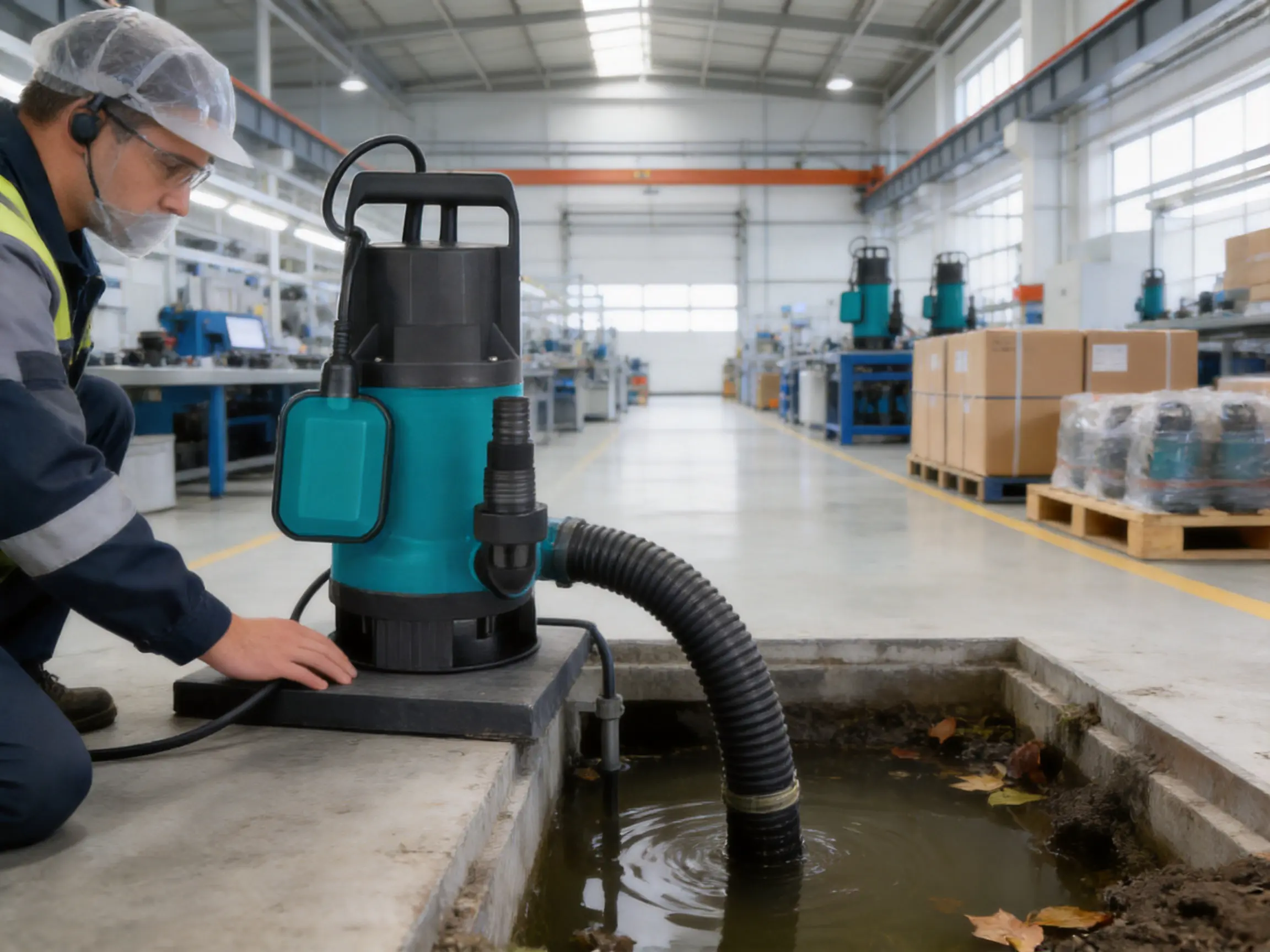
Garden drainage often looks simple until the water contains leaves, soil, small stones, organic matter, or other suspended debris. A conventional clean-water pump may struggle in these conditions, lose efficiency, or suffer premature wear. The EGP-B1 Series Suitable for Sewage Thickened Base Automatic Garden Submersible Pump is designed for this type of demanding work. It combines submersible operation, automatic garden drainage capability, a reinforced thickened-wire construction, and a base configuration intended for dirty-water applications.
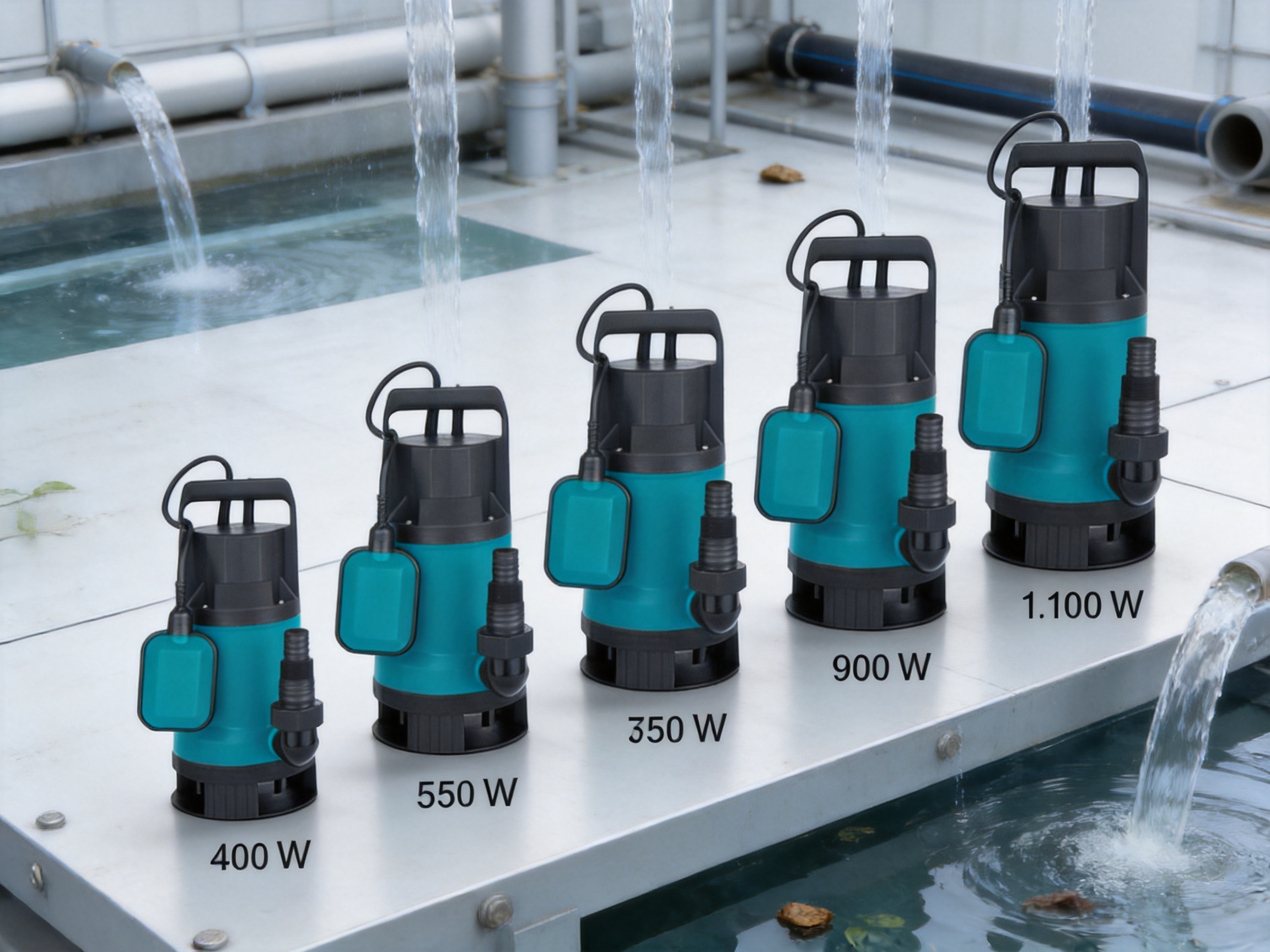
Available in five power levels from 400 W to 1,100 W, the series provides a practical range for household gardens, rainwater collection systems, drainage pits, small agricultural areas, construction sites, and general outdoor water transfer. Depending on the model, the maximum pump rate extends from 8,000 L/H to 15,000 L/H, while maximum head ranges from 5 m to 11 m. Every model is designed for a maximum immersion depth of 5 m, except the 1,100 W version, which reaches 7 m.
This article examines the construction, performance, application value, selection criteria, and manufacturing strengths behind this submersible garden pump series. It also explains why a reinforced dirty-water pump can offer important advantages over basic clean-water pumps and lighter-duty alternatives.
The EGP-B1 Series is a dirty-water garden submersible pump intended for drainage and water transfer where the fluid may contain suspended particles. Its typical applications include emptying rainwater tanks, transferring water between garden areas, draining flooded outdoor spaces, removing water from drainage pits, and supporting general landscape maintenance.
The pump is installed directly in the water source. Once submerged, its motor and hydraulic section can transfer water through a connected discharge pipe. This arrangement avoids the need for a long suction line and reduces the priming requirements associated with many surface-mounted pumps. For users who need a straightforward drainage solution, the submersible format is convenient, compact, and efficient to deploy.
The “thickened base” configuration differentiates this series from the standard EGP-B1 design. A stable and reinforced base is particularly useful when the pump is placed in a tank, pit, garden reservoir, or other uneven outdoor location. It helps maintain the pump’s position and provides a more suitable support structure for dirty-water service.
The series also uses thickened electrical wiring. The cable specifications vary by model, beginning with H05RN-F 3G0.75 mm² × 10 m for the 400 W version and extending to H07RN-F 3G1.0 mm² × 10 m for the higher-powered models. The reinforced cable design is intended to improve resistance to wear, outdoor handling, and the mechanical demands associated with regular garden and drainage work.
Electrical compatibility is another practical feature. The pump can be adapted to 230 V or 115 V operation and to 50 Hz or 60 Hz electrical systems, subject to the correct configuration. This flexibility makes the series suitable for different regional markets and a variety of electrical environments.
Water in a garden or rainwater tank is rarely as clean as water from a treated domestic supply. It may carry sand, plant fragments, mud, algae, or small gravel. Even when these particles are not visibly large, they can affect an impeller, wear internal passages, block narrow inlets, or reduce the flow delivered by a pump.
A clean-water pump is generally optimized for relatively clear water and may contain smaller hydraulic passages. If it is used in a dirty environment, debris can create blockages or cause the pump to operate under excessive mechanical stress. A pump designed for dirty water, by contrast, is selected with a larger permissible grain size and a more suitable intake structure.
The EGP-B1 Series permits a maximum grain size of 35 mm across the listed models. This specification is important because it provides an objective indication of the type of solid material that the pump can accommodate. It does not mean that every type of solid waste is suitable, nor does it replace good installation practice, but it confirms that the series is designed for more demanding water conditions than a typical clean-water garden pump.
The distinction is particularly relevant when draining rainwater tanks. Rainwater can carry roof dust, leaves, small twigs, soil, and other material into a storage tank. Similar conditions can occur in landscape ponds, excavation pits, agricultural drainage areas, and temporary floodwater collection points. A dedicated dirty-water pump offers a more appropriate solution for these applications than a light-duty clear-water unit.
The thickened-wire construction is one of the main distinguishing features of this product. Electrical cables used outdoors are exposed to bending, pulling, contact with rough surfaces, moisture, and repeated installation and removal. A stronger cable structure can provide better resistance to routine handling and help protect the conductors during service.
The cable is not simply an accessory; it is part of the overall operating system. An undersized or poorly protected cable may create voltage drop, heat buildup, or damage during use. By specifying different cable types and cross-sectional areas for different motor sizes, the product range provides a more appropriate electrical connection for each power class.
The 400 W version uses an H05RN-F 3G0.75 mm² cable, while the 550 W model uses H05RN-F 3G1.0 mm². The 750 W, 900 W, and 1,100 W models use H07RN-F 3G1.0 mm² cables. This progression reflects the higher electrical demand and more rigorous service expectations of the larger pumps.
The reinforced base is designed to distinguish this version from the conventional EGP-B1 model. In dirty-water drainage, the pump may be placed on a tank bottom, a concrete floor, compact soil, or another uneven surface. A stable base reduces the chance of tipping and helps maintain the intended inlet position.
Correct pump positioning is important for both performance and service life. If a pump rests directly in mud or loose sediment, the inlet can become restricted. If it moves during operation, the discharge hose may be strained or the pump may draw in excessive settled material. The thickened base helps provide a more controlled installation, although the user should still select a firm and reasonably clean placement area.
The maximum grain size of 35 mm gives the EGP-B1 Series a significant application advantage in outdoor drainage. It supports the transfer of water containing relatively large particles compared with pumps intended only for clear water. This can reduce the need for frequent cleaning in suitable dirty-water applications.
Users should understand that the grain-size specification applies to solid particles that are compatible with the pump’s hydraulic design. Long fibrous materials, ropes, plastic bags, dense sludge, and abrasive industrial solids may require a different pump type. Nevertheless, for ordinary garden debris, rainwater contamination, and general dirty water, the 35 mm capability offers useful operational flexibility.
A submersible pump is installed inside the water rather than beside it. This arrangement can shorten the installation process because the pump is placed directly at the source and connected to a discharge pipe. It also avoids many suction-side problems, such as air leakage, difficult priming, and long suction-line losses.
For garden owners, maintenance workers, and contractors, this is a practical advantage. The pump can be moved between drainage points when required, provided that the electrical supply, discharge connection, and installation depth are suitable. It is especially convenient for seasonal rainwater drainage and occasional floodwater removal.
The five available models allow users to select performance according to the required head and flow. A smaller pump may be appropriate for a shallow garden tank or a short discharge route, while a larger pump can provide higher lift for deeper pits and longer pipe runs.
The available models are EGP400-B1, EGP550-B1, EGP750-B1, EGP900-B1, and EGP1100-B1. The rated power increases progressively, giving distributors and end users a clear product ladder instead of forcing every application into one oversized or undersized pump.
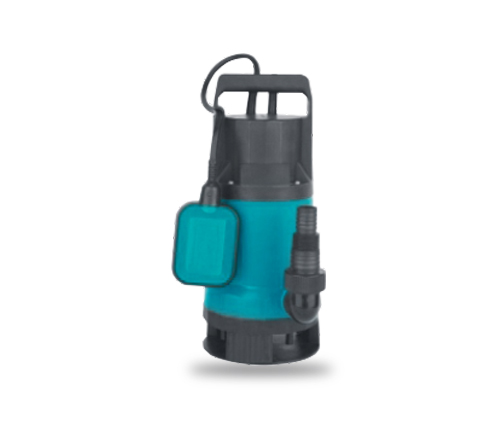
EGP-B1 Series Suitable for Sewage Thicken Base Automatic Garden Submersible Pump
The performance information supplied for the series includes rated power, maximum pump rate, maximum height, maximum depth, maximum grain size, and available pipe diameters. These values help users compare models and identify the appropriate configuration for a particular drainage task.
| Model | Rated Power | Maximum Pump Rate | Maximum Height | Maximum Depth | Maximum Grain Size | Pipe Diameter |
|---|---|---|---|---|---|---|
| EGP400-B1 | 400 W | 8,000 L/H | 5 m | 5 m | 35 mm | 1 in, 1.25 in, 1.5 in |
| EGP550-B1 | 550 W | 10,000 L/H | 6.5 m | 5 m | 35 mm | 1 in, 1.25 in, 1.5 in |
| EGP750-B1 | 750 W | 13,000 L/H | 7.5 m | 5 m | 35 mm | 1 in, 1.25 in, 1.5 in |
| EGP900-B1 | 900 W | 14,000 L/H | 8.5 m | 5 m | 35 mm | 1 in, 1.25 in, 1.5 in |
| EGP1100-B1 | 1,100 W | 15,000 L/H | 11 m | 7 m | 35 mm | 1 in, 1.25 in, 1.5 in |
Maximum pump rate represents the highest stated flow under suitable operating conditions. Actual flow will normally be lower when the pump works against vertical lift, pipe friction, bends, valves, or restrictions. For this reason, the maximum flow figure should not be treated as the guaranteed flow at every installation point.
Maximum height is the stated lifting capability of each model. The 400 W pump reaches up to 5 m, while the 1,100 W version reaches up to 11 m. If a drainage point is located below the discharge outlet, the user should calculate the vertical lift from the pump outlet to the final discharge point and add the expected friction losses in the pipe.
The maximum depth indicates the recommended immersion depth listed for the pump. Most models are rated for 5 m, while the EGP1100-B1 is listed for 7 m. Operation beyond the specified depth should be avoided unless a technically approved configuration confirms that the pump can safely withstand the additional pressure.
Model selection should begin with the required discharge height, not only with the desired flow rate. A pump that can deliver a high free-flow rate may not deliver the same volume when water must be lifted several meters. Users should identify the vertical distance, the approximate pipe length, the number of bends, and the condition of the water before choosing a model.
The EGP400-B1 is the entry model and may suit shallow drainage, small rainwater tanks, and short discharge routes. Its 8,000 L/H maximum pump rate can provide effective transfer where the lift is modest and the volume is not excessive.
The EGP550-B1 increases the maximum pump rate to 10,000 L/H and the maximum height to 6.5 m. It is a reasonable choice when the application requires more capacity than the 400 W model but does not require the highest performance in the series.
The EGP750-B1 reaches 13,000 L/H and 7.5 m. It can be suitable for larger garden drainage tasks, deeper collection pits, and situations where water must be moved over a more demanding discharge route.
The EGP900-B1 provides 14,000 L/H and 8.5 m of maximum height. This model offers additional lifting capability for substantial rainwater transfer, temporary flood drainage, or commercial landscaping work.
The EGP1100-B1 is the most powerful version in the range. With a rated power of 1,100 W, a maximum pump rate of 15,000 L/H, and a maximum height of 11 m, it is intended for the most demanding applications within the series. Its listed maximum depth of 7 m also provides greater installation flexibility.
Oversizing is not always the best choice. A larger pump may consume more electricity and can cause unnecessary turbulence or pipe stress if the system is not designed for its output. Selecting the smallest model that meets the actual head and flow requirement can improve operating economy while preserving reliable drainage.
Garden water transfer includes moving water from storage tanks to another location, draining low areas, supporting landscape maintenance, and transferring water between temporary containers. A submersible format is useful because it can be placed directly in the source tank or collection area.
When used for garden water transfer, the pump should be positioned on a firm base and connected to a discharge hose or pipe with a suitable diameter. The user should avoid placing the pump in heavy settled sediment. A raised, stable position can help reduce the amount of material drawn into the inlet while still allowing efficient drainage.
Rainwater tanks can collect valuable water for garden irrigation, but they may also accumulate sediment and organic debris. The EGP-B1 Series is designed for dirty-water transfer and can accommodate particles up to the listed 35 mm maximum grain size.
Before installation, the tank should be inspected for large objects, tangled plant matter, and material that could obstruct the inlet. A basic screen or routine tank cleaning can improve operating reliability. The pump should never be used as a substitute for proper tank maintenance when heavy sludge has accumulated.
Heavy rain can leave water in lawns, planting beds, courtyards, and low-lying garden areas. A portable submersible pump provides a practical way to remove this water, especially when gravity drainage is unavailable or too slow.
For temporary flood drainage, the discharge route should lead to an approved location that will not cause erosion, property damage, or contamination. The electrical supply must be protected from water, and all connections should be handled in accordance with local electrical safety requirements.
Landscapers and small agricultural operators may need to drain irrigation pits, transfer water from holding tanks, or manage water during site preparation. The range of power options makes it possible to match the equipment to different project sizes.
Although the pump is suitable for many outdoor water-transfer tasks, users should confirm fluid compatibility before applying it to chemicals, concentrated fertilizers, industrial liquids, or highly abrasive slurries. The stated product information is focused on dirty water and general drainage rather than chemical handling.
Small construction sites, maintenance areas, and service pits may accumulate water after rain or cleaning operations. The higher-output versions can help remove water from pits and excavated areas when the required lift remains within the listed performance range.
Construction environments can contain sharp debris, concrete particles, metal fragments, and heavy sediment. These materials may be more abrasive than ordinary garden dirt. The pump should therefore be inspected regularly, and the site operator should determine whether a specialized construction dewatering pump is more appropriate for severe conditions.
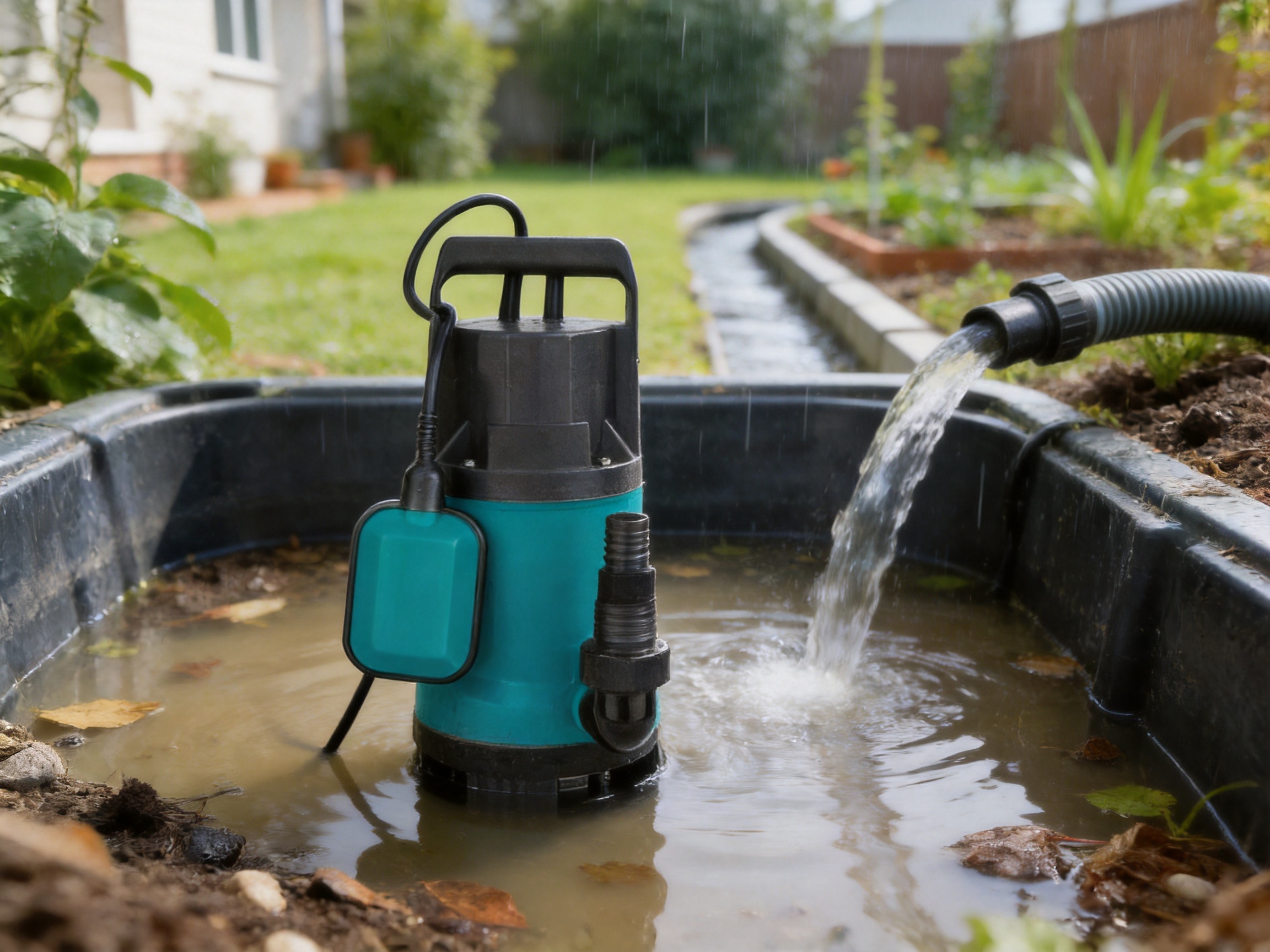
The main competitive advantage of this series is its combination of dirty-water capability, reinforced wiring, stable base construction, and a broad performance range. Many basic garden pumps are intended primarily for clear water and may not have the same particle-handling capacity. Others may offer only one power level, making it difficult to match the pump to a particular head requirement.
The 35 mm maximum grain-size specification gives buyers a clearer basis for product selection than a general description such as “for outdoor use.” A defined particle limit helps distributors and installers evaluate whether the pump is suitable for a given water source.
The thickened wire also supports a stronger value proposition for outdoor use. A garden pump may be moved frequently, installed in wet locations, or exposed to rough handling. Reinforced wiring can be an important differentiator when comparing products that have similar motor ratings but different cable constructions.
The reinforced base provides another practical distinction. A pump with a stable base is easier to position in a tank or pit than a unit that depends entirely on an improvised support. Stable positioning can also help protect the inlet from direct contact with settled material.
The five-model range creates advantages for wholesalers, dealers, and project buyers. A distributor can offer a coherent series for different customer requirements while maintaining consistent product familiarity. Replacement and repeat purchasing can also be simplified when the models share a common application concept and connection range.
Compared with a surface pump, the submersible design can reduce suction-side installation difficulties. Surface pumps often require a properly sealed suction pipe and correct priming. A submersible pump is placed at the water source, reducing the risk of air entering the suction line.
Compared with a small clean-water pump, the EGP-B1 Series is better aligned with rainwater, garden drainage, and water containing suspended particles. Compared with an oversized commercial dewatering unit, it may provide a more practical solution for small and medium outdoor applications where extreme flow or heavy industrial construction is not required.
The product is manufactured by Taizhou Edwin Electric Co., Ltd., an integrated enterprise established in 2008. The company’s stated capabilities include independent research and development, mass production, and global export. These capabilities are important because a reliable pump supplier must do more than assemble individual units; it must coordinate design, production, inspection, packaging, documentation, and international delivery.
Independent research and development supports continuous product improvement. For a pump series such as the EGP-B1, development work may involve hydraulic design, motor matching, cable selection, base structure, sealing, thermal behavior, packaging, and compatibility with different electrical markets. The combination of product engineering and application knowledge helps create a model range that addresses practical customer requirements.
Mass production provides a foundation for consistent supply. Buyers serving garden equipment markets, agricultural distributors, construction suppliers, and online channels often need repeatable availability rather than occasional small-batch production. A manufacturer with established production capacity can support recurring orders and maintain common specifications across different production lots.
The company’s product portfolio includes deep well pumps, submersible pumps, domestic booster pumps, circulation pumps, solar water pumps, intelligent booster pumps, and related water-treatment peripheral products. This broad product experience can strengthen technical understanding across different pumping conditions, including pressure boosting, water transfer, irrigation, and household supply.
Manufacturing strength also includes the ability to prepare products for international markets. The EGP-B1 Series can be adapted for 230 V or 115 V and for 50 Hz or 60 Hz systems. Such flexibility requires attention to motor configuration, electrical safety, labeling, packaging, and documentation. A supplier that supports different regional requirements can help importers reduce product adaptation work.
The supplied packaging information shows that the series has defined individual package sizes, outer-carton measurements, approximate weights, and container quantities. These details support logistics planning and help buyers estimate warehouse capacity, freight requirements, and container utilization.
| Model | Cable | Individual Package | Outer Measurement | Approximate Weight | Quantity per 20-foot Container |
|---|---|---|---|---|---|
| EGP400-B1 | H05RN-F 3G0.75 mm² × 10 m | 22 × 16 × 35 cm | 46 × 34 × 37 cm / 4 pcs | 15.0 / 16.42 kg | 2,040 pcs |
| EGP550-B1 | H05RN-F 3G1.0 mm² × 10 m | 22 × 16 × 35 cm | 46 × 34 × 37 cm / 4 pcs | 17.5 / 19.56 kg | 2,020 pcs |
| EGP750-B1 | H07RN-F 3G1.0 mm² × 10 m | 22 × 16 × 37 cm | 46 × 34 × 38.5 cm / 4 pcs | 18.6 / 20.62 kg | 2,020 pcs |
| EGP900-B1 | H07RN-F 3G1.0 mm² × 10 m | 22 × 16 × 37 cm | 46 × 34 × 38.5 cm / 4 pcs | 20.3 / 22.32 kg | 2,020 pcs |
| EGP1100-B1 | H07RN-F 3G1.0 mm² × 10 m | 22 × 16 × 37 cm | 46 × 34 × 38.5 cm / 4 pcs | 22.3 / 24.32 kg | 2,020 pcs |
Clear packaging specifications are particularly valuable for export customers. They allow buyers to plan palletization, warehouse organization, container loading, and retail presentation in advance. They also demonstrate that the product has been prepared for structured distribution rather than only for local, one-off sales.
Before installation, verify the model, voltage, frequency, cable condition, pipe connection, and intended immersion depth. Confirm that the electrical supply is compatible with the pump configuration. If the local power system differs from the ordered specification, the pump should not be connected until the configuration has been professionally confirmed.
Place the pump on a firm surface. Do not suspend the entire pump by the electrical cable, and do not allow the cable to support the weight of the discharge pipe. If the tank or pit contains sediment, use a stable platform or raised support that keeps the pump inlet away from the thickest layer of settled material.
Select a discharge pipe that is compatible with the available 1-inch, 1.25-inch, or 1.5-inch connection options. A larger pipe generally creates lower friction loss, while a smaller pipe may restrict flow and increase the operating load. Excessive bends, narrow fittings, and unnecessarily long discharge routes should be avoided where possible.
Secure the discharge hose so that it cannot whip, collapse, or pull the pump from its position. The final discharge point should be stable and safe. If water is being moved near a building, road, electrical installation, or neighboring property, confirm that the discharge will not create a secondary hazard.
The pump should be fully and correctly submerged before operation. Running a submersible pump without adequate water can cause overheating or damage. Never handle the pump, cable, or discharge connection while the power is connected. Disconnect the electrical supply before repositioning, cleaning, inspecting, or servicing the unit.
Routine maintenance begins with inspection. Before each important use, check the cable for cuts, crushed sections, exposed conductors, or damaged insulation. Examine the discharge connection and verify that the pump is positioned securely. If abnormal noise, vibration, reduced flow, or repeated tripping occurs, stop operation and investigate the cause.
After pumping dirty water, rinse the exterior with clean water when appropriate. Remove leaves, mud, and visible debris from the inlet area. Do not use tools that could damage the housing or hydraulic components. If internal cleaning is required, it should be performed by a qualified person according to the applicable service procedure.
Do not allow the pump to operate against a fully closed discharge line unless the design specifically permits that condition. A blocked or restricted outlet can reduce cooling flow and increase stress on the pump. Similarly, avoid operating the pump in heavily compacted sludge if the application exceeds the stated dirty-water conditions.
Seasonal storage should include cleaning, drying, inspection, and protection from freezing temperatures. The cable should be coiled without sharp bends. Store the pump in a clean, dry location where it will not be struck by tools or exposed to corrosive chemicals.
Good maintenance improves more than service life. It also helps preserve performance. An inlet partly blocked by debris can cause a noticeable reduction in pump rate, while a damaged or undersized electrical connection can create unreliable operation. Regular inspection is therefore an important part of achieving the value promised by the equipment.
Water and electricity create a serious safety risk. The pump should be connected only to a properly protected electrical circuit. Local regulations may require residual-current protection, grounding, overcurrent protection, or other safeguards. Installation should be performed by a qualified electrician when required by law or by the site conditions.
Do not enter a tank, pit, or flooded area to retrieve or adjust the pump while the electrical supply is connected. Disconnect and isolate the power first. In flood conditions, hidden electrical hazards may exist in surrounding buildings, outdoor sockets, extension cables, and submerged equipment.
The pump should not be used for drinking water unless the complete configuration has been specifically approved for potable-water service. It should also not be used for flammable liquids, aggressive chemicals, solvents, or liquids whose temperature exceeds the pump’s approved operating range.
Keep children and unauthorized persons away from the installation area. Secure cables and hoses to prevent tripping. If the pump is installed in a public, commercial, or construction area, provide suitable barriers and warning signs where necessary.
For distributors, the EGP-B1 Series offers a clear product story. It is a garden-oriented dirty-water submersible pump with reinforced wiring, a stable base, five output choices, and international electrical adaptability. These features are straightforward to explain to retail customers, irrigation installers, landscapers, and maintenance contractors.
The series can also support market segmentation. The lower-powered models can serve household and light garden applications, while the higher-powered models can target professional landscaping, agricultural drainage, and small commercial projects. A single product family can therefore address several customer groups without requiring completely unrelated inventory.
For project buyers, consistent technical data simplifies comparison. The stated maximum flow, maximum head, maximum depth, particle size, cable type, package size, and container quantity provide a foundation for procurement planning. Buyers can select equipment based on operating requirements rather than relying only on motor wattage or general marketing terms.
The manufacturer’s experience in research, mass production, export, and related pump categories adds value for customers seeking a long-term supply partner. Beyond the individual pump, international buyers may benefit from coordinated communication, order tracking, procurement planning, cross-border delivery support, and access to a wider product portfolio.
The series is designed for dirty water, including water used for garden drainage, rainwater tanks, and general outdoor water transfer. It can handle particles up to the stated maximum grain size of 35 mm. It is not automatically suitable for chemicals, flammable liquids, heavy industrial sludge, or liquids containing long fibrous materials.
The listed maximum grain size is 35 mm for all five models. Users should still remove oversized objects, ropes, plastic materials, and tangled vegetation before operation because these items may obstruct the inlet or hydraulic section even if their general size appears acceptable.
The EGP1100-B1 provides the highest stated maximum height at 11 m. The EGP900-B1 reaches 8.5 m, the EGP750-B1 reaches 7.5 m, the EGP550-B1 reaches 6.5 m, and the EGP400-B1 reaches 5 m.
The EGP1100-B1 has the highest stated maximum pump rate at 15,000 L/H. Actual flow depends on the vertical lift, pipe diameter, pipe length, fittings, valves, and other system conditions.
Yes, the series is intended for applications such as rainwater tanks. The tank should be inspected and cleaned as necessary, and the pump should be placed on a stable base away from heavy settled sediment. The discharge and electrical installation must also be arranged safely.
The maximum listed depth is 5 m for the EGP400-B1, EGP550-B1, EGP750-B1, and EGP900-B1 models. The EGP1100-B1 is listed for a maximum depth of 7 m. These limits should not be exceeded without technical confirmation.
The listed pipe diameters are 1 inch, 1.25 inches, and 1.5 inches. The selected pipe should match the connection arrangement and the required discharge performance. A larger pipe can help reduce friction loss, particularly on longer discharge routes.
The series can be adapted to 230 V or 115 V and to 50 Hz or 60 Hz systems. The exact electrical configuration must be confirmed before ordering and connection.
The thickened-wire construction is intended to improve durability, strength, and resistance to wear during outdoor handling and continuous use. Cable condition remains important, so the wire should still be protected from sharp edges, crushing, excessive pulling, and unauthorized modification.
The pump is designed for garden drainage, rainwater, and general dirty-water transfer. Some light commercial applications may be suitable, but aggressive chemicals, highly abrasive solids, heavy sludge, and industrial wastewater should be evaluated separately. A specialized industrial pump may be required for severe conditions.
Place it on a stable surface, connect a suitable discharge pipe, confirm the electrical configuration, fully submerge the pump, and protect the electrical supply with appropriate safety devices. Do not lift or suspend the pump by the power cable.
The thickened-base version uses a different base configuration from the standard EGP-B1 Series. Its reinforced support is intended to provide more stable positioning in garden tanks, drainage pits, and other outdoor dirty-water environments.
The EGP-B1 Series Suitable for Sewage Thickened Base Automatic Garden Submersible Pump is a practical solution for dirty-water drainage and outdoor water transfer. Its main strengths include a 35 mm maximum grain-size capability, thickened electrical wiring, a reinforced base, submersible convenience, five power options, and adaptability to common international voltage and frequency requirements.
With maximum pump rates from 8,000 L/H to 15,000 L/H and maximum heights from 5 m to 11 m, the series can cover a broad range of garden, rainwater, landscaping, agricultural, maintenance, and small construction applications. Correct model selection remains essential: users should evaluate head, pipe losses, water condition, immersion depth, and electrical requirements instead of choosing only by wattage.
The manufacturer’s integrated capabilities in research and development, mass production, global export, and related pump technologies further support the product’s commercial value. For distributors and project buyers, the series combines a clear application focus with defined technical data, structured packaging information, and a product range that can be introduced across several outdoor drainage markets.
When installed safely, operated within its specifications, and maintained regularly, this pump family provides a dependable approach to the everyday challenge of moving dirty water where gravity drainage is not enough.
1. Product technical data supplied for the EGP-B1 Series Suitable for Sewage Thickened Base Automatic Garden Submersible Pump.
2. Product performance specifications for EGP400-B1, EGP550-B1, EGP750-B1, EGP900-B1, and EGP1100-B1 models.
3. Manufacturer information concerning research and development, mass production, export operations, and product portfolio capabilities.
4. General principles of submersible pump selection, dirty-water drainage, hydraulic head calculation, and outdoor electrical safety.
5. General guidance for pump installation, cable protection, particle handling, maintenance, and safe water-transfer operations.
edwina@edwin-pump.com
+86-13586290903 (WhatsApp)
Xuri Gongliang Cutting Tool Entrepreneurship Park, Wenqiao Town, Wenling City, Taizhou City, Zhejiang Province, China

High Performance Smart Pump Factory


 English
