
edwina@edwin-pump.com

View All Products
en
Reliable pressure control is essential to the performance, safety, and service life of a water supply system. Whether the application involves a domestic booster pump, a garden water installation, a small irrigation network, or a residential water distribution system, the pressure switch plays a central role. It determines when the pump should start, helps maintain a stable supply, and protects the equipment from unsuitable operating conditions. A poorly selected pressure controller can lead to frequent cycling, unstable water delivery, motor stress, leakage, or premature pump failure.
The EPC-16 Series automatic pressure controller is designed to address these requirements with a practical combination of adjustable starting pressure, single-phase compatibility, compact construction, and protection against demanding operating conditions. Available in voltage configurations ranging from 110V to 240V, the series is suitable for various regional electrical standards and pump installations. Its principal model supports pumps up to 1.1 kW, while additional electrical versions are available for lower-power applications.
A key feature of the EPC-16 Series is its toolless starting-pressure adjustment. Instead of requiring a screwdriver or specialized adjustment equipment, the user can set the desired starting pressure quickly and conveniently. This design simplifies commissioning, reduces installation time, and makes later pressure changes easier for installers, maintenance teams, and end users.
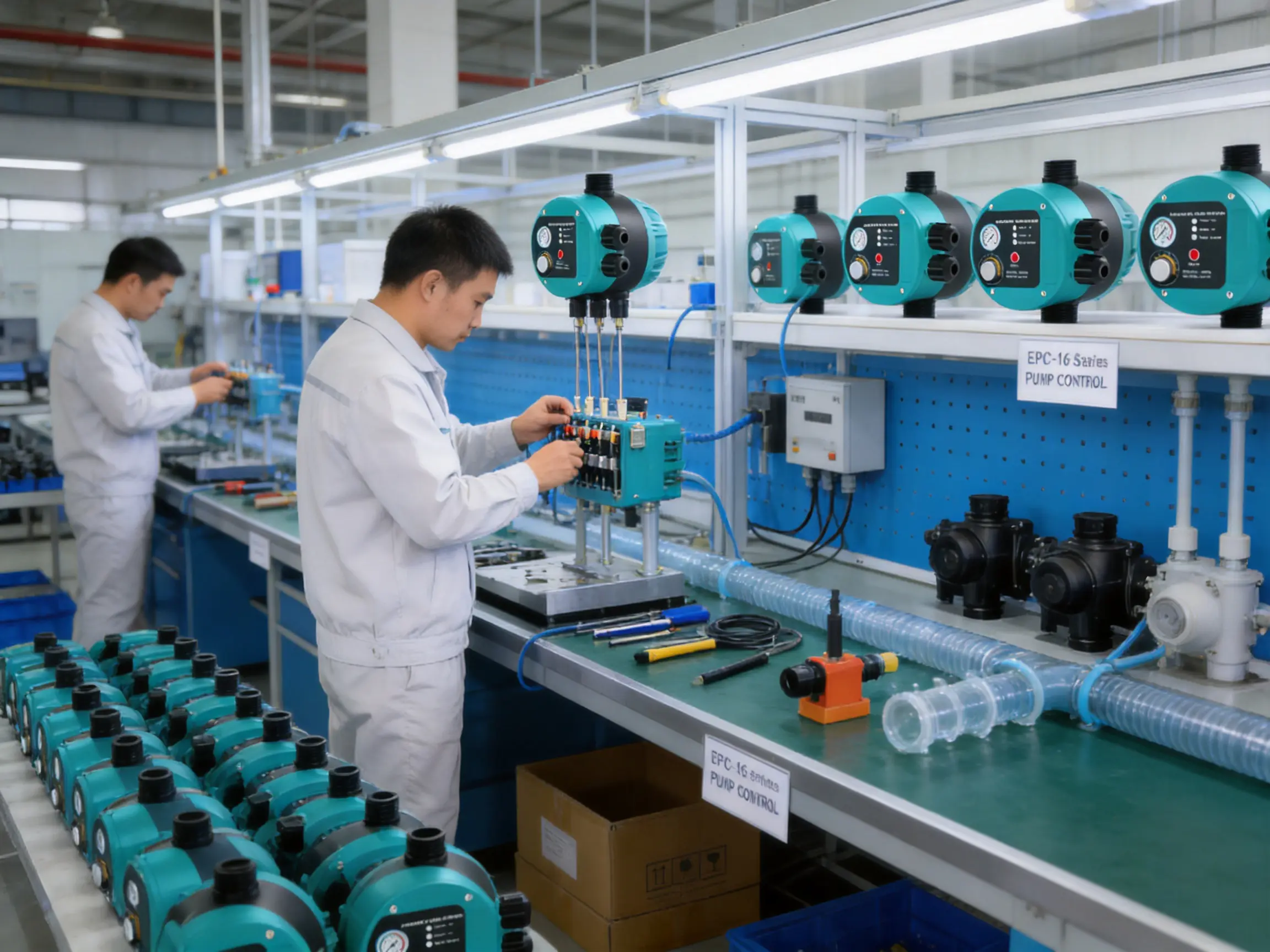
The controller is manufactured by Taizhou Edwin Electric Co., Ltd., also known as Edwin Pump, an integrated manufacturer with experience in research and development, mass production, and international export. The company’s wider product portfolio includes deep well pumps, submersible pumps, domestic booster pumps, circulation pumps, solar water pumps, intelligent booster pumps, and related water-system products. This broader product knowledge supports the development of pressure-control equipment that is intended to work effectively as part of a complete pumping solution.
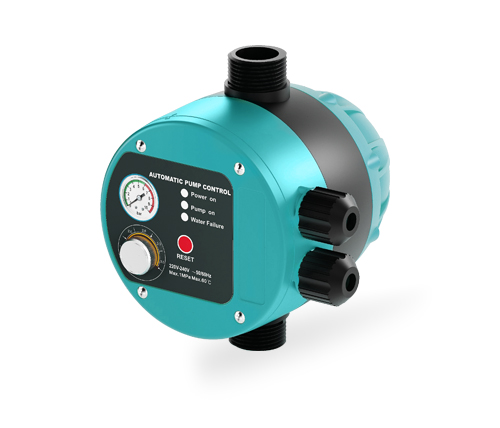
EPC-16 Series 110V to 240V 1.1KW Single Phase Toolless Starting Pressure Adjust Pressure Switch for Water Systems
A water pump is designed to move water and generate pressure, but it cannot independently determine when demand has started or ended. A control device is therefore required to connect water usage with pump operation. When a tap, shower, irrigation outlet, or appliance is opened, system pressure falls. The pressure controller detects this change and starts the pump once the pressure reaches the configured starting point. When water demand stops and pressure recovers, the system can stop the pump or place it into standby, depending on the design of the complete installation.
This automatic response is more convenient than manually operating a pump. It also helps ensure that the pump is available whenever water is required. In a domestic or light commercial system, automatic operation can improve comfort by maintaining a dependable water supply without requiring users to operate a separate electrical switch.
Correct pressure control also contributes to pump protection. Excessive pressure may damage pipes, fittings, valves, appliances, or the pump itself. Insufficient pressure may cause poor water delivery or repeated attempts to start the pump. By providing a defined starting-pressure range, the EPC-16 Series helps users configure the system according to the pump characteristics and the requirements of the installation.
Pressure control is particularly important in systems that experience variable demand. A household may use only a small volume of water at one moment and several outlets at another. A garden system may have different sprinkler zones. A small commercial installation may supply wash stations, utility outlets, or process equipment at different times. Adjustable control allows the system to be adapted rather than forcing every application to use the same fixed setting.
The EPC-16 Series is an automatic pressure controller for water systems using single-phase pumps. The principal 220V–240V version is rated for a maximum pump power of 1.1 kW, equivalent to approximately 1.5 horsepower for a single-phase pump. The series also includes 110V–120V and universal 110V–240V configurations, supporting different electrical requirements and purchasing specifications.
The pressure controller is designed with a G1-inch connection thread, making it suitable for many common small and medium water-system layouts. Its maximum working pressure is 10 bar, while the maximum working temperature is 60°C. An IP65 protection rating provides a high level of resistance against dust ingress and water projected from different directions when the product is correctly installed.
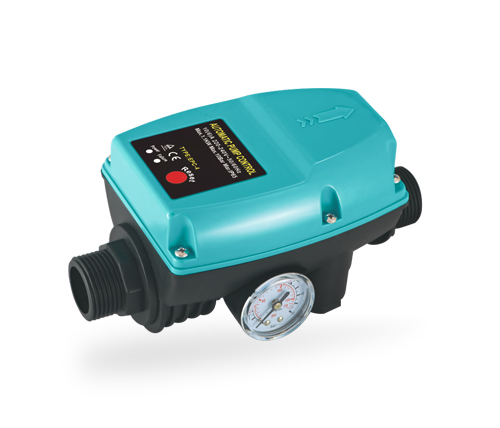
The unit includes a pressure gauge, allowing users or technicians to observe system pressure directly. This is useful during installation, adjustment, troubleshooting, and routine maintenance. A visible gauge reduces the need for a separate pressure-measuring instrument during basic system checks and provides an immediate indication of whether the installation is operating near the selected pressure range.
The EPC-16 Series is intended to provide a practical bridge between a water pump and the distribution system. It is not simply an electrical switch; it is a control component that combines pressure sensing, pump starting control, and user adjustment in a compact package. Its design is focused on easy operation and compatibility with common water-supply applications.
Product series |
EPC-16 Series automatic pressure controller |
Rated voltage options |
220–240V, 110–120V, or 110–240V |
Power frequency |
50/60 Hz |
Maximum power |
Up to 1.1 kW depending on voltage version |
Maximum working pressure |
10 bar |
Starting-pressure adjustment range |
1.0–3.0 bar |
Factory starting-pressure setting |
1.0 bar |
Connection thread |
G1 inch |
Protection rating |
IP65 |
Maximum ambient or working temperature |
60°C |
Pressure indication |
Integrated pressure gauge |
Control type |
Automatic pressure-based pump control |
The specifications demonstrate that the controller is designed for a broad range of low- and medium-duty water applications. The 1.0–3.0 bar starting-pressure range provides useful flexibility without making adjustment unnecessarily complicated. The 10-bar working-pressure rating offers a substantial operating margin for many domestic and light commercial systems, provided that the pump, pipework, fittings, and other components are also correctly rated.
The most distinctive convenience feature of the EPC-16 Series is the toolless starting-pressure adjustment. Traditional mechanical pressure controls may require a tool to change the spring tension or pressure setting. While this arrangement can be effective, it can also make field adjustment slower and less convenient. Installers may need to remove a cover, locate a small adjustment screw, and repeatedly start and stop the pump while checking pressure with a separate gauge.
The EPC-16 Series is designed to make the starting-pressure adjustment more accessible. The user can adjust the setting without a dedicated tool, allowing the pressure controller to be configured during installation or service with fewer steps. This is particularly valuable when the controller is installed in a confined pump room, a utility cabinet, a garden equipment area, or another location where using tools may be inconvenient.
Toolless adjustment also benefits distributors and service organizations. A single product can be adapted to different application requirements within its specified range. Instead of stocking multiple fixed-pressure versions for every small variation in demand, a supplier can offer a configurable controller and help the customer set it appropriately during commissioning.
The adjustable range of 1.0 to 3.0 bar covers many common domestic and light-duty water-system requirements. A lower starting point may be suitable for certain shallow installations or systems that need the pump to respond to a modest pressure drop. A higher setting may be preferred where the system requires stronger delivery pressure before the pump starts. The final setting should always be selected according to pump capability, static water pressure, pipe layout, elevation, and the requirements of connected equipment.
The factory setting is 1.0 bar. This provides a defined starting point for initial installation and allows the installer to test the system before making any application-specific adjustment. A factory setting can also reduce confusion during first commissioning, especially when the unit is supplied to users who want a straightforward installation process.
Installation efficiency is an important consideration for contractors and system integrators. A pressure controller that can be adjusted without tools may reduce the time required to establish the desired operating point. The installer can focus on correct hydraulic connection, electrical wiring, and system testing rather than spending additional time locating and operating adjustment hardware.
This benefit becomes more significant when several units must be installed. In residential developments, irrigation projects, pump replacement work, or service contracts, small time savings on each unit can improve overall productivity. The simpler adjustment method can also reduce the risk of using the wrong tool or applying excessive force to a delicate adjustment mechanism.
The integrated pressure gauge provides a direct view of the pressure condition. Conventional control arrangements may require the addition of a separate gauge, which increases the number of fittings and potential leak points. The gauge supplied with the EPC-16 Series helps users confirm the initial pressure, observe pressure recovery, and identify possible operating abnormalities.
A visible pressure reading is useful when diagnosing issues such as a blocked inlet, insufficient water supply, air in the pipe, a leaking outlet, or a pump that cannot reach the required pressure. Although the gauge does not replace professional testing equipment, it offers valuable information during normal operation and routine service.
Water-system equipment is used in markets with different electrical standards. The EPC-16 Series is offered in 220–240V, 110–120V, and 110–240V versions. This range helps distributors and original equipment manufacturers select a configuration suitable for local power infrastructure. The universal 110–240V option can be particularly useful for international projects or product lines that serve multiple markets.
Voltage flexibility can simplify procurement and reduce the need for extensive redesign when the same pump-control concept is introduced in different regions. However, installers must always verify the actual product label, wiring diagram, motor rating, and local electrical requirements before energizing the unit.
The IP65 rating is an important advantage in pump environments, where equipment may be exposed to dust, splashing water, condensation, or occasional spray. The rating indicates that the enclosure is dust-tight and protected against water jets under defined testing conditions. Correct installation remains essential: cable entries must be properly sealed, the unit must not be submerged, and the electrical enclosure should be positioned according to the manufacturer’s installation instructions.
Compared with a basic unprotected switch, an IP65 pressure controller is better suited to utility rooms, pump shelters, agricultural service areas, and outdoor equipment locations where environmental exposure is possible. The rating supports dependable use while helping protect the internal electrical and control components.
By integrating pressure sensing, pump control, and pressure indication into one unit, the EPC-16 Series can reduce the number of separate components required in a basic automatic water system. Fewer components may mean a simpler pipe layout, fewer connections, and a cleaner installation. Compact integration is especially useful where space is limited or where the customer wants an uncomplicated pump-control arrangement.
A compact controller also makes it easier to standardize system designs. Pump manufacturers, installers, and distributors can develop repeatable installation methods around a known connection size, electrical range, and adjustment procedure.
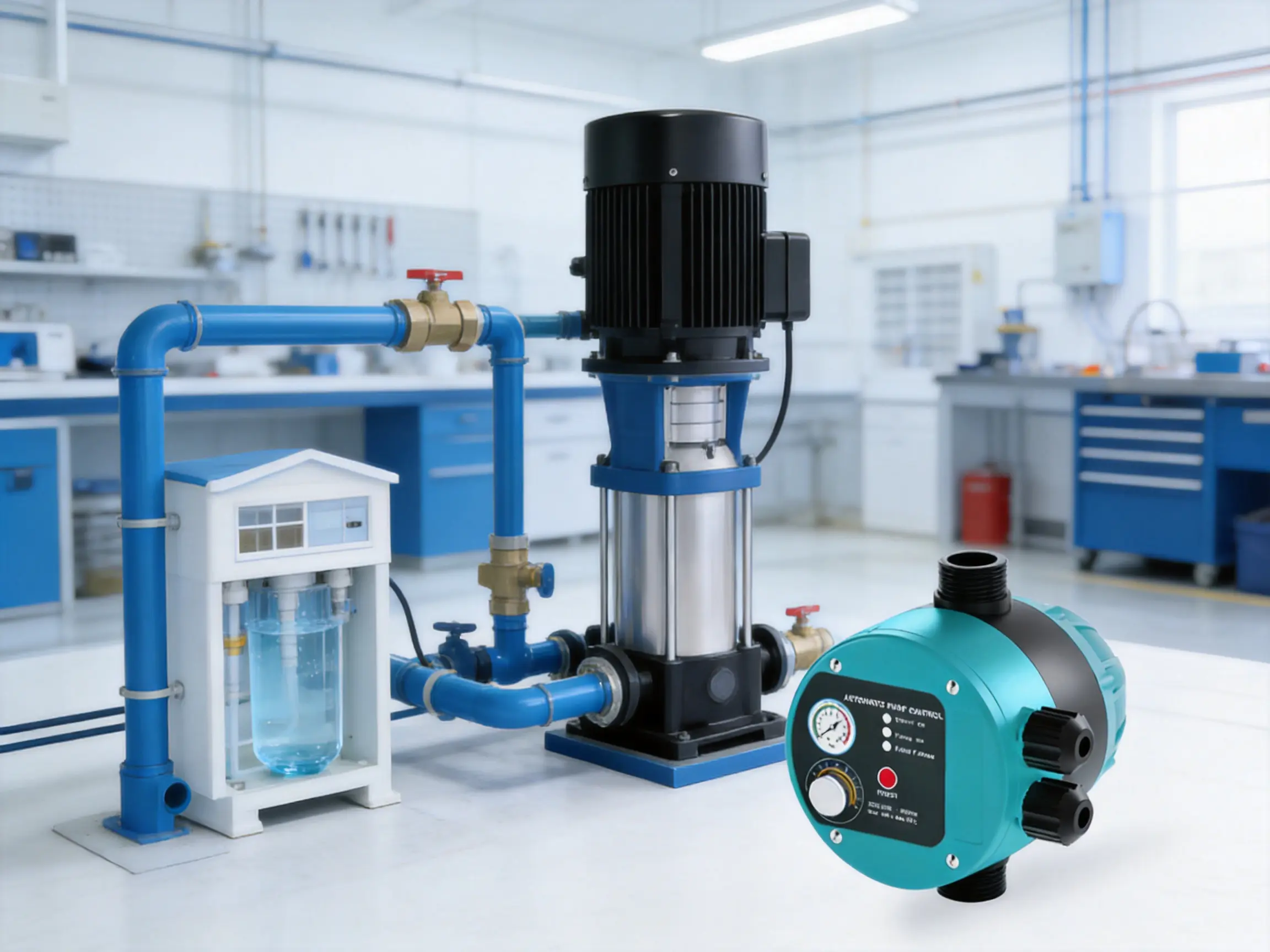
In homes, pressure controllers are frequently used with booster pumps that improve water delivery to showers, kitchen outlets, washing machines, and other fixtures. Low municipal pressure, elevated buildings, long pipe runs, and peak demand can all cause unsatisfactory water flow. An automatic pressure controller allows the booster pump to respond when household demand causes pressure to fall.
The adjustable starting pressure enables the system to be matched to the home’s plumbing characteristics. A small residence may require a different setting from a multi-level house with longer vertical pipework. The pressure gauge helps the homeowner or service technician verify that the system is producing a reasonable pressure during operation.
Garden pumps and small irrigation systems often experience changing demand as sprinklers, hoses, and valves are opened or closed. A pressure controller can automate the pump and make water delivery more convenient. The 1.0–3.0 bar adjustment range may suit many low- and medium-pressure irrigation arrangements, although the actual setting must be matched to the sprinkler type and pump performance.
For garden use, environmental protection is especially valuable because equipment may be installed in sheds, pump boxes, service cabinets, or semi-outdoor areas. The IP65 design provides a suitable level of enclosure protection when the unit is mounted and wired correctly.
Small workshops, retail facilities, guesthouses, restaurants, and service buildings may need automatic water pressure control without installing a large industrial control panel. The EPC-16 Series can be considered for applications using compatible single-phase pumps within the specified power and pressure limits.
In such installations, the controller can support utility sinks, cleaning points, washdown outlets, and general water distribution. The toolless adjustment feature is useful for maintenance teams that may need to adapt pressure behavior after a change in plumbing layout or equipment demand.
Small farms, nurseries, greenhouses, and agricultural outbuildings may use pressure-controlled pumps for water transfer and local irrigation. The controller can provide automatic response for systems that do not require a large programmable control cabinet. However, agricultural users should consider water quality, filtration, electrical protection, weather exposure, and the possibility of continuous-duty operation before selecting the product.
When an existing automatic water system requires replacement, a controller with common G1-inch connections and multiple voltage options can make the retrofit process more straightforward. The EPC-16 Series may be used where its electrical and hydraulic specifications match the existing pump and pipework. Before replacement, technicians should verify the original controller’s wiring, motor current, pressure requirements, and operating sequence.
The main 220–240V version is specified for a maximum power of 1.1 kW and is suitable for a single-phase pump of approximately 1.5 horsepower. The 110–120V version is specified for up to 0.55 kW, while the 110–240V version supports a maximum power of 0.55/1.1 kW depending on the operating voltage. These values are important for correct product selection.
A pressure controller should never be selected only by looking at voltage. The installer must also consider the pump’s rated current, starting current, power factor, duty cycle, motor type, and the controller’s switching capacity. The pump should operate within the pressure controller’s specified electrical limits. If the motor exceeds those limits, an appropriate contactor, relay, or motor-control arrangement may be required.
Hydraulic compatibility is equally important. The G1-inch connection must match the pipe and fittings, and the system’s maximum pressure must remain within the 10-bar working limit. The pump should be able to produce sufficient pressure to reach the selected starting and operating conditions. If the pump is undersized, increasing the pressure setting will not necessarily improve water delivery and may cause unstable operation.
For reliable performance, the water source should provide an adequate and continuous supply. A pressure controller is not a substitute for dry-run protection unless the complete product design specifically includes that function. Installers should evaluate whether a separate low-water protection device, filter, check valve, expansion vessel, or additional control component is required for the application.
Product performance begins with design, but consistent manufacturing determines whether that performance is repeated across large production volumes. Taizhou Edwin Electric Co., Ltd. operates as an integrated manufacturing enterprise with capabilities covering independent research and development, production, and global export. This integrated structure supports closer coordination between product design, component selection, assembly, inspection, and customer feedback.
For a pressure controller, manufacturing quality involves more than the appearance of the enclosure. Important factors include the accuracy and repeatability of the pressure-sensing mechanism, the reliability of electrical terminals, the sealing performance of the enclosure, the durability of the adjustment structure, the consistency of the pressure gauge, and the secure connection between hydraulic and electrical sections.
An experienced manufacturer can establish production controls around these areas. Incoming components can be checked against defined requirements before assembly. Mechanical parts can be inspected for dimensional consistency. Electrical assemblies can be reviewed for correct connection and insulation. Finished units can be tested for pressure response, switching behavior, enclosure condition, and general functionality.
Independent research and development also allows the manufacturer to refine product details according to market requirements. The EPC-16 Series reflects a practical design direction: it combines a common connection thread, a defined adjustment range, multiple voltage options, a built-in gauge, and a protected enclosure. These features respond to common installer concerns about convenience, compatibility, visibility, and environmental resistance.
Edwin Pump was founded in 2008 and has developed experience in water-pumping equipment and related control products. Its product portfolio includes deep well pumps, submersible pumps, surface pumps, booster pumps, circulation pumps, garden pumps, pool and spa pumps, commercial multistage pumps, end-suction pumps, solar water pumps, intelligent booster pumps, pump accessories, pipes, and valves.
This broad product range gives the manufacturer a practical understanding of how pressure controllers interact with different pump categories. A controller intended for a booster-pump application must respond differently in practical terms from equipment used in a specialized industrial installation. Experience across multiple pump types can support better product selection guidance and more complete system solutions.
The company also established related import and export service organizations to support procurement planning, order tracking, cross-border delivery, and international trade services. For overseas buyers, this can be an advantage because product supply involves more than manufacturing alone. Documentation, communication, production scheduling, packaging, shipment coordination, and after-sales support all influence the success of a purchasing project.
A reliable production process should reduce variation from one unit to the next. For the EPC-16 Series, this means maintaining consistency in the pressure-setting mechanism, ensuring that the electrical components are properly assembled, and confirming that the housing and sealing parts are correctly fitted. Batch consistency is especially important for distributors and installers who need predictable installation and operating behavior.
Functional testing can help verify whether each completed unit responds at the intended pressure range and switches the compatible pump correctly. Pressure tests can help identify leakage or abnormal behavior in the hydraulic section. Electrical checks can help confirm correct connections and safe insulation. Visual and dimensional inspections can identify assembly defects before products are packed and shipped.
Although specific internal production procedures may vary by model and order requirement, an integrated manufacturer is positioned to coordinate these activities through its own technical and production teams. The result is a product designed for repeatable global supply rather than one-off assembly.
Correct installation is essential for achieving the advantages of the EPC-16 Series. The controller should be installed by a qualified technician familiar with water pumps and electrical systems. Before installation, the technician should confirm the pump voltage, frequency, rated power, current, connection size, and operating pressure. The water source and piping should also be checked for cleanliness and adequate flow.
The hydraulic connection should use compatible G1-inch fittings and suitable sealing methods. Excessive force should not be applied to the housing or threaded connection. The controller should be installed in a position that allows the pressure gauge to be read and the adjustment control to be accessed. The unit should be supported appropriately so that the pipework does not place unnecessary mechanical stress on the controller.
Electrical wiring must follow the applicable wiring diagram and local regulations. The power supply should be isolated before wiring or servicing. The controller and pump should have suitable grounding and protective devices. Cable glands or entries should be sealed correctly to preserve the intended enclosure protection. Voltage selection is particularly important for the 110V–120V, 220V–240V, and universal versions.
After installation, the system should be filled and air should be removed as required by the pump manufacturer. The technician should check for leaks, confirm that the pump starts at the selected pressure, and observe whether the system reaches a stable operating condition. If adjustment is needed, it should be made gradually within the specified 1.0–3.0 bar range.
The controller should not be used beyond its maximum working pressure of 10 bar or maximum temperature of 60°C. It should not be submerged or installed in an environment that exceeds the stated protection and temperature limits. If the water contains excessive particles, a suitable filter may be necessary to protect the pump and pressure-control components.
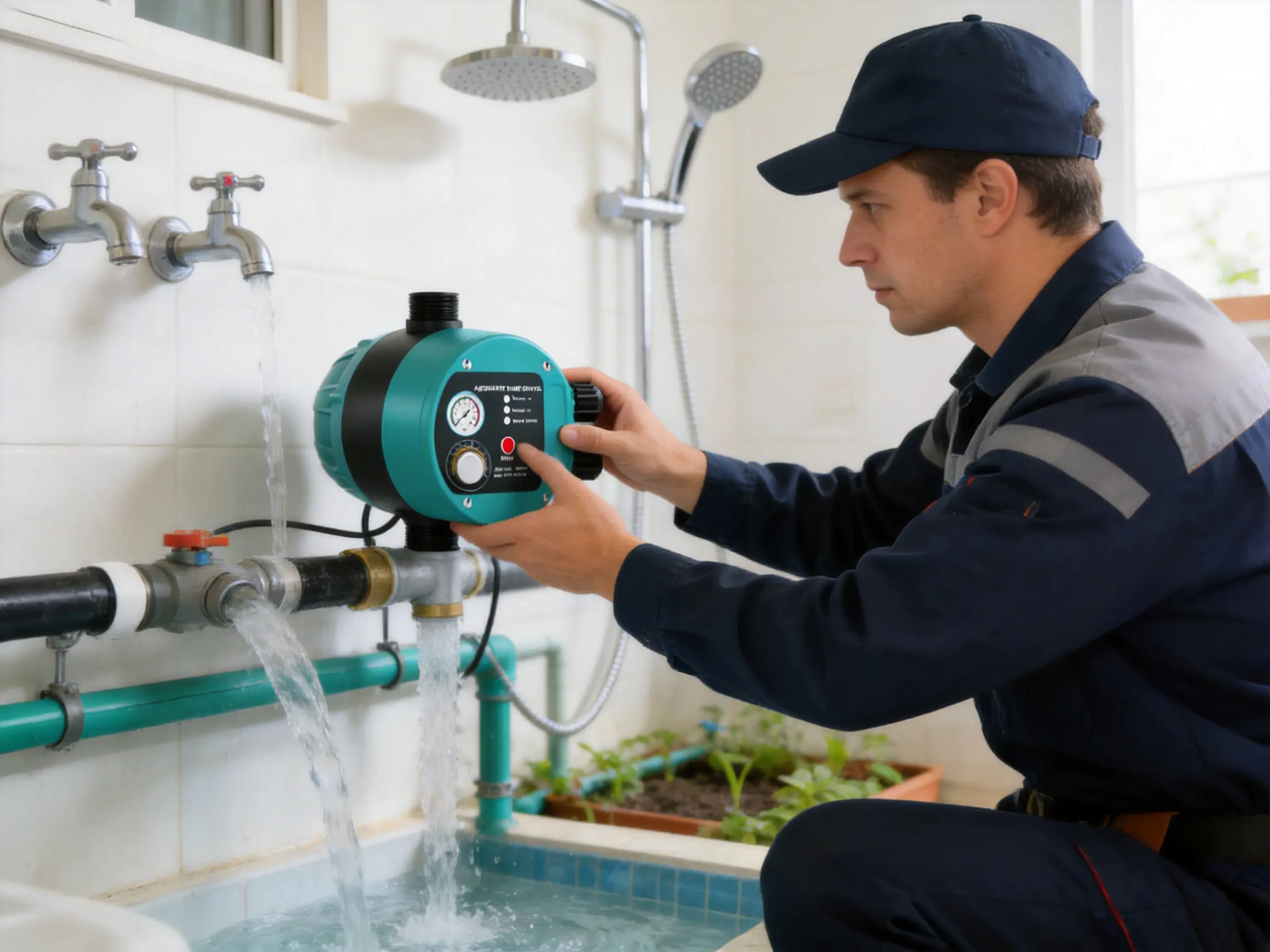
Routine maintenance helps preserve automatic pressure control. Users should periodically inspect the controller for visible damage, water leakage, loose connections, unusual noise, or irregular pump cycling. The pressure gauge should be checked for a reasonable reading during normal operation. A sudden change in pressure behavior may indicate a hydraulic or electrical problem elsewhere in the system.
If the pump does not start, the technician should first verify that electrical power is available and that the pump and controller are wired correctly. The water supply should then be checked. A blocked inlet, closed valve, air lock, or insufficient water level may prevent normal operation. The selected starting pressure should also be reviewed to confirm that it is compatible with the pump’s available pressure.
If the pump starts and stops repeatedly, possible causes may include a leaking outlet, a small unnoticed water demand, insufficient system pressure, an unsuitable pressure setting, or a problem with the pump’s check valve. Frequent cycling should not be ignored because it can increase motor wear and place additional stress on electrical components.
If the gauge does not show a pressure increase after the pump starts, the system may have a blocked suction line, inadequate priming, a damaged impeller, or a leak. The controller cannot compensate for a pump that is unable to generate pressure. In such cases, the complete hydraulic system should be inspected.
Cleaning should be performed with the power isolated and with methods suitable for the enclosure. Harsh chemicals, excessive water pressure, and unauthorized disassembly should be avoided. If the controller needs internal repair, qualified service personnel should handle the work to protect the pressure-sensing and electrical components.
Distributors increasingly seek products that combine competitive specifications with easy market positioning. The EPC-16 Series offers several features that can simplify product communication: a clear pressure range, multiple voltage options, an integrated gauge, G1-inch connection, IP65 protection, and toolless adjustment. These features are easy to explain to installers and end users because they address visible and practical needs.
The series can also support product segmentation. The 220–240V, 1.1 kW version can serve common single-phase booster-pump applications, while the 110–120V and universal versions support other regional requirements. Distributors can therefore build a related product offering without dealing with entirely different control concepts for every market.
For original equipment manufacturers, the controller can be incorporated into packaged pump systems, compact booster sets, garden-pump kits, and domestic water-supply assemblies. The integrated gauge and adjustable control can improve the usability of the finished equipment. The supplier’s wider pump portfolio may also support coordinated sourcing of pumps, accessories, and control components.
International buyers may benefit from the manufacturer’s experience with overseas orders, production planning, export packaging, and cross-border logistics. A stable supplier relationship can reduce communication gaps between the technical and purchasing teams. It can also make it easier to discuss customization, labeling, documentation, packaging, and application requirements.
Pressure controllers operate at the intersection of water hydraulics and electrical switching. A company that understands only one of these areas may overlook important application details. A pump manufacturer with experience in both hydraulic equipment and electrical control is better positioned to consider the entire operating environment.
Edwin Pump’s involvement in pumps, intelligent booster systems, solar water pumps, and related equipment reflects an ongoing focus on water movement and system control. Its investment in new energy and intelligent technology since 2018 demonstrates an effort to expand beyond conventional pump manufacturing and respond to changing market needs.
The company’s applications knowledge covers new energy projects, agricultural irrigation, municipal engineering, mining, construction, HVAC systems, and household water supply. Not every EPC-16 Series installation will involve these large or specialized sectors, but experience across them can strengthen the manufacturer’s understanding of reliability, operating conditions, and procurement requirements.
Manufacturing strength should also be considered in terms of supply continuity. A product is more valuable when it can be supplied consistently, supported with technical information, and integrated into a broader purchasing program. The combination of research and development, mass production, export service, and a wide product range gives the supplier a foundation for serving both individual equipment buyers and larger international customers.
Before purchasing the EPC-16 Series, buyers should define the operating conditions of the intended system. The first consideration is voltage. The selected model must match the local supply and the pump motor. The second consideration is motor power. The 1.1 kW model should not be used with a motor that exceeds its specified capacity, and lower-power versions should be selected where appropriate.
The next consideration is pressure. The pump must be capable of achieving the desired operating pressure, while all connected components must be rated for the system’s maximum possible pressure. The 1.0–3.0 bar starting-pressure range should be adequate for many common applications, but a specialist design may require a different control method.
Buyers should also evaluate water temperature, ambient conditions, installation location, water quality, and expected operating frequency. The maximum stated temperature is 60°C, and the IP65 protection rating does not mean the unit can be immersed. If the system involves hot water, corrosive liquid, abrasive particles, or unusual chemicals, additional technical review is necessary.
Finally, the purchaser should consider service requirements. A controller that is easy to adjust and includes a gauge can reduce routine service complexity. The one-year warranty coverage stated for the product provides a defined warranty period, but installation must still follow the relevant instructions and electrical regulations to preserve safe and reliable operation.
The EPC-16 Series is an automatic pressure controller designed to operate compatible single-phase water pumps. It starts the pump when system pressure falls to the selected starting point and supports automatic pressure management in domestic, garden, irrigation, and light commercial water systems.
The starting pressure can be adjusted from 1.0 to 3.0 bar. The factory setting is 1.0 bar. The correct setting depends on the pump’s performance, the building or installation layout, water demand, and the pressure requirements of connected equipment.
No. The product is designed with a toolless starting-pressure adjustment mechanism. This allows the installer or service technician to make the adjustment more conveniently, provided that the setting remains within the specified range.
The series includes 220–240V, 110–120V, and 110–240V versions. Buyers should confirm the exact voltage configuration before ordering and verify that it matches the pump and local electrical supply.
The 220–240V version supports up to 1.1 kW. The 110–120V version supports up to 0.55 kW, while the 110–240V version is specified for 0.55/1.1 kW depending on the operating voltage. The pump’s actual current and starting characteristics must also be checked.
The maximum working pressure is 10 bar. The pump and all connected pipes, valves, fittings, and appliances must also be rated appropriately for the system pressure.
The EPC-16 Series uses a G1-inch connection thread. Compatible fittings and proper sealing methods should be used during installation.
The IP65 protection rating makes the unit suitable for many protected outdoor and utility-area installations when it is mounted and wired correctly. However, it must not be submerged, exposed beyond its temperature limits, or installed without proper cable sealing and environmental protection.
Yes. The product advantages include an integrated pressure gauge, which allows users and technicians to observe system pressure during installation, operation, and troubleshooting.
The supplied information identifies the product as an automatic pressure controller but does not confirm a dedicated dry-run protection function. Installers should not assume that dry-run protection is included. If the water source may become empty, a separate suitable protection solution should be evaluated.
The controller is suitable for compatible single-phase water pumps, including many domestic booster pumps, surface pumps, garden pumps, and small irrigation pumps. Electrical power, voltage, hydraulic pressure, and installation requirements must be checked for every application.
The EPC-16 Series is manufactured by Taizhou Edwin Electric Co., Ltd., a Chinese integrated manufacturer of pumps, pressure-control products, and related water-system equipment. The company operates under the Edwin Pump name and serves customers in international markets.
The product information states warranty coverage for one year. Warranty conditions may depend on correct installation, operation within the specified limits, and compliance with the supplier’s terms.
The EPC-16 Series automatic pressure controller offers a balanced solution for single-phase water systems that require convenient and adjustable pump control. Its main strengths include toolless starting-pressure adjustment, a 1.0–3.0 bar setting range, an integrated pressure gauge, G1-inch connections, 10-bar maximum working pressure, IP65 protection, and voltage options from 110V to 240V.
Compared with more basic pressure-switch solutions, the product is designed to simplify installation, improve pressure visibility, and support a wider range of regional electrical requirements. Its compact integrated format can reduce system complexity, while the adjustable control allows the same product family to serve different water-system conditions.
The product’s value is also supported by the manufacturing background of Taizhou Edwin Electric Co., Ltd. The company combines independent research and development, mass production, export experience, and a broad portfolio of pumps and water-system products. This integrated capability supports consistent product development and provides buyers with access to a wider range of related equipment.
For domestic boosters, garden systems, small irrigation installations, and compatible light commercial applications, the EPC-16 Series provides a practical way to automate pump operation and manage starting pressure. Correct selection, professional installation, proper electrical protection, and routine inspection remain essential. When used within its specified limits, the controller can contribute to convenient operation, more consistent water delivery, and a more serviceable pumping system.
1. EPC-16 Series product technical information and supplied product specifications.
2. Taizhou Edwin Electric Co., Ltd. company information and product portfolio materials.
3. General principles of automatic pressure control for single-phase water pumps.
4. General guidance for ingress protection classifications used in electrical enclosures.
5. General installation and maintenance practices for domestic and light commercial water-pumping systems.
edwina@edwin-pump.com
+86-13586290903 (WhatsApp)
Xuri Gongliang Cutting Tool Entrepreneurship Park, Wenqiao Town, Wenling City, Taizhou City, Zhejiang Province, China

High Performance Smart Pump Factory


 English
