edwina@edwin-pump.com

View All Products
en
Industrial pumping applications often involve far more than the movement of clean water. Mining sites, construction projects, wastewater facilities, power plants, chemical processing areas, and sedimentation systems may need to transport liquids containing sand, silt, coal particles, mineral solids, ash, and other abrasive materials. These operating conditions place exceptional demands on pump materials, motor protection, sealing systems, hydraulic design, and overall serviceability.
The HVS Series 7.5kW high wear-resistant mechanical seal submersible slurry pump is designed specifically for these challenging duties. With a power range of 5.5kW to 7.5kW, high-chrome alloy wetted components, a high-wear-resistant mechanical seal, a vortex impeller, and an H-class motor, the pump is engineered to provide dependable slurry handling where ordinary drainage or clean-water pumps may experience rapid wear, clogging, overheating, or seal failure.
This article examines the design, construction, performance, manufacturing strengths, application value, and competitive advantages of this industrial submersible slurry pump. It also explains how material selection, production control, engineering experience, and integrated export support contribute to reliable performance in demanding environments.
Slurry is a difficult medium because it combines liquid with suspended or partially settled solids. The solids may be fine, such as silt and ash, or relatively coarse, such as sand, mineral fragments, coal particles, and construction debris. Depending on the application, slurry can also have a high density, variable viscosity, irregular particle distribution, and significant abrasive action.
A conventional clean-water pump is generally designed around low-solid-content liquids. Its impeller passages, pump casing, inlet structure, seal arrangement, and materials may not withstand continuous contact with abrasive particles. When such a pump is used in a slurry application, the internal surfaces can wear quickly. Hydraulic performance may decline, the impeller may become unbalanced, the mechanical seal may leak, and the motor may eventually be exposed to moisture or contamination.
Slurry pumping also creates a risk of blockage. Solids may accumulate around a narrow impeller passage or become trapped near the suction inlet. If the pump cannot pass the available particles, flow can be interrupted and the motor may operate under abnormal conditions. For this reason, effective slurry pump design must address two problems at the same time: wear resistance and solids passage.
The HVS Series responds to these requirements with a combination of wear-resistant alloys, a vortex impeller configuration, a robust submersible motor, and a sealing system designed for severe service. Instead of treating abrasive liquid as an occasional exception, the design considers it a normal operating condition.
The HVS Series is a high wear-resistant mechanical seal submersible slurry pump for harsh environments. It is suitable for applications that involve silt, sand, mineral solids, sewage, ash, construction sediment, and other abrasive materials. The pump is installed directly in the liquid, allowing it to collect and discharge slurry without requiring a separate dry-mounted pump room in many installations.
The available power range is 5.5kW to 7.5kW, corresponding approximately to 7.5HP to 10HP. The pump can achieve a capacity of up to 115 cubic meters per hour and a head of up to 17 meters, depending on the selected model, operating point, system resistance, and liquid characteristics.
The pump is designed for three-phase electrical supply at 380V with a tolerance of plus or minus 10 percent. Models may be configured for 50Hz or 60Hz operation. The motor uses insulation class H and protection class IP68, providing an appropriate electrical and thermal design for submersible service.
| Parameter | Specification |
|---|---|
| Product type | Submersible slurry pump |
| Series | HVS Series |
| Power range | 5.5kW to 7.5kW |
| Approximate horsepower range | 7.5HP to 10HP |
| Maximum capacity | Up to 115m³/h |
| Maximum head | Up to 17m |
| Liquid density | Up to 1.3g/cm³ |
| Power supply | Three-phase 380V ±10% |
| Frequency options | 50Hz or 60Hz |
| Insulation class | H |
| Protection class | IP68 |
| Standard cable length | 10m |
| Maximum liquid temperature | Up to 60°C |
| Applicable pH range | pH 6 to pH 10 |
| Maximum immersion depth | 15m |
Actual performance depends on the pump model, discharge pipe, installation conditions, liquid density, solids content, particle size, and operating point. Proper selection should therefore be based on a complete duty specification rather than on capacity or power alone.
HVS Series 7.5kW High Wear-resistant Mechanical Seal Submersible Slurry Pump for Harsh Environment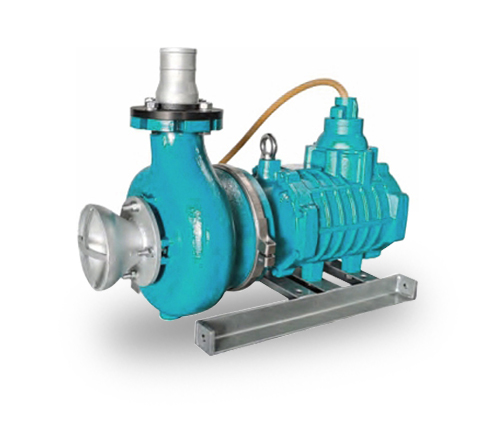
The most important feature of a slurry pump is its ability to maintain useful service life while exposed to abrasive particles. In the HVS Series, the pump body and impeller are manufactured from high-chrome alloy. This material selection is particularly valuable in areas where sand, mineral particles, coal, ash, or other hard solids repeatedly contact the hydraulic passages.
High-chrome alloy is widely used in abrasive service because it can provide a hard, wear-resistant working surface while retaining sufficient structural strength for pump operation. The pump body and impeller are among the most highly exposed components, so protecting these parts directly helps preserve hydraulic performance and reduce the frequency of replacement.
The inlet plate uses a combination of cast iron and polyurethane. This arrangement provides a balance between structural support and resistance to impact or abrasive contact. Polyurethane can be useful in slurry applications because it offers a degree of resilience and wear resistance against suspended solids. The specific suitability of the inlet plate depends on the particle characteristics and operating conditions, but the material combination reflects the pump’s focus on difficult media.
Many standard drainage pumps use general-purpose cast iron components throughout the hydraulic section. Such construction may be economical for clean water or lightly contaminated drainage, but it may not provide the same level of protection in continuous abrasive duty. The HVS design has an advantage because the principal hydraulic wear components are specified in high-chrome alloy rather than relying only on standard cast materials.
The pump body contains the pressure and flow passages through which slurry travels. As abrasive solids move at high velocity, they can gradually remove material from bends, transitions, discharge areas, and regions of turbulence. A high-chrome alloy body is intended to resist this gradual erosion and help maintain the designed internal geometry for a longer period.
Maintaining the internal shape of the pump body is important because excessive wear can increase clearances, reduce hydraulic efficiency, lower head, and raise energy consumption. It can also create uneven loading or localized turbulence, which may accelerate further wear. A wear-resistant pump body helps slow this cycle.
The impeller is directly responsible for transferring energy from the motor shaft to the pumped liquid. It is also one of the components most exposed to solid particles. An impeller made from high-chrome alloy is better suited to repeated contact with abrasive slurry than a basic clean-water impeller.
Impeller wear can change the pump’s performance curve. As vane surfaces become thinner or hydraulic clearances increase, the pump may deliver less flow and head. In severe cases, imbalance can produce vibration and place additional stress on bearings and the mechanical seal. The high-chrome alloy impeller in the HVS Series is therefore not only a wear component; it is also an important part of stable long-term operation.
The HVS Series uses a vortex impeller that allows large solids to pass through the pump. This feature is valuable in sewage, construction drainage, sediment removal, and mining applications where the liquid may contain irregular or fibrous particles.
In a vortex configuration, the impeller creates a rotating flow field while reducing direct contact between the impeller vanes and some of the solids passing through the pump. This arrangement can help lower the risk of blockage and reduce the possibility that large particles will become tightly trapped between narrow vane passages.
A vortex design is not intended to eliminate all wear or make the pump suitable for every particle size. The allowable solids size and operating limits still depend on the specific model and manufacturer’s technical data. However, compared with a narrow-passage clean-water impeller, a vortex impeller offers a practical advantage where blockage resistance and solids handling are major concerns.
The design is especially relevant for liquids that cannot be screened completely before pumping. Construction pits may contain gravel, silt, and fragments from excavation. Wastewater may include suspended solids and debris. Mining slurry may contain mineral particles with varying sizes. A pump that can pass solids more effectively can reduce interruptions, manual cleaning, and emergency maintenance.
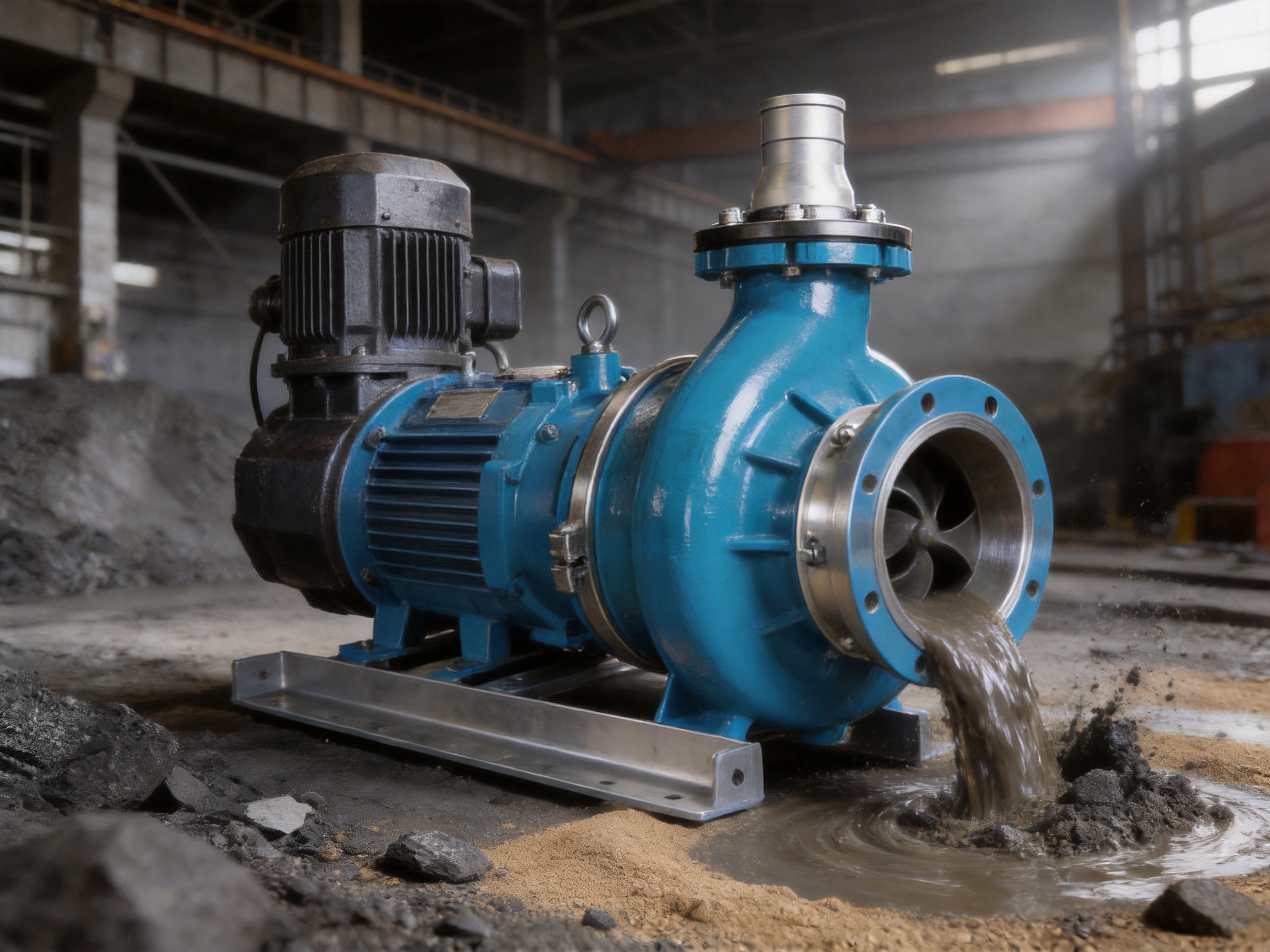
A submersible pump operates inside or close to the liquid being handled. This means the motor and bearings must be protected from water and slurry penetration. The mechanical seal is one of the most important barriers between the pumped medium and the motor chamber.
The HVS Series uses a high wear-resistant mechanical seal with silicon carbide on silicon carbide sealing faces. Silicon carbide is selected for demanding applications because it offers high hardness, strong resistance to abrasive wear, and good performance under difficult lubrication and contamination conditions when properly designed and installed.
The seal arrangement is listed as SiC-SiC / SiC-SiC. This indicates a robust material pairing for the sealing faces. In abrasive slurry service, conventional softer seal materials may be damaged rapidly when particles enter the sealing interface. A hard-face configuration can provide improved resistance to scoring and wear, helping extend the interval between seal maintenance events.
Seal performance also depends on shaft alignment, surface finish, spring condition, correct assembly, operating temperature, pressure, and the concentration of solids in the liquid. A high-quality seal cannot compensate for incorrect installation or operation outside the specified range. Nevertheless, selecting a wear-resistant silicon carbide seal gives the pump a stronger foundation for severe service than a basic general-purpose seal.
The mechanical seal works together with the pump body, seal bracket, bearings, shaft, cable entry, and motor housing. The HVS materials list includes a cast iron seal bracket, cast iron motor body, ball bearings, and an AISI 420 stainless steel shaft. These components form the mechanical structure supporting the rotating assembly and protecting the motor.
The IP68 protection class is appropriate for equipment intended for continuous or extended immersion under defined conditions. It indicates a high level of protection against dust ingress and water penetration. Installation depth, liquid temperature, cable condition, and duration of operation must still remain within the manufacturer’s stated limits.
The HVS Series uses a motor with insulation class H. This insulation class provides a higher thermal capability than many standard motor insulation systems. In slurry pumping, motor temperature can be affected by ambient liquid temperature, hydraulic loading, voltage variation, frequent starts, partial blockage, and poor heat dissipation. A higher thermal insulation class provides additional design margin when the motor is correctly applied.
The pump is rated for water temperatures up to 60°C, subject to the applicable model and operating conditions. Since temperature directly affects motor cooling and seal performance, users should confirm the actual liquid temperature before selection. The pump should not be treated as suitable for hot liquids merely because the motor has H-class insulation.
The three-phase 380V ±10% power supply specification supports common industrial electrical systems in many regions. Both 50Hz and 60Hz options are available. Other voltages and cable lengths can be supplied upon request, allowing the pump to be matched more closely to local power infrastructure and site layout.
A standard cable length of 10 meters is provided. In a deep excavation, settling basin, mine sump, or wastewater tank, cable length can influence installation convenience and electrical safety. The cable should be routed carefully, protected from sharp edges and mechanical damage, and connected through suitable control and overload protection equipment.
The material table for the HVS Series demonstrates that the pump is assembled from components selected for different mechanical and environmental functions. No single material is ideal for every part. The hydraulic components require abrasion resistance, the motor body requires structural rigidity, the shaft requires strength and corrosion resistance, and the seal requires specialized tribological properties.
| Component | Specified material or construction | Functional purpose |
|---|---|---|
| Water inlet | Steel | Provides a durable inlet structure for liquid entry |
| Hose coupling | Steel | Supports connection to the discharge hose or piping system |
| Terminal box | Cast iron | Protects and supports electrical connection components |
| Upper cover | Cast iron | Provides structural enclosure and motor protection |
| Bearing house | Cast iron | Supports the bearing arrangement |
| Seal bracket | Cast iron | Holds and supports the mechanical seal assembly |
| Motor body | Cast iron | Provides a rigid protective motor enclosure |
| Pump body | High-chrome alloy | Resists abrasive wear in the hydraulic passage |
| Impeller | High-chrome alloy | Maintains hydraulic performance under abrasive service |
| Inlet plate | Cast iron and polyurethane | Combines support, resilience, and wear resistance |
| Rotor shaft | AISI 420 stainless steel | Provides rotating strength and corrosion resistance |
| Bearings | Ball bearings | Support smooth rotation and axial or radial loads |
| Mechanical seal | SiC-SiC / SiC-SiC | Protects against liquid and abrasive penetration |
This component-based approach offers an advantage over products designed around a single general-purpose material. By assigning materials according to the stresses encountered by each part, the manufacturer can improve durability while maintaining practical production and serviceability.
The maximum capacity of up to 115m³/h makes the HVS Series suitable for a broad range of drainage, dewatering, and slurry transfer duties. The maximum head of up to 17m is appropriate for many pits, tanks, settling basins, process areas, and short-to-medium discharge lines. The final operating point must be confirmed using the technical performance curve for the selected pump.
Capacity and head should always be considered together. A pump may achieve its highest flow at a relatively low head, while a higher head condition generally results in lower flow. Pipe diameter, hose length, elbows, valves, vertical lift, elevation changes, and solids concentration all influence the system resistance.
The liquid density limit is specified as up to 1.3g/cm³. This is important because pumping a denser slurry requires more power than pumping water at the same flow and head. Users should provide accurate information about density and solids concentration so that the motor is not overloaded and the pump is selected correctly.
The pH range of 6 to 10 covers many neutral and mildly alkaline water-based slurries. It includes a variety of construction drainage, municipal wastewater, mining water, and industrial process liquids. Highly acidic or strongly alkaline liquids may require different materials and should not be pumped without a detailed compatibility review.
Mining operations frequently need to move water containing mineral solids, sand, coal particles, tailings, and sediment. Sumps and collection pits may receive water from excavation areas, processing lines, tunnels, and dewatering systems. In these environments, pump reliability directly affects production continuity and workplace safety.
The HVS Series is suitable for handling abrasive slurry associated with coal, gold, platinum, and diamond mining, subject to the specified density, pH, temperature, particle size, and hydraulic limits. Its high-chrome alloy pump body and impeller are valuable in areas where conventional cast components would wear too quickly.
In a mine dewatering system, the pump may be moved between working areas as water accumulates. A submersible design can simplify deployment because the pump does not require a long suction pipe or a dry installation platform. It can be lowered into a sump, connected to a discharge line, and operated using an appropriate control system.
Mining users should inspect the pump regularly because abrasive wear varies considerably between different ores and slurry concentrations. A pump working with fine silt may experience a different wear pattern from one handling sharp mineral fragments. Monitoring flow, head, motor current, vibration, and discharge condition can help identify wear before a serious failure occurs.
Wastewater systems may contain suspended solids, sludge, organic matter, and debris. Raw sewage pumping requires equipment that can handle solids without frequent clogging. The vortex impeller helps reduce the risk of blockage by providing a more open flow path than many narrow-passage impellers.
The pump can be used for transporting raw sewage and wastewater in suitable municipal, commercial, or industrial systems. It may be installed in collection pits, temporary bypass systems, treatment plant areas, or wastewater holding tanks.
Wastewater can also contain chemicals, oils, fibers, and corrosive substances. Before installation, users should confirm that the liquid falls within the specified pH and temperature range and that the materials are compatible with the actual composition. The pump is designed for demanding solids handling, but no pump should be selected solely on the basis of a general application label.
Power generation facilities may require pumps for ash handling, process drainage, equipment washdown, coal transfer areas, and dewatering operations. Fly ash and coal-related liquids can contain abrasive particles that rapidly damage ordinary drainage pumps.
The HVS Series combines wear-resistant hydraulic components with a submersible structure suitable for sumps and collection pits. This can be useful where ash-laden water must be removed from low points or transferred to a settling or treatment system.
Because ash slurry density can vary, the duty point and motor load must be assessed carefully. Operators should avoid allowing settled ash to completely cover the pump or restrict the inlet. Planned flushing, sump management, and routine inspection can improve operating stability.
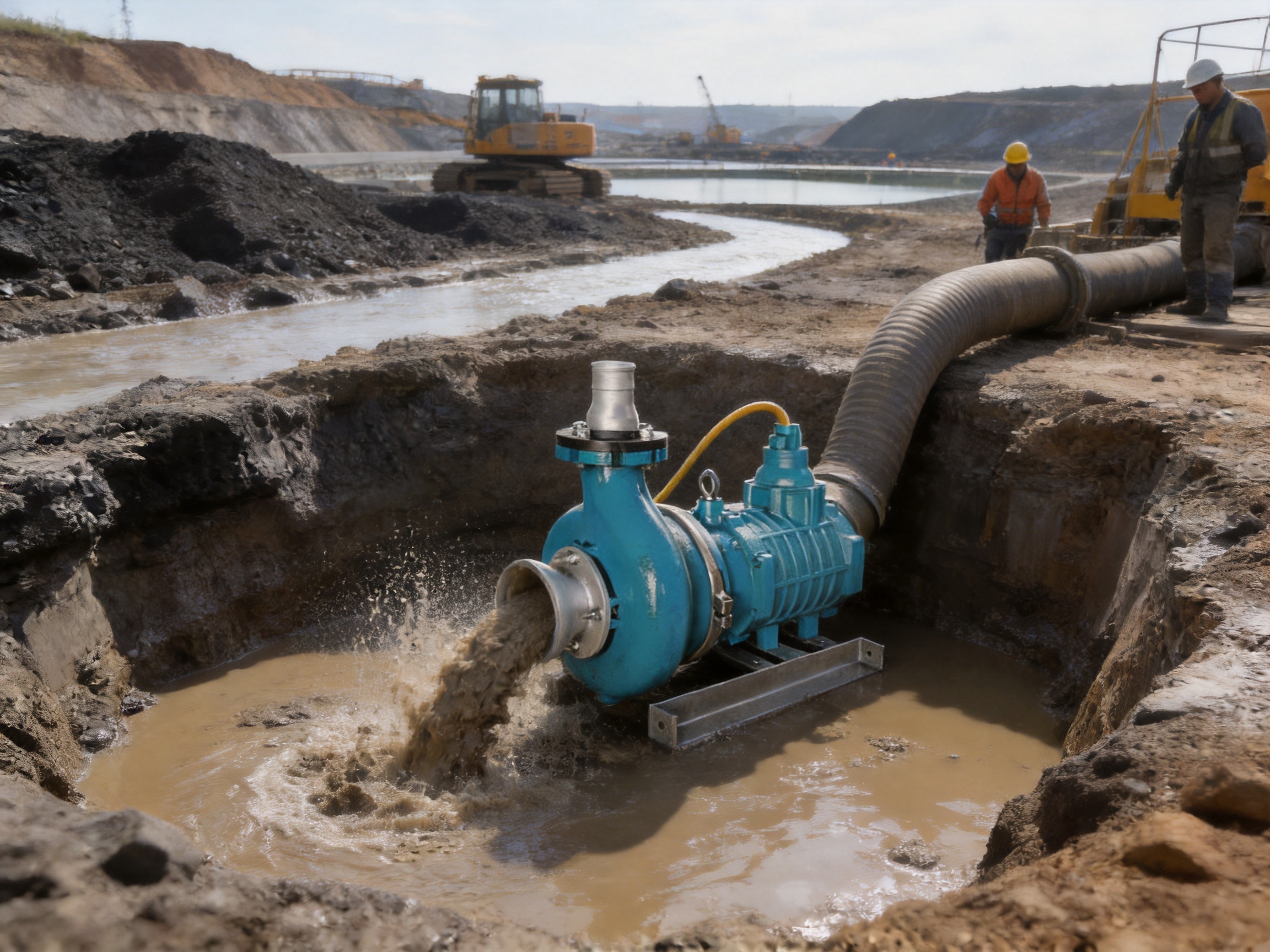
Construction sites often generate silt water during excavation, foundation work, tunneling, pile construction, and underground development. Rainwater can carry soil and fine particles into pits, while construction processes may create sedimentation tanks that require periodic cleaning.
The HVS Series can be applied to drainage of construction silt water, underwater sand extraction, and sedimentation tank cleanup when the liquid remains within the specified operating range. Its wear-resistant construction is particularly beneficial where the water contains more than ordinary dirt and includes a significant concentration of abrasive solids.
A submersible pump can be placed close to the lowest collection point, reducing the need for a long suction arrangement. This can help contractors respond quickly to changing site conditions. The steel water inlet and hose coupling provide practical connection options for temporary or semi-permanent discharge systems.
For construction use, the cable should be protected from cranes, vehicles, rebar, sharp concrete edges, and other sources of mechanical damage. The pump should be lifted with suitable equipment and should never be suspended by the electrical cable. Operators should also prevent dry running because loss of liquid can affect cooling and mechanical seal lubrication.
Some chemical and industrial processes involve abrasive raw materials or contaminated process water. The HVS Series may be considered for suitable applications where the liquid has a pH between 6 and 10, a temperature no higher than 60°C, and a density no greater than 1.3g/cm³.
Chemical compatibility must be reviewed before use. The stated materials may be appropriate for many water-based slurries, but aggressive solvents, concentrated acids, strong alkalis, oxidizing chemicals, and high-temperature liquids may require alternative elastomers, metals, coatings, or seal materials.
Industrial users should provide the pump supplier with a complete liquid analysis whenever the application involves chemicals. Important information includes pH, temperature, density, solids concentration, particle hardness, particle size, viscosity, chemical composition, and the presence of gases or fibrous material.
Compared with a standard clean-water submersible pump, the HVS Series offers a stronger material system for abrasive liquids. The high-chrome alloy pump body and impeller are specifically intended to resist erosion caused by solids. This can help reduce wear-related performance decline and replacement frequency.
The vortex impeller is designed to permit larger solids to pass through the pump and reduce the likelihood of blockage. This provides a practical advantage over narrow-passage impellers when liquid quality is inconsistent or screening is limited.
The silicon carbide mechanical seal faces provide a wear-resistant barrier in a difficult environment. Compared with a basic seal arrangement, the SiC-SiC configuration is better suited to abrasive service and can help protect the motor chamber when the pump is correctly operated.
A submersible configuration eliminates the need for a separate suction lift system in many installations. The pump can operate directly in a sump, tank, pit, or drainage area. This can reduce installation complexity and make the equipment easier to relocate between work areas.
The H-class insulation, IP68 protection class, three-phase industrial supply, and 5.5kW to 7.5kW power range make the pump suitable for serious industrial duties rather than only light drainage. These features provide useful operating margin when matched to the correct site conditions.
The pump is assembled from identifiable components, including the pump body, impeller, inlet plate, seal bracket, bearings, shaft, motor body, and terminal box. A clear component structure supports inspection, maintenance planning, and replacement of wear parts instead of automatically replacing the complete pump.
The manufacturer behind the HVS Series is an integrated pump enterprise founded in 2008, with capabilities covering independent research and development, mass production, and global export. This combination is important because industrial pump quality depends not only on product design but also on repeatable production, material control, assembly accuracy, testing, and after-sales coordination.
Independent research and development allows the manufacturer to adapt pump structures to changing market requirements. Slurry pumping often requires adjustments to materials, hydraulic passages, mechanical seals, motor specifications, cable lengths, and installation details. A company with internal engineering capability can respond more efficiently than a distributor that only resells standard equipment.
Mass production provides opportunities to standardize manufacturing procedures and improve component interchangeability. Consistent casting, machining, balancing, winding, sealing, assembly, and testing processes are essential for maintaining performance from one production batch to another.
The company’s product portfolio includes deep well pumps, submersible pumps, domestic booster pumps, circulation pumps, solar water pumps, intelligent booster pumps, and related water treatment products. This broad range provides experience across residential, agricultural, municipal, industrial, and new-energy applications.
Such product diversity can also support customers that need several types of pumps within one project. A procurement program may require a deep well pump for water supply, a submersible pump for drainage, a circulation pump for HVAC, and a booster pump for distribution pressure. A manufacturer capable of supplying multiple categories can simplify technical communication and order management.
For a slurry pump, material control is central to performance. The manufacturer must ensure that high-chrome alloy components meet the intended hardness, structure, and dimensional requirements. The inlet plate, shaft, bearings, mechanical seal, and motor housing must also be compatible with the design loads and operating environment.
Component inspection can include dimensional verification, visual examination, surface checks, balance inspection, electrical testing, and assembly verification. The precise inspection program depends on the production process and model, but the principle remains the same: every component should perform its intended role before the completed pump is released.
Submersible motor production requires careful winding, insulation treatment, rotor and stator assembly, bearing installation, shaft alignment, cable connection, and enclosure sealing. The H-class insulation specification places particular importance on the quality and consistency of the winding insulation system.
Correct assembly of the rotor, shaft, bearings, and mechanical seal is equally important. Misalignment can increase vibration and seal wear. Inadequate cable sealing can create a path for moisture. Proper production control helps ensure that the electrical and mechanical systems work together reliably.
Industrial pump manufacturing benefits from performance testing and inspection before shipment. Testing may involve checking current, voltage, rotation, leakage, insulation resistance, vibration, flow, head, and overall operating behavior. The exact tests depend on the product model and applicable quality procedures.
For slurry pumps, the performance curve is particularly important. Buyers should receive the relevant technical information for the selected model and compare it with the actual system duty. Testing and documentation provide a basis for confirming that the pump is suitable for the intended operating range.
The manufacturer has developed associated import and export organizations to support procurement planning, order tracking, cross-border delivery, and foreign trade services. For international industrial buyers, this capability can be as important as the pump itself.
Export projects often involve more than product manufacturing. They may require model confirmation, voltage selection, cable customization, packaging, shipping documentation, delivery coordination, inspection records, and communication between technical and purchasing teams. A professional export service structure can reduce delays and improve visibility throughout the order cycle.
One-stop procurement can be valuable for contractors, engineering companies, distributors, and system integrators. Instead of sourcing each pump category from a different supplier, customers may coordinate several water movement requirements through one manufacturing and export network.
The company’s products are used in new-energy projects, agricultural irrigation, municipal engineering, mining, construction, HVAC systems, household water supply, and other fields. This range reflects experience with different standards of performance, installation, control, and customer support.
Before installation, verify the pump model, power supply, frequency, operating point, liquid density, pH, temperature, immersion depth, and solids characteristics. Confirm that the discharge hose or pipe has a suitable diameter and pressure rating. Excessive pipe resistance can move the operating point away from the desired range.
Inspect the pump, cable, coupling, inlet, impeller area, and mechanical seal region for visible damage. Make sure the electrical control system includes appropriate overload protection, short-circuit protection, grounding, and switching equipment. Electrical work should be performed by qualified personnel.
Lower the pump using suitable lifting equipment. Do not use the power cable as a lifting rope. Position the pump securely so that it cannot overturn, become buried in sediment, or draw excessive settled solids into the inlet.
Ensure that the pump is adequately immersed before starting. Submersible motors depend on the surrounding liquid and pump conditions for cooling. Avoid prolonged dry running, repeated rapid starts, operation against a closed discharge valve, and conditions that allow the inlet to become blocked.
After startup, check the direction of rotation where applicable, discharge flow, motor current, vibration, noise, and liquid leakage. Any abnormal condition should be investigated promptly. A sudden reduction in flow may indicate blockage, excessive wear, a closed valve, a damaged hose, or a change in slurry concentration.
Regular maintenance is essential even when the pump is manufactured for severe service. After operation in highly abrasive slurry, inspect the pump body, impeller, inlet plate, wear surfaces, shaft, mechanical seal, cable, and bearings at appropriate intervals.
Monitor performance rather than relying only on a calendar-based schedule. A gradual decrease in flow or head may indicate wear in the impeller or pump body. Increased current may indicate hydraulic overload, a blocked discharge line, excessive liquid density, or mechanical friction. Abnormal vibration may indicate bearing wear, impeller damage, imbalance, or installation instability.
Clean the pump after use when solids are likely to settle and harden. In a sedimentation tank or mining sump, hardened deposits can obstruct the inlet or make later removal difficult. Cleaning procedures should be carried out safely, with the electrical supply isolated and the pump removed or secured as necessary.
Mechanical seal inspection is especially important. If the seal shows signs of leakage or damage, continued operation may expose the motor chamber to liquid. Replace worn seals with compatible parts and follow correct installation procedures. Do not force sealing faces together or handle precision seal surfaces carelessly.
Bearings should operate smoothly without excessive noise, heat, or play. The AISI 420 stainless steel shaft should be checked for scoring, corrosion, bending, and wear at seal contact areas. Any shaft damage can shorten the life of a new mechanical seal.
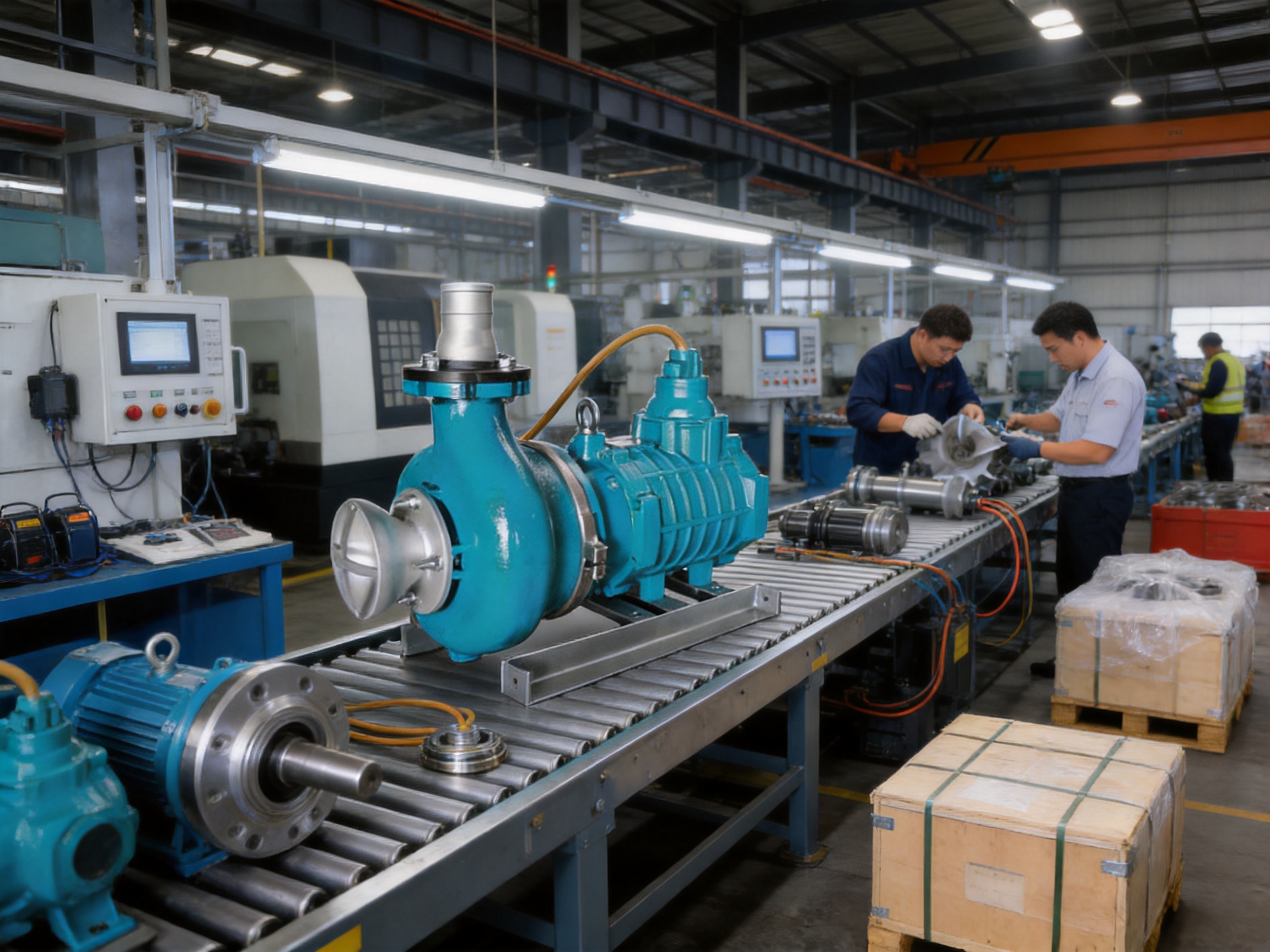
Correct selection begins with the system duty. The purchaser should define the required flow rate, total head, discharge distance, elevation difference, pipe or hose diameter, number of bends, valve arrangement, and expected operating hours.
The liquid description should include density, temperature, pH, solids concentration, particle size, particle hardness, viscosity, and any chemical content. A statement such as “dirty water” is often insufficient for slurry pump selection because two liquids with the same appearance may create very different wear and power requirements.
Electrical details should include voltage, frequency, number of phases, available short-circuit protection, cable length, and control method. If the pump is intended for a mobile application, the user should also specify lifting arrangements, transport frequency, and the type of discharge connection.
Users should compare the actual duty with the pump’s performance curve. The maximum figures of 115m³/h and 17m are not necessarily achieved at the same operating point. The pump should operate within a stable region of the curve rather than continuously at an extreme point.
A durable pump can contribute to lower life-cycle costs by reducing premature replacement, emergency downtime, and the consumption of spare components. The environmental value of longer service life depends on correct operation and maintenance, but wear-resistant materials are an important part of the equation.
When abrasive components retain their hydraulic geometry for longer, the pump may maintain useful efficiency over a greater portion of its service life. Stable performance can reduce the need to oversize the pump or operate multiple backup units continuously.
Serviceable construction also supports responsible maintenance. Replacing a worn impeller, inlet plate, mechanical seal, or bearing may be more resource-efficient than discarding the entire pump, provided the motor housing and main structure remain suitable for continued use.
Energy efficiency should still be considered during selection. A pump that is too large for the system may consume unnecessary power, while a pump that is too small may operate continuously at overload. Matching the pump to the actual flow and head is one of the most effective ways to improve operating economy.
The pump is designed for water-based liquids containing silt, sand, sewage, mineral particles, coal particles, ash, and other abrasive solids. The specified operating range includes liquid density up to 1.3g/cm³, temperatures up to 60°C, and pH from 6 to 10. Actual suitability depends on particle size, concentration, hardness, and chemical composition.
It can move clean or relatively clean water, but its main value is in difficult applications involving abrasive solids. A clean-water pump may be more economical for simple water transfer, while the HVS Series is intended to provide additional wear and solids-handling capability.
The HVS Series is available from 5.5kW to 7.5kW, approximately 7.5HP to 10HP.
The maximum stated capacity is up to 115m³/h, and the maximum stated head is up to 17m. These figures are model-dependent and should not be assumed to occur simultaneously. The correct operating point must be selected from the relevant performance curve.
A vortex impeller creates a flow pattern that can allow larger solids to pass more easily and reduce the risk of blockage. It is useful in sewage, construction drainage, sediment removal, and other applications where the liquid may contain irregular solids.
The pump body and impeller use high-chrome alloy, while the inlet plate uses cast iron and polyurethane. The mechanical seal uses silicon carbide sealing faces. Together, these materials provide improved resistance to erosion and seal damage compared with many standard clean-water pump constructions.
IP68 indicates a high level of protection against dust and water penetration for the electrical enclosure under defined test and operating conditions. The pump must still be installed within the specified maximum immersion depth and used with an undamaged cable and correctly sealed electrical connections.
Yes. The stated power supply options include three-phase 380V ±10% at both 50Hz and 60Hz. Other voltages and cable lengths may be available on request and should be confirmed before ordering.
The specified maximum immersion depth is 15 meters. The installation should also remain within the applicable temperature, pressure, cable, and mechanical limits.
The standard cable length is 10 meters. Other cable lengths can be requested to suit the installation layout.
The stated pH range is 6 to 10, so highly acidic or strongly alkaline liquids are outside the standard specification. Chemical compatibility must be reviewed with the manufacturer before use, including the effects on the pump body, elastomers, shaft, and mechanical seal.
Important maintenance tasks include inspecting the impeller and pump body for wear, checking the inlet for blockage, monitoring the mechanical seal, checking bearings and shaft condition, inspecting the cable, cleaning settled solids, and recording changes in flow, head, current, vibration, and temperature.
Yes, it is designed for demanding applications such as coal, gold, platinum, and diamond mining, including slurry transfer and dewatering. The actual mining duty must be checked against the density, particle size, pH, temperature, and hydraulic limits.
The HVS Series is manufactured by Taizhou Edwin Electric Co., Ltd., an integrated pump enterprise with capabilities in research and development, mass production, and global export.
Useful information includes required flow, total head, liquid density, solids concentration, particle size, temperature, pH, voltage, frequency, cable length, discharge connection, installation depth, operating hours, and the intended industry or application.
The HVS Series 7.5kW high wear-resistant mechanical seal submersible slurry pump is designed for industrial environments where abrasive solids, difficult installation conditions, and continuous drainage requirements make ordinary pumps unsuitable. Its high-chrome alloy pump body and impeller, polyurethane-supported inlet plate, vortex impeller, silicon carbide mechanical seal, H-class motor insulation, IP68 protection, and industrial three-phase power configuration create a strong platform for harsh-service pumping.
The pump is applicable to mining, sewage and wastewater transportation, power generation, construction drainage, underwater sand removal, sedimentation tank cleanup, and selected chemical or industrial processes. Its submersible construction simplifies installation in pits and tanks, while the vortex impeller helps improve solids passage and reduce blockage risk.
Beyond the product design, the manufacturer’s integrated capabilities in research and development, mass production, component control, product diversification, and international export support provide additional value for industrial buyers. Customers can benefit from technical coordination, model selection, customized voltage or cable requirements, order management, and one-stop sourcing across several pump categories.
For the best result, the pump should be selected according to the complete system duty rather than a single maximum performance figure. Correct sizing, proper installation, suitable electrical protection, and regular maintenance will help the HVS Series deliver reliable service and achieve its intended wear-resistant performance in demanding environments.
1. Manufacturer-provided HVS Series product description, performance range, materials table, and application information.
2. Manufacturer-provided technical information for submersible slurry pump construction, mechanical seal configuration, motor protection, and operating limits.
3. General engineering principles for centrifugal pump selection, system head calculation, slurry handling, and industrial pump maintenance.
4. General reference guidance on mechanical seals, silicon carbide sealing faces, pump wear materials, and submersible motor protection.
5. General reference guidance on industrial wastewater, mining dewatering, construction drainage, sediment transport, and abrasive slurry pumping.
edwina@edwin-pump.com
+86-13586290903 (WhatsApp)
Xuri Gongliang Cutting Tool Entrepreneurship Park, Wenqiao Town, Wenling City, Taizhou City, Zhejiang Province, China

High Performance Smart Pump Factory


 English