edwina@edwin-pump.com

View All Products
en
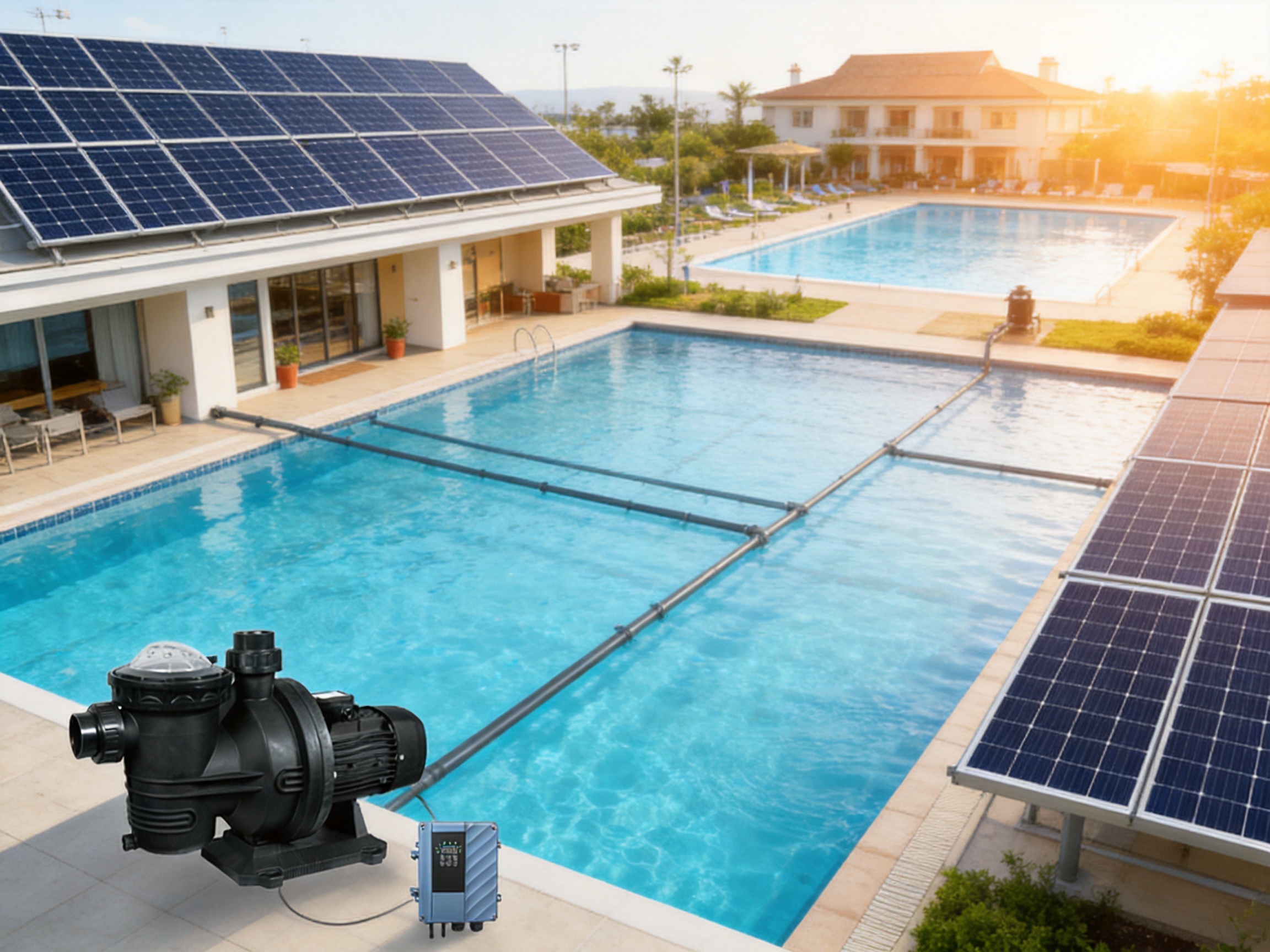
Swimming pool owners, hotel operators, community facilities, and commercial property managers increasingly need circulation systems that are reliable, economical, and adaptable to changing energy conditions. A pool pump must operate for long periods, move water through filtration equipment, maintain consistent circulation, and support clean and safe pool conditions. At the same time, rising electricity costs and the global shift toward renewable energy are encouraging users to consider solar-powered pumping solutions.
The ADLP Series AC/DC Hybrid Motor Solar Swimming Pool Pump is designed to meet these requirements through a flexible power system that can use both solar direct current and mains alternating current. This hybrid design allows the pump to operate with solar energy when sufficient sunlight is available while retaining the option of mains power when solar input is reduced or unavailable. The result is a practical circulation solution for residential swimming pools, small hotels, community facilities, and off-grid or semi-off-grid applications.
Unlike a conventional pool pump that depends entirely on grid electricity, this AC/DC surface solar pump can be integrated into a renewable-energy system without sacrificing operational flexibility. Unlike many basic solar pumps designed mainly for irrigation or water transfer, it is developed specifically for swimming pool circulation, filtration, and continuous water movement. Its combination of hybrid power compatibility, compact construction, durable components, and energy-conscious operation makes it suitable for pool systems that require dependable daily performance.
Swimming pool water must circulate continuously or at regular intervals to maintain acceptable water quality. Without effective circulation, disinfectants may not be distributed evenly, suspended particles can settle, and water near the surface or in low-flow areas may become stagnant. The circulation pump is therefore one of the most important components in a pool’s filtration and water-management system.
A pool pump draws water from the pool through the circulation line, sends it through a filter and other treatment equipment, and returns the treated water to the pool. This process helps distribute chemicals, remove debris, and maintain more uniform water conditions. The pump must provide sufficient flow for the filter while also overcoming the resistance created by pipes, valves, elbows, filtration units, heating systems, and other accessories.
Pool circulation is different from many short-duration water transfer applications. A pump may need to run for several hours each day, often under changing weather conditions and variable solar input. This places emphasis on electrical flexibility, thermal stability, mechanical durability, low maintenance, and predictable hydraulic performance. A pump that works well for occasional water transfer may not be suitable for long operating cycles in a pool environment.
The ADLP Series addresses this operating pattern with a motor and hydraulic configuration intended for continuous pool circulation. Its maximum flow options of 20 cubic meters per hour and 27 cubic meters per hour provide choices for different pool sizes and system requirements. The maximum head rating of 19 meters supports circulation systems with moderate elevation changes and line resistance, subject to the actual installation conditions and performance curve.
The central advantage of the ADLP Series is its AC/DC hybrid motor. The pump accepts a broad AC voltage range of 85V to 280V and a DC voltage range of 100V to 350V. This allows the pump to be connected to a suitable solar array while also retaining compatibility with an available mains supply.
Solar-only pool pumps can reduce daytime operating costs, but their performance may be affected by clouds, seasonal changes, shading, or insufficient solar generation. A mains-only pump offers stable availability but exposes the user to conventional electricity costs and dependence on the grid. The hybrid arrangement combines the principal benefits of both approaches. Solar energy can be used whenever practical, while AC power can support continued circulation during periods of weak sunlight or increased demand.
This flexibility is particularly valuable for pool systems that must maintain regular filtration. If a solar-only pump stops whenever irradiance falls below the operating threshold, the pool may receive less circulation during cloudy weather or in the early morning and evening. With an AC/DC hybrid model, the system designer can arrange a power strategy that prioritizes solar energy but allows a backup or supplementary AC source.
The hybrid approach can also help users plan future energy upgrades. A pool owner may initially install the pump with mains power and later add solar panels. Alternatively, a facility may begin with a solar-assisted system and retain the existing AC supply as a backup. This reduces the need to replace the pump when the energy architecture changes.
The broad voltage ranges also give installers more design flexibility. Solar arrays can be configured according to local sunlight conditions, available roof or ground space, and the selected pump model, provided that the open-circuit voltage remains below the specified limit and the system is installed according to appropriate electrical practice. The stated solar panel requirement is at least 1.3 times the pump power, helping designers account for conversion losses and the variable nature of solar generation.
The ADLP Series is not simply a general-purpose water pump connected to a solar power source. It is presented as a swimming pool circulation pump, which means its primary role is to support the movement of water through filtration and treatment equipment. This application focus is important because the pump must balance flow, head, operating duration, installation convenience, and energy use.
The ADLP20-19-72-900 model provides a rated power of 900 watts, a maximum flow of 20 cubic meters per hour, and a maximum head of 19 meters. Its outlet size is 2 by 2 inches, and it is supplied with a 2-meter cable. This configuration may suit smaller residential pools, compact filtration systems, and installations where moderate circulation capacity is required.
The ADLP27-19-72-1200 model provides 1,200 watts of power, a maximum flow of 27 cubic meters per hour, and a maximum head of 19 meters. Its larger 3 by 3 inch outlet is intended for systems requiring greater water movement and larger connection dimensions. It may be appropriate for larger residential pools, small hotels, guesthouses, or community facilities, depending on the system’s actual flow and head requirements.
Maximum flow and maximum head are reference points rather than simultaneous operating values in every installation. Actual performance depends on the operating point created by the pool plumbing, filter, valves, elevation, pipe length, and fittings. Installers should therefore use the performance curve and calculate the total dynamic head before selecting a model. Correct selection helps prevent underperformance, excessive energy use, or unnecessary strain on the pump.
| Model | AC Voltage | DC Voltage | Power | Maximum Flow | Maximum Head | Outlet | Cable Length | Solar Panel Open-Circuit Voltage | Recommended Solar Panel Power |
| ADLP20-19-72-900 | 85V–280V | 100V–350V | 900W | 20 m³/h | 19m | 2 × 2 inches | 2m | Below 450V | At least 1.3 × pump power |
| ADLP27-19-72-1200 | 85V–280V | 100V–350V | 1,200W | 27 m³/h | 19m | 3 × 3 inches | 2m | Below 450V | At least 1.3 × pump power |
The two-model range makes product selection more practical. Instead of forcing every customer to use one fixed capacity, the series offers a choice between a lower-power option and a higher-flow option. This can help reduce oversizing, which is important because an unnecessarily large pump may increase initial cost, require larger plumbing, and consume more energy than the pool system needs.
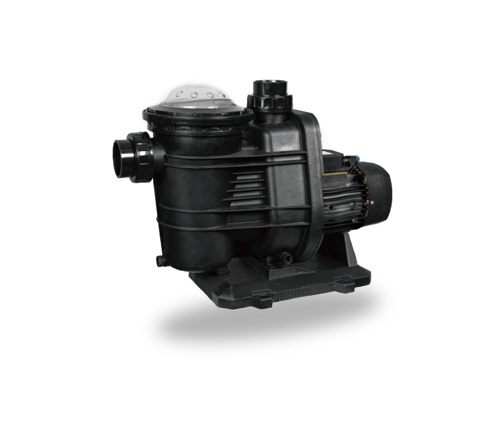
ADLP Seires AC/DC Hybrid Motor Solar Swimming Pool Pump
Pool pumps are often among the largest electrical loads in a residential or commercial pool system because they operate for extended periods. The use of solar energy can reduce reliance on grid electricity during daylight hours, especially in regions with strong solar resources. The ADLP Series supports this approach by accepting DC power directly from a properly designed solar array.
Direct solar operation can provide an efficient energy pathway because the pump is designed to work with DC input rather than requiring a separate conventional AC motor system powered through multiple conversion stages. The exact system efficiency will depend on the pump, solar array, wiring, environmental conditions, operating point, and installation quality. Nevertheless, direct compatibility with solar DC simplifies the overall concept and makes renewable-energy integration more accessible.
The requirement for solar panel power of at least 1.3 times the pump power provides an important design margin. For the 900-watt model, the solar array should provide at least approximately 1,170 watts under the specified design basis. For the 1,200-watt model, the minimum recommended array capacity is approximately 1,560 watts. The actual array may need to be larger depending on local solar irradiation, panel orientation, seasonal conditions, temperature, shading, and desired daily operating hours.
Solar energy is variable by nature. A well-designed pool system should account for the difference between the rated output of a panel and the energy it can deliver during real operating conditions. Morning and afternoon production is lower than midday production, and clouds can temporarily reduce available power. A hybrid pump gives the installer more options for managing these fluctuations. The system can prioritize solar energy during productive periods and use AC power when necessary to preserve circulation schedules.
Energy efficiency also depends on hydraulic design. Even a highly efficient pump may consume unnecessary energy if the pipework is too small, the filter is clogged, valves are incorrectly positioned, or the system contains excessive bends and restrictions. The pump should therefore be installed with appropriately sized pipes, clean filtration equipment, correctly selected valves, and a hydraulic layout that minimizes avoidable pressure losses.
For commercial users, the operating schedule can be coordinated with solar production. Pool filtration may be arranged to run more heavily during daylight hours when solar energy is available, while AC support can maintain the required circulation outside those periods. For residential users, this can provide a balance between water-quality requirements and electricity-cost management.
The most direct comparison is with a conventional AC-only pool pump. An AC-only model may provide dependable operation when grid power is stable, but it cannot use solar DC without additional equipment. The ADLP Series is designed for both input types, which can reduce the complexity of adopting solar energy and provide a backup operating pathway.
Compared with a solar-only pump, the hybrid model offers greater continuity. Solar-only systems may require batteries, a backup generator, or a secondary pump if the facility needs circulation during low-light periods. The AC/DC design can reduce dependence on battery storage for basic backup operation, although the final system architecture should be determined by the user’s operating requirements and local electrical regulations.
Compared with general irrigation pumps, the ADLP Series is better aligned with pool circulation needs. Irrigation pumps are often selected for watering schedules, transfer duties, or pressurizing distribution networks. Pool circulation requires compatibility with filtration equipment and stable operation over repeated daily cycles. A pump designed around pool circulation can provide a more suitable balance of flow and head for this purpose.
The series also has an advantage over a single-size product range because it offers two capacity choices. The 900-watt model can help users avoid installing a pump that is unnecessarily large for a smaller pool. The 1,200-watt model provides additional flow capacity for systems with greater circulation needs. Model selection should always be based on hydraulic calculations rather than maximum flow alone, but the availability of different sizes improves the likelihood of a closer match.
Another advantage is installation flexibility. The product information identifies the pump as suitable for pool-side or underground installations in solar-powered systems. This gives designers options when planning equipment spaces, pipe routes, and solar-system layouts. The compact construction can be helpful where equipment-room space is limited, although installers must still provide adequate access, ventilation, drainage, and protection from conditions that could damage electrical components.
A pool circulation pump must withstand repeated starting, stopping, and long operating periods. It may also be exposed to humidity, temperature changes, splashing water, chemical residues, and vibration. Durable construction is therefore essential for protecting performance over the service life of the equipment.
The ADLP Series is described as having robust components suitable for residential, commercial, and off-grid solar pool applications. This positioning reflects the need for a pump that can operate in different environments and under different energy conditions. A durable pump can help reduce unplanned interruptions, maintenance frequency, and replacement costs, although service life will always depend on correct installation, water conditions, operating practices, and regular inspection.
Mechanical reliability begins with the motor and pump assembly. The motor must convert electrical energy into stable rotational power, while the hydraulic section must move water efficiently without excessive vibration or wear. Correct alignment, suitable materials, effective sealing, and appropriate protection against moisture are all important in the manufacturing and assembly process.
Durability also depends on using the pump within its design limits. The pump should not be operated dry, subjected to blocked suction lines, or forced to run against a closed valve. Pool chemistry should remain within the recommended range for the complete circulation system. Excessive debris, sand, or other abrasive particles can also increase wear. A strong product design provides a foundation for reliability, but proper system management remains equally important.
For facilities such as hotels and community pools, maintainability is particularly important. A pump that is easy to inspect and access can reduce the time required for routine service. The compact and installation-friendly design of the ADLP Series can support practical maintenance planning when the pump is installed with appropriate clearance and accessible isolation valves.
Space limitations are common in residential pool equipment areas. Pumps, filters, dosing equipment, heaters, control panels, and pipework must often be arranged in a relatively small location. A compact pump can simplify equipment-room planning and help installers create a cleaner layout.
The ADLP Series is described as compact and easy to install. Its 2-meter cable provides a basic connection length for many layouts, while the outlet configurations correspond to the different flow models. The 2 by 2 inch connection of the lower-capacity model and the 3 by 3 inch connection of the higher-capacity model allow the pump to be matched with appropriately sized plumbing.
When planning installation, the pump should be located as close as practical to the pool filtration system while maintaining safe access. The suction line should be designed to avoid unnecessary restrictions and should be properly sealed to prevent air entry. The discharge line should be sized for the expected flow and connected to filtration and return equipment in accordance with the pool system design.
Solar installation requires additional attention. The panel array should be positioned to receive sufficient sunlight and should be protected from shading caused by buildings, trees, chimneys, and nearby structures. The open-circuit voltage must remain below 450V, as specified for the product. Wiring, disconnects, grounding, overcurrent protection, and other electrical components should be selected and installed by qualified professionals in accordance with applicable local requirements.
If AC and DC sources are both connected, the power-management arrangement must be designed carefully. The system should prevent unsafe backfeeding, unauthorized switching, and incompatible voltage conditions. The hybrid feature provides flexibility, but it does not eliminate the need for correct electrical design. A professional installer should confirm the operating instructions, source changeover method, protection devices, and maintenance procedures before commissioning the pump.
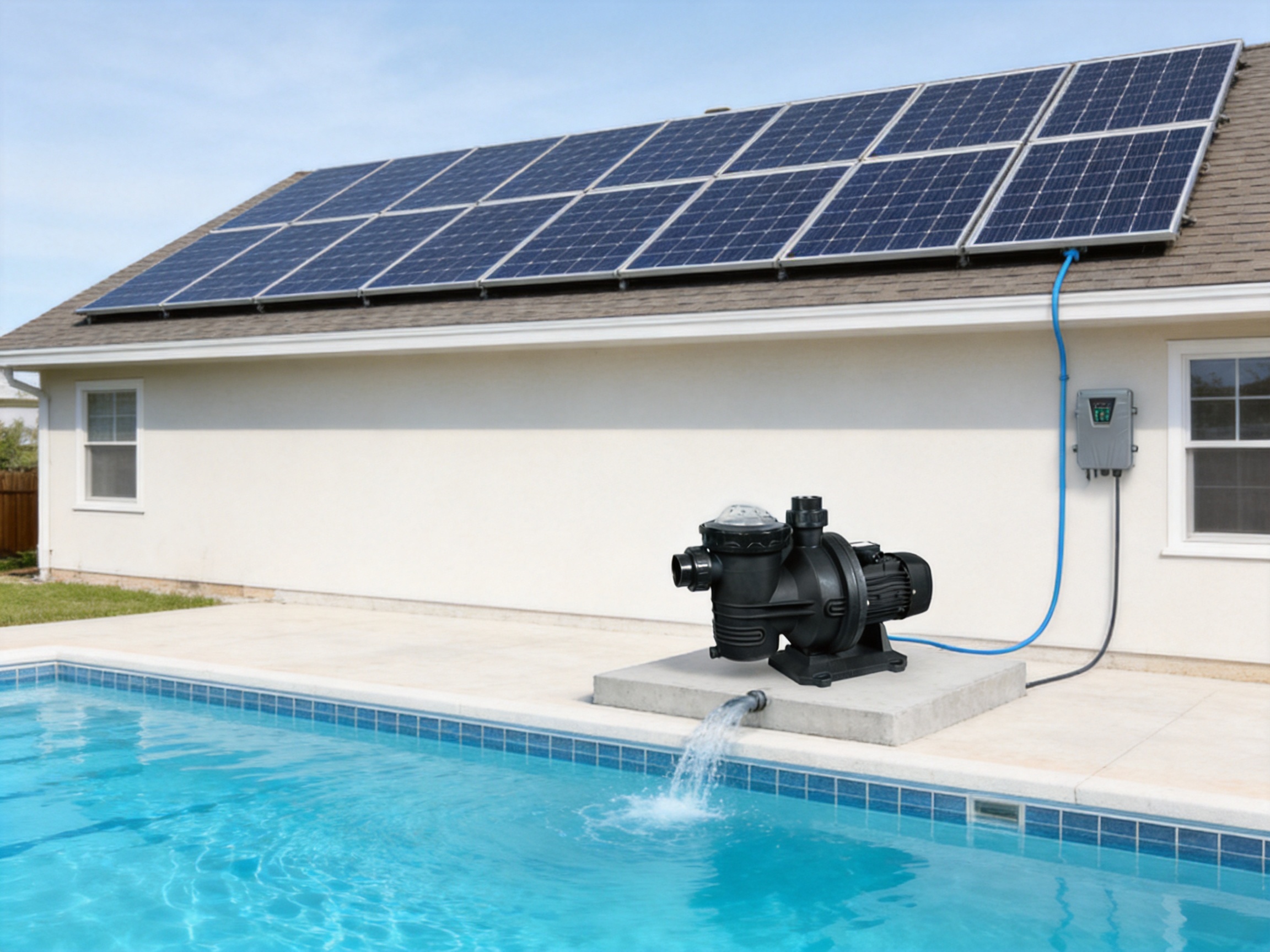
For residential pool owners, the ADLP Series can support everyday circulation and filtration while creating an opportunity to reduce dependence on grid electricity. The lower-capacity model may be appropriate for a smaller pool system, while the higher-capacity model can serve a larger pool or a system with greater filter-flow requirements.
Homeowners may choose a solar-priority arrangement in which the pump operates from the solar array during daylight and switches to AC power only when needed. This can be useful in regions with high electricity prices or strong sunlight. It may also be attractive for new homes that already include rooftop solar generation or for properties where the owner wants to increase the use of renewable energy.
Small hotels, guesthouses, and holiday properties often need to balance guest expectations, operating costs, and equipment reliability. Pool water must remain clean and visually attractive, but the circulation pump may operate for many hours each day. An AC/DC hybrid system can help these businesses use solar energy during productive periods while retaining a stable mains supply for operational continuity.
The pump’s available flow capacities may support different pool sizes and filtration layouts. A properly designed installation can also be integrated with other energy-saving measures, such as efficient lighting, solar water heating, variable filtration schedules, and improved pool covers. The pump itself is one part of a broader energy-management strategy, but its ability to accept both AC and DC power makes it a useful component within that strategy.
Community pools and smaller public facilities have a responsibility to maintain effective circulation while controlling long-term operating costs. These facilities may have predictable daily schedules and substantial daytime activity, making solar-assisted operation particularly relevant. The higher-flow ADLP model may be considered where the hydraulic design calls for greater circulation capacity, subject to engineering verification.
Public facilities also benefit from the backup potential of hybrid operation. Pool circulation should not depend entirely on favorable weather, especially when water-quality routines must be maintained. The combination of solar and mains power can help facility managers create more resilient operating procedures.
Remote resorts, rural properties, recreational facilities, and off-grid homes may have limited access to stable mains electricity. The ADLP Series can be integrated with a solar array for direct DC operation, creating a practical option for pool circulation in areas where conventional electrical infrastructure is unavailable or expensive to extend.
In a fully off-grid system, the pump’s daily schedule must be coordinated with solar availability and any energy storage or backup-generation equipment. The system designer should consider the pool volume, required turnover time, filtration resistance, seasonal sunlight, and the energy budget of other loads. The product’s hybrid capability also allows future connection to an AC source if a generator or local grid supply becomes available later.
The manufacturer behind the ADLP Series is Taizhou Edwin Electric Co., Ltd., also known as Edwin Pump. The company was founded in 2008 and operates as an integrated manufacturing enterprise focused on independent research and development, mass production, and global export. This combination is important because a pump manufacturer must coordinate design, component selection, assembly, quality control, order management, and after-sales communication.
Independent research and development gives the company the ability to develop products around changing market needs. The move into solar water pumps and intelligent booster pumps since 2018 reflects a deliberate investment in new energy and intelligent technology. This experience is relevant to hybrid solar products, where hydraulic performance must be coordinated with electrical input characteristics and changing energy conditions.
Mass-production capability provides another important strength. A product may perform well as a prototype, but commercial customers require repeatable quality across multiple orders. Standardized production procedures, controlled assembly, supplier coordination, and inspection routines help manufacturers maintain consistency when producing pumps for different markets.
An integrated manufacturing structure can also support faster communication between design and production teams. If field feedback identifies a recurring installation issue or a market requires a particular configuration, an integrated enterprise may be better positioned to evaluate the requirement, adjust the design process, and organize production changes. This is especially valuable in international pump markets where voltage standards, applications, and customer expectations vary considerably.
The company’s core product lines include deep well pumps, submersible pumps, domestic booster pumps, and circulation pumps. This broader product experience provides an understanding of different hydraulic applications, including water supply, irrigation, municipal engineering, construction, HVAC systems, mining, and household use. A solar swimming pool pump benefits from knowledge across these fields because pool circulation combines water movement, energy management, compact installation, and long operating hours.
The company also established Taizhou Haipai Import and Export Co., Ltd. and Golden Falcon Industrial Co., Ltd. in 2012 to support procurement planning, order tracking, cross-border delivery, and foreign-trade services. These capabilities are valuable for distributors, contractors, and international project buyers that need more than a product catalog. They may require coordinated quotations, production schedules, shipment planning, documentation, and communication throughout the purchasing process.
Although specific machine models and inspection instruments are not stated in the available product information, the manufacturer’s integrated R&D and mass-production structure indicates a production approach built around repeatability and controlled processes. For a hybrid solar pool pump, this normally involves several important stages.
The first stage is the development of the motor and hydraulic assembly around the intended operating range. Engineers must consider the target flow, head, connection size, power rating, electrical input range, and expected operating conditions. For pool circulation, the design must also account for integration with filters, return lines, valves, and other pool equipment.
Hydraulic design influences efficiency, noise, vibration, and operating stability. A well-matched impeller, pump casing, inlet, and outlet can help the pump deliver useful flow without creating unnecessary losses. The two ADLP models demonstrate an effort to provide different capacity levels while maintaining a stated maximum head of 19 meters.
The AC/DC hybrid motor is a central development feature. The electrical system must accept the stated AC and DC voltage ranges while delivering stable motor operation. This requires careful coordination among the motor, control components, protection functions, wiring, and input-source arrangement.
Solar input is not constant in the same way as mains power. The electrical design must therefore be suitable for variable DC availability within the stated voltage range. At the same time, the AC input must be handled safely and reliably. Proper electrical integration is essential for preventing unstable operation and for supporting the long operating cycles expected in pool applications.
During mass production, correct assembly is essential for maintaining pump performance. Components must be positioned accurately, fasteners must be tightened consistently, seals must be installed correctly, and electrical connections must be secure. Process control helps reduce variation between individual units and supports more predictable field performance.
Manufacturers serving global markets must also manage component availability and supply-chain consistency. A stable procurement system helps ensure that the materials and components used in production meet the intended specifications. The company’s broader export and procurement-service structure supports this commercial requirement by coordinating product supply with international orders.
Pump testing typically involves checking electrical operation, hydraulic output, leakage, noise, vibration, and general assembly quality. For a hybrid model, verification should also include the ability to operate with the specified AC and DC input ranges, subject to the manufacturer’s testing procedures and safety requirements.
Performance testing helps confirm that the pump is aligned with its stated maximum flow and maximum head characteristics. It also supports the preparation of performance curves used by installers and engineers during model selection. Quality verification before shipment is particularly important for export products because international logistics can make field replacement more time-consuming.
The manufacturer’s commitment to reliable quality and global supply is supported by its integrated structure and product experience. Buyers should still request the latest technical documentation, installation instructions, testing information, and applicable compliance documents for the destination market before placing a project order.
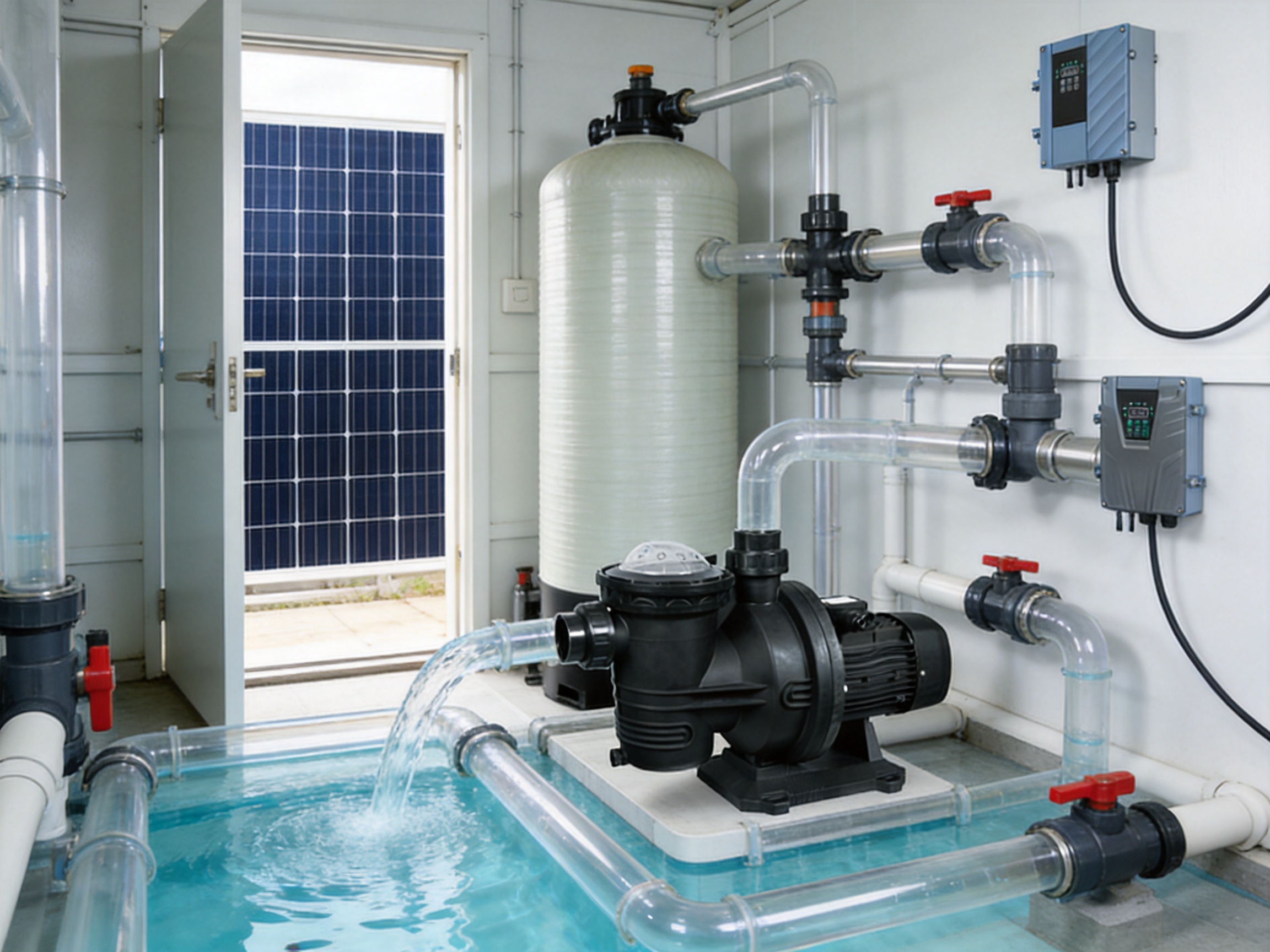
International pump buyers often evaluate more than technical specifications. They may consider factory experience, product range, production capacity, customization communication, packaging, export support, shipment reliability, and documentation. The ADLP Series is supported by a company that has been operating since 2008 and has established dedicated import and export entities for foreign-trade services.
This structure can simplify purchasing for distributors and engineering contractors. A buyer may need several types of pumps for one project, such as deep well pumps, submersible pumps, booster pumps, circulation pumps, and solar water pumps. A manufacturer with multiple product lines can potentially support one-stop procurement, reducing the number of suppliers involved in the project.
The company’s product applications cover new energy projects, agricultural irrigation, municipal engineering, mining, construction, HVAC systems, and household water supply. This range demonstrates experience with different water-system requirements and operating environments. While every application requires separate technical verification, a broad product portfolio can help buyers find compatible equipment for related systems.
Global buyers may also benefit from direct communication with a manufacturer rather than relying only on a trading intermediary. Direct contact can improve clarification of model selection, voltage requirements, solar-array design, packaging, lead times, and installation questions. The company provides telephone, WhatsApp, and email contact options for customer communication.
Choosing between the two models should begin with the required flow rate and total dynamic head. Pool volume alone is not enough to determine pump size. The installer should calculate the desired turnover time and then consider the resistance of the filter, pipework, valves, fittings, heating equipment, and elevation differences.
The ADLP20-19-72-900 model has a maximum flow of 20 cubic meters per hour and a 2 by 2 inch outlet. It may be a practical choice where the pool and filtration system require moderate flow and where a smaller connection size is preferred. Its 900-watt rating may also help limit the size of the solar array and associated electrical equipment.
The ADLP27-19-72-1200 model offers a maximum flow of 27 cubic meters per hour and a 3 by 3 inch outlet. It may be considered for systems requiring greater circulation capacity or larger pipe connections. Its higher power rating requires a larger solar array, with at least approximately 1,560 watts recommended under the stated 1.3-times-power guideline.
The solar array must be selected with careful attention to open-circuit voltage. The stated solar panel open-circuit voltage must remain below 450V. The installer should also account for the temperature-related increase in panel voltage that can occur in cold conditions. The array should be designed so that the maximum possible voltage remains within the pump’s allowable limit.
Other factors include the available installation area, local sunlight, desired operating hours, AC availability, cable routing, environmental exposure, filtration equipment, and local electrical codes. For commercial or public installations, additional requirements may apply regarding electrical protection, equipment access, drainage, and service procedures.
Before installation, confirm that the pump model, power source, pipe size, filter capacity, and system head are compatible. Inspect the pump and cable for transport damage, and make sure all required accessories are available. The pump should be placed on a stable foundation that reduces vibration and protects the equipment from flooding or standing water.
The suction line should be airtight and adequately sized. Air entering the suction pipe can reduce performance, cause irregular operation, and increase noise. The pump should be properly primed when required by the installation design, and it should not be allowed to run dry.
The filter should be clean and correctly sized for the selected pump. A blocked filter increases system resistance and may reduce flow. Valves should be positioned correctly before starting the pump, and the system should be checked for leaks after commissioning.
Electrical work should be completed by qualified personnel. The AC and DC sources must be connected according to the manufacturer’s instructions, with suitable isolation, grounding, overcurrent protection, and source-management equipment. The solar array must comply with the voltage and power requirements. Do not connect a solar array solely on the basis of its nominal voltage; the open-circuit voltage and operating characteristics must be checked.
Routine maintenance should include inspection of the pump housing, cable, connections, seals, pipe joints, and surrounding area. The filter should be cleaned according to the pool system’s operating schedule. Unusual noise, vibration, reduced flow, repeated tripping, or visible leakage should be investigated promptly.
Pool chemistry should be maintained within the recommended range for the complete circulation system. Extremely aggressive water conditions may damage pump components, seals, or connected equipment. Seasonal shutdown procedures should include protection against freezing where relevant and isolation of the electrical supply before service work.
The economic value of a hybrid solar pool pump comes from more than the nominal power rating. It also depends on how effectively the pump is integrated with the pool system and how often solar energy can replace grid electricity. In a region with strong daytime sunlight, solar operation may reduce the amount of electricity purchased from the grid during a significant portion of the circulation schedule.
The AC backup function can help avoid the need for excessive battery storage when the primary objective is daytime solar circulation with occasional supplementary operation. Batteries may still be useful for specific off-grid requirements, but the hybrid architecture gives the user another method of managing energy availability.
Reduced energy use can also support sustainability goals for hotels, residential developments, community facilities, and commercial properties. A solar-assisted pool system can contribute to a broader renewable-energy plan and demonstrate visible environmental responsibility. The actual environmental and financial results depend on local energy prices, solar conditions, system size, operating schedule, maintenance, and installation quality.
Low-maintenance operation is another practical benefit. The product is described as energy-efficient and low maintenance, with durable components and a compact structure. By combining appropriate pump selection with clean filtration, correct water chemistry, and regular inspection, users can help protect performance and extend service life.
An AC/DC hybrid solar swimming pool pump is a circulation pump that can operate from both solar direct current and mains alternating current. The ADLP Series is designed to use a suitable solar array as a DC power source while also accepting AC input within the stated voltage range. This allows the pool owner or system designer to use solar energy when available and retain mains power as a backup or supplementary source.
Yes. Because the pump supports AC input from 85V to 280V, it can operate from a suitable mains supply even when solar power is not available. The exact connection method and source-changeover arrangement should follow the manufacturer’s instructions and local electrical requirements.
The available specifications identify two models. The ADLP20-19-72-900 is rated at 900 watts, with a maximum flow of 20 cubic meters per hour, a maximum head of 19 meters, and a 2 by 2 inch outlet. The ADLP27-19-72-1200 is rated at 1,200 watts, with a maximum flow of 27 cubic meters per hour, a maximum head of 19 meters, and a 3 by 3 inch outlet.
No. Maximum flow is a reference specification obtained under particular test conditions. The actual flow depends on total dynamic head, pipe length, pipe diameter, filter resistance, valves, fittings, elevation, and the operating point shown on the performance curve. Professional selection should be based on the complete hydraulic system.
The solar array should provide at least 1.3 times the pump power according to the supplied specifications. The array’s open-circuit voltage must remain below 450V. Designers should also consider local sunlight, seasonal variation, panel temperature, shading, cable losses, and the required daily operating schedule.
Yes, it can be considered for off-grid solar pool systems in remote areas. The system must be designed around the available solar energy and the pool’s circulation requirements. Depending on the desired operating hours, an off-grid installation may also require energy storage, a generator, or another backup source.
The product is intended for solar-powered residential pools, small hotels and guesthouses, community or public swimming pools, off-grid pool systems, and domestic or commercial water circulation and filtration applications.
The main difference is power-source flexibility. An AC-only pump requires mains electricity unless additional conversion equipment is installed. The ADLP Series can accept both AC and DC, allowing solar integration without making the system completely dependent on solar conditions.
A solar-only pump may stop or reduce operation when sunlight is insufficient. The AC/DC hybrid design provides an additional AC operating option, which can help maintain circulation during cloudy weather, low-light periods, or periods of increased pool-use demand.
The product information identifies it as suitable for pool-side or underground installations in solar-powered systems. The installation must still provide adequate protection from flooding, excessive humidity, poor ventilation, physical damage, and unauthorized access. Local installation requirements should always be followed.
Maintenance should include checking the pump, cable, pipe connections, filter, valves, seals, and surrounding area. The filter should be kept clean, the pump should not run dry, and unusual noise, vibration, leakage, or reduced flow should be investigated. Pool water chemistry should also be managed correctly.
The manufacturer’s product portfolio includes deep well pumps, submersible pumps, domestic booster pumps, circulation pumps, solar water pumps, intelligent booster pumps, and other pump categories. This broader range may support one-stop procurement for projects requiring several water-pumping functions.
The ADLP Series AC/DC Hybrid Motor Solar Swimming Pool Pump offers a flexible approach to modern pool circulation. Its ability to use both solar DC and mains AC power provides a practical balance between renewable-energy use and operating continuity. The two available models cover maximum flow ratings of 20 and 27 cubic meters per hour, while both offer a maximum head of 19 meters and are designed for integration with swimming pool filtration systems.
Its principal advantages over conventional single-source pumps include flexible energy selection, compatibility with solar arrays, reduced dependence on grid electricity during productive sunlight hours, and continued AC operation when solar conditions are insufficient. Its compact design, durable construction, and low-maintenance positioning further support residential, hospitality, community, and off-grid applications.
The product is backed by a manufacturer established in 2008 with capabilities in independent research and development, mass production, global export, and one-stop procurement support. The company’s expansion into solar water pumps and intelligent technologies demonstrates a commitment to developing products for new energy and modern water-management requirements. Its wider product portfolio and international trade support can also benefit contractors, distributors, and project buyers seeking coordinated pump supply.
Successful performance depends on correct model selection, accurate hydraulic calculation, appropriate solar-array sizing, safe electrical installation, clean filtration, and regular maintenance. When these factors are addressed, the ADLP Series can provide an efficient and adaptable solution for reliable swimming pool circulation in both grid-connected and renewable-energy systems.
Taizhou Edwin Electric Co., Ltd. Product information for the ADLP Series AC/DC Hybrid Motor Solar Swimming Pool Pump.
Taizhou Edwin Electric Co., Ltd. Technical specifications for ADLP20-19-72-900 and ADLP27-19-72-1200 models.
Manufacturer information regarding solar panel voltage, recommended solar panel power, product applications, and installation suitability.
Manufacturer profile and company history concerning independent research and development, mass production, global export, and intelligent pump technology.
General engineering principles for swimming pool circulation, filtration-system design, solar photovoltaic sizing, and pump hydraulic selection.
serieswatershortageprotectionvoltagestabilizationstainlesssteelverticalmultistagepump.jpg "EVR(S) Series Water Shortage Protection Voltage Stabilization Stainless Steel Vertical Multistage Pump")
edwina@edwin-pump.com
+86-13586290903 (WhatsApp)
Xuri Gongliang Cutting Tool Entrepreneurship Park, Wenqiao Town, Wenling City, Taizhou City, Zhejiang Province, China

High Performance Smart Pump Factory


 English