
edwina@edwin-pump.com

View All Products
en
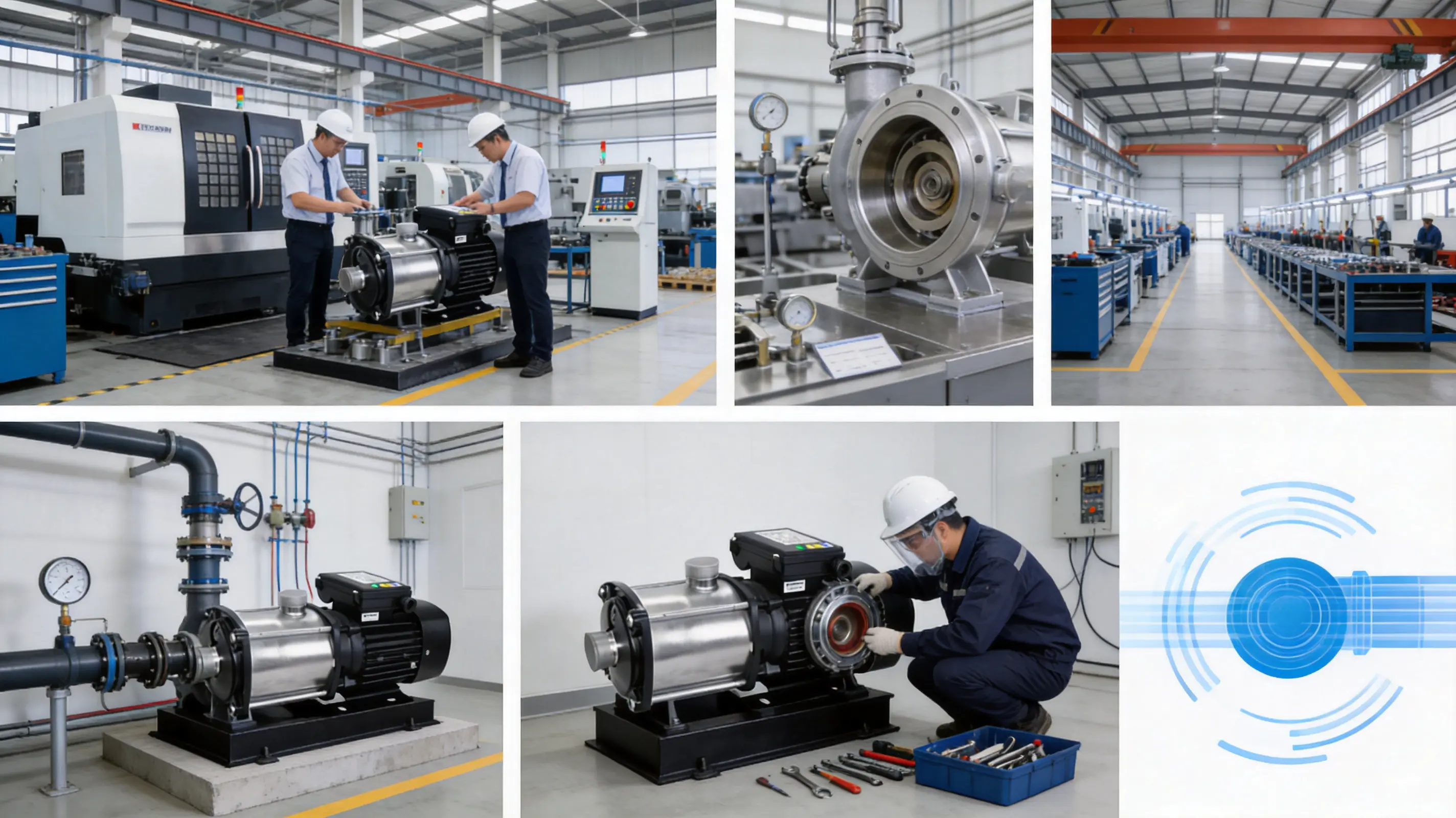
Reliable water movement is essential in industrial processing, commercial buildings, residential water systems, heating networks, cooling installations, and many other applications. A pump must do more than move water from one location to another. It must generate suitable pressure, maintain stable flow, tolerate repeated operating cycles, fit within available installation space, and continue performing under demanding environmental conditions. When the water source is below the pump or the suction line cannot remain fully flooded, self-suction capability becomes an additional advantage.
The EMI Series Self-Suction Design Cast Iron Horizontal Multistage Pump is designed for applications that require a combination of pressure generation, compact horizontal installation, dependable water handling, and flexible electrical configurations. Its multistage hydraulic design uses several impellers working in sequence. This allows the pump to achieve higher pressure than a comparable single-stage pump using a relatively compact body and motor arrangement.
The series is also identified as a heating and cooling type pump. This makes it suitable for circulation and transfer duties associated with industrial heating and cooling processes, air-conditioning systems, heater devices using softened water, water treatment processes, industrial cleaning, fertilization and metering systems, and general water supply and boosting. Depending on the selected model, the series covers rated flows from approximately 1 to 20 m³/h and rated heads from approximately 8.5 to 63 m.
This article examines the product’s construction, hydraulic principle, operating range, material selection, applications, installation considerations, maintenance requirements, and advantages compared with common alternative pump configurations. It also explains the manufacturing strengths of the producer, including independent research and development, mass production capability, quality-oriented assembly, and experience serving international markets.
The pump is a horizontal multistage centrifugal pump with a self-suction design and cast iron structural components. The horizontal configuration places the pump and motor along a common horizontal axis, creating a practical arrangement for equipment rooms, process skids, booster assemblies, and plant utility areas. In many installations, a horizontal pump is easier to access for inspection and service than a vertically arranged equivalent.
The pump’s multistage structure consists of multiple impellers and associated diffusers. Water enters the pump, passes through the first impeller, and then moves through successive hydraulic stages. Each stage adds energy to the liquid. The accumulated energy is converted into pressure, allowing the pump to deliver a high head without requiring one extremely large impeller.
The self-suction design is intended to simplify operation where the pump is positioned above the liquid level or where air may be present in the suction pipe during startup. A self-suction valve supports the suction process and helps the pump establish liquid movement after the initial priming conditions have been met. Operators should still follow the installation and priming instructions for the selected model, because self-suction capability does not eliminate the need for a correctly designed suction line or proper commissioning.
The product range includes narrow-flow, high-head models as well as higher-flow models designed for water supply and boosting. Model groups such as EMI1, EMI2, EMI3, EMI4, EMI5, EMI8, EMI10, EMI12, EMI16, and EMI20 provide different combinations of flow and pressure. The number in the model designation generally corresponds to the nominal flow family, while the final number commonly indicates the stage or performance version. Exact selection should always be based on the actual pump curve, system resistance, liquid properties, power supply, and duty cycle.
The most important advantage of the series is its multistage hydraulic architecture. A single-stage pump must generate the required head through one impeller and one diffuser arrangement. When the required pressure becomes high, a single-stage design may need a larger impeller, a higher motor speed, or a larger pump body. A multistage pump divides the pressure-building task among several stages.
This approach offers a useful balance between pressure and equipment size. Each impeller contributes a portion of the total head, allowing the pump to reach rated heads up to approximately 63 m in the listed range. For building water boosting, process cleaning, heating circuits, and pressure transfer duties, this can be more practical than installing multiple single-stage pumps in series.
Multiple stages also provide selection flexibility. The same general hydraulic platform can be configured with different numbers of stages and different impeller arrangements. This enables a broader range of pressure points while retaining common manufacturing methods, replacement procedures, and service knowledge.
Self-suction capability is valuable when the pump is not installed directly below a flooded tank or when the suction pipe may contain air. Conventional centrifugal pumps often require manual priming before each startup if air enters the casing. Repeated priming can increase operating effort and create an opportunity for dry running or delayed water delivery.
The self-suction design helps the pump evacuate air from the suction passage and establish a liquid column under suitable conditions. This is particularly useful in water transfer, small process systems, utility installations, and booster applications where the layout cannot guarantee a permanently flooded suction.
However, self-suction should be understood as a performance feature rather than permission to ignore hydraulic fundamentals. The suction pipe should be appropriately sized, airtight, adequately supported, and protected from unnecessary bends. A foot valve, strainer, isolation valve, or other accessories may be required depending on the system. The maximum suction value listed for the series is approximately 5 m on many models, with some entries indicating higher values in the supplied technical data. The exact allowable suction condition must be confirmed for the selected model and application.
The horizontal layout is suitable for installations where floor space is available but overhead clearance is limited. It can be integrated into plant rooms, utility areas, equipment bases, and process lines without the vertical height often associated with vertical multistage pumps. Motor terminals, the pump body, and the mechanical seal area can generally be reached from a practical service position.
Horizontal installation can also simplify connection to horizontal pipework. When the suction and discharge arrangements match the piping route, the installer may reduce unnecessary elbows and support requirements. Fewer changes in direction can contribute to lower hydraulic losses and easier maintenance.
Cast iron is used for major structural parts such as the pump body and support. The supplied materials table identifies HT200 for the pump body and support, cast iron for the motor cover, stainless steel for the impeller, carbon and ceramic for the mechanical seal, aluminum for the motor case, and polypropylene for the fan.
HT200 cast iron is widely used in pump construction because it provides a practical combination of rigidity, machinability, dimensional stability, and cost efficiency. A rigid casing helps maintain alignment between internal hydraulic components and reduces deformation under normal pressure conditions. Compared with lightweight materials, cast iron can provide a solid mounting base and good resistance to vibration when the pump is correctly installed.
Cast iron is not universally suitable for every liquid. Highly corrosive chemicals, saltwater, abrasive slurries, and liquids with unusual pH values may require stainless steel, engineered plastics, special coatings, or a different pump family. The EMI Series is primarily intended for clean water and compatible low-viscosity liquids. Liquid compatibility must be reviewed before purchase.
The stainless steel impeller provides a useful complement to the cast iron casing. The impeller is exposed directly to the pumped liquid and is responsible for transferring energy to the water. Stainless steel can offer improved resistance to rust and surface deterioration compared with ordinary carbon steel in many clean-water applications.
The combination of cast iron structural components and stainless steel wetted rotating elements is a practical way to balance durability, hydraulic performance, and production cost. It can be advantageous over an entirely basic cast iron construction where impeller corrosion may become a concern, while remaining more economical than a fully stainless steel pump for applications that do not require complete stainless construction.
The mechanical seal is listed as carbon and ceramic. This combination is commonly used in water pumps because the two faces can provide reliable sealing under normal clean-water conditions. A properly selected mechanical seal helps prevent leakage along the shaft and protects the motor-side components from liquid intrusion.
Seal life depends on water quality, temperature, pressure, shaft alignment, operating frequency, and protection against dry running. The pump should not be operated without liquid. If the application involves hot water, treated water, glycol mixtures, chemicals, or suspended solids, the seal materials and temperature limit should be verified with the supplier.
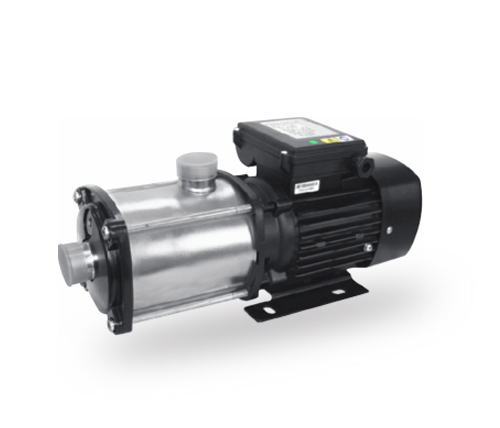
EMI Series Self-suction Design Cast Iron Horizontal Multistage Pump
The product’s component arrangement reflects the requirements of a compact multistage centrifugal pump. Each part performs a specific function, and the combined design supports serviceability and repeatable production.
The pump body contains the suction and discharge passages and forms the main pressure boundary. The pump casing and casing sections guide liquid through the successive hydraulic stages. Accurate machining of these parts is important because clearances, alignment, and passage geometry affect efficiency, pressure stability, and noise.
Cast iron provides a stable foundation for machining and assembly. The casing must be inspected for casting quality, dimensional accuracy, thread integrity, and sealing-surface condition. During operation, the pump body should be protected from impact, freezing, and pressure conditions above the stated maximum working pressure.
Diffusers guide water from one impeller to the next and help convert velocity into pressure. In a multistage pump, the diffuser geometry must work consistently across all stages. Poor alignment or excessive internal clearance can reduce the pressure achieved by each stage and increase hydraulic losses.
Because the diffuser is an internal hydraulic component, its design and inspection have a direct influence on the pump curve. Consistent diffuser production is therefore essential when manufacturing multiple models within the same series.
The stainless steel impellers rotate on the shaft and transfer motor power to the liquid. Impeller balance is important because unbalanced rotation may create vibration, accelerate bearing wear, and affect the mechanical seal. The impeller diameter, blade geometry, and stage count determine much of the pump’s pressure and flow performance.
Different model families use different hydraulic configurations to serve different flow ranges. Smaller-flow models are suited to pressure-focused duties, while models in the EMI8 through EMI20 families can provide greater flow for larger water supply, HVAC, and process applications.
The shaft and rotor transfer torque from the motor to the impellers. The ball bearings support rotation and maintain the required position of the rotor. Proper bearing selection, lubrication, assembly cleanliness, and shaft alignment are essential to long operating life.
The motor is a two-pole induction motor. Single-phase options include 1 × 220–240 V at 50 Hz and 1 × 110–120 V at 50 Hz. Three-phase options include 3 × 380–415 V at 50 Hz. Motors for other voltages may be available upon request. Before ordering, the user should confirm local voltage, frequency, phase, starting method, protection requirements, and motor power.
Single-phase models include a thermal protector according to the supplied product information. This helps protect the motor against excessive temperature under appropriate operating conditions. Thermal protection is not a substitute for correct sizing, overload protection, adequate ventilation, and proper electrical installation.
The motor case is identified as aluminum, while the fan is polypropylene and the motor cover is cast iron. Aluminum can help reduce housing weight and provide effective heat dissipation. The fan circulates air over the motor housing, while the fan cover protects the rotating fan and helps direct airflow.
The motor should be installed in a location with sufficient ventilation. Dust, insulation, blocked airflow, and high ambient temperature can reduce heat dissipation. The stated environmental temperature is no more than +50°C, and this limit should be considered during equipment-room design.
The self-suction valve contributes to the air-removal and priming function. “O” rings support sealing between casing sections and other mating components. O-ring condition is important during maintenance because a hardened, damaged, incorrectly sized, or improperly installed ring may cause air leakage on the suction side or water leakage on the pressure side.
When servicing the pump, sealing surfaces should be cleaned without scratching them. Replacement rings should match the approved material, dimensions, and temperature range. Excessive sealant should not be applied unless specifically permitted, because loose sealant can enter the hydraulic passages.
The EMI Series includes a broad range of motor powers, rated heads, rated flows, suction capabilities, and gross weights. The listed power range begins at approximately 0.25 kW for compact models and extends to approximately 4 kW for the highest-flow or highest-head versions shown. Rated head values range from approximately 8.5 m to 63 m, while rated flows range from approximately 1 to 20 m³/h.
The following table summarizes representative models from the supplied technical data. It is intended as a selection guide rather than a replacement for a full pump curve. Some model entries in the original data use slightly different suffix formats, such as “T,” “BT,” or “B(T).” These designations should be confirmed against the current technical catalogue.
| Model | Power (kW) | Rated Head (m) | Rated Flow (m³/h) | Maximum Suction (m) | Gross Weight (kg) |
|---|---|---|---|---|---|
| EMI1-2(T) | 0.25 | 18 | 1 | 5 | 7.6 |
| EMI2-5(T) | 0.55 | 40 | 2 | 5 | 10.5 |
| EMI3-7(T) | 1.00 | 49 | 3 | 5 | 13 |
| EMI4-6(T) | 1.00 | 46 | 4 | 5 | 13 |
| EMI5-7(T) | 1.10 | 45.5 | 5 | 5 | 15 |
| EMI8-25(T) | 1.50 | 30 | 8 | 5 | 16 |
| EMI8-40(T) | 2.20 | 45 | 8 | 5 | 23 |
| EMI10-5T | 3.00 | 63 | 10 | 5 | 26 |
| EMI12-40B(T) | 2.20 | 39.5 | 12 | 5 | 23 |
| EMI16-30(T) | 2.20 | 30 | 16 | 5 | 22 |
| EMI20-40T | 4.00 | 42 | 20 | 5 | 28 |
Model selection should begin with the required flow. Flow is the amount of liquid that must be delivered during a given period. A domestic water supply system may require a relatively modest flow, while a commercial HVAC loop, industrial cleaner, or process line may need several cubic meters per hour or more.
The next factor is total dynamic head. Total head includes static elevation, required terminal pressure, friction losses in pipes and fittings, losses through filters and valves, and any pressure required by downstream equipment. Selecting a pump only by pipe size or motor power can lead to underperformance or unnecessary energy consumption.
For water systems, a useful preliminary conversion is that 10 m of water head is approximately equivalent to 1 bar of pressure, although the exact conversion depends on water density and gravity. A model rated at 40 m head therefore provides a theoretical pressure increase of about 4 bar under the rated condition, before accounting for system losses and actual pump curve behavior.
Liquid temperature and viscosity must also be considered. The supplied information states that when the liquid density or viscosity is higher than water, a higher-power driving motor may be necessary. More viscous liquids increase resistance and may reduce flow, head, and motor efficiency. If the liquid is not clean water, the pump should be evaluated by a qualified technical person.
Finally, the user should verify electrical supply, installation altitude, ambient temperature, operating schedule, suction lift, noise requirements, and local safety standards. A correctly selected smaller pump is generally preferable to an oversized pump that operates far from its best efficiency region.
The pump can support water treatment processes that require transfer, circulation, or pressure boosting of compatible clean or lightly treated water. Examples may include filtration support, water transfer between process stages, equipment washing, and auxiliary circulation. The exact water quality should be assessed because abrasive particles or aggressive chemicals may affect the casing, impeller, seals, and bearings.
Industrial cleaning systems often need stable pressure to supply spray devices, washdown equipment, cleaning manifolds, or process lines. The multistage arrangement helps provide pressure within a compact footprint. The self-suction feature can be useful where the pump is installed beside a tank or cleaning reservoir rather than below it.
For cleaning liquids containing detergents, solvents, elevated temperatures, or suspended solids, material compatibility must be confirmed. In some cases, a stainless steel or chemically resistant pump may be more appropriate than a cast iron model.
Manufacturing facilities frequently experience inadequate pressure at distant equipment, upper floors, or multiple points of use. The EMI Series can be used to boost water pressure for production lines, utility systems, and equipment requiring a stable supply. Its range of flow and head combinations allows the installer to match the pump more closely to the process demand.
Heating and cooling installations require dependable circulation and pressure management. The pump may be applied to industrial process heating, cooling circuits, air-conditioning systems, and equipment using softened water. A horizontal multistage pump can be installed near heat exchangers, circulation loops, or pressure-sensitive equipment when the liquid and temperature remain within the permitted operating conditions.
Designers should calculate the system’s required circulation flow and friction head rather than selecting a pump solely by motor rating. Closed-loop systems may have relatively low static head but substantial friction losses through heat exchangers, control valves, strainers, and long pipe runs.
Air-conditioning support systems may need water circulation for heat transfer, cooling towers, fan-coil systems, or auxiliary equipment. Stable flow helps maintain thermal performance and can prevent uneven temperature distribution. The pump should be integrated with appropriate control devices, expansion provisions, isolation valves, and protection against low-flow operation.
Heater devices using softened water may benefit from a pump that combines pressure capability with compact installation. Softened water can have different chemical characteristics from untreated water, so the water-treatment program should be reviewed to ensure that the impeller, casing, seal, and elastomers remain compatible over the expected service life.
The product information identifies fertilization and metering systems as potential applications. These systems require special attention to chemical concentration, temperature, viscosity, and corrosion. The pump should only be used where the conveyed liquid is compatible with cast iron, stainless steel, carbon, ceramic, and the selected O-ring material. For concentrated fertilizers or corrosive dosing chemicals, a pump designed specifically for chemical service may be required.
Water supply and boosting duties may include drinking water and light chlorine water. In these applications, all wetted materials, seals, coatings, and manufacturing cleanliness should meet the regulations applicable in the destination market. The product’s stainless steel impeller is beneficial for many clean-water applications, but regulatory approval should never be assumed without documentation.
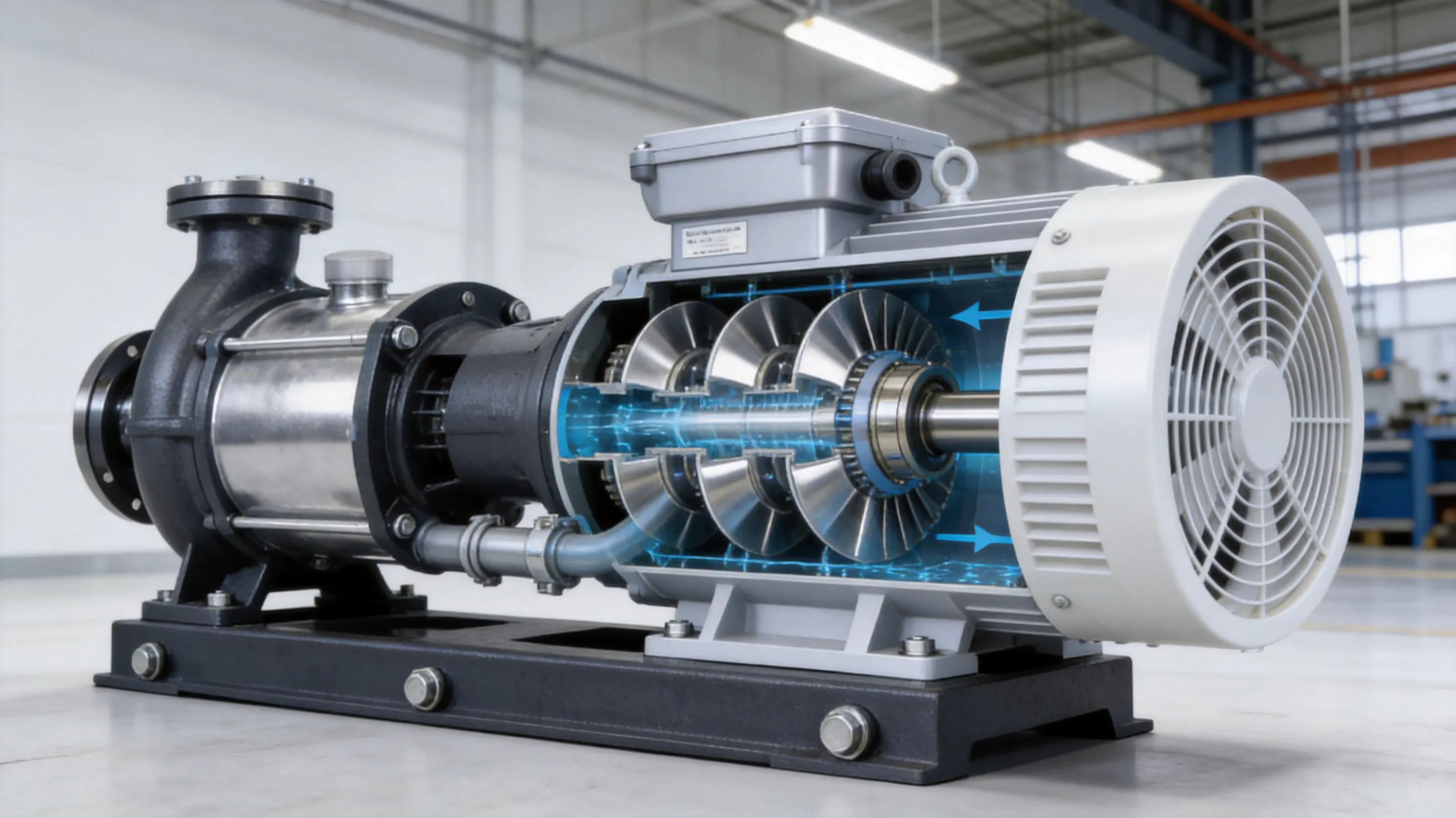
A single-stage centrifugal pump is often economical and effective for low- to moderate-head duties. However, when the system requires higher pressure, a multistage pump can provide a more efficient and compact solution. The EMI Series develops pressure through several impellers rather than relying on one large impeller.
This can reduce the physical size required for a given pressure duty and offers more model choices for different head requirements. A multistage pump may also provide a smoother way to match pressure demand in applications such as building boosting, industrial cleaning, and long pipe runs.
A conventional non-self-suction pump may require a flooded suction or frequent manual priming. In systems where the pump is above the liquid level, this can increase commissioning time and operating complexity. The self-suction design of the EMI Series is intended to reduce this difficulty under suitable installation conditions.
The advantage is particularly relevant in smaller water systems, transfer installations, and equipment layouts where the tank cannot be located above the pump. Nevertheless, the suction line still must be airtight and correctly designed. Self-suction performance cannot compensate for an undersized pipe, excessive suction lift, or a leaking connection.
Vertical multistage pumps can offer a small floor footprint, but they require sufficient vertical clearance and may be less convenient where overhead obstructions exist. The horizontal arrangement provides an alternative for plant rooms and skids with limited height.
The choice between horizontal and vertical construction depends on the installation. The horizontal model may be easier to access for certain maintenance tasks, while vertical designs can be preferable where floor area is extremely limited. The EMI Series is competitive where horizontal accessibility, self-suction capability, and a broad pressure range are more important than minimum floor footprint.
Fully stainless steel pumps are appropriate for aggressive liquids, hygienic environments, or applications with stringent corrosion requirements. They can, however, involve a higher purchase cost. The EMI Series uses cast iron for key structural components and stainless steel for the impeller, providing a balanced construction for compatible water applications.
This material strategy can make the pump more accessible for industrial water supply, HVAC, cleaning, and general boosting applications where full stainless construction is not necessary. The correct comparison should consider total lifecycle cost, liquid compatibility, maintenance, energy use, and required certifications rather than purchase price alone.
The producer is an integrated manufacturing enterprise established in 2008, with capabilities covering independent research and development, mass production, and global export. This integrated structure is important for pump buyers because product performance depends not only on design but also on casting, machining, component sourcing, assembly, testing, packaging, and after-sales support.
Independent research and development enables the manufacturer to adapt hydraulic platforms to changing market requirements. For a multistage pump, research may involve impeller geometry, diffuser efficiency, self-suction behavior, motor matching, thermal management, seal reliability, vibration control, and model-range planning.
Ongoing development is particularly important because pump applications differ significantly between residential water supply, commercial buildings, agriculture, industrial utilities, HVAC systems, mining environments, and new-energy projects. A company that maintains its own technical development capability can refine products for specific operating conditions rather than relying solely on generic designs.
Mass production can provide advantages in component standardization, repeatable assembly, manufacturing efficiency, and spare-parts availability. When a product family includes many flow and head combinations, common parts and controlled production processes help maintain consistency across the range.
Process consistency should include incoming material inspection, casting evaluation, machining control, impeller balance checks, shaft inspection, bearing installation, seal assembly, electrical testing, pressure testing, and performance verification. These controls reduce the risk that a pump’s actual performance will differ significantly from its intended specification.
Hydraulic performance depends on accurate relationships between the impeller, diffuser, casing, shaft, and sealing elements. Machining tolerances influence internal clearances, while surface quality affects friction and leakage. The manufacturer’s ability to coordinate these processes is a major strength when producing multistage equipment.
Impeller balancing is also an important manufacturing step. A balanced rotor assembly helps limit vibration and protects bearings and mechanical seals. For pumps intended for continuous or frequent operation, attention to rotating-component balance can contribute substantially to service reliability.
The motor must be correctly matched to the hydraulic assembly. If the motor is too small, it may overload when the pump operates at a different point on the curve. If it is excessively large, the system may incur unnecessary purchase and operating costs. The listed model range shows coordinated power progression across different flow and head families.
Motor production and assembly should include winding quality, insulation verification, rotor balance, bearing fit, thermal protection, terminal integrity, and no-load testing. The stated two-pole induction motor design provides a conventional and widely serviceable drive arrangement for water-pumping applications.
The company has developed dedicated import and export service organizations to support procurement planning, order tracking, cross-border delivery, and foreign-trade services. For international buyers, this commercial infrastructure can be as important as the pump itself. Export experience helps address documentation, packaging, model confirmation, voltage requirements, shipping coordination, and communication across different markets.
The company’s pumps are used in new-energy projects, agricultural irrigation, municipal engineering, mining, construction, HVAC systems, and household water supply. This variety indicates exposure to different installation environments and purchasing requirements. It also supports one-stop procurement for customers seeking several categories of water pumps and related products.
Since 2018, the company has invested in new energy and intelligent technology, including solar water pumps and intelligent booster pumps. Although the EMI Series is a conventional motor-driven multistage pump, experience in intelligent and solar technologies can strengthen the manufacturer’s understanding of modern system integration, energy management, remote operation, and variable-demand water supply.
This broader product portfolio allows customers to consider different pump technologies from one manufacturing and supply network. A buyer may use a conventional horizontal multistage pump for an industrial utility system, a solar pump for remote irrigation, and an intelligent booster system for a variable-demand building.
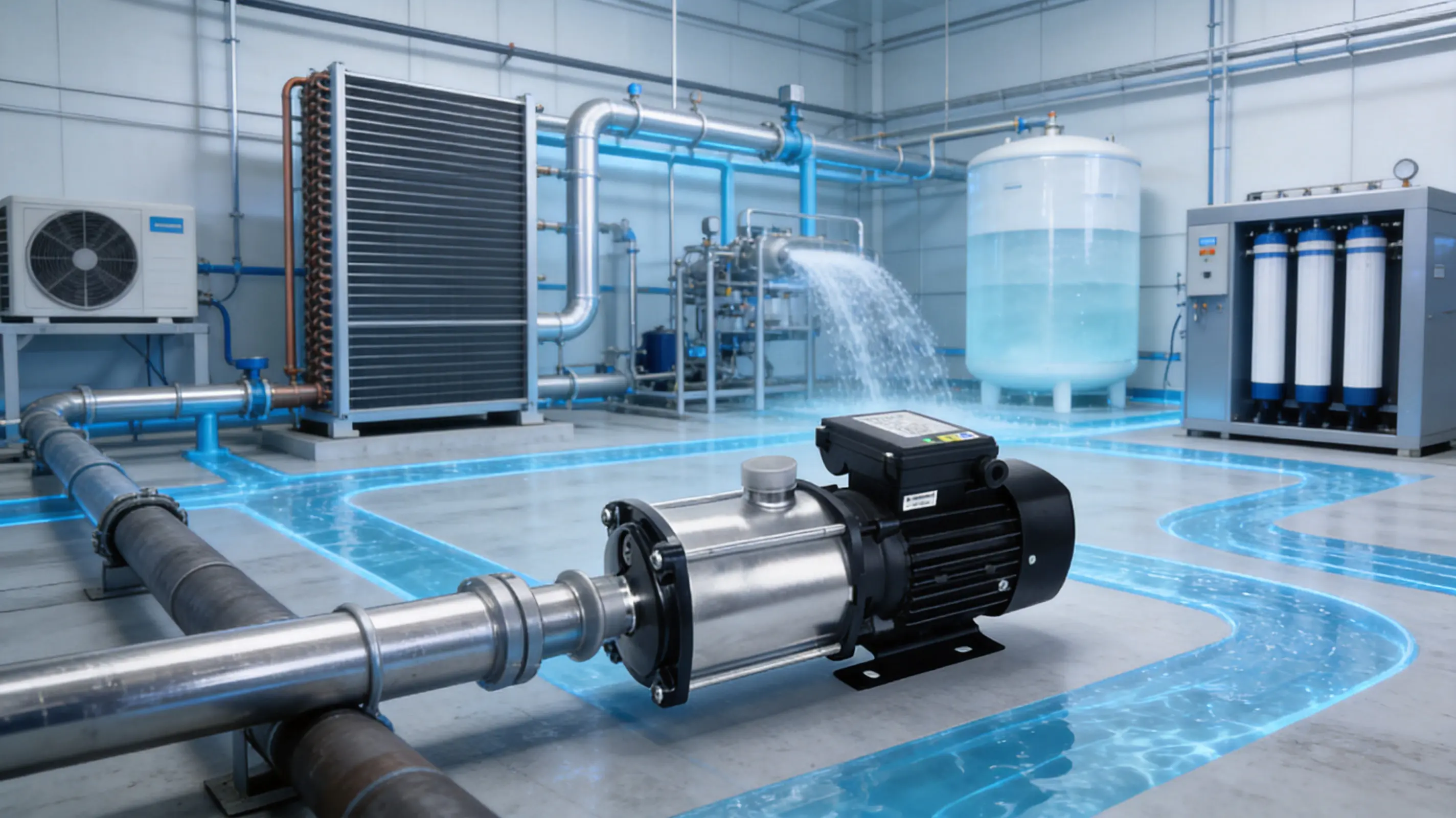
Correct installation is essential for achieving the expected performance of any centrifugal pump. Before installation, inspect the pump for transport damage, confirm the model and voltage, check the rotation requirements, and verify that the supplied accessories match the system design.
The pump should be mounted on a stable, level foundation capable of supporting the equipment and resisting vibration. The foundation should not transfer pipe strain to the pump casing. If the pump is installed on a skid or baseplate, the base should be adequately rigid and properly anchored.
Allow sufficient space around the motor, fan cover, terminal box, pump casing, and mechanical seal area. Access is required for electrical inspection, seal replacement, bearing evaluation, and cleaning. The installation area should be protected from flooding, corrosive vapors, excessive dust, and temperatures outside the permitted range.
The suction pipe should be as short and direct as practical. It should rise continuously toward the pump where possible, avoiding air pockets. All threaded, flanged, or union connections must be sealed and tightened correctly. Even a small air leak can prevent self-suction operation or cause unstable flow.
The suction pipe should not be smaller than the pump inlet unless an engineering calculation confirms that the arrangement is acceptable. An undersized suction pipe increases friction loss and can reduce the available inlet pressure. Excessive suction losses may lead to cavitation, noise, vibration, and premature component damage.
A strainer or foot valve may be used when required by the water source. The strainer must be selected to prevent blockage and should be accessible for cleaning. The use of a foot valve can help retain water in the suction pipe, but the valve must have adequate flow capacity and low opening resistance.
The discharge pipe should include suitable isolation and non-return provisions where required. A check valve can help prevent reverse flow when the pump stops. A pressure gauge near the discharge side can assist with commissioning and troubleshooting.
Pipe supports should be installed independently of the pump. Thermal expansion in heating systems must be considered so that pipe movement does not load the casing. In cooling systems, insulation should be arranged to prevent condensation from reaching the motor or electrical connections.
Electrical work should be completed by qualified personnel in accordance with local regulations. Confirm whether the motor is single-phase or three-phase and verify the supply voltage and frequency before energizing the pump. Correct overload protection, grounding, isolation, and cable sizing are required.
For three-phase motors, phase sequence should be checked to confirm correct rotation. Incorrect rotation may result in reduced performance or damage. The terminal box should remain dry and properly sealed, particularly in humid plant rooms or outdoor installations.
Before startup, fill and prime the pump according to the manufacturer’s instructions. Open the required suction valve and verify that the liquid source is available. The pump must not run dry, even for a short period, because the mechanical seal depends on liquid for cooling and lubrication.
Start the pump briefly if rotation must be checked, then observe pressure, flow, sound, vibration, motor temperature, and leakage. If the pump fails to establish suction, switch it off and inspect the suction line for air leaks, blocked strainers, inadequate liquid level, excessive lift, or incorrect valve position.
Routine observation is one of the simplest ways to protect a pump. Operators should monitor pressure, flow, motor current, sound, vibration, temperature, and visible leakage. A gradual reduction in pressure may indicate a blocked strainer, worn impeller, damaged diffuser, air entry, closed valve, or changing system conditions.
Dry running is a major risk for mechanical seals. The pump should be stopped immediately if the liquid supply is interrupted or if abnormal seal heating is observed. Level controls, low-water protection, flow switches, pressure controls, or intelligent control systems can be added when the application requires automatic protection.
Clean water is generally the preferred medium for this pump series. Sand, rust particles, scale, and other solids can damage hydraulic surfaces and mechanical seals. Where the water source contains suspended matter, filtration and regular strainer maintenance should be considered.
Water chemistry can also affect service life. Chlorine, dissolved salts, low or high pH, and treatment additives may influence cast iron, stainless steel, elastomers, and seal faces. A compatibility review is recommended for every non-standard liquid.
A small amount of initial adjustment or settling may occur in a mechanical seal, but continuous leakage indicates a problem that should be investigated. Possible causes include dry running, shaft misalignment, worn seal faces, vibration, excessive pressure, contamination, or installation damage.
When replacing a mechanical seal, the shaft should be inspected for scoring and the seal chamber should be cleaned. The replacement seal must be installed squarely and without contamination. Reusing damaged O-rings is not recommended.
Abnormal bearing noise, elevated motor temperature, or increasing vibration can indicate bearing wear, rotor imbalance, misalignment, or excessive hydraulic loading. Maintenance intervals should be based on operating hours, duty cycle, environment, and manufacturer recommendations.
The motor cooling path should be kept clean. Dust and debris around the fan cover can restrict airflow. Electrical connections should be checked for looseness, discoloration, or overheating during scheduled maintenance.
If the pump may be exposed to freezing conditions, drain the pump and connected pipes when it is out of service. Frozen water can expand and damage the casing or other components. For long-term storage, protect the pump from humidity, dust, impact, and corrosion, and rotate the shaft periodically if recommended by the service procedure.
Pump energy consumption is influenced by flow, head, efficiency, operating hours, motor efficiency, control method, and system resistance. Selecting a pump close to the actual duty point is one of the most effective ways to reduce unnecessary energy use. Oversizing can cause throttling, unstable operation, or operation far from the best efficiency region.
Because the EMI Series includes multiple model families, users can select a combination that more closely matches the required flow and head. The multistage design can also reduce the need for multiple separate pumps in series in certain pressure-boosting systems. Fewer major units may simplify piping, controls, spare parts, and maintenance planning.
Lifecycle value should include the initial pump price, motor power, installation cost, spare parts, downtime risk, maintenance labor, seal replacement, and expected operating hours. A pump with a robust casing, accessible arrangement, standardized components, and reliable supplier support may provide greater long-term value than a lower-cost product with limited service infrastructure.
Energy savings may be improved further through pressure controls, variable-frequency drives, staged operation, or intelligent booster integration where appropriate. Any control system must be matched to the motor, hydraulic characteristics, minimum flow requirements, and application safety conditions.
Purchasers should provide complete technical information when requesting a quotation. Important details include required flow, total head, liquid type, liquid temperature, suction lift, pipe sizes, power supply, phase, frequency, installation location, operating hours, ambient temperature, and applicable certifications.
The manufacturer indicates that motors with other voltages may be available upon request. This is useful for international projects and equipment export, where electrical standards vary. Buyers should request confirmation of motor voltage, frequency, insulation class, protection rating, cable entry, and thermal protection before placing an order.
For large projects, it is beneficial to request a complete technical submittal including pump curves, dimensional drawings, materials information, motor data, performance tolerances, testing documentation, packaging specifications, spare-parts recommendations, and warranty terms.
The manufacturer’s related companies support procurement planning, order tracking, cross-border delivery, and foreign-trade services. This can simplify projects that require multiple pump categories, accessories, pipes, valves, or water-treatment peripheral products. Consolidated procurement may reduce communication gaps and improve shipment coordination.
No pump is suitable for every liquid or operating condition. The EMI Series should not be treated as a universal chemical, slurry, seawater, or high-temperature pump without technical approval. Cast iron can be affected by aggressive corrosion, and suspended solids may accelerate wear of impellers, diffusers, seals, and casing surfaces.
The stated maximum working pressure is 1.0 MPa, and the environmental temperature is listed as no more than +50°C. These values must not be exceeded. The pump’s actual permitted liquid temperature, suction condition, and performance limits should be confirmed from the official documentation for the exact model.
Where liquid density or viscosity is greater than that of water, a higher-power motor may be necessary. The pump curve for clean water cannot automatically be applied to viscous or chemically treated liquids. Engineering review is especially important when the pump is part of a safety-critical, hygienic, fire-protection, or continuous-process installation.
It is a self-suction, cast iron, horizontal multistage centrifugal pump. It uses several impellers and diffusers to generate pressure and is intended for water supply, water boosting, heating, cooling, cleaning, and compatible process applications.
The multistage design allows several impellers to add energy to the liquid in sequence. This increases the total pressure or head while maintaining a relatively compact pump arrangement.
The self-suction design is intended to support operation where the pump is positioned above the liquid level within the stated suction limit and under suitable installation conditions. The suction line must be airtight, correctly sized, and properly installed. The pump must also be primed according to the commissioning instructions.
The supplied materials information lists HT200 for the pump body and support, stainless steel for the impeller, carbon and ceramic for the mechanical seal, aluminum for the motor case, cast iron for the motor cover, and polypropylene for the fan. Some component material fields are not specified in the supplied table and should be confirmed for the selected model.
The series is primarily intended for clean water and compatible low-viscosity liquids. Potential applications include drinking water, light chlorine water, softened water, heating water, cooling water, and industrial process water. Chemical compatibility must be checked for fertilizers, detergents, additives, or other non-standard liquids.
The supplied product information states a maximum working pressure of 1.0 MPa. The system designer must also consider pressure during startup, shutoff, water hammer, thermal expansion, and any external pressure source.
The listed models cover rated flows from approximately 1 to 20 m³/h and rated heads from approximately 8.5 to 63 m. Motor powers range from approximately 0.25 to 4 kW in the supplied table. Exact performance depends on the model and operating point.
The supplied information lists single-phase 220–240 V at 50 Hz, single-phase 110–120 V at 50 Hz, and three-phase 380–415 V at 50 Hz. Motors with other voltages may be available upon request. Electrical requirements should be confirmed before ordering.
The product information states that a thermal protector is provided for single-phase models. Additional overload, short-circuit, grounding, and isolation protection should be installed according to local electrical regulations and system requirements.
The series is described for heating and cooling applications, but the exact liquid temperature limit should be confirmed for the selected model. Hot-water service affects seals, O-rings, lubrication, motor cooling, and casing safety. Never exceed the approved temperature or pressure limits.
The horizontal configuration can be easier to install where overhead clearance is limited and may provide convenient access for service. A vertical model may occupy less floor space. The better choice depends on available space, suction conditions, maintenance access, and the required hydraulic duty.
Maintenance should include checking pressure and flow, inspecting for leakage, listening for abnormal noise, monitoring vibration and motor temperature, cleaning strainers, checking electrical connections, and replacing worn seals or bearings as required. The pump should always be isolated and depressurized before service.
Provide the required flow, total head, liquid type, temperature, viscosity, density, suction lift, pipe arrangement, power supply, operating schedule, ambient temperature, and any certification or hygiene requirements. This information allows the supplier to recommend a suitable model rather than selecting only by motor power.
The EMI Series Self-Suction Design Cast Iron Horizontal Multistage Pump is a flexible solution for water boosting, industrial utility systems, heating and cooling duties, equipment cleaning, water treatment support, and compatible process applications. Its principal strengths are the combination of multistage pressure generation, self-suction functionality, horizontal installation, cast iron structural construction, stainless steel impellers, and a broad range of flow and head options.
Compared with a basic single-stage pump, the multistage hydraulic design can provide higher pressure in a compact form. Compared with a conventional non-self-suction pump, the self-suction arrangement can simplify installations where air may enter the suction line. Compared with a fully stainless steel construction, the cast iron and stainless steel combination can offer a practical balance between strength, corrosion resistance in suitable water service, and cost.
The product is supported by a manufacturer with experience in independent research and development, mass production, international export, procurement coordination, and a broader portfolio that includes solar and intelligent pump technologies. These strengths are valuable to customers seeking consistent products, model variety, customized electrical configurations, and one-stop support for international projects.
Successful operation ultimately depends on correct selection and installation. Users should calculate the actual system duty, verify liquid compatibility, respect pressure and temperature limits, prevent dry running, and maintain the suction and discharge systems properly. When applied within its intended operating range, the pump can provide a dependable and economical foundation for many commercial, residential, and industrial water systems.
1. Supplied EMI Series product description and technical parameter data.
2. Supplied pump component and materials table.
3. General centrifugal pump selection and system-head calculation principles.
4. General guidance on mechanical seals, pump priming, suction piping, and motor protection.
5. General industrial practices for heating, cooling, water treatment, and pressure-boosting systems.
6. General principles of pump manufacturing, rotating-equipment inspection, and lifecycle maintenance.
edwina@edwin-pump.com
+86-13586290903 (WhatsApp)
Xuri Gongliang Cutting Tool Entrepreneurship Park, Wenqiao Town, Wenling City, Taizhou City, Zhejiang Province, China

High Performance Smart Pump Factory


 English
