edwina@edwin-pump.com

View All Products
en

Reliable pressure management is essential in domestic water supply, agricultural irrigation, commercial facilities, and many other water conveyance applications. A pump must start when demand increases, maintain dependable flow while a tap or valve is open, and stop safely when water demand ends. If the control system is poorly matched to the pump, users may experience pressure fluctuations, excessive noise, dry running, unnecessary energy consumption, or premature equipment failure.
The EPC-5.1 Series Automatic Pressure Switch has been developed to provide a practical and efficient control solution for water pumps. It automatically starts an electric pump when pressure decreases and stops the pump when water flow interruption is detected. With a maximum working pressure of 10 bar, a maximum using current of 10 A, IP44 protection, adjustable starting pressure, and support for several voltage configurations, the controller is suitable for a broad range of water pumping systems.
Unlike a traditional pump control arrangement that may require a separate pressure switch, pressure tank, check valve, and additional connection components, the EPC-5.1 integrates essential control functions into a compact device. This simplified approach can reduce installation complexity, save space, and make routine operation easier for users and maintenance personnel.
Manufactured by Taizhou Edwin Electric Co., Ltd., the EPC-5.1 reflects the company’s experience in pump development, electrical control, mass production, and international supply. The company has built its product portfolio around deep well pumps, submersible pumps, domestic booster pumps, circulation pumps, solar water pumps, intelligent booster pumps, and related water-treatment accessories. This broader product expertise allows the pressure controller to be developed with a practical understanding of real pump applications.
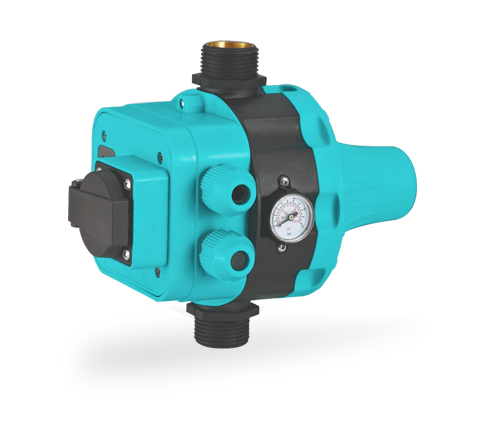
EPC-5.1 Series Low Noise Easy Operation Automatic Pressure Switch for Water Pumps
An automatic pressure switch is an electrical control device used to coordinate a water pump with changes in system demand. In a typical installation, the pressure switch is connected between the water supply piping and the pump power circuit. When a tap is opened, pressure in the piping falls. Once the pressure reaches the configured starting level, the controller sends power to the pump. The pump then supplies water to the open outlet.
When the tap is closed, water flow stops. The controller detects the interruption of flow and stops the pump at the appropriate operating condition. This automatic cycle eliminates the need for a user to turn the pump on and off manually. It also helps prevent the pump from continuing to operate when there is no longer a water demand.
The EPC-5.1 is intended for water conveyance systems where automatic operation, compact installation, and dependable pressure control are important. It is particularly useful in household water supply systems, small booster systems, garden irrigation, water transfer applications, and other installations using compatible pumps.
Traditional pump systems often use a pressure switch, pressure tank, check valve, and various fittings as separate components. Such arrangements can function effectively, but they may require more installation space and more time for assembly and adjustment. The EPC-5.1 is designed to replace this traditional control arrangement in suitable applications, offering a more integrated solution.
| Specification | Available Value |
| Product series | EPC-5.1 |
| Product type | Automatic pressure controller for water pumps |
| Rated voltage | 220–240 V, 110–120 V, or 110–240 V |
| Power frequency | 50/60 Hz |
| Maximum using current | 10 A |
| Maximum power | 1.1 kW for 220–240 V; 0.55 kW for 110–120 V; 0.55 kW or 1.1 kW for 110–240 V configuration |
| Starting pressure settings | 1.2 bar, 1.5 bar, or 2.2 bar |
| Installation adjustment range | Approximately 1.2–3.0 bar, depending on the selected configuration |
| Maximum working pressure | 10 bar |
| Connection thread | G1-inch male thread |
| Protection rating | IP44 |
| Maximum ambient or working temperature | 55°C |
| Warranty | One year |
The specifications provide flexibility for different markets and electrical standards. Customers can select a voltage configuration appropriate to their target region and application. The 50/60 Hz frequency rating also supports use in electrical environments based on either common frequency standard, subject to correct installation and local electrical requirements.
Noise is an important consideration in water pump installations. A pump located near a bedroom, kitchen, office, retail area, or residential living space can become disruptive if its control system causes frequent or abrupt switching. Pressure fluctuations can also create vibration and water hammer, contributing to uncomfortable operating sounds.
The EPC-5.1 is designed with low-noise operation as one of its key features. Its purpose is to provide smooth and controlled pump starting and stopping while minimizing unnecessary disturbance. Although the total sound level of an installation also depends on the selected pump, pipe layout, mounting method, water flow, and building structure, a low-noise pressure controller can contribute to a more comfortable overall system.
Compared with basic control devices that may produce noticeable switching sounds or irregular operating behavior, the EPC-5.1 is intended to support quieter operation. This makes it a useful choice for domestic booster systems, garden pumps positioned close to homes, small commercial premises, and other locations where acoustic comfort matters.
Low-noise performance also has a practical maintenance benefit. Excessive vibration and repeated mechanical disturbance can place stress on pipe connections, fittings, and mounting points. A stable switching process helps support a cleaner installation and may reduce the likelihood of issues caused by uncontrolled cycling. Proper pump sizing and correct hydraulic design remain essential, but the controller provides an important part of the overall operating solution.
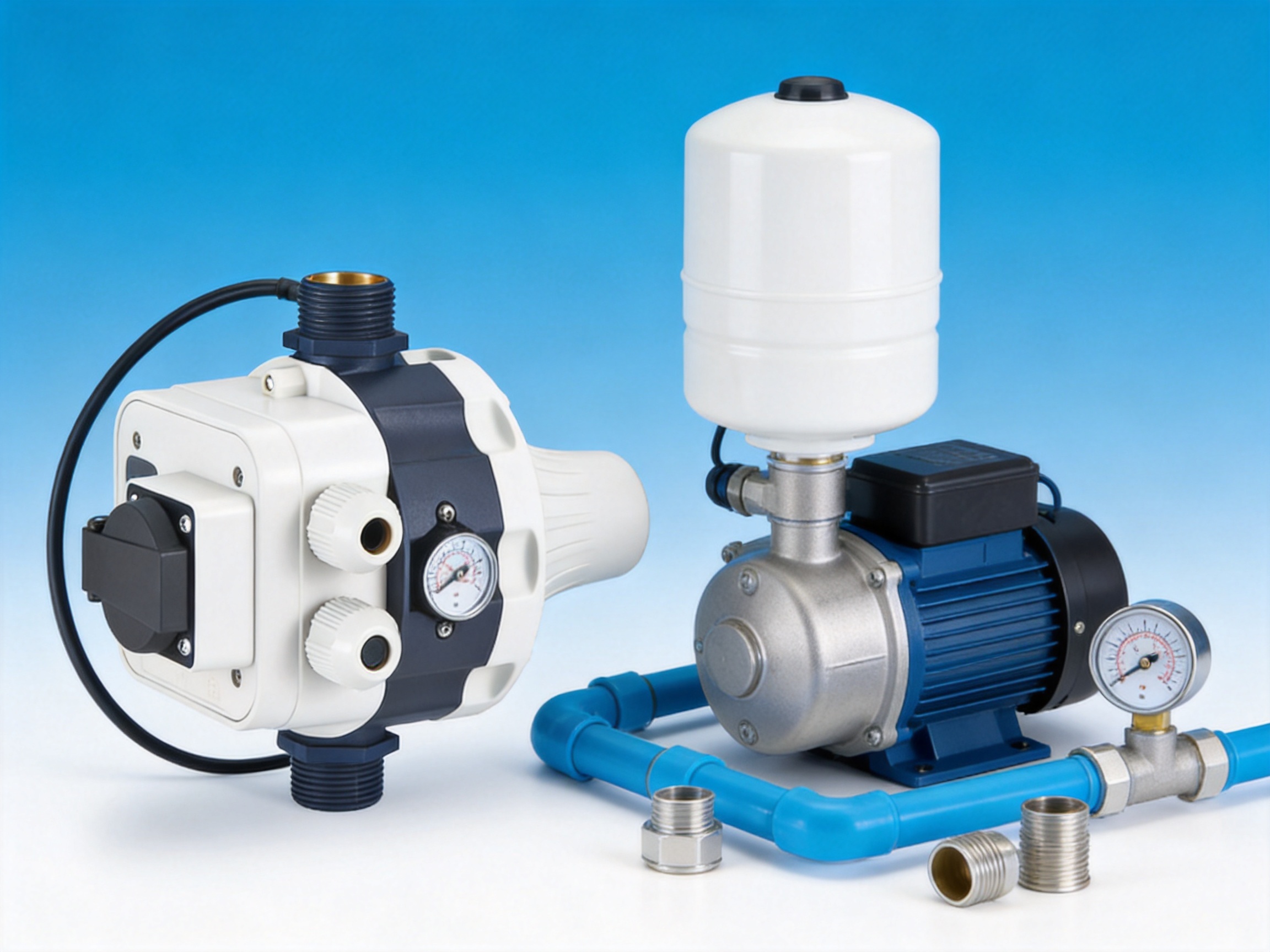
The EPC-5.1 is designed for easy operation. Its control concept is straightforward: a reduction in pressure starts the pump, while an interruption of flow stops it. This automatic sequence reduces the need for users to understand complex control procedures. Once the system has been installed and adjusted correctly, everyday operation can take place automatically.
The controller uses a G1-inch male threaded connection. This common connection format can simplify compatibility with suitable pumps, pipes, and fittings. A G1-inch plastic pipe joint is also available as an option for quick connection to a water pump. The appropriate connection method should always be selected according to the pump outlet, pipe material, pressure rating, and installation requirements.
Easy installation is especially valuable in replacement projects. A conventional pump system may include several components that must be arranged in the correct sequence. The EPC-5.1 can reduce the number of control components required in suitable applications, helping installers save time and reducing the number of potential leakage points.
The power cable length can be customized according to customer requirements. This option is useful when the pump and electrical supply are positioned at different distances from the controller. A correctly specified cable length can support neater wiring and reduce the need for unnecessary extensions or additional junctions.
Color customization is also available according to customer requirements. This is beneficial for distributors, project suppliers, and original equipment customers that need products coordinated with a particular equipment series, packaging design, or market identity.
Different water systems require different pressure characteristics. A small domestic water supply system may need a moderate starting pressure, while a booster application may require a higher setting to meet the expectations of users or equipment. The EPC-5.1 provides selectable starting pressure settings of 1.2 bar, 1.5 bar, and 2.2 bar. Installation adjustment can be customized within an approximate range of 1.2 to 3.0 bar, depending on the selected version and configuration.
This adjustability gives installers greater control over system behavior. The starting pressure can be matched to pump performance, building height, pipe resistance, outlet requirements, and the desired user experience. A correctly selected pressure setting helps prevent the pump from starting too frequently or failing to respond quickly enough when water demand begins.
Pressure adjustment should be performed by qualified personnel who understand the pump’s operating curve and the requirements of the connected piping system. The controller should not be adjusted beyond the pump’s permitted operating range. The maximum working pressure of the complete system must also be considered, including the pressure rating of pipes, valves, fittings, hoses, and connected appliances.
Because the EPC-5.1 can be adapted to different pressure requirements, it offers more application flexibility than a fixed-setting controller. This flexibility is valuable for pump manufacturers, wholesalers, installers, and engineering contractors serving multiple markets.
Operating a pump without an adequate water supply can cause serious problems. A pump that runs dry may suffer from overheating, seal damage, abnormal wear, or reduced service life. In some installations, a loss of incoming water may occur because of an empty storage tank, a closed valve, a blocked intake, or a temporary interruption in the supply source.
The EPC-5.1 is designed to halt water pump operation in cases of insufficient water supply. This protective function helps reduce the risk associated with dry-running conditions. By stopping the pump when the expected water flow is not detected, the controller provides an additional layer of protection for the pump and the surrounding system.
This function is particularly useful in domestic water systems, garden irrigation, small tanks, and transfer applications where the water source may not always be continuously available. It can also reduce wasted electricity caused by a pump operating without producing useful flow.
Protection features cannot replace correct system design. Installers should still provide suitable inlet piping, strainers where appropriate, correctly sized valves, and adequate water storage. The controller should be regarded as part of a complete protection strategy rather than the only safeguard in every installation.
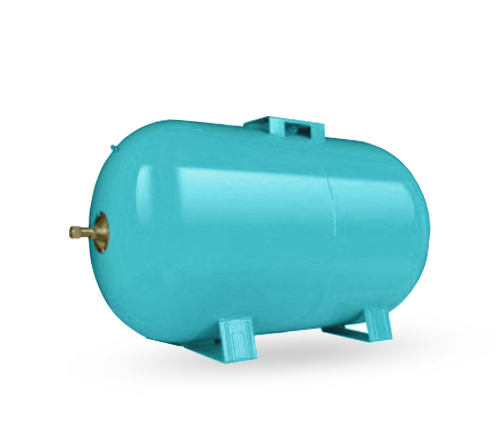
A traditional automatic pump system may use a pressure switch, a pressure tank, a check valve, separate wiring, and multiple fittings. Each component has a function, but the complete arrangement can take up considerable space. It may also require careful adjustment to prevent rapid cycling, pressure instability, or incorrect pump operation.
The EPC-5.1 is designed to replace this type of traditional pump control system in compatible applications. By combining automatic starting and stopping functions into one compact controller, it can help simplify the installation. Fewer separate components may result in less pipework, fewer connection points, and a cleaner appearance.
A compact control system is advantageous where space is limited. Domestic utility rooms, garden pump enclosures, small plant rooms, and equipment cabinets often have restricted installation areas. A controller that performs several functions in one housing can make better use of available space.
Reducing the number of components can also support easier troubleshooting. When the system has a single integrated control unit, an installer can evaluate the controller, pump, power supply, and hydraulic conditions in a more organized way. This does not eliminate the need for professional diagnosis, but it can make routine inspection more efficient.
Compared with a simple manual switch, the EPC-5.1 provides a higher level of convenience and pump protection. Compared with a large traditional control arrangement, it can offer a more compact and straightforward alternative. These practical benefits make it suitable for customers seeking an automatic pump controller without unnecessary system complexity.
The EPC-5.1 is available in 220–240 V, 110–120 V, and 110–240 V versions. This range supports applications in multiple countries and regions. The controller operates at 50/60 Hz, allowing it to accommodate common power-frequency standards when the selected model is appropriate for the local electrical supply.
The maximum using current is 10 A. Maximum power varies by voltage configuration, with a rated maximum of 1.1 kW for the 220–240 V version, 0.55 kW for the 110–120 V version, and 0.55 kW or 1.1 kW for the 110–240 V version according to the applicable electrical condition.
These ratings make the controller suitable for many small and medium water pump applications. Before installation, the motor’s rated current, starting characteristics, voltage, frequency, power, and electrical protection requirements must be checked. A pump motor should not be connected if its electrical demand exceeds the controller’s permitted rating.
Correct electrical installation is essential for safety and performance. Wiring should comply with local regulations, and the system should include suitable circuit protection, grounding, and isolation. The controller should be installed in a location that meets its environmental requirements and protects it from direct water exposure beyond its IP44 rating.
The EPC-5.1 has an IP44 protection rating. This indicates protection against solid objects of a specified size and against water splashing from different directions. IP44 protection is appropriate for many sheltered pump installations, but it does not mean that the controller can be submerged or exposed to uncontrolled water jets.
The device should be installed in a clean, dry, and adequately protected location. Direct rainfall, flooding, condensation, chemical exposure, and high-pressure water spray should be avoided. Where the pump is outdoors, an appropriate enclosure or covered installation area may be required.
The maximum ambient or working temperature is 55°C. Installers should consider the temperature inside equipment cabinets, pump rooms, and outdoor enclosures. A location exposed to strong sunlight or poor ventilation may become significantly hotter than the surrounding air. Maintaining suitable ventilation and avoiding unnecessary heat sources can help support reliable operation.
Mechanical installation should also be performed carefully. The G1-inch connection must be sealed correctly without excessive tightening that could damage the housing or threaded parts. The connected pipe should be supported independently so that its weight is not transferred directly to the controller.
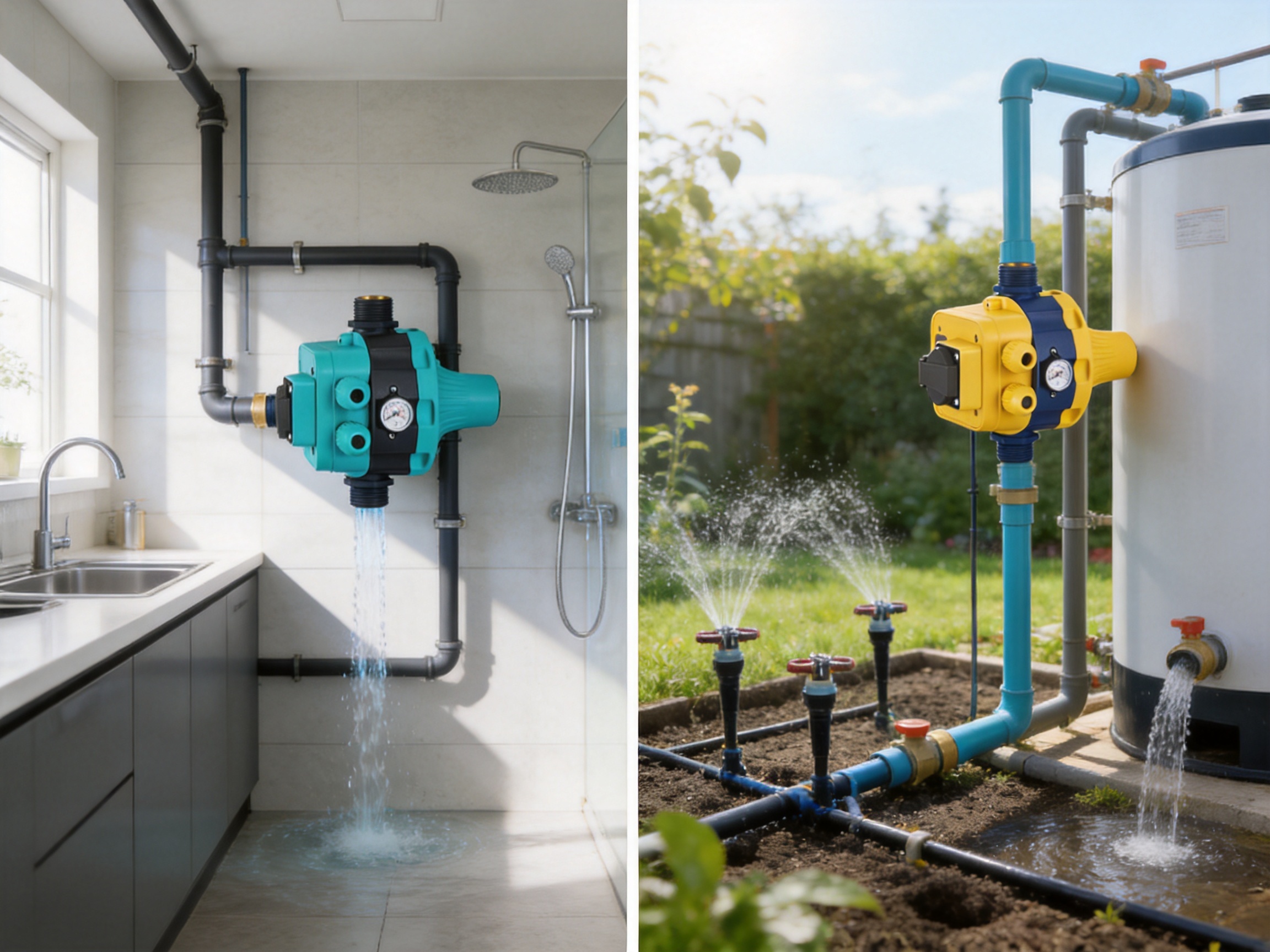
The EPC-5.1 can be used in household water supply systems where a pump is required to provide automatic pressure support. When a user opens a faucet or shower, the pressure falls and the pump starts automatically. When the outlet is closed, the controller stops the pump after flow interruption is detected.
This automatic behavior improves convenience for residents and reduces the risk of leaving a pump running unintentionally. It can be applied to compatible surface pumps, booster pumps, and other small water pumps within the controller’s electrical and hydraulic ratings.
Garden irrigation systems frequently experience changing demand as sprinklers, hoses, and valves are opened or closed. An automatic pressure controller can help coordinate pump operation with these changes. The EPC-5.1’s selectable pressure settings allow the installer to choose a suitable starting point for the irrigation system.
Outdoor applications require attention to enclosure protection, cable routing, temperature, and water exposure. The controller should be located in a suitably protected position, and the pump should be selected according to the irrigation flow rate and pressure requirements.
Small commercial buildings, workshops, restaurants, offices, and service facilities may require automatic water pressure control without the installation space or budget for a large control cabinet. The EPC-5.1 offers a compact alternative for compatible pumps and relatively straightforward water supply systems.
Applications may include wash areas, utility sinks, equipment cleaning systems, and general water transfer. The required pump capacity, operating schedule, water quality, and electrical load should be evaluated before selection.
The controller can also support water transfer systems in which water is supplied from a tank or other source. When used with a suitable pump and correctly arranged piping, it can initiate pumping when downstream pressure decreases and stop when the demand ends.
Tank level controls, inlet protection, check valves, and other accessories may still be required depending on the application. The controller’s insufficient-water protection is helpful, but the complete system should be designed to maintain a dependable water supply and prevent unstable cycling.
Booster applications often need the pump to respond quickly when several outlets are used. The EPC-5.1 can provide automatic control for compatible booster pumps, helping maintain convenient operation without requiring manual intervention.
For larger buildings, high-rise systems, or applications with multiple pumps, a more advanced variable-speed or multi-pump control system may be appropriate. The EPC-5.1 is best suited to applications within its electrical, pressure, temperature, and flow-control capabilities.
The performance of a pressure controller depends not only on its stated specifications but also on the consistency of its manufacturing process. Taizhou Edwin Electric Co., Ltd. was founded in 2008 and operates as an integrated manufacturing enterprise focused on independent research and development, mass production, and global export.
This integrated structure supports coordination between product design, component selection, assembly, quality control, packaging, and delivery. For buyers, such coordination can be important when purchasing products for regular distribution or use in larger projects. Consistent production helps reduce variation between batches and supports more predictable product performance.
The company’s experience extends across several pump categories, including deep well pumps, submersible pumps, domestic booster pumps, circulation pumps, solar water pumps, intelligent booster pumps, and related water-treatment products. This broad product knowledge contributes to a practical understanding of pump motors, hydraulic systems, electrical controls, pressure requirements, and field installation conditions.
Since 2018, the company has invested in new energy and intelligent technology. The development of solar water pumps and intelligent booster pumps demonstrates an effort to respond to changing market requirements, including energy efficiency, automation, remote application needs, and improved system management.
Manufacturing an automatic pressure switch for water pumps requires attention to several production stages. Product engineering must establish suitable electrical and hydraulic parameters. Component procurement must maintain stable quality. Assembly must ensure correct positioning and secure connections. Testing must verify electrical operation, pressure response, leakage resistance, and general functionality.
Although individual testing procedures may vary by production model and customer requirement, a professional manufacturer should maintain structured inspection and quality-control practices. These may include incoming material checks, assembly inspections, electrical tests, pressure tests, functional tests, appearance inspections, and final packaging checks.
Independent research and development allows the manufacturer to improve products based on market feedback and actual application requirements. For a pressure controller, useful development goals include easier adjustment, quieter switching, broader voltage compatibility, improved protection, reliable sealing, and simplified installation.
The EPC-5.1 reflects several of these practical objectives. Its compact integrated design addresses installation convenience. Its low-noise operation addresses user comfort. Its adjustable starting pressure addresses application flexibility. Its insufficient-water protection addresses pump safety. Its multiple voltage options address international market requirements.
Research and development also involves balancing different technical needs. A controller must be responsive enough to detect demand but stable enough to avoid unnecessary cycling. It must support the rated motor load while remaining compact. It must be protected against normal environmental conditions while allowing practical installation and servicing.
Product development is most effective when it considers the pump, controller, piping, and user as one system. The company’s experience across multiple pump categories provides a foundation for this system-oriented approach. Rather than treating the pressure switch as an isolated electrical component, the manufacturer can evaluate how it functions in real water supply applications.
Edwin Pump supplies products to customers around the world and has developed a business structure that includes manufacturing, export, procurement planning, order tracking, cross-border delivery, and foreign trade services. This is valuable for international buyers that need more than a product catalog. Reliable communication, documentation, production coordination, and delivery planning are important parts of an effective industrial supply relationship.
The company established Taizhou Haipai Import & Export Co., Ltd. and Golden Falcon Industrial Co., Ltd. in 2012 to support diverse purchasing needs and one-stop services. This organizational development reflects an understanding that international customers may require coordinated sourcing, order management, shipping arrangements, and technical communication.
For distributors, the availability of customized color, cable length, and connection accessories can make the EPC-5.1 easier to integrate into a private-label, equipment, or project supply program. Buyers can discuss product configuration, packaging, documentation, and order requirements according to their target market and application.
A one-year warranty is provided for the product. Warranty terms should be reviewed before purchase, including coverage conditions, exclusions, installation requirements, and the procedure for handling product concerns. Correct installation and operation within the specified limits are essential for warranty validity and long-term performance.
The EPC-5.1 offers several practical advantages compared with a basic manual switch or a limited-function pressure control device. Automatic operation reduces the need for users to monitor the pump manually. The controller can respond to pressure reduction and flow interruption, supporting a more convenient water supply experience.
Its low-noise design is another advantage in locations where operating sound matters. While every pump installation has its own acoustic characteristics, a controller designed for quiet switching can help reduce disturbance compared with more basic alternatives.
The adjustable starting pressure provides greater flexibility than a fixed-pressure product. Installers can select a setting that better matches the pump and system requirements. This can be particularly useful for distributors serving different building types and water supply conditions.
The integrated structure can reduce the number of separate parts required in suitable systems. This may simplify installation, reduce space requirements, and lower the number of threaded joints that could potentially develop leaks. A compact design can also improve the visual appearance of a pump assembly.
Multiple voltage versions make the controller suitable for a wider international customer base. The G1-inch connection, optional plastic pipe joint, and customizable cable length further support installation adaptability.
Finally, the product is backed by a manufacturer with experience in pump production, intelligent water technology, international export, and one-stop procurement services. This combination is valuable for buyers that need a stable supply partner rather than a single isolated component.
Before installing the EPC-5.1, verify the pump’s voltage, frequency, power, rated current, and starting current. Confirm that the motor load does not exceed the controller’s maximum rating. Check that the water pressure and temperature remain within the product’s specified limits.
Inspect the piping system before connection. The inlet and outlet should be clean and free from excessive debris. Pipes should be correctly supported, and all threaded joints should be sealed using suitable materials. Do not apply excessive mechanical force to the controller housing.
Install the controller in a location protected from flooding, direct rain, chemical contamination, and damaging vibration. Ensure that the ambient temperature does not exceed 55°C. The IP44 rating should be considered during enclosure and installation planning.
Connect the electrical wiring according to the product instructions and local regulations. A qualified electrician should provide appropriate overcurrent protection, grounding, and isolation. Power should remain disconnected during installation, inspection, or maintenance.
After installation, open the water supply and remove air from the system where necessary. Check for leaks, verify that the pump primes correctly, and observe the starting and stopping sequence. Open a suitable outlet to confirm that the pressure reduction starts the pump. Close the outlet and confirm that the controller stops the pump when flow interruption is detected.
If the pump starts too early, starts too late, or cycles repeatedly, the installer should examine the pressure setting, pump capacity, water supply, check valves, pipe leakage, and outlet demand. Adjustments should be made carefully and only within the permitted range.
Routine maintenance begins with visual inspection. Check the controller housing, cable entry, threaded connection, and nearby pipe joints for signs of damage, leakage, corrosion, or overheating. Any unusual noise, smell, vibration, or repeated cycling should be investigated promptly.
If the pump does not start when a tap is opened, check the electrical supply, circuit protection, cable connections, water availability, controller setting, and pump condition. A blocked inlet, insufficient priming, or excessive air in the piping can also affect operation.
If the pump continues running after outlets are closed, inspect the system for leaks, a partially open valve, a damaged check valve, or continued flow through an appliance. The controller should also be checked for correct installation and possible contamination.
If the pump starts and stops repeatedly, the cause may be an incorrectly selected pressure setting, inadequate water supply, a small leak, pressure instability, or a pump that is too large or too small for the system. Cycling should not be ignored because frequent starts can increase motor and electrical stress.
When insufficient water supply protection activates, confirm that the source tank has adequate water, inlet valves are open, the suction line is unobstructed, and the pump is properly primed. Repeated activation may indicate a hydraulic design problem that should be corrected rather than bypassed.
The EPC-5.1 can be considered by pump manufacturers, wholesalers, distributors, engineering contractors, agricultural equipment suppliers, plumbing companies, and industrial buyers. Its combination of automatic control, low-noise operation, adjustable settings, and compact integration makes it suitable for many standard water pump packages.
Customers can discuss the required voltage version, power cable length, starting pressure, color, connection accessories, packaging, and order quantity. These options allow the product to be adapted for different markets and equipment configurations.
For project purchasing, buyers should provide information about the pump model, motor rating, water source, desired pressure, operating temperature, installation environment, and local power supply. This information helps determine whether the EPC-5.1 is suitable and which configuration should be selected.
For distribution customers, stable documentation and consistent product configuration are important. The manufacturer’s experience in export and procurement coordination can support order planning, production follow-up, shipment preparation, and communication across the purchasing process.
The EPC-5.1 is an automatic pressure switch designed to control compatible water pumps. It starts the pump when system pressure decreases and stops the pump when water flow interruption is detected.
It is designed to completely replace the traditional pump control arrangement consisting of a pressure switch, pressure tank, check valve, and related components in suitable applications. The complete system must still be evaluated to confirm compatibility with the pump, piping, pressure requirements, and local regulations.
The available rated voltage options are 220–240 V, 110–120 V, and 110–240 V. Customers should select the version that matches the local electrical supply and the pump motor.
The maximum using current is 10 A. The pump’s rated and starting current must be checked to ensure that it remains within the controller’s permitted electrical capacity.
The standard starting pressure settings are 1.2 bar, 1.5 bar, and 2.2 bar. The starting pressure can be adjusted during installation within an approximate range of 1.2 to 3.0 bar, depending on the specific configuration.
The maximum working pressure is 10 bar. All components in the connected water system must have suitable pressure ratings.
The controller uses a G1-inch male threaded connection. A G1-inch plastic pipe joint is available as an option for quick connection to a compatible water pump.
The EPC-5.1 is designed to halt pump operation in cases of insufficient water supply. Proper pump priming, inlet design, water storage, and system maintenance remain necessary for reliable protection.
It may be suitable for a properly protected outdoor installation. Its IP44 rating does not permit submersion or exposure to uncontrolled water jets. The controller should be protected from rain, flooding, direct spray, and excessive heat.
The maximum ambient or working temperature is 55°C. The installation location should provide suitable ventilation and should not expose the controller to temperatures above this limit.
Yes. The power cable length can be customized according to customer requirements, subject to production and order conditions.
Yes. Color customization is available according to customer requirements. Buyers should confirm the desired color and applicable order conditions before production.
Buyers should confirm the pump’s voltage, frequency, maximum current, power, pressure requirements, connection size, water temperature, installation environment, and desired starting pressure. This information helps ensure that the selected controller is compatible with the intended system.
The EPC-5.1 is manufactured by Taizhou Edwin Electric Co., Ltd., an integrated pump and electrical equipment manufacturer established in 2008. The company develops and produces a broad range of water pumps, intelligent pumping products, solar water pumps, and related accessories.
The EPC-5.1 Series Automatic Pressure Switch provides a practical method for automating compatible water pump systems. Its core functions are straightforward but valuable: it starts a pump when pressure falls, stops the pump when flow interruption is detected, and helps protect the pump when the water supply is insufficient.
Its main advantages include low-noise operation, easy control, adjustable starting pressure, a compact integrated structure, multiple voltage options, a G1-inch connection, IP44 protection, and a maximum working pressure of 10 bar. These characteristics make it suitable for domestic water supply, garden irrigation, small commercial systems, booster applications, and water transfer installations.
Compared with a simple manual switch, the EPC-5.1 offers greater convenience and automatic control. Compared with a multi-component traditional arrangement, it can reduce installation complexity and space requirements in appropriate applications. Its customizable cable length, color options, and connection accessories also support a range of customer and project requirements.
The product is supported by Taizhou Edwin Electric Co., Ltd.’s experience in pump manufacturing, research and development, mass production, international export, and one-stop procurement services. The company’s broad portfolio and investment in intelligent and renewable-energy pump technology provide a strong foundation for developing practical products for changing water-system requirements.
For the best results, the EPC-5.1 should be selected and installed according to the pump’s electrical ratings, the hydraulic design, the required pressure, the environmental conditions, and applicable safety standards. When correctly matched with the pump and system, it can provide quiet, convenient, and dependable automatic pressure control for many water conveyance applications.
1. EPC-5.1 Series product technical specifications supplied by the manufacturer.
2. Manufacturer’s product information for automatic pressure controllers and water pump control systems.
3. General principles of pump pressure control, flow detection, and dry-running protection.
4. Electrical installation and low-voltage equipment safety practices applicable to water pump systems.
5. International protection rating principles for electrical enclosures, including IP44 applications.
6. Manufacturer background information concerning pump research and development, mass production, export services, and intelligent water technology.
7. General installation and maintenance practices for domestic booster pumps, surface pumps, irrigation pumps, and water transfer systems.
edwina@edwin-pump.com
+86-13586290903 (WhatsApp)
Xuri Gongliang Cutting Tool Entrepreneurship Park, Wenqiao Town, Wenling City, Taizhou City, Zhejiang Province, China

High Performance Smart Pump Factory


 English