edwina@edwin-pump.com

View All Products
en
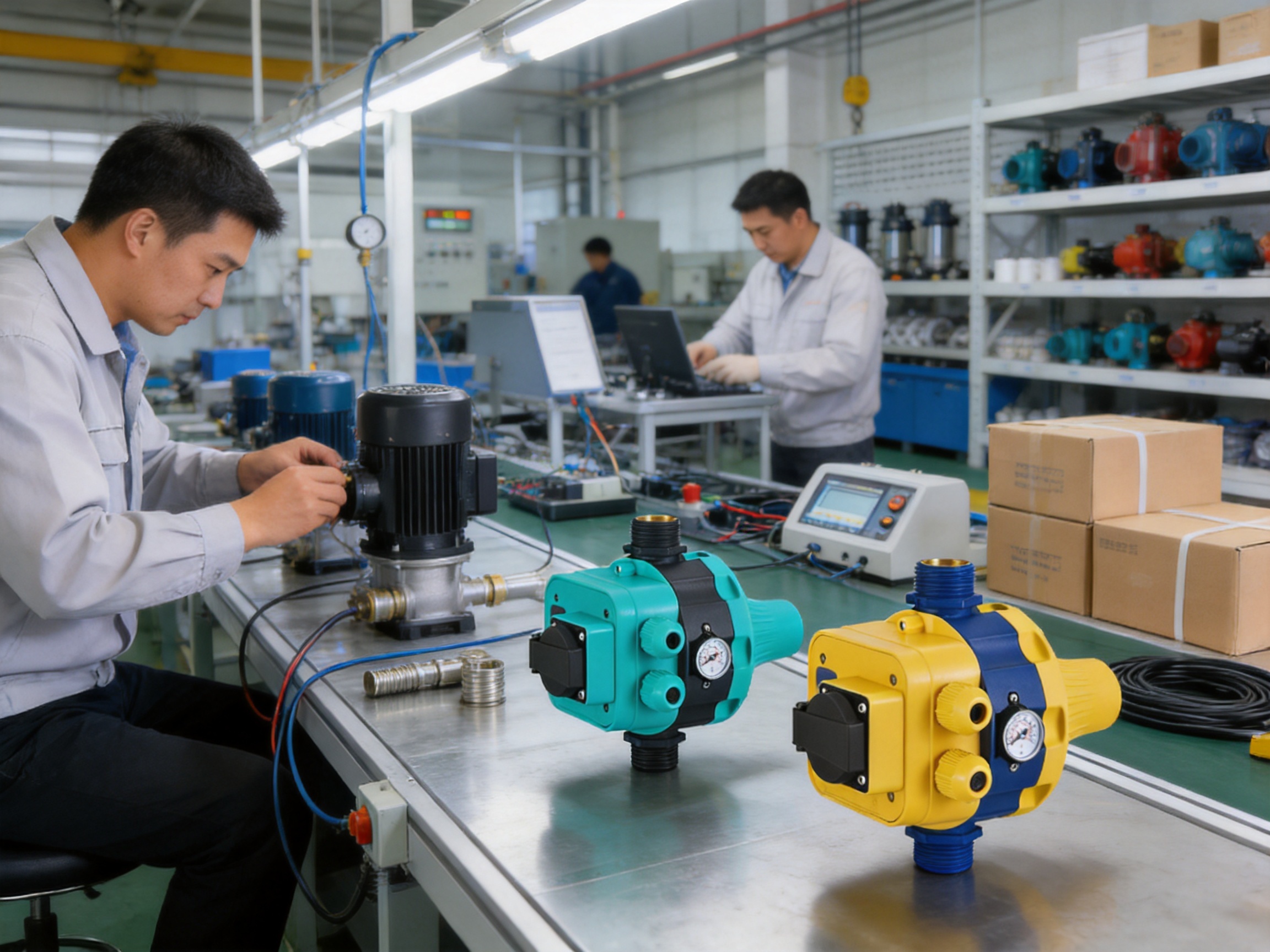
Modern water supply systems require more than a pump alone. A complete installation must respond to changing water demand, maintain stable pressure, protect the pump from abnormal operating conditions, and remain convenient for users and maintenance personnel. The EPC-5.1 Series Low Noise Easy Operation Automatic Pressure Switch for Water Pumps is designed to address these requirements in one compact control solution.
As an automatic pressure controller, the EPC-5.1 Series is intended to start an electric water pump when system pressure falls and stop the pump when water flow is interrupted. This operating principle makes it suitable for household water supply, garden irrigation, small commercial installations, and a variety of water conveyance systems. It combines automatic operation, adjustable starting pressure, pump protection functions, and a compact G1-inch threaded connection.
The controller is manufactured by Taizhou Edwin Electric Co., Ltd., an integrated enterprise engaged in product development, production, export, and one-stop procurement services for water pumps and related equipment. The company’s broader product portfolio includes solar pumps, deep well pumps, submersible pumps, domestic booster pumps, circulation pumps, surface pumps, commercial multistage pumps, intelligent booster pumps, pipes, valves, and pump accessories. This product knowledge supports the development of practical control equipment that is compatible with real pump applications.
A conventional water pump often requires manual starting and stopping unless it is connected to a pressure switch, pressure tank, check valve, or another control arrangement. Without automatic control, users must operate the pump whenever water is needed and remember to shut it down afterward. This can be inconvenient and may cause unnecessary energy consumption, premature wear, or accidental dry running.
An automatic pressure controller provides a more responsive way to operate a pump. When a tap is opened, pressure in the discharge line decreases. The pressure controller detects this reduction and starts the pump. As soon as the tap is closed and water flow stops, the controller detects the change in operating conditions and stops the pump. The result is a more convenient water supply system that responds to demand without requiring constant manual supervision.
The EPC-5.1 Series is designed to replace a traditional pump control arrangement consisting of multiple separate components. In suitable applications, it can take the place of a pressure switch, pressure tank, check valve, and related control elements. Reducing the number of separate components can simplify installation, save space, and make system configuration easier.
Automatic control is particularly valuable in homes, apartments, workshops, gardens, agricultural support systems, and small commercial buildings where water demand changes frequently. The controller can help maintain a more user-friendly supply system by ensuring that the pump operates only when water is required.
The EPC-5.1 Series is a compact automatic pressure switch developed specifically for water pumps. It supports rated voltages of 220–240 V, 110–120 V, and, depending on the model configuration, 110–240 V. The controller operates at 50/60 Hz and supports a maximum using current of 10 A.
Its maximum working pressure is 10 bar, while the maximum working temperature is 55°C. The IP44 protection rating provides protection against solid objects of a specified size and splashing water from normal directions. As with all electrical products, the controller should be installed in a suitable location and protected from direct exposure to heavy water spray, flooding, and unsuitable environmental conditions.
The standard connection thread is G1-inch male. A G1-inch plastic pipe joint is also available as an option for quick connection to a water pump. Power cable length can be customized according to customer requirements, and the product color can also be adjusted for private-label or project-specific needs.
| Product item | EPC-5.1 Series Automatic Pressure Switch |
| Application | Water pumps and water conveyance systems |
| Rated voltage options | 220–240 V, 110–120 V, or 110–240 V |
| Frequency | 50/60 Hz |
| Maximum using current | 10 A |
| Maximum power | 1.1 kW at 220–240 V; 0.55 kW at 110–120 V; configuration-dependent at 110–240 V |
| Starting pressure settings | 1.2 bar, 1.5 bar, or 2.2 bar |
| Adjustable installation range | Approximately 1.2–3.0 bar |
| Maximum working pressure | 10 bar |
| Connection thread | G1-inch male |
| Protection rating | IP44 |
| Maximum ambient or working temperature | 55°C |
| Warranty | One year |
The primary advantage of the EPC-5.1 Series is its automatic response to water demand. When the pressure in the water line decreases because a tap, shower, irrigation outlet, or other water-consuming point is opened, the controller initiates the electric pump. This allows water to be supplied without a separate manual switching procedure.
When water demand ends, the operating conditions in the line change. Once fluid flow interruption is detected at the pump’s maximum operating pressure level, the controller stops the pump. This helps prevent the pump from continuing to run after the outlet has been closed.
This start-and-stop principle is valuable in applications where several users may operate different outlets at different times. It also provides a practical solution for systems in which a pump must serve intermittent demand rather than operate continuously.
Automatic operation can improve user convenience and contribute to more efficient pump utilization. The pump is activated when the system needs additional pressure and switched off when demand ends. Although actual energy savings depend on the pump, pipework, operating frequency, and water consumption pattern, automatic control helps avoid unnecessary manual operation.
Noise is an important consideration in domestic and light commercial water systems. A pump that starts and stops abruptly, or a control system that reacts poorly to pressure changes, may create unwanted sound and vibration. The EPC-5.1 Series is designed with low-noise operation as one of its principal features.
Low-noise switching is especially useful when the equipment is installed near bedrooms, kitchens, offices, retail spaces, or other areas occupied by people. A quieter pressure controller can help create a more comfortable environment while allowing the pump system to respond automatically to water demand.
Noise levels in a complete installation depend on more than the controller. Pump design, motor condition, mounting, pipe support, water hammer, air in the system, and installation quality can all affect perceived sound. Nevertheless, a controller engineered for smooth operation can be an important part of a low-noise water supply system.
Compared with basic switching devices that may produce a noticeable mechanical click or inconsistent response, the EPC-5.1 Series offers a more refined operating experience. Its low-noise design is particularly attractive for customers who want automatic water pressure management without introducing unnecessary disturbance.
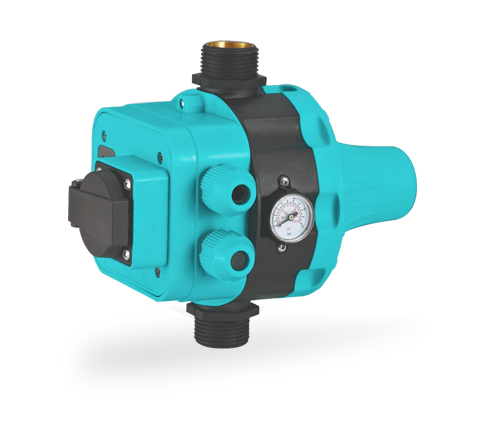
EPC-5.1 Series Low Noise Easy Operation Automatic Pressure Switch for Water Pumps
Many water pump users value simple installation as much as advanced functionality. A control product that requires complicated wiring, multiple external parts, or difficult commissioning can increase project cost and make maintenance more demanding. The EPC-5.1 Series is designed around straightforward operation and a compact connection format.
The G1-inch male threaded joint is compatible with common water pump plumbing arrangements. The optional G1-inch plastic pipe joint allows quick connection to a pump, which can help reduce assembly time for suitable installations. The product is also designed to replace several conventional control components, reducing the amount of equipment required in the pipework.
Starting pressure can be selected or adjusted during installation. Available standard settings include 1.2 bar, 1.5 bar, and 2.2 bar, while the starting pressure can be adjusted within an approximate range of 1.2–3.0 bar. This flexibility allows installers to select a setting that is appropriate for the pump, building height, pipe resistance, and expected water demand.
Power cable length can be customized according to customer requirements. This is useful for original equipment manufacturers, distributors, engineering contractors, and project buyers who need a particular cable arrangement for their installations. Custom cable length can reduce unnecessary cable management and simplify integration into packaged pump systems.
The controller’s straightforward configuration also supports easier service work. Installers can identify the pipe connection, electrical connection, and pressure setting without dealing with a large external control cabinet. However, electrical installation should always be carried out by qualified personnel in accordance with local codes and the pump manufacturer’s instructions.
Different water systems have different pressure requirements. A single fixed starting pressure may not be suitable for every pump and building. For this reason, the EPC-5.1 Series provides selectable starting pressure settings and an adjustment range intended to support different installation conditions.
A lower starting pressure may be suitable for a small domestic water supply system with modest pressure requirements. A higher setting may be selected where users require more pressure before the pump starts or where the pipe system and pump performance support that configuration. The correct setting should be chosen after considering pump capacity, static head, pipe length, outlet elevation, and the operating characteristics of the water system.
Adjustability also makes the product more adaptable for international distribution. A distributor may supply the same controller family to different markets while configuring the pressure setting according to local application requirements. The available voltage options further increase its suitability for different regions.
Installers should avoid setting the controller beyond the capability of the pump or the pressure rating of the pipework. The maximum working pressure of the controller is 10 bar, but every component in the system must be evaluated individually. The safe operating pressure is determined by the lowest-rated component in the installation.
Water pumps can be damaged when they operate under abnormal conditions. Insufficient water supply is one of the most common risks. If a pump runs without an adequate water source, the motor, seals, impeller, and other internal parts may be exposed to excessive heat, friction, or mechanical stress.
The EPC-5.1 Series is designed to halt water pump operation in cases of insufficient water supply. This protective function can help reduce the risk associated with dry-running conditions. It is particularly relevant for systems connected to tanks, wells, rooftop reservoirs, rainwater storage, and other sources where water levels may vary.
Protection functions should not be considered a substitute for correct system design. The water source must be adequately sized, suction conditions must be suitable, and the pump must be installed according to the manufacturer’s requirements. A strainer, suitable foot valve, correct pipe diameter, and proper priming may also be necessary depending on the pump type.
When combined with responsible installation and periodic inspection, automatic protection can extend the practical service life of a pump system. It can also provide users with greater confidence that the pump will not continue operating indefinitely when water is unavailable.
Traditional pump control systems often use a pressure switch, pressure tank, check valve, gauge, and several connecting parts. Such arrangements can be effective, but they may require more space, more plumbing connections, and more adjustment work. The EPC-5.1 Series is designed to integrate key control functions into a compact automatic pressure controller.
The first advantage is system simplification. Fewer separate components can make the installation more compact and reduce the number of potential connection points. A simpler configuration may also make it easier for an installer to identify the controller and diagnose basic operating issues.
The second advantage is convenience. Instead of manually switching the pump on and off, users can open a tap or outlet and allow the controller to start the pump automatically. When demand ends, the pump stops without requiring a separate manual command.
The third advantage is application flexibility. The controller is available in different voltage configurations, supports 50/60 Hz operation, offers several starting pressure settings, and can be supplied with customized cable lengths. These features are useful for distributors and system integrators serving different markets.
The fourth advantage is space efficiency. A compact automatic controller can be helpful where a conventional pressure tank is difficult to accommodate, such as in small utility rooms, compact residences, garden pump enclosures, or packaged booster systems.
The fifth advantage is reduced operating noise. Low-noise performance can provide a better user experience than basic control devices that create disruptive switching sounds. In residential and hospitality environments, quiet operation can be a meaningful purchasing factor.
These advantages do not mean that the controller is suitable for every installation. Large industrial systems, high-flow municipal networks, or applications with complex variable-speed requirements may need a different control architecture. The EPC-5.1 Series is best suited to water pump systems within its electrical, pressure, temperature, and application limits.
Residential water systems are one of the most natural applications for the EPC-5.1 Series. It can be used with suitable surface pumps, booster pumps, and other compatible electric water pumps to provide automatic pressure response for taps, showers, washing machines, and outdoor outlets.
In a home with inadequate municipal pressure, a pump may be used to improve water delivery. The automatic controller starts the pump when a user opens a water outlet and stops it when the outlet is closed. This can reduce the need for manual control and help make the booster system more convenient.
The low-noise feature is beneficial in homes where the pump is installed near living spaces. The compact design can also help installers fit the control device into a small utility area, provided that the environment is suitable and electrical safety requirements are followed.
For residential applications, the installer should verify pump compatibility, maximum power, starting current, system pressure, pipe size, voltage, and available water supply. The starting pressure should be selected according to the desired system response rather than adjusted arbitrarily.
Garden pumps and small irrigation systems often operate intermittently. Water may be required for a hose, sprinkler, drip irrigation line, greenhouse outlet, or garden cleaning point. An automatic pressure switch can simplify operation by starting the pump when an outlet is opened.
The EPC-5.1 Series may be considered for suitable garden pump applications where the voltage, power, pressure, and temperature conditions fall within the product specifications. Its G1-inch connection and optional quick-connect pipe joint can support practical installation on compatible systems.
In irrigation systems, the controller should be used with attention to minimum flow requirements. Some irrigation outlets may deliver very low flow, and a pump control device may cycle frequently if the system is not correctly designed. A suitable accumulator, flow arrangement, or irrigation control method may be needed in applications with frequent short cycles.
Water source protection is also important. If the pump draws from a tank or shallow well, the installer should confirm that water remains available during the entire irrigation period. The controller’s insufficient-water protection is valuable, but good source management remains essential.
Small commercial sites may include workshops, cafés, offices, guesthouses, retail premises, agricultural buildings, and service facilities. These sites often need reliable water pressure but do not require a large centralized pump control system.
The EPC-5.1 Series can support suitable small commercial pump systems where automatic demand-based operation is preferred. The product’s 10 A maximum using current and power limits should be checked carefully against the pump motor and starting conditions. Where the pump exceeds the controller’s electrical capacity, an appropriate contactor or larger control solution may be required.
For commercial users, the ability to customize cable length and product color may assist with equipment standardization and project branding. A distributor can also configure different voltage versions and starting pressure options for various markets or customer requirements.
Commercial installations generally demand more frequent operation than domestic systems. For this reason, correct sizing, clean water conditions, proper electrical protection, and scheduled inspection are especially important. The controller should be installed where it can be accessed for maintenance without exposure to damaging environmental conditions.
The EPC-5.1 Series is supported by the manufacturing capabilities of Taizhou Edwin Electric Co., Ltd., which was founded in 2008. The company operates as an integrated manufacturing enterprise with activities covering independent research and development, mass production, and global export.
An integrated structure can create practical benefits for product development. Engineering teams can receive feedback from manufacturing, quality control, sales, and field applications. This feedback loop helps manufacturers identify recurring installation requirements, preferred voltage configurations, cable needs, connection preferences, and market-specific expectations.
The company’s product range includes deep well pumps, submersible pumps, domestic booster pumps, circulation pumps, solar water pumps, intelligent booster pumps, surface pumps, commercial multistage pumps, and pump accessories. This broad product knowledge is relevant to an automatic pressure controller because the controller must be considered as part of a complete pumping system rather than as an isolated electrical device.
Manufacturing competence in multiple pump categories can support better compatibility analysis. Different pumps have different flow characteristics, pressure curves, starting currents, priming requirements, and operating environments. A manufacturer familiar with these variations is better positioned to develop control products that address practical pump-system requirements.
The company has also invested in new energy and intelligent technology since 2018. This direction reflects the changing needs of the water pump industry, where customers increasingly seek automatic operation, energy awareness, remote or intelligent management, and compatibility with renewable energy systems. Although the EPC-5.1 Series is a dedicated automatic pressure controller, it forms part of a broader product strategy focused on intelligent and efficient water handling.
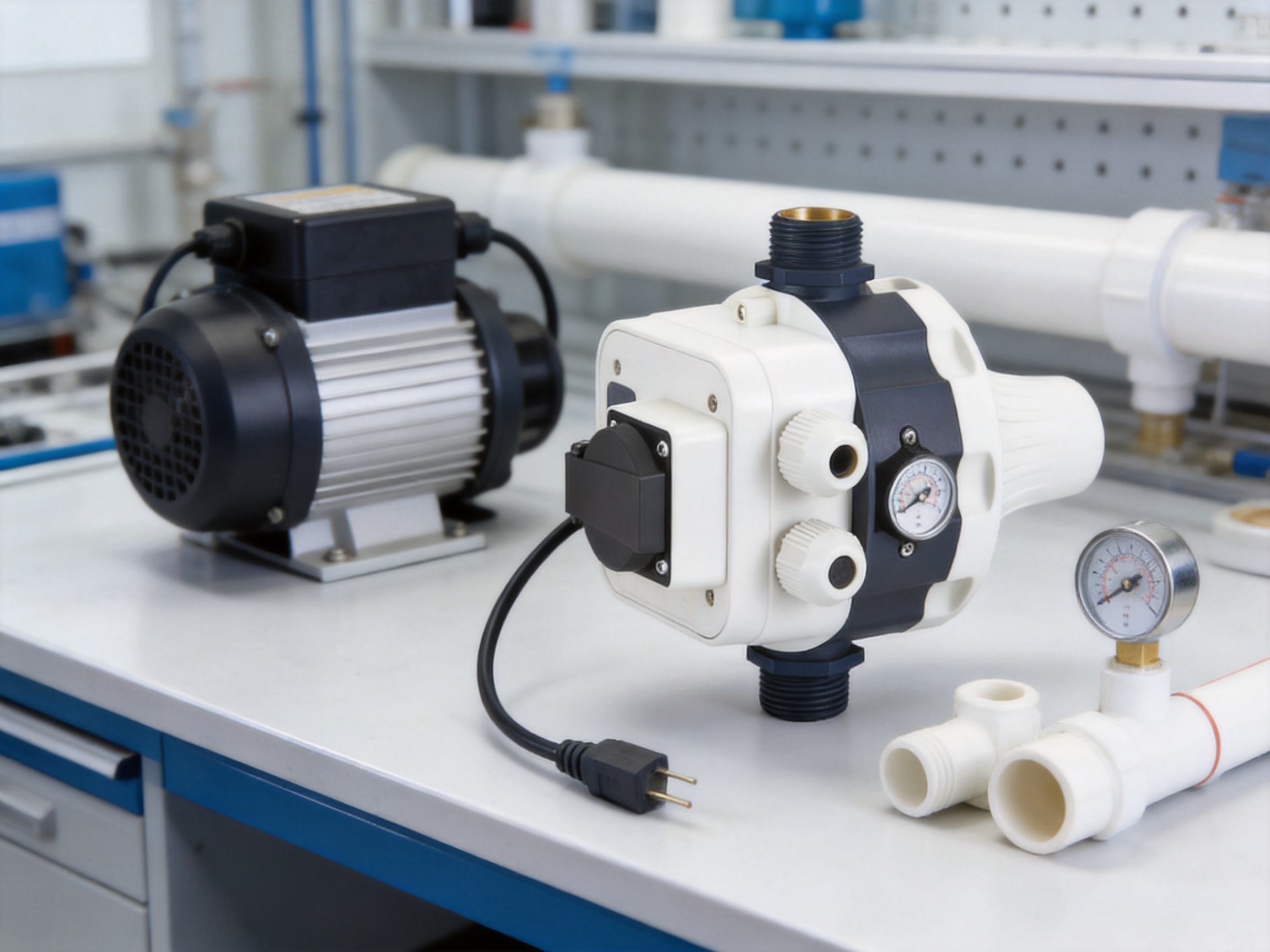
Reliable automatic pressure control depends on consistent electrical switching, accurate pressure response, secure connections, and durable housing components. A manufacturing process for this type of product must therefore combine component control, assembly discipline, functional testing, and final inspection.
Independent research and development allows the manufacturer to adjust the product according to field requirements. Design considerations may include the pressure sensing structure, switching response, insulation, enclosure configuration, thread quality, cable arrangement, and protection rating. Each element influences the controller’s performance in actual water pump systems.
Mass production provides another important advantage. Once a design has been validated, repeatable production methods can help maintain consistent dimensions, electrical connections, and operating characteristics across larger orders. This is valuable for importers and distributors who need dependable product uniformity.
Export experience also encourages attention to packaging, documentation, voltage options, labeling, logistics, and customer support. Global customers often require different electrical standards, cable specifications, product colors, and packaging arrangements. The ability to manage these requirements is an important part of manufacturing strength.
Taizhou Edwin Electric Co., Ltd. has established related import and export service companies to support procurement planning, order tracking, cross-border delivery, and foreign trade services. This one-stop structure can benefit project customers who need both products and coordinated international purchasing support.
Customization is an important advantage for pump distributors, original equipment manufacturers, system integrators, and engineering companies. The EPC-5.1 Series allows several configuration details to be adapted to customer requirements.
Color can be customized according to customer specifications. This may be useful for private-label products, product-family consistency, project identification, or distributor branding. While color does not change operating performance, it can improve visual standardization across packaged pump systems.
Power cable length can also be customized. A suitable cable length can reduce installation time, simplify internal routing, and improve the appearance of assembled equipment. It can also help customers maintain consistent electrical layouts across different pump packages.
The optional G1-inch plastic pipe joint supports quick connection to a compatible pump. This option can be useful for customers who want to standardize installation kits or reduce the number of separate plumbing items required during assembly.
Starting pressure adjustment provides another level of configuration. Customers can select the standard 1.2 bar, 1.5 bar, or 2.2 bar settings, or discuss an installation adjustment within the available range. Any customized configuration should be confirmed against the pump’s performance and the complete system design before production or installation.
These customization options make the controller suitable not only for individual replacement purchases but also for larger procurement programs. Buyers can communicate application requirements to the manufacturer and develop a configuration that is more suitable for their market or equipment package.
Before installation, the rated voltage of the controller must match the electrical supply and the pump motor arrangement. The EPC-5.1 Series is offered in 220–240 V, 110–120 V, and 110–240 V configurations. The selected version should correspond to the local electrical system and the pump’s rated voltage.
The maximum using current is 10 A. The stated maximum power is 1.1 kW for the 220–240 V version, 0.55 kW for the 110–120 V version, and 0.55 kW/1.1 kW depending on configuration for the 110–240 V version. Motor starting current may be higher than running current, so installers must evaluate the pump’s electrical characteristics rather than rely only on its nominal power rating.
The G1-inch male thread should be checked against the pump connection, adapter, seal, and pipework. Thread compatibility alone is not enough; the installer must also verify sealing method, alignment, mechanical support, and access for future servicing.
The IP44 protection rating indicates that the controller should be used in a properly selected location. It is not intended to be submerged or installed in an area where water can accumulate around the enclosure. A protective cover or suitable equipment cabinet may be required in outdoor or damp installations.
The controller should be installed by a qualified technician who understands both electrical safety and pump hydraulics. Before work begins, the electrical supply must be isolated. The pump, pressure controller, pipework, and fittings should be inspected for compatibility and damage.
The water line should be installed with suitable pipe support and adequate sealing. Excessive mechanical stress on the G1-inch connection can damage the controller or create leakage. The controller should not be used as a structural support for heavy pipework.
The pump should be primed according to its design before operation. Air in the suction line or pump chamber may prevent correct pressure development and can cause unstable operation. The water source must also provide sufficient supply for the pump’s required flow.
After electrical and hydraulic connections are complete, the installer should verify the starting pressure, observe the pump during startup, and confirm that the controller stops the pump when flow ends. The system should be checked for leaks, abnormal noise, vibration, excessive cycling, and overheating.
The starting pressure should be adjusted only within the permitted range. If the pump does not reach the required pressure, the cause may be inadequate pump capacity, excessive pipe resistance, a blocked filter, air leakage, insufficient water, an incorrectly positioned valve, or an unsuitable setting. Repeatedly increasing the pressure setting without diagnosing the system may create unsafe operating conditions.
Automatic pressure controllers require less manual operation than traditional arrangements, but they still benefit from periodic inspection. Users should check that the pump starts when an outlet is opened and stops after the outlet is closed. Any continuous running, repeated short cycling, delayed starting, or failure to stop should be investigated.
Pipe connections should be inspected for leakage. Electrical cables and terminals should be checked for signs of damage, overheating, loose connections, or moisture exposure. The controller should remain clean and should not be covered by materials that prevent heat dissipation or access.
Filters and strainers in the water system should be cleaned as required. A blocked filter can reduce flow and cause the pump to operate abnormally. In systems supplied from tanks or wells, the water source should be inspected to ensure that the inlet remains clear and adequately submerged where applicable.
If the controller activates dry-run protection or stops because of insufficient water, the cause should be corrected before repeated restarting. Continuous attempts to restart a pump without restoring the water supply may place unnecessary stress on the pump and control system.
The EPC-5.1 Series is supplied with one year of warranty coverage. Warranty conditions should be confirmed with the supplier, including requirements related to installation, electrical connection, operating environment, unauthorized modification, and improper use.
Buyers should begin by identifying the pump type and application. The controller may be suitable for compatible surface pumps, garden pumps, domestic booster pumps, and other water pumps within the stated limits. The pump’s voltage, power, current, flow, pressure, and starting behavior must be compared with the controller specifications.
The next consideration is the electrical supply. Customers in regions using 110–120 V should select the correct low-voltage version, while customers using 220–240 V should select the corresponding version. Where a wide-voltage configuration is required, the 110–240 V option should be confirmed with the manufacturer.
Water pressure requirements should then be reviewed. The desired starting pressure, maximum operating pressure, building height, pipe length, and outlet requirements all influence product selection. The controller supports standard starting pressure settings of 1.2 bar, 1.5 bar, and 2.2 bar, with adjustment available within the specified range.
Buyers should also assess the operating environment. The maximum working temperature is 55°C, and the IP44 rating requires installation in a location that is protected from immersion and severe water exposure. Outdoor installations may need additional weather protection.
For volume orders, buyers can discuss customized color, cable length, packaging, product labeling, and connection accessories. Providing complete technical information before ordering can help avoid delays and ensure that the delivered configuration matches the intended system.
Purchasing a pressure controller from a company that also manufactures a broad range of pumps can provide practical coordination benefits. The supplier understands not only the electrical control device but also the hydraulic equipment it is intended to operate.
This broader knowledge can support application discussions involving deep well pumps, submersible pumps, surface pumps, booster pumps, circulation pumps, solar pumps, and intelligent water systems. Customers may be able to source multiple products from one supply network instead of coordinating separate manufacturers for every component.
An integrated supplier can also help with product matching. Pump head, flow, voltage, motor current, pressure behavior, and intended duty cycle should be considered together. A pressure controller selected without reference to the pump may cause nuisance trips, frequent cycling, inadequate pressure, or electrical overload.
Edwin Pump’s one-stop procurement structure is designed to support procurement planning, order tracking, foreign trade, and cross-border delivery. This can be especially useful for international customers managing multiple pump categories or large project orders.
The company’s focus on research and development, mass production, intelligent technology, and global export provides a foundation for serving distributors and industrial customers. Its experience in new energy and solar water pump products also reflects awareness of the industry’s shift toward efficient, automated, and application-specific water systems.
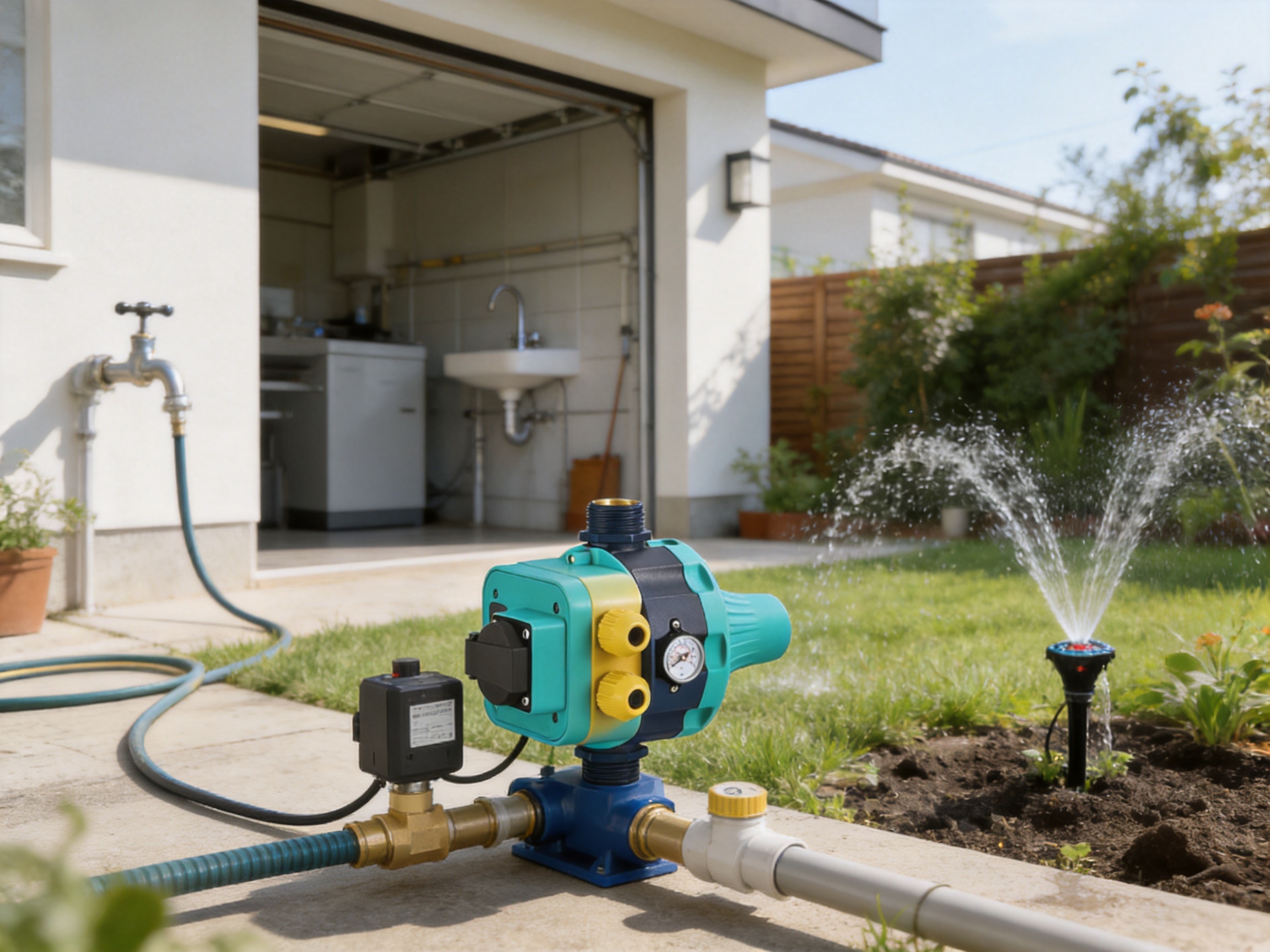
The EPC-5.1 Series is an automatic pressure switch for compatible electric water pumps. It starts the pump when pressure decreases because a water outlet is opened and stops the pump when water flow is interrupted after the outlet is closed.
It is designed to completely replace a traditional pump control arrangement consisting of a pressure switch, pressure tank, check valve, and related components in suitable applications. The complete system must still be evaluated to confirm that the pump, pipework, pressure requirements, and operating cycle are appropriate.
The product is available in 220–240 V, 110–120 V, and 110–240 V configurations. Customers should select the version that matches the local electrical supply and pump requirements.
The maximum using current is 10 A. The pump’s starting current and motor characteristics must also be considered before installation. A contactor or alternative control arrangement may be necessary for pumps that exceed the controller’s electrical capacity.
Standard starting pressure settings include 1.2 bar, 1.5 bar, and 2.2 bar. The starting pressure can be adjusted during installation within an approximate range of 1.2–3.0 bar.
The maximum working pressure is 10 bar. All other components in the water system must have suitable pressure ratings, and the system should never be operated beyond the limit of its lowest-rated component.
The standard connection is a G1-inch male threaded joint. A G1-inch plastic pipe joint is available as an option for quick connection to a compatible water pump.
The EPC-5.1 Series is designed to halt the water pump in cases of insufficient water supply. This helps reduce the risk of damage caused by dry running, although correct pump installation and proper water-source management remain essential.
It may be used in suitable protected outdoor installations, but its IP44 rating does not permit immersion or exposure to severe water conditions. The controller should be installed in a dry, properly protected location and should comply with local electrical requirements.
Yes. Power cable length can be customized according to customer requirements. This option is useful for pump manufacturers, system integrators, and project buyers who need a specific installation arrangement.
Yes. Color customization is available according to customer requirements, subject to confirmation with the manufacturer.
The maximum ambient or working temperature is 55°C. The controller should be installed away from excessive heat and in an environment suitable for its protection rating.
The product is designed for low-noise operation. Actual system noise also depends on the pump, motor, pipework, mounting, water hammer, and installation quality.
The product includes one year of warranty coverage. Buyers should confirm detailed warranty conditions with the supplier before purchase.
The product is manufactured by Taizhou Edwin Electric Co., Ltd., a Chinese water pump and pump-control manufacturer founded in 2008. The company conducts independent research and development, mass production, and global export, and provides related procurement and foreign trade services.
The EPC-5.1 Series Low Noise Easy Operation Automatic Pressure Switch provides a practical control solution for compatible water pumps. Its automatic start-and-stop function, low-noise operation, adjustable starting pressure, G1-inch connection, dry-run protection, and multiple voltage options make it suitable for a wide range of water conveyance applications.
Compared with conventional arrangements built from several separate components, the controller offers a more compact and convenient approach. It can simplify installation, reduce manual operation, and support more responsive pump performance in residential, garden, agricultural support, and small commercial systems.
The product is also supported by the manufacturing strengths of Taizhou Edwin Electric Co., Ltd. The company’s experience in pump research, mass production, international export, intelligent technology, and one-stop procurement provides a solid foundation for serving global customers. Its broader product range helps connect pressure control with the practical requirements of complete pumping systems.
For the best results, the controller should be selected according to the pump’s voltage, power, current, pressure, and operating environment. Correct installation, suitable water supply, proper electrical protection, and regular inspection remain essential. When these conditions are met, the EPC-5.1 Series can provide quiet, automatic, and dependable pressure control for modern water pump installations.
1. Product technical information for the EPC-5.1 Series Low Noise Easy Operation Automatic Pressure Switch for Water Pumps.
2. Manufacturer-provided specifications for rated voltage, frequency, maximum current, maximum power, pressure settings, connection thread, protection rating, and temperature limits.
3. Manufacturer-provided company information concerning research and development, mass production, pump product categories, international export, and procurement services.
4. General principles of domestic water supply pump control and automatic pressure switching.
5. General installation and maintenance practices for electrically controlled water pump systems.
edwina@edwin-pump.com
+86-13586290903 (WhatsApp)
Xuri Gongliang Cutting Tool Entrepreneurship Park, Wenqiao Town, Wenling City, Taizhou City, Zhejiang Province, China

High Performance Smart Pump Factory


 English