edwina@edwin-pump.com

View All Products
en
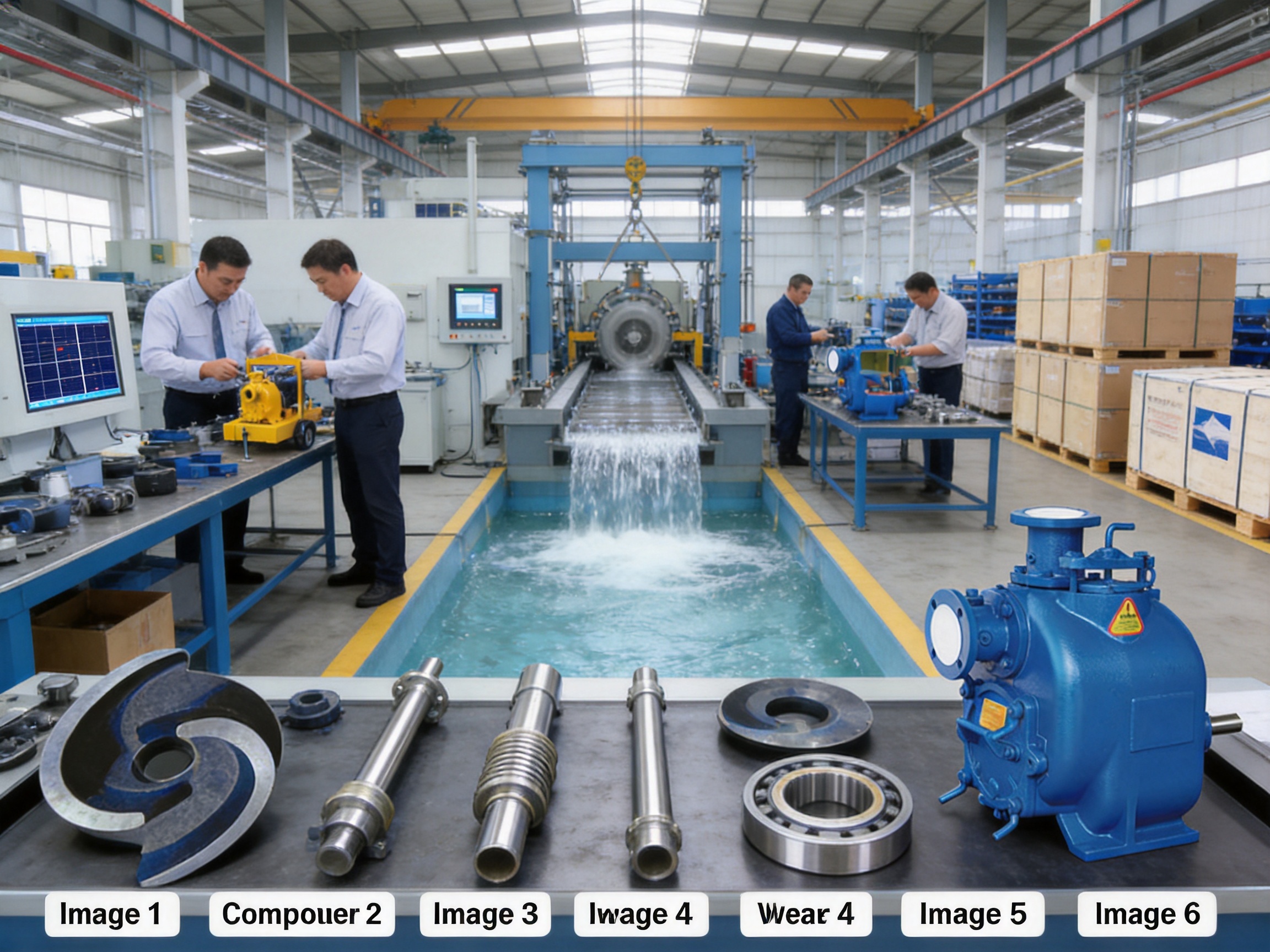
Effective wastewater management depends on pumping equipment that can handle suspended solids, polluted liquids, variable operating conditions, and demanding duty cycles without frequent blockage or complicated maintenance. The ET Series non-clogging self-priming sewage end suction centrifugal pump is designed for precisely these requirements. It combines a self-priming structure, semi-open impeller, horizontal end suction configuration, strong solids-passing capability, and a service-friendly back-pull-out design in one practical pumping solution.
Developed for municipal drainage, industrial sewage transfer, construction dewatering, light chemical applications, agricultural and food-processing wastewater, and other contaminated-liquid services, the ET Series provides a flexible alternative to conventional clean-water centrifugal pumps. Its design allows the pump to be installed above the liquid level, provided the suction line is correctly arranged and the pump casing is filled with water before the first start. This configuration can simplify installation, improve access for inspection, and reduce the need to place the complete pump assembly inside a wet pit.
The series is manufactured by Taizhou Edwin Electric Co., Ltd., an integrated pump enterprise with experience in research and development, mass production, export operations, and one-stop industrial procurement. The company’s wider portfolio includes deep well pumps, submersible pumps, booster pumps, circulation pumps, solar water pumps, and intelligent pumping equipment. This broad product background supports a practical understanding of different water-handling environments, from household water supply to municipal engineering and industrial wastewater treatment.
For users seeking a robust sewage pump rather than a standard clean-water pump adapted beyond its intended purpose, the ET Series offers a purpose-oriented design. Its non-clogging flow passage, large solids clearance, durable materials, and maintainable mechanical construction are intended to improve operational continuity and reduce the time required for service.
The ET Series is a horizontal end suction centrifugal pump designed for sewage and other contaminated liquids. Liquid enters through the axial suction inlet, passes into the impeller, and is redirected through the volute toward the radial discharge outlet. The centrifugal action generated by the rotating impeller converts mechanical energy from the motor into flow and pressure.
Unlike many standard centrifugal pumps that require a continuously flooded suction or a separate priming arrangement, the ET Series incorporates a self-priming sewage-pump configuration. This makes it suitable for dry-mounted installations where the pump is positioned above the liquid level and connected to a suction pipe extending into the collection tank, drainage channel, or sump.
Self-priming capability is particularly useful in temporary drainage systems, construction sites, municipal pumping stations, emergency bypass operations, and locations where installing a submersible pump is inconvenient. It can also simplify routine inspection because the motor and pump assembly remain accessible at floor level rather than being suspended in a wet environment.
The pump must be filled with water before its first start. Correct installation of the suction pipe, avoidance of air leakage, and proper selection of foot valves or flap valves are essential to reliable priming. Once the pump has been correctly commissioned, the internal hydraulic arrangement supports repeated operation in applications where the liquid level changes and the suction line is not permanently flooded.
The motor rotates clockwise when viewed from the drive side. The pump is intended to be installed on a suitable pedestal or foundation, with axial suction and radial discharge. A firm installation helps control vibration, maintain shaft alignment, protect connected pipework, and support long-term bearing and mechanical-seal performance.
Sewage and industrial wastewater often contain fibrous materials, soft solids, suspended particles, sludge deposits, and irregular debris. A pump designed only for clean water may experience impeller blockage, rapid wear, unstable flow, or motor overload when exposed to these conditions. Such problems can result in unplanned shutdowns, emergency cleaning, production interruptions, and increased maintenance costs.
The ET Series addresses this challenge through a semi-open impeller and a relatively large free passage. The semi-open impeller structure provides a more open hydraulic path than a tightly enclosed clean-water impeller. This helps reduce the likelihood that common sewage particles and fibrous matter will become trapped inside the impeller passages.
The maximum free-passage diameter varies according to model. The ET-2 allows particles up to approximately 44 millimeters, the ET-3 allows approximately 63 millimeters, and the ET-4, ET-6, and ET-8 allow approximately 76 millimeters. These clearances provide the user with a practical way to match the pump model to the expected solids content of the liquid.
Non-clogging design does not mean that the pump can process every type of waste without preparation. Extremely long fibers, stones, metal objects, large hard debris, and materials outside the specified operating conditions can still cause damage or blockage. Proper screening and installation remain important. However, compared with a conventional clean-water pump, the ET Series is purposefully configured for more difficult liquids and offers a significantly more suitable hydraulic passage.
The semi-open impeller also supports easier inspection and cleaning. If the pump does require attention, access to the hydraulic components can be obtained through the removable cover and back-pull-out construction. This reduces the need to dismantle the entire pipe system, a major practical advantage in wastewater installations where pipe disconnection can be time-consuming and unhygienic.

ET Series Non-clogging Self-priming Sewage End Suction Centrifugal Pump
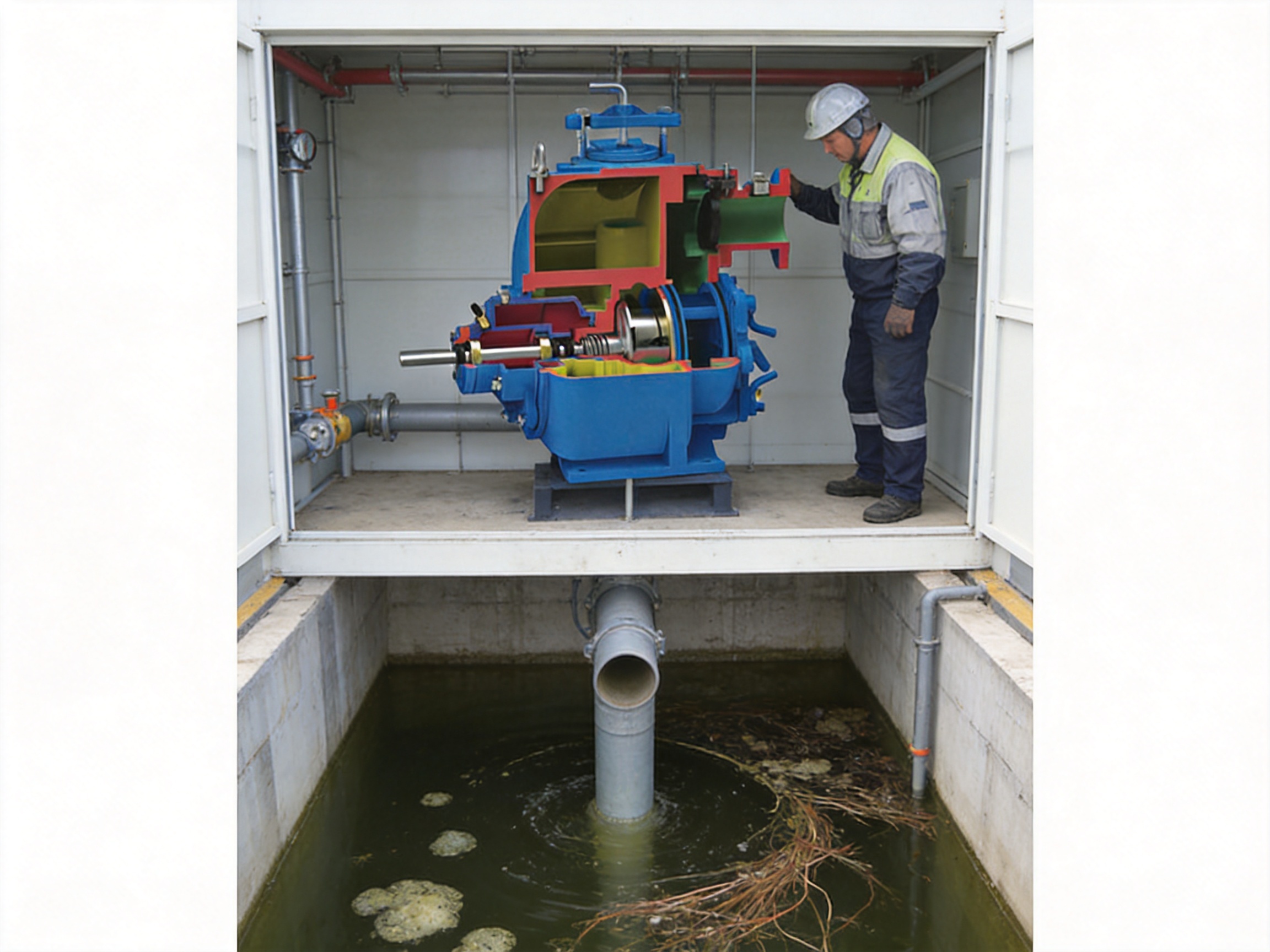
A major advantage of the ET Series is its ability to operate in a self-priming arrangement. The pump can be installed at floor level or above the liquid surface, with only the suction line extending down into the liquid. This can be beneficial where a wet-well installation is difficult, where the pump must remain accessible, or where the system requires mobile or temporary drainage equipment.
Dry installation can also make routine maintenance more convenient. Operators can inspect the motor, coupling, bearing housing, mechanical seal area, and pump casing without entering a pit or lifting a submerged assembly. In facilities with restricted access, corrosive atmospheres, or strict safety procedures, this arrangement can improve the overall service process.
The ET Series is designed with a semi-open impeller and wide flow passages to reduce clogging risks. The available free passage is substantially larger than that typically found in ordinary clean-water centrifugal pumps. This makes the series more appropriate for sewage, rainwater containing debris, industrial drainage, and polluted liquids with suspended solids.
Large solids-passing capability can reduce the frequency of manual intervention. Every avoided blockage helps preserve pumping continuity and reduces the need for operators to stop equipment, isolate valves, drain the casing, and remove debris. In municipal and industrial systems, this can contribute to lower labor requirements and more predictable operation.
The back-pull-out construction is another important service advantage. It allows the rotating assembly and related internal components to be withdrawn from the pump casing from the rear, subject to proper site clearance and installation practice. In many cases, the main suction and discharge pipework can remain connected during inspection or repair.
This arrangement can shorten maintenance time compared with designs that require extensive piping disassembly. The removable cover plate is equipped with a handle and supporting fasteners to provide access to the pump interior. Operators can inspect the impeller, wear plate, volute, and internal passages using common tools. The ability to return the pump to service quickly is especially valuable in drainage stations, production facilities, and emergency wastewater systems.
The standard component selection combines cast iron, stainless steel, carbon steel, elastomeric materials, and hard mechanical-seal faces according to the function of each part. The pump body, volute, covers, and bearing housing use cast-iron grades suited to general sewage service. The impeller can be supplied in QT500 ductile iron, stainless steel 304, or stainless steel 316, depending on the requested configuration and liquid conditions.
Stainless steel impeller options can be considered when the pumped medium requires improved corrosion resistance or when the application involves seawater-influenced drainage, selected chemical conditions, or more demanding industrial service. Material selection must be confirmed against the actual liquid composition, temperature, concentration, and operating cycle before purchase.
The five principal models cover a wide range of flow and head requirements. Maximum flow rates range from 46 cubic meters per hour for the ET-2 to 600 cubic meters per hour for the ET-8. Maximum heads range from approximately 32 to 36.5 meters, depending on the model. Motor power options range from 1 horsepower to 75 horsepower.
This range allows the same product family to serve smaller drainage applications as well as larger municipal or industrial transfer duties. Standardized product-family design can simplify procurement, spare-parts planning, operator training, and future capacity expansion.
The following figures summarize the principal published performance ranges. Actual operating points depend on speed, impeller configuration, system resistance, liquid properties, suction conditions, and installation details. Final selection should be based on a complete duty-point review rather than maximum figures alone.
| Model | Speed Range | Maximum Flow | Maximum Head | NPSH Range | Power Range | Maximum Solids |
| ET-2 | 1,150–2,900 rpm | 46 m³/h | 35 m | 7.3–7.6 m | 1–10 HP | 44.45 mm |
| ET-3 | 650–2,150 rpm | 110 m³/h | 35 m | 1.5–7.6 m | 1–20 HP | 63.5 mm |
| ET-4 | 650–1,950 rpm | 160 m³/h | 36 m | 1.5–7.6 m | 1–30 HP | 76.2 mm |
| ET-6 | 650–1,550 rpm | 350 m³/h | 32 m | 2.4–7.6 m | 2–40 HP | 76.2 mm |
| ET-8 | 650–1,450 rpm | 600 m³/h | 36.5 m | 2.7–7 m | 7.5–75 HP | 76.2 mm |
The performance table shows that the model range is not organized only by motor size. Each model also has its own hydraulic capacity and solids-passage characteristics. The ET-2 is appropriate for smaller flow requirements, while the ET-6 and ET-8 are intended for substantially larger drainage and wastewater-transfer duties. The ET-4 provides an intermediate option with a large solids passage, making it useful for facilities that need more capacity than the ET-3 without moving immediately to the largest frame sizes.
Material quality and component selection have a direct effect on pump service life. The ET Series uses a defined component structure that allows users and maintenance teams to identify the principal wear and sealing parts.
| Component | Standard Material | Functional Purpose |
| Suction inlet | HT250 cast iron | Provides the axial entry passage for the pumped liquid. |
| Flap valve | NBR and carbon steel | Helps control liquid retention and supports the priming arrangement. |
| Infusion cover | HT250 cast iron | Provides access for filling the pump before initial operation. |
| Discharge outlet | HT250 cast iron | Connects the pump casing to the discharge pipe. |
| End cover | HT250 cast iron | Supports the hydraulic casing assembly. |
| Wear plate | ASTM 1045 steel | Provides a replaceable wear interface in the hydraulic chamber. |
| Volute | HT250 cast iron | Converts velocity energy into pressure and directs flow to discharge. |
| Impeller | QT500, stainless steel 304, or stainless steel 316 | Transfers rotational energy to the pumped liquid. |
| Impeller cover | HT250 cast iron | Supports the impeller-side hydraulic structure. |
| Mechanical seal | TC/TC and related sealing materials | Limits leakage along the rotating shaft. |
| O-ring | NBR | Provides static sealing between mating components. |
| Shaft | SS420 stainless steel | Transmits torque from the drive to the impeller. |
| Bearing body | HT250 cast iron | Supports the bearing and rotating assembly. |
| Bearing cover | HT200 cast iron | Protects and retains the bearing arrangement. |
The use of a wear plate is especially practical in sewage pumping. Suspended particles can gradually erode hydraulic surfaces, and a replaceable wear component can be more economical than replacing the complete casing. The mechanical seal is also a critical component because leakage at the shaft can damage bearings, contaminate the surrounding area, and reduce equipment reliability.
For corrosive or saline liquids, the available stainless steel impeller options can provide a higher level of material compatibility than ordinary cast iron. Nevertheless, no single material is suitable for every chemical. Users should provide a complete medium description, including pH, chlorides, temperature, density, abrasive content, and any chemical additives, so that the pump configuration can be reviewed appropriately.
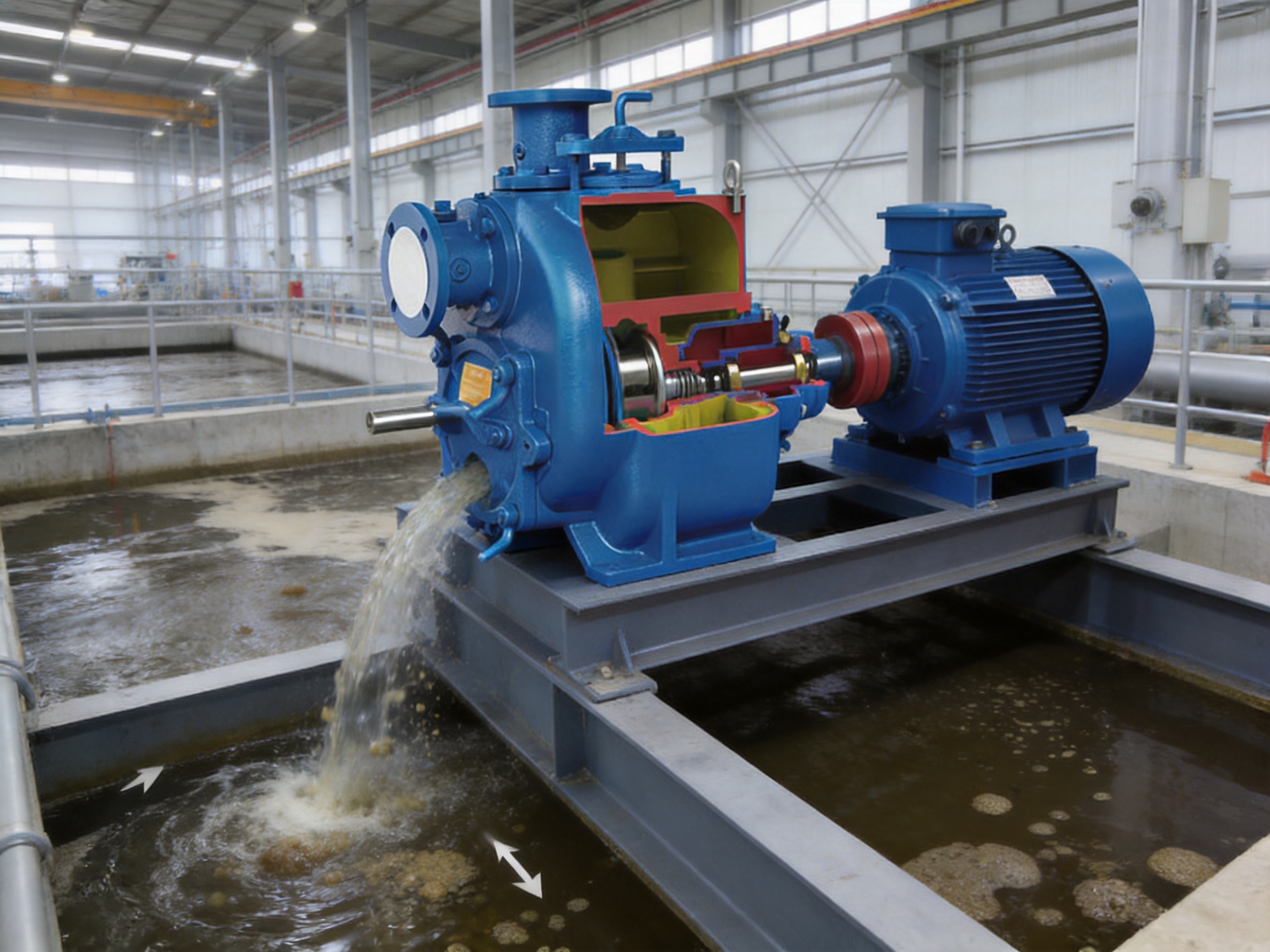
Municipal drainage networks require pumps that can transfer domestic sewage, rainwater, and contaminated surface water with changing solids content. The ET Series can be used in sewage collection systems, drainage stations, wastewater transfer points, and selected municipal treatment stages where the pump’s flow and head are suitable.
Its dry-mounted self-priming arrangement can be advantageous in municipal pumping stations where operators need direct access to the equipment. The pump can be positioned on a foundation above the wet area, reducing the need to lift a submerged motor during routine inspections.
Construction sites frequently experience changing water levels, sediment, mud, and debris. Temporary drainage systems also need equipment that can be installed, moved, and serviced efficiently. The ET Series can support dewatering operations where the liquid characteristics remain within its stated limits and where suitable screening is used to protect the pump from oversized objects.
Because the pump can be installed at floor level with a suction pipe leading to the collection area, it can be integrated into temporary drainage layouts without placing the motor directly in the water. This can simplify relocation and reduce exposure of electrical components to wet conditions, although all electrical installations must still follow applicable safety requirements.
The pump is suitable for selected non-flammable and non-explosive liquids in light chemical-industrial environments. Applications may include contaminated process drainage, wastewater transfer, utility drainage, and intermediate treatment systems. Chemical compatibility must be assessed carefully, particularly when the liquid contains solvents, strong acids, strong alkalis, high chloride levels, or aggressive additives.
The availability of stainless steel 304 and stainless steel 316 impeller materials provides configuration flexibility. In some services, the impeller may require greater corrosion resistance than the cast-iron casing. In others, a fully upgraded wetted-part configuration may be required. The correct selection depends on the complete process chemistry rather than on the liquid name alone.
Paper mills, textile plants, and food-processing facilities generate wastewater containing fibers, suspended solids, organic matter, and process residues. A semi-open impeller with a large free passage is more appropriate for these liquids than a narrow clean-water impeller. The pump can be used for wastewater discharge, collection-tank transfer, and selected treatment-system duties.
Hygiene, cleaning procedures, and material compatibility are particularly important in food-processing environments. The pump should be selected for the specific wastewater duty rather than for direct sanitary product transfer unless an appropriate hygienic configuration has been separately confirmed.
Mining and deep-excavation environments often require reliable drainage under difficult conditions. The ET Series can be considered for non-flammable contaminated water, site drainage, and selected industrial wastewater duties where the abrasive content, solids concentration, density, and particle size remain within the operating limits.
The published operating conditions specify a medium density below approximately 1,200 kilograms per cubic meter and a solids volume ratio of no more than 2 percent. If the liquid contains a higher concentration of abrasive solids, a different pump design or upgraded wear materials may be required.
Residential areas, commercial buildings, and community facilities may require sewage transfer pumps for collection tanks, drainage systems, and wastewater treatment equipment. The ET Series can provide a dry-installed alternative where the available space, access conditions, and required flow rate match the product’s characteristics.
For smaller installations, model selection should consider not only the required flow but also the expected solids size, pipe length, static lift, number of bends, and frequency of operation. Oversizing a pump can increase energy consumption and create unfavorable operating conditions, while undersizing can result in inadequate drainage or excessive running time.
The ET Series is specified for liquid temperatures from 0 to 40 degrees Celsius. The medium density should remain below approximately 1.2 times 10³ kilograms per cubic meter, the pH should generally be within 5 to 9, and the volume ratio of solids should not exceed 2 percent.
The ambient temperature should be below 40 degrees Celsius, and the recommended maximum installation altitude is 1,000 meters. At higher altitudes, reduced air density can affect motor cooling and may require a review of motor loading and ventilation conditions.
Users should begin pump selection by defining the required duty point. This includes the desired flow rate, total dynamic head, static suction lift, discharge elevation, pipe diameter, pipe length, fittings, valves, and expected operating schedule. The pump should normally operate near an efficient and stable point on its performance curve rather than continuously at an extreme end of the range.
Liquid properties must also be documented. Important information includes temperature, density, viscosity, pH, solids type, solids concentration, particle size, fiber content, abrasiveness, and corrosiveness. A wastewater description such as “industrial sewage” is not sufficient by itself for engineering selection because industrial wastewater can vary widely between facilities.
NPSH conditions require special attention. The published NPSH values must be compared with the available NPSH at the installation site. A long suction pipe, excessive suction lift, undersized suction piping, blocked strainers, high liquid temperature, or air leakage can reduce suction performance and contribute to cavitation or loss of prime.
A solid, level foundation should be provided for the pump and motor assembly. The foundation must support the equipment weight and resist vibration. Pipework should be independently supported so that its weight and thermal or mechanical loads are not transferred to the pump casing.
The suction line should be as short and direct as practical. Sudden changes in direction, unnecessary restrictions, high points that trap air, and undersized pipework can make self-priming more difficult. Suction piping should be checked carefully for air-tightness because even a small leak may prevent the pump from establishing a stable prime.
The suction pipe should be arranged to avoid vortex formation and excessive turbulence at the liquid surface. Where a flap valve, foot valve, or strainer is used, its pressure loss and solids-passing capability must be considered. A fine screen may protect the pump from large debris but can become blocked quickly in sewage service, so the screening approach should balance protection and flow capacity.
Before the first start, the pump casing should be filled with clean water or an approved compatible liquid. The operator should verify that the suction line is correctly immersed, the discharge valve is positioned according to the commissioning procedure, and the motor rotates in the specified clockwise direction when viewed from the drive side.
After starting, the pump should be monitored for abnormal noise, vibration, leakage, overheating, unstable discharge, and failure to prime. A pump that does not prime should not be allowed to run dry for an extended period. The cause may be insufficient filling, air leakage, incorrect suction depth, a blocked flap valve, excessive suction lift, or an unsuitable pipe arrangement.
The ET Series is designed to support practical maintenance through its back-pull-out construction and removable cover. Regular inspection should include the mechanical seal, shaft, bearings, impeller, wear plate, casing passages, flap valve, fasteners, and electrical connections.
Operators should establish an inspection schedule based on operating hours and liquid severity. In a clean municipal drainage application, inspection intervals may be longer than in a heavily contaminated industrial process. A pump handling abrasive solids or fibrous waste should be checked more frequently for wear and blockage.
Mechanical-seal leakage should be treated as an early warning rather than ignored. Small leakage can develop into a more serious failure that affects the bearing housing or surrounding equipment. O-rings should be inspected whenever components are dismantled, and damaged sealing elements should be replaced rather than reused.
The impeller should be examined for erosion, corrosion, cracks, deformation, and blockage. The wear plate should be checked for excessive clearance and surface damage. Excessive wear can reduce hydraulic efficiency, increase energy consumption, lower delivered head, and cause unstable operation.
Bearings should be monitored for noise, temperature rise, vibration, and signs of contamination. The shaft should be checked for bending, scoring, or seal-contact damage. Correct alignment between the motor and pump is essential, particularly after maintenance or relocation.
Before maintenance begins, the pump must be isolated from electrical power and hydraulic pressure. The casing should be drained safely, and the liquid should be handled according to the site’s environmental and occupational-safety procedures. Sewage and industrial wastewater may contain biological hazards or hazardous chemicals, so suitable personal protective equipment and decontamination procedures are required.
Taizhou Edwin Electric Co., Ltd. was established in 2008 and operates as an integrated manufacturing enterprise focused on independent research and development, mass production, and global export. This structure is valuable for industrial customers because it connects product design, production planning, order management, and international delivery within a coordinated organization.
Independent research and development allows the company to build products around practical market requirements rather than relying only on standard catalog designs. For the ET Series, this is reflected in the combination of self-priming operation, a non-clogging semi-open impeller, dry-installation flexibility, back-pull-out maintenance access, and multiple material options.
Mass-production capability can support consistent component availability and more predictable lead times. Repeatable manufacturing also allows production teams to standardize casting, machining, assembly, inspection, and packaging procedures. For overseas buyers, this consistency is important because pumps may be installed in different countries and must be supported with repeatable documentation and spare-parts planning.
The company’s product portfolio extends across deep well pumps, submersible pumps, domestic booster pumps, circulation pumps, solar water pumps, intelligent booster pumps, and other water-treatment-related equipment. This broad range indicates experience with different hydraulic systems, motor arrangements, control requirements, and installation environments.
Since 2018, the company has invested in new energy and intelligent technology, including solar water pumps and intelligent booster pumps. Although the ET Series is a mechanical sewage pump rather than a smart-control product, this wider technical direction can support future integration with monitoring, automation, remote operation, and energy-management systems where project requirements justify such features.
The company also established Taizhou Haipai Import and Export Co., Ltd. and Golden Falcon Industrial Co., Ltd. to support procurement planning, order tracking, cross-border delivery, and foreign-trade services. For international customers, these capabilities can be as important as the pump itself. A technically suitable product still requires accurate order confirmation, coordinated production, export documentation, packaging, shipment management, and after-sales communication.
A reliable pump begins with controlled design and material selection. The intended liquid, solids content, flow range, pressure requirement, and maintenance expectations should be translated into a suitable hydraulic and mechanical configuration. For the ET Series, the principal design decisions include the semi-open impeller, large solids passage, horizontal end suction layout, self-priming arrangement, and back-pull-out structure.
Casting is used for several major components, including the pump casing, volute, covers, suction inlet, discharge outlet, and bearing housing. Consistent casting quality is important because internal defects, dimensional variation, or rough hydraulic passages can affect pressure performance, structural integrity, and service life. Cast components must be inspected and machined to achieve the required fit and sealing surfaces.
Machining creates the accurate interfaces needed for assembly. Shaft seats, bearing locations, seal chambers, impeller fits, casing joints, and bolt patterns must maintain appropriate dimensions. Controlled machining helps ensure that the rotating assembly is centered, that the mechanical seal is correctly located, and that the impeller operates with suitable clearances.
Impeller production requires particular attention because the impeller determines much of the hydraulic behavior. The semi-open passages must remain clear and correctly formed. Surface quality, balance, dimensional accuracy, and material integrity all influence vibration, efficiency, and solids-passing performance.
Assembly should follow controlled procedures for bearings, seals, shaft components, impeller installation, casing closure, and fastener tightening. Mechanical-seal faces must be protected from scratches and contamination. O-rings should be installed without twisting or cutting. Rotating components should be checked for free movement before the pump is coupled to the motor.
Inspection and testing provide the final opportunity to identify problems before shipment. Depending on the order and applicable requirements, checks may include dimensional inspection, visual inspection, rotation verification, leakage checks, electrical testing, vibration observation, and hydraulic performance testing. The product information identifies CE certification, supporting the company’s focus on compliance for international markets.
Quality control should not be limited to the final assembly stage. It is more effective when integrated across incoming materials, casting, machining, component inspection, assembly, testing, packing, and shipment. This process-based approach helps prevent defects from moving to the next production stage and supports more consistent product performance.
International buyers often need more than a pump model number. They require technical confirmation, material options, reliable production coordination, export support, and communication throughout the order. Edwin Pump’s integrated manufacturing and trade-service structure is intended to address these needs.
The ET Series can be supplied as part of a broader procurement program when a project requires several pump types. A customer may need sewage pumps for drainage, submersible pumps for wet wells, booster pumps for water supply, circulation pumps for HVAC, and solar pumps for remote irrigation. Working with a supplier that has multiple pump categories can simplify vendor management and technical coordination.
The product family also supports spare-parts planning. Common service items such as mechanical seals, O-rings, wear plates, impellers, bearings, and flap valves can be identified during the original purchase. Establishing a recommended spare-parts package before commissioning can reduce downtime when maintenance becomes necessary.
For contractors, the dry-mounted configuration may help simplify civil works and equipment access. For distributors, the broad model range provides opportunities to serve several market segments with a recognizable product family. For end users, the back-pull-out structure can reduce reliance on specialized maintenance equipment during routine service.
Energy performance depends on the complete pumping system, not only on the motor nameplate. A pump that is incorrectly sized may operate far from its preferred duty point, resulting in unnecessary throttling, excessive recirculation, vibration, or premature wear.
Correct selection begins with accurate system data. The required flow should reflect the real drainage or transfer requirement rather than an assumed maximum that rarely occurs. The total head should include static elevation, pipe friction, valves, fittings, treatment equipment, and any required outlet pressure. Suction conditions should be evaluated separately because inadequate suction performance can limit the system even when the motor has sufficient power.
Variable operating conditions may justify the use of speed control, multiple pumps, or staged operation, depending on the application. The ET Series includes models with broad speed ranges, but speed adjustment must remain within the approved motor, impeller, bearing, seal, and hydraulic limits. Any variable-frequency-drive application should be reviewed for motor compatibility, minimum speed, cooling, starting torque, and control strategy.
Maintaining clear suction passages, properly adjusted wear clearances, clean strainers, and correctly aligned rotating components can also help preserve efficiency. A pump that is mechanically healthy and operated near its intended point will generally provide more stable service than one that is constantly forced to overcome avoidable system problems.
The ET Series is intended for non-flammable and non-explosive liquids. It should not be installed in a hazardous area unless the complete pump, motor, electrical system, and installation are specifically approved for that environment. Users must follow local regulations for electrical protection, grounding, overload protection, emergency isolation, and wastewater handling.
Sewage may contain pathogens, sharp debris, toxic substances, and gases. Maintenance personnel should use appropriate protective clothing, gloves, eye protection, respiratory protection where required, and safe decontamination practices. The pump should be isolated and drained before internal access.
Environmental protection also requires responsible handling of drained liquids, used oil or grease where applicable, contaminated components, worn seals, and replaced metal parts. Wastewater should not be discharged or bypassed without considering local treatment and environmental requirements.
Before ordering an ET Series pump, the purchaser should prepare the following information:
1. Required flow rate in cubic meters per hour.
2. Required total head in meters.
3. Static suction lift and discharge elevation.
4. Suction and discharge pipe sizes and approximate lengths.
5. Number and type of valves, bends, strainers, and other fittings.
6. Liquid temperature and density.
7. pH, chemical composition, and corrosion risk.
8. Solids concentration, particle size, fiber content, and abrasiveness.
9. Required motor power, voltage, frequency, and phase.
10. Installation altitude and ambient temperature.
11. Duty cycle, starting frequency, and expected annual operating hours.
12. Required impeller and casing materials.
13. Available foundation dimensions and maintenance clearance.
14. Required certificates, inspection documents, packaging, and export documentation.
Providing this information at the quotation stage can reduce the risk of selecting an unsuitable model. It also allows the supplier to recommend the correct configuration, confirm materials, review the performance point, and plan any required accessories or spare parts.
The ET Series is a horizontal, end suction, self-priming sewage centrifugal pump. It uses a semi-open impeller and is designed for contaminated liquids containing suspended solids within the published operating limits.
Yes. The pump can be mounted at floor level or on a suitable pedestal above the liquid, with the suction pipe extending into the liquid. The pump casing must be filled with water before the first start, and the suction system must be properly sealed and arranged.
The principal features are the semi-open impeller, relatively wide hydraulic passages, and large solids-passing capability. These features reduce the likelihood of blockage compared with conventional clean-water centrifugal pumps, although appropriate screening and installation remain necessary.
The maximum free passage is approximately 44 millimeters for the ET-2, approximately 63 millimeters for the ET-3, and approximately 76 millimeters for the ET-4, ET-6, and ET-8. Actual suitability depends on the shape and nature of the solids as well as the concentration.
The pump is intended for rainwater, common sewage, municipal wastewater, selected industrial sewage, and other non-flammable and non-explosive polluted liquids. The standard operating range includes liquid temperatures from 0 to 40 degrees Celsius, pH from 5 to 9, density below approximately 1,200 kilograms per cubic meter, and solids volume ratio no greater than 2 percent.
The product description identifies seawater and sewage among its service applications. However, seawater can create corrosion concerns, so the impeller and other wetted materials should be confirmed for the actual salinity, temperature, operating cycle, and required service life. Stainless steel options may be appropriate in selected conditions.
The back-pull-out construction allows access to the internal rotating and hydraulic components with less need to disconnect the main pipework. This can reduce service time and make inspection of the impeller, wear plate, volute, and mechanical seal more convenient.
Check that the casing has been filled, the suction pipe is immersed correctly, all suction connections are air-tight, the flap or foot valve is functioning, the suction lift is within the allowable range, and the suction pipe is not blocked. The motor rotation direction and discharge arrangement should also be verified.
Select the model according to the required flow, total head, solids size, liquid properties, suction conditions, motor requirements, and installation environment. Maximum flow and maximum head should not be used as the only selection criteria. A complete duty-point review is recommended.
Recommended spare parts may include mechanical seals, O-rings, wear plates, impellers, flap-valve components, bearings, gaskets, and fasteners. The exact package should reflect operating hours, liquid severity, site access, and the importance of uninterrupted service.
Yes. Taizhou Edwin Electric Co., Ltd. manufactures and supplies several categories of pumping equipment, including deep well pumps, submersible pumps, domestic booster pumps, circulation pumps, solar water pumps, intelligent booster pumps, and related water-treatment products.
The buyer should provide the duty point, liquid description, solids information, installation arrangement, motor and electrical requirements, materials, quantity, destination, documentation requirements, and expected delivery schedule. Detailed information enables more accurate technical and commercial confirmation.
The ET Series non-clogging self-priming sewage end suction centrifugal pump is designed for users who need more than ordinary clean-water pumping performance. Its semi-open impeller, wide solids passage, self-priming capability, horizontal dry-mounted configuration, and back-pull-out construction address many of the practical challenges found in sewage and contaminated-liquid handling.
Its five-model range covers flows from approximately 46 to 600 cubic meters per hour, with motor power options from 1 to 75 horsepower and maximum solids-passing capacity up to approximately 76.2 millimeters on the larger models. Material alternatives, including stainless steel impellers, further expand its suitability for selected municipal, industrial, saline, and light chemical applications.
The product is supported by the manufacturing and export capabilities of Taizhou Edwin Electric Co., Ltd. The company combines independent research and development, mass production, broad pump-category experience, international procurement support, and investment in new energy and intelligent pump technology. These strengths can benefit contractors, distributors, engineering companies, and industrial end users seeking coordinated supply and dependable technical communication.
When correctly selected, installed, and maintained, the ET Series can provide reliable wastewater transfer, simplified access for service, and improved resistance to common sewage-related blockage problems. Its strongest value lies in the combination of hydraulic practicality, maintainable construction, material flexibility, and manufacturer support for global industrial applications.
1. ET Series product performance data and component-material schedule supplied for this product.
2. Manufacturer technical information for non-clogging self-priming sewage centrifugal pumps.
3. General centrifugal pump engineering principles for flow, head, suction performance, and pump selection.
4. General wastewater pumping and municipal drainage design practices.
5. General mechanical-seal, bearing, wear-component, and rotating-equipment maintenance guidance.
edwina@edwin-pump.com
+86-13586290903 (WhatsApp)
Xuri Gongliang Cutting Tool Entrepreneurship Park, Wenqiao Town, Wenling City, Taizhou City, Zhejiang Province, China

High Performance Smart Pump Factory


 English