edwina@edwin-pump.com

View All Products
en
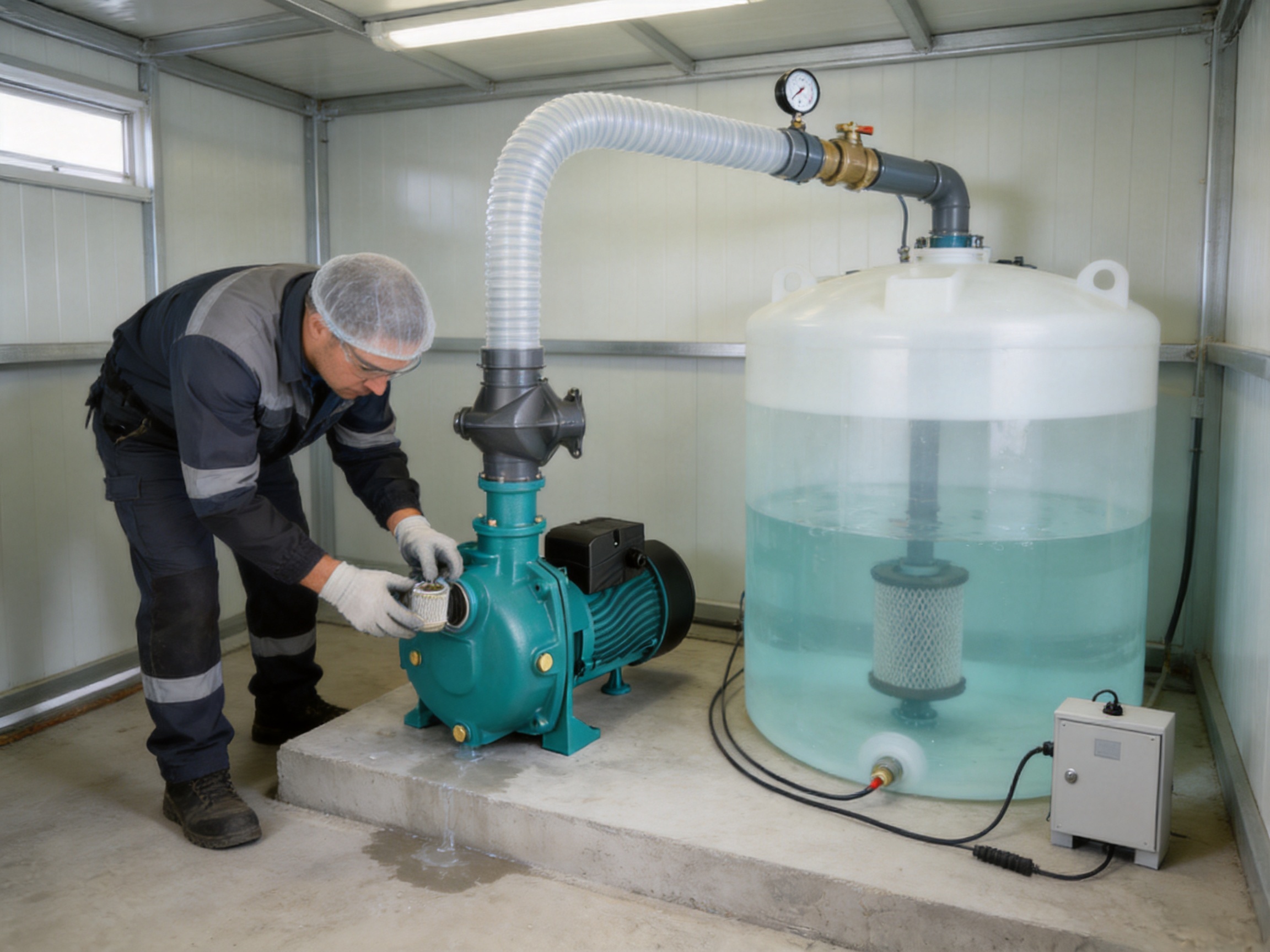
Reliable water movement is essential in gardens, greenhouses, small farms, breeding facilities, workshops, and residential water systems. In these applications, the pump must do more than simply move water. It must start reliably, maintain stable pressure, tolerate repeated operating cycles, resist corrosion, and continue working efficiently with limited maintenance. A pump that loses its prime, overheats, or experiences premature wear can interrupt irrigation, damage crops, and increase operating costs.
The JET-SE Series Clean Water Copper Wire Self-Priming Pump is designed for these practical requirements. It is a shallow-well, horizontal self-priming pump intended for clean water and liquids with properties similar to water. The series combines a cast iron hydraulic body, a brass impeller, rust-resistant stainless steel shaft components, copper motor wiring, thermal protection, and a compact structure suitable for a wide range of water supply tasks.
Available in three power configurations, the JET-SE Series provides a practical selection for different flow and head requirements. The JET-550SE is rated at 0.6 kW and 0.8 HP, the JET-750SE at 0.75 kW and 1 HP, and the JET-1100SE at 1.1 kW and 1.5 HP. Each model uses a 1-inch inlet and 1-inch outlet, reaches a maximum suction height of 8 meters, and is designed for continuous operation when correctly installed and used within its working conditions.
Its principal value lies in the balance between performance, durability, ease of use, and application flexibility. Compared with basic surface pumps, the self-priming hydraulic design can simplify startup after the pump and suction line have been properly filled. Compared with lightly constructed residential pumps, the JET-SE Series uses a more durable component arrangement, including a treated cast iron body and support, brass hydraulic components, and an AISI 304 stainless steel shaft for water-contact areas.
This article examines the structure, operating principle, technical performance, manufacturing strengths, application advantages, installation requirements, maintenance considerations, and purchasing value of the JET-SE Series.
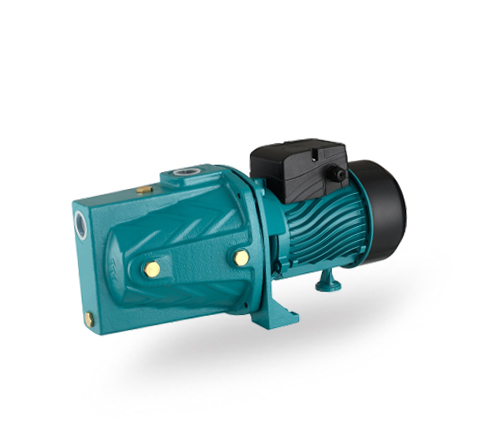
JET-SE Series Clean Water Copper Wire Self-Priming Pump
A surface pump is installed above the water source and draws water through a suction pipe. Unlike a submersible pump, it does not operate inside the well, tank, or reservoir. This makes surface pumps easy to inspect, service, and replace. However, a conventional surface centrifugal pump cannot normally remove all air from the suction line by itself. If air enters the suction pipe, the pump may lose its prime and stop delivering water.
A self-priming jet pump addresses this limitation through a special hydraulic arrangement that combines a centrifugal impeller with a nozzle, venturi, and diffuser. During the priming process, the pump circulates water internally and creates a pressure difference that helps remove air from the suction line. Once the air has been expelled and water reaches the pump, the unit can transition into normal pumping operation.
The self-priming function does not mean that the pump can run completely dry or operate without initial filling. The pump casing must generally be filled with water before the first startup, and the suction pipe must be correctly installed. The self-priming system is intended to make recovery from air in the suction line easier, not to eliminate all installation requirements.
The JET-SE Series is therefore particularly suitable for shallow wells, storage tanks, rainwater collection systems, irrigation reservoirs, and other sources where the pump must remain above the water level. Its maximum suction height of 8 meters provides flexibility for many small-scale water transfer and irrigation systems, although actual performance depends on pipe length, pipe diameter, elevation, water temperature, fittings, and atmospheric conditions.
The pump is designed for clean water and liquids with chemical properties similar to water. This includes many ordinary irrigation and domestic water applications, provided the liquid does not contain abrasive solids, fibrous material, aggressive chemicals, or excessive sediment. Clean water reduces the risk of impeller erosion, mechanical seal damage, valve blockage, and nozzle wear.
Using the pump within its intended liquid range is one of the most important factors affecting service life. Water containing sand or suspended solids should be filtered before entering the suction line. Wastewater, seawater, corrosive liquids, and liquids containing substantial chemical additives require a pump specifically designed for those conditions.
The durability of a pump is strongly influenced by the materials selected for its hydraulic and motor components. The JET-SE Series uses a combination of cast iron, brass, stainless steel, engineering plastics, copper wiring, and specialized sealing materials. Each material serves a specific function.
The pump body and support are made from HT200 cast iron. Cast iron offers good structural strength, vibration resistance, and dimensional stability. It also provides a solid platform for the hydraulic assembly, helping the pump maintain alignment during operation.
The pump body receives special anti-rust treatment. This treatment is important because a surface pump may be installed in humid environments, outdoor pump houses, agricultural structures, or utility rooms where condensation and splashing water are common. Protecting the exterior improves appearance and helps reduce corrosion-related deterioration.
A rigid cast iron body also helps reduce distortion under pressure. While the pump is compact, the casing must withstand internal hydraulic forces and maintain reliable sealing around the impeller, diffuser, and mechanical seal. The material choice therefore supports both durability and stable operation.
The impeller is manufactured from brass. The impeller is one of the most important moving components because it transfers mechanical energy from the motor to the water. Brass provides a useful combination of strength, corrosion resistance, and dimensional stability for clean-water pumping.
The use of a brass impeller is also beneficial when a pump remains unused for a period of time. In many ordinary water systems, mineral deposits and corrosion can make restarting more difficult. A brass hydraulic component can help maintain reliable mechanical movement and reduce the risk associated with long idle periods, provided the pump is properly stored and protected.
Brass is also suitable for the pump's internal water-contact environment because it generally performs well in clean-water service. However, compatibility must still be checked if the pump is used with water containing unusual chemicals, high salt concentrations, or aggressive treatment agents.
The shaft and rotor assembly transfer torque from the motor to the impeller. The JET-SE Series uses an AISI 304 stainless steel shaft in the water-contact area. This helps protect the shaft from rust and supports clean operation.
A rust-resistant shaft is valuable because shaft corrosion can damage the mechanical seal, increase friction, create imbalance, and make future servicing more difficult. Stainless steel also supports consistent rotating performance over the life of the pump when the unit is operated within its specified conditions.
The mechanical seal uses a carbon and ceramic combination. Its role is to prevent water from moving along the rotating shaft into the motor housing. The mechanical seal must maintain contact between stationary and rotating surfaces while accommodating heat, pressure, and shaft rotation.
Carbon and ceramic are widely used in clean-water pumps because they provide suitable wear resistance and sealing performance for ordinary water applications. Seal life depends on correct alignment, adequate water availability, clean liquid conditions, and avoidance of dry running. Even a high-quality seal can be damaged if the pump operates without water.
The nozzle, venturi, and diffuser are listed as PPO components. Polyphenylene oxide is an engineering plastic known for dimensional stability and useful resistance to heat and moisture in suitable operating conditions. These components form an important part of the jet-pump hydraulic circuit.
Engineering polymers can reduce weight and support accurate hydraulic geometry. The nozzle and venturi require carefully formed passages to create the pressure and velocity conditions necessary for self-priming. Stable molded components help maintain the intended internal flow path.
The motor case is made from aluminum, while the motor cover is made from cast iron. Aluminum can provide a useful balance between low weight and heat dissipation. The cast iron cover contributes additional mechanical strength and supports the motor assembly.
The cooling fan is made from PP, a commonly used engineering thermoplastic for motor cooling components. The fan cover protects the rotating fan and helps direct air across the motor housing. The capacitor holding box, terminal cover, and other electrical enclosures help organize and protect the motor connections.
The JET-SE Series uses durable copper wiring. Copper has high electrical conductivity, which helps transfer electrical energy efficiently through the motor windings. Efficient copper windings can support stable motor performance and reduce unnecessary electrical losses compared with lower-conductivity winding materials.
Copper wiring is especially important in pumps that operate for extended periods. Garden irrigation, greenhouse supply, and water transfer systems may require long operating cycles. A motor designed for continuous work must manage heat effectively while delivering consistent torque to the impeller.
The motor is equipped with high-efficiency C&U bearings. Bearings support the rotating shaft and rotor while minimizing friction. Smooth bearings help reduce operating noise, vibration, and mechanical losses. They also support stable alignment between the motor and hydraulic assembly.
The single-phase motor includes a built-in thermal protector. The thermal protector responds to excessive temperature conditions and helps protect the motor from overheating. Overheating may result from blocked ventilation, excessive ambient temperature, low voltage, abnormal loading, frequent restarting, or a pump operating outside its recommended hydraulic range.
Thermal protection is an important advantage for agricultural and household installations, where the pump may be used by operators who are not continuously monitoring motor temperature. It is not a substitute for correct electrical protection, grounding, cable selection, and installation. A suitable circuit breaker and residual-current protection should be selected according to local electrical regulations.
The motor uses Class F insulation. This insulation class is designed for elevated operating temperatures and provides a practical margin for normal heat generation during operation. The actual temperature of the winding depends on the load, ambient conditions, voltage, ventilation, and operating time.
Class F insulation supports dependable performance in demanding service, but the motor should still be installed in a ventilated location. The fan cover must remain unobstructed, and the motor should not be enclosed in a small space where heat cannot escape.
The motor protection rating is IP44. The first digit indicates protection against solid objects of a specified size, while the second digit indicates protection against water splashing from various directions. IP44 is suitable for many sheltered pump-house and utility applications.
IP44 does not mean that the entire motor can be submerged or exposed to high-pressure water jets. The pump should be protected from flooding, direct heavy rain, hose spraying, and water accumulation around the terminal box. Proper installation remains essential to preserve electrical safety.
The JET-SE Series includes three models that share a common 1-inch inlet and 1-inch outlet configuration. The different motor powers provide a straightforward way to select a pump according to required flow and head.
| Model | Power | Power | Inlet/Outlet | Maximum Flow | Maximum Head | Maximum Suction |
| JET-550SE | 0.6 kW | 0.8 HP | 1 inch x 1 inch | 40 L/min | 40 m | 8 m |
| JET-750SE | 0.75 kW | 1 HP | 1 inch x 1 inch | 45 L/min | 45 m | 8 m |
| JET-1100SE | 1.1 kW | 1.5 HP | 1 inch x 1 inch | 50 L/min | 50 m | 8 m |
The maximum values in the table are reference points rather than guaranteed simultaneous operating conditions. In real installations, flow decreases as total head increases. Total head includes vertical elevation, pressure requirements, friction losses in the pipe, and losses through elbows, filters, valves, and other fittings.
For a short garden irrigation line with modest elevation, the lower-power JET-550SE may provide a suitable balance between capacity and energy use. The JET-750SE offers an intermediate option for users who need additional head or flow. The JET-1100SE is the strongest model in the range and may be preferable for longer pipe runs, greater elevation, or higher water demand.
Correct selection should be based on a system calculation rather than motor power alone. Oversizing a pump can increase energy consumption, produce unnecessary pressure, and cause frequent cycling if the system does not require the additional capacity. Undersizing can lead to poor water delivery, prolonged operation, and motor stress.
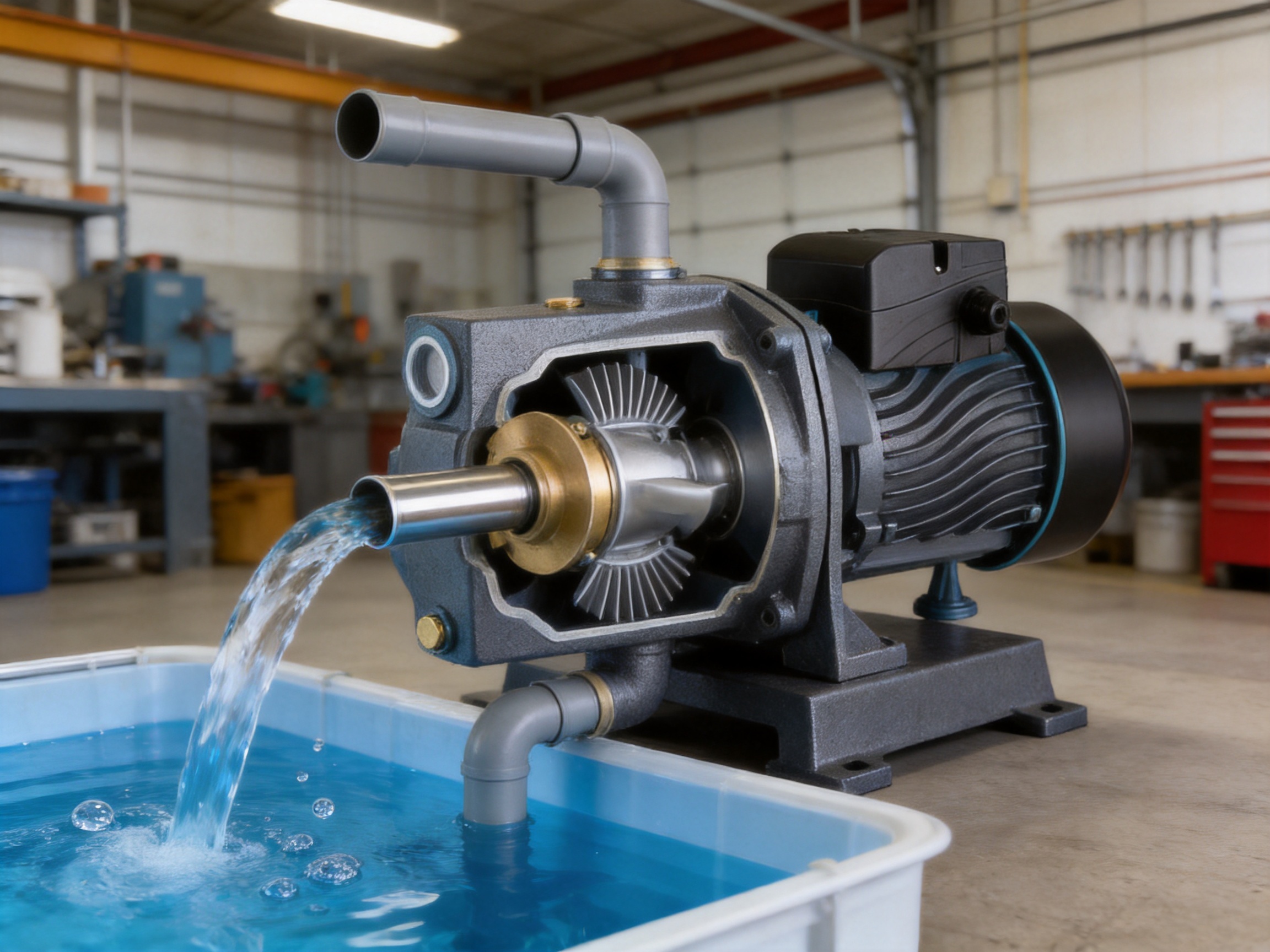
The JET-SE Series has several practical advantages over simple surface centrifugal pumps used in similar applications.
The self-priming jet arrangement helps the pump remove air from the suction line after initial filling. This is useful in shallow-well and tank installations where small amounts of air may enter through threaded connections, flexible hoses, foot valves, or changing water levels.
A basic centrifugal pump may need to be manually reprimed more frequently under the same conditions. Frequent repriming is inconvenient and can increase the risk of accidental dry running. The self-priming design does not eliminate the need for a sound suction system, but it provides greater operational convenience.
Some entry-level pumps rely heavily on lightweight materials that may be less resistant to impact, corrosion, or long-term mechanical stress. The JET-SE Series combines a treated cast iron body and support with a brass impeller and stainless steel shaft. This material combination is intended to provide a stronger and more durable hydraulic assembly.
Durable copper wiring supports electrical efficiency and motor reliability. In applications where the pump operates regularly, the quality of the winding material can influence heat generation, operating stability, and service life. The integrated thermal protector adds a further layer of protection for the single-phase motor.
The series is designed for continuous operation. This makes it more suitable for irrigation zones, greenhouse water supply, and water transfer tasks that require steady operation rather than only brief intermittent use.
Continuous-work capability must always be considered together with correct flow conditions. The pump should not be operated against a fully closed discharge valve for an extended period, and the motor must receive stable voltage with adequate ventilation.
With a maximum suction height of 8 meters, a choice of three power levels, and standard 1-inch connections, the series can be adapted to many small and medium clean-water systems. It can be used for garden irrigation, greenhouse water supply, breeding-industry water supply and drainage, and various supporting water-management equipment.
Light-duty household pumps are often selected because of their low purchase price and compact appearance. However, buyers should examine the materials, operating rating, motor protection, and service requirements before choosing a pump for repeated agricultural or commercial use.
The JET-SE Series is designed with a more comprehensive construction approach. Its cast iron pump body provides a stable hydraulic structure, the brass impeller supports durability, the AISI 304 stainless steel shaft resists corrosion in water-contact areas, and the copper-wound motor is designed for reliable operation.
The inclusion of a thermal protector, Class F insulation, IP44 protection, and C&U bearings demonstrates attention to motor operating conditions rather than only initial cost. These features can help reduce the likelihood of interruptions caused by overheating, bearing friction, or environmental exposure.
For professional users, the value of a pump includes more than the purchase price. A pump that starts consistently, delivers predictable water, and requires fewer interventions may provide a lower total cost of ownership. Reduced downtime is especially important in greenhouse production, irrigation, and water supply systems where a failure can affect other operations.
The manufacturer, Taizhou Edwin Electric Co., Ltd., operates as an integrated manufacturing enterprise specializing in research and development, mass production, and global export. Its product portfolio includes deep-well pumps, submersible pumps, domestic booster pumps, circulation pumps, solar water pumps, intelligent booster pumps, and related water-management products.
This broader product experience is valuable because pump manufacturing requires knowledge of hydraulics, motor design, sealing systems, materials, casting, machining, electrical protection, and application engineering. Experience across several pump categories can support more consistent design decisions and a better understanding of different market requirements.
Independent research and development provides a foundation for adapting pump structures to different operating conditions. For the JET-SE Series, the hydraulic design integrates a centrifugal impeller with a nozzle, venturi, and diffuser. The motor, casing, bearing system, thermal protection, and sealing arrangement must all work together to achieve dependable self-priming performance.
Product development also includes material selection and component matching. The use of cast iron, brass, stainless steel, engineering polymers, copper wiring, and carbon-ceramic sealing surfaces reflects an effort to assign appropriate materials to different mechanical and hydraulic roles.
Mass production requires repeatable processes rather than one-time assembly. Consistent casting, machining, component inspection, winding, rotor assembly, seal installation, electrical testing, and final performance verification are important for maintaining uniformity among production units.
Repeatable manufacturing is particularly important for distributors, contractors, and original equipment purchasers. They need confidence that a model ordered in one production batch will maintain the same connection size, motor rating, material configuration, and basic operating characteristics in later batches.
A pump should be viewed as a system made from many components. The pump body must align with the support. The impeller must rotate without excessive interference. The shaft must remain concentric. The mechanical seal must be installed correctly. The motor bearings must be properly fitted. Electrical connections must be secure, and the thermal protector must function as intended.
Component-oriented inspection helps identify problems before final delivery. Dimensional checks can verify critical fits. Electrical tests can check insulation and winding performance. Hydraulic tests can help confirm flow and pressure behavior. Visual inspections can identify casting defects, coating damage, missing fasteners, and assembly errors.
The company has developed an international supply and service structure that includes procurement planning, order tracking, cross-border delivery, and foreign-trade support. This is useful for international customers who may need more than a pump unit. They may also require model selection assistance, packaging coordination, documentation, spare parts, and shipment planning.
For importers and distributors, a one-stop procurement approach can simplify purchasing across different product categories. The company’s wider product range may allow customers to source several types of water pumps and related accessories through one supply relationship.
Investment in solar water pumps and intelligent booster pumps since 2018 indicates an effort to respond to changing water-management requirements. Solar pumping supports off-grid and energy-conscious installations, while intelligent booster systems address automatic pressure management and modern domestic or commercial water supply needs.
This product development direction complements the JET-SE Series. Although the JET-SE is a conventional self-priming pump rather than a smart pump, it serves as a practical solution where users value simple control, easy maintenance, and reliable mechanical performance.
Garden irrigation systems often include storage tanks, rainwater reservoirs, shallow wells, sprinklers, drip lines, and hose connections. The pump must provide enough pressure to overcome elevation and pipe friction while delivering water efficiently to the required areas.
The JET-SE Series is suitable for supplying garden irrigation systems with clean water. Its self-priming design can simplify operation when the pump is installed above the water source. The 1-inch connections are compatible with many commonly used small irrigation systems, although the final pipe size should be selected according to the required flow and distance.
For sprinkler systems, the selected model should be checked against the pressure requirements of the sprinkler heads. For drip irrigation, filters and pressure regulators may be required. Sand, algae, and debris should be prevented from entering the pump because they can affect the nozzle, venturi, mechanical seal, and impeller.
Garden operators should also consider seasonal storage. If temperatures may fall below freezing, water should be drained from the pump and exposed pipework. If the pump will remain unused for a long period, it should be protected from moisture, dust, and accidental impact.
Greenhouse crops require predictable water delivery. Inadequate irrigation can affect plant growth, nutrient absorption, and production consistency. A pump used in a greenhouse must operate reliably in a humid environment and support regular irrigation schedules.
The JET-SE Series can supply clean water to greenhouse distribution lines, storage tanks, and auxiliary irrigation equipment. The three available power levels allow users to select a configuration based on greenhouse size, pipe length, number of irrigation zones, and required pressure.
Because greenhouse humidity may be high, the motor should be installed in a protected and ventilated position. IP44 protection helps with ordinary splashing conditions but does not permit direct water spraying onto the motor. The terminal cover should remain closed, cable entries should be sealed, and the pump base should be kept above areas where water may collect.
For automated greenhouse systems, the pump can be combined with pressure switches, float switches, timers, filters, valves, and control panels. Any automatic control system should include protection against dry running and excessive cycling where appropriate.
Breeding facilities may require water for cleaning, animal drinking systems, tank filling, cooling, and drainage support. The JET-SE Series is intended for clean water and water-like liquids, so the source must be evaluated before installation.
Water containing manure, fibers, heavy sediment, or biological waste may require a special wastewater or sewage pump instead. The JET-SE Series should not be treated as a solids-handling pump. Pre-filtration and regular cleaning may be necessary when water comes from an open reservoir.
For clean-water transfer, the pump can move water between tanks, supply utility points, or support auxiliary equipment. The maximum liquid temperature is +60 degrees Celsius. This provides a useful operating range for moderately warm water, but the pump is not intended for steam, boiling water, or liquids whose chemical composition is unsuitable for the materials and seal.
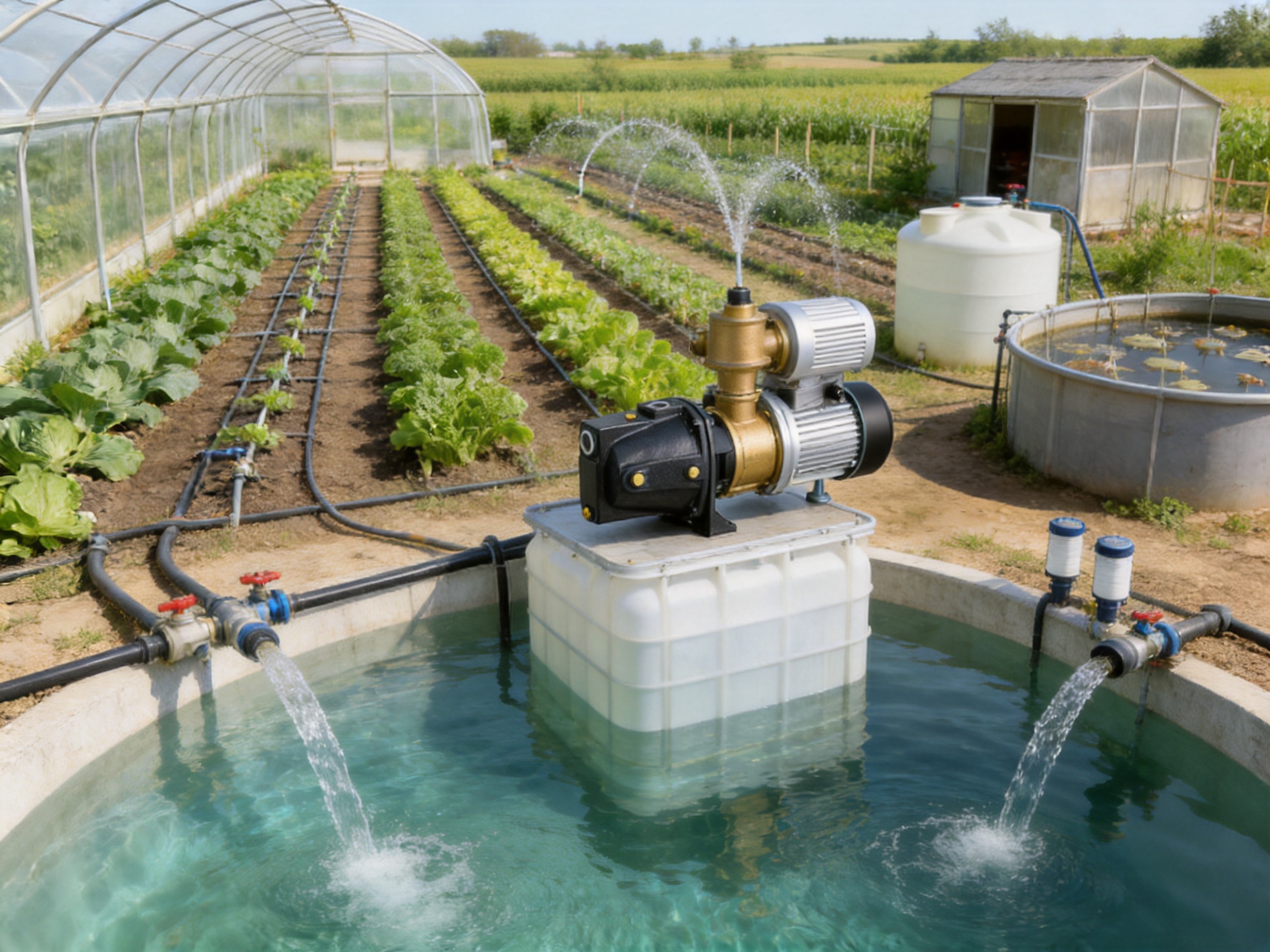
Correct installation is essential for self-priming performance. The pump should be installed on a firm, level base that can support its weight and absorb normal vibration. The base should be protected from flooding, and adequate space should be left around the motor for ventilation and maintenance.
The suction pipe should be as short and direct as practical. Excessive bends, narrow sections, long flexible hoses, and unnecessary fittings increase friction losses and may reduce the actual suction capability.
All suction-side connections must be airtight. Even a small air leak may prevent the pump from establishing a stable prime. Thread sealant or suitable sealing tape should be used correctly, without allowing loose material to enter the hydraulic passage.
The suction pipe should maintain a gradual rise toward the pump where possible. High points that trap air should be avoided. A foot valve or check valve may be required depending on the installation, especially when the water source is below the pump and the suction line must retain water between operating cycles.
Before the first startup, the pump casing should be filled with clean water through the designated filling opening. The suction line should also be prepared according to the installation design. The filling plug should be securely replaced before energizing the motor.
The pump should never be allowed to run dry during priming. If water is not delivered after a reasonable period, the pump should be switched off and the system inspected. Common causes include an empty water source, a blocked foot valve, an air leak, an incorrectly positioned check valve, an excessive suction height, or an unfilled casing.
The discharge pipe should be sized to avoid excessive friction. A valve can be installed to regulate flow, but the pump should not operate against a completely closed discharge for an extended time. Pressure gauges may be added when the system requires monitoring or adjustment.
Where the pump supplies several irrigation zones, isolation valves can allow each zone to be controlled independently. A filter, pressure regulator, or non-return valve may be installed where required by the application.
The electrical supply must match the motor rating and local voltage requirements. Wiring should be selected according to current, cable length, ambient conditions, and applicable regulations. The pump must be properly grounded.
A qualified electrician should install circuit protection and verify that the thermal protector, switchgear, and control equipment are appropriate. Electrical connections should be protected from moisture, and the terminal cover should not be opened while power is connected.
Routine maintenance helps preserve hydraulic efficiency and motor reliability. The pump should be inspected regularly for leaks, unusual noise, vibration, overheating, reduced flow, and repeated loss of prime.
The suction strainer and inlet filter should be cleaned as required. A blocked filter increases suction resistance and can reduce water delivery. If the water source contains sand or sediment, cleaning may be required more frequently.
The mechanical seal area should be checked for leakage. A small amount of initial moisture may sometimes occur during operation, but persistent or increasing leakage should be investigated. Continued leakage can damage bearings, insulation, and motor components.
The cooling fan and fan cover should be kept free from dust, leaves, insects, and other obstructions. Restricted airflow can increase motor temperature and activate the thermal protector. Repeated thermal trips should not be ignored; the cause should be identified.
Bearings are designed for smooth operation, but abnormal noise or vibration may indicate wear, misalignment, a damaged impeller, loose mounting, or a hydraulic blockage. Repairs should be carried out using suitable replacement parts and by qualified personnel.
Before opening the pump, the electrical supply must be disconnected and secured against accidental reconnection. The pump should also be isolated from the water system and allowed to cool if it has recently been operating with warm liquid.
Energy consumption depends on motor power, operating hours, hydraulic load, efficiency, system pressure, and control method. Selecting the correct model is therefore more important than simply choosing the largest available motor.
A pump that is too small may operate continuously at a high load, while a pump that is too large may consume more energy than necessary and require throttling. A properly selected pump operates close to the actual system requirement and delivers the required water without excessive pressure or wasted power.
The JET-SE Series provides three power options, allowing users to match the pump more closely to the installation. The copper-wound motor, efficient bearings, and durable hydraulic materials can also contribute to dependable long-term operation.
Total ownership cost includes purchase price, electricity, maintenance, replacement parts, downtime, and installation. A stronger pump may provide better value when it reduces interruptions and performs reliably over repeated operating cycles. For commercial growers, contractors, and facility operators, predictable availability may be more important than the lowest initial price.
Distributors should evaluate the series as a practical clean-water pump range rather than as a single model. The three power ratings cover different requirements while maintaining a common connection format. This simplifies inventory planning and can reduce the number of different installation accessories required.
Before ordering, purchasers should confirm voltage, frequency, motor configuration, packaging requirements, nameplate information, spare parts availability, and applicable certification needs for the target market. They should also confirm whether the application involves clean water, warm water, irrigation water, or a liquid requiring special materials.
Professional users should provide the supplier with system details, including source-water level, pump location, vertical lift, pipe length, pipe diameter, required flow, desired pressure, operating schedule, and liquid temperature. These details allow more accurate model selection.
For export projects, procurement support is also important. Order tracking, production coordination, inspection, documentation, shipping preparation, and after-sales communication can influence the success of a project. A manufacturer with experience in international delivery can help reduce avoidable delays and specification errors.
The pump is designed for clean water and liquids with chemical properties similar to water. It is not intended for abrasive wastewater, sewage, seawater, highly corrosive chemicals, or liquids containing large solids or fibers.
The stated maximum suction height is 8 meters. Actual suction performance depends on atmospheric pressure, water temperature, pipe diameter, pipe length, fittings, water level, and the airtight condition of the suction line. A shorter and more direct suction system generally provides better results.
Yes. The pump casing normally needs to be filled with clean water before initial startup. Self-priming technology helps remove air from the suction system after the pump has been prepared, but it does not permit dry running.
The answer depends on the required flow, pipe length, elevation, sprinkler pressure, and irrigation area. The JET-550SE may suit smaller systems, while the JET-750SE or JET-1100SE may be preferable for greater distance, higher elevation, or higher demand. A system calculation should be completed before selection.
Yes. It is suitable for clean-water supply in greenhouse irrigation systems. The motor should be installed in a ventilated and protected location, and filters, pressure regulators, valves, or automatic controls should be added according to the irrigation design.
The maximum stated liquid temperature is +60 degrees Celsius. The liquid must also be chemically compatible with the pump materials and mechanical seal. The pump should not be used for boiling water, steam, or liquids outside the specified range.
The single-phase motor includes a built-in thermal protector. It also uses Class F insulation and has an IP44 protection rating. External circuit protection, grounding, proper wiring, and suitable control equipment are still required.
Yes. The JET-SE Series is designed for continuous work when installed and operated within its specified conditions. The pump should have adequate ventilation, stable electrical supply, sufficient water, and a correctly sized hydraulic system.
The pump body and support are made from HT200 cast iron, the impeller is brass, the nozzle, venturi, and diffuser are PPO, the mechanical seal uses carbon and ceramic, and the shaft and rotor assembly includes stainless steel components. The motor case is aluminum and the motor cover is cast iron.
Common causes include an air leak in the suction line, an empty source, a blocked foot valve or filter, an improperly installed check valve, excessive suction height, an unfilled pump casing, or a damaged suction hose. The pump should be switched off before troubleshooting.
It can be installed in a protected outdoor location if the motor is shielded from flooding, heavy rain, direct water jets, and prolonged exposure to severe weather. The IP44 rating does not permit submersion or high-pressure washing.
Copper provides high electrical conductivity and supports efficient energy transfer through the windings. In a pump designed for regular operation, copper winding can contribute to stable performance and effective motor durability when combined with proper cooling and protection.
The JET-SE Series Clean Water Copper Wire Self-Priming Pump is a versatile solution for shallow-well water supply, garden irrigation, greenhouse water delivery, clean-water transfer, breeding-facility support, and related applications. Its design combines self-priming hydraulic technology with a durable material configuration and a motor intended for continuous work.
The treated cast iron body and support provide structural strength. The brass impeller supports reliable hydraulic operation. AISI 304 stainless steel shaft components help resist rust in water-contact areas. The carbon-ceramic mechanical seal provides a suitable sealing arrangement for clean water. PPO nozzle, venturi, and diffuser components support the jet-pump hydraulic circuit.
On the motor side, copper wiring, C&U bearings, Class F insulation, a built-in thermal protector, and IP44 protection contribute to stable and safer operation. The three available models provide a practical capacity range from 40 to 50 liters per minute and from 40 to 50 meters of maximum head, with a maximum suction height of 8 meters.
Its advantages over simpler competitors are most apparent in the combination of self-priming convenience, durable hydraulic materials, continuous-work capability, motor protection, and product-range flexibility. Its value is further supported by the manufacturer’s integrated approach to research and development, mass production, export coordination, and broader pump technology.
As with any surface pump, performance depends on proper system design. The pump must be matched to the required flow and head, installed with an airtight suction line, protected from dry running, connected to a suitable electrical supply, and maintained according to operating conditions. When these requirements are met, the JET-SE Series can provide dependable clean-water service for domestic, agricultural, and light commercial applications.
1. Manufacturer-provided JET-SE Series product specifications and materials information.
2. Manufacturer-provided pump application and installation information for clean-water self-priming systems.
3. General principles of centrifugal and jet-pump operation.
4. General guidance on pump system head, suction lift, friction loss, and flow selection.
5. General electrical motor protection principles for single-phase water pumps.
6. General material and sealing guidance for cast iron, brass, stainless steel, PPO, carbon, and ceramic pump components.
7. General maintenance practices for surface-mounted clean-water pumps.
edwina@edwin-pump.com
+86-13586290903 (WhatsApp)
Xuri Gongliang Cutting Tool Entrepreneurship Park, Wenqiao Town, Wenling City, Taizhou City, Zhejiang Province, China

High Performance Smart Pump Factory


 English