edwina@edwin-pump.com

View All Products
en
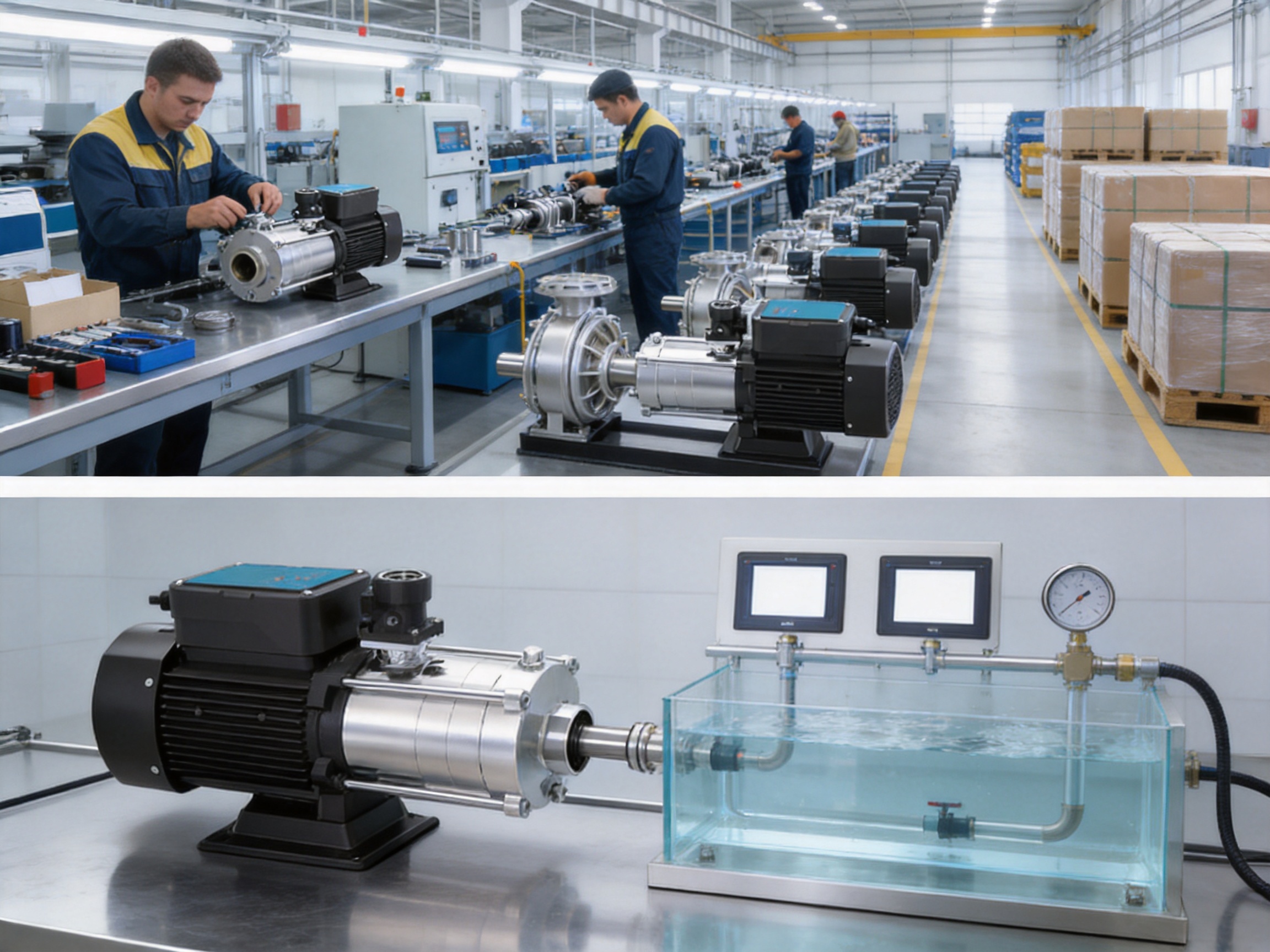
Modern cooling systems require more than simple water movement. They need stable circulation, dependable pressure, efficient energy use, compact installation, and the flexibility to respond to changing operating demands. The ITSRM Series 10-Bar IP55 Self-Adaptive Energy-Saving Multistage Centrifugal Pump has been developed to address these requirements in cooling, air-conditioning, HVAC, industrial circulation, and high-rise water-supply applications.
This horizontal multistage pump combines a stainless-steel hydraulic structure with self-adaptive operation, a maximum operating pressure of 10 bar, IP55 motor protection, and a performance range suitable for many compact and medium-duty circulation systems. Depending on the selected model, the series provides power from 0.25 kW to 1.1 kW, maximum flow from 4 to 7 m³/h, and maximum head from 19 to 56 meters.
Its design is particularly suitable for systems in which demand varies throughout the day. Cooling loads may rise and fall according to ambient temperature, occupancy, production schedules, or equipment operation. Instead of operating continuously at an unnecessarily high output, a self-adaptive pump can match its working performance more closely to the system requirement. This helps reduce wasted electricity, unnecessary hydraulic stress, and operating costs.
Manufactured by Taizhou Edwin Electric Co., Ltd., the ITSRM Series reflects the company’s broader experience in pump research and development, mass production, export manufacturing, and global water-pumping applications. The company’s product portfolio includes deep-well pumps, submersible pumps, domestic booster pumps, circulation pumps, solar water pumps, intelligent booster pumps, and other water-treatment-related products. This product knowledge supports the development of practical equipment for agricultural, municipal, industrial, construction, HVAC, and household applications.
Cooling systems depend on reliable circulation. Water or another compatible fluid must move through heat exchangers, air-conditioning equipment, cooling coils, pipe networks, cooling towers, and related components. The pump must provide sufficient flow while overcoming friction losses, elevation differences, valves, fittings, and equipment resistance.
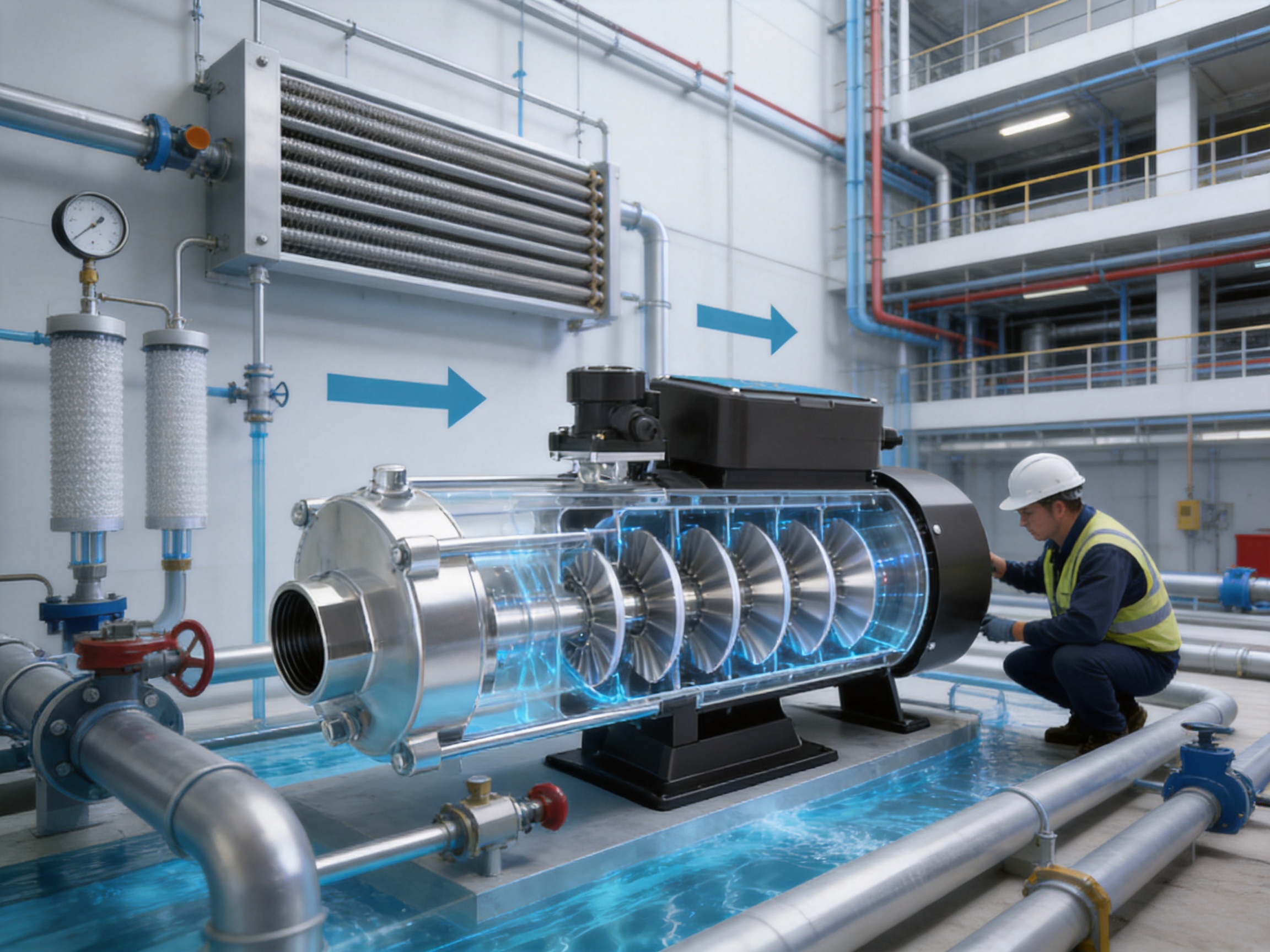
A single-stage centrifugal pump may be sufficient for low-pressure circulation. However, many cooling installations require higher pressure in a compact package. A multistage pump generates pressure through several impellers arranged in series. Each stage contributes to the total head, allowing the pump to achieve a higher pressure level without requiring a physically large single impeller.
The ITSRM Series uses this multistage principle to deliver maximum heads ranging from 19 to 56 meters, depending on the model. This makes the range suitable for applications where water must travel through long pipe networks, elevated building sections, compact heat-exchange systems, or equipment with notable pressure resistance.
The pump is also suitable for pressurization in high-rise construction water supply. In these installations, the pump must overcome elevation and maintain adequate pressure at upper floors or distant outlets. The same high-head characteristics that benefit high-rise water supply can also support cooling installations with extensive pipework or multiple circulation branches.
The ITSRM Series covers a practical range of small and medium power ratings. The smallest listed model uses 0.25 kW, or approximately 0.3 horsepower, while the largest models use 1.1 kW, or approximately 1.5 horsepower. Maximum flow rates are 4 m³/h for the ITSRM2 models and 7 m³/h for the ITSRM4 models.
Maximum head varies according to the number and configuration of stages. The ITSRM2 range provides maximum heads from 19 to 54 meters. The ITSRM4 range provides maximum heads from 19 to 56 meters. This gives system designers several options when selecting a pump for a required combination of flow and pressure.
The pump has a maximum operating pressure of 10 bar. This rating provides a useful safety margin for many pressurized circulation and water-supply systems, provided that the complete installation is designed within the applicable pressure, temperature, and material limits.
The maximum suction value listed for the series is 2 meters. Proper installation remains essential because actual suction performance depends on water temperature, pipe arrangement, atmospheric conditions, inlet losses, and the available net positive suction head. The pump should be installed with an adequately sized and properly supported inlet pipe to reduce the risk of cavitation and unstable operation.
| Performance Item | ITSRM Series Range |
|---|---|
| Product type | Horizontal multistage centrifugal pump |
| Primary application | Cooling systems, air-conditioning circulation, pressurization, and water supply |
| Power range | 0.25–1.1 kW |
| Horsepower range | 0.3–1.5 HP |
| Maximum flow | 4–7 m³/h |
| Maximum head | 19–56 m |
| Maximum operating pressure | 10 bar |
| Maximum suction | 2 m |
| Insulation class | F |
| Protection rating | IP55 |
| Lower medium-temperature range | -15°C to +70°C |
| Higher medium-temperature range | -15°C to +110°C |
| Maximum environmental temperature | +70°C |
One of the main advantages of the ITSRM Series is its self-adaptive energy-saving design. A cooling system rarely operates at a constant demand. For example, an air-conditioning system may require maximum circulation during the hottest part of the day but much less flow during start-up, night operation, mild weather, or reduced building occupancy.
A pump that operates at full output under every condition can consume more electricity than necessary. It may also create excessive differential pressure, increase flow noise, accelerate valve wear, and impose unnecessary stress on pipe connections and heat-exchange equipment. A self-adaptive pump is intended to respond to changing demand and adjust its operating behavior accordingly.
This approach can provide several benefits. First, electricity consumption may be reduced when the system load is lower. Second, the pump can operate more smoothly across changing conditions. Third, the system may experience less hydraulic shock and lower mechanical stress. Fourth, the equipment can contribute to more precise temperature and pressure control in the overall cooling installation.
Energy efficiency is particularly important in commercial and industrial facilities because circulation pumps may run for many hours each day. Even a relatively small reduction in average power consumption can produce meaningful annual savings when multiplied by long operating hours. Reduced consumption can also support a facility’s sustainability objectives and lower the indirect environmental impact associated with electricity use.
The self-adaptive function should be considered part of a complete system design rather than a substitute for correct pump selection. The pump must still be matched to the required duty point, including flow, head, fluid temperature, fluid quality, pipe resistance, and operating schedule. Proper commissioning is also important to ensure that the selected control behavior corresponds to the needs of the cooling system.
The multistage configuration is a major reason the ITSRM Series can deliver substantial head in a compact format. Instead of depending on one large impeller to generate the full pressure, the pump builds pressure progressively through multiple hydraulic stages.
This arrangement is useful where the required flow is moderate but the required pressure is relatively high. Cooling systems with long pipe runs, multiple terminal units, narrow equipment passages, or considerable elevation changes can benefit from this balance between flow and head.
A multistage pump can also offer greater selection flexibility. The ITSRM2 and ITSRM4 groups provide different flow capacities, while multiple stage configurations provide different head levels. A system designer can therefore choose a model that more closely fits the required duty point rather than selecting an oversized pump simply because a limited range is available.
Better matching may improve efficiency and reduce throttling losses. If a pump is significantly oversized, control valves may need to restrict the flow, converting useful pump energy into avoidable pressure loss. Selecting a model near the actual system requirement can help the installation operate more economically.
The horizontal construction also supports practical installation in plant rooms, utility areas, mechanical spaces, and equipment skids. The listed dimensions range from approximately 338 × 138 × 215 mm to 507 × 155 × 220 mm, depending on the model. These compact dimensions can simplify layout planning where floor space is limited.
The motor has an IP55 protection rating. The first numeral indicates protection against dust ingress at a level suitable for normal industrial environments, while the second numeral indicates protection against water jets from certain directions. IP55 does not mean that the pump is waterproof under every condition, and the unit should not be submerged or exposed to conditions outside the rating.
For cooling-system equipment, IP55 provides an important level of protection against airborne contaminants, incidental splashing, and moisture commonly found in mechanical rooms, utility areas, workshops, and sheltered outdoor locations. The rating supports reliable operation when the pump is installed according to the manufacturer’s instructions and protected from direct flooding, condensation accumulation, and improper cleaning methods.
The IP55 enclosure also supports flexible installation. The pump can be used in indoor plant rooms and in suitable outdoor locations where the ambient environment remains within the specified limits. Site engineers should still consider weather protection, drainage, ventilation, cable entry, and access for maintenance.
The ITSRM Series is specified for a broad medium-temperature range. The supplied operating information lists a lower temperature range from -15°C to +70°C and a higher temperature range from -15°C to +110°C. The applicable temperature should be confirmed according to the selected configuration, the pumped medium, seal arrangement, and the specific installation requirements.
The maximum environmental temperature is listed as +70°C. The pump should be installed in a location where the surrounding temperature does not exceed this limit and where adequate ventilation is available around the motor. High ambient temperatures can affect motor cooling, insulation life, lubricant performance, and electronic control components.
The maximum operating pressure is 10 bar. This specification should be evaluated together with the pressure produced by the pump, static system pressure, water-hammer conditions, and the pressure rating of pipes, valves, heat exchangers, filters, and other connected equipment. A system is only as reliable as its lowest-rated component.
For hot-water or elevated-temperature applications, the fluid must be compatible with the pump’s stainless-steel components, mechanical seal, elastomers, and other wetted materials. The pump should not be used for aggressive, flammable, abrasive, or chemically incompatible fluids unless the application has been specifically approved by a qualified technical representative.
The product construction list identifies stainless steel for many important hydraulic and wetted components. These include the inlet and outlet, connecting pipe, pressing plate, impeller, shaft, plug, inlet diffuser, mechanical seal, connector, diffuser, supporting diffuser, and fluid director.
This extensive use of stainless steel provides several practical advantages. It can improve resistance to corrosion in ordinary water applications, support cleaner fluid contact, and provide a durable hydraulic structure for repeated operation. Stainless-steel impellers and diffusers are particularly valuable because they are directly involved in converting motor power into pressure and flow.
The material selection also supports the pump’s use in cooling and HVAC systems, where water quality may vary and condensation can create a humid environment. However, stainless steel is not immune to every form of corrosion. Chloride concentration, pH, temperature, stagnant conditions, and chemical treatment must be considered when determining suitability for a particular fluid.
The motor end cover is identified as aluminum alloy or cast iron, while the base is identified as steel plate or plastic. These materials provide structural support and contribute to the overall compactness and manufacturability of the product. The final material configuration may vary according to the model or production specification.
The ITSRM model designation provides a useful starting point for selection. The ITSRM2 models are listed with a maximum flow of 4 m³/h, while the ITSRM4 models are listed with a maximum flow of 7 m³/h. Within each group, the model number corresponds to different head levels.
For example, the ITSRM2-20(S) provides a listed maximum head of 19 meters at 0.25 kW. The ITSRM2-30(S) provides 28 meters at 0.37 kW, while the ITSRM2-60(S) provides 54 meters at 0.75 kW. In the ITSRM4 group, the ITSRM4-20(S) provides 19 meters at 0.37 kW, and the ITSRM4-60(S) provides 56 meters at 1.1 kW.
| Model | Power | Power | Maximum Flow | Maximum Head | Maximum Suction | Inlet and Outlet | Dimensions |
|---|---|---|---|---|---|---|---|
| kW | HP | m³/h | m | m | inch | mm | |
| ITSRM2-20(S) | 0.25 | 0.3 | 4 | 19 | 2 | 1 × 1 | 338 × 138 × 215 |
| ITSRM2-30(S) | 0.37 | 0.5 | 4 | 28 | 2 | 1 × 1 | 356 × 138 × 215 |
| ITSRM2-40(S) | 0.55 | 0.7 | 4 | 36 | 2 | 1 × 1 | 374 × 138 × 215 |
| ITSRM2-50(S) | 0.55 | 0.7 | 4 | 46 | 2 | 1 × 1 | 392 × 138 × 215 |
| ITSRM2-60(S) | 0.75 | 1.0 | 4 | 54 | 2 | 1.25 × 1 | 410 × 138 × 215 |
| ITSRM4-20(S) | 0.37 | 0.5 | 7 | 19 | 2 | 1.25 × 1 | 356 × 138 × 215 |
| ITSRM4-30(S) | 0.55 | 0.7 | 7 | 28 | 2 | 1.25 × 1 | 383 × 138 × 215 |
| ITSRM4-40(S) | 0.75 | 1.0 | 7 | 38 | 2 | 1.25 × 1 | 410 × 138 × 215 |
| ITSRM4-50(S) | 1.1 | 1.5 | 7 | 47 | 2 | 1.25 × 1 | 480 × 155 × 220 |
| ITSRM4-60(S) | 1.1 | 1.5 | 7 | 56 | 2 | 1.25 × 1 | 507 × 155 × 220 |
These figures are maximum catalog values rather than guaranteed operating points across the complete pump curve. Final selection should be based on the required flow-head duty point and the performance curve for the exact model. Engineers should also confirm electrical supply, control requirements, fluid temperature, installation elevation, and connection standards before ordering.
The ITSRM Series offers several advantages compared with a conventional fixed-speed, single-stage pump selected only by nominal flow. Its multistage configuration can provide higher pressure in a compact body. Its self-adaptive operation is intended to respond to changing demand. Its IP55 protection supports installation in more demanding environments. Its stainless-steel hydraulic components support durability in ordinary water circulation.
A basic fixed-speed pump may operate acceptably when the system load is stable. However, cooling systems often have variable demand. A fixed-speed unit can require bypass arrangements, throttling valves, or frequent manual adjustment to control excess flow. These methods may work, but they can introduce additional energy loss and increase system complexity.
A properly applied self-adaptive pump can reduce reliance on these inefficient control methods. By adjusting its operation more closely to actual requirements, the pump can help maintain useful pressure without continuously producing unnecessary output.
The product also offers a broader selection than a single general-purpose pump. With ten listed models covering two flow groups and several head ranges, system designers can select a model based on the actual application rather than relying on one oversized solution.
Compared with a large high-power pump, the ITSRM Series can be advantageous in compact systems where the required flow is moderate but the required head is substantial. Its smaller physical dimensions may reduce installation space, supporting equipment, and transportation requirements.
Taizhou Edwin Electric Co., Ltd. was founded in 2008 and operates as an integrated manufacturing enterprise focused on independent research and development, mass production, and global export. These three capabilities are important for pump buyers because they connect product design, factory production, quality control, and international supply.
Independent research and development enables the manufacturer to adapt products to different application requirements. A company that works across deep-well pumps, submersible pumps, booster pumps, circulation pumps, solar pumps, and intelligent pump systems can draw on knowledge from multiple hydraulic and motor technologies. This broader product experience supports the refinement of compact pressure pumps such as the ITSRM Series.
Mass production provides consistency and supply capacity. For distributors, contractors, and equipment integrators, stable production is essential when repeat orders must match earlier installations. Standardized manufacturing also helps control dimensions, component compatibility, assembly procedures, packaging, and replacement-part planning.
The product’s component structure suggests a manufacturing process organized around multiple hydraulic stages, stainless-steel parts, motor assembly, mechanical sealing, electrical protection, and final performance verification. Consistency in the alignment of the shaft, impellers, diffusers, motor, and pump body is important for smooth operation and service life.
Manufacturing strength is not limited to the production line. It also includes procurement planning, order tracking, export documentation, cross-border delivery, and technical communication. Through associated import and export service companies established in 2012, the business has developed a professional approach to procurement and international trade support.
This integrated structure can benefit overseas customers that need more than a product quotation. It can help coordinate model selection, production schedules, packaging, shipment preparation, and repeat supply. For commercial projects, this type of support reduces communication gaps between technical, purchasing, and logistics teams.
Reliable pump performance begins with appropriate product architecture. The ITSRM Series combines a multistage hydraulic arrangement, stainless-steel flow components, insulation class F, IP55 protection, and a self-adaptive energy-saving operating concept. Each feature addresses a different part of the reliability challenge.
The hydraulic assembly must maintain correct clearances and alignment between impellers, diffusers, and the shaft. The mechanical seal must limit leakage while operating under pressure and temperature variations. The motor must dissipate heat effectively while maintaining electrical insulation. The enclosure must protect internal components from the expected environmental exposure.
Manufacturing quality is especially important for multistage pumps because several hydraulic stages work together. Dimensional variation in one component can influence the performance of the complete assembly. Accurate machining, careful assembly, inspection of rotating parts, and appropriate testing all contribute to stable operation.
The use of stainless steel for the impeller, shaft, diffusers, and other hydraulic components provides a consistent material platform across the product. It also simplifies the technical explanation of the wetted construction for system designers and purchasing teams.
For international customers, product quality must be combined with dependable documentation. Model tables, performance information, dimensional data, operating conditions, material descriptions, and installation guidance help customers evaluate whether a product is appropriate for their systems.
The ITSRM Series is designed for cooling systems and can be applied in air-conditioning or cooling mechanisms where the required duty falls within the pump’s operating range. Potential applications include chilled-water circulation, equipment cooling loops, compact HVAC systems, cooling-tower support circuits, and circulation between pumps, heat exchangers, and terminal units.
In a commercial building, the pump may circulate water through air-handling units, fan-coil units, heat exchangers, or secondary distribution networks. In a light industrial environment, it may support process cooling equipment, machinery temperature control, or localized cooling loops.
In a cooling tower arrangement, the pump selection must account for the system’s static elevation, pipe friction, tower resistance, valves, strainers, and required flow. The pump should not be selected only by maximum flow or maximum head. The actual intersection of the system curve and pump curve determines the operating point.
For air-conditioning applications, low noise and smooth control may be important. A self-adaptive system can help reduce unnecessary flow during partial-load operation. However, designers should also consider vibration isolation, flexible connectors, pipe support, air removal, and correct valve placement.
The pump may also be used for pressurization in high-rise construction water supply. In such applications, designers must evaluate the static head associated with the building height, the required pressure at the highest outlet, peak demand, storage arrangements, and local plumbing regulations.
The pump should be installed on a stable, level support that can withstand operating vibration and the weight of the pump and connected pipework. Pipework should be independently supported so that excessive loads are not transferred to the pump inlet and outlet.
The suction pipe should be as short and direct as practical, with an appropriate diameter and minimal sharp bends. Poor suction design can cause turbulence, pressure loss, noise, and cavitation. If a strainer, filter, or valve is installed on the inlet side, its pressure loss should be included in the system calculation.
All piping should be cleaned before commissioning. Welding debris, scale, sand, and other foreign material can damage the mechanical seal, obstruct diffusers, reduce hydraulic efficiency, or cause abnormal wear. Isolation valves and service connections should be arranged so that the pump can be inspected and maintained without draining the entire system.
The electrical supply should match the motor and control specifications for the selected model. Wiring must be completed by qualified personnel, with appropriate grounding, overload protection, and local electrical compliance. The IP55 rating does not eliminate the need for correct cable glands, enclosure sealing, and safe electrical installation.
Before starting the pump, the system should be filled and properly vented. Dry running can damage the mechanical seal and may cause rapid overheating. The pump should be checked for correct rotation, unusual noise, leakage, vibration, and stable pressure after start-up.
Routine maintenance helps preserve efficiency and reliability. Operators should periodically inspect the pump for leakage, abnormal sound, vibration, overheating, pressure instability, and changes in flow. Any change in performance may indicate a blocked filter, air in the system, worn components, incorrect valve position, insufficient inlet pressure, or a developing mechanical problem.
Cooling systems should be maintained with appropriate water treatment where necessary. Deposits, corrosion products, biological growth, and suspended particles can reduce heat-transfer performance and affect pump components. The water quality program should be compatible with stainless steel, seals, heat exchangers, and all other system materials.
The pump should be isolated and safely depressurized before service. If the mechanical seal, bearing, motor, or hydraulic stages require inspection, technicians should follow approved procedures and use suitable replacement components. After maintenance, the pump should be reassembled carefully to preserve alignment and sealing performance.
Because the product is available in several closely related models, the exact model designation should be recorded during maintenance and spare-part ordering. This helps ensure that replacement components correspond to the correct hydraulic configuration, connection size, dimensions, and power rating.
Global buyers often require a combination of technical capability, stable supply, product variety, and export support. The manufacturer’s experience since 2008 and its focus on independent development, mass production, and overseas markets provide a foundation for serving customers in different regions.
The company’s product portfolio covers several major water-pumping categories. This allows buyers to coordinate multiple pump requirements through one manufacturing source. A customer may need a circulation pump for an HVAC project, a submersible pump for drainage, a deep-well pump for water extraction, and an intelligent booster pump for pressure control. A broad product range can simplify procurement and technical communication.
The ITSRM Series itself offers a useful model range for distributors. The different flow and head combinations allow stock planning for several applications without requiring a completely different product platform for every project. Compact dimensions and common connection configurations can also make warehousing and installation more manageable.
International project customers may also benefit from coordinated order tracking and delivery support. These services are especially valuable when pumps must be included in equipment packages, exported with other machinery, or delivered according to a construction schedule.
Single-stage pumps can be efficient and economical for low- to medium-head applications. Their simpler construction may make them suitable for basic circulation duties. However, when a system requires higher pressure without a substantial increase in flow, a multistage pump can provide a more appropriate solution.
The ITSRM Series offers maximum heads up to 56 meters, making it more suitable than many basic single-stage circulation pumps for elevated-pressure duties, high-rise pressurization, and systems with significant pipe resistance.
A large fixed-speed pump may provide more capacity than a compact cooling loop requires. Oversizing can increase initial cost, installation space, and energy use. It may also require control valves or bypass lines to prevent excessive flow.
The ITSRM Series provides a lower-power selection from 0.25 to 1.1 kW, with different model options for 4 and 7 m³/h maximum flow. This makes it easier to choose a compact pump for moderate-duty systems while retaining a high-head multistage configuration.
Cooling equipment may be installed in humid mechanical rooms or protected outdoor locations. A pump with a lower enclosure protection level may be more vulnerable to dust and water exposure. The IP55 rating of the ITSRM motor provides a stronger level of environmental protection for suitable installations.
A non-adaptive pump may operate at a constant output even when the system demand changes. The ITSRM Series is designed around self-adaptive, energy-saving operation, which can better suit variable-load cooling systems. The actual savings depend on system design, operating hours, control settings, and the difference between full-load and partial-load demand.
Before selecting an ITSRM model, engineers should identify the required design flow and total dynamic head. Total dynamic head should include static elevation, friction losses, equipment resistance, valves, filters, heat exchangers, and the pressure required at the delivery point.
The required fluid temperature should be compared with the applicable temperature range. Water chemistry and any treatment additives should be checked for material compatibility. The installation environment should be evaluated against the IP55 enclosure rating and the maximum ambient temperature.
Electrical requirements should also be confirmed, including voltage, frequency, phase arrangement, control method, starting conditions, and protective devices. The available installation space should be compared with the published dimensions, while connection sizes should be matched to the system piping.
Finally, the pump curve should be reviewed at the actual duty point. Maximum head and maximum flow are not normally achieved at the same operating condition. Selecting according to the duty point rather than catalog maximums helps avoid underperformance, oversizing, and unnecessary energy consumption.
First, the ITSRM Series can support reliable pressure delivery in compact cooling installations. Its multistage structure is appropriate for systems that need more head than a basic low-pressure circulation pump can provide.
Second, its self-adaptive energy-saving concept can support lower operating costs in variable-load applications. Cooling demand changes frequently, and matching pump output to system demand can reduce wasted energy.
Third, stainless-steel hydraulic components can provide a durable and corrosion-resistant construction for many ordinary water applications. This supports dependable circulation when the system is properly maintained.
Fourth, the model range and compact dimensions make it easier to select and install a pump for different flow and pressure requirements. Customers can choose from multiple power, head, connection, and size combinations within one product family.
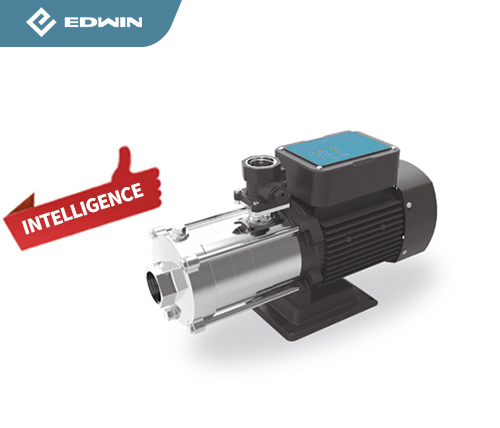
ITSRM Series 10Bar IP55 Self-adaptive Energy-saving Multi-stage Centrifugal Pump for Cool System
The manufacturer’s integrated approach brings together product development, production, export, and procurement services. This structure is valuable for customers that require repeat supply, customized purchasing plans, or coordination across multiple pump categories.
Independent research and development supports product improvement and adaptation to changing market needs. Mass production supports order capacity and consistent assembly. Global export experience supports documentation and delivery coordination. Together, these capabilities create a stronger foundation than a purely trading-based supply model.
The company’s investment in new energy and intelligent technology since 2018 has expanded its capabilities in solar water pumps and intelligent booster pumps. This background is relevant to the ITSRM Series because modern pump systems increasingly depend on energy management, automatic control, and efficient operation rather than simple motor rotation.
For distributors and engineering contractors, a manufacturer with both conventional and intelligent pump experience can provide broader technical support. It can also help customers build product portfolios that include domestic, agricultural, commercial, industrial, and renewable-energy applications.
Commissioning should begin with a complete inspection of the installation. The pump, motor, base, pipe supports, electrical connections, valves, filters, expansion arrangements, and control components should be checked before energization.
The system should be filled with the approved medium and vented at suitable high points. Any air trapped in the pump or piping can reduce flow, increase noise, and cause unstable pressure. The suction side should be checked for leaks because air infiltration can be especially harmful to centrifugal pump performance.
After start-up, operators should compare actual flow and pressure with the design requirements. The motor should run smoothly, and the pump should not produce excessive vibration or unusual mechanical noise. If operating data differs substantially from the expected values, the system should be investigated before continuous operation.
Where the self-adaptive function is used, the control response should be observed during both high-demand and low-demand conditions. The objective is to ensure that the pump maintains suitable circulation without creating unnecessary pressure or frequent cycling.
Commissioning data should be recorded for future maintenance. Useful records include model number, installation date, operating pressure, flow, temperature, electrical readings, control settings, and any observed abnormal conditions.
It is a horizontal multistage centrifugal pump designed for cooling systems, air-conditioning circulation, pressurization, and selected water-supply applications.
The maximum operating pressure is 10 bar. The complete system, including pipes, valves, heat exchangers, and fittings, must also be rated for the expected pressure.
The listed ITSRM2 models have a maximum flow of 4 m³/h, while the ITSRM4 models have a maximum flow of 7 m³/h.
Depending on the model, the maximum head ranges from 19 to 56 meters. The exact operating head depends on the selected model and the actual duty point on its performance curve.
The series includes models from 0.25 kW to 1.1 kW, corresponding approximately to 0.3 HP to 1.5 HP.
It combines multistage high-head performance, self-adaptive energy-saving operation, stainless-steel hydraulic components, compact dimensions, and IP55 motor protection. These features address the pressure, efficiency, durability, and installation requirements of many cooling systems.
No. IP55 provides protection against dust and water jets under specified conditions, but it does not mean the pump is suitable for submersion or flooding. The pump should be installed in a location appropriate for its protection rating.
The listed construction identifies stainless steel for the inlet and outlet, connecting pipe, pressing plate, impeller, shaft, plug, inlet diffuser, mechanical seal, connector, diffuser, supporting diffuser, and fluid director.
The supplied operating information lists temperature ranges extending up to +110°C for the higher-temperature condition. The applicable limit should be confirmed for the exact model, seal configuration, medium, and installation before use.
It can be used for pressurization in high-rise construction water supply when the required flow, head, pressure, temperature, and connection specifications are within the selected model’s capabilities.
Selection should be based on the required flow, total dynamic head, fluid temperature, operating pressure, electrical supply, installation dimensions, pipe connections, and system control requirements. Maximum catalog values should not be used as the only selection criteria.
Routine checks should include leakage, vibration, noise, temperature, pressure, flow, filter condition, water quality, and electrical protection. Maintenance must be performed with the pump isolated, depressurized, and electrically disconnected.
The self-adaptive energy-saving design is intended to adjust operation in response to changing system demand. This can reduce unnecessary energy use and excessive pressure in variable-load cooling applications.
Confirm the duty point, medium compatibility, temperature, pressure, power supply, environmental conditions, piping arrangement, suction conditions, dimensions, and connection sizes. Proper pipe support and system cleaning are also essential.
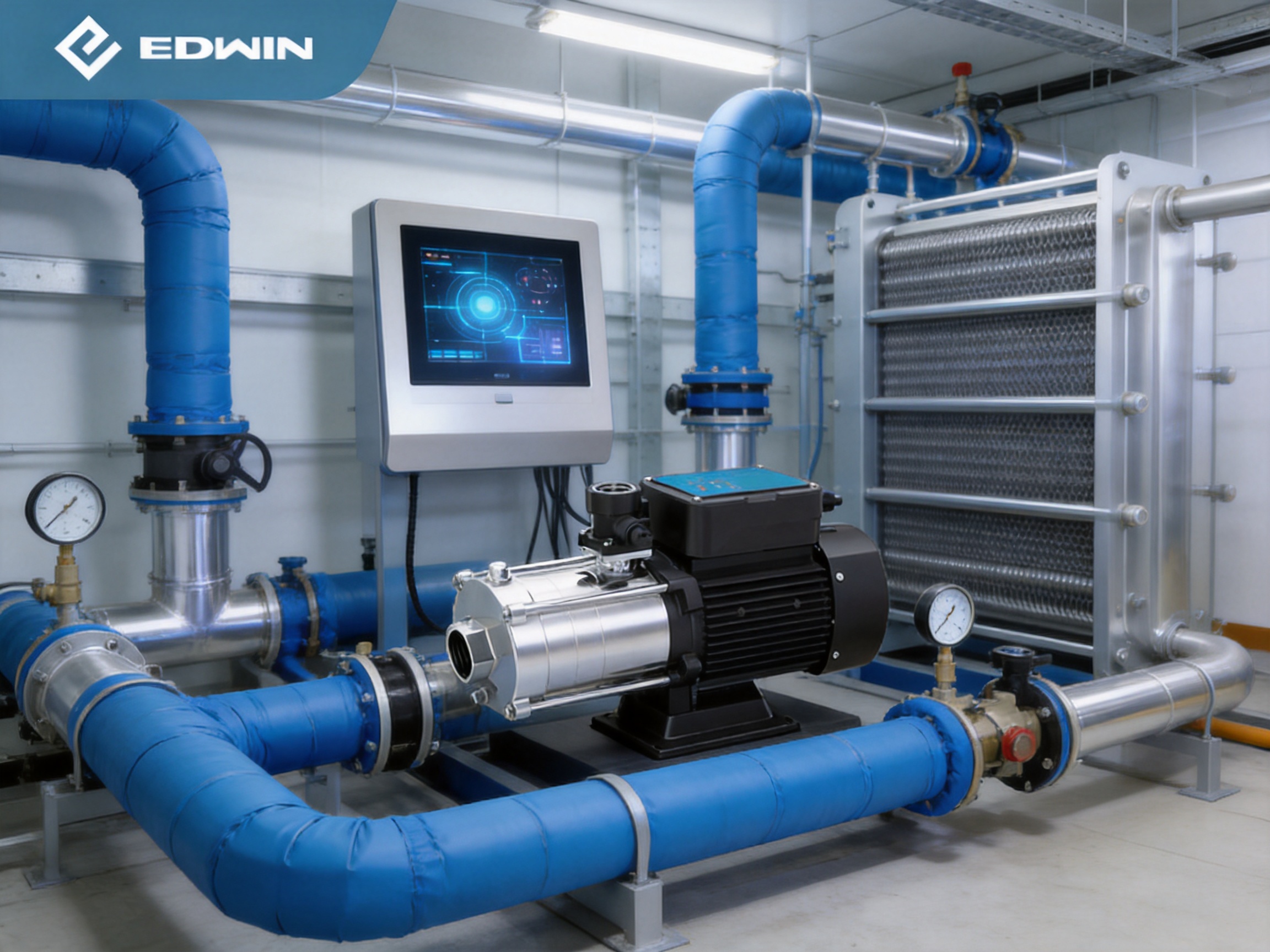
The ITSRM Series 10-Bar IP55 Self-Adaptive Energy-Saving Multistage Centrifugal Pump provides a practical solution for cooling systems and other applications requiring moderate flow with dependable pressure. Its multistage hydraulic design delivers maximum heads up to 56 meters, while the available models cover power ratings from 0.25 to 1.1 kW and maximum flow rates from 4 to 7 m³/h.
The product’s strongest advantages are its self-adaptive operating concept, compact horizontal structure, 10-bar pressure capability, IP55 motor protection, and broad use of stainless steel in the hydraulic assembly. These characteristics make it suitable for HVAC circulation, industrial cooling, cooling mechanisms, high-rise pressurization, and selected commercial water-supply applications.
Its value is further supported by the manufacturer’s integrated capabilities in research and development, mass production, international export, procurement planning, order tracking, and pump-system diversification. Experience across conventional, intelligent, solar, submersible, deep-well, booster, and circulation pump categories provides a broad technical foundation for serving global customers.
For the best result, the pump should be selected according to the actual system duty point and installed with correct suction conditions, pipe support, electrical protection, fluid compatibility, and commissioning procedures. When properly matched and maintained, the ITSRM Series can help cooling-system owners achieve stable circulation, efficient pressure delivery, compact installation, and improved energy management.
1. Product technical information for the ITSRM Series 10-Bar IP55 Self-Adaptive Energy-Saving Multistage Centrifugal Pump.
2. Manufacturer-provided model, performance, dimensional, operating-condition, and construction-material data.
3. General engineering principles for centrifugal pump selection, multistage hydraulic design, and cooling-system circulation.
4. General guidance on motor enclosure protection classifications and IP55 environmental protection.
5. General practices for HVAC water circulation, pump commissioning, preventive maintenance, and energy-efficient operation.
6. Manufacturer profile and corporate information concerning research and development, mass production, export services, and intelligent pump technology.
edwina@edwin-pump.com
+86-13586290903 (WhatsApp)
Xuri Gongliang Cutting Tool Entrepreneurship Park, Wenqiao Town, Wenling City, Taizhou City, Zhejiang Province, China

High Performance Smart Pump Factory


 English