edwina@edwin-pump.com

View All Products
en
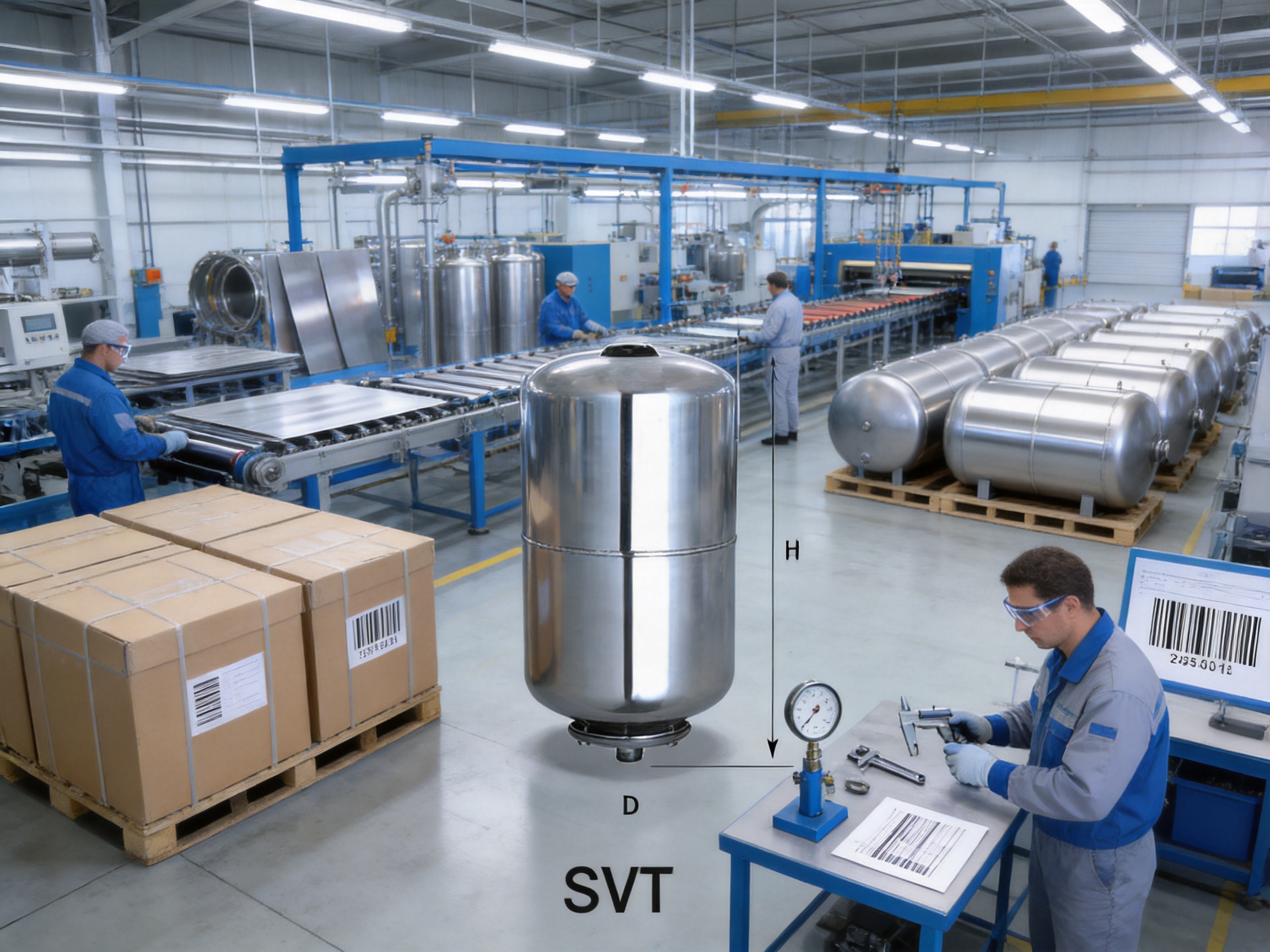
Modern water supply systems require more than a pump alone. A complete installation must manage pressure changes, reduce unnecessary pump starts, protect equipment, and provide a stable flow of water for users. The SVT Series horizontal tank is designed to support these requirements as a stainless steel pressure tank with a replaceable membrane structure. It is suitable for domestic water supply, booster systems, irrigation, small commercial installations, and other applications where pressure stability and compact equipment arrangement are important.
Available in SVT19L and SVT24L models, the series combines stainless steel construction, a replaceable membrane, flexible pressure options, and compact horizontal dimensions. The tanks are designed for maximum working pressures of 6, 8, or 10 bar, with a factory-listed precharge pressure of 1.5 bar. Their 1-inch connector allows convenient integration with many common pump and piping configurations.
The value of a pressure tank is often measured by how effectively it supports the entire water system. A well-selected tank can reduce short cycling, improve pressure consistency, reduce mechanical stress on the pump, and provide a reserve of pressurized water between demand cycles. The SVT Series is developed for this supporting role, offering a practical balance between capacity, durability, serviceability, and installation convenience.
Manufactured by Taizhou Edwin Electric Co., Ltd., the product benefits from the company’s experience in pump development, mass production, export management, and water-system equipment. Since its establishment in 2008, the company has developed product lines covering deep well pumps, submersible pumps, domestic booster pumps, circulation pumps, solar water pumps, intelligent booster pumps, and related water treatment peripherals. This broader product knowledge helps the company design pressure tanks with an understanding of how they operate within complete pumping systems.
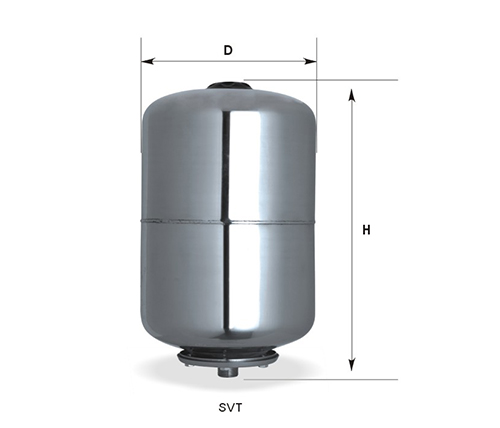
SVT Series horizontal tank
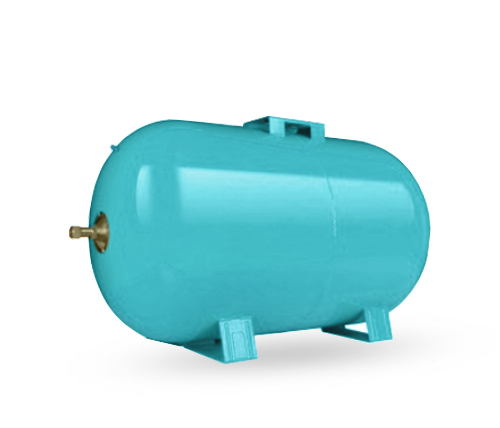
The SVT Series is a stainless steel pressure tank equipped with a replaceable membrane. It is intended to be installed horizontally and connected to a pump or pressurized water network through its 1-inch connector. The tank stores water under pressure and separates the water from the air or gas cushion inside the vessel by means of the membrane.
When the pump operates, water enters the tank and compresses the air cushion. This compressed air stores energy and helps maintain pressure after the pump stops. When a tap, irrigation outlet, or other water-use point is opened, the tank can supply part of the demand before the pump needs to restart. This operating principle helps reduce frequent start-and-stop cycles, particularly in systems with small or intermittent water consumption.
The use of a replaceable membrane is a significant design feature. In a conventional tank with a permanently integrated internal component, service can be more difficult if the internal membrane eventually becomes worn. A replaceable design allows authorized maintenance personnel to renew the membrane instead of replacing the complete tank in every case. This can reduce long-term service costs and extend the useful life of the pressure vessel when the external shell remains in suitable condition.
The stainless steel body provides a durable external structure for water-system applications. Stainless steel is widely used where resistance to corrosion, clean appearance, and long-term mechanical stability are important. It is especially useful in indoor utility rooms, household installations, light commercial buildings, agricultural systems, and pump rooms where equipment may be exposed to humidity or occasional splashing.
The SVT Series currently includes two compact models. The SVT19L has a nominal volume of 19 liters, while the SVT24L has a nominal volume of 24 liters. Both models share the same 270-millimeter diameter, 1-inch connector, and 1.5-bar precharge pressure. The primary dimensional difference is height, allowing buyers to select the tank according to available installation space and required buffer capacity.
| Model | Nominal Volume | Maximum Pressure Options | Diameter | Height | Precharge Pressure | Connector | Packing Volume |
|---|---|---|---|---|---|---|---|
| SVT19L | 19 L | 6, 8, or 10 bar | 270 mm | 395 mm | 1.5 bar | 1 inch | 0.03214 CBM |
| SVT24L | 24 L | 6, 8, or 10 bar | 270 mm | 460 mm | 1.5 bar | 1 inch | 0.03606 CBM |
The maximum pressure options provide flexibility for different system designs. A tank selected for a 6-bar application should be used only within the applicable pressure limits of the complete installation. The pump, pipework, fittings, safety devices, and control equipment must all be compatible with the selected operating pressure. Product selection should therefore consider the full hydraulic system rather than the tank in isolation.
The identical diameter of the two models simplifies product planning and installation layout. The installer can choose between a shorter 19-liter version and a taller 24-liter version without changing the basic connection size. This is particularly convenient for distributors and system integrators who need a consistent product family for different project requirements.
Material selection is one of the most important factors in pressure-tank performance. The SVT Series uses stainless steel for the tank body, giving the product a strong and clean external structure. Stainless steel is valued in water equipment because it can provide improved resistance to oxidation and corrosion compared with many ordinary painted steel alternatives.
In a pump room, the tank may be exposed to condensation, airborne moisture, cleaning water, or minor leaks from nearby fittings. A stainless steel exterior helps the tank maintain its appearance and structural condition in these environments. It also reduces dependence on surface coatings for basic corrosion protection. This can be beneficial in installations where the appearance of the equipment matters, such as residential utility rooms, hotels, offices, and light commercial buildings.
Stainless steel also supports easier routine cleaning. Dust, water marks, and surface contamination can generally be removed without the deterioration that may occur when a painted surface is scratched or damaged. While correct installation and regular inspection remain necessary, the stainless steel body offers a practical foundation for long-term equipment care.
Compared with low-cost pressure tanks made from less durable materials, a stainless steel model can offer a stronger value proposition over the life of the installation. The initial purchase price is only one part of total cost. Maintenance frequency, external corrosion, replacement difficulty, and service interruptions can all affect the actual cost of ownership. A durable tank body can help reduce these risks when the product is correctly selected and operated.
It is important to distinguish the stainless steel body from the internal membrane. The body provides the outer pressure vessel, while the membrane is the flexible component that separates stored water from the internal air cushion. Both parts must be compatible with the application, and the correct membrane material should be selected according to the required working temperature and water-system conditions.
The replaceable membrane is one of the strongest functional advantages of the SVT Series. Pressure tanks operate through repeated expansion and contraction of the internal membrane. Over time, this component may experience wear because of pressure cycling, temperature variation, water quality, or incorrect precharge conditions. A replaceable design makes the tank more serviceable and can help preserve the value of the stainless steel shell.
Maintenance personnel can inspect the condition of the membrane during service and replace it when necessary, subject to proper procedures and the manufacturer’s technical guidance. This approach is different from treating the complete vessel as a disposable item. For distributors, contractors, and commercial users, serviceable construction can simplify spare-parts planning and support more sustainable equipment management.
The membrane also contributes to water quality by separating the stored water from the air chamber. This prevents direct contact between the water and the internal air cushion. The separation helps maintain a more stable tank operating principle and reduces the possibility of waterlogging that can occur when a pressure vessel is not correctly maintained.
Correct precharge pressure is essential. If the precharge is too low, the membrane may flex excessively and the tank may provide less usable drawdown. If the precharge is too high, the tank may accept insufficient water and the pump may cycle more frequently than expected. The listed precharge pressure for the SVT models is 1.5 bar, but final commissioning should follow the requirements of the actual system and the manufacturer’s instructions.
The replaceable membrane also gives system owners more flexibility when planning future maintenance. Instead of replacing the complete pressure tank at the first sign of membrane deterioration, the service team may be able to renew the internal component and continue using the stainless steel vessel. This can be particularly useful in installations where access is difficult or where equipment downtime must be minimized.
The SVT Series supports different membrane material options with different working temperature ranges. The listed ranges are -20°C to 99°C for Butyl, -20°C to 99°C for EPDM, and 0°C to 77°C for natural rubber. These figures provide a practical guide for matching the membrane to the expected operating environment.
| Membrane Material | Working Temperature Range | Typical Selection Consideration |
|---|---|---|
| Butyl | -20°C to 99°C | Suitable where broad temperature performance and low gas permeability are important |
| EPDM | -20°C to 99°C | Suitable for many water applications requiring wide temperature tolerance |
| Natural Rubber | 0°C to 77°C | Suitable for applications within a moderate temperature range |
Butyl is commonly considered when gas retention and stable long-term pressure performance are important. EPDM is widely used in water-related equipment because of its resistance characteristics in many general water applications. Natural rubber can be an economical option where the temperature remains within the specified range. The correct choice should also consider the water chemistry, hygiene requirements, local regulations, and compatibility with any additives or treatment chemicals.
Temperature limits must never be treated as suggestions. Operating a membrane outside its approved range can accelerate aging, reduce elasticity, and compromise system performance. Installers should assess the maximum temperature during normal operation, not only the average temperature. Short periods of high temperature, thermal cycling, and exposure to hot water can all influence the selection.
For cold environments, the lower temperature rating is also important. A tank installed in an unheated room or seasonal building may experience temperatures below freezing. While the membrane material may be rated for low temperatures, the water inside the system can still freeze and cause damage. Adequate insulation, drainage, or freeze protection should therefore be included where necessary.
A pressure tank is designed to make pump operation more stable. Without a properly sized tank, a pump may start every time a small quantity of water is used. Frequent starts can increase electrical stress, heat generation, mechanical wear, and pressure fluctuations. The SVT Series provides a pressurized water reserve that can handle short periods of demand without immediately activating the pump.
This function is particularly useful in domestic booster systems. A user opening a tap for a few seconds may receive water from the pressure tank rather than causing the pump to start and stop. In irrigation systems, the tank can help smooth pressure changes when valves open or close. In small commercial systems, it can reduce unnecessary cycling during low-volume usage periods.
The tank can also support more comfortable water use. By reducing abrupt pressure changes, it helps create a more consistent supply at outlets. The actual result depends on pump capacity, pressure-switch settings, pipe design, elevation, and the number of connected outlets, but the tank provides an important stabilizing element within the system.
Another advantage is reduced wear on pump controls. Motors, pressure switches, relays, and electronic controllers are all affected by repeated cycling. A properly adjusted tank can lengthen the interval between pump starts and reduce the number of unnecessary operating cycles. This does not eliminate the need for correct pump sizing, but it can improve the working conditions of the complete installation.
The tank may also provide limited water availability during short interruptions in pump operation. The available volume depends on the pressure settings and the usable drawdown, not simply on the nominal tank volume. For this reason, system designers should calculate the expected drawdown under the actual cut-in and cut-out pressures rather than assuming that the full 19 or 24 liters will always be available.
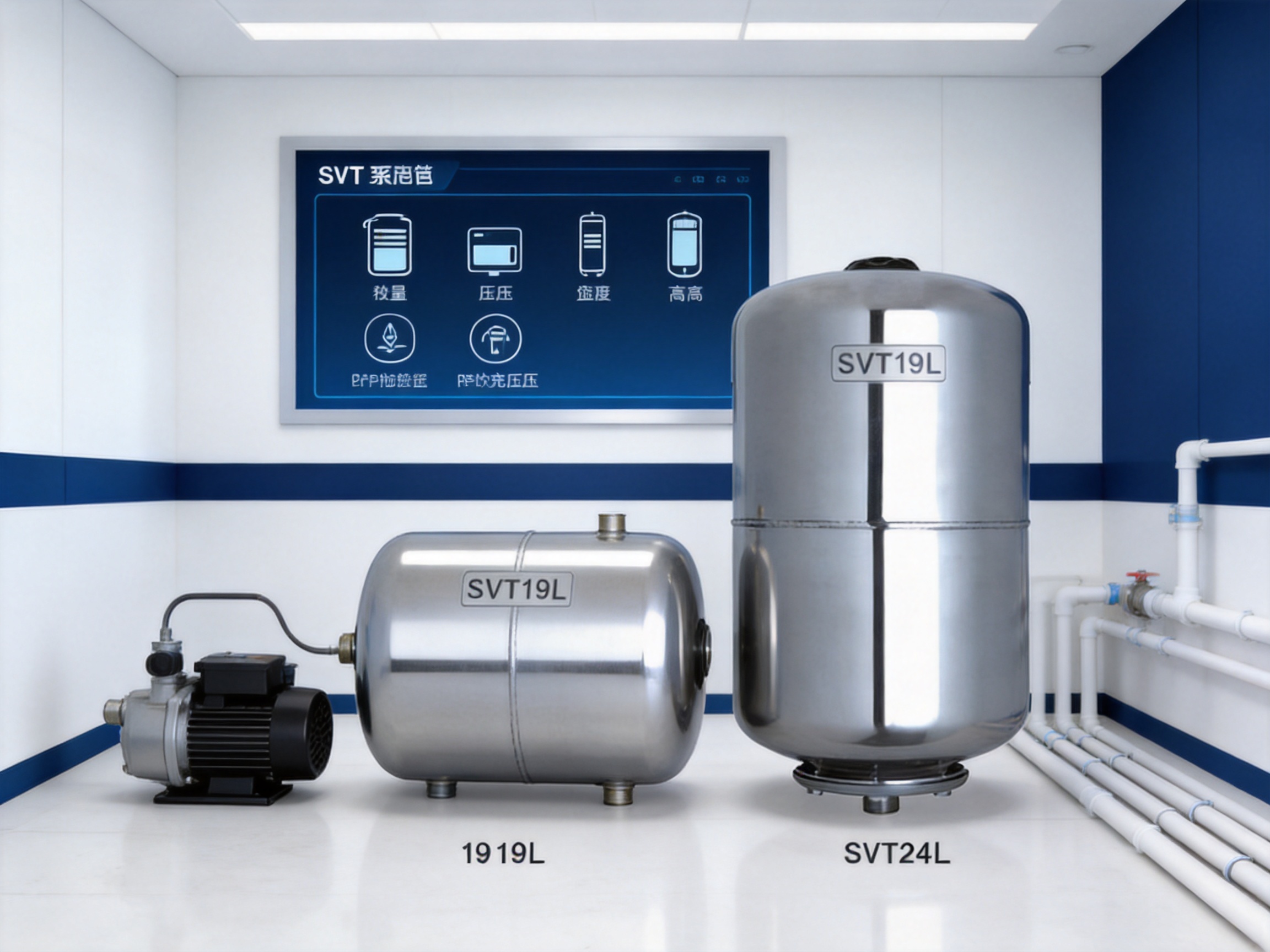
One competitive advantage of the SVT Series is its stainless steel construction. Many entry-level tanks use painted carbon steel or other materials that may require greater attention to surface damage and corrosion. Stainless steel provides a clean appearance and a durable external surface, helping the tank remain suitable for demanding indoor and sheltered outdoor environments.
The replaceable membrane gives the SVT Series an advantage over tanks that are difficult or uneconomical to repair. A serviceable internal component can reduce waste and simplify long-term maintenance. For professional contractors and distributors, this design also makes it easier to prepare spare parts and provide after-sales support.
The 19-liter and 24-liter models are compact and share a common diameter and connector size. This makes them easier to position in confined pump rooms and simplifies selection across different projects. The horizontal design can be integrated into systems where a vertical tank would be impractical or where the installer needs to keep the overall equipment height low.
With maximum pressure options of 6, 8, and 10 bar, the series can serve a range of applications. This gives system integrators more choice than a single-pressure product. Selection must always be based on the pressure rating of the complete system, but the available options allow the product family to support different building heights, booster requirements, and control settings.
The availability of Butyl, EPDM, and natural rubber options allows the tank to be matched to temperature and application needs. Instead of using one standard membrane for every project, buyers can work with the supplier to identify a more suitable material. This is an important advantage for international customers who may serve different climates and water-system markets.
The compact packing volumes of 0.03214 CBM for the SVT19L and 0.03606 CBM for the SVT24L support practical storage and shipment planning. Efficient packing is valuable for wholesalers, importers, and project buyers because logistics costs can influence the final product price. A supplier with experience in export coordination can also help organize order tracking, procurement planning, and cross-border delivery.
Taizhou Edwin Electric Co., Ltd. is an integrated manufacturing enterprise specializing in independent research and development, mass production, and global export. This structure is important because pressure tanks are not isolated commodities. Their quality depends on material control, forming accuracy, welding consistency, membrane installation, pressure testing, packaging, and technical coordination with pumps and controls.
The company was founded in 2008 and has built experience across several water-pump categories. Its product portfolio includes deep well pumps, submersible pumps, domestic booster pumps, circulation pumps, solar water pumps, intelligent booster pumps, and commercial multistage pumps. This broad manufacturing background gives the company practical insight into the operating conditions pressure tanks face in complete water systems.
Independent research and development enables the manufacturer to adapt product structures and configurations to market requirements. For the SVT Series, this may include adjustments to membrane material, pressure rating, connector requirements, packaging, and system compatibility. Product development based on real pump applications helps ensure that the tank is designed for practical installation rather than only for isolated laboratory specifications.
Mass production provides another important strength. Consistent manufacturing procedures help reduce variation between batches and support dependable supply for distributors and project customers. When a buyer needs repeated shipments of the same model, stable production capability is essential for maintaining consistent dimensions, connections, pressure ratings, and packaging standards.
A professional manufacturing process should include incoming material inspection, controlled forming and welding, dimensional checks, membrane installation verification, pressure testing, leakage inspection, and final packaging review. These stages are especially important for pressure vessels because small defects in a connection, weld, or sealing component can affect long-term system reliability. The exact inspection plan should be confirmed with the supplier for each order, but these quality principles form the basis of responsible pressure-tank production.
Stainless steel manufacturing requires careful control of material handling and surface condition. Scratches, contamination, poor welding, or inadequate finishing can reduce the appearance and corrosion resistance of the finished product. A manufacturer experienced in stainless steel pump and water equipment can better coordinate these processes, from material selection to final inspection.
Membrane installation also requires precision. The membrane must be correctly positioned, securely sealed, and compatible with the tank’s internal geometry. Incorrect assembly can reduce usable capacity or cause premature wear. Production teams must therefore combine mechanical assembly skills with pressure testing and process verification.
The company’s experience in global export adds value for overseas buyers. International customers often require more than a product specification. They may need commercial documentation, packing information, model consistency, order coordination, and communication across different time zones. Edwin Pump has established additional import and export service resources to support procurement planning, order tracking, cross-border delivery, and foreign-trade services.
Since 2018, the company has invested in new energy and intelligent technology, expanding into solar water pumps and intelligent booster pumps. This development reflects an understanding of modern water-system trends, including energy efficiency, automation, remote management, and integrated equipment. Although the SVT Series is a pressure tank rather than an intelligent controller, it can form part of a modern booster solution when combined with suitable pumps and control equipment.
The SVT Series is suitable for household water systems that require pressure stabilization and fewer pump starts. It can be used with booster pumps supplying kitchens, bathrooms, garden outlets, and other domestic fixtures. The compact dimensions are useful where the pump room, utility cabinet, or service area has limited space.
In booster installations, the tank works with a pump and pressure control device to maintain a more stable supply. It can absorb small demand changes and reduce cycling when users consume limited quantities of water. The appropriate model depends on the number of outlets, the pump flow rate, the pressure settings, and the desired drawdown.
Small irrigation systems can benefit from a pressure tank when watering zones open and close intermittently. The tank helps smooth pressure transitions and can reduce the number of starts during short irrigation events. For larger irrigation networks, several tanks or a larger capacity vessel may be required, depending on flow demand and control strategy.
Offices, small retail facilities, workshops, guesthouses, and similar properties may use the tank as part of a domestic or light commercial water supply system. Stainless steel construction is attractive in these environments because equipment may be visible or installed in clean technical rooms.
Solar water pumping systems can use pressure storage to improve water availability when pump output varies with solar conditions. The tank does not replace a solar controller, battery, or correct hydraulic design, but it can act as a useful buffer between variable pump production and intermittent water demand.
Some heating, cooling, or circulation installations require pressure compensation and stable water volume. Before using the tank in such systems, the designer must verify temperature, fluid compatibility, pressure, and applicable regulations. The membrane option and working temperature range are especially important for these applications.
The tank should be installed by qualified personnel who understand pressure vessels and pump controls. Before installation, confirm the model, pressure rating, connector size, membrane material, and expected temperature range. The selected tank must be compatible with the pump, pressure switch, electronic controller, pipework, and safety equipment.
The 1-inch connector should be matched with suitable fittings and sealing methods. Connections must be tightened correctly without applying excessive force that could damage threads or sealing surfaces. The tank should be supported securely in its horizontal position, and the installation should prevent unnecessary vibration or mechanical loading on the connector.
Before commissioning, the system should be flushed where appropriate, filled with clean water, and checked for leakage. The precharge pressure should be measured with the water side depressurized. Adjustments should be made only according to the manufacturer’s instructions and the pressure-control settings of the system.
The tank should not be exposed to pressure above its rated maximum. If the system can generate excessive pressure, an appropriate relief device must be installed. The pressure setting of the pump should be coordinated with the tank rating, pipe rating, and safety equipment. A pressure tank is not a substitute for a relief valve or other required protection.
Installation location also matters. The tank should be protected from impact, excessive heat, freezing conditions, and corrosive chemicals. Adequate access should be provided for inspection, precharge measurement, connector service, and membrane replacement. A compact tank still needs sufficient clearance for safe maintenance.
Where the tank is used with an automatic pump, the control system should be adjusted to avoid rapid cycling. The pressure differential between pump start and stop settings should be suitable for the tank volume and the application. If the differential is too narrow, the tank may provide limited benefit. If it is too wide, users may experience unacceptable pressure variation.
Regular inspection helps preserve pressure-tank performance. Maintenance personnel should check the external stainless steel surface, connector, fittings, mounting arrangement, and surrounding area for signs of leakage or damage. Any unusual noise, rapid pump cycling, unstable pressure, or loss of usable water reserve should be investigated.
Precharge pressure should be checked periodically, especially after commissioning, service work, or a noticeable change in pump behavior. The pressure must be measured with the water side safely depressurized. Measuring precharge while the tank is still under system pressure can produce an inaccurate result.
If the tank loses pressure repeatedly, the cause may be a leaking valve, damaged membrane, faulty pressure-control device, or an issue elsewhere in the pipework. The problem should not be solved simply by adding air without identifying the cause. Repeated pressure loss may indicate that the membrane or a sealing component requires service.
The replaceable membrane should be changed by trained personnel using approved replacement parts. The tank must be isolated, depressurized, and drained before internal service. After replacement, the vessel should be reassembled correctly, checked for leakage, and returned to service gradually.
Cleaning should use methods compatible with stainless steel and the application. Abrasive materials or aggressive chemicals may damage the surface. If the tank is used in a system with special hygiene requirements, the buyer should confirm material suitability and cleaning procedures before installation.
Buyers should begin by identifying the system’s pressure range, pump capacity, expected demand pattern, available installation space, and water temperature. The SVT19L may be suitable where a compact pressure reserve is required, while the SVT24L offers additional nominal capacity with the same 270-millimeter diameter and a greater height.
The maximum pressure option must be selected carefully. A 10-bar tank is not automatically the best choice for every application. The system designer should consider the pressure generated by the pump, static elevation, pressure-switch settings, transient conditions, and the ratings of all connected components.
Membrane selection should follow the operating temperature and fluid conditions. Butyl and EPDM options cover a broad temperature range from -20°C to 99°C, while natural rubber is listed for 0°C to 77°C. Buyers should also specify whether the water is potable, treated, chemically conditioned, or used in an industrial process.
Distributors can benefit from stocking both SVT models because they share a common connector size and diameter. This simplifies inventory organization while offering customers a choice between two nominal capacities. The compact packing volumes also support more efficient warehouse planning and consolidated shipment arrangements.
For original equipment manufacturers and system integrators, the manufacturer’s wider pump portfolio may simplify sourcing. A single supplier with experience in booster pumps, submersible pumps, circulation pumps, solar pumps, and pressure tanks can provide more coordinated technical communication than several unrelated vendors.
Project customers should request confirmation of the production specification, pressure rating, membrane material, packaging, inspection procedure, and delivery schedule before placing an order. Clear communication at the quotation stage reduces the risk of receiving a configuration that does not match the intended application.
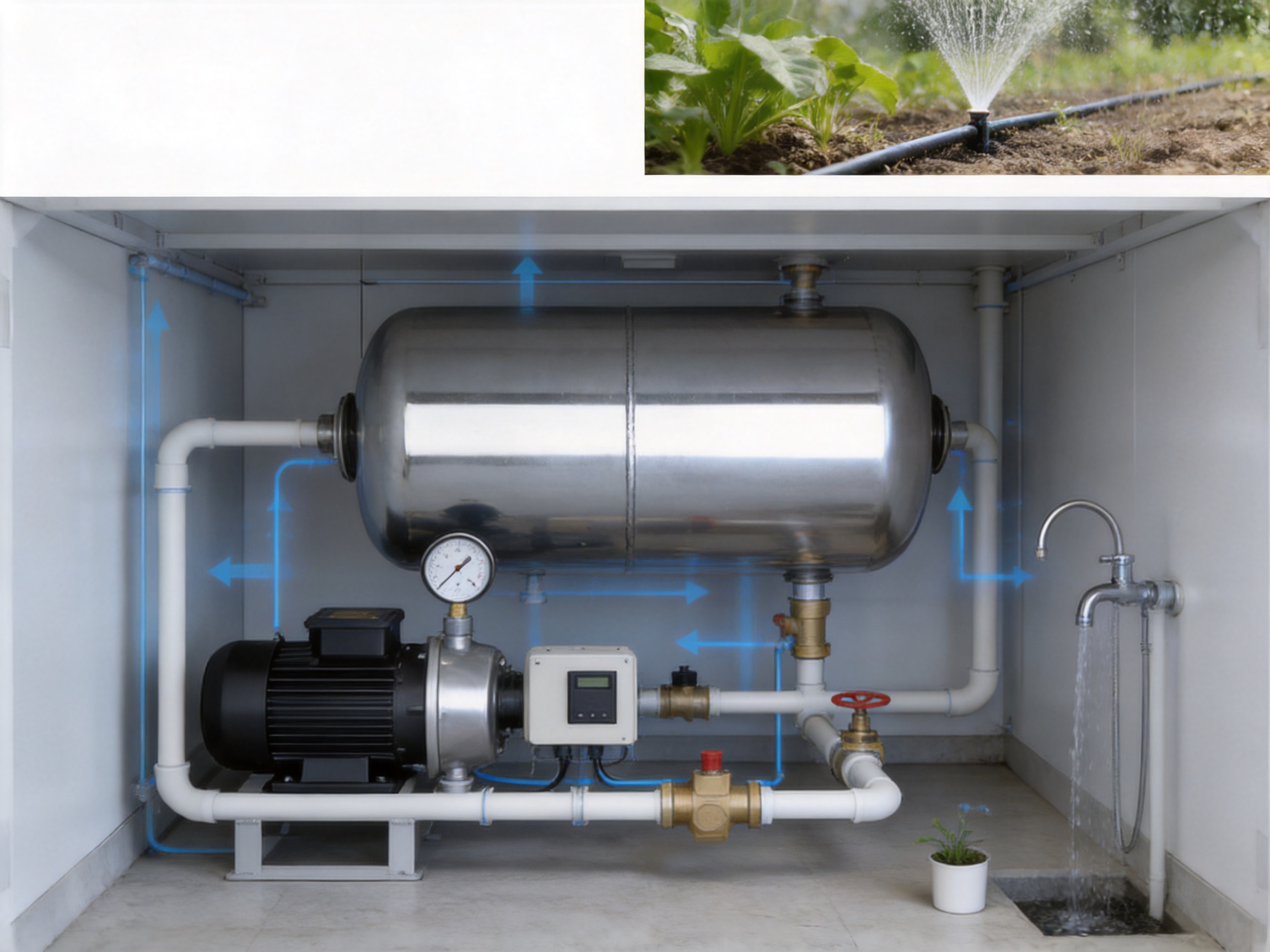
Pressure tanks are closely connected to the performance of pumps and controls. A manufacturer that understands only the vessel may not fully appreciate pump cycling, pressure-control behavior, suction conditions, or the requirements of complete water systems. An integrated pump manufacturer can evaluate the tank in relation to these operating factors.
Edwin Pump’s product range covers multiple pump technologies and applications. Its experience includes water supply, agricultural irrigation, municipal engineering, mining, construction, HVAC systems, household water supply, and new-energy projects. This application exposure supports a more practical approach to pressure-tank development and customer service.
The company’s manufacturing and export organization also supports one-stop procurement. Through its related import and export service companies, it provides procurement planning, order tracking, cross-border delivery coordination, and foreign-trade support. These services can be valuable for international distributors and industrial buyers managing multiple models or repeated orders.
Quality, innovation, and high-performance water equipment are central to the company’s stated business direction. Investment in intelligent technology and solar pumping demonstrates a willingness to develop products for changing market needs. For buyers, this creates the possibility of building a broader water-equipment supply relationship rather than purchasing a single pressure tank without technical continuity.
A pressure tank can improve water-system operation, but performance depends on correct design and commissioning. The nominal tank volume is not the same as the usable water volume. Drawdown is influenced by precharge, cut-in pressure, cut-out pressure, pump characteristics, water demand, and the condition of the membrane.
Users should also understand that a tank does not increase the pump’s maximum flow or pressure. It stores and releases water within the limits of the system. If the pump is undersized, the tank cannot permanently compensate for insufficient capacity. If the pipework is poorly designed, the tank cannot eliminate all pressure losses.
Correct sizing is therefore essential. A tank that is too small may provide limited cycling reduction, while a tank that is unnecessarily large may increase cost and occupy more space. The SVT19L and SVT24L models are intended for compact systems, but larger installations may require multiple tanks or a different pressure-storage solution.
Safety must remain a priority. The tank should be used only within its rated pressure and temperature limits. Installation, inspection, and maintenance should comply with applicable local regulations and professional practice. Where the system handles hot water, treated water, or special fluids, material compatibility must be confirmed before operation.
The SVT Series is a stainless steel horizontal pressure tank with a replaceable membrane. It is designed to store pressurized water and support more stable operation in pump and booster systems.
The listed models are SVT19L and SVT24L. The SVT19L has a nominal volume of 19 liters and a height of 395 millimeters. The SVT24L has a nominal volume of 24 liters and a height of 460 millimeters. Both have a 270-millimeter diameter.
Both models use a 1-inch connector. The complete connection arrangement should still be checked against the pump, pipework, fittings, and installation standards used in the project.
The product information lists maximum pressure options of 6, 8, and 10 bar. The correct option depends on the operating pressure and safety requirements of the complete water system.
The listed precharge pressure is 1.5 bar. The pressure should be checked and adjusted only when the water side is safely depressurized and in accordance with the system design and manufacturer’s instructions.
A replaceable membrane allows the internal flexible component to be serviced or renewed when required. This can extend the useful life of the stainless steel tank body and simplify long-term maintenance.
The listed options are Butyl, EPDM, and natural rubber. Butyl and EPDM are rated from -20°C to 99°C, while natural rubber is rated from 0°C to 77°C. The final choice should consider temperature, water chemistry, hygiene requirements, and application conditions.
Yes. By storing pressurized water, the tank can supply small or intermittent demands without requiring the pump to start every time. The amount of cycling reduction depends on tank size, pressure settings, pump capacity, and demand patterns.
Yes. The compact horizontal design, stainless steel body, replaceable membrane, and 1-inch connector make the product suitable for many domestic booster applications, provided the pressure and temperature requirements are compatible.
It can support small irrigation and water-supply systems where pressure stabilization and reduced cycling are needed. Larger irrigation networks may require greater storage capacity or multiple tanks.
Buyers should confirm the nominal volume, maximum pressure, dimensions, connector size, membrane material, working temperature, precharge pressure, packing information, and delivery requirements. They should also verify compatibility with the selected pump and control equipment.
The manufacturer has experience in independent research and development, mass production, global export, procurement planning, order tracking, cross-border delivery, and foreign-trade services. Specific documentation and support should be confirmed for each order.
The SVT Series horizontal tank is a practical pressure-storage solution for water systems that require stable operation, compact installation, and serviceable construction. Its stainless steel body provides a durable and clean external structure, while the replaceable membrane supports long-term maintenance. The 19-liter and 24-liter models offer a straightforward choice for compact domestic, agricultural, and light commercial applications.
Flexible maximum pressure options, a common 1-inch connector, multiple membrane materials, and two compact dimensions make the series suitable for different system designs. Its ability to reduce pump cycling and provide a pressurized water reserve can improve user comfort, protect pump equipment, and contribute to lower maintenance requirements.
The product is strengthened by the manufacturing capabilities of Taizhou Edwin Electric Co., Ltd., an integrated water-equipment enterprise with experience in research and development, mass production, global export, and a broad range of pump technologies. Its investment in solar and intelligent pumping solutions further supports its position as a complete water-system supplier.
For the best results, the tank must be correctly selected, installed, precharged, and maintained. When matched with the right pump and control equipment, the SVT Series can provide dependable pressure support and efficient system performance across a wide range of water applications.
1. Product specification sheet for the SVT Series horizontal tank, including model dimensions, pressure ratings, precharge pressure, connector size, and packing data.
2. Manufacturer technical information concerning replaceable membrane pressure tanks and membrane working-temperature ranges.
3. General engineering principles for hydropneumatic pressure tanks, pump cycling control, drawdown, and pressure-system commissioning.
4. General stainless steel material guidance for water equipment, corrosion resistance, cleaning, and maintenance.
5. General pump-system design practices for domestic water supply, irrigation, booster applications, and light commercial installations.
aseriesnoisereductiondesignacid-baseverticalsurfacepump-1.jpg "EV(F)A Series Noise Reduction Design Acid-base Vertical Surface Pump")
edwina@edwin-pump.com
+86-13586290903 (WhatsApp)
Xuri Gongliang Cutting Tool Entrepreneurship Park, Wenqiao Town, Wenling City, Taizhou City, Zhejiang Province, China

High Performance Smart Pump Factory


 English