edwina@edwin-pump.com

View All Products
en
Pressure management is one of the most important factors in the performance, efficiency, and service life of a modern water-supply system. A pump may provide the required flow and pressure, but without a suitable pressure tank, the system can experience frequent starts, unstable pressure, hydraulic shock, unnecessary energy consumption, and accelerated wear on electrical and mechanical components. The SVT Series horizontal tank is designed to address these challenges through a stainless steel pressure vessel and a replaceable membrane structure suited to domestic, agricultural, commercial, and light industrial water applications.
Available in SVT19L and SVT24L models, the series provides a compact storage and pressure-buffering solution for systems that require dependable water delivery in a limited installation space. Its replaceable membrane design separates the stored water from the pressurized air or gas chamber, helping maintain water quality and simplifying service when the membrane eventually reaches the end of its useful life. The stainless steel construction provides a practical balance of corrosion resistance, durability, appearance, and long-term operating value.
This article examines the design, operating principle, specifications, application advantages, material options, manufacturing strengths, installation considerations, maintenance requirements, and purchasing value of the SVT Series. It also explains why a purpose-built pressure tank can provide advantages over basic or less adaptable alternatives.
A pressure tank is a hydraulic storage device installed in conjunction with a water pump and control system. Its principal function is to store a controlled quantity of water under pressure so that the pump does not need to start every time a small amount of water is used. When a tap, shower, irrigation outlet, appliance, or other water-use point opens, the tank supplies part or all of the initial demand. The pump starts only after the system pressure falls to the designated cut-in level.
When water demand stops, the pump replenishes the tank and restores the pressure to the cut-out level. This operating sequence reduces the number of pump starts and stops. Since every motor start creates electrical and mechanical stress, reducing cycling can contribute to improved pump reliability, quieter operation, and lower maintenance requirements.
Pressure tanks also help stabilize the water supply. Without sufficient buffering capacity, a pump may respond abruptly to small changes in demand. This can cause pressure fluctuations that are noticeable at faucets and damaging to sensitive equipment. A properly sized tank smooths these changes and supports more consistent delivery throughout the system.
Another important function is the reduction of hydraulic shock. Rapid changes in water velocity can produce pressure waves in pipes and valves. Although a pressure tank cannot eliminate every form of water hammer, it can provide a degree of system cushioning when correctly installed and matched to the pump and piping arrangement.
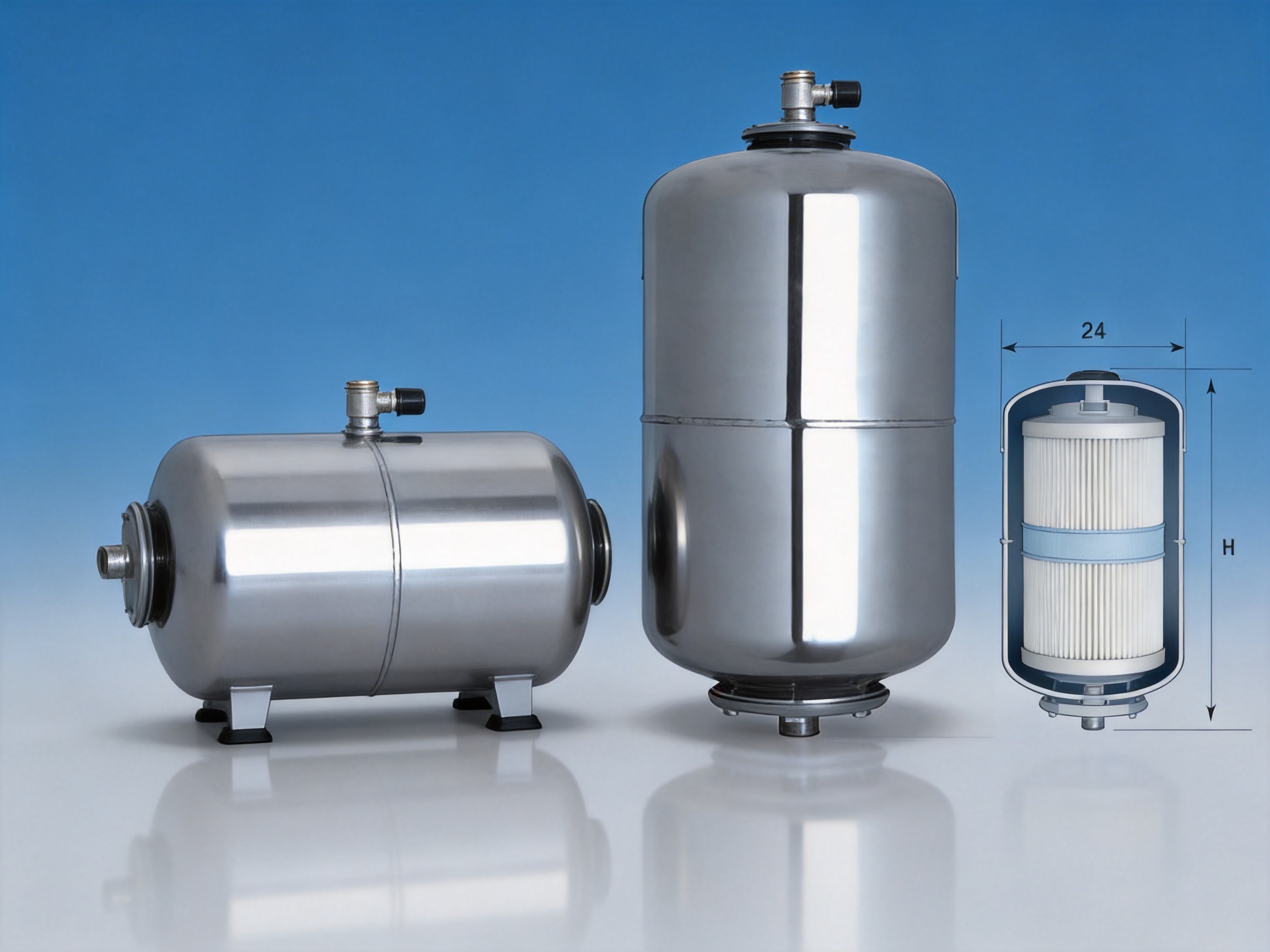
The SVT Series is a stainless steel pressure tank with a replaceable membrane. It is intended for use in pressurized water systems where compact dimensions, material durability, serviceability, and stable pressure control are important. The series includes two listed capacities: 19 liters and 24 liters.
The tank is designed with a horizontal configuration. This format can be useful where vertical clearance is restricted or where the tank must be integrated into a compact booster set, domestic water system, garden-pump installation, or equipment cabinet. The horizontal form can also support flexible layout planning when the pump, pressure switch, gauge, and pipework are positioned close to the tank.
The stainless steel body is a significant feature of the product. Compared with ordinary painted carbon-steel pressure vessels, stainless steel offers stronger resistance to surface corrosion in humid, wet, and demanding installation environments. It also provides a clean appearance and is easier to maintain in applications where the tank is visible or exposed to moisture.
The replaceable membrane is another important design characteristic. In a conventional non-replaceable bladder tank, membrane deterioration may require replacement of the complete vessel. A replaceable membrane arrangement can allow the serviceable internal component to be changed separately, potentially reducing downtime and improving lifecycle economics. Actual replacement procedures should follow the applicable model instructions and be completed only after the tank has been fully isolated and depressurized.
The SVT Series is available with different membrane material options for different temperature requirements. The listed operating temperature ranges are minus 20 degrees Celsius to 99 degrees Celsius for Butyl, minus 20 degrees Celsius to 99 degrees Celsius for EPDM, and 0 degrees Celsius to 77 degrees Celsius for natural rubber. Selection should be based on fluid compatibility, operating temperature, water quality, duty cycle, and local system requirements.
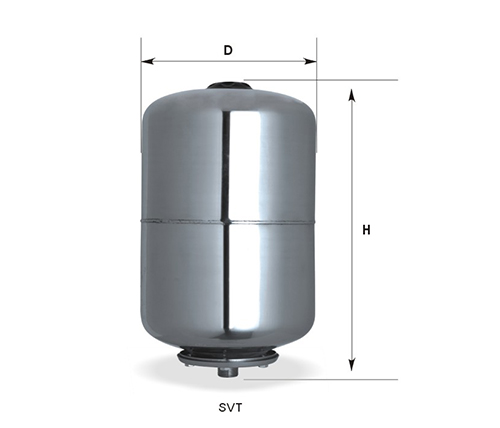
SVT Series horizontal tank
The two available models share the same listed diameter, connector size, and precharge pressure, while their height and packing volume differ. The maximum pressure is offered in three selectable ratings: 6 bar, 8 bar, and 10 bar. The correct pressure class must be selected according to the system design, pump characteristics, operating pressure, and applicable safety requirements.
| Model | Maximum Pressure Options | Diameter | Height | Precharge Pressure | Connector | Packing Volume |
|---|---|---|---|---|---|---|
| SVT19L | 6 bar, 8 bar, 10 bar | 270 mm | 395 mm | 1.5 bar | 1 inch | 0.03214 CBM |
| SVT24L | 6 bar, 8 bar, 10 bar | 270 mm | 460 mm | 1.5 bar | 1 inch | 0.03606 CBM |
The 270-millimeter diameter shared by both models allows installers to plan around a consistent footprint. The difference in height provides a straightforward way to select between the two capacities according to available vertical space and water-demand requirements. The 19-liter model may be suitable for more compact systems or lower intermittent demand, while the 24-liter model offers greater nominal storage volume where additional buffering is beneficial.
The listed 1-inch connector supports compatibility with many common pump and water-supply arrangements. However, installers should verify the actual pipe standard, thread type, sealing method, and connection orientation before ordering. A connector dimension alone does not replace a complete system compatibility check.
Material selection directly affects the performance and service life of a pressure tank. Stainless steel is widely used in water equipment because it provides a strong resistance to corrosion compared with many untreated or conventionally painted steels. The benefit is particularly relevant in pump rooms, utility rooms, agricultural facilities, coastal regions, and other locations where condensation, humidity, fertilizer residue, cleaning chemicals, or airborne contaminants may be present.
A stainless steel vessel can maintain a cleaner external appearance over time. This is useful for domestic installations, commercial premises, hotels, apartment buildings, workshops, and equipment rooms where a visible pressure tank should look professional and be easy to inspect. A smooth and durable exterior also simplifies routine cleaning.
Stainless steel is not a universal guarantee against every form of corrosion. Fluid chemistry, chloride concentration, temperature, external contamination, dissimilar-metal contact, and installation conditions must still be considered. Proper selection of the stainless steel grade, manufacturing controls, welding quality, surface treatment, and connection materials remains important. The tank should also be installed according to the manufacturer’s instructions and protected from conditions outside its intended service range.
Compared with a basic painted steel tank, stainless steel can offer a stronger long-term value proposition in wet or corrosive environments. A painted surface may eventually be scratched or damaged, allowing corrosion to begin beneath the coating. Stainless steel avoids dependence on an external paint layer as the primary protection mechanism. This can reduce cosmetic deterioration and simplify inspection.
For applications requiring high hygiene standards, the stainless steel exterior is also advantageous. The tank can be cleaned more easily than a heavily textured or damaged coated surface. The suitability of the internal wetted materials must nevertheless be confirmed for any application involving drinking water, food processing, special fluids, or regulatory requirements.
The replaceable membrane divides the water chamber from the compressed air chamber. This separation is central to the tank’s operation. When water enters the tank, it pushes against the flexible membrane and compresses the air on the opposite side. When a water outlet opens, the compressed air expands and forces stored water into the system.
This arrangement helps prevent direct and continuous contact between the water and the air charge. As a result, the pressure relationship remains more predictable than in a simple air-over-water vessel. The separated design can also reduce the possibility of air being absorbed into the water and carried through the plumbing.
Membrane construction provides an important service advantage. Rubber and elastomer components naturally experience wear over time because of pressure changes, temperature variation, chemical exposure, and repeated flexing. A replaceable membrane design allows maintenance personnel to renew the internal flexible component without automatically discarding the complete pressure vessel.
Replaceability can be particularly valuable in commercial or agricultural installations where service interruptions have a direct operational cost. Instead of waiting for a complete tank replacement, a qualified technician may be able to restore the tank through a planned membrane replacement, subject to the product design, availability of spare parts, and applicable safety procedures.
The membrane material must be selected carefully. Butyl and EPDM are listed for temperatures from minus 20 degrees Celsius to 99 degrees Celsius, while natural rubber is listed for 0 degrees Celsius to 77 degrees Celsius. Temperature is only one selection factor. Compatibility with the pumped medium, disinfectants, oils, chemicals, and other additives should also be evaluated before installation.
Butyl is commonly selected where low gas permeability, flexibility, and broad temperature capability are valuable. Its listed range for the SVT Series is minus 20 degrees Celsius to 99 degrees Celsius. This makes it a practical option for systems exposed to both cold conditions and elevated water temperatures within the specified limit.
EPDM is recognized for its resistance to weathering and many water-related conditions. The listed operating range is also minus 20 degrees Celsius to 99 degrees Celsius. It may be considered for systems where temperature stability and resistance to outdoor environmental exposure are important, provided the fluid compatibility requirements are satisfied.
Natural rubber is listed for 0 degrees Celsius to 77 degrees Celsius. It may be appropriate for certain standard water applications operating within this narrower range. It should not be selected for freezing conditions or temperatures above its specified limit. A lower-temperature or higher-temperature application requires a different membrane choice or a different product solution.
The SVT Series offers several practical advantages over basic pressure tanks that rely on non-replaceable internal components, less corrosion-resistant bodies, or limited sizing flexibility.
The replaceable membrane is one of the clearest competitive advantages. A tank that can be serviced internally may offer a lower total cost of ownership than a tank that must be discarded after membrane failure. Maintenance planning is also easier because the pressure vessel itself can remain in service when it is structurally sound and otherwise suitable.
The stainless steel construction offers a stronger defense against many common environmental corrosion conditions than ordinary unprotected steel. This can be particularly useful in pump rooms, utility spaces, humid agricultural facilities, and installations near sources of water spray or condensation.
The horizontal shape provides an alternative to tall vertical tanks. In low-ceiling rooms, beneath work benches, beside booster pumps, or within compact equipment arrangements, a horizontal tank may be easier to position. The 270-millimeter diameter creates a consistent planning dimension across the two models.
The availability of 6-bar, 8-bar, and 10-bar maximum-pressure options allows the buyer to select a pressure class closer to the intended system conditions. This is preferable to treating every installation as identical. Correct selection helps align the tank with pump shut-off pressure, control settings, pipe ratings, and safety margins.
Different water systems may operate in different temperature ranges and environmental conditions. The availability of Butyl, EPDM, and natural rubber options gives system designers greater flexibility than a single-material tank. The correct option should be confirmed during technical selection rather than chosen solely on price.
The listed packing volumes of 0.03214 CBM for the SVT19L and 0.03606 CBM for the SVT24L support organized storage, container planning, and international distribution. Compact packing is valuable for importers and distributors because it can improve warehouse utilization and help control logistics costs.
A pump motor consumes energy during every start and while operating under load. If a system demands only small quantities of water but the pump starts repeatedly, the resulting cycling can reduce efficiency and increase wear. A pressure tank provides a reservoir that can satisfy short-duration demand without requiring immediate pump operation.
For example, a user may open a faucet briefly to fill a container or rinse equipment. If the tank has sufficient usable drawdown, the stored water can meet that demand while the pump remains off. The pump then starts after the pressure reaches the cut-in point. This operating pattern can reduce unnecessary starts and help the pump run for more meaningful cycles.
The tank does not automatically guarantee energy savings in every installation. The result depends on tank sizing, pressure-switch settings, pump capacity, pipe losses, water demand, and the condition of the membrane and air precharge. An incorrectly adjusted or undersized tank may provide limited benefit. The product should therefore be integrated into a complete pressure-control design.
Pressure stability can also improve the performance of automatic equipment. Irrigation controllers, washing systems, heating circuits, filtration units, and other devices often operate more reliably when pressure changes are controlled. A pressure tank helps absorb short demand variations and reduces abrupt transitions in the water network.
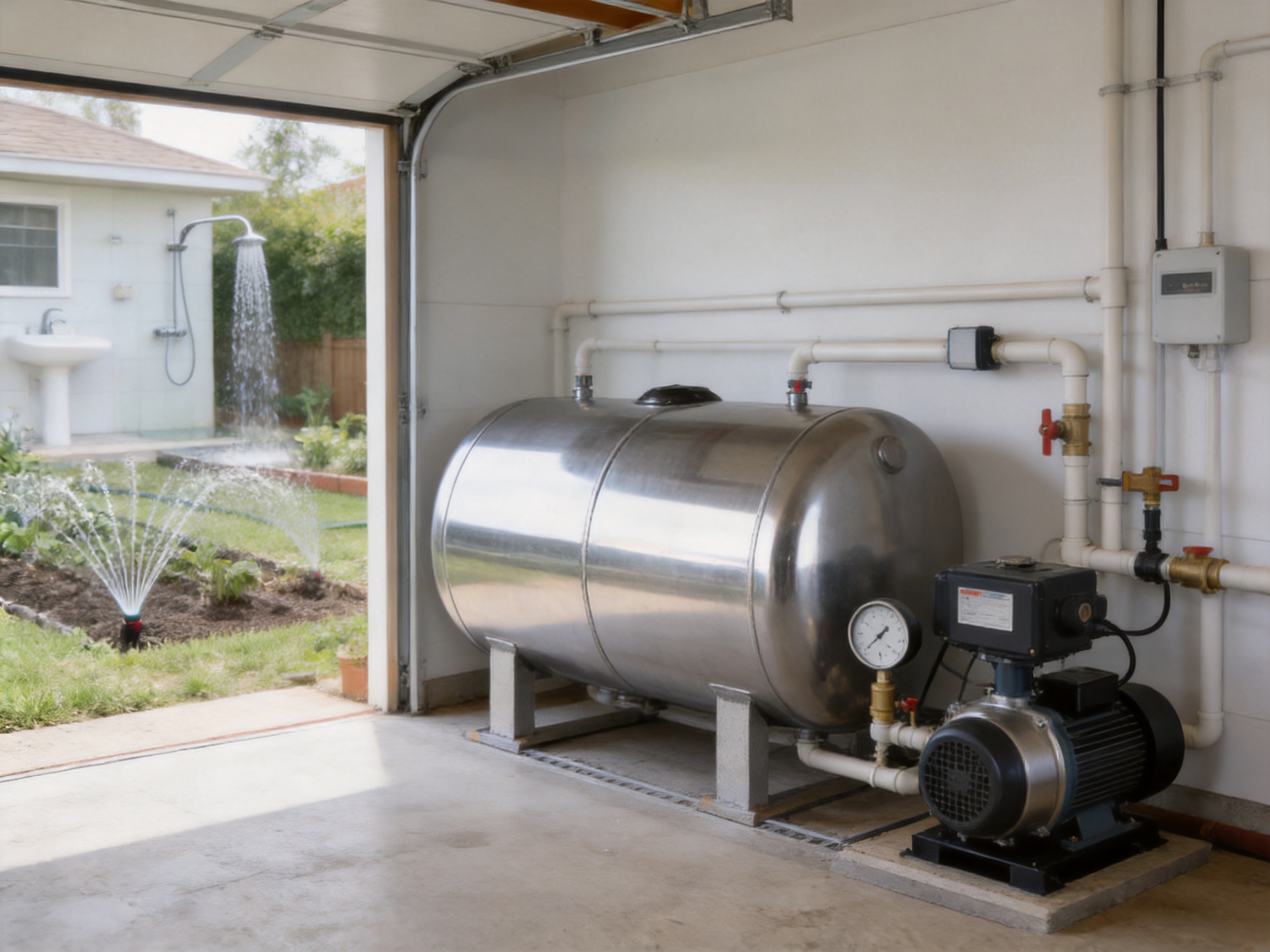
The SVT Series can be used in household booster systems, well-water installations, rainwater reuse systems, and other domestic water arrangements where a pump must maintain pressure for intermittent demand. Its compact horizontal configuration is suitable for utility rooms, garages, service areas, and other locations where vertical space may be limited.
Garden pumps and small irrigation systems often experience intermittent outlet use. A pressure tank can reduce pump cycling when sprinklers, hoses, or irrigation zones are opened and closed. The stainless steel body is also useful in outdoor-adjacent environments where humidity and occasional splashing may occur.
Booster systems benefit from pressure buffering because several outlets may open at different times. The tank can help reduce rapid pressure changes and support smoother pump control. The 1-inch connector and compact dimensions can simplify integration with a small booster assembly, although the final connection design must be verified by the installer.
Well pumps and submersible pumps may be installed far from the water-use points. Adding a pressure tank to the discharge system allows the pump to respond to demand through a pressure switch or electronic controller rather than starting for every brief water draw. The suitable pressure rating must be checked against the well-pump shut-off pressure.
In some water-based circulation or heating arrangements, a pressure vessel can help accommodate pressure changes caused by temperature variation. The membrane material and temperature range must be reviewed carefully before use. The listed maximum temperatures should never be exceeded, and the tank must be appropriate for the fluid and system design.
Small commercial buildings, workshops, agricultural facilities, and service premises may require stable water pressure without installing a large storage vessel. The SVT19L and SVT24L provide compact options for selected duties. Multiple tanks may also be considered in a larger system when the overall design requires additional drawdown capacity, provided that the pipework and control system are engineered accordingly.
A pressure tank is a safety-related component that must be produced with consistent dimensional accuracy, reliable joining, controlled material quality, and appropriate pressure testing. The manufacturer’s broader business profile is relevant because it demonstrates experience in pump and water-treatment equipment rather than isolated production of a single component.
Taizhou Edwin Electric Co., Ltd., operating under the Edwin Pump name, was founded in 2008 as an integrated manufacturing enterprise focused on independent research and development, mass production, and global export. Its product portfolio includes deep-well pumps, submersible pumps, domestic booster pumps, circulation pumps, solar water pumps, intelligent booster pumps, and related water-treatment peripheral products.
This product breadth can support a more complete understanding of pressure-system requirements. A company involved in pumps, booster systems, circulation equipment, and water accessories is positioned to evaluate pressure tanks as part of an overall hydraulic solution rather than as an isolated vessel. That perspective is useful when selecting capacity, pressure rating, membrane type, and connection arrangements.
The company’s stated emphasis on independent research and development supports product improvement and adaptation to different market requirements. In pressure equipment, development work may include dimensional optimization, material selection, membrane compatibility, connection design, packaging efficiency, and coordination with pump-control systems.
Mass production capability is also important for distributors and project buyers. Consistent production can support repeat orders, model continuity, standardized packaging, and predictable procurement. For international customers, a stable manufacturing base may simplify purchasing programs that involve several product categories, including pumps, pressure tanks, valves, pipes, and accessories.
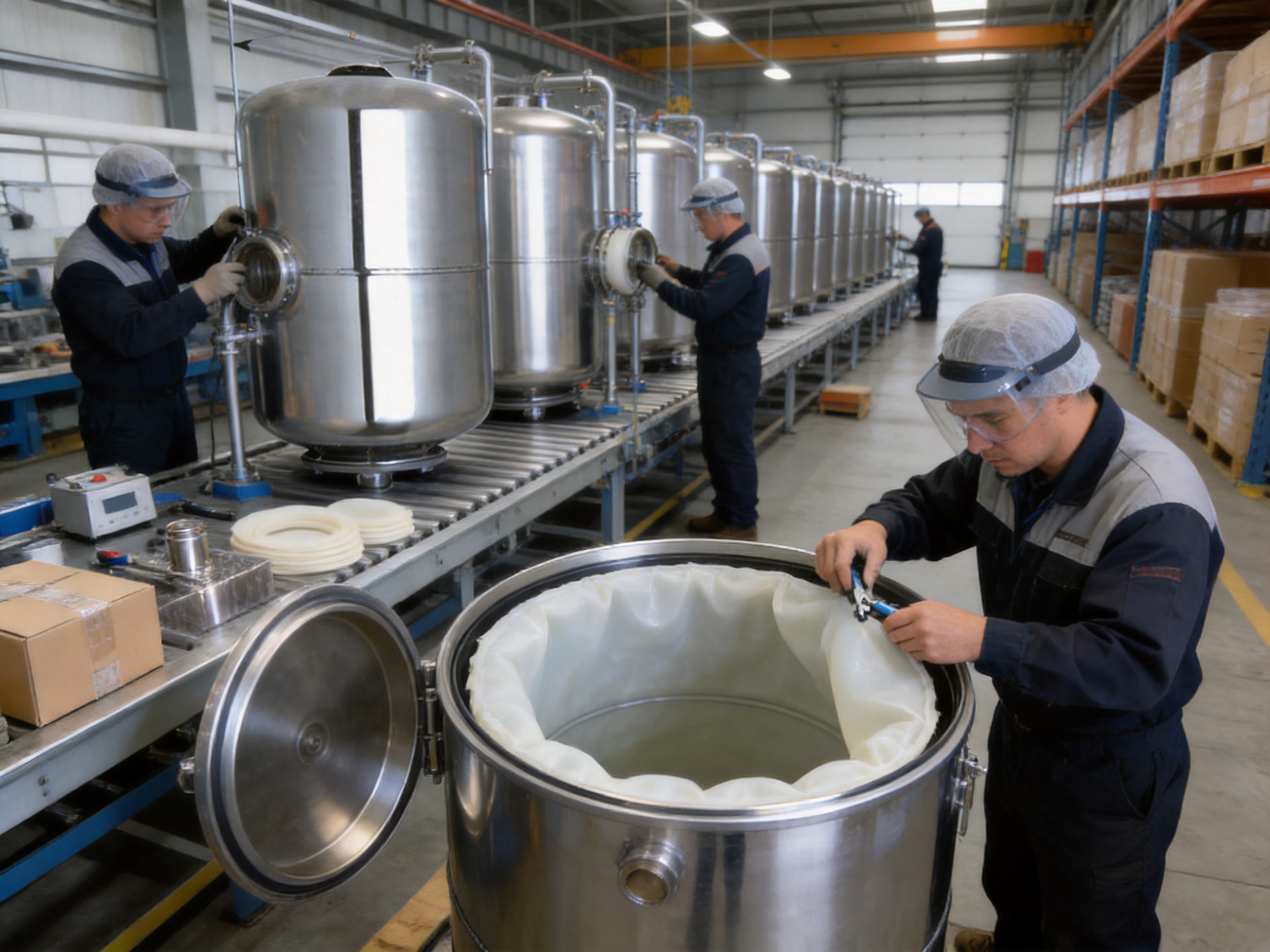
Advanced manufacturing of stainless steel pressure tanks normally involves several controlled stages. These include incoming material verification, sheet or tube preparation, forming, welding, surface treatment, component assembly, membrane installation, pressure testing, dimensional inspection, labeling, and final packing. Each stage contributes to the reliability of the completed vessel.
Material verification helps ensure that the stainless steel used in production matches the intended specification. Forming operations must maintain the designed geometry so that the vessel fits its membrane, connector, and support components correctly. Welding must be consistent and properly managed because weld areas are critical to structural integrity and corrosion resistance.
Surface treatment and cleaning are especially relevant to stainless steel. Proper finishing can improve appearance, remove contaminants, and reduce the risk of localized surface corrosion. The exact treatment should be appropriate for the selected material and intended application.
Membrane assembly requires careful positioning and sealing. The membrane must be installed without damage, folds, or contamination that could affect movement or service life. Connection and sealing components must be assembled with suitable torque and inspection procedures. A controlled assembly process helps reduce variation between units.
Pressure testing is essential for a pressure vessel. Testing procedures should confirm that the tank can withstand its rated operating conditions and that leaks are not present at the vessel body, welds, connector, valve, or membrane-related interfaces. Buyers should request the applicable quality documentation when the project requires formal records.
Final inspection may include checks of external dimensions, connection size, model identification, precharge pressure, appearance, packaging, and documentation. These controls are particularly important for export orders, where improper labeling or inadequate protection during transport can create avoidable installation delays.
The manufacturer’s business structure includes associated companies established to support procurement planning, order tracking, cross-border delivery, and foreign-trade services. For overseas buyers, this can provide value beyond the physical product. Clear order communication, coordinated documentation, shipment planning, and after-sales contact are important parts of a successful supply relationship.
The company reports that its products are used in new-energy projects, agricultural irrigation, municipal engineering, mining, construction, HVAC systems, and household water supply. These markets expose equipment to different operating conditions and purchasing requirements. Experience across multiple application areas can encourage more practical product development and broader technical support.
Since 2018, the company has invested in new energy and intelligent technology, including solar water pumps and intelligent booster pumps. Although the SVT Series is a pressure tank rather than an intelligent controller, its use within modern pumping systems can support the stable operation of conventional and electronically controlled equipment.
The SVT19L and SVT24L should be selected according to the actual system rather than by nominal volume alone. Important factors include average water demand, peak demand, pump flow rate, pump start frequency, pressure-switch settings, available installation space, maximum operating pressure, and expected future expansion.
The SVT19L has a height of 395 millimeters and a nominal volume of 19 liters. It may be appropriate where a compact tank is required and the system has relatively modest intermittent demand. Its lower height may simplify installation in restricted spaces.
The SVT24L has a height of 460 millimeters and a nominal volume of 24 liters. The additional nominal capacity may provide greater buffering for systems with more frequent short-duration demand. It may also be useful where reducing pump starts is a priority and the available installation space permits the additional height.
Nominal tank volume is not the same as usable water drawdown. The actual amount of water delivered between pump cut-out and cut-in pressures depends on the precharge pressure, pressure settings, tank design, membrane condition, and system configuration. Buyers should use a proper sizing calculation or obtain guidance from a qualified pump-system designer.
The listed precharge pressure for both models is 1.5 bar. Precharge is the air-side pressure established before the tank is connected to a pressurized water system. It influences the available drawdown and the point at which water begins entering or leaving the tank.
Before checking or adjusting precharge, the water side of the tank must be isolated and fully depressurized. Measuring precharge while the tank remains under water pressure can produce an incorrect result. Any adjustment should be completed using a calibrated pressure gauge and suitable equipment.
The correct precharge setting depends on the pump-control arrangement. In many conventional systems, the precharge is set slightly below the pressure-switch cut-in setting, but the exact value must follow the equipment instructions and system design. The listed 1.5-bar precharge should not be treated as a universal setting for every installation.
Incorrect precharge can create several problems. Excessive precharge may reduce water entry into the tank, causing limited drawdown and rapid cycling. Insufficient precharge may allow excessive membrane movement, poor pressure control, or an increased possibility of the membrane reaching an unsuitable position inside the vessel. Regular inspection helps maintain the intended performance.
The tank should be installed by a qualified professional familiar with water-pumping equipment and pressure vessels. The installation location must provide sufficient support, access for inspection, protection from impact, and enough clearance for membrane replacement or connector servicing.
The pipework should be sized and arranged to minimize unnecessary pressure loss. A shut-off valve can simplify future maintenance, while a drain arrangement may assist with safe system service. The tank should not be subjected to loads from unsupported piping. Pipework must be independently supported so that the connector is not forced out of alignment.
The pressure gauge, pressure switch, check valve, safety valve, and other control components should be installed according to the pump-system design. A safety device may be required to protect the tank and connected equipment from overpressure. The maximum pressure rating of the tank must never be exceeded.
The tank should be protected from freezing when the selected membrane or system contains water that may freeze. Even when the Butyl or EPDM temperature range includes minus 20 degrees Celsius, the complete water system, fittings, and operating conditions must be evaluated. Freezing water can expand and damage components regardless of the membrane material.
After installation, the system should be flushed where appropriate, checked for leaks, and brought to operating pressure gradually. The installer should confirm the pump cut-in and cut-out values, observe the tank response, and verify that the pump is not cycling abnormally.
Routine maintenance helps preserve the performance of the SVT Series. Inspection intervals should reflect the application, water quality, operating temperature, pressure cycle frequency, and local regulations. Commercial and agricultural systems may require more frequent checks than lightly used domestic installations.
The external surface should be inspected for dents, deep scratches, unusual discoloration, corrosion products, and signs of leakage. Stainless steel requires less protective coating maintenance than painted steel, but it should still be kept clean and protected from corrosive deposits.
The connector and nearby pipework should be checked for leaks. A small leak can gradually lower system pressure and cause the pump to start more often. Repeated cycling may be mistaken for a pump fault when the underlying problem is a leaking connection, defective check valve, or incorrect precharge.
Precharge should be checked only after the tank has been isolated and depressurized. If the pressure is outside the required range, it should be adjusted according to the system design. The tank should never be opened or disassembled while pressurized.
Membrane condition may be evaluated through system behavior and inspection by a qualified technician. Symptoms of a possible membrane problem include rapid cycling, loss of drawdown, unstable pressure, water at the air valve, or unusual changes in the tank’s response. If the membrane is damaged, replacement should use the correct model and material.
When replacing a membrane, the technician should verify that the replacement is compatible with the vessel, temperature range, fluid, and pressure rating. Sealing surfaces should be clean and undamaged. After reassembly, the tank should be tested carefully before returning to full service.
For international buyers, product value includes more than technical specifications. Packaging volume affects warehouse planning, freight calculation, container utilization, and distributor handling. The listed packing volumes provide a useful basis for preliminary logistics planning.
The SVT19L packing volume is listed as 0.03214 CBM, while the SVT24L packing volume is listed as 0.03606 CBM. Actual shipment planning should confirm the final package dimensions, gross weight, quantity per carton or pallet, protective materials, and loading arrangement with the supplier before an order is finalized.
Protective packaging should prevent impact damage to the stainless steel body, connector, air valve, and any attached components. It should also keep the tank dry and stable during transport. Clear model identification and handling instructions can reduce the chance of incorrect installation after delivery.
Edwin Pump’s global export experience and associated foreign-trade support structure may be valuable to wholesalers, project contractors, and overseas distributors. Procurement planning, order tracking, documentation coordination, and cross-border shipment management can help customers organize repeat purchases across multiple pump and water-equipment categories.
A pressure tank works as part of a system. Its performance depends on the pump, pressure switch, controller, check valve, pipes, valves, water demand, and installation conditions. Purchasing from a manufacturer with experience across several pump categories can make technical coordination easier.
Edwin Pump’s product range covers solar pumps, deep-well pumps, submersible pumps, surface pumps, booster pumps, circulation pumps, garden pumps, pool and spa pumps, commercial multistage pumps, end-suction pumps, intelligent booster pumps, and pump accessories. This broad portfolio can support one-stop sourcing for customers developing complete water-supply packages.
For a distributor, a broader product range may reduce the number of separate supplier relationships required. For an engineering contractor, it may simplify technical communication and product matching. For an importer, it may support consolidated shipments and a more consistent product presentation across related categories.
The manufacturer’s stated focus on quality, innovation, high-performance water pumps, and one-stop procurement services aligns with the requirements of modern water-system projects. While each product must still be evaluated according to its own technical data, an integrated manufacturing background is a meaningful advantage when system compatibility and supply continuity are important.
The SVT Series should be used only within its rated pressure, temperature, and application limits. The maximum pressure options of 6 bar, 8 bar, and 10 bar must not be exceeded. Pressure relief protection should be provided where required by the system design.
The membrane temperature limits are specific to the selected material. Butyl and EPDM are listed from minus 20 degrees Celsius to 99 degrees Celsius, while natural rubber is listed from 0 degrees Celsius to 77 degrees Celsius. The lowest-rated component in the complete system generally determines the safe operating boundary.
The tank should not be used for fluids that are incompatible with the membrane or wetted materials. Drinking-water, chemical, thermal-fluid, or special-process applications may require additional approvals or material verification. Buyers should provide complete fluid information to the supplier before ordering.
Pressure vessels can store significant energy. Installation, inspection, precharge adjustment, and membrane replacement should be performed by trained personnel. Never drill, weld, cut, modify, or open the vessel without authorization and appropriate safety controls.
The tank stores water under pressure and reduces the need for the pump to start during every brief water demand. It also helps stabilize system pressure and can reduce pump cycling.
The product is specified as a stainless steel pressure tank. Stainless steel provides corrosion resistance, a durable external surface, and a clean appearance when properly selected and maintained.
It means the internal flexible membrane can be replaced separately when service conditions require it, subject to the tank design and availability of the correct replacement component. This may reduce lifecycle cost compared with replacing the complete vessel.
The listed models are SVT19L and SVT24L. The SVT19L has a nominal capacity of 19 liters and a height of 395 millimeters. The SVT24L has a nominal capacity of 24 liters and a height of 460 millimeters. Both have a listed diameter of 270 millimeters.
Both models are listed with maximum-pressure options of 6 bar, 8 bar, and 10 bar. The selected option must match the pump and complete system design.
The listed precharge pressure is 1.5 bar for both models. The final operating adjustment should be confirmed against the pressure-switch setting and system requirements.
The listed choices are Butyl, EPDM, and natural rubber. Butyl and EPDM are specified for minus 20 degrees Celsius to 99 degrees Celsius, while natural rubber is specified for 0 degrees Celsius to 77 degrees Celsius.
It can be considered for domestic booster systems when the pressure rating, connector, membrane material, capacity, and installation conditions are suitable. A qualified installer should confirm compatibility with the selected pump and controls.
Yes. The horizontal arrangement can be useful where ceiling height is restricted or where the tank must be positioned beside a pump or inside a compact equipment area. The installer must still provide adequate support and service clearance.
Maintenance generally includes external inspection, leak checks, confirmation of operating behavior, and periodic precharge verification after complete depressurization. Membrane replacement should be performed by qualified personnel using the correct component.
No. Usable drawdown depends on pressure settings, precharge, membrane condition, tank geometry, and system operation. A sizing calculation is necessary to determine the effective water volume between pump start and stop pressures.
Buyers should provide the required model or capacity, maximum pressure, membrane material, water temperature, fluid type, connector requirements, quantity, destination, packaging expectations, and intended application. Pump and pressure-control data are also useful for technical matching.
The SVT Series horizontal tank is a practical pressure-management component for water systems that require stable operation, compact installation, and serviceable construction. Its stainless steel body provides a durable and corrosion-resistant platform, while the replaceable membrane improves maintainability and can support better lifecycle value.
The SVT19L and SVT24L models offer two compact capacity choices. Their shared 270-millimeter diameter, 1-inch connector, 1.5-bar listed precharge, and selectable 6-bar, 8-bar, or 10-bar maximum-pressure options simplify product comparison. The availability of Butyl, EPDM, and natural rubber membranes allows selection according to temperature and application requirements.
Compared with conventional pressure tanks that use less durable external materials or non-replaceable internal components, the series offers meaningful advantages in corrosion resistance, serviceability, installation flexibility, and configuration choice. Its effectiveness will depend on correct sizing, precharge adjustment, membrane selection, pressure protection, and professional installation.
The manufacturer’s experience in pump research and development, mass production, global export, intelligent pumping technology, solar water systems, booster equipment, and water-treatment accessories provides a strong foundation for supplying pressure tanks as part of complete water-system solutions. For distributors, contractors, and project buyers, this integrated capability can support more coordinated procurement and technical communication.
When selected and maintained correctly, the SVT Series can help reduce unnecessary pump cycling, smooth pressure fluctuations, protect connected equipment, and improve the practical reliability of domestic, agricultural, commercial, and light industrial water installations.
1. Product specification information for the SVT Series horizontal tank, including model dimensions, pressure ratings, connector size, precharge pressure, and packing volume.
2. Product material information for stainless steel pressure vessels and replaceable-membrane water-system tanks.
3. General engineering principles for hydropneumatic pressure tanks, pump cycling reduction, and pressure-system control.
4. General maintenance practices for water pumps, pressure vessels, membrane tanks, pressure switches, and precharge systems.
5. General technical guidance concerning elastomer selection, operating temperature, and fluid compatibility in water equipment.
6. Company profile information concerning integrated research and development, manufacturing, export, pump product categories, and water-system applications.
aseriesnoisereductiondesignacid-baseverticalsurfacepump-1.jpg "EV(F)A Series Noise Reduction Design Acid-base Vertical Surface Pump")
edwina@edwin-pump.com
+86-13586290903 (WhatsApp)
Xuri Gongliang Cutting Tool Entrepreneurship Park, Wenqiao Town, Wenling City, Taizhou City, Zhejiang Province, China

High Performance Smart Pump Factory


 English