edwina@edwin-pump.com

View All Products
en
Modern water supply systems require more than simple pumping power. Residential buildings, commercial facilities, agricultural installations, heating and cooling systems, and many light industrial applications all need water pressure that is stable, efficient, quiet, and easy to control. Conventional fixed-speed pumps often operate at one constant speed regardless of actual demand. This can create unnecessary energy consumption, pressure fluctuations, mechanical stress, and noise. The HGZ15/45EA-A Series Energy Saving Self-Suction Intelligent Adaptive VFD Permanent Magnet Booster Pump is designed to solve these challenges through a combination of self-suction performance, permanent magnet motor technology, variable frequency drive control, intelligent adaptation, and integrated protection.
With a rated power of 600 W, a rated flow of 0.8 m³/h, a rated head of 25 m, a maximum head of 45 m, and a maximum suction lift of 8 m, the pump is suitable for a wide range of domestic, commercial, and light-duty water supply applications. Its 1-inch connection size supports practical installation, while the compact structure makes it easier to incorporate into existing water systems. The pump can provide both boosting and circulation functions and is designed for hot and cold water applications.
The product is manufactured by Taizhou Edwin Electric Co., Ltd., an integrated pump enterprise with experience in independent research and development, mass production, international sales, and technical service. The company has developed product lines covering deep well pumps, submersible pumps, booster pumps, circulation pumps, solar water pumps, and related water system products. Its manufacturing and export experience provides a strong foundation for producing intelligent pump equipment for customers in different markets and application environments.
This article examines the product’s construction, operating principles, intelligent functions, energy-saving advantages, manufacturing strengths, installation considerations, maintenance requirements, and applications. It also explains why a self-suction intelligent variable-speed pump can offer meaningful advantages over traditional fixed-speed booster pumps.
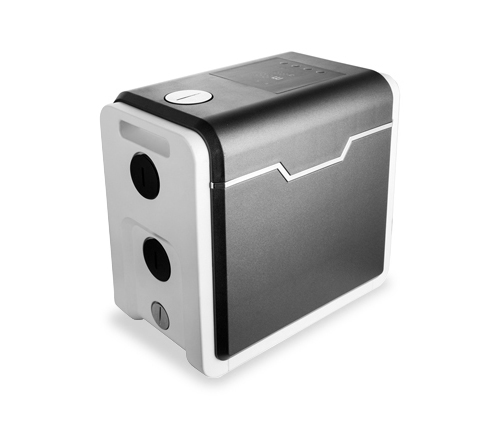
HGZ15/45EA-A Series Energy Saving Self-suction Intelligent Adaptive VFD Permanent Magnet Booster Pump
The HGZ15/45EA-A is an intelligent booster pump built around a permanent magnet motor and variable frequency drive system. Instead of operating continuously at a fixed speed, the pump can adjust its operating speed according to actual water demand. When demand is low, the motor can reduce its speed and energy consumption. When demand increases, the pump can raise its speed to maintain the required pressure and flow.
This adaptive operating method is particularly useful in water systems where demand changes throughout the day. A household may use very little water at night but require a higher flow rate during morning and evening periods. A commercial building may have different pressure requirements when several outlets are operating simultaneously. A circulation system may need regular temperature-based starting and stopping rather than continuous operation. The pump’s control functions are designed to respond to these changes automatically.
The self-suction function is another important feature. A self-suction pump can draw water into the pump chamber and suction line under suitable installation conditions, reducing the need for repeated manual priming. This is useful in systems where the water source is below the pump, where the suction pipe may initially contain air, or where the pump must restart after a temporary interruption.
The pump is also designed for both hot and cold water. This expands its application range beyond ordinary cold-water boosting. It can be used in suitable circulation and temperature-control systems, provided that the operating temperature, fluid quality, pressure, and installation conditions remain within the approved limits of the complete system.
| Item | Specification |
|---|---|
| Product model | HGZ15/45EA-A |
| Product type | Self-suction intelligent VFD permanent magnet booster pump |
| Rated power | 600 W |
| Connection size | 1 inch |
| Rated flow | 0.8 m³/h |
| Rated head | 25 m |
| Maximum head | 45 m |
| Maximum suction lift | 8 m |
| Motor technology | Permanent magnet motor with variable frequency drive |
| Pump body material | SUS 304 stainless steel |
| Impeller material | PPO |
| Check valve material | Brass |
| Operating functions | Boosting, circulation, self-suction, temperature control, automatic pressure control |
The rated head and maximum head should be understood in relation to the actual system curve. Maximum head is normally reached at very low or zero flow, while rated operating conditions depend on pipe resistance, elevation, outlet demand, and system pressure. Correct pump selection therefore requires consideration of the complete water system rather than relying on a single performance value.
Traditional induction motors are widely used in water pumps, but they can experience energy losses associated with rotor excitation, heat generation, and operation away from their most efficient speed. A permanent magnet motor uses permanent magnetic material to create the rotor magnetic field. This allows the motor to operate efficiently with reduced electrical loss under appropriate operating conditions.
The permanent magnet motor in the HGZ15/45EA-A is combined with a variable frequency drive. The VFD controls the motor’s speed by adjusting the operating frequency and electrical output. This means the pump does not need to run at full speed whenever the water demand is low. In a variable-demand system, this can reduce wasted energy compared with a fixed-speed pump that repeatedly starts, stops, throttles, or operates against a closed outlet.
Pump affinity laws help explain the importance of speed control. For many centrifugal pump conditions, flow is approximately proportional to rotational speed, head is approximately proportional to the square of rotational speed, and power is approximately proportional to the cube of rotational speed. These relationships are simplified and depend on the pump and system, but they demonstrate why even a moderate reduction in speed can significantly reduce power consumption.
For example, if a pump can meet a low-demand condition at a reduced speed rather than operating continuously at full speed, the system may avoid a large amount of unnecessary hydraulic and electrical work. The actual energy savings depend on the duty cycle, pipe system, pressure setting, water demand, and installation quality. Nevertheless, adaptive speed control is generally more efficient for fluctuating demand than a single-speed operating strategy.
Variable frequency operation also improves comfort and equipment protection. A fixed-speed pump may produce a sudden pressure surge when it starts. A VFD-controlled pump can accelerate and decelerate more smoothly, helping reduce water hammer, vibration, and stress on pipe connections. More stable pressure can also improve the performance of faucets, showers, appliances, boilers, and other water-consuming equipment.
The first advantage is demand-based operation. A fixed-speed pump usually provides one operating speed, and the system must use pressure switches, throttling devices, or frequent starts and stops to respond to changing demand. The HGZ15/45EA-A can adjust speed more precisely, allowing the pump to match its output to the actual requirement.
The second advantage is improved pressure stability. When several outlets open or close, a traditional pump may create noticeable pressure fluctuations. Intelligent flow and pressure control enables the HGZ15/45EA-A to respond to these changes and maintain a more consistent water supply.
The third advantage is lower operating noise. The shielded design and water-cooled motor help reduce mechanical and thermal noise. The stated full-load operating noise is below 55 dB under specified conditions. Actual sound levels can still be influenced by mounting, pipe vibration, cavitation, air in the system, and surrounding structures, but the pump’s design is intended to support quiet operation.
The fourth advantage is reduced cycling. Frequent starting and stopping can increase motor heating, electrical stress, and mechanical wear. Intelligent control can help the pump run at a more suitable speed and use controlled starts and stops. This can contribute to longer service life when the pump is properly selected and maintained.
The fifth advantage is functional flexibility. The pump combines boosting and circulation modes and includes temperature-control operation. This reduces the need for separate equipment in applications that require both pressure enhancement and water circulation.
The sixth advantage is built-in protection. Stall protection, undervoltage protection, abnormal temperature reminders, dry-run protection, and leakage protection help reduce the risk of damage caused by abnormal operating conditions. Protection functions do not replace correct installation, but they provide an additional layer of safety for the equipment and water system.
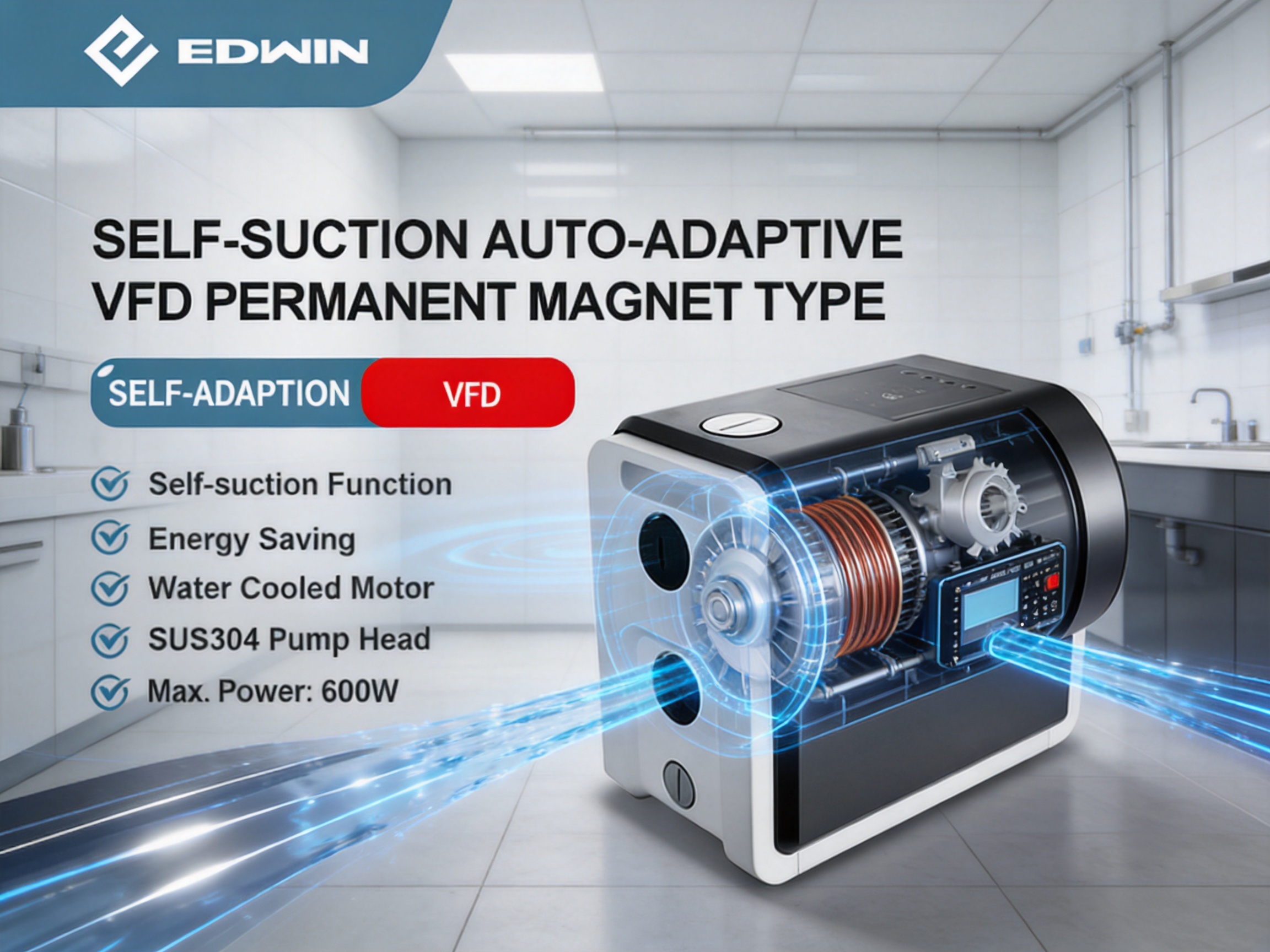
Self-suction capability is valuable in systems where the pump cannot always remain fully flooded. Air in the suction pipe is a common reason for poor pump performance, unstable flow, and repeated manual priming. A self-suction design can help evacuate air and draw water into the pumping chamber, making commissioning and restarting more convenient.
The maximum suction lift listed for this model is 8 m. This value should not be interpreted as a universal installation guarantee. Actual suction performance depends on atmospheric pressure, water temperature, pipe diameter, pipe length, pipe material, valve arrangement, elevation, water quality, air tightness, and the condition of the suction inlet. Hot water, high altitude, long suction pipes, and excessive fittings can reduce the practical suction margin.
The suction pipe should be as short and straight as practical. It should have an appropriate diameter and should avoid unnecessary elbows, sharp changes in direction, and high points where air can accumulate. All threaded and flanged connections must be sealed correctly. Even a small air leak on the suction side may prevent stable self-priming and cause the pump to run irregularly.
A check valve is important in many self-suction applications because it helps retain water in the suction line after the pump stops. The HGZ15/45EA-A uses a brass check valve component. The valve should be installed in the correct direction and inspected periodically if the water contains particles or deposits.
The pump should be installed on a firm, level support. Although the product has a compact structure, the connected pipes should not place excessive mechanical load on the pump body. Pipe supports should be used where necessary. Proper alignment helps reduce vibration and protects threaded connections from stress.
Before initial operation, the pump and suction line should be prepared according to the installation instructions. The system must contain sufficient water for safe operation. Self-suction does not mean that the pump can operate indefinitely without water. Dry operation can cause overheating, seal damage, unstable performance, and premature wear. The integrated waterless operation protection provides a safeguard, but correct commissioning remains essential.
The intelligent adaptive system is designed to monitor operating conditions and adjust the pump’s output. Flow and pressure are central control parameters. When water demand changes, the pump can modify its speed to keep the system within the desired operating range.
Intelligent dual control provides flexibility for different applications. Some systems are primarily concerned with maintaining a target pressure. Others require a specific flow behavior or a combination of pressure and flow stability. The ability to adjust control parameters helps installers and users match the pump to the system rather than forcing every installation to use the same fixed operating mode.
Adaptive control is especially useful in multi-outlet systems. When one tap is opened, the pump can operate at a relatively low speed. When several outlets open at the same time, the controller can increase speed to compensate for the higher demand. When outlets close, the controller can reduce the speed again. This operating pattern is more responsive than a basic pressure switch that only turns a fixed-speed motor on or off.
The system can also help prevent unnecessary pressure overshoot. Excessive pressure can cause leakage, noise, uncomfortable water use, and stress on appliances. By regulating output more gradually, the pump supports a more controlled water supply.
The memory function enables the pump to retain operating settings or usage-related information. According to the product information, the intelligent memory system can learn and record usage patterns and operate according to established habits. In practical terms, this can help the pump respond more efficiently to repeated demand conditions.
A memory function is useful where water use follows a regular pattern. For example, a building may experience predictable demand in the morning, at midday, and in the evening. A circulation system may operate according to recurring temperature conditions. By retaining appropriate settings, the control system can reduce the need for repeated manual adjustment.
Memory features should be used as an aid to system control, not as a substitute for proper pressure settings and professional commissioning. If the water system changes significantly, the operating parameters should be reviewed so that the pump continues to match the new conditions.
The HGZ15/45EA-A supports temperature-control starting and stopping. In a temperature-controlled system, the pump can operate according to a set temperature range. When the measured condition reaches the relevant starting point, the pump can begin operation. When the target condition is achieved, it can stop or change its operating state.
This function is useful for hot water circulation, equipment cooling, temperature-maintenance loops, and systems where water movement is required only during particular thermal conditions. It can reduce unnecessary continuous operation and may improve energy management in applications where the pump does not need to run all day.
Hot and cold water compatibility gives the pump broader practical value than a cold-water-only booster. However, compatibility must always be considered together with fluid temperature, pressure, chemical composition, cleanliness, and seal materials. The system designer should confirm that the pump is appropriate for the actual water temperature and that the connected pipes, valves, fittings, and control devices are also suitable.
Temperature sensors and switches should be installed where they can accurately represent the relevant water temperature. Poor sensor placement can lead to delayed starts, premature stops, or unnecessary cycling. The control system should be configured based on the thermal response of the pipe network and equipment rather than using arbitrary settings.
In circulation applications, the pump should be selected according to the required circulation flow, system resistance, heat loss, and temperature difference. The highest possible head is not always the best selection criterion. A pump that is too large may increase energy consumption and create excessive flow, while a pump that is too small may fail to maintain the required temperature or pressure.
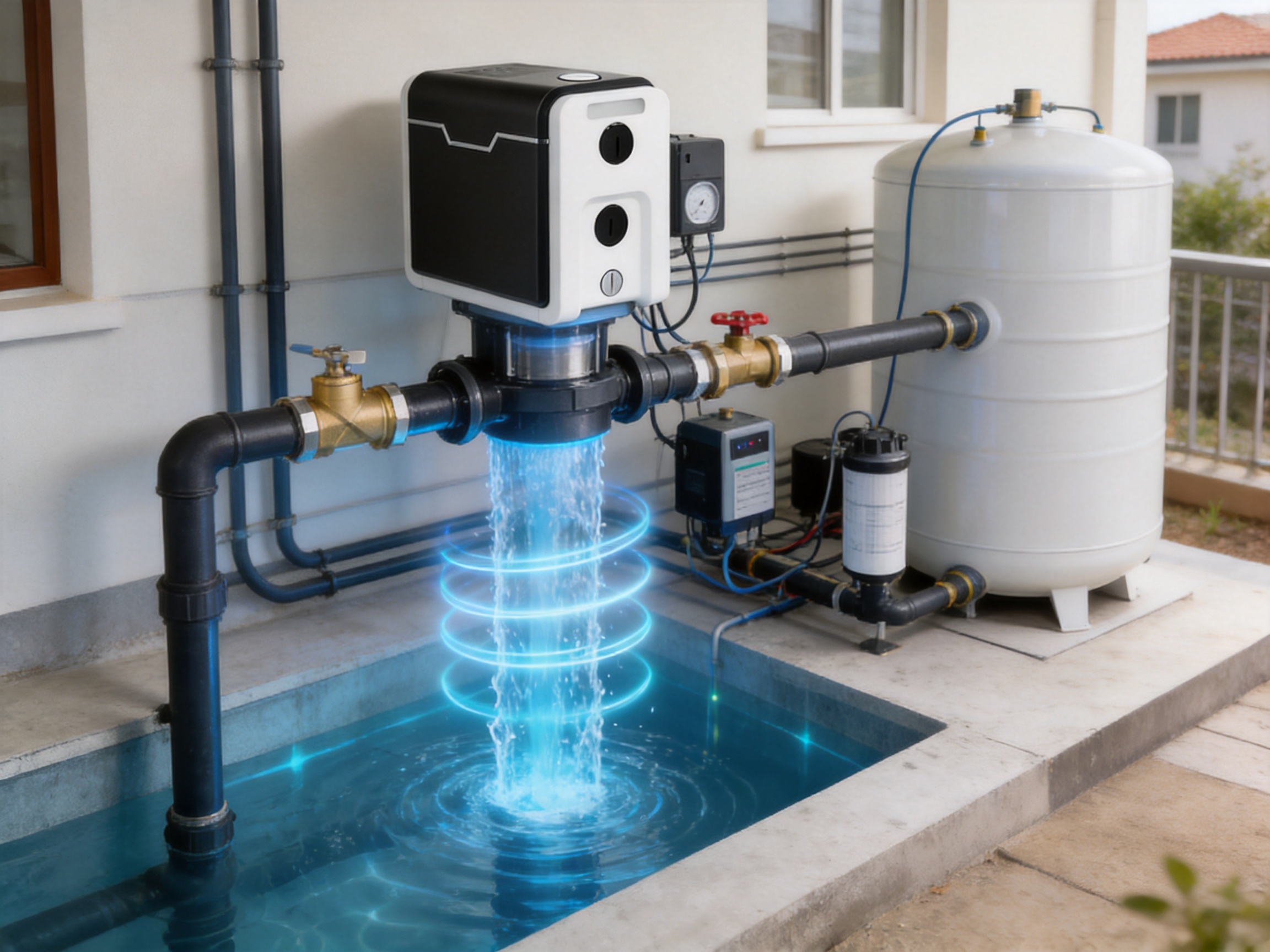
Noise is an important consideration in residential buildings, hotels, offices, clinics, utility rooms, and other locations where pumps operate near people. Traditional pump noise can result from motor vibration, bearing operation, hydraulic turbulence, cavitation, pipe resonance, or repeated starting. The HGZ15/45EA-A uses a shielded structure intended to reduce operating noise and limit the risk of water pump leakage associated with certain conventional cooling arrangements.
The stated noise level is below 55 dB in full-load working mode under the specified test conditions. This is designed to support quieter operation than many conventional booster installations. However, acoustic performance depends on the entire installation. Rigid pipe connections, loose brackets, air pockets, undersized suction pipes, and operation outside the recommended point can all increase noise.
The water-cooled motor uses the pumped water to help remove heat from the motor area. This design can reduce the need for an external fan and may lower fan-related noise. Water cooling can also help maintain a more stable motor temperature when the pump operates in a warm environment, contributing to reliability and service life.
Water cooling does not eliminate the importance of proper ventilation and installation. The pump should be protected from freezing, excessive external heat, flooding of electrical components, and direct exposure to damaging environmental conditions. Electrical connections must be properly protected and installed by qualified personnel.
The selection of wetted and structural materials influences durability, corrosion resistance, hygiene, and long-term reliability. The HGZ15/45EA-A uses SUS 304 stainless steel for the pump body. Stainless steel provides strong resistance to corrosion in many clean-water applications and gives the pump a durable external structure.
The impeller is made from PPO, an engineering polymer known for dimensional stability, low weight, and resistance to many operating conditions. A polymer impeller can reduce rotating mass and may contribute to efficient motor operation. Its suitability depends on the fluid temperature and chemical environment, so the pump should be used within the manufacturer’s stated application limits.
The brass check valve provides a robust valve structure for controlling reverse flow. A reliable check valve helps maintain water in the suction line and supports stable restarting. It also prevents unwanted backflow when the pump stops, although system designers may require additional isolation or backflow prevention devices depending on local regulations and application requirements.
The stator winding uses copper wire with silicon steel sheet. Copper winding supports effective electrical conductivity, while silicon steel is commonly used in motor cores to improve magnetic performance and reduce certain forms of electrical loss. The rotor uses ceramic and silicon steel sheet, combining permanent magnetic properties with an engineered magnetic circuit.
| Component | Specified material | Functional contribution |
|---|---|---|
| Stator winding | Copper wire and silicon steel sheet | Supports electrical conductivity and motor magnetic efficiency |
| Rotor | Ceramic and silicon steel sheet | Provides permanent magnetic operation and a controlled magnetic circuit |
| Pump body | SUS 304 stainless steel | Provides structural strength and corrosion resistance |
| Impeller | PPO | Provides a lightweight and dimensionally stable hydraulic component |
| Check valve | Brass | Helps control reverse flow and retain suction-line water |
Water pumps operate in changing electrical and hydraulic environments. Voltage variation, blocked flow, lack of water, overheating, and leakage can all damage equipment if they are not detected quickly. The HGZ15/45EA-A includes several protection functions designed to identify abnormal conditions and reduce operating risk.
Stall protection can help protect the motor when rotation is restricted by a mechanical obstruction, abnormal hydraulic condition, or other fault. Undervoltage protection helps prevent operation under electrical conditions that may cause unstable motor performance or excessive current. A temperature abnormality reminder alerts the user when the operating temperature moves outside an expected range.
Waterless operation protection is particularly relevant to self-suction installations. If the water source is interrupted or the suction system loses prime, the pump can detect conditions associated with dry operation and take protective action. This feature helps reduce the risk of seal damage and overheating, but it should not be treated as permission to run the pump without water.
Water leakage protection provides another layer of safety. Leakage can occur because of seal deterioration, pipe damage, loose connections, or abnormal pressure. Early detection helps users respond before a minor issue becomes a major equipment or building problem.
The use of SENSATA sensors and switches supports accurate monitoring and control. Reliable sensors are essential because the intelligent controller depends on accurate pressure, flow, temperature, and fault information. Stable measurement contributes to more precise adjustment and more dependable protection.
Taizhou Edwin Electric Co., Ltd. was established in 2008 and operates as an integrated manufacturing enterprise. Its activities include independent research and development, production, product improvement, quality management, and global export. This integrated structure allows the company to coordinate product design with production requirements and market feedback.
Independent research and development is important for intelligent pump manufacturing. A modern booster pump is not simply a motor attached to a hydraulic body. Its performance depends on the relationship between motor efficiency, impeller design, pressure sensing, software logic, protective functions, heat management, and user interface. An experienced manufacturer must coordinate these elements so that the final product operates as a complete system.
Mass production capability also provides practical advantages. Repeatable manufacturing processes help maintain consistency between units. Standardized winding, assembly, sealing, inspection, and electrical testing can reduce variation and support predictable product performance. Production scale can also improve component sourcing, spare-parts planning, and delivery capability for international customers.
The company’s product portfolio includes deep well pumps, submersible pumps, domestic booster pumps, circulation pumps, solar water pumps, and intelligent booster pumps. Experience across these categories gives the manufacturer a broad understanding of water movement, pressure control, motor design, environmental conditions, and application-specific requirements.
Since 2018, the company has invested in new energy and intelligent technology. This investment has supported the development of solar water pumps and intelligent booster pumps. The HGZ15/45EA-A reflects this direction by combining energy-saving motor technology with intelligent variable-speed control.
Manufacturing quality depends on more than final inspection. It begins with material selection and continues through incoming component checks, motor production, hydraulic assembly, electrical integration, software configuration, functional testing, and packaging. A professional pump factory should control each stage to ensure that the final product matches the intended design.
Motor production requires accurate winding, appropriate insulation, balanced rotor construction, and consistent assembly tolerances. Copper wire must be wound correctly to achieve the specified electrical characteristics. Silicon steel components must be assembled into an effective magnetic circuit. Rotor balance is important because imbalance can create vibration, noise, and bearing stress.
Electrical control integration is equally important in an intelligent VFD pump. The controller must communicate correctly with pressure and flow sensors, respond to temperature conditions, recognize faults, and regulate motor speed. Production testing should verify startup behavior, speed changes, protection functions, and communication between the control system and sensing components.
Permanent magnet motors require careful control because their magnetic characteristics influence the relationship between current, speed, torque, and frequency. Correct controller configuration helps the motor operate smoothly and efficiently. This is one area where experience in both pump manufacturing and electronic control provides a meaningful advantage.
Hydraulic components must be assembled with appropriate alignment and clearance. The impeller, pump chamber, shaft, seals, and check valve all affect water delivery. A small assembly error can lead to friction, vibration, reduced flow, or leakage. Proper sealing is especially important in a compact shielded pump because the design depends on reliable separation between water and electrical areas.
Testing should include inspection for leakage, abnormal vibration, pressure response, suction behavior, and stable operation at relevant duty points. A factory with experience in different pump categories can use knowledge from submersible, circulation, booster, and surface pump production to improve assembly procedures and quality checks.
For international buyers, manufacturing capability must be supported by organized export and order management. In 2012, the company established Taizhou Haipai Import & Export Co., Ltd. and Golden Falcon Industrial Co., Ltd. to support procurement planning, order tracking, cross-border delivery, and foreign trade services.
This structure helps the company provide one-stop purchasing support for customers who need multiple pump categories or related water system products. It can also simplify communication between technical teams, production departments, quality personnel, logistics providers, and overseas buyers.
Global customers often require more than a product catalog. They may need model selection, packaging specifications, documentation, labeling, delivery coordination, and after-sales support. An integrated manufacturer with export experience is better positioned to address these requirements in a coordinated manner.
The pump can support domestic water supply where municipal pressure is insufficient or where water must be delivered from a storage tank. It can improve pressure for showers, faucets, washing equipment, and other household outlets. Variable-speed operation is beneficial in homes because water demand changes frequently and low noise is important.
For a domestic installation, the designer should determine the required pressure at the highest or most remote outlet, calculate pipe losses, and consider the simultaneous operation of multiple fixtures. The pump should not be selected solely because it has a high maximum head. The actual operating point should fall within a useful and efficient region of the performance curve.
Offices, guesthouses, small hotels, restaurants, clinics, and retail facilities may require pressure boosting for several outlets. The HGZ15/45EA-A can provide responsive control for changing demand while occupying relatively little space. Its compact structure is useful in pump rooms, utility cabinets, equipment spaces, and retrofit projects.
Commercial users can benefit from reduced noise, stable pressure, and protective functions. A pump that can adapt its speed may also reduce energy use during periods of low occupancy. For larger commercial systems, several pumps or a higher-capacity model may be required, so the system designer should compare demand against the available flow and head performance.
The temperature-control function makes the pump suitable for certain hot water circulation systems. It can help move water through a loop when temperature falls below a selected level, reducing the delay before warm water reaches a point of use. It may also be used in circulation systems associated with heating equipment, provided that all materials and operating conditions are suitable.
Hot water applications require careful attention to temperature, pressure, expansion, insulation, and scald protection. The pump should be integrated with the complete system rather than installed as an isolated component. Appropriate valves, strainers, expansion provisions, and temperature controls may be required.
In light-duty HVAC and thermal management systems, circulation pumps move water through heat exchangers, radiators, floor heating loops, or cooling circuits. The variable-speed function can help match circulation to the thermal load. Temperature-based operation can reduce unnecessary pumping when the system does not require circulation.
The fluid must be compatible with the pump materials. If additives, glycol mixtures, treatment chemicals, or contaminated water are used, the system designer should verify material compatibility and viscosity effects. Higher viscosity can change flow, head, and motor load.
Many homes and facilities use roof tanks, ground tanks, or intermediate storage tanks. The HGZ15/45EA-A can be installed as a self-suction booster between a water source and the distribution network when the arrangement meets the pump’s suction requirements. The check valve and self-suction design can support convenient restarting after periods of inactivity.
Tank systems should include suitable filtration and protection against sediment. Particles can damage the impeller, check valve, seals, or sensors. A shutoff valve and service access should be provided so that maintenance can be performed without draining the entire building system.
Before installation, confirm the model, connection size, voltage requirements, system pressure, water temperature, pipe layout, suction lift, and expected flow. Verify that the pump’s rated and maximum performance are appropriate for the system. The pump should be installed in a location that is dry, accessible, protected from freezing, and suitable for electrical equipment.
The suction pipe should be airtight and adequately supported. Avoid placing the suction inlet near heavy sediment, floating debris, or turbulence. If the water source contains particles, install a suitable filter or strainer while ensuring that the filter does not create excessive suction resistance.
The discharge pipe should be connected without forcing the pump body into alignment. Excessive pipe stress can distort connections and create leakage. Install isolation valves where appropriate so that the pump can be removed or serviced. A pressure gauge or service connection may be useful for commissioning and troubleshooting.
Electrical work should be completed by a qualified professional. The power supply must match the product requirements, and proper grounding and protection should be provided. Electrical components should be protected from water and condensation. Cable routing should prevent abrasion, excessive heat exposure, and accidental disconnection.
During commissioning, inspect all connections and open the required valves. Confirm that the water source is available and that the pump has adequate initial water. Start the pump according to the operating procedure and observe pressure, flow, sound, vibration, temperature, and leakage. If the pump cycles excessively, loses prime, produces unusual noise, or fails to reach the required pressure, stop the unit and investigate the system conditions.
Control settings should be adjusted gradually. The pressure target should match the building or equipment requirement. Excessive pressure settings can increase energy use and stress on pipes and appliances. Insufficient pressure settings may cause poor service at outlets. The most efficient setting is normally the lowest pressure that reliably satisfies the application.
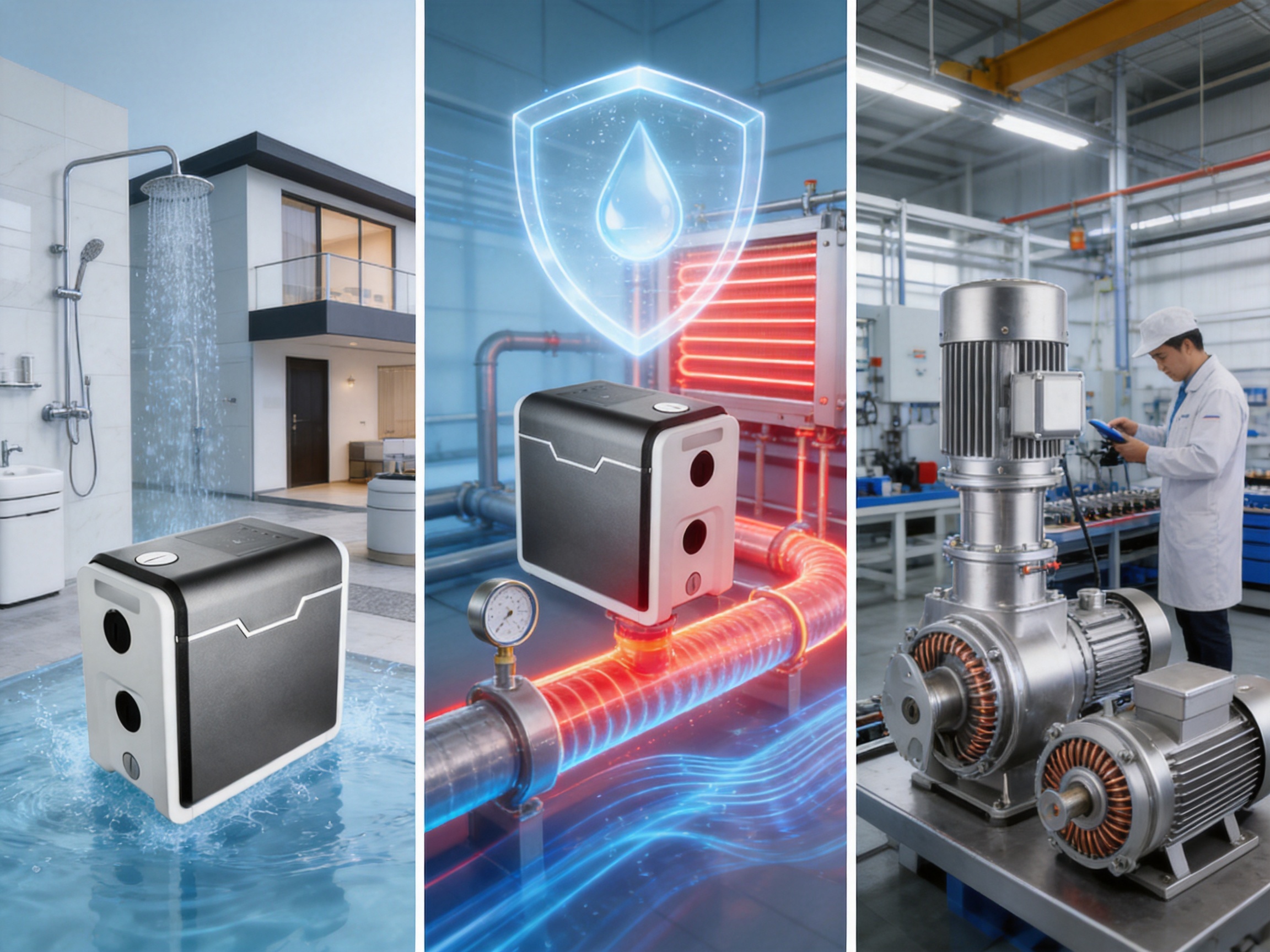
Regular maintenance helps preserve pump efficiency and reliability. Inspection frequency depends on water quality, operating hours, temperature, installation environment, and application criticality. A domestic pump may require less frequent service than a commercial circulation system operating continuously.
Inspect the pump for external leakage, unusual vibration, abnormal noise, corrosion, loose connections, and display warnings. Check whether the pump starts and stops normally and whether the pressure remains stable. A gradual reduction in flow may indicate a blocked filter, clogged pipe, worn impeller, air leakage, check valve problems, or changes in the water source.
Filters and strainers should be cleaned according to the condition of the water. Sediment can restrict flow and increase the load on the pump. If the system contains hard water, mineral deposits may accumulate on valves, sensors, or hydraulic components. Cleaning procedures should follow the material and safety requirements of the installation.
The suction side deserves special attention. Air leaks may not produce visible water leakage, but they can cause loss of prime, unstable pressure, noise, and dry-run protection events. Inspect threaded joints, seals, valve seats, and pipe connections if the self-suction function becomes unreliable.
The pump should be disconnected from power before inspection or service. Hot water systems must be allowed to cool, and pressure must be released safely. Replacement parts should be compatible with the HGZ15/45EA-A design. Unauthorized modifications to the motor, controller, sensors, or protection system may reduce safety and invalidate product support.
Many existing buildings have water systems designed for older usage patterns. Demand may have increased because of additional bathrooms, appliances, production equipment, or changes in occupancy. Replacing a fixed-speed booster with an intelligent variable-speed model can improve pressure control without requiring a complete redesign of the water network.
The compact construction of the HGZ15/45EA-A makes it suitable for many retrofit situations. Its 1-inch connections can fit common small-system pipe layouts, although adapters may be required depending on the existing installation. Self-suction capability can simplify installation where the pump cannot be installed directly below a flooded water source.
The pump’s multifunction design may also reduce equipment count. A system that needs both boosting and circulation can potentially use one pump platform rather than separate basic pumps, subject to hydraulic and thermal requirements. Fewer components can simplify control and reduce space requirements, but the complete application must always be evaluated by a qualified designer.
Intelligent protection is another advantage in retrofit environments. Existing systems may have limited monitoring or inconsistent water supply. Dry-run, undervoltage, temperature, stall, and leakage protection can improve operational resilience where water or electrical conditions are not perfectly stable.
For distributors, the HGZ15/45EA-A offers several product features that are easy to communicate to end users: energy-saving permanent magnet technology, VFD speed control, self-suction operation, quiet performance, hot and cold water compatibility, temperature control, and multiple protection functions. These features support positioning in the smart home, domestic water supply, small commercial, and circulation markets.
For engineering contractors, the product provides a compact integrated solution that can reduce control complexity. The built-in intelligent functions may eliminate the need for some external control devices in suitable systems. However, contractors should still evaluate whether additional expansion tanks, pressure sensors, check valves, isolation valves, filters, or control panels are required for the specific project.
For original equipment manufacturers, the pump’s compact form and intelligent control may be suitable for integration into packaged water systems, thermal equipment, small pressure units, and specialized circulation assemblies. OEM buyers should confirm electrical interfaces, operating parameters, mounting requirements, communication needs, and customization possibilities before placing volume orders.
For international buyers, Edwin Pump’s experience in global export and procurement coordination can support project planning and delivery. The company’s broader product range can also help buyers source multiple pump categories from one manufacturing partner, potentially simplifying supplier management and shipment coordination.
A surface pump without self-suction capability may require more careful priming and may be less convenient in systems where air enters the suction pipe. The HGZ15/45EA-A is advantageous in such situations because its self-suction function can assist with water absorption and restarting.
A traditional fixed-speed booster pump may have a lower initial cost in some markets, but its operating efficiency can be less favorable when demand changes frequently. The HGZ15/45EA-A adds VFD and permanent magnet technology to provide more flexible operation and potentially lower energy consumption over the product’s service life.
A basic circulation pump may be suitable when only constant circulation is required. The HGZ15/45EA-A becomes more attractive when the system also requires pressure boosting, temperature-based control, self-suction, or intelligent adaptation.
A large commercial multistage pump may provide greater capacity for high-flow projects, but it can be excessive for small domestic and light commercial applications. The HGZ15/45EA-A is designed for a more compact duty range, helping avoid over-sizing where the required flow is moderate.
A submersible pump is appropriate when the pump must operate inside a well, tank, or submerged water source. The HGZ15/45EA-A is instead intended for surface installation and is better suited to boosting and circulation systems where the pump must remain accessible for control and maintenance.
These comparisons do not mean that one pump type is universally better than another. The correct product depends on the water source, flow, pressure, temperature, installation position, fluid quality, and operating schedule. The HGZ15/45EA-A offers its strongest advantages where intelligent, quiet, self-suction surface pumping is required.
The main function is to provide intelligent water pressure boosting with self-suction capability. It can also support circulation applications and temperature-controlled water movement.
The rated power is 600 W.
The maximum head is 45 m. The actual head available at a particular flow depends on the system curve and the pump’s performance characteristics.
The rated flow is 0.8 m³/h. Actual flow varies according to pressure, pipe resistance, elevation, outlet demand, and operating speed.
The listed maximum suction lift is 8 m. Practical suction performance depends on atmospheric pressure, water temperature, pipe arrangement, air tightness, and other installation conditions.
The product is designed for hot and cold water compatibility. The actual water temperature and fluid conditions must remain within the manufacturer’s approved limits, and the complete system must use compatible materials and safety controls.
Yes. It is suitable for many domestic water pressure boosting applications, especially where demand changes frequently and low noise, compact size, and stable pressure are important.
Yes. The pump supports boosting and circulation models and includes temperature-control starting and stopping. The required circulation flow, system resistance, temperature, and fluid compatibility should be checked before selection.
The variable frequency drive adjusts motor speed according to demand and control requirements. This helps maintain pressure and flow while reducing the need for full-speed operation at all times.
A permanent magnet motor can provide high electrical efficiency and reduced motor losses under suitable operating conditions. When combined with VFD control, it can support energy-saving operation across changing demand conditions.
The stated full-load operating noise is below 55 dB under specified conditions. Actual sound levels depend on installation, pipe vibration, water conditions, mounting, and operating point.
The pump body is made of SUS 304 stainless steel, while the impeller is made of PPO. The check valve is made of brass.
Yes. Waterless operation protection is included among the comprehensive protection functions. Correct water supply and commissioning are still essential.
Yes. Water leakage protection is included. Users should still inspect the pump and connected pipes regularly.
The connection size is 1 inch.
The pump is manufactured by Taizhou Edwin Electric Co., Ltd., also known as Edwin Pump. The company specializes in pump research, production, export, and one-stop water equipment supply.
The manufacturer serves applications including new energy projects, agricultural irrigation, municipal engineering, mining, construction, HVAC systems, household water supply, and other water management fields.
Maintenance should include checking for leakage, abnormal noise, vibration, pressure changes, clogged filters, suction-side air leaks, warning signals, and unusual temperature. The pump must be isolated from power and pressure before service.
No. The pump is designed for its specified performance range. Larger commercial or industrial systems may require multiple pumps or a different pump type. Selection should be based on the complete hydraulic duty.
The HGZ15/45EA-A Series Energy Saving Self-Suction Intelligent Adaptive VFD Permanent Magnet Booster Pump combines several technologies that address the most common weaknesses of conventional booster systems. Its permanent magnet motor supports efficient operation, while VFD control allows the pump to adapt to changing demand. Self-suction capability simplifies operation in suitable surface installations, and intelligent pressure and flow control help maintain more stable water delivery.
Its shielded and water-cooled construction is designed for quieter operation, with a stated full-load noise level below 55 dB under specified conditions. Temperature-controlled starting and stopping extends the product’s usefulness to hot water circulation and thermal management systems. Integrated stall, undervoltage, temperature, waterless operation, and leakage protection provide additional support for reliable operation.
The material selection is practical for the intended applications, including a SUS 304 stainless steel pump body, PPO impeller, brass check valve, copper stator winding, and silicon steel motor components. These details, combined with intelligent sensing and control, create a compact pump platform for domestic, commercial, circulation, and retrofit projects.
Behind the product is a manufacturer with experience in research and development, mass production, export, and multiple pump categories. Taizhou Edwin Electric Co., Ltd. has developed its capabilities since 2008 and has expanded into intelligent and new-energy pumping technologies. Its manufacturing and supply chain structure supports customers seeking both individual pump models and coordinated water system procurement.
For buyers searching for a quiet, energy-conscious, self-suction, and intelligent booster pump, the HGZ15/45EA-A provides a balanced solution. The best results will be achieved when the pump is correctly selected, professionally installed, operated within its rated conditions, and maintained according to the manufacturer’s requirements.
1. Taizhou Edwin Electric Co., Ltd., HGZ15/45EA-A Series Product Description and Performance Data.
2. Taizhou Edwin Electric Co., Ltd., Product Material and Component Specification Information.
3. General centrifugal pump selection principles covering flow, head, suction lift, system resistance, and pump performance curves.
4. General variable frequency drive application principles for centrifugal pump energy management.
5. General permanent magnet motor design principles and motor efficiency considerations.
6. General pump installation and maintenance practices for surface-mounted self-suction water pumps.
7. General water system design practices for domestic pressure boosting, hot water circulation, and HVAC circulation.
edwina@edwin-pump.com
+86-13586290903 (WhatsApp)
Xuri Gongliang Cutting Tool Entrepreneurship Park, Wenqiao Town, Wenling City, Taizhou City, Zhejiang Province, China

High Performance Smart Pump Factory


 English