edwina@edwin-pump.com

View All Products
en
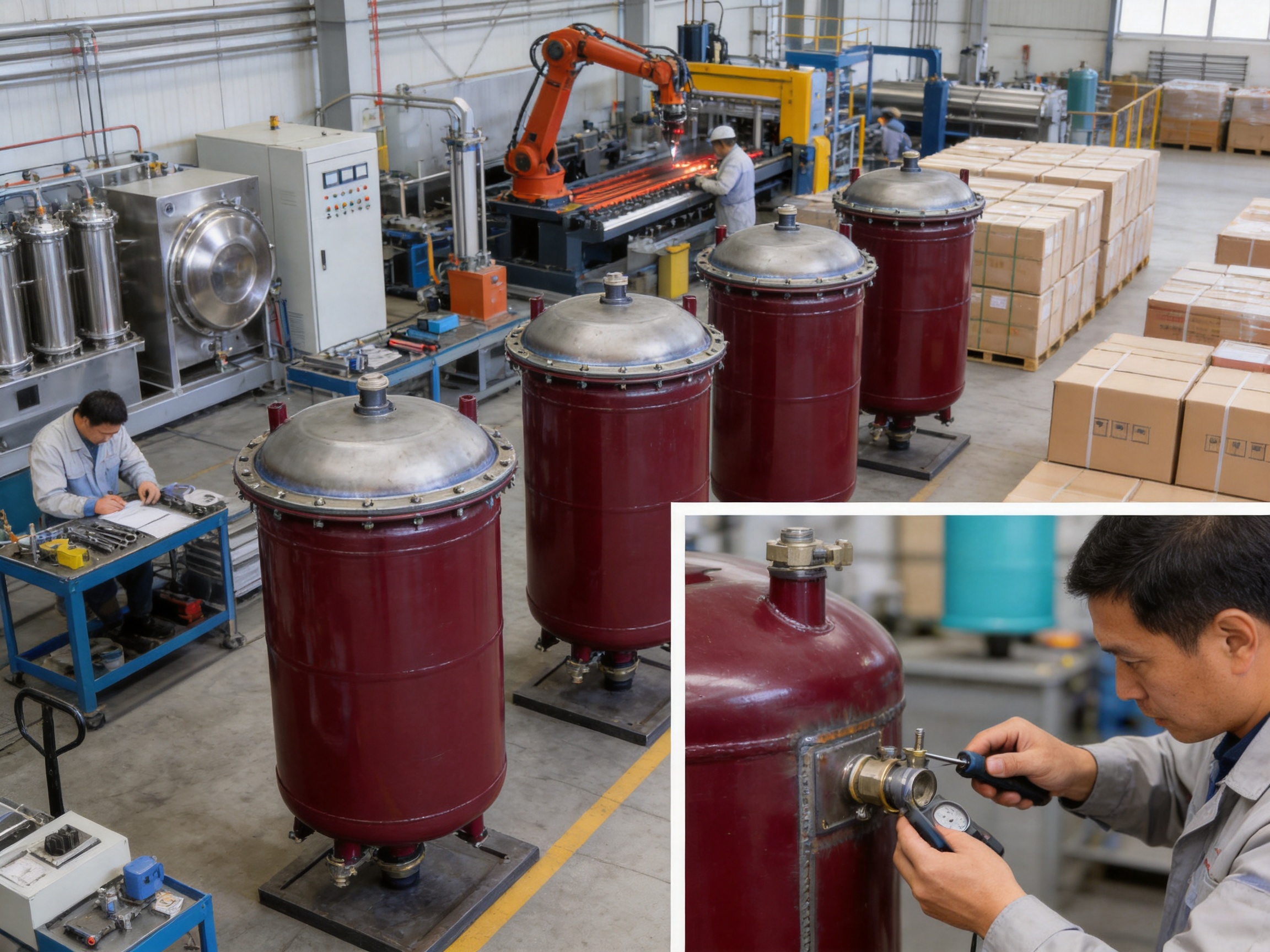
Vertical pressure tanks play an important role in solar thermal installations, boiler systems, heating circuits, and compact water-management equipment. Although a pressure tank is often a relatively small component, its design can influence system stability, pump operating frequency, pressure fluctuations, maintenance requirements, and the service life of connected equipment. The VT2 Series Vertical Tank is designed as a compact carbon steel diaphragm expansion tank for applications where dependable pressure compensation and efficient use of installation space are required.
The product combines a carbon steel tank body, a fixed diaphragm membrane, a factory pre-charge pressure of 1.5 bar, and a maximum working pressure of 3.5 bar. With EPDM membrane material suitable for working temperatures from -10°C to 99°C, the tank is intended for thermal systems, boiler systems, and solar systems. Its vertical structure and compact dimensions make it suitable for equipment assemblies where installation space is limited but pressure-control performance remains important.
Manufactured by Taizhou Edwin Electric Co., Ltd., the VT2 Series reflects the company’s experience in pump production, water-system components, export manufacturing, and product development. The company has operated since 2008 and has developed capabilities covering research and development, production, inspection, packaging, order coordination, and international delivery. These capabilities support the production of pressure tanks that can be supplied as individual components or included in broader pump and water-treatment procurement programs.
A pressure tank is a storage and pressure-balancing device installed in a hydraulic or thermal system. Inside the tank, a diaphragm separates the system fluid from a compressed gas charge. As the temperature or pressure of the system fluid changes, the diaphragm moves. This movement allows the tank to absorb expansion, support pressure stability, and reduce the effect of sudden changes in fluid volume.
In a solar thermal system, fluid temperature can vary considerably between periods of sunlight and periods of low solar radiation. When the fluid is heated, it expands. Without a correctly selected expansion tank, the increased volume can cause excessive pressure, unnecessary activation of safety valves, leakage, or stress on pipes and fittings. The VT2 Series is designed to provide a controlled space for this fluid expansion.
In boiler and heating systems, the tank can also help compensate for the natural expansion and contraction of water as the system heats and cools. In certain compact water systems, a pressure tank may reduce short cycling by allowing a small amount of water to be delivered without immediately starting a pump. The specific function depends on system design, installation position, fluid type, operating pressure, and the calculation performed by the system designer.
The tank does not replace a safety valve, temperature-control device, pressure switch, flow-control device, or other required protection. Instead, it works as one component within a properly engineered system. Correct sizing, correct pre-charge adjustment, suitable installation, and regular inspection are essential for safe and efficient operation.
The VT2 Series is a vertical carbon steel pressure tank with a fixed diaphragm membrane. The product range presented for this series includes VT2-2 and VT2-3 models. Both models use a 1.5 bar pre-charge pressure and a 1/2-inch connector. Their compact dimensions allow them to be integrated into smaller solar, heating, and boiler assemblies.
| Model | Diameter | Height | Pre-charge Pressure | Connector | Packing Information |
|---|---|---|---|---|---|
| VT2-2 | 110 mm | 222 mm | 1.5 bar | 1/2 inch | 0.0625 CBM / 20 pieces |
| VT2-3 | 106/116 mm | 192 mm | 1.5 bar | 1/2 inch | 0.0520 CBM / 20 pieces |
The specified maximum working pressure is 3.5 bar. The working temperature range is -10°C to 99°C when the EPDM membrane is used under appropriate operating conditions. The fixed diaphragm design separates the gas chamber from the system fluid chamber, helping prevent direct contact between the fluid and the tank’s gas charge.
Because the product is compact, it can be considered for installations where a large floor-standing tank is not practical. The small footprint is particularly useful in prefabricated solar water-heating units, wall-mounted boiler assemblies, pump-room packages, domestic heating equipment, and other systems in which every millimeter of installation space matters.
The fixed diaphragm is one of the central features of the VT2 Series. A diaphragm creates a flexible barrier between the gas side and the fluid side of the tank. When system pressure rises, the fluid pushes against the membrane and compresses the gas. When system pressure decreases, the compressed gas pushes the membrane back toward the fluid side. This repeated movement allows the tank to accommodate pressure changes during normal operation.
A fixed membrane configuration offers a straightforward structure with a limited number of internal components. This can simplify production, reduce internal complexity, and support consistent assembly. Since the diaphragm is fixed in position, the design is suited to compact tanks where a replaceable bladder system would add unnecessary size or complexity.
The separation created by the membrane is also important for system cleanliness. The gas charge remains isolated from the system fluid, while the fluid remains within the designated water or thermal-fluid chamber. This arrangement can help reduce aeration and maintain more predictable pressure behavior compared with an open or unseparated chamber.
The membrane material specified for the product is EPDM. EPDM is widely used in water, heating, and solar-related applications because it offers useful resistance to water, weathering, ozone, and temperature variation. However, material compatibility must always be confirmed against the actual system fluid. The use of additives, glycol concentrations, chemicals, or fluids outside the intended application may affect membrane life and should be reviewed before installation.
The tank body is made from carbon steel. Carbon steel is commonly selected for pressure vessels and expansion tanks because it provides a practical combination of mechanical strength, manufacturability, availability, and cost efficiency. For a compact tank operating within a specified pressure range, carbon steel can provide a reliable structural enclosure when it is formed, joined, inspected, and finished correctly.
The carbon steel construction also supports efficient mass production. Steel components can be cut, shaped, formed, welded, and finished using repeatable manufacturing procedures. Consistent production methods are especially important for pressure-related components because dimensional accuracy and weld integrity influence the ability of the tank to withstand its intended operating conditions.
A carbon steel tank requires suitable external protection according to the installation environment. The tank should be kept away from prolonged exposure to corrosive chemicals, standing water, and conditions beyond its specified service range. The product should be installed in a location that allows inspection and protects the tank from impact, freezing conditions outside the rated range, and unauthorized pressure adjustment.
The choice of carbon steel offers an economical alternative to higher-cost materials for applications that do not require stainless steel construction. Compared with a stainless steel tank, a carbon steel tank may provide a more attractive purchasing cost for large projects, replacement programs, and original equipment manufacturer applications. At the same time, it remains important for the purchaser to select the correct material for the fluid, environment, and applicable regulations.
The VT2 Series is supplied with a pre-charge pressure of 1.5 bar. Pre-charge is the gas pressure established inside the tank before the tank is connected to the system. This pressure influences how quickly the diaphragm responds to changes in system pressure and how much usable expansion volume is available.
A factory-set pre-charge provides a consistent starting point for system installation. It reduces the amount of preparation required before a tank is connected, especially in standardized equipment packages. The installer should nevertheless verify the pre-charge according to the system manufacturer’s instructions, because the correct value may depend on static pressure, installation height, operating pressure, fluid temperature, and the requirements of the complete system.
Pre-charge should be checked only when the tank is isolated from the system and the fluid pressure has been safely released. Measuring the gas pressure while the tank is still under system pressure may produce misleading results. Any adjustment should be carried out by trained personnel using suitable equipment and following applicable safety procedures.
The 1.5 bar value is particularly relevant for the intended compact thermal and solar applications. It provides a defined gas-side operating condition while allowing the tank to respond to fluid expansion within its working pressure limits. System designers should not assume that one pre-charge value is suitable for every installation. Correct engineering remains necessary for different building heights, circuit pressures, and fluid temperatures.
The stated maximum working pressure of the VT2 Series is 3.5 bar. This rating defines the highest pressure under which the tank is intended to operate during normal service. The pressure rating should not be confused with a test pressure, burst pressure, or emergency relief setting. A suitable safety valve must be installed to protect the system from abnormal pressure conditions.
The product’s specified working temperature range is -10°C to 99°C with an EPDM membrane. This range makes the tank suitable for many conventional heating, boiler, and solar thermal applications. The upper temperature limit is important because membrane performance, gas pressure, and system volume all change as temperature increases. Operating beyond the stated range may shorten component life or create unsafe conditions.
Solar systems may experience temperature changes more rapidly than ordinary domestic water systems. During periods of strong sunlight, stagnation, circulation interruption, or low demand, the temperature inside parts of a solar circuit can rise significantly. For that reason, the installer should consider the maximum possible temperature, the type and concentration of heat-transfer fluid, the location of the tank, and the operation of safety devices.
The temperature rating also demonstrates why correct tank positioning matters. The expansion tank should be installed in accordance with the system design so that it is not unnecessarily exposed to the hottest fluid or to conditions that exceed its rated capability. Isolation valves, service access, and suitable pipe routing can assist with maintenance and improve long-term reliability.
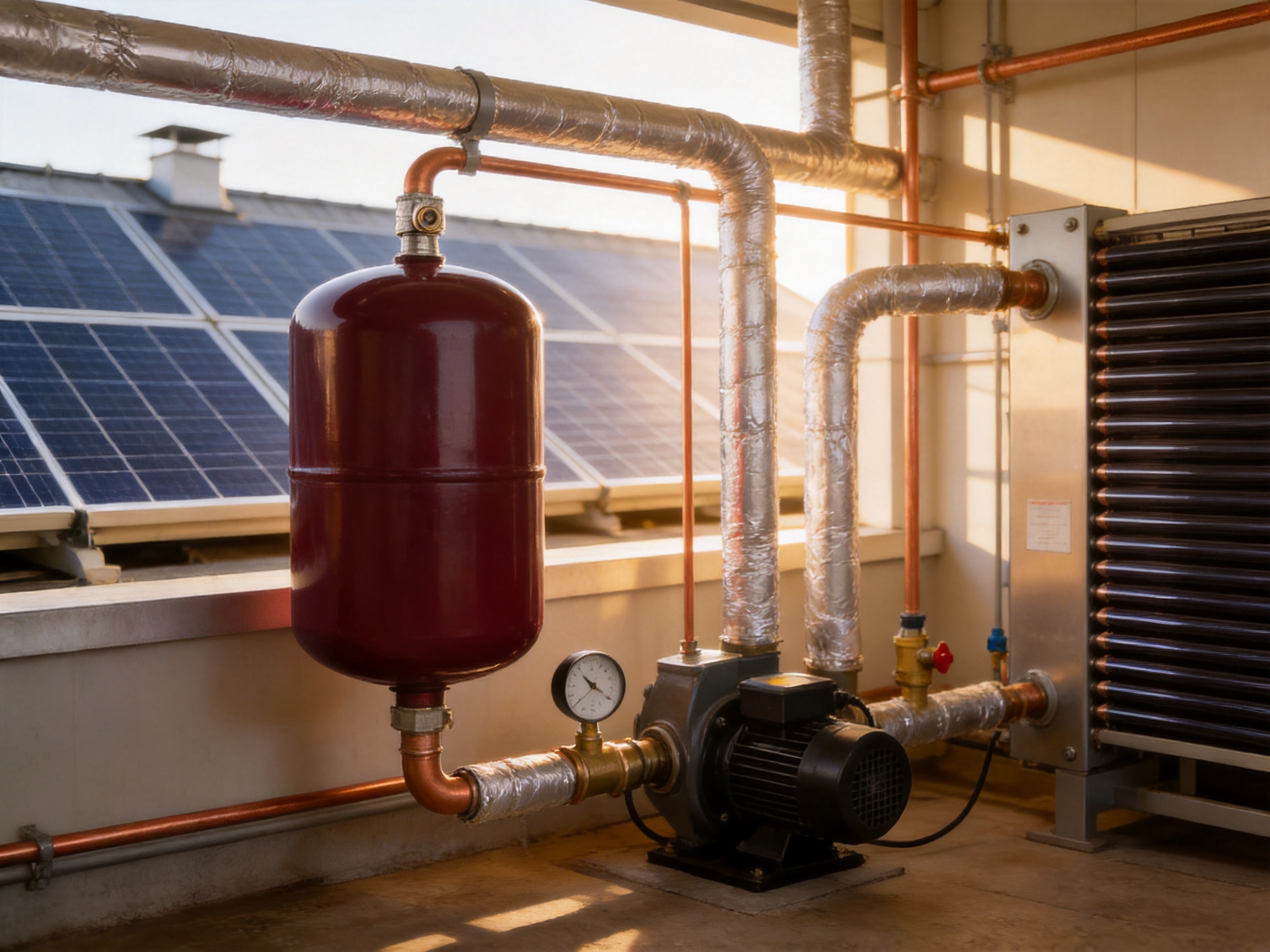
Solar thermal systems require components that can accommodate changing temperatures and variable operating conditions. During the day, solar collectors can transfer heat into the circulation loop. At night, the fluid cools and contracts. The VT2 Series provides a dedicated expansion volume for these regular changes, helping the system maintain more stable pressure during thermal cycling.
The compact vertical format is advantageous in solar water-heating equipment where the tank may be installed near a pump station, heat exchanger, controller, or storage-cylinder connection. The product can be incorporated into packaged assemblies without occupying the floor area required by a larger horizontal tank.
Another advantage is the combination of a fixed diaphragm and EPDM membrane. Solar thermal systems require separation between the gas charge and circulating fluid. The membrane supports this separation while allowing the gas to be compressed and released as the system volume changes. This makes the product suitable for many small and medium compact solar circuits, subject to professional sizing.
The 3.5 bar maximum working pressure also provides a defined operating boundary for designers. A clear pressure rating helps the installer coordinate the tank with pressure-relief valves, pumps, pipework, collectors, heat exchangers, and other circuit components. The tank should always be selected as part of the complete pressure-control strategy rather than as an isolated accessory.
In comparison with generic low-cost tanks that may provide limited application information, a product with clearly stated membrane material, pre-charge, connector size, pressure rating, and temperature range gives buyers a more useful basis for system planning. This information can simplify technical communication between manufacturers, wholesalers, installers, and project engineers.
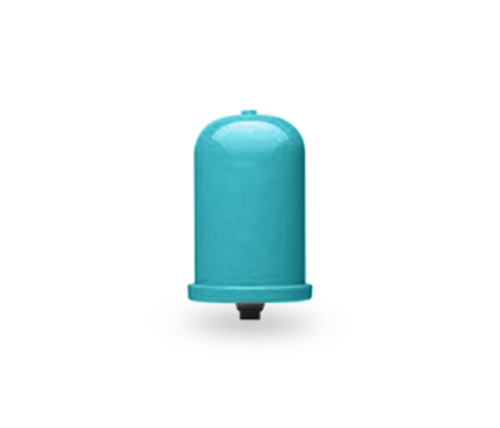
VT2 Series Vertical Tank for Solar System
Heating systems experience repeated changes in water temperature. As water becomes warmer, its volume increases. When the water cools, its volume decreases. If these changes are not managed, pressure may fluctuate unnecessarily, creating stress on valves, seals, heat exchangers, and pipe connections.
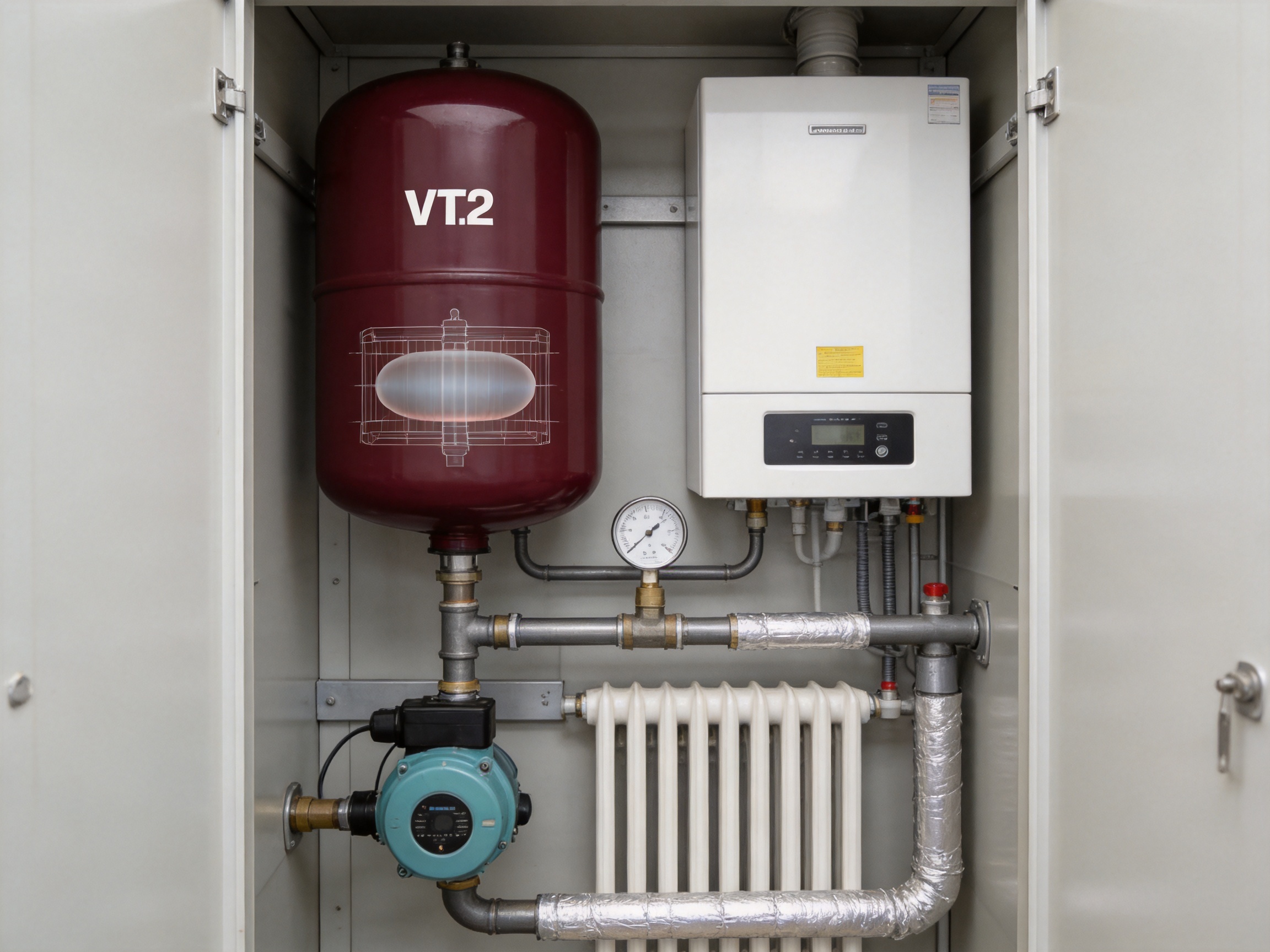
The VT2 Series can be installed as an expansion tank in suitable boiler and heating applications. Its gas chamber provides compressible volume, while the diaphragm allows the tank to respond to changes in the system water volume. This can help reduce the frequency of pressure-relief events and support more stable system operation when the tank is correctly sized and installed.
The compact dimensions are helpful in wall-mounted heating packages and equipment cabinets. Many modern boilers and heating modules place multiple components in a restricted enclosure. A vertical tank with a small diameter can be easier to position than a larger vessel, especially when the manufacturer is designing a standardized package for residential or light commercial markets.
The 1/2-inch connector is compatible with many compact pipe arrangements and can simplify connection to small heating circuits. The final connection method must still follow the project design, local codes, sealing requirements, and the installer’s professional judgment. Thread compatibility, pipe support, isolation provisions, and access for inspection should all be considered.
Compared with an unprotected fixed-volume arrangement, an expansion tank adds a controlled response to changing fluid volume. Compared with an oversized tank, the compact VT2 format may reduce cost, weight, packaging volume, and installation space. The most important advantage is achieved when the tank is accurately matched to the system volume and operating conditions.
Pressure tanks on the market can vary substantially in membrane material, tank construction, pre-charge consistency, connector design, surface treatment, packaging, and technical documentation. The VT2 Series is positioned as a focused product for thermal, boiler, and solar applications rather than as an undefined general-purpose vessel.
One advantage is the clear combination of application information and operating limits. The product documentation identifies the intended systems, the fixed diaphragm structure, the carbon steel tank material, the factory pre-charge, the maximum working pressure, and the EPDM temperature range. This makes it easier for distributors and installers to compare the tank with system requirements before purchase.
A second advantage is the compact vertical structure. Some competing products may be physically larger or designed in a horizontal format. The vertical arrangement can help equipment manufacturers make better use of narrow installation spaces. It may also allow the tank to be placed beside a pump, controller, or pipe manifold without extending the equipment package excessively.
A third advantage is manufacturing suitability for original equipment manufacturers. The product is available with OEM support, allowing buyers to discuss packaging, labeling, order quantities, technical coordination, and product integration. OEM support is valuable for pump manufacturers, solar equipment assemblers, boiler companies, wholesalers, and project suppliers that need a repeatable component rather than a one-time retail purchase.
A fourth advantage is packaging efficiency. The listed packing volumes of 0.0625 cubic meters for 20 VT2-2 units and 0.0520 cubic meters for 20 VT2-3 units provide useful information for logistics planning. Efficient packing can reduce warehouse space, improve container utilization, and support more predictable export arrangements.
These advantages should not be interpreted as a claim that one tank is suitable for every application. Tank selection must always be based on actual system volume, fluid properties, temperature range, operating pressure, applicable standards, and installation conditions. The strength of the VT2 Series is its focused design and clearly defined technical profile.
Taizhou Edwin Electric Co., Ltd. was founded in 2008 and operates as an integrated manufacturing enterprise. Its activities include independent research and development, mass production, and global export. This integrated model is important because pressure tanks must be managed through more than a simple assembly process. Product performance depends on material selection, forming accuracy, welding quality, membrane installation, pressure control, inspection, packaging, and traceability.
The company’s broader product portfolio includes deep well pumps, submersible pumps, domestic booster pumps, circulation pumps, solar water pumps, intelligent booster pumps, and related water-system products. This experience gives the manufacturer an understanding of the conditions in which pressure tanks are used. A tank may be supplied as a standalone component, but it is often integrated into a pump station, heating package, solar circulation unit, or complete water system.
An advanced manufacturing process begins with controlled material procurement. Carbon steel material must be selected according to the intended forming and welding requirements. Incoming material checks can include verification of dimensions, surface condition, and documentation. Consistent material control helps maintain repeatable tank geometry and reduces variation between production batches.
Forming is another important stage. Tank components must be shaped accurately so that mating surfaces, connection openings, and welded sections align correctly. Proper forming supports a consistent internal volume and reduces unnecessary stress during assembly. In mass production, jigs and fixtures can help maintain repeatable positioning and improve production efficiency.
Welding quality is especially important in a pressure-related product. Welded joints must provide structural continuity and resist leakage under the specified operating conditions. A controlled welding process can include defined parameters, trained operators, fixture control, visual inspection, and selected pressure or leak tests. The exact inspection program should correspond to the product design, applicable standards, and customer requirements.
After the tank body is assembled, the diaphragm and connector components must be installed accurately. The fixed membrane needs to be positioned so that it can move correctly during pressure changes without being damaged by sharp edges, incorrect assembly, or excessive deformation. The gas-side valve and fluid-side connector must also be installed and checked for secure attachment and sealing performance.
Surface treatment and finishing contribute to product protection and presentation. A suitable coating or finish can help protect the carbon steel exterior from normal handling and environmental exposure. Consistent finishing also supports brand presentation for OEM customers that incorporate the tanks into their own systems.
Final inspection can cover dimensions, connector position, appearance, pre-charge pressure, leakage, labeling, and packaging. The specific inspection points may vary by model and order. A professional production system records key results so that recurring issues can be identified and corrected rather than repeated across future batches.
Independent research and development allows a manufacturer to adapt product designs to changing market requirements. Solar thermal equipment, compact heating systems, domestic water packages, and intelligent pump units often require components with different dimensions, pressure ranges, connection arrangements, or packaging methods.
Development work may include evaluating new membrane materials, improving assembly fixtures, refining tank geometry, adjusting pre-charge procedures, and optimizing packaging. It can also involve coordinating the tank with pumps, valves, controllers, and pipe fittings so that the final equipment package operates as a coordinated system.
The company’s investment in new energy and intelligent technology since 2018 is relevant to the development of modern water-system products. Solar water pumps and intelligent booster pumps require reliable hydraulic accessories that support automated operation. A pressure tank can contribute to the stability of such systems when it is properly selected and connected.
For OEM customers, product integration is often as important as the basic tank specification. The tank may need to fit within a specific enclosure, match a private-label product range, use defined packaging, or be ordered according to a recurring production schedule. OEM support enables communication about these requirements before mass production begins.
A manufacturer with experience in both components and complete pump categories can also provide more practical technical communication. Buyers can discuss the pressure tank in relation to pump flow, head, switching frequency, thermal conditions, and system layout rather than treating the tank as an isolated commodity.
For international buyers, production capability must be supported by export readiness. A technically suitable tank is only useful if it can be produced consistently, packed securely, documented clearly, and delivered according to the purchasing schedule.
Taizhou Edwin Electric Co., Ltd. has established related import and export service companies to support procurement planning, order tracking, cross-border delivery, and foreign trade services. This structure is intended to provide a one-stop purchasing experience for customers that may need multiple water-system products from one supply network.
Export-oriented manufacturing requires attention to packaging design. The VT2 Series packing information indicates that multiple units can be grouped within defined carton volume. Suitable internal protection can help reduce the risk of scratches, connector damage, or movement during transport. Clear model identification is also useful for warehouse handling and receiving inspection.
Order tracking is particularly important for OEM customers and project suppliers. Solar and heating equipment production is often scheduled around seasonal demand, construction milestones, or container consolidation. A supplier that can coordinate production status, packaging information, and shipping preparation helps the buyer reduce uncertainty in the supply chain.
International customers may also require documents such as product specifications, packing lists, invoices, inspection records, or customized labels. These requirements should be confirmed before the order is finalized. The manufacturer’s export experience provides a foundation for managing such requests, while the final documentation depends on the destination market and contract terms.
The VT2 Series should be installed by qualified personnel familiar with pressure systems, solar thermal equipment, boilers, or heating circuits. Before installation, the installer should confirm the tank model, connector size, pressure rating, temperature rating, membrane compatibility, and pre-charge requirement.
The tank should be installed in a location that is accessible for inspection and service. The surrounding space should permit visual examination of the tank body, connector, gas valve, and pipe connection. The tank should not be placed where it can be struck by moving equipment or exposed to uncontrolled heat, corrosive substances, or persistent moisture.
The connection should be supported so that the tank does not carry excessive pipe weight or mechanical stress. Threaded connections should be sealed using a method suitable for the system and the fluid. Over-tightening can damage threads or the connector, while insufficient tightening can result in leakage. The correct tools and torque practices should be used.
A suitable isolation arrangement may be useful where permitted by the system design. Isolation can make inspection or replacement easier, but any isolation valve must not create an unsafe condition by disconnecting the expansion tank from a protected circuit without an appropriate operating procedure. Safety valves and other protective equipment must remain correctly positioned and functional.
The initial system fill pressure should be established according to the system design. The tank’s 1.5 bar pre-charge is an important reference value, but it does not automatically define the fill pressure for every installation. Static height, system pressure, pump characteristics, operating temperature, and safety-valve settings must be considered together.
After installation, the system should be checked for leaks, correct pressure response, proper circulation, and safe operation under expected temperature conditions. In solar systems, commissioning should include consideration of collector stagnation, circulation failure, thermal-fluid expansion, and the operation of the relief system.
Expansion tanks generally require less maintenance than pumps or moving mechanical equipment, but regular inspection remains important. The tank body should be visually inspected for corrosion, damage, coating failure, leakage, or deformation. The connector and surrounding pipework should also be checked for signs of moisture or seal failure.
Pre-charge pressure should be checked at suitable service intervals and whenever the system shows unusual pressure behavior. A loss of pre-charge can reduce the tank’s effective expansion capacity. The check should be carried out safely with the tank isolated and the fluid side depressurized according to the correct procedure.
If the tank repeatedly loses pre-charge, the gas valve, membrane, tank body, and connection should be investigated. Continued operation without identifying the cause may lead to unstable pressure, frequent relief-valve discharge, or premature component wear.
The membrane is a service component subject to temperature, pressure, fluid compatibility, and cycling. Its service life depends on actual operating conditions. If the tank shows signs of internal failure, leakage, persistent pressure loss, or abnormal system behavior, it should be removed from service and assessed by qualified personnel.
Maintenance records can be useful for commercial installations, solar projects, and equipment manufacturers. Records may include installation date, model, pre-charge verification, inspection findings, pressure readings, and replacement history. This information helps identify changes in system behavior and supports preventive maintenance planning.
The VT2 Series can be considered for a variety of applications in which a compact diaphragm expansion tank is required within the stated operating limits. Solar water-heating systems are a primary application because the tank can accommodate temperature-related volume changes in a closed thermal circuit.
Boiler systems may also use the product to manage the expansion of heated water. Small heating units, wall-mounted boilers, and packaged hot-water equipment can benefit from a compact tank that fits within a restricted equipment space.
Residential heating systems, including selected hydronic circuits, may use a pressure tank to stabilize pressure during normal heating and cooling cycles. The correct tank size must be calculated based on the water volume and operating temperature of the complete system.
Light commercial heating and thermal equipment can use multiple tanks or standardized tanks in modular equipment designs. OEM buyers may integrate the product into packaged systems intended for hotels, apartments, commercial buildings, agricultural facilities, and small industrial installations.
The tank may also be relevant to pump accessories and water-treatment equipment when the operating conditions fall within the product’s specifications. However, the tank should not be used with incompatible fluids or in systems that exceed the pressure and temperature limits.
Purchasing teams should provide complete application information when requesting a quotation. Useful information includes the intended system, fluid type, normal and maximum temperature, normal and maximum pressure, required quantity, connection arrangement, packaging requirements, destination market, and any certification or labeling needs.
OEM customers may also need customized cartons, product labels, manuals, color requirements, or model codes. These details should be reviewed before production to avoid delays or packaging changes after manufacturing has started.
For larger projects, buyers may request samples or pre-production confirmation. A sample can help verify dimensions, connection position, packaging, and integration with the customer’s equipment. Any sample approval should be documented so that mass production can follow the agreed specification.
Technical communication is especially important where the tank will be installed in a solar system with glycol-based fluid, a high-temperature boiler circuit, or an automated pump package. The customer and manufacturer should confirm whether the specified EPDM membrane and carbon steel construction are appropriate for the actual operating fluid and environment.
Taizhou Edwin Electric Co., Ltd. supports global customers through its manufacturing, export, and product-development capabilities. Its wider product range allows buyers to coordinate pressure tanks with pumps and other water-system products. This can reduce the number of suppliers involved in a project and simplify procurement planning.
A pressure tank may appear simple from the outside, but reliable performance depends on consistency inside the production process. A poorly controlled forming operation can create dimensional variation. An inconsistent weld can cause leakage or reduce structural reliability. Incorrect membrane installation can affect pressure response. An inaccurate pre-charge can change the tank’s performance from the beginning of service.
Manufacturing strength matters because it converts a technical drawing into a repeatable product. Research and development defines the design, production engineering creates the process, inspection verifies conformity, and export operations ensure that the product reaches the customer in usable condition.
The manufacturer’s experience in mass-producing pumps and related components provides a foundation for managing production volume. Pump products require coordination of motor components, hydraulic bodies, seals, electrical parts, testing, and packaging. This background is relevant to the disciplined production of pressure tanks and their integration into complete water-system solutions.
Global customers also benefit from a supplier that understands different purchasing models. Some customers buy replacement components, while others purchase complete equipment packages. Some require standard products, while others need OEM labeling or private packaging. An integrated manufacturer can organize production and communication around these different requirements.
Responsible product selection requires recognizing the limits of the VT2 Series. The maximum working pressure is 3.5 bar, and the working temperature range is -10°C to 99°C with EPDM. Applications outside these limits require a different product or written technical confirmation.
The tank is not a substitute for a system safety valve. It does not control temperature, remove air, filter fluid, or regulate pump speed. It should be used together with all other protective and control components required by the installation design.
The stated dimensions and connector information should be verified against the latest technical drawing before equipment design or mass installation. Manufacturing tolerances, connection orientation, support requirements, and local installation standards may affect the final arrangement.
The correct expansion tank size depends on the total fluid volume and the pressure-temperature conditions of the system. A small tank may not provide sufficient expansion capacity, while an excessively large tank may increase cost and occupy unnecessary space. Professional calculation is therefore recommended for every project.
Fluid compatibility must also be checked. EPDM is suitable for many water-based applications, but not every chemical mixture. Glycol type, concentration, additives, cleaning agents, and contamination can influence membrane life. Buyers should provide complete fluid information when confirming an order.
The VT2 Series is designed as a carbon steel diaphragm expansion tank for thermal systems, boiler systems, and solar systems. It accommodates changes in fluid volume and helps support stable pressure when correctly sized and installed.
The tank uses a fixed diaphragm membrane. The specified membrane material is EPDM, with a working temperature range of -10°C to 99°C under the stated conditions.
The specified pre-charge pressure is 1.5 bar. The installer should verify the appropriate operating value for the actual system and should only check or adjust the gas pressure after safely isolating and depressurizing the tank.
The maximum working pressure is 3.5 bar. The system must also include suitable pressure-relief and safety devices designed for the complete installation.
The listed models are VT2-2 and VT2-3. The VT2-2 has a diameter of 110 millimeters and a height of 222 millimeters. The VT2-3 has a stated diameter of 106/116 millimeters and a height of 192 millimeters. Both use a 1/2-inch connector and a 1.5 bar pre-charge.
The vertical design can help save installation space in compact solar equipment, boiler packages, heating systems, and pump assemblies. It may be easier to integrate into narrow or organized equipment layouts than a larger horizontal tank.
No. Carbon steel is suitable for many applications, but the tank must be protected from corrosive environments, standing water, chemical exposure, and conditions beyond its design limits. The installation environment and fluid compatibility should be assessed before use.
It may be suitable for selected water-based solar fluids, but compatibility must be confirmed based on the exact glycol type, concentration, additives, temperature, and system conditions. The use of a particular fluid should not be assumed without technical verification.
No. The expansion tank and the safety valve perform different functions. The tank accommodates normal volume changes, while the safety valve protects the system against excessive pressure. Both may be required in a properly designed installation.
Yes. OEM support is available. Customers can discuss product integration, quantities, packaging, labeling, order planning, and other requirements with the manufacturer before production.
The tank should be isolated from the system and the fluid side should be safely depressurized before checking the gas-side pre-charge. Qualified personnel should perform the procedure using suitable pressure-measuring equipment.
The VT2 Series is manufactured by Taizhou Edwin Electric Co., Ltd., a Chinese manufacturer established in 2008 with experience in pumps, water-system products, research and development, mass production, and international export.
The VT2 Series Vertical Tank provides a focused solution for pressure compensation in solar, boiler, and thermal systems. Its fixed EPDM diaphragm, carbon steel tank body, 1.5 bar pre-charge, 3.5 bar maximum working pressure, and compact vertical configuration make it suitable for many space-conscious equipment designs.
Its main advantages include a clearly defined technical profile, efficient installation dimensions, separation of gas and system fluid, suitability for OEM integration, and packaging information that supports international logistics. Compared with generic alternatives, the product offers buyers a more transparent basis for evaluating pressure, temperature, membrane, connector, and application requirements.
The product is supported by a manufacturer with experience in independent research and development, mass production, pump manufacturing, intelligent water technology, export coordination, and global customer service. These capabilities are important because a reliable pressure tank depends not only on its design but also on controlled materials, accurate forming, reliable welding, correct membrane installation, consistent pre-charge, inspection, and secure packaging.
For best results, the VT2 Series should be selected as part of a complete system design. Qualified installers and engineers should confirm tank sizing, pressure settings, temperature conditions, fluid compatibility, safety equipment, and local requirements. When these factors are addressed correctly, the tank can provide dependable expansion support for compact solar and thermal water systems.
1. Product technical information for the VT2 Series Vertical Tank, including model dimensions, connector size, pre-charge pressure, working pressure, temperature range, and packing data.
2. Manufacturer information for Taizhou Edwin Electric Co., Ltd., including company history, product categories, research and development activities, manufacturing capabilities, and export services.
3. General engineering principles for diaphragm expansion tanks used in closed-loop heating and solar thermal systems.
4. General guidance on pressure-vessel installation, pre-charge verification, system safety valves, and thermal-fluid compatibility.
5. General technical information on EPDM elastomers used in water, heating, and thermal-system applications.
Manufacturer: Taizhou Edwin Electric Co., Ltd.
Product: VT2 Series Vertical Tank for Solar System
Product Category: Carbon Steel Pressure Tank
edwina@edwin-pump.com
+86-13586290903 (WhatsApp)
Xuri Gongliang Cutting Tool Entrepreneurship Park, Wenqiao Town, Wenling City, Taizhou City, Zhejiang Province, China

High Performance Smart Pump Factory


 English