edwina@edwin-pump.com

View All Products
en
Efficient water management is essential in agriculture, construction, municipal maintenance, industrial facilities, livestock operations, and residential properties. Whenever unwanted water, accumulated liquid, or drainage water must be removed quickly and safely, a dependable pump becomes a critical part of the system. The Submersible Sewage Pump SPA4 is designed for practical drainage and water-supply duties in environments where compact dimensions, simple operation, electrical safety, and dependable performance are important.
As a submersible drainage pump, the SPA4 operates while immersed in water. This arrangement allows the pump to remain close to the liquid source, reducing the need for long suction lines and helping simplify installation. The pump is intended for small electrical irrigation and drainage equipment and can be used in urban well-water pumping, field irrigation, garden irrigation, household water supply, and the removal of accumulated industrial water. It is also suitable for water supply and drainage in construction and livestock-breeding applications.
The SPA4 combines a copper-wound motor, a built-in thermal protector, Class B insulation, and an IPX8 protection rating. These features are important because a submersible pump must operate in a wet environment while managing heat generated by the motor. The maximum immersion depth is 5 meters, and the maximum liquid temperature is 40 degrees Celsius. Within these operating limits, the pump provides a practical solution for users who need portable or permanently positioned drainage equipment.
This article examines the construction, operating principles, applications, advantages, installation considerations, maintenance requirements, and manufacturing strengths associated with the SPA4. It also explains how the product fits into the broader capabilities of Taizhou Edwin Electric Co., Ltd., a manufacturer specializing in pumps for agricultural, residential, commercial, and industrial water-management requirements.
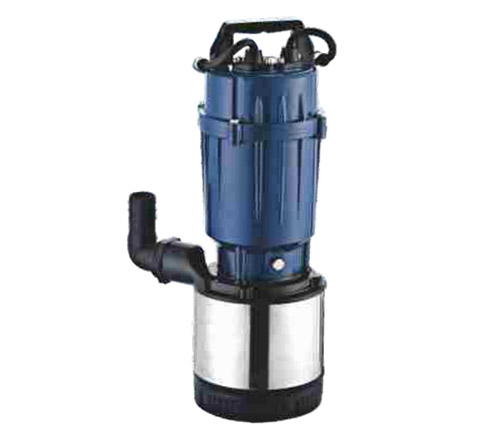
SUBMERSIBLE SEWAGE PUMP SPA4
The Submersible Sewage Pump SPA4 is an electrically driven pump designed to work below the surface of the liquid being handled. Instead of drawing water through a suction pipe from above the liquid level, the pump is placed directly in the water. The motor and hydraulic section are housed within a compact assembly, allowing the unit to transfer water through a connected discharge line.
This design offers several practical benefits. First, the pump does not normally require a separate priming procedure because the hydraulic section is already surrounded by liquid when installed correctly. Second, the short distance between the pump inlet and the liquid source can reduce suction-related difficulties. Third, the submersible structure can be useful in pits, tanks, wells, drainage areas, construction sites, and other locations where surface-mounted equipment would require additional pipework or a dedicated foundation.
The SPA4 is particularly suited to small-scale drainage and water-transfer duties. It can help remove standing water from work areas, transfer water for garden or field irrigation, drain accumulated water from industrial locations, and support water-supply tasks in rural or domestic settings. Its application range makes it suitable for users who need one practical pump for multiple routine water-handling jobs.
Although the pump is described as a sewage pump, application conditions must always be evaluated before installation. Users should confirm that the liquid is compatible with the pump materials and that the liquid does not contain solids, fibrous materials, chemicals, abrasive particles, or other contaminants beyond the pump’s intended operating conditions. Correct application selection is one of the most important factors in achieving long service life.
| Item | Specification |
|---|---|
| Product | Submersible Sewage Pump SPA4 |
| Maximum immersion depth | 5 meters |
| Maximum liquid temperature | 40 degrees Celsius |
| Motor winding | Copper winding |
| Thermal protection | Built-in thermal protector |
| Insulation class | Class B |
| Protection class | IPX8 |
| Primary function | Small-scale drainage, irrigation, and water transfer |
The listed specifications define the basic operating envelope of the SPA4. The maximum immersion depth indicates that the pump should not be installed deeper than 5 meters below the liquid surface. The maximum liquid temperature of 40 degrees Celsius identifies the upper recommended temperature for the handled liquid. Exceeding either limit may affect motor cooling, insulation performance, mechanical reliability, or overall service life.
A submersible pump uses an electric motor to rotate an impeller or hydraulic element inside the pump body. As the impeller rotates, it creates a pressure difference that draws liquid into the pump inlet and moves it toward the discharge outlet. The connected discharge pipe then directs the liquid to a drainage point, storage tank, irrigation area, or other destination.
Because the SPA4 is installed in the liquid, the surrounding water assists with motor cooling during normal operation. The pump’s sealed construction is therefore especially important. The IPX8 protection class indicates that the product is designed for continuous immersion under conditions specified by the manufacturer. This is a significant advantage over equipment intended only for occasional splashing or temporary contact with water.
Submersible installation can reduce the complexity of a pumping system. A surface pump may require a suction hose, foot valve, priming arrangement, and a stable dry mounting location. A submersible pump generally requires a suitable discharge connection, a safe electrical supply, and an appropriate support or placement method. This can make the SPA4 convenient for temporary drainage work as well as fixed installations.
Even with a waterproof submersible design, installation quality remains essential. The electrical cable must be protected from cutting, crushing, abrasion, vehicles, livestock, and sharp edges. The pump should not be lifted or suspended by the power cable. A rope or suitable lifting line should be used when positioning or retrieving the pump. The unit should be placed on a stable surface or supported in a way that prevents it from becoming buried in mud or blocked by debris.
The maximum immersion depth of 5 meters is an important design parameter. At greater depths, water pressure increases and places additional demands on seals, cable entries, housings, and other protective components. Operating within the specified depth helps preserve the integrity of the pump’s water-resistant construction.
Users should measure the vertical distance between the liquid surface and the pump position before installation. This measurement is different from the total discharge height. The pump’s immersion depth concerns how far below the liquid surface the pump is placed, while the total pumping requirement also includes vertical lift and pipe friction. A complete system assessment should consider both factors.
The SPA4 is specified for liquid temperatures up to 40 degrees Celsius. Water at or below this temperature can help maintain appropriate motor cooling conditions when the pump is operating within its intended duty range. Higher temperatures may reduce cooling efficiency and place additional stress on insulation, seals, bearings, and other internal components.
The temperature specification also helps define suitable applications. The pump is appropriate for ordinary drainage water, irrigation water, household water, and many types of accumulated industrial or construction water, provided that the liquid is not excessively hot or chemically aggressive. Users handling heated process water should select equipment specifically designed for high-temperature service.
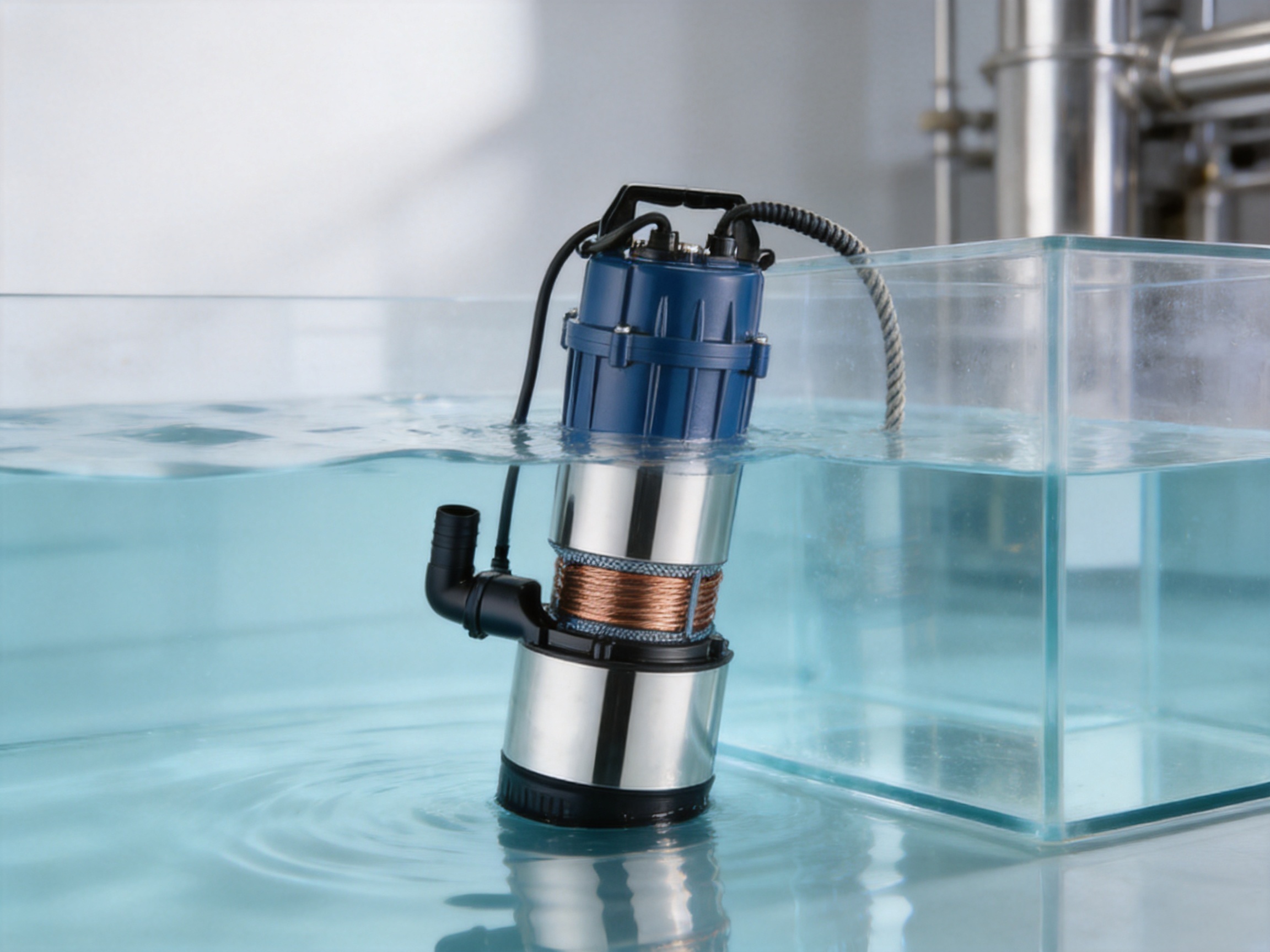
The motor is one of the most important components in any electric pump. The SPA4 uses copper winding, which supports efficient electrical conduction and reliable motor operation. Copper is widely used in quality electric motors because of its strong conductivity, mechanical stability, and ability to form consistent windings.
A properly manufactured copper winding can help reduce electrical losses and support stable operation. It also contributes to dependable starting and running characteristics when the pump is connected to a suitable power supply. Motor performance, however, depends on the complete electrical system, including voltage stability, cable sizing, protective devices, grounding, and correct installation.
The SPA4 includes a built-in thermal protector. This component is designed to help protect the motor if its temperature rises beyond a safe operating level. Excessive temperature can result from overload, restricted water flow, blocked hydraulic passages, insufficient cooling, abnormal voltage, frequent starting, or operation outside the recommended conditions.
When a thermal protector responds, the pump may stop temporarily. This should not be treated as an inconvenience to be bypassed. Instead, it should be regarded as a warning that the pump or system requires inspection. The user should identify and correct the cause of overheating before returning the pump to service. Repeated thermal trips may indicate a blocked inlet, unsuitable liquid, insufficient voltage, excessive head, damaged bearings, or another operating problem.
The motor uses Class B insulation. Insulation class describes the thermal capability of the materials used to isolate electrical conductors from one another and from the motor core. Class B insulation is commonly associated with electrical equipment designed for a defined temperature range under normal operating conditions.
The presence of Class B insulation supports the pump’s suitability for routine water-handling applications. Nevertheless, insulation performance can be reduced by moisture penetration, overheating, chemical exposure, voltage irregularities, and aging. Correct installation and periodic inspection remain necessary even when the motor has an appropriate insulation classification.
The IPX8 protection class is a major feature for a submersible pump. It indicates protection against continuous immersion in water under conditions defined by the product design and manufacturer. This protection helps the motor and electrical components operate in an environment where contact with water is unavoidable.
IPX8 does not mean that every installation condition is automatically safe. The pump must still be used within its maximum immersion depth, temperature, liquid compatibility, and electrical requirements. The power connection should be kept out of standing water unless it is specifically designed and protected for that environment. A qualified electrician should verify grounding, residual-current protection, circuit capacity, and local electrical-code compliance.
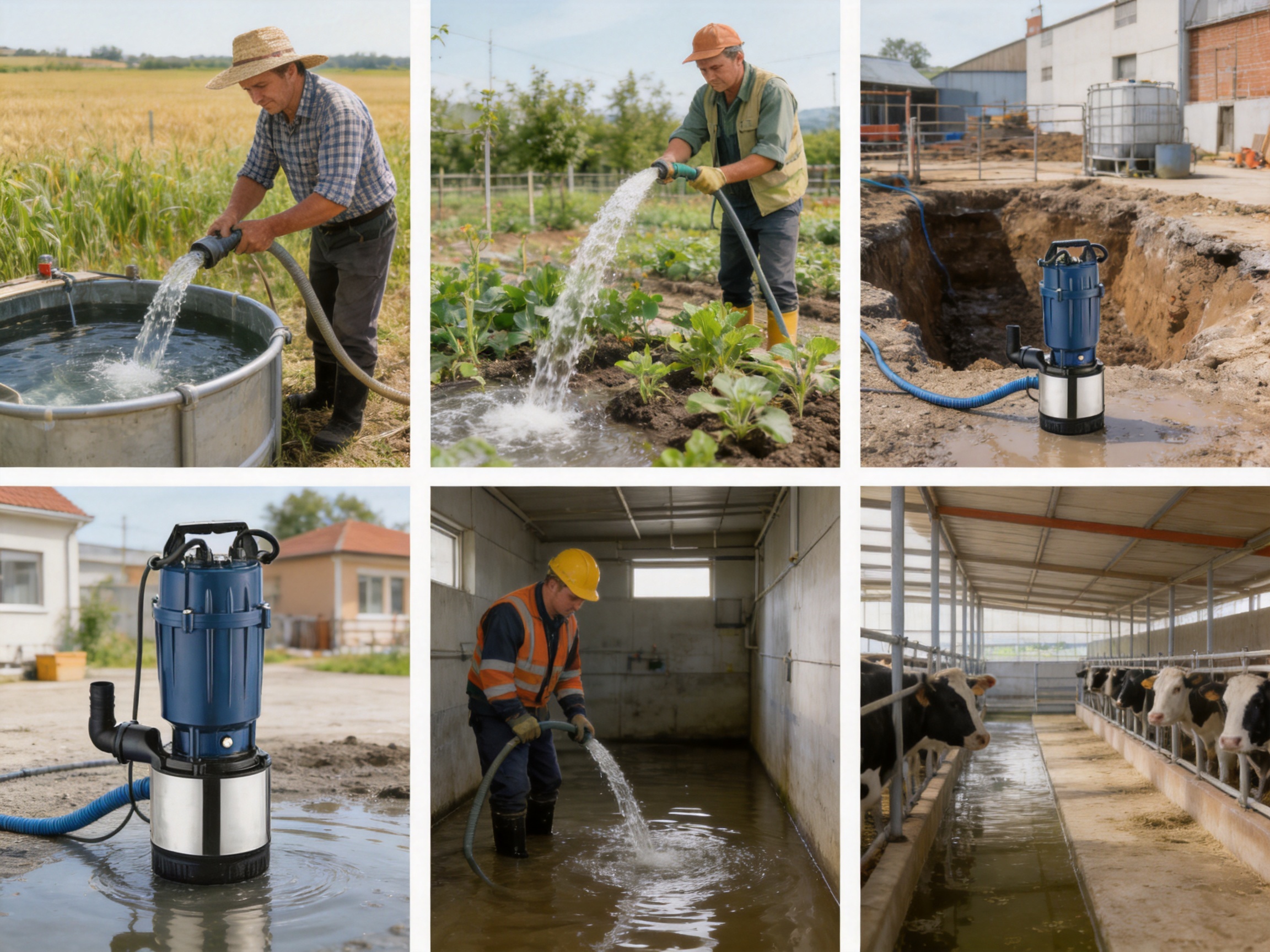
The SPA4 is designed for a broad group of practical water-handling duties. Its compact submersible format makes it useful in locations where water collects at a low level or where a surface-mounted pump would be difficult to install. The following applications represent the main areas identified for the product.
In urban and semi-urban areas, wells may be used for gardening, cleaning, supplementary household water, or local utility purposes. A submersible pump can be positioned inside the well and connected to a discharge line leading to a storage tank or distribution point. The SPA4 can support such duties when the well depth, water temperature, water quality, and required flow conditions are within the product’s operating limits.
Well-water applications require attention to installation depth and water level changes. The pump should remain adequately submerged during operation, but it should not be placed deeper than the specified maximum. The intake area should also be kept clear of sand, sludge, and other materials that could enter the hydraulic section.
Small farms, nurseries, and gardens often need flexible water-transfer equipment. The SPA4 can be used to move water from a collection pit, tank, pond, or other source toward irrigation lines. It may assist with watering crops, transferring stored rainwater, or draining excess water from cultivated areas.
For irrigation use, users should consider the distance and elevation between the water source and the discharge point. Long hoses and narrow pipes increase friction losses and can reduce delivered flow. A properly sized discharge pipe, minimal unnecessary bends, and a clean inlet can improve system efficiency.
Residential users may require a pump for garden watering, tank transfer, emergency drainage, or supplementary water supply. The SPA4 provides a practical option for these tasks when the liquid is clean or only mildly contaminated and the installation is performed safely.
For household water supply, the pump should be used in conjunction with suitable storage, filtration, pressure-control, and backflow-prevention equipment where required. Water intended for drinking should only be handled by equipment and systems approved for potable-water service. The product information identifies general household water supply as an application, but users must still confirm local health, plumbing, and electrical requirements.
Industrial premises can experience water accumulation in low areas, service yards, equipment rooms, pits, and temporary work zones. The SPA4 can help remove ordinary accumulated water when the liquid temperature, chemical composition, solids content, and depth are suitable.
Industrial users should perform a liquid compatibility review before operation. Water containing oils, solvents, acids, alkalis, abrasive particles, or high concentrations of suspended solids may require specialized materials or a different pump design. A pump selected only by size may fail prematurely if the liquid chemistry is unsuitable.
Construction sites frequently require temporary drainage after rainfall, excavation, concrete work, or groundwater infiltration. A submersible pump is convenient because it can be placed directly in a collection point and relocated as site conditions change.
The SPA4 can support small construction drainage tasks within its operating limits. The pump should be protected from large stones, concrete fragments, steel offcuts, wood pieces, and other debris. A temporary screen or suitable collection arrangement may be needed to prevent blockage. Construction-site electrical systems also require careful grounding and residual-current protection because the working environment is wet and physically demanding.
Livestock facilities may need drainage for washing areas, service zones, holding areas, and water-collection pits. The SPA4 can assist with general drainage and water transfer where the liquid is compatible with the pump and does not contain material that could block or damage the hydraulic section.
Hygiene and maintenance are especially important in agricultural environments. After use, the pump should be cleaned according to the liquid handled. Operators should wear appropriate protective equipment and follow site procedures for handling wastewater. The pump should not be moved by pulling on its electrical cable.
The SPA4 offers several advantages over basic surface pumps and less-protected drainage units. These advantages relate primarily to installation flexibility, immersion capability, motor protection, and suitability for multiple small-scale applications.
Direct immersion places the pump close to the water source. This can reduce the suction-side complications commonly associated with surface-mounted pumps. A surface pump may lose prime, draw air through a loose connection, or require a foot valve and careful suction-pipe design. The submersible configuration of the SPA4 simplifies the liquid-entry arrangement and can make startup more straightforward.
The compact submerged format can reduce the need for a separate pump base, suction assembly, and weather-protection enclosure. This is useful for temporary projects, emergency drainage, and locations where space is limited. The pump can be positioned in a pit or tank and connected to an appropriate discharge line without building a large mechanical installation.
With an IPX8 protection class, the SPA4 is designed for a wet operating environment rather than merely protected against occasional splashing. This makes it more suitable for continuous immersion than ordinary outdoor electric pumps that must remain above the waterline.
The built-in thermal protector provides an additional layer of motor protection. This feature can help reduce the risk of damage caused by overheating, provided that users investigate the underlying problem when protection is activated. Competing low-cost products without adequate thermal protection may be more vulnerable to failure during blocked, overloaded, or poorly ventilated operation.
The copper winding supports efficient electrical performance and dependable motor construction. In comparison with motors made with lower-conductivity winding materials, a properly manufactured copper-wound motor can provide a strong basis for stable operation and effective heat management.
The SPA4 is not limited to one narrow installation type. It can be used in irrigation, drainage, household water transfer, construction, industrial water removal, and livestock-related applications. This flexibility can help distributors, contractors, farmers, and property owners reduce the number of different small pumps required for routine jobs.
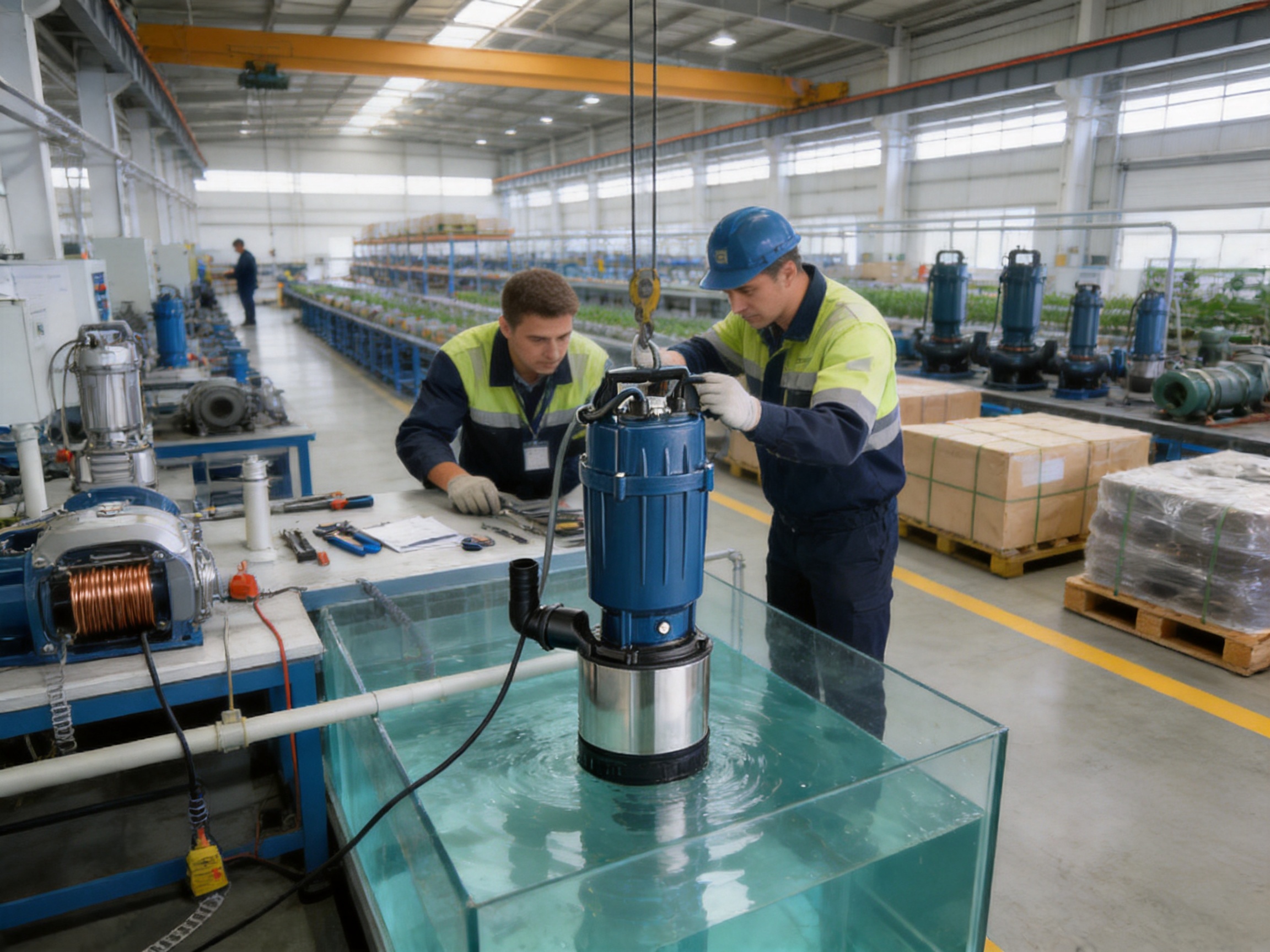
The performance of a pump depends not only on its published specifications but also on the manufacturing system behind the product. Taizhou Edwin Electric Co., Ltd. was founded in 2008 and operates as an integrated manufacturing enterprise specializing in independent research and development, mass production, and global export. This structure gives the company experience across product design, production organization, quality management, and international customer service.
An integrated manufacturer can coordinate the development of the motor, hydraulic components, electrical protection, housing, sealing system, and assembly process more effectively than a business that only resells finished equipment. Product knowledge developed through research and manufacturing can also support more consistent troubleshooting, spare-parts planning, and application guidance.
Independent research and development is important in the pump industry because operating conditions vary widely. Agricultural irrigation, residential water supply, construction drainage, and industrial water handling all place different demands on pump design. A manufacturer with internal development capabilities can improve product structures, adapt product lines, and respond to changing market requirements.
The company’s product portfolio includes deep well pumps, submersible pumps, domestic booster pumps, and circulation pumps. It has also expanded into solar water pumps and intelligent booster pumps since 2018. This broad product knowledge provides a useful technical foundation for understanding different hydraulic conditions and customer requirements.
Mass production requires repeatable processes, controlled component supply, standardized assembly, and inspection procedures. For a pump such as the SPA4, consistency is essential. The copper winding must be formed and connected properly, protective components must be installed correctly, seals must be positioned accurately, and the finished motor must be tested before shipment.
A structured production system helps reduce variations between units. It also supports more reliable delivery for distributors and project customers who need repeated orders. Production capacity is especially important for international customers who may purchase pumps for agricultural programs, construction contracts, residential projects, or equipment distribution.
Edwin Pump serves customers in international markets and focuses on medium-to-high-end global applications. Export experience requires attention to packaging, documentation, order coordination, communication, transportation, and destination-market expectations. It also requires the ability to support customers across different climates, electrical standards, operating practices, and commercial requirements.
The company established Taizhou Haipai Import and Export Co., Ltd. and Golden Falcon Industrial Co., Ltd. in 2012 to support procurement planning, order tracking, cross-border delivery, and foreign-trade services. These related capabilities contribute to a more complete purchasing experience for customers seeking product supply and export coordination from one source.
Reliable pump performance begins with appropriate design and continues through material selection, assembly, testing, packaging, and after-sales support. The company describes its business as focused on quality, innovation, high-performance water pumps, and one-stop procurement services. These priorities are relevant to buyers who need more than a single product shipment and are looking for stable supply, technical communication, and long-term cooperation.
Since 2018, the company has invested in new-energy and intelligent technologies, including solar water pumps and intelligent booster pumps. Although the SPA4 is a conventional electric submersible pump, experience in newer technologies reflects the company’s effort to expand its engineering capabilities and respond to modern water-management requirements.
Intelligent and solar pumping systems require knowledge of motor efficiency, control systems, energy management, operating conditions, and application planning. That wider technical background can support continued improvement across the company’s conventional pump portfolio as well.
Correct installation is essential for safety and performance. Before installing the SPA4, the user should confirm the pump model, power requirements, liquid characteristics, immersion depth, discharge route, and electrical protection. The installation area should be inspected for debris, sharp objects, unstable surfaces, and hazards that could damage the pump or cable.
The pump should be placed in a stable location where the inlet can remain open and the unit cannot become trapped in mud. It should not rest directly on loose sediment if that material could be drawn into the pump. Where necessary, a clean platform, support frame, or suitable intake arrangement can help keep the inlet clear.
The maximum immersion depth of 5 meters must be observed. The pump should remain adequately covered by liquid during normal operation to support cooling and prevent dry running. If the water level may fall, the installation should include a control method or operator supervision to prevent the pump from continuing to run without sufficient liquid.
The discharge pipe or hose should be correctly sized and securely connected. Excessively small piping can increase friction losses and reduce the amount of water delivered. Long discharge routes, multiple bends, partially closed valves, and clogged outlets can also increase system resistance.
The discharge line should be supported independently where necessary. The pump should not carry the full weight of a long or water-filled pipe unless the installation has been designed for that load. A check valve may be useful in some systems to reduce reverse flow, but its selection should match the pump and application.
Electrical work should be completed by a qualified professional in accordance with local regulations. The power supply must match the pump’s electrical requirements. Grounding, circuit protection, residual-current protection, cable sizing, and connection enclosures should all be reviewed before operation.
The power cable should be routed away from traffic, moving machinery, sharp edges, heat sources, animals, and areas where it could be pinched. Never use the cable as a lifting rope. Before removing the pump from the water, disconnect the power supply and verify that the circuit is isolated.
Routine maintenance helps preserve performance and identify developing problems before they become major failures. The maintenance schedule should reflect operating frequency, liquid cleanliness, installation conditions, and the importance of the drainage system.
Before each use, inspect the cable, plug, housing, discharge connection, and lifting arrangement. Look for cuts, exposed conductors, cracks, loose components, corrosion, or signs of overheating. Do not operate the pump if electrical or mechanical damage is visible.
After pumping dirty or accumulated water, the pump should be cleaned with suitable water and tools. Remove mud, fibers, sediment, and debris from the exterior and accessible inlet areas. Cleaning reduces the risk of restricted flow and helps prevent material from hardening around the pump body.
The cleaning method should be appropriate for the pump’s materials and seals. Avoid using aggressive chemicals unless their compatibility has been confirmed. If the pump has handled contaminated water, operators should follow site hygiene procedures and use appropriate personal protective equipment.
Operators should observe unusual noise, vibration, reduced discharge, repeated thermal trips, odor, abnormal current draw, or irregular starting. Any of these signs may indicate a blockage, damaged component, unsuitable liquid, low voltage, excessive head, or other system fault.
A thermal protector is not a substitute for maintenance. If the protector repeatedly disconnects the motor, the pump should be removed from service until the cause has been identified. Continuing to reset and operate the pump without inspection can lead to more serious damage.
When the pump is not in use for an extended period, it should be cleaned, dried externally, and stored in a protected location. The cable should be coiled without tight bends. The pump should be protected from freezing conditions, impact, excessive dust, and unauthorized use.
Product selection should begin with the liquid rather than the pump alone. The user should identify whether the liquid is clean water, drainage water, sewage-influenced water, industrial accumulated water, or another type of fluid. Temperature, suspended solids, fibers, chemical content, acidity, alkalinity, and abrasiveness all affect pump suitability.
The required water-transfer distance and elevation should then be calculated. The system’s total head includes vertical lift and friction losses through pipes, hoses, valves, filters, and fittings. A pump may be physically capable of operating but still deliver insufficient flow if the system resistance is too high.
Users should also estimate the expected operating duration. Occasional emergency drainage, daily irrigation, and continuous industrial service place different demands on a pump. A correctly selected product should match not only the required flow but also the expected duty cycle.
Distributors should consider the variety of applications expected in their market. Because the SPA4 can support irrigation, drainage, household water transfer, construction, and livestock-related duties, it may be suitable as part of a general-purpose submersible pump range. Distributors should nevertheless provide clear application instructions so end users do not exceed the immersion, temperature, electrical, or liquid-quality limits.
Project buyers should review delivery requirements, product documentation, spare-parts expectations, packaging, and after-sales communication. A manufacturer with independent research and development, mass-production experience, and export-support companies can provide useful advantages for repeat orders and international projects.
The SPA4 represents one part of a broader water-pump portfolio. Different applications require different hydraulic designs. Deep well pumps are intended for greater underground water depths, booster pumps are used to increase pressure, circulation pumps move water through heating or cooling systems, and solar pumps are designed around photovoltaic power sources.
Submersible drainage pumps occupy an important position because they address water removal and low-level transfer. They are often used as practical equipment in situations where the primary need is to move water away from a location rather than maintain a highly controlled pressure system.
The company’s wider product range includes solar pumps, deep well pumps, domestic booster pumps, circulation pumps, pool and spa pumps, commercial multistage pumps, end-suction pumps, pipes and valves, pump accessories, and intelligent booster pumps. This range allows customers to source different categories of pumping equipment through one supplier and may simplify procurement for projects involving several water systems.
Efficient pumping contributes to responsible water management. A pump that is correctly sized and maintained can reduce unnecessary energy consumption, limit operating interruptions, and extend equipment life. The SPA4 can support the reuse and transfer of stored water for irrigation, gardening, construction, and other suitable tasks.
Users should avoid operating the pump against a closed discharge line, running it without enough liquid, or using an unnecessarily long and narrow discharge hose. These conditions can waste energy and increase mechanical or thermal stress. Good system design is therefore as important as the pump itself.
The company’s investment in solar water pumps and intelligent booster pumps also reflects the growing importance of energy-conscious and digitally managed water systems. Conventional electric pumps such as the SPA4 remain useful because they are straightforward and adaptable, while newer technologies can provide alternatives where renewable energy or automatic control is a priority.
The SPA4 is designed for small electrical irrigation, drainage, and water-transfer duties. It can be used for urban well-water pumping, field and garden irrigation, household water supply, industrial accumulated-water drainage, construction drainage, and suitable livestock-facility applications.
Yes. The pump is designed as a submersible unit and has an IPX8 protection class for immersion under the conditions defined by the manufacturer. It must still be installed within the maximum immersion depth of 5 meters and used with a suitable electrical connection.
The maximum specified liquid temperature is 40 degrees Celsius. Users handling hotter liquids should select a pump specifically designed for high-temperature service.
Copper has strong electrical conductivity and is widely used in reliable motor construction. The copper winding in the SPA4 supports stable electrical operation and provides a sound basis for motor efficiency and durability when the pump is used within its specified conditions.
The thermal protector helps safeguard the motor if its temperature becomes too high. If the protector activates, the user should investigate possible causes such as blockage, overload, low voltage, restricted cooling, unsuitable liquid, or excessive system resistance before restarting the pump.
No pump should be assumed to handle every type of sewage or wastewater. The liquid’s solids content, fiber content, chemical composition, temperature, and abrasiveness must be compatible with the pump. Users should confirm application suitability before handling heavily contaminated or aggressive liquids.
It may be used for suitable household water-supply and transfer applications. However, water intended for drinking requires equipment and installation practices approved for potable-water service. Local plumbing, health, and electrical requirements must be followed.
The maximum immersion depth is 5 meters. This is the vertical depth below the liquid surface, not the total discharge height. The complete system must also account for elevation, pipe friction, valves, and the required flow rate.
Because the pump operates while immersed, it generally does not require the same suction-line priming procedure as a surface-mounted pump. It must nevertheless be correctly positioned, adequately submerged, and connected to a suitable discharge line.
The pump should be lifted with a suitable rope, chain, or handling line attached to an appropriate point. The electrical cable must never be used as a lifting rope because pulling on it can damage the cable entry and create an electrical hazard.
Repeated stopping may indicate thermal protection activation, blockage, overload, low voltage, excessive head, cable problems, or another fault. Disconnect the power and have the system inspected by a qualified person. Do not bypass the thermal protector or continue operating the pump without finding the cause.
Taizhou Edwin Electric Co., Ltd. has operated since 2008 and combines independent research and development, mass production, and global export. Its related import and export companies support procurement planning, order tracking, cross-border delivery, and foreign-trade services. The company also offers a broad pump portfolio for different project requirements.
The Submersible Sewage Pump SPA4 is a practical solution for small-scale drainage, irrigation, water transfer, and general water-management duties. Its direct-immersion design simplifies installation in pits, tanks, wells, and collection areas. The maximum immersion depth of 5 meters and maximum liquid temperature of 40 degrees Celsius define a clear and manageable operating range.
The pump’s copper winding, built-in thermal protector, Class B insulation, and IPX8 protection class provide important advantages for wet-environment operation. These features help distinguish the SPA4 from basic pumps that may lack adequate immersion protection or motor-temperature safeguards. Its flexibility across agricultural, household, construction, industrial, and livestock-related applications also makes it useful for distributors and end users seeking one adaptable product.
Product quality is supported by the manufacturer’s broader capabilities. Founded in 2008, Taizhou Edwin Electric Co., Ltd. combines research and development, mass production, global export, and a wide product portfolio. Its experience with deep well pumps, submersible pumps, booster pumps, circulation pumps, solar pumps, and intelligent pumping systems demonstrates a broad understanding of modern water-management requirements.
For best results, users should match the pump to the liquid, calculate the complete system head, respect the immersion and temperature limits, provide safe electrical protection, and perform regular cleaning and inspection. When selected and installed correctly, the SPA4 can deliver dependable support for routine drainage and water-transfer requirements across many working environments.
1. Taizhou Edwin Electric Co., Ltd. Product information for the Submersible Sewage Pump SPA4.
2. Taizhou Edwin Electric Co., Ltd. Company profile and product portfolio information.
3. International Electrotechnical Commission. Degrees of Protection Provided by Enclosures for Electrical Equipment.
4. International Electrotechnical Commission. Rotating Electrical Machines: Thermal Evaluation and Classification of Insulation Systems.
5. Hydraulic Institute. Engineering Principles for Centrifugal Pump Selection and Operation.
6. National Fire Protection Association. Electrical Safety Practices for Wet and Damp Locations.
7. General industrial guidance on submersible pump installation, motor protection, drainage systems, and preventive maintenance.
edwina@edwin-pump.com
+86-13586290903 (WhatsApp)
Xuri Gongliang Cutting Tool Entrepreneurship Park, Wenqiao Town, Wenling City, Taizhou City, Zhejiang Province, China

High Performance Smart Pump Factory


 English