edwina@edwin-pump.com

View All Products
en
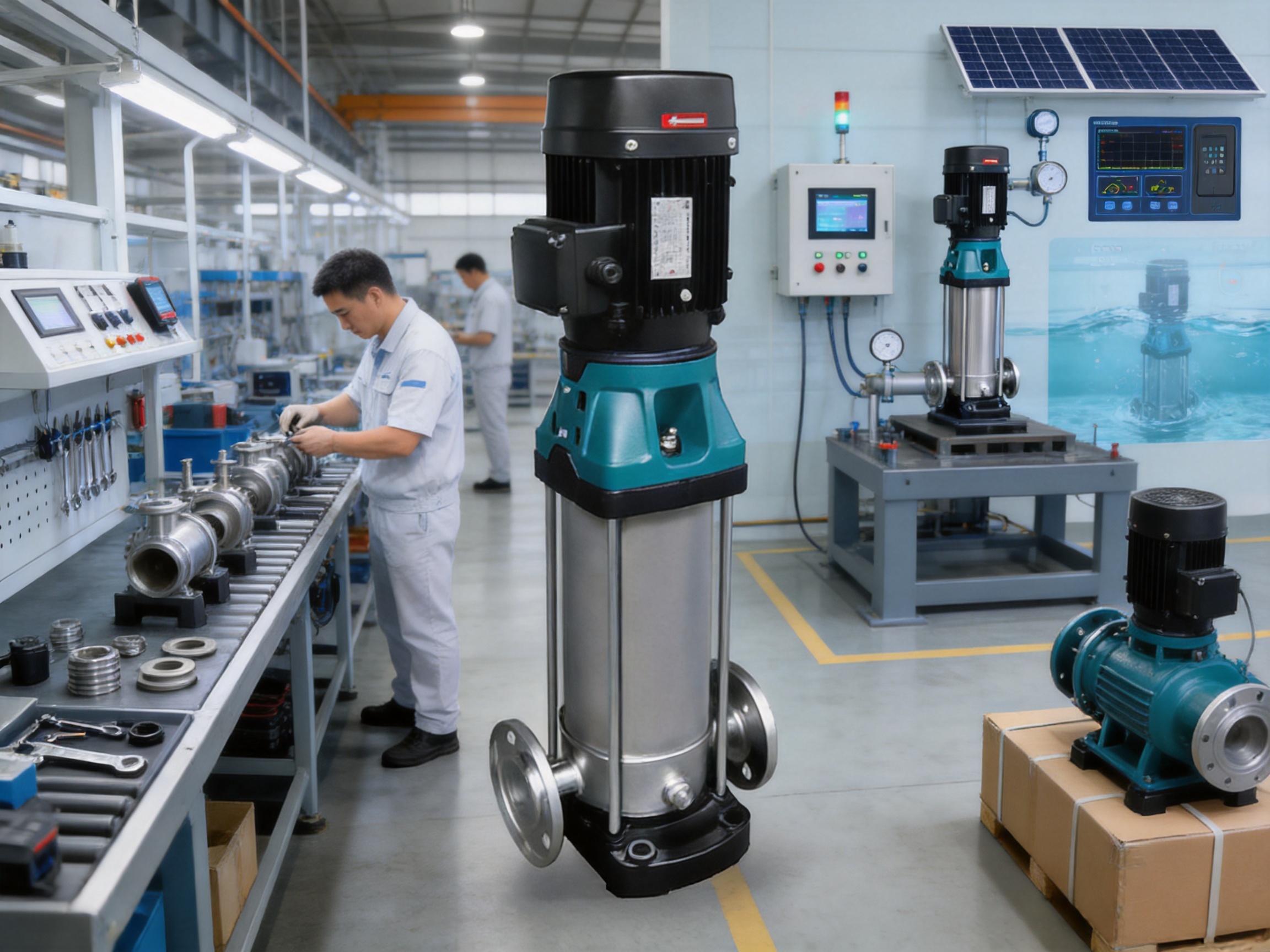
Modern water systems require more than basic fluid transfer. Commercial buildings, irrigation networks, industrial cleaning systems, firefighting installations, and high-rise water supplies all depend on pumps that can deliver stable pressure, dependable flow, and long service life. The EVLA Series Stable Chassis Plain Washer Dustproof Multistage Pump is designed for these demanding conditions. It combines a vertical multistage centrifugal structure, dust-resistant protection, a stable chassis, stainless steel wetted components, and a cartridge-type mechanical seal to support efficient and reliable operation.
Unlike a simple single-stage pump, this multistage model uses several impellers arranged in series. Each impeller adds energy to the liquid, enabling the pump to achieve higher pressure without requiring an excessively large individual impeller. This makes the design suitable for pressure boosting, industrial water circulation, building water supply, irrigation, cleaning systems, and other applications where consistent pressure is more important than basic low-pressure transfer.
The EVLA Series is also designed with practical installation and maintenance requirements in mind. Its inlet and outlet are positioned on the same plane at the lower part of the pump, creating an inline arrangement that can simplify connection to existing pipelines. The vertical configuration helps reduce the floor area required for installation, while the stable chassis helps minimize vibration during operation. Together, these features provide a balanced solution for users seeking a compact, durable, and high-performance water pump.
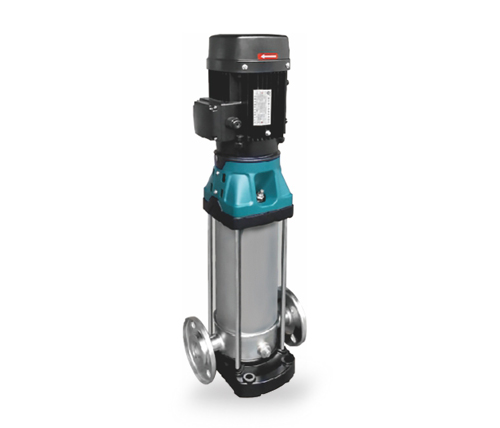
EVLA Series Stable Chassis Plain Washer Dustproof Multistage Pump
The EVLA Series is a non-self-priming vertical multistage centrifugal pump. It is intended for clean water and compatible liquid applications in which the pump can be installed with a flooded suction arrangement or another suitable water supply configuration. Because the pump is non-self-priming, the suction line and pump body must be correctly filled before operation, and the installation should be designed to prevent air entry.
The main operating principle is straightforward. An electric motor rotates the pump shaft, which drives a series of impellers. As water passes through each stage, its pressure increases progressively. The final discharge pressure depends on the number of stages, motor power, impeller design, system resistance, and selected operating point. This arrangement allows the pump to provide strong pressure performance while maintaining a relatively narrow and vertical footprint.
The EVLA Series product concept places particular emphasis on stability and protection. Its dustproof design helps reduce the entry of dust and airborne particles into vulnerable areas. This is especially useful in workshops, agricultural facilities, utility rooms, construction environments, and industrial locations where a pump may be exposed to suspended dust or debris.
The stable chassis provides a firm base for the vertical pump assembly. A secure foundation is essential because vibration can accelerate wear in bearings, couplings, seals, fasteners, and connected pipework. The use of plain washers in relevant structural connections helps distribute clamping loads and supports secure assembly. These details may appear simple, but they contribute to the overall mechanical stability of the pump.
The most important advantage of a multistage pump is its ability to produce higher pressure than many conventional single-stage designs. Instead of forcing one impeller to generate the entire pressure increase, the EVLA Series divides the work among multiple stages. This can improve hydraulic balance and make the pump suitable for high-rise buildings, long pipelines, industrial washing systems, and sprinkler irrigation.
For a building water supply, pressure often needs to overcome elevation, pipe friction, valves, filters, and simultaneous demand. A single-stage pump may not be able to satisfy these requirements efficiently. A vertical multistage pump offers a more practical approach by adding pressure progressively through the stage stack.
In industrial systems, high-pressure water may be required for equipment cleaning, production processes, boiler feed support, water treatment circulation, or fire protection. The multistage arrangement allows engineers to select a pump configuration that matches the required head while preserving a compact installation profile.
Floor space is a major concern in mechanical rooms, agricultural pump houses, commercial buildings, and factory utility areas. The vertical design places the motor and pump stages along a single upright axis. Compared with a horizontally arranged pump delivering comparable pressure, the EVLA Series can occupy less floor area and leave more room for valves, control panels, pressure tanks, and maintenance access.
The inline inlet and outlet arrangement further supports practical installation. Since the suction and discharge connections are located at the lower section on the same plane, pipe routing may be simplified in systems where the pump is installed directly into a main pipeline. The final installation must still follow the selected model’s connection dimensions, flow direction, pipe support requirements, and local safety standards.
A pump’s foundation affects more than noise. Excessive vibration can damage mechanical seals, loosen fasteners, stress pipe connections, and shorten motor bearing life. The EVLA Series uses a stable chassis to support the pump assembly and provide a reliable foundation during continuous operation.
The chassis works together with proper alignment, suitable pipe supports, correct anchoring, and balanced operating conditions. The plain washer arrangement helps distribute fastening pressure across contact surfaces and supports secure mechanical connections. Although washers are basic components, correct load distribution is important when a vertical assembly is exposed to rotating forces and hydraulic fluctuations.
Compared with less carefully supported pump designs, a stable chassis can provide a more controlled operating experience. Users may benefit from smoother running, reduced structural movement, and fewer maintenance problems associated with loose connections or misalignment.
Dust and debris can affect pump performance in several ways. Particles may enter motor ventilation areas, accumulate around seals, contaminate mechanical components, or interfere with electrical protection. The EVLA Series incorporates a dustproof design to help reduce exposure to airborne contaminants.
This feature is valuable in agricultural buildings, workshops, warehouses, construction projects, industrial plants, and outdoor equipment rooms. It does not mean that the pump can be submerged in dust, exposed to every weather condition, or operated without an appropriate enclosure. Instead, it provides an additional layer of protection when the pump is installed in environments where ordinary equipment may experience faster contamination.
A dust-resistant design can also support longer inspection intervals in suitable applications. However, regular cleaning and inspection remain necessary. Dustproof protection should be considered part of a complete installation strategy that includes ventilation, drainage, electrical protection, and appropriate environmental shielding.
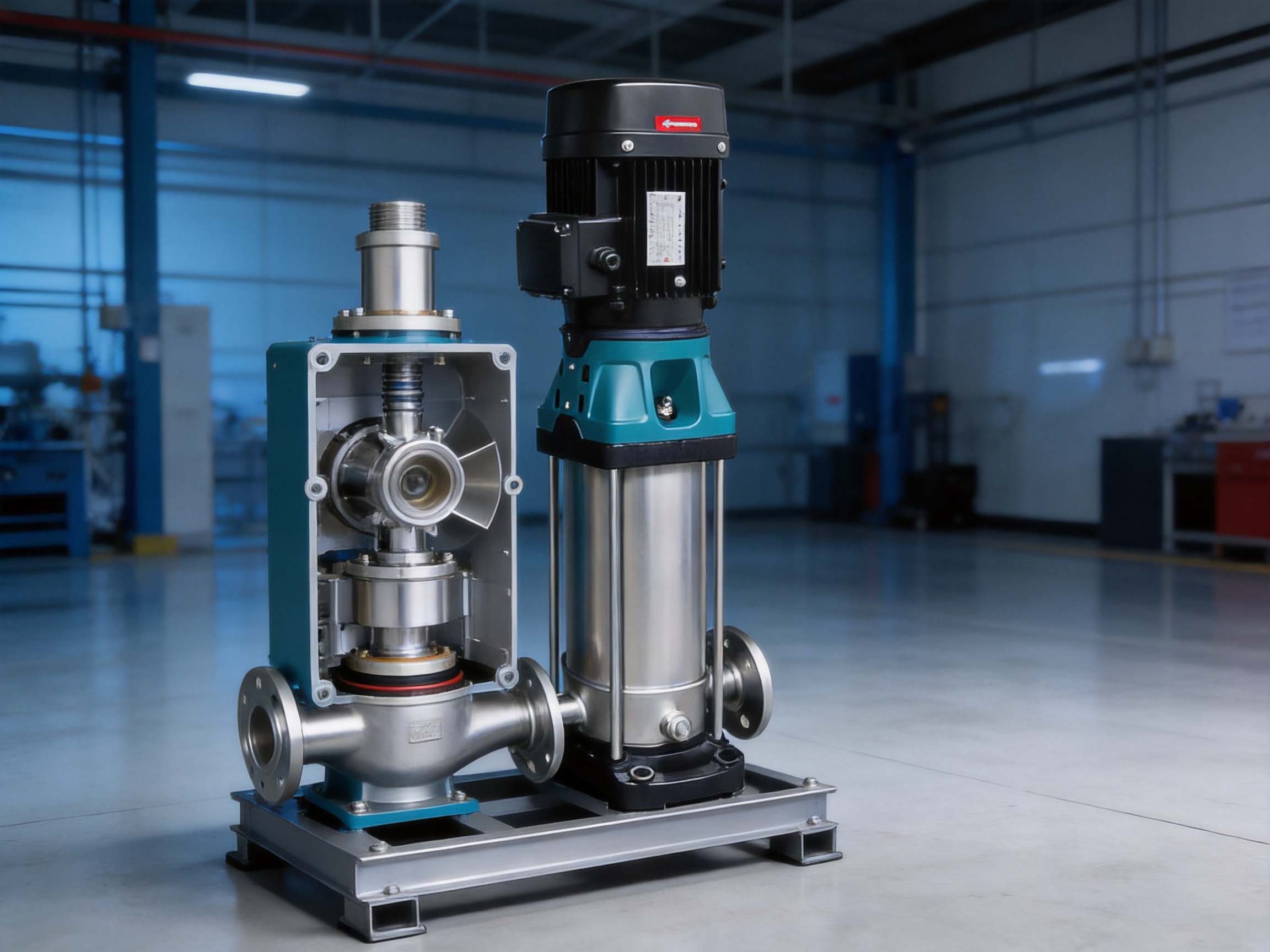
Durability depends on the interaction between design, materials, manufacturing precision, assembly quality, and operating conditions. The EVLA Series uses several materials selected for strength, corrosion resistance, and compatibility with water service.
The pump barrel is made from AISI 304 stainless steel. This material is widely used in water-handling equipment because it offers a useful balance of corrosion resistance, mechanical strength, cleanability, and production practicality. A stainless steel barrel can be particularly beneficial in installations where the pump is exposed to moisture or where clean internal surfaces are desirable.
The long sleeve is also specified as AISI 304 stainless steel. The sleeve supports the internal rotating assembly and helps protect critical surfaces from the operating environment. Stainless steel construction can reduce the risk of premature corrosion when the pump is used with suitable liquids and maintained correctly.
The impeller and last-stage diffuser are specified as stainless steel. These components directly influence hydraulic performance. Their geometry determines how efficiently energy is transferred from the motor to the liquid. Stainless steel construction helps protect the hydraulic components against common forms of water-related corrosion and supports long-term dimensional stability.
The support is made from cast iron, providing structural rigidity and resistance to mechanical loads. The mechanical seal uses carbon and ceramic materials, a combination commonly selected for reliable sealing performance in water pumps. The elastic ring is made from rubber, while other sealing elements, including the “O” ring, help prevent leakage between assembled components.
| Component | Specified Material or Construction | Functional Role |
|---|---|---|
| Motor | Electric motor assembly | Provides rotational power to the pump shaft |
| Coupling | Mechanical drive connection | Transfers torque between the motor and pump assembly |
| Support | Cast iron | Provides structural support and mounting stability |
| Mechanical seal | Carbon / ceramic | Helps prevent liquid leakage along the rotating shaft |
| Elastic ring | Rubber | Supports sealing and component connection |
| Long sleeve | AISI 304 stainless steel | Protects and supports the internal rotating assembly |
| Last-stage diffuser | Stainless steel | Guides liquid flow and contributes to pressure development |
| Impeller | Stainless steel | Transfers motor energy to the liquid |
| Pump barrel | AISI 304 stainless steel | Contains the hydraulic stages and supports corrosion resistance |
All pumps in the described series are equipped with a maintenance-free mechanical seal set of the cartridge type. A cartridge seal is assembled as a complete unit, which can help simplify installation and replacement compared with a seal arrangement requiring extensive individual adjustment.
The mechanical seal is one of the most important wear components in a centrifugal pump. It prevents pressurized liquid from escaping along the shaft while allowing the shaft to rotate. Carbon and ceramic sealing faces are commonly used because they can provide suitable wear resistance and sealing performance in clean-water applications.
The cartridge configuration can offer practical advantages during service. It helps technicians handle the seal as a coordinated assembly, reduces the risk of incorrect component positioning, and supports more consistent maintenance procedures. Even though the seal is described as maintenance-free during normal service, it is still a replaceable wear component. Its actual life depends on liquid quality, temperature, pressure, alignment, dry-running protection, and operating frequency.
Users should avoid operating the pump without water. Dry running can rapidly damage the mechanical seal because the sealing faces depend on the liquid for cooling and lubrication. Correct commissioning, adequate suction conditions, and protection against low-water operation are essential for realizing the expected service life of the seal.
The motor specifications provided for the EVLA Series include a liquid temperature range of approximately -20°C to +70°C and a maximum ambient temperature of +40°C. The stated altitude for standard operation is up to 1,000 meters. Standard voltage options include single-phase 220–240 V at 50 Hz and three-phase 380 V at 50 Hz.
These values provide a general operating framework, but the final selection should always be based on the exact model nameplate and technical documentation. Motor power, rated current, discharge pressure, flow rate, stage number, connection size, insulation class, protection rating, and control method may vary among configurations.
At higher ambient temperatures or altitudes, motor cooling conditions may change. Air density decreases with elevation, and a motor may require derating depending on the design and applicable standards. Similarly, liquids near the upper temperature limit may affect seal life, material compatibility, suction conditions, and motor load. Professional selection is recommended when operating conditions approach the stated limits.
Electrical installation should include suitable overload protection, short-circuit protection, grounding, isolation, and switching equipment. Three-phase motors should be checked for correct rotation before sustained operation. Incorrect rotation can result in low pressure, reduced flow, increased noise, or equipment damage.
The EVLA Series is suitable for pressure boosting in main water lines, commercial buildings, apartment complexes, and high-rise structures. In these applications, the pump can raise system pressure to compensate for elevation and friction losses.
High-rise water systems require careful pressure zoning. A pump that supplies the lower floors may not be appropriate for upper floors, and excessive pressure can damage fixtures or pipelines. The multistage design allows engineers to select a suitable pressure range, while control equipment can be added to regulate operation according to demand.
Industrial plants often need reliable water pressure for cleaning, cooling, processing, and utility services. The EVLA Series can be applied to industrial water systems, cleaning systems, high-pressure washing systems, and other installations where clean water must be delivered at a stable pressure.
Stainless steel wetted components are an advantage in many industrial environments because they can provide better resistance to moisture and ordinary water-related corrosion than less resistant materials. The actual liquid chemistry must still be evaluated. Acids, solvents, high concentrations of salts, abrasive particles, and special process chemicals may require different materials or pump designs.
Pressure boosting is a key requirement in firefighting systems. A vertical multistage pump may be used in a firefighting water arrangement when the selected model, controls, certification, flow, pressure, redundancy, and installation comply with the applicable local fire codes.
The EVLA Series should not automatically be considered a complete certified fire pump package solely because it can generate pressure. Fire protection projects require engineering review, approved components where required, reliable power supplies, automatic controls, test connections, alarms, and scheduled inspections. Within a properly designed system, the pump’s multistage pressure capability can support demanding water delivery requirements.
The pump can support field irrigation, sprinkler irrigation, and drip-feed irrigation. Sprinkler systems often require sufficient pressure at the nozzle, while drip systems require controlled pressure and filtration. The pump should be selected according to total flow, pipeline length, elevation difference, emitter requirements, filter losses, and the desired operating schedule.
Because irrigation water may contain sand, silt, algae, or organic matter, a filtration and water-quality strategy is important. The EVLA Series is best suited to liquids within its intended cleanliness and compatibility range. Abrasive particles can accelerate wear in impellers, diffusers, seals, and sleeves.
Commercial facilities use pressure pumps for washdown, water transfer, HVAC support, equipment cleaning, and general utility supply. The compact vertical form can be useful where plant-room space is limited. Its stable chassis and inline connections may also help integrate the pump into an existing mechanical system.
Building operators may value the combination of compact installation, high-pressure capability, stainless steel components, and straightforward maintenance access. Correct access clearance should be provided around the motor, coupling, mechanical seal, electrical box, valves, and pipe connections.
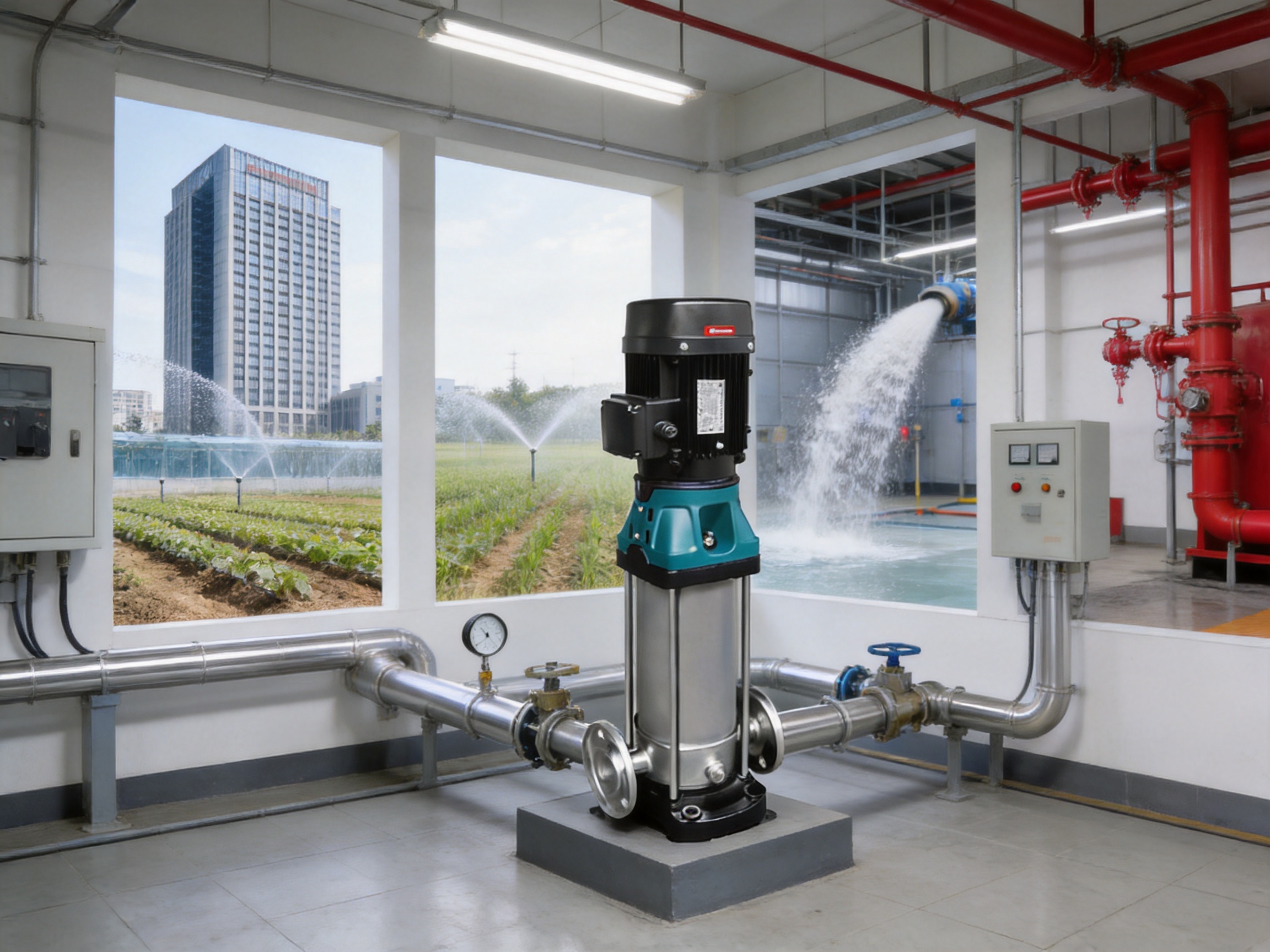
Competitor products vary widely, so a fair comparison should be based on actual specifications rather than general claims. Nevertheless, the EVLA Series has several design characteristics that can create practical advantages over basic or less specialized pump designs.
A single-stage pump may be economical for low-head applications, but it may require a larger impeller, higher rotational loading, or a different pump size to produce the same pressure as a multistage unit. The EVLA Series distributes pressure generation across multiple stages, making it better suited to high-pressure water supply and long-distance delivery.
The vertical multistage configuration can also provide a more compact solution than a large single-stage pump selected for the same head requirement. This can reduce floor-space demands in building service rooms and industrial utility areas.
Horizontal pumps can be effective, but they may require more floor space and a larger base arrangement. The vertical structure of the EVLA Series can be a significant advantage where installation space is restricted. Its inline lower connections may also simplify integration into a straight pipeline layout.
However, horizontal pumps may be preferred in some systems because of easier access, specific suction arrangements, or existing foundation design. The EVLA Series is most competitive when compactness, high pressure, and vertical installation are important selection criteria.
Many pump systems use cast iron or other materials throughout the wetted path. The EVLA Series specifies stainless steel for the pump barrel, impeller, last-stage diffuser, and long sleeve. This material approach can provide better resistance to corrosion in ordinary water-service environments and can support a longer useful life when the pump is correctly selected and maintained.
Stainless steel construction may also be valuable where cleanliness, appearance, and reduced surface corrosion are important. It is not a universal solution for all chemicals, so users should verify compatibility before handling liquids other than clean or mildly treated water.
The cartridge-type mechanical seal provides a practical service advantage. Instead of requiring a technician to assemble multiple individual seal components with precise positioning, a cartridge arrangement is supplied as a coordinated unit. This can reduce installation complexity and support more repeatable maintenance.
Cartridge seals do not eliminate the need for correct operating conditions. They still require water, proper alignment, compatible temperature, and protection from abrasive contamination. Their advantage is primarily easier handling and consistent assembly.
A stable chassis can distinguish a professionally designed pump from a product that relies on inadequate mounting. Proper support helps reduce vibration, protects pipe connections, and improves the operating environment for the motor, coupling, shaft, and seal.
The plain washer detail also reflects attention to mechanical assembly. Washers help distribute loads and protect contact surfaces when fasteners are tightened. Combined with a rigid support, this can contribute to stable long-term operation.
Taizhou Edwin Electric Co., Ltd. was founded in 2008 and operates as an integrated manufacturing enterprise with capabilities in independent research and development, mass production, and global export. This combination is important for pump buyers because product reliability depends not only on design but also on repeatable production, quality control, technical support, and supply continuity.
Independent research and development allows a manufacturer to refine hydraulic structures, select suitable materials, improve motor and pump matching, and respond to changing market requirements. For a multistage pump, engineering work may include impeller geometry, diffuser flow paths, shaft strength, seal arrangements, vibration control, motor sizing, and assembly tolerances.
Mass production creates another advantage: repeatability. When manufacturing processes are standardized, the dimensions and performance of individual components can be controlled more consistently. This is particularly important for pump stages, shafts, sleeves, seals, couplings, and stainless steel pressure-containing parts.
An integrated manufacturing system can also improve coordination between design, machining, assembly, testing, packaging, and after-sales support. Problems identified during production can be communicated more quickly to engineering teams. Product improvements can then be incorporated into future manufacturing batches.
The company has developed product lines including deep well pumps, submersible pumps, domestic booster pumps, circulation pumps, solar water pumps, intelligent booster pumps, and related water-treatment peripheral products. This broad product portfolio can help customers create coordinated procurement plans instead of sourcing every pump type from a different supplier.
Reliable pump production begins with control of incoming materials. Stainless steel grades, castings, rubber sealing materials, carbon and ceramic seal faces, motor components, and fasteners should be checked against applicable specifications. Material traceability and dimensional inspection can reduce the risk of inconsistent performance.
For the EVLA Series, the stated use of AISI 304 stainless steel in the pump barrel and long sleeve, along with stainless steel impellers and diffusers, provides a clear material framework. Proper fabrication and finishing are necessary to ensure that the selected material delivers its intended benefits.
Multistage pumps require careful assembly because several hydraulic stages operate on a common shaft. The impellers, diffusers, sleeves, seals, and stage connections must be positioned correctly. Excessive axial movement, poor alignment, uneven compression, or contamination during assembly can affect performance and service life.
A professional assembly process should include controlled fastening, inspection of rotating clearances, seal installation procedures, shaft alignment checks, and final visual examination. The stable chassis, coupling, support, and protective cover must also be assembled in a way that limits movement and protects operating personnel.
Performance testing is essential for centrifugal pumps. Depending on the product configuration and applicable requirements, testing may include flow, head, motor current, rotation, leakage, vibration, noise, insulation, and pressure-holding checks.
Testing helps identify problems before shipment and provides greater confidence that the pump corresponds to its intended operating range. For export markets, careful documentation is also important. Buyers may require nameplate information, inspection reports, packing lists, spare-parts information, installation manuals, and electrical data.
To meet different purchasing requirements, the company established Taizhou Haipai Import & Export Co., Ltd. and Golden Falcon Industrial Co., Ltd. in 2012. These organizations support procurement planning, order tracking, cross-border delivery, and foreign-trade services.
For international customers, logistical coordination can be as important as product selection. A pump project may require several models, accessories, replacement seals, valves, control equipment, and documentation. A supplier with experience in export coordination can help reduce communication gaps between technical, commercial, and shipping departments.
One-stop procurement may also support distributors and engineering contractors that need a wider product portfolio. By supplying several categories of pumps and related products, the manufacturer can help customers develop a more consistent sourcing strategy.
Since 2018, the company has invested in new energy and intelligent technology, including solar water pumps and intelligent booster pumps. This development is relevant to the EVLA Series because the future of water pumping increasingly involves automation, remote monitoring, variable-speed control, and energy-conscious operation.
A conventional multistage pump can be integrated into a controlled system using pressure sensors, variable-frequency drives, level switches, flow meters, and programmable controls. These additions can help match pump output to actual demand rather than running continuously at full speed.
In a building water system, intelligent control can stabilize pressure while reducing unnecessary cycling. In irrigation, control can coordinate pump operation with irrigation zones, storage tanks, soil conditions, or solar availability. In industrial service, monitoring can help identify abnormal vibration, pressure loss, dry-running conditions, or excessive motor current.
The pump itself must still be correctly sized. Intelligent control cannot compensate for an incorrectly selected hydraulic duty point, undersized pipework, blocked filters, air leakage, or poor installation. Automation is most effective when combined with sound hydraulic design and reliable mechanical construction.
Before installation, confirm the pump model, voltage, frequency, flow, head, liquid temperature, ambient conditions, connection size, and material compatibility. Inspect the pump for transport damage and verify that the shaft can rotate freely when appropriate and safe to do so.
Install the pump on a solid and level foundation. The chassis should be securely anchored, and the foundation should be capable of supporting the equipment without excessive movement. Flexible connectors may be considered where suitable, but they should not be used as a substitute for proper pipe support or alignment.
Install isolation valves on the suction and discharge sides when required for maintenance. A check valve may be useful on the discharge side to prevent reverse flow, depending on the system design. Pressure gauges can help operators observe pump performance and identify changes over time.
The suction pipe should be adequately sized and arranged to minimize friction loss and air pockets. Avoid sudden restrictions immediately before the pump inlet. Ensure that the suction line is properly supported and sealed. Air entering the suction pipe can cause unstable flow, noise, loss of pressure, and mechanical seal damage.
Fill and vent the pump before startup. Open the appropriate valve gradually, confirm that water is available, and check for leaks. After starting, verify rotation, pressure, flow, motor current, vibration, and noise. Stop the pump immediately if it runs dry, experiences severe vibration, or shows abnormal electrical readings.
Electrical work should be completed by qualified personnel. The supply must match the motor nameplate, and the equipment must be properly grounded. Overload protection should be set according to the motor requirements. A local disconnecting device should be available for safe maintenance.
Although the EVLA Series is designed for reliable service, routine inspection remains important. Operators should periodically check for leakage, unusual noise, vibration, pressure changes, motor heating, loose fasteners, and changes in flow. Early detection can prevent a minor issue from becoming a major failure.
Keep the pump and motor exterior clean. The dustproof design helps limit contamination, but it does not eliminate the need for cleaning. Do not block ventilation openings or allow dust to build up around the motor. The installation environment should remain dry enough to protect electrical components.
Inspect the mechanical seal area for leakage. A small amount of initial moisture may occur during certain commissioning conditions, but continuous or increasing leakage indicates that inspection is needed. Seal failure can result from dry running, abrasive particles, misalignment, excessive pressure, high temperature, or normal wear.
Check the coupling and mounting hardware for signs of looseness. The stable chassis and plain washer arrangement support secure assembly, but vibration, thermal cycling, and repeated operation can still affect fasteners over time. Tightening procedures should follow suitable engineering practices and avoid over-tightening.
Clean or replace filters according to the water quality and system requirements. Blocked filters increase suction losses and may cause cavitation or insufficient flow. If the pump handles irrigation water, additional attention may be needed for sediment, sand, biological growth, and fertilizer residues.
Before extended storage, drain the pump when appropriate, protect it from freezing, and keep it in a dry environment. Follow the manufacturer’s procedures for preservation, rotation, and recommissioning.
Choosing the correct EVLA Series configuration requires more than selecting the highest available pressure. The required flow rate, total dynamic head, operating schedule, liquid temperature, water quality, motor supply, ambient temperature, installation altitude, and pipe arrangement should all be evaluated.
Total dynamic head includes static elevation, pipeline friction, fittings, valves, filters, heat exchangers, emitters, and required terminal pressure. Selecting a pump only by pipe diameter may result in poor performance. Similarly, selecting a pump solely by maximum head may produce excessive pressure, inefficient operation, or unnecessary energy consumption.
Operating near the pump’s preferred performance range is generally desirable. The selected duty point should be compared with the pump curve for the exact model. If demand varies substantially, a variable-speed or intelligent control arrangement may improve efficiency and pressure stability.
Liquid compatibility must also be reviewed. The listed materials are appropriate for many water applications, but the pump may not be suitable for abrasive slurries, highly corrosive chemicals, flammable liquids, or liquids containing large solids. Special applications should be reviewed with qualified technical personnel.
International buyers often need a supplier that can combine product variety, manufacturing capability, technical communication, and delivery support. The EVLA Series addresses an important segment of the water-pump market by providing high-pressure performance in a compact vertical design.
The product’s combination of multistage hydraulics, stainless steel components, dust-resistant design, stable chassis, and cartridge mechanical seal makes it suitable for many general water-service applications. Its operating voltage options also support common electrical systems used in different commercial and industrial markets, subject to local requirements.
Edwin Pump’s experience in research and development, mass production, and export provides a foundation for serving distributors, contractors, agricultural users, building-service companies, and industrial customers. Its broader product portfolio can support projects that require several pump categories, from submersible and deep well pumps to circulation and intelligent booster systems.
The company’s focus on new energy and intelligent technology also demonstrates an effort to respond to evolving customer requirements. As customers seek lower operating costs, better automation, solar-compatible systems, and integrated procurement, manufacturers with broader technical capabilities can offer more flexible solutions.
The EVLA Series is a non-self-priming vertical multistage centrifugal pump. It uses multiple impellers arranged in series to increase pressure progressively.
Yes. Its multistage design is intended for applications requiring increased pressure, including building water supply, pressure boosting, industrial cleaning, sprinkler irrigation, and selected firefighting water systems.
No. It is a non-self-priming pump. The pump and suction line must be filled correctly, and the installation must provide suitable suction conditions before startup.
The dustproof design helps reduce the entry and accumulation of dust or airborne particles around vulnerable pump and motor areas. It is useful in dusty industrial, agricultural, construction, and utility environments, but it does not eliminate the need for proper enclosure, cleaning, and maintenance.
The pump barrel and long sleeve are specified as AISI 304 stainless steel. The impeller and last-stage diffuser are specified as stainless steel. The support is cast iron, and the mechanical seal uses carbon and ceramic materials.
A cartridge-type mechanical seal is supplied as a coordinated assembly. It can simplify installation and replacement by reducing the need to position multiple individual seal parts manually. It remains a wear component and must be protected from dry running and incompatible liquids.
The product is primarily intended for water and compatible liquids within the stated temperature and material limits. Chemical concentration, abrasiveness, solids content, and temperature should be checked before using the pump with any liquid other than suitable clean or treated water.
The standard voltage options provided are single-phase 220–240 V at 50 Hz and three-phase 380 V at 50 Hz. The exact motor data must be confirmed from the nameplate and model-specific technical documentation.
Yes. It can support field irrigation, sprinkler irrigation, and drip-feed irrigation when the selected model matches the required flow and pressure. Filtration is recommended when irrigation water contains sand, sediment, or organic matter.
It may be used in a properly engineered firefighting water system if the exact pump, control arrangement, certification, and installation comply with applicable local fire codes and project requirements. Its pressure capability alone does not make it a complete certified fire-pump package.
The inlet and outlet are located at the bottom of the pump on the same plane, creating an inline arrangement. The system must still be designed with proper pipe support, valves, suction conditions, foundation, and maintenance access.
Confirm correct electrical connection, pump filling, valve position, rotation direction, pressure, flow, motor current, vibration, noise, and leakage. Never allow the pump to operate without adequate liquid.
The multistage design can provide higher pressure in a compact vertical structure. It is particularly useful where elevation, friction loss, or terminal pressure requirements exceed the practical capability of a basic single-stage pump.
The product is manufactured by Taizhou Edwin Electric Co., Ltd., also known as Edwin Pump. The company provides independent research and development, mass production, export services, and a broad range of water-pump products.
The EVLA Series Stable Chassis Plain Washer Dustproof Multistage Pump is designed for users who need dependable pressure boosting in a compact and stable package. Its vertical multistage hydraulic structure supports high-pressure operation, while the inline connection arrangement can simplify integration into suitable pipeline systems.
Its main competitive strengths include a dust-resistant design, stable chassis, plain washer-supported assembly, stainless steel hydraulic components, carbon and ceramic mechanical sealing surfaces, and a cartridge-type seal arrangement. These features address common challenges involving contamination, vibration, corrosion, maintenance, and space limitations.
The product is suitable for water supply, high-rise buildings, industrial pressure boosting, cleaning systems, high-pressure washing, selected firefighting installations, and agricultural irrigation. Correct sizing and professional installation remain essential. The pump should be operated within its specified temperature, electrical, altitude, and liquid-compatibility limits.
Behind the product is a manufacturing organization with experience in research and development, mass production, export coordination, and a broad pump portfolio. Taizhou Edwin Electric Co., Ltd. combines traditional pump manufacturing with ongoing development in solar and intelligent pumping technology. For customers seeking a high-performance vertical multistage pump and a supplier capable of supporting broader water-system requirements, the EVLA Series offers a practical and technically focused solution.
1. Centrifugal Pump Handbook, general principles of pump hydraulics, multistage operation, and system selection.
2. Hydraulic Institute Standards, guidance on centrifugal pump performance, installation, and operation.
3. International Electrotechnical Commission motor standards, including general requirements for rotating electrical machines.
4. General engineering practice for mechanical seal installation, pump alignment, vibration control, and preventive maintenance.
5. Manufacturer-provided EVLA Series product information, component materials, application notes, and operating conditions.
6. General building-services engineering guidance for pressure boosting, irrigation, industrial water systems, and pump-room installation.
edwina@edwin-pump.com
+86-13586290903 (WhatsApp)
Xuri Gongliang Cutting Tool Entrepreneurship Park, Wenqiao Town, Wenling City, Taizhou City, Zhejiang Province, China

High Performance Smart Pump Factory


 English