edwina@edwin-pump.com

View All Products
en
Water pressure systems require more than a pump alone. A pump can generate flow and pressure, but without an appropriately sized pressure tank, the system may start and stop too frequently, experience unstable pressure, consume unnecessary energy, and suffer premature wear. The WCF Series horizontal water pressure tank is designed to provide a practical and dependable solution for domestic, agricultural, commercial, and light industrial water applications.
Available in capacities from 60 to 300 liters and with maximum pressure options from 6 bar to 16 bar, the WCF Series is suitable for a broad range of booster systems, surface pump installations, well-water systems, irrigation equipment, and pressure supply applications. Its replaceable membrane construction, carbon steel flange, horizontal configuration, and multiple connector options allow system designers to select a model that matches their installation requirements.
The tank is manufactured by Taizhou Edwin Electric Co., Ltd., an integrated pump and water-system equipment enterprise founded in 2008. The company combines product research and development, mass production, export operations, and procurement support. Although the WCF Series is a pressure-storage product rather than a pump, it complements the company’s broader portfolio of deep well pumps, submersible pumps, booster pumps, circulation pumps, solar water pumps, and intelligent booster systems.
This article explains the construction, operating principle, technical data, application advantages, maintenance requirements, and purchasing considerations associated with the WCF Series. It also examines how a replaceable membrane tank can offer advantages over basic non-replaceable designs and how a specialized manufacturer can support consistent product quality and international supply requirements.
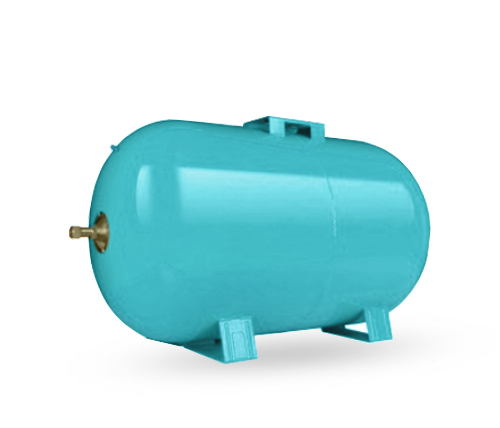
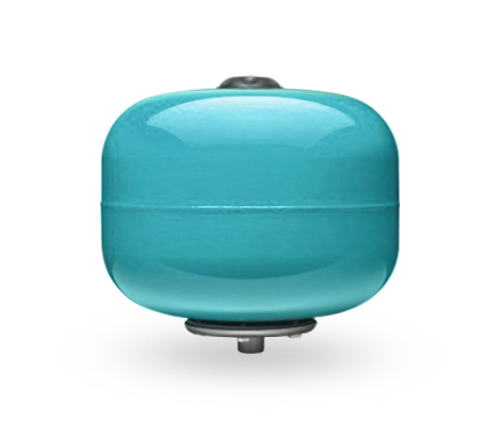
WCF Series 6 Bar to 16 Bar 1 Inch Connector Horizontal Water Pressure Tank
A pressure tank is a storage and pressure-stabilizing device installed between a water pump and the points of use. The tank contains water separated from a compressed air or gas chamber by a flexible membrane. When the pump operates, water enters the tank and compresses the air on the opposite side of the membrane. This stored pressure can then push water through the system when demand occurs.
Without a pressure tank, a pump may need to start every time a tap, shower, irrigation valve, or small appliance requires water. Such frequent cycling increases mechanical and electrical stress. Motor windings, bearings, seals, impellers, control switches, and electrical contacts may all experience more frequent operating cycles than necessary.
A pressure tank reduces this problem by supplying a limited volume of water without immediately starting the pump. When the system pressure falls to the lower activation point, the pump starts and restores pressure. When the upper pressure point is reached, the pump stops. This operating pattern increases the interval between pump starts and helps the pump run for more stable periods.
The tank also helps reduce pressure fluctuations. In a household booster system, for example, users may open and close taps repeatedly. A correctly precharged pressure tank can absorb these changes and deliver a smoother water supply. In agricultural irrigation, it can help balance short-term demand variations and reduce rapid pump cycling caused by small leaks or intermittent valve operation.
For commercial and light industrial systems, a pressure tank can provide additional operational flexibility. It may act as a buffer during short periods of demand, help protect the pump from unnecessary starts, and support a more stable pressure profile. The correct tank size depends on pump capacity, pressure-switch settings, expected demand, allowable cycling frequency, and the characteristics of the water system.
The WCF Series is a horizontal water pressure tank with a replaceable membrane and carbon steel flange. Its horizontal layout makes it suitable for installations where floor-mounted equipment is preferred or where the available vertical clearance is limited. The 1-inch connector used on the smaller models is compatible with many domestic and small commercial pump systems, while larger models use a 1.5-inch connector.
The product family includes six principal models: WCF60L, WCF80L, WCF100L, WCF150L, WCF200L, and WCF300L. The rated capacities range from 60 liters to 300 liters. Depending on the model, the maximum pressure is available in 6 bar, 8 bar, 10 bar, or 16 bar configurations.
The smaller WCF60L, WCF80L, and WCF100L models are specified with 6, 8, 10, and 16 bar maximum-pressure options. These models are appropriate for many household pressure-boosting systems, small irrigation systems, and compact water-supply installations. The WCF150L, WCF200L, and WCF300L models are specified with 10 bar and 16 bar options and are intended for higher-volume or more demanding systems.
The replaceable membrane is one of the most important design features. Instead of permanently bonding the water-contacting membrane to the tank body, the construction allows the membrane to be replaced when service conditions eventually require it. This can extend the useful service life of the pressure tank and reduce the need to discard the complete steel vessel because of membrane wear.
The tank body is made from carbon steel, while the flange provides the connection and support interface for the membrane assembly. The final material selection, coating, membrane compound, pressure rating, and connection configuration should always be confirmed against the exact model and order specification before installation.
The WCF Series offers replaceable membrane pressure-tank construction, which supports repairability and long-term serviceability.
The carbon steel flange provides a firm mechanical interface between the tank body and membrane assembly.
The horizontal form factor supports floor-mounted installation and can be useful in equipment rooms with limited overhead space.
The product family covers capacities from 60 liters to 300 liters, supporting both compact and higher-volume water systems.
Maximum pressure options from 6 bar to 16 bar allow selection according to the requirements of different pump and pipeline systems.
The smaller models use a 1-inch connector, while the larger WCF200L and WCF300L models use a 1.5-inch connector.
Precharge pressure specifications are provided for each model, helping installers establish the correct operating condition.
Butyl and EPDM membrane options are identified in the product information, allowing the tank material to be matched to the application and water conditions.
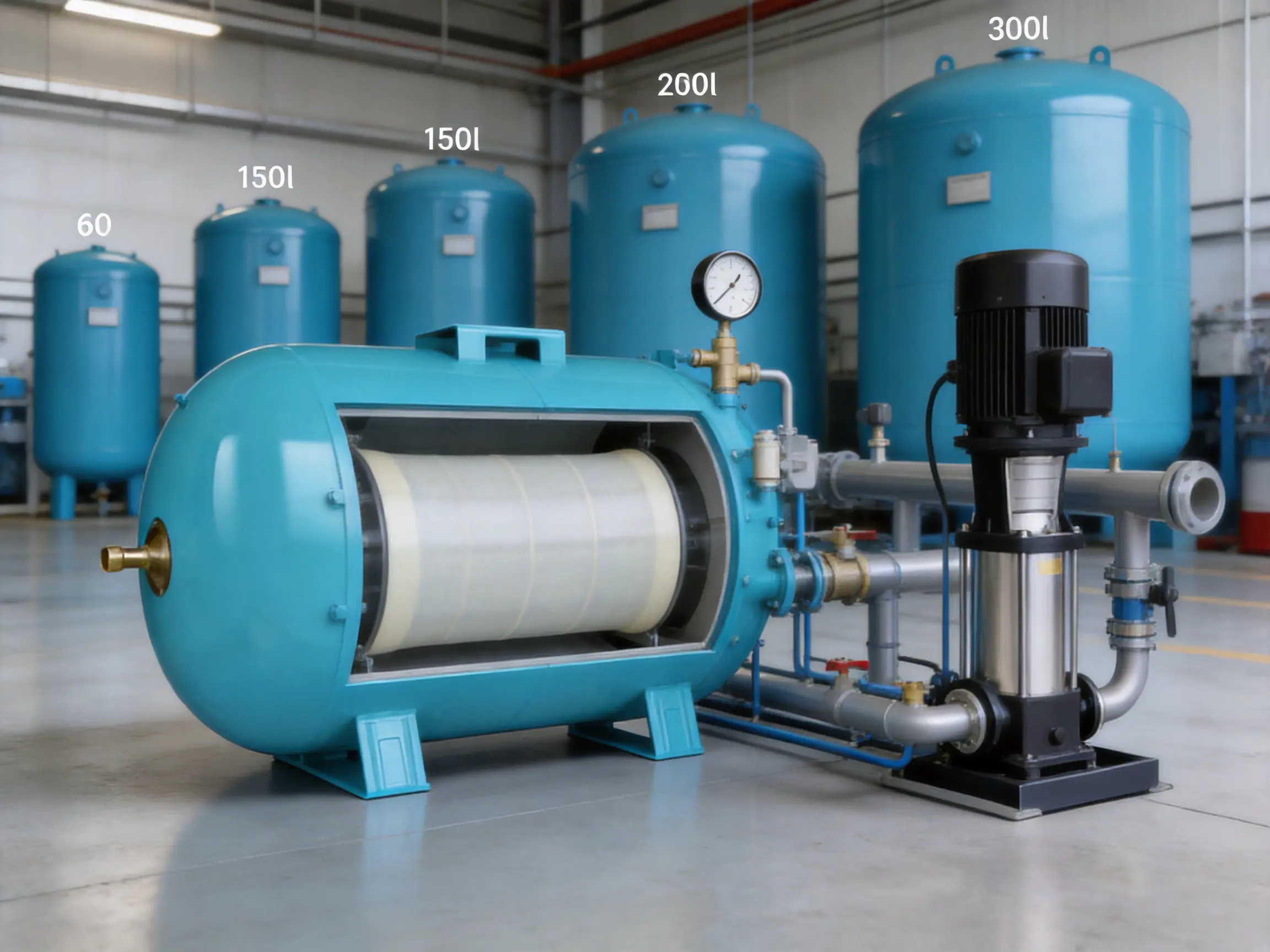
The WCF Series operates through the separation of water and compressed air by a flexible membrane. Before the tank is connected to the water system, the gas chamber is charged to a specified precharge pressure. When the pump fills the tank, water enters the membrane chamber and expands the flexible membrane into the available vessel space.
As the membrane expands, it compresses the air surrounding it. This compressed air stores energy. When a water outlet is opened, the compressed air pushes against the membrane and forces water out of the tank. The pump therefore does not need to start immediately for every small demand.
The effectiveness of the pressure tank depends on correct precharge adjustment. If the precharge is too low, the membrane may expand excessively, reducing available water storage and potentially increasing the risk of membrane fatigue. If the precharge is too high, the tank may accept too little water before the system reaches its upper pressure limit. In either case, the system may not achieve the expected drawdown volume.
Precharge should be checked when the tank is isolated from the water system and the water-side pressure has been fully released. Measuring precharge while the tank remains pressurized can produce an inaccurate reading. Installation personnel should use an appropriate pressure gauge and follow the pressure settings recommended by the system designer, pump manufacturer, or tank supplier.
The membrane is a critical wear component because it repeatedly flexes as the tank fills and empties. Water temperature, chemical compatibility, pressure range, cycling frequency, and installation quality all influence membrane service life. The replaceable construction of the WCF Series allows the membrane to be treated as a service component rather than an inaccessible permanent part.
The product information identifies Butyl and EPDM as available membrane materials. Butyl rubber is widely used in water pressure applications because of its low permeability and suitability for many potable and general water environments. EPDM is known for its resistance to weathering, ozone, and a broad range of environmental conditions.
Material selection should be based on the actual water chemistry, temperature, regulatory requirements, and application. A membrane suitable for ordinary clean water may not be appropriate for aggressive chemicals, oils, solvents, high salinity, or specialized process fluids. Buyers should confirm material compatibility before placing an order for unusual applications.
The provided product information contains two temperature descriptions. The product content states a working temperature of -10°C to 99°C for both Butyl and EPDM, while the detailed specification lists -20°C to 99°C. Because these values differ, the exact allowable operating range should be confirmed with the manufacturer for the selected membrane and configuration. The lower temperature limit may depend on material compound, order version, environmental conditions, and certification requirements.
Model selection should begin with the required pressure rating, tank volume, available installation space, connection size, and anticipated water demand. A larger tank is not automatically better. Excessive tank size can increase cost and occupy unnecessary space, while an undersized tank may not sufficiently reduce pump cycling.
The following table summarizes the technical information supplied for the WCF Series.
| Model | Nominal Capacity | Maximum Pressure Options | Length | Height | Precharge Pressure | Connector | Packing Volume |
|---|---|---|---|---|---|---|---|
| WCF60L | 60 L | 6, 8, 10, 16 bar | 680 mm | 408 mm | 1.8–2.0 bar | 1 inch | 0.1054 CBM |
| WCF80L | 80 L | 6, 8, 10, 16 bar | 640 mm | 470 mm | 1.8–2.0 bar | 1 inch | 0.1398 CBM |
| WCF100L | 100 L | 6, 8, 10, 16 bar | 725 mm | 470 mm | 1.8–2.0 bar | 1 inch | 0.1616 CBM |
| WCF150L | 150 L | 10, 16 bar | 980 mm | 532 mm | 2.5 or 4.0 bar | 1 inch | 0.2803 CBM |
| WCF200L | 200 L | 10, 16 bar | 912 mm | 660 mm | 2.5 or 4.0 bar | 1.5 inches | 0.4134 CBM |
| WCF300L | 300 L | 10, 16 bar | 1192 mm | 660 mm | 2.5 or 4.0 bar | 1.5 inches | 0.5353 CBM |
The dimensions listed in the table should be treated as planning data. Installers should allow additional clearance for pipework, valves, inspection, membrane replacement, pressure-gauge access, and safe handling. A pressure tank should not be installed in a location where it cannot be isolated or serviced.
The WCF60L, WCF80L, WCF100L, and WCF150L models use a 1-inch connector. This connection size is widely used in domestic booster systems, small pressure sets, and compact pump installations. It can simplify integration with common pipework and accessories.
The WCF200L and WCF300L models use a 1.5-inch connector. The larger connection is appropriate for systems with greater flow requirements or larger pipework. Correct connection sizing helps reduce unnecessary pressure loss and supports more effective transfer between the tank and the water system.
The connector size should not be selected solely according to the pump outlet. The complete system design should consider flow rate, pipe length, pipe material, fittings, valves, expected peak demand, and pressure loss. Oversized or undersized pipework can both create design inefficiencies, so the tank connection should be coordinated with the rest of the installation.
The WCF Series offers several practical advantages compared with basic pressure tanks that use fixed or difficult-to-replace membranes. These advantages are particularly relevant to professional installers, system integrators, distributors, and users who value long-term serviceability.
The most visible advantage is the replaceable membrane. In a conventional non-serviceable tank, membrane deterioration may require complete replacement of the vessel. This increases material waste, labor, transportation cost, and downtime. A replaceable design allows qualified technicians to renew the internal flexible component while retaining the main steel body if the vessel remains in acceptable condition.
Serviceability is especially valuable in commercial, agricultural, and remote installations. A pressure tank installed in a farm, pump room, construction site, or utility facility may be expensive or inconvenient to remove. If the membrane can be replaced locally, maintenance planning becomes easier and the equipment can remain in service longer.
The available pressure options extend from 6 bar to 16 bar. This range enables the product family to serve different system conditions rather than forcing every installation into one standard pressure class. Lower-rated models can be appropriate for ordinary domestic systems, while higher-rated configurations can be considered for stronger booster applications and higher-pressure water networks.
Pressure rating must always be treated as a safety-critical selection criterion. The tank’s maximum pressure must not be lower than the highest pressure that can occur in the system, including pump shutoff pressure, thermal expansion, and possible control failure. A safety valve or other appropriate protection should be included where required by the design and applicable regulations.
Many pressure tanks are designed primarily for vertical installation. The horizontal WCF configuration provides another option for equipment rooms, low-clearance plant spaces, compact pump skids, and floor-mounted domestic systems. This can make layout planning easier where a tall vertical tank would interfere with ceilings, cable trays, storage areas, or other equipment.
Horizontal installation also allows the tank to be positioned near a surface pump or booster set. This can simplify pipe routing and reduce the length of connecting pipework. However, the tank must be supported on a stable and level base, and the installation must prevent vibration, movement, or excessive loading on the connector.
The six available capacities give system designers more flexibility than a single-size pressure vessel. A 60-liter tank may be appropriate for a compact residential booster unit, while a 150-liter, 200-liter, or 300-liter model may better support a larger building, irrigation system, or commercial pump set.
Using a correctly sized tank can improve equipment efficiency. The objective is not simply to maximize stored water but to reduce unnecessary starts while maintaining acceptable pressure and drawdown. Correct sizing can contribute to longer pump life, smoother operation, and lower maintenance frequency.
Carbon steel is widely used for pressure vessels because it offers mechanical strength, dimensional stability, and suitability for formed and welded tank construction. The steel body provides the structural enclosure for the membrane and compressed gas chamber. The carbon steel flange supports the replaceable membrane assembly and contributes to a robust connection interface.
Steel pressure vessels must be protected against corrosion through suitable surface treatment, storage, and installation practices. The selected coating or finish should be compatible with the environment. Outdoor, coastal, humid, and chemically aggressive locations may require additional protective measures.
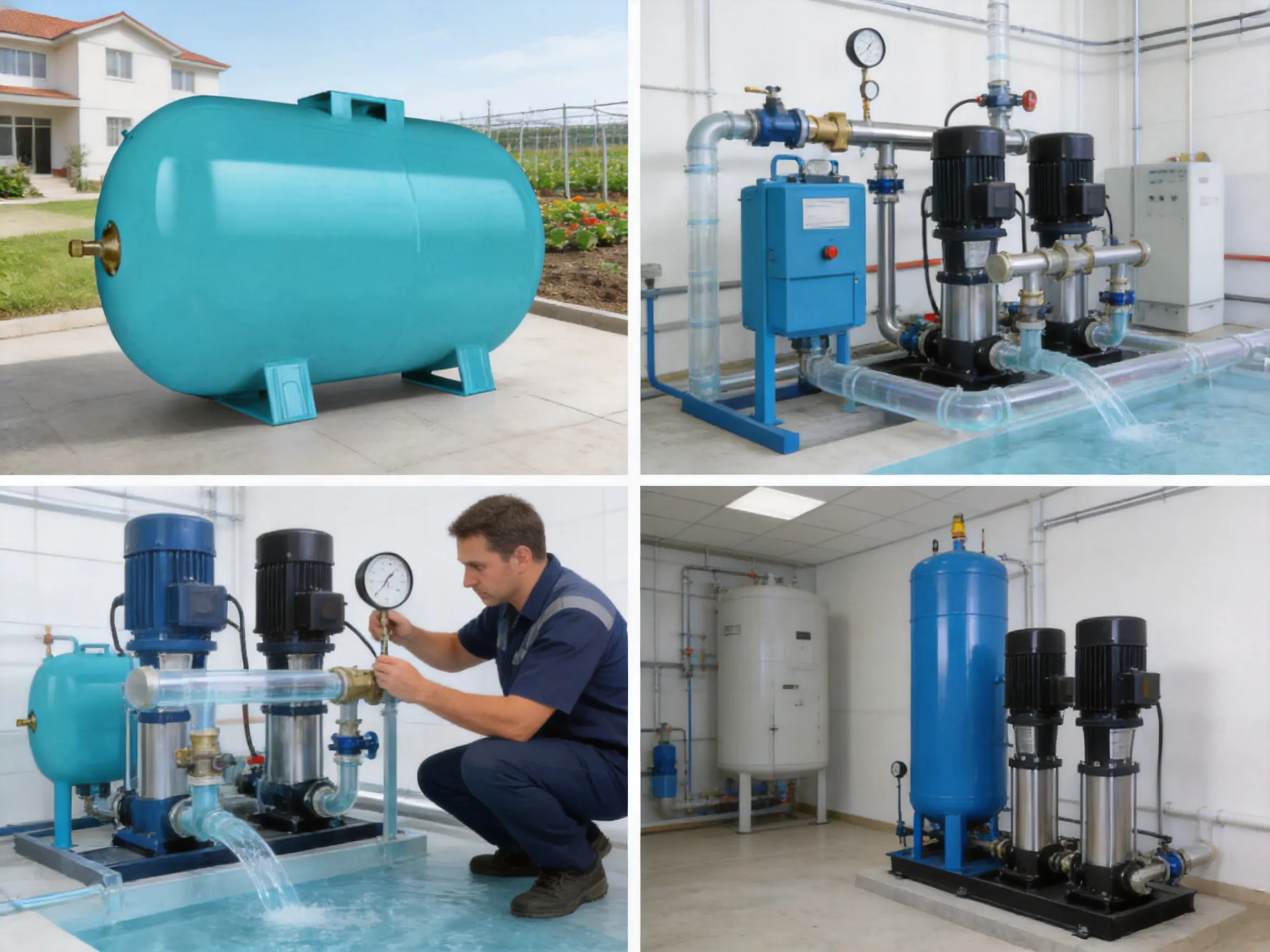
Taizhou Edwin Electric Co., Ltd. was founded in 2008 and operates as an integrated manufacturing enterprise. Its stated capabilities include independent research and development, mass production, and global export. These capabilities are relevant to pressure-tank buyers because a reliable supply relationship depends not only on the physical product but also on engineering coordination, production organization, order tracking, and after-sales communication.
The company’s core product lines include deep well pumps, submersible pumps, domestic booster pumps, and circulation pumps. It has also expanded into solar water pumps and intelligent booster pumps since 2018. This product breadth gives the manufacturer practical exposure to the types of systems in which pressure tanks are used.
A pump and pressure tank must work together as a system. Knowledge of pump performance, pressure switches, variable-speed controls, water demand, and pipeline behavior can support more appropriate tank selection. A manufacturer familiar with multiple pump categories may also be better positioned to help distributors assemble complete water-supply packages rather than treating the tank as an isolated component.
Independent product development can support continuous improvement in vessel dimensions, membrane design, connection arrangements, packaging, and application compatibility. For an international customer, engineering coordination is also important when adapting a product to local pipe standards, electrical systems, installation practices, and market expectations.
The WCF Series demonstrates a product-family approach rather than a single standardized vessel. Different capacities, pressure ratings, precharge values, and connector sizes are provided for different applications. This type of series planning can help distributors maintain a more useful product range while allowing customers to select a tank that matches the actual operating conditions.
Mass production can provide advantages in repeatability, purchasing efficiency, production scheduling, and spare-part planning. For wholesalers and project suppliers, consistent model identification is particularly important. The WCF60L through WCF300L naming structure provides a straightforward way to organize capacity and ordering information.
Production consistency should include control of steel forming, welding, flange fit, surface treatment, membrane assembly, pressure testing, precharge setting, labeling, and packaging. Each of these stages can influence the tank’s performance. A pressure vessel must not only look uniform; it must also maintain structural integrity and reliable separation between the water and gas chambers.
Customers should request the applicable inspection documents, test records, material details, and certifications required for their market. The exact documentation package may vary by destination, pressure rating, water application, and local regulations. Early confirmation helps prevent delays during project approval or customs clearance.
To support diverse purchasing needs, the company established Taizhou Haipai Import and Export Co., Ltd. and Golden Falcon Industrial Co., Ltd. in 2012. These organizations provide procurement planning, order tracking, cross-border delivery, and foreign-trade services.
For overseas buyers, this structure can be useful when a project requires several categories of equipment. A customer may need a deep well pump, pressure tank, control panel, booster pump, valves, and other accessories. Coordinating these items through a professional export and procurement team can reduce communication gaps and simplify shipment planning.
International supply also requires attention to packaging volume, container utilization, product protection, shipping documents, and delivery schedules. The WCF Series includes packing-volume data for each model, which assists buyers in estimating shipment requirements. The listed packing volumes range from 0.1054 CBM for the WCF60L to 0.5353 CBM for the WCF300L.
The WCF Series can be used with domestic booster pumps to stabilize water pressure in houses, villas, apartments, and small residential buildings. It may be especially useful where municipal pressure is inconsistent or where a well pump supplies a private water network.
In a household application, the tank can provide water for short-duration demands such as handwashing, toilet flushing, kitchen use, or a brief shower without requiring the pump to start each time. The appropriate capacity depends on the number of occupants, number of fixtures, pump flow rate, and pressure-switch settings.
Deep well and submersible pumps often supply water from wells, boreholes, storage reservoirs, or underground sources. A pressure tank installed on the discharge side can help regulate system pressure and reduce cycling when demand is intermittent.
Because well systems may operate in remote locations, serviceability is important. A replaceable membrane can reduce the need to replace the entire vessel if the flexible component eventually fails. The installation should include appropriate check valves, isolation valves, pressure controls, and dry-run protection as required by the pump system.
Agricultural irrigation systems frequently experience changing demand as valves open and close or as different irrigation zones operate. A pressure tank can act as a buffer and help smooth short-term changes. It may be paired with a surface pump, submersible pump, solar water pump, or booster pump.
Irrigation water may contain suspended solids, fertilizers, or chemicals. The tank itself should be selected for compatible water conditions, while filters and treatment equipment should be installed where needed. The membrane material, pressure rating, and corrosion protection should be reviewed before use with non-standard water.
Commercial buildings such as offices, hotels, restaurants, workshops, and retail facilities often need stable pressure across several points of use. The larger WCF150L, WCF200L, and WCF300L models may be considered as part of a packaged pressure system, depending on the building’s demand and pump performance.
Commercial installations benefit from planned maintenance. The tank should be accessible for pressure checks, visual inspection, membrane service, and connector inspection. If the building has critical water requirements, the system may also need duty and standby pumps, alarm controls, backup power, and a documented maintenance schedule.
Pressure vessels are also used in heating, cooling, and circulation-related systems, although the specific tank type and membrane material must match the fluid and temperature conditions. The WCF Series may be considered for suitable water-based systems, but users should verify temperature limits, fluid compatibility, pressure ratings, and any regulatory requirements before using it in HVAC applications.
The company reports that its pump products are used in municipal engineering, construction, mining, new-energy projects, HVAC systems, agricultural irrigation, and household water supply. In these sectors, a pressure tank may be part of a larger water-transfer or pressure-boosting package.
Project applications require careful engineering. Designers should evaluate transient pressure, pump shutoff head, elevation changes, pipe friction, water quality, environmental exposure, access for service, and emergency operating conditions. The tank should be integrated into the complete system rather than selected only by nominal volume.
Before installation, inspect the tank for shipping damage, dents, damaged fittings, coating defects, or visible deformation. Confirm the model, nominal volume, maximum pressure, connector size, membrane material, and precharge specification against the purchase order.
Install the tank on a firm, level, and adequately supported base. The horizontal vessel should not be allowed to rest on pipework or be suspended from the connector. Pipework should be independently supported so that its weight and thermal movement do not place stress on the tank connection.
Provide isolation valves where practical. These valves allow the tank to be removed or serviced without draining the entire system. A drain arrangement may also be useful, especially in systems that require regular inspection or seasonal shutdown.
Connect the tank to a suitable point on the discharge side of the pump. The connection should be sized and arranged to permit effective communication between the tank and the main water line. Avoid unnecessary restrictions, sharp bends, or poorly supported fittings near the vessel.
Verify the precharge before placing the tank into service. The water-side pressure should be released, and the reading should be taken under the condition specified by the system design. The supplied data identifies 1.8–2.0 bar for the WCF60L, WCF80L, and WCF100L models, and 2.5 or 4.0 bar for the WCF150L, WCF200L, and WCF300L models. The correct value for a particular installation must be confirmed with the supplier or system designer.
Install a pressure gauge in a visible position. Depending on the system, a pressure switch, electronic controller, safety valve, check valve, and pressure-relief arrangement may also be required. All protective devices should be selected according to the pump characteristics and local safety requirements.
After installation, fill the system gradually and inspect all joints for leakage. Confirm that the pump starts and stops at the intended pressure points. Observe several complete cycles to verify that the tank is accepting and delivering water correctly and that the pump is not short-cycling.
Routine inspection helps protect the tank and the connected pump. The inspection interval depends on system use, water quality, temperature, cycling frequency, and operating pressure. Commercial and agricultural systems may require more frequent checks than occasional domestic installations.
Check the tank for corrosion, coating damage, leakage, unusual noise, vibration, or deformation. Inspect the connector, flange area, valves, pressure gauge, and nearby pipework. A loss of water pressure, rapid pump cycling, or a pump that starts whenever a small outlet opens may indicate an incorrect precharge, a damaged membrane, a leaking check valve, or a system leak.
When checking precharge, isolate the tank from the water system and fully release the water-side pressure. Never remove a flange or membrane assembly while the tank is pressurized. Pressure must be safely discharged before any service work begins.
If the membrane is damaged, qualified personnel should replace it using the correct spare part and installation procedure. The flange and sealing surfaces should be cleaned and inspected. Fasteners should be tightened evenly and according to the applicable service instructions. After replacement, the tank should be checked for leakage and returned to the specified precharge.
Corrosion protection is also important. The tank should be kept away from standing water, aggressive chemicals, and environments that exceed the intended coating capability. Outdoor installations may need shielding from rain, sunlight, salt spray, and accidental impact.
A pressure tank stores energy in compressed gas and pressurized water. It must therefore be treated as pressure equipment. The maximum operating pressure must never be exceeded. The pump’s maximum shutoff pressure, pressure-control failure conditions, thermal expansion, and water hammer should all be considered in the system design.
Never drill, weld, cut, modify, or otherwise alter the pressure vessel without written authorization from the manufacturer and the necessary engineering approval. Unauthorized modification can compromise structural integrity and invalidate safety documentation.
The tank should be protected from freezing unless the selected configuration and operating conditions specifically allow low-temperature operation. Water expansion during freezing can damage the membrane, connection, or vessel. The temperature limits supplied for the product should be confirmed for the exact model and membrane compound.
Only compatible fluids should be used. Ordinary clean-water pressure tanks should not automatically be used for fuels, oils, solvents, corrosive chemicals, or fluids with unknown compatibility. If a system contains additives, disinfectants, fertilizers, or treatment chemicals, the membrane and steel protection should be reviewed first.
Installation and maintenance should be carried out by trained personnel. Local pressure-vessel regulations, plumbing codes, electrical requirements, and building rules may apply. The product data supplied with the actual order should take priority over general catalog information when there is any difference.
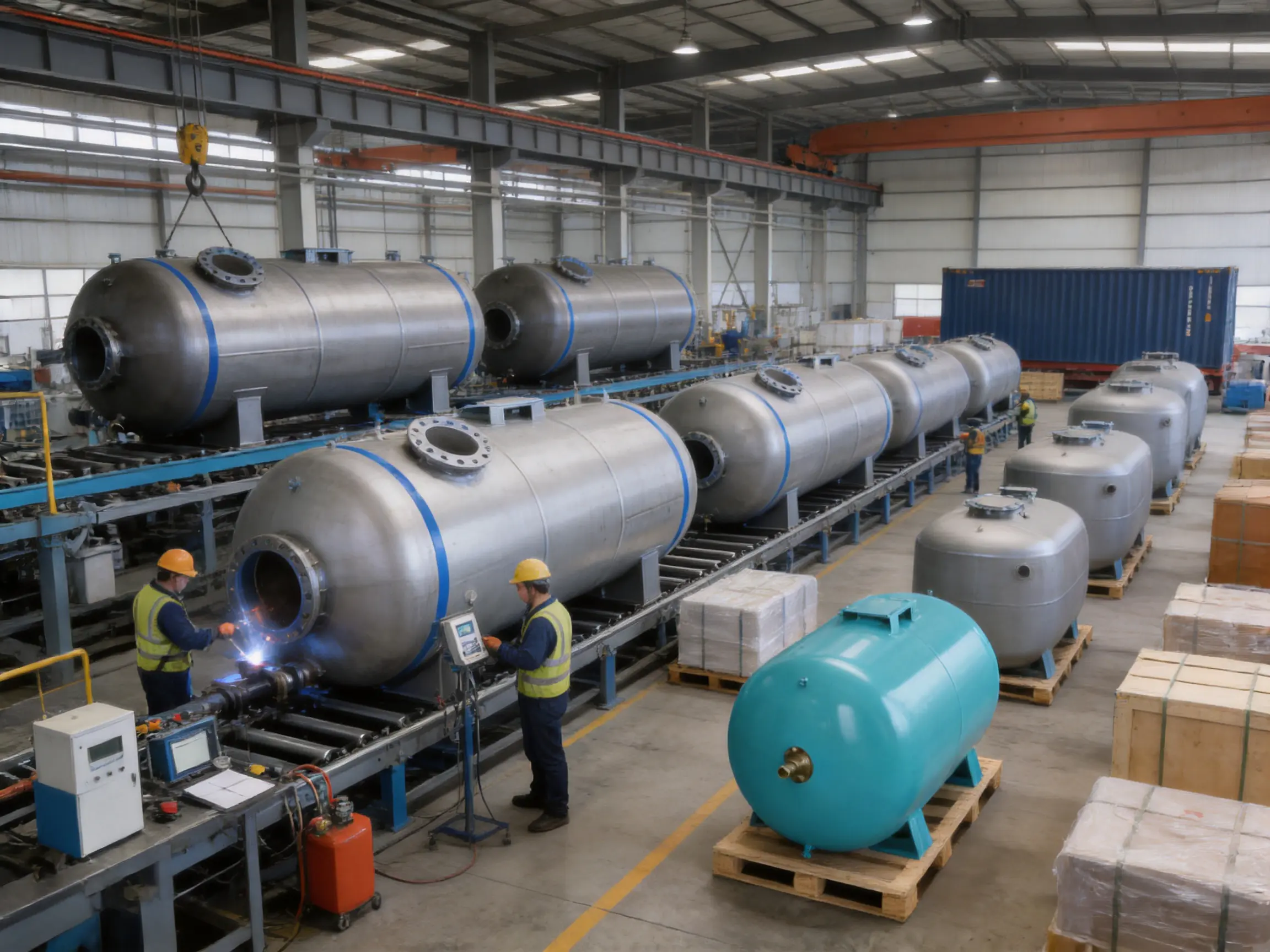
Pressure tanks are often purchased as part of a broader water-system project. The technical performance of the tank depends on how it is matched with the pump, control system, pipeline, and water demand. A supplier that understands pumps and related accessories can provide more useful assistance than a source that sells the vessel as an isolated commodity.
Edwin Pump’s broader product portfolio includes solar water pumps, intelligent booster pumps, deep well pumps, submersible pumps, surface pumps, circulation pumps, garden pumps, pool and spa pumps, commercial multistage pumps, end-suction pumps, pipes, valves, and pump accessories. This portfolio supports integrated procurement for residential, agricultural, commercial, municipal, and industrial applications.
The company states that it focuses on quality, innovation, high-performance water pumps, and one-stop procurement services for global industrial clients. Its international support structure includes procurement planning, order tracking, cross-border delivery, and foreign-trade services. These capabilities can be valuable for overseas distributors and contractors that need dependable communication throughout the purchasing process.
For large projects, buyers should clarify production lead time, minimum order quantities, packaging requirements, spare-membrane availability, inspection procedures, labeling, documentation, warranty conditions, and shipping arrangements. Early communication can prevent specification errors, especially when several pressure ratings or membrane materials are available.
Before ordering a WCF Series pressure tank, identify the required nominal capacity. Consider the pump’s flow rate, the number of starts per hour, the expected drawdown volume, the usage pattern, and the available installation space.
Confirm the maximum pressure requirement. Select a pressure class that exceeds the highest normal and abnormal pressure expected in the system, while remaining compatible with all connected components.
Confirm the connector size. The smaller models use a 1-inch connector, while the WCF200L and WCF300L models use a 1.5-inch connector. Verify that the selected connector aligns with the planned pipework and fittings.
Confirm the membrane material. Butyl and EPDM are identified in the product information, but the best choice depends on water chemistry, temperature, fluid compatibility, and local requirements.
Confirm the precharge pressure. The values differ between the smaller and larger models. The precharge must also be coordinated with the pump’s cut-in and cut-out pressure settings.
Confirm the operating-temperature range. Because the supplied information includes both -10°C and -20°C lower limits, the buyer should request confirmation for the exact product version and membrane configuration.
Check the external dimensions and service clearances. The length ranges from 640 mm to 1192 mm, and the height ranges from 408 mm to 660 mm. Packaging dimensions and shipping volume should also be included in logistics planning.
Request technical documents required for the destination market. These may include product drawings, pressure-test records, material information, inspection documents, operating instructions, spare-part details, and applicable conformity documentation.
Discuss replacement membranes and service parts at the time of purchase. Keeping spare membranes, gaskets, and suitable fasteners available can reduce downtime during maintenance.
The value of a pressure tank should be evaluated over its operating life rather than only by its initial purchase price. A low-cost tank with a non-replaceable membrane may appear attractive at the time of purchase, but complete replacement can become expensive when the membrane fails. The WCF Series offers a service-oriented alternative by allowing the membrane to be replaced.
The broad pressure range also reduces the need to source different tank brands for different projects. A distributor can organize a product family covering ordinary low-pressure systems and higher-pressure applications. This may simplify inventory management, product training, and customer support.
Horizontal installation can reduce layout limitations. In pump rooms where vertical clearance is unavailable, a horizontal tank may avoid costly changes to the equipment arrangement. It can also provide a more convenient configuration for skid-mounted equipment, provided that the base and pipework are properly engineered.
The combination of multiple capacities, replaceable membranes, carbon steel construction, and international manufacturing support makes the WCF Series a practical option for many water-pressure applications. It is not a substitute for correct system design, but it can provide a solid component within a well-engineered installation.
A typical pressure-boosting installation may include a water source, pump, check valve, pressure tank, pressure gauge, pressure switch or electronic controller, isolation valves, discharge pipework, and water outlets. A filter may be installed upstream where the water contains sediment or suspended particles.
The pressure tank should be connected in a location where it can respond effectively to changes in system pressure. In many systems, it is installed close to the pump discharge or on a common manifold. The final arrangement depends on pump type, controller design, pipework configuration, and the location of the pressure sensor.
For systems with variable-speed drives or intelligent booster controls, the tank settings may differ from those used with a traditional pressure switch. The controller and tank must be configured together. A pressure tank that is correctly adjusted for a fixed-speed pump may not provide the same performance when connected to a variable-speed system.
For solar pumping systems, demand and available power may vary throughout the day. A pressure tank can provide limited buffer storage between pump operation and water use. However, it should be integrated with the solar pump controller, storage tank, and water-demand strategy rather than treated as the only form of storage.
A reliable pressure tank depends on disciplined control throughout manufacturing. The carbon steel body must be formed accurately, and welded areas must be produced consistently. The flange must fit correctly so that the membrane is securely retained and the sealing surfaces remain reliable.
Membrane production and assembly require attention to material formulation, thickness, flexibility, dimensional accuracy, and cleanliness. A membrane that is improperly fitted or exposed to incompatible substances may fail prematurely even when the steel body is sound.
Pressure testing is a key part of responsible pressure-vessel production. The purpose is to verify vessel integrity and identify leakage or structural problems before shipment. The precise testing method and acceptance criteria should be established according to the applicable design and regulatory requirements.
Precharge control is also important. The supplied data lists different precharge ranges for different tank groups. Maintaining the correct initial pressure helps ensure consistent field performance and reduces the risk of improper commissioning.
Packaging must protect the flange, connector, coating, and vessel body during handling and transport. The published packing volumes help logistics planners estimate container loading and shipment costs. For international export, packaging should also account for humidity, vibration, stacking, and extended storage.
The tank stores pressurized water and reduces the number of times a pump must start. It also helps stabilize system pressure during intermittent water demand.
The WCF Series includes 60-liter, 80-liter, 100-liter, 150-liter, 200-liter, and 300-liter models.
Depending on the model, the available maximum-pressure options range from 6 bar to 16 bar. The WCF60L, WCF80L, and WCF100L are listed with 6, 8, 10, and 16 bar options. The larger models are listed with 10 and 16 bar options.
The WCF60L, WCF80L, WCF100L, and WCF150L models use a 1-inch connector.
The WCF200L and WCF300L models use a 1.5-inch connector.
It means the flexible internal membrane can be removed and replaced by qualified service personnel, subject to the condition of the tank body and the manufacturer’s service procedure.
The product information identifies Butyl and EPDM membrane options. The appropriate material should be selected according to water chemistry, temperature, fluid compatibility, and application requirements.
The WCF60L, WCF80L, and WCF100L are listed with a precharge pressure of 1.8–2.0 bar.
The WCF150L, WCF200L, and WCF300L are listed with precharge values of 2.5 or 4.0 bar, depending on the selected configuration.
Outdoor installation may be possible when the environment, coating, temperature, moisture exposure, and local requirements are suitable. The tank should be protected from standing water, severe corrosion, freezing, impact, and unauthorized access.
Yes, it can be considered for deep well and submersible pump systems when the pressure rating, capacity, connector, precharge, and membrane material match the system design.
It may be used as part of a solar water-pumping system to buffer short-term demand, but the tank must be coordinated with the solar controller, pump output, water storage, and pressure-control strategy.
Correct precharge affects drawdown volume, membrane movement, pump cycling, and pressure stability. An incorrect setting can reduce tank performance or increase membrane stress.
The tank should be isolated from the water system and the water-side pressure fully released before measuring precharge. A suitable pressure gauge should be used.
The supplied material gives both -10°C and -20°C as the lower operating-temperature limit. Buyers should confirm the exact temperature range for the selected model and membrane material with the manufacturer.
The WCF Series is manufactured by Taizhou Edwin Electric Co., Ltd., also known as Edwin Pump, a Chinese pump and water-system equipment manufacturer founded in 2008.
International buyers can discuss product selection, procurement planning, order tracking, cross-border delivery, technical documentation, spare parts, packaging, and export arrangements with the manufacturer or its associated foreign-trade organizations.
No. The correct size depends on pump capacity, demand pattern, pressure settings, allowable cycling, installation space, and required drawdown. Oversizing can increase cost and space requirements without providing proportional benefits.
Unauthorized drilling, welding, cutting, or alteration is unsafe and should not be performed. Any modification must be reviewed and approved by the manufacturer and qualified engineering personnel.
Check for incorrect precharge, a leaking membrane, system leakage, a defective check valve, incorrect pressure-switch settings, or an undersized tank. The system should be inspected by qualified personnel before continued operation.
The WCF Series horizontal water pressure tank is designed to improve the performance and serviceability of modern water-pressure systems. Its replaceable membrane construction, carbon steel flange, horizontal installation format, six capacity options, and pressure ratings from 6 bar to 16 bar provide practical flexibility for domestic, agricultural, commercial, and selected industrial applications.
Compared with basic non-replaceable pressure tanks, the WCF Series offers a clear service-life advantage: the membrane can be replaced without automatically discarding the complete vessel. Its multiple connector sizes and precharge specifications also help system designers match the tank to different pump configurations and flow requirements.
The product is supported by Taizhou Edwin Electric Co., Ltd., an integrated manufacturer with experience in pump research and development, mass production, global export, and one-stop procurement services. Its wider product portfolio gives the company a system-oriented understanding of water supply, boosting, irrigation, circulation, and renewable-energy pumping applications.
To achieve reliable results, buyers and installers should confirm the exact pressure rating, capacity, membrane material, temperature range, precharge, connector size, documentation, and local compliance requirements. When correctly selected, installed, and maintained, the WCF Series can help reduce pump cycling, stabilize water pressure, improve system efficiency, and support long-term water-equipment reliability.
1. Taizhou Edwin Electric Co., Ltd., WCF Series Product Specification and Technical Data.
2. Taizhou Edwin Electric Co., Ltd., Product Information for Replaceable Membrane Carbon Steel Pressure Tanks.
3. General principles of hydropneumatic pressure-tank operation and pump-cycle control.
4. General engineering practices for pressure-vessel installation, precharge adjustment, and maintenance.
5. General guidance on Butyl and EPDM elastomer selection for water-system applications.
6. General pump-system design principles for domestic water supply, irrigation, booster systems, and commercial water networks.
7. General international logistics practices for packaged pressure vessels and water-system equipment.
edwina@edwin-pump.com
+86-13586290903 (WhatsApp)
Xuri Gongliang Cutting Tool Entrepreneurship Park, Wenqiao Town, Wenling City, Taizhou City, Zhejiang Province, China

High Performance Smart Pump Factory


 English