edwina@edwin-pump.com

View All Products
en
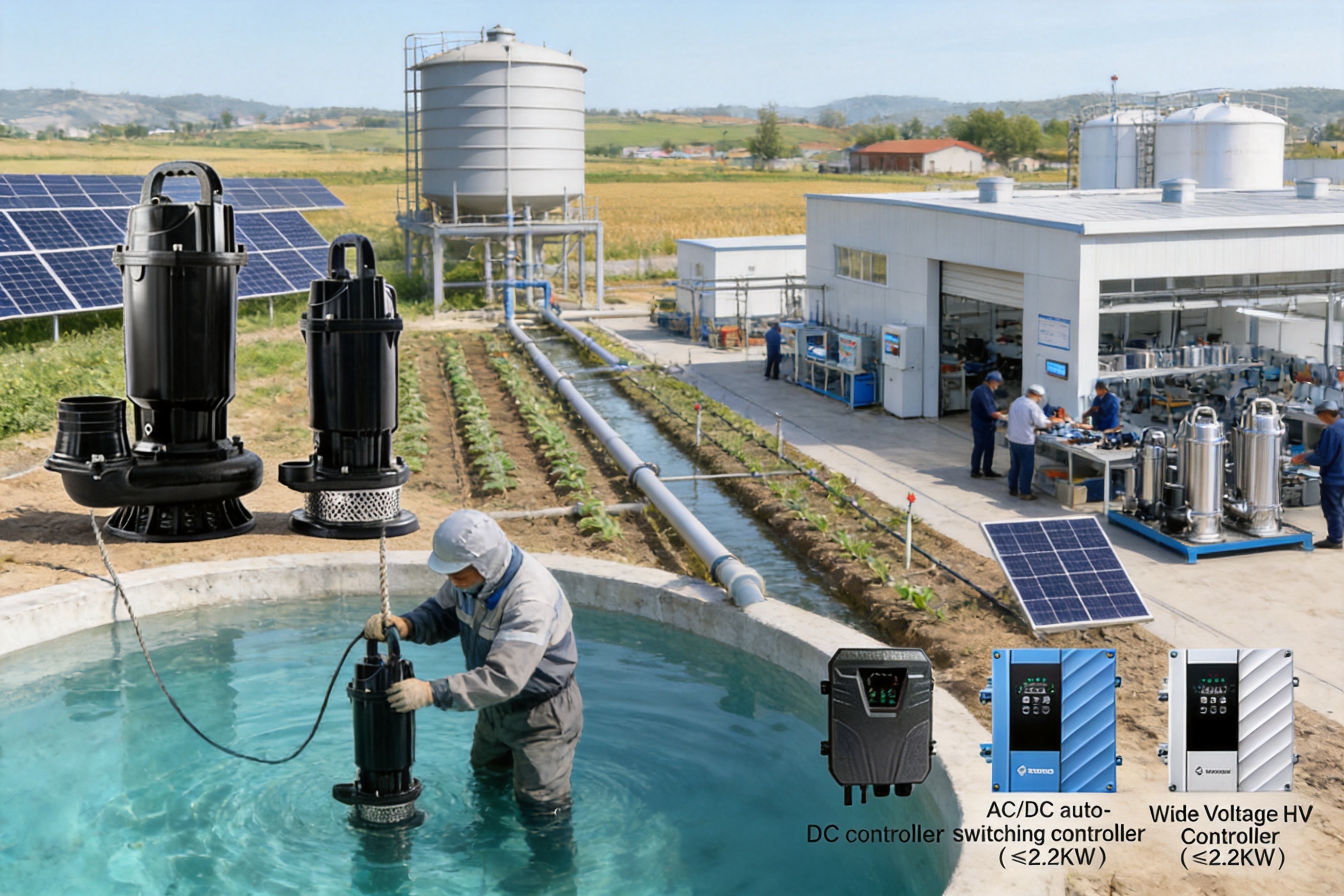
Reliable water access is essential for households, farms, community facilities, and remote infrastructure. In locations where grid electricity is unavailable, unstable, or expensive to extend, solar water pumping offers an efficient alternative. The HVQD Series wide-voltage brushless motor solar aluminum submersible pump is designed for this exact operating environment. It combines a solar-compatible electrical system, a durable aluminum pump body, a closed impeller, and several flow-and-head configurations for clean-water pumping applications.
Unlike conventional fixed-voltage pumps that may operate only within a narrow electrical range, the HVQD Series is engineered to accept changing power conditions associated with solar generation. Its brushless DC motor is suitable for systems in which available voltage varies throughout the day because of sunlight intensity, cloud cover, temperature, and panel operating conditions. This flexibility helps the pump make better use of available solar energy while reducing dependence on a stable utility supply.
The product family includes models from 750 W to 1,500 W, with maximum flow rates from 7 m³/h to 50 m³/h and maximum heads from 10 m to 30 m. This range allows system designers to select a pump according to required discharge, lifting height, pipe size, and available solar array capacity. The result is a practical solution for household water supply, small-scale irrigation, remote reservoirs, and other clean-water duties.
Solar pumping systems convert sunlight into electrical energy that powers a pump. During daylight hours, solar panels supply direct-current electricity to the pump or its control system. The pump then transfers water from a well, tank, reservoir, or other source to a storage tank, irrigation network, or point of use.
This operating principle provides several benefits. Solar energy is renewable, available in many remote areas, and free at the point of use after the system has been installed. A solar pump can also reduce fuel consumption, eliminate the need for frequent generator refueling, and lower operating noise compared with engine-driven pumping equipment.
However, solar pumping creates specific engineering challenges. Solar output is not constant. A pump must be capable of starting and operating under changing voltage and power conditions. If the pump has a narrow operating range, it may stop frequently or fail to use available energy efficiently. A pump intended for solar applications must therefore be matched carefully with the solar array, hydraulic requirements, cable length, water source, and storage arrangement.
The HVQD Series addresses the electrical challenge through a wide-voltage brushless motor design. The listed models support an AC voltage range of 85 V to 280 V and an optimum DC input voltage range of 100 V to 350 V. The stated solar-panel open-circuit voltage requirement is below 450 V. These specifications should be used by qualified system designers when determining the panel configuration and control equipment.
Solar pumping is often most effective when water is stored rather than electricity. Instead of relying entirely on batteries, a system can pump water during periods of sunlight into an elevated or ground-level storage tank. The stored water can then be used during the evening, at night, or during short periods of poor weather. This approach can simplify system design and reduce battery replacement requirements.
The HVQD Series is a DC submersible solar pump intended for clean-water applications. Its main construction features include a wide-voltage brushless motor, an aluminum pump body, and a closed impeller. The pump is designed to be installed below the water surface in wells, tanks, or reservoirs, allowing it to push water through an outlet pipe to the required destination.
The pump body is made from aluminum, providing a combination of low weight, mechanical durability, and corrosion resistance suitable for many submersible installations. A lighter pump is easier to transport, lower into a well, remove for inspection, and install in remote locations where handling equipment may not be available.
The closed impeller is designed to create smooth and consistent water flow. Compared with an open impeller, a closed impeller generally provides a more enclosed hydraulic passage and is well suited to clean-water pumping. It can help protect the internal flow path from certain external debris, although the water source should still be screened and kept as free from sand, mud, fibers, and large solids as possible.
The series is available in multiple hydraulic configurations. Smaller models can serve lower-volume household or garden applications, while larger models provide greater flow for agricultural irrigation and water transfer. The outlet sizes range from 1 inch to 3 inches, giving installers flexibility when selecting pipes, fittings, valves, and distribution systems.
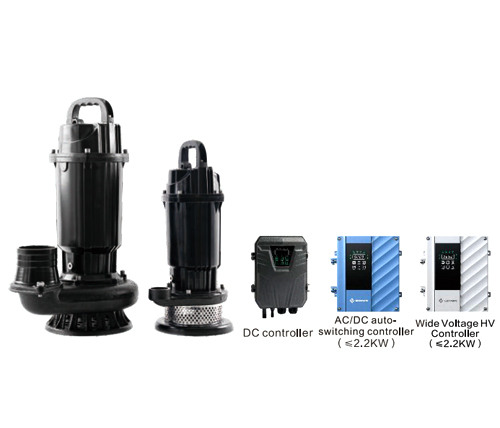
HVQD Seires Wide Voltage Brushless Motor Solar Aluminum Submersible Pump with Closed Impeller
The brushless motor is one of the most important features of the HVQD Series. A brushless design does not rely on conventional mechanical brushes and commutators for motor switching. This reduces a common source of mechanical wear and supports stable, low-maintenance operation.
Solar power conditions change continuously. At sunrise, the available voltage and current gradually increase. During cloud cover, the electrical output may fall quickly. At midday, the array may provide a higher operating level, while high temperatures can affect panel performance. A wide-voltage motor gives the system greater tolerance for these variations than a narrow-voltage motor.
The stated optimum DC input range of 100 V to 350 V allows the listed models to work with different solar-array configurations. The correct panel arrangement depends on the model, installation location, seasonal sunlight, cable length, and system controller. The open-circuit voltage of the connected solar array must remain below the stated limit of 450 V.
Wide-voltage operation does not mean that system design can be ignored. The pump must still receive sufficient power to reach the desired operating point. If the solar array is too small, the pump may operate below its rated performance. If the array voltage is too high, equipment damage may occur. Correct electrical matching remains essential for safety, reliability, and performance.
Aluminum provides several practical advantages in solar pumping systems. It is lighter than many alternative metal construction materials, which can simplify transportation and installation. This is particularly valuable for rural wells, rooftop storage systems, remote farms, and locations where access roads or lifting equipment are limited.
The aluminum body also provides useful durability for long-term submersible use when the water chemistry is appropriate. Installers should evaluate the water source before selecting any pump material. Highly aggressive water, excessive salinity, or unusual chemical conditions may require a different material specification or additional protection.
A durable pump body helps protect internal hydraulic and motor components during installation and operation. Even so, the pump should not be dropped, dragged by its cable, or operated while resting in sediment. Proper suspension, cable support, and intake clearance are necessary to protect the equipment.
The closed impeller supports smooth water movement and consistent hydraulic performance in clean-water conditions. The enclosed vanes help form a defined flow passage, making this design appropriate for household water supply, storage tank transfer, and irrigation systems supplied by relatively clear wells or reservoirs.
Because the product is intended for clean water, the intake should be protected from floating debris, sand, stones, leaves, and other solids. A suitable screen or filter can help prevent blockage. Water quality should be reviewed before installation, particularly in wells that contain abrasive particles.
A closed impeller is not a substitute for source-water management. If sediment enters the pump continuously, it can cause wear, reduce flow, increase power consumption, or obstruct the hydraulic passage. Periodic inspection of the water source and intake area helps maintain performance.
The submersible format places the pump close to the water source and allows it to push water upward through the discharge pipe. This can reduce the priming issues associated with some surface pumps. It also makes the equipment suitable for wells, tanks, reservoirs, and other submerged installation locations.
The compact design is particularly useful where the available installation area is limited. A submersible pump can be installed inside a narrow well or tank, provided the well diameter, water depth, pump dimensions, cable arrangement, and discharge connection are compatible with the selected model.
The power cable supplied for the listed models is 5 m. If a longer cable is required, the extension must be correctly sized, properly insulated, protected from moisture, and installed by a qualified technician. Voltage drop should be calculated carefully, especially in high-voltage DC solar systems.
The HVQD Series contains six listed configurations. Their performance values describe maximum flow and maximum head rather than a guaranteed flow at every operating condition. Actual discharge depends on total dynamic head, pipe diameter, pipe length, fittings, valves, water level, solar power, and system resistance.
| Model | Power | Optimum DC Input Voltage | Maximum Flow | Maximum Head | Outlet | Cable |
| HVQD7-26-72-750 | 750 W | 100–350 V | 7 m³/h | 26 m | 1 inch | 5 m |
| HVQD12-30-110-1100 | 1,100 W | 110–350 V | 12 m³/h | 30 m | 1.5 inches | 5 m |
| HVQD25-25-110-1100 | 1,100 W | 110–350 V | 25 m³/h | 25 m | 2 inches | 5 m |
| HVQD30-28-110-1500 | 1,500 W | 110–350 V | 30 m³/h | 28 m | 2 inches | 5 m |
| HVQD35-20-110-1500 | 1,500 W | 110–350 V | 35 m³/h | 20 m | 2.5 inches | 5 m |
| HVQD50-10-110-1500 | 1,500 W | 110–350 V | 50 m³/h | 10 m | 3 inches | 5 m |
Flow is the volume of water delivered during a specific period. It is commonly expressed in cubic meters per hour. Household systems may require a relatively modest flow, while orchard irrigation, livestock facilities, or storage-tank filling may require a greater volume.
The 7 m³/h model is the smallest listed configuration and may be suitable for lower-volume water transfer, household supply, or small garden systems. The 12 m³/h model offers increased head capability and may be selected where both moderate flow and greater lifting height are needed.
The 25 m³/h, 30 m³/h, 35 m³/h, and 50 m³/h models are more suitable for higher-volume transfer and irrigation. The 50 m³/h model has the highest stated maximum flow but a lower maximum head of 10 m. It is therefore more appropriate for relatively low-lift applications with large-volume requirements.
Head is the vertical height and pressure requirement the pump must overcome. It includes the elevation difference between the water level and the delivery point, as well as friction losses in pipes, elbows, filters, valves, and other fittings.
A model with a higher maximum head is not automatically the best choice for every installation. If the system requires high flow at a low lift, a large-outlet, high-flow model may be more efficient and economical. If the water must be lifted to an elevated tank, a model with greater head capability may be more appropriate, even if its maximum flow is lower.
System designers should use the pump performance curve to determine the expected operating point. The maximum values in a specification table should be treated as reference limits. The actual flow at the required head must be confirmed before final selection.
The listed outlet sizes range from 1 inch to 3 inches. A larger outlet can help accommodate higher flow rates and reduce friction losses when used with correctly sized piping. However, changing the outlet connection does not by itself increase pump capacity. The pump, pipe, valve, and storage system must be treated as one hydraulic system.
Reducing the pipe diameter too much can increase friction, lower delivered flow, and create unnecessary energy losses. Long pipelines should be sized according to flow, distance, elevation, and acceptable pressure loss.
A fixed-voltage pump may require a narrowly defined solar-array voltage. This can limit design flexibility and make the system more sensitive to changes in sunlight or panel configuration. The HVQD Series offers a wider DC input range, giving installers more options when arranging panels and designing systems for different conditions.
Wide-voltage operation can also be valuable when solar arrays produce different output levels during the day. Instead of being restricted to a single voltage condition, the pump can operate across a broader range, subject to the required power and controller specifications.
This advantage is especially relevant for remote sites where the pump may need to operate without grid support. The system can be designed around the available solar resource rather than around a conventional utility voltage.
Brushed motors contain components that make mechanical contact during operation. These components can wear over time and may require replacement or inspection. A brushless motor eliminates this specific wear mechanism, supporting lower maintenance and longer service potential when the pump is correctly operated.
Brushless operation is also suitable for equipment that needs to run automatically for extended periods. In a solar water system, reducing routine maintenance can be valuable because the pump may be installed in a remote field, well, or community water facility.
Fuel-driven pumps can provide high power, but they require fuel storage, regular refueling, engine maintenance, lubrication, and exhaust management. They may also produce more noise and emissions. A solar submersible pump has no fuel tank and does not produce local exhaust during operation.
For daily irrigation or routine water transfer, solar operation can reduce recurring energy costs. The main investment is normally concentrated in the pump, solar panels, electrical protection, support structure, pipes, and storage equipment. Over the operating life of the system, reducing fuel use can provide meaningful economic benefits.
A surface pump must draw water through an intake line. Depending on the installation, this can create suction limitations, priming requirements, and sensitivity to air leaks. A submersible pump is placed directly in the water, allowing it to push water toward the destination.
Submersible installation can be advantageous for deep wells and submerged tanks. It also helps reduce noise at the surface and can save space in compact installations. However, maintenance access must be considered because the pump must be lifted from the water for certain inspections or repairs.
Open impellers can be useful for fluids containing solids, but they may not provide the same enclosed hydraulic path as a closed impeller. The HVQD Series is optimized for clean water, where a closed impeller can support stable flow and efficient transfer.
The correct choice depends on water quality. A closed-impeller clean-water pump should not be selected for heavily contaminated water, thick sludge, or applications with large solids unless the manufacturer has specifically approved that use.
The pump can be used to transfer water from a well or underground source to a household storage tank. A tank-based arrangement allows the pump to operate during daylight and provides water during periods when solar power is unavailable.
For household use, the system should include suitable filtration, a non-return valve where required, tank-level control, and appropriate electrical protection. Drinking-water applications require a complete review of all materials and water-quality conditions, not only the pump itself.
Small farms, gardens, orchards, and nurseries often need reliable water movement without the cost of extending grid electricity. The HVQD Series can support irrigation systems connected to drip lines, sprinklers, storage tanks, or distribution channels.
Irrigation demand varies significantly. Drip irrigation may require lower flow at controlled pressure, while filling an irrigation reservoir may require high volume at low head. Selecting the model according to the actual hydraulic duty is essential.
Remote construction sites, rural communities, field stations, and isolated properties can benefit from a pump that does not depend on utility electricity. The wide-voltage solar design provides a practical foundation for systems powered directly by photovoltaic arrays.
Remote installations should be designed for easy inspection. The solar array, cables, controller, pump suspension, outlet pipe, and storage tank should be arranged so that faults can be identified without specialized equipment whenever possible.
The pump can move water from one storage location to another. For example, it may transfer water from a collection reservoir to an elevated tank, from a well to an irrigation tank, or from a lower tank to a distribution point.
Float switches, water-level sensors, or controller-based protections can help prevent dry running and overflow. The exact control method should be selected according to the installation and the associated control equipment.
Community facilities may use solar pumping to provide water for washing, sanitation, livestock, or other non-industrial needs. Where the water is intended for human consumption, treatment and testing requirements must be addressed separately.
A community system should include adequate storage capacity, a reliable distribution network, maintenance access, and a clear operating procedure. The pump is one part of the wider water infrastructure and should be selected according to the complete demand profile.
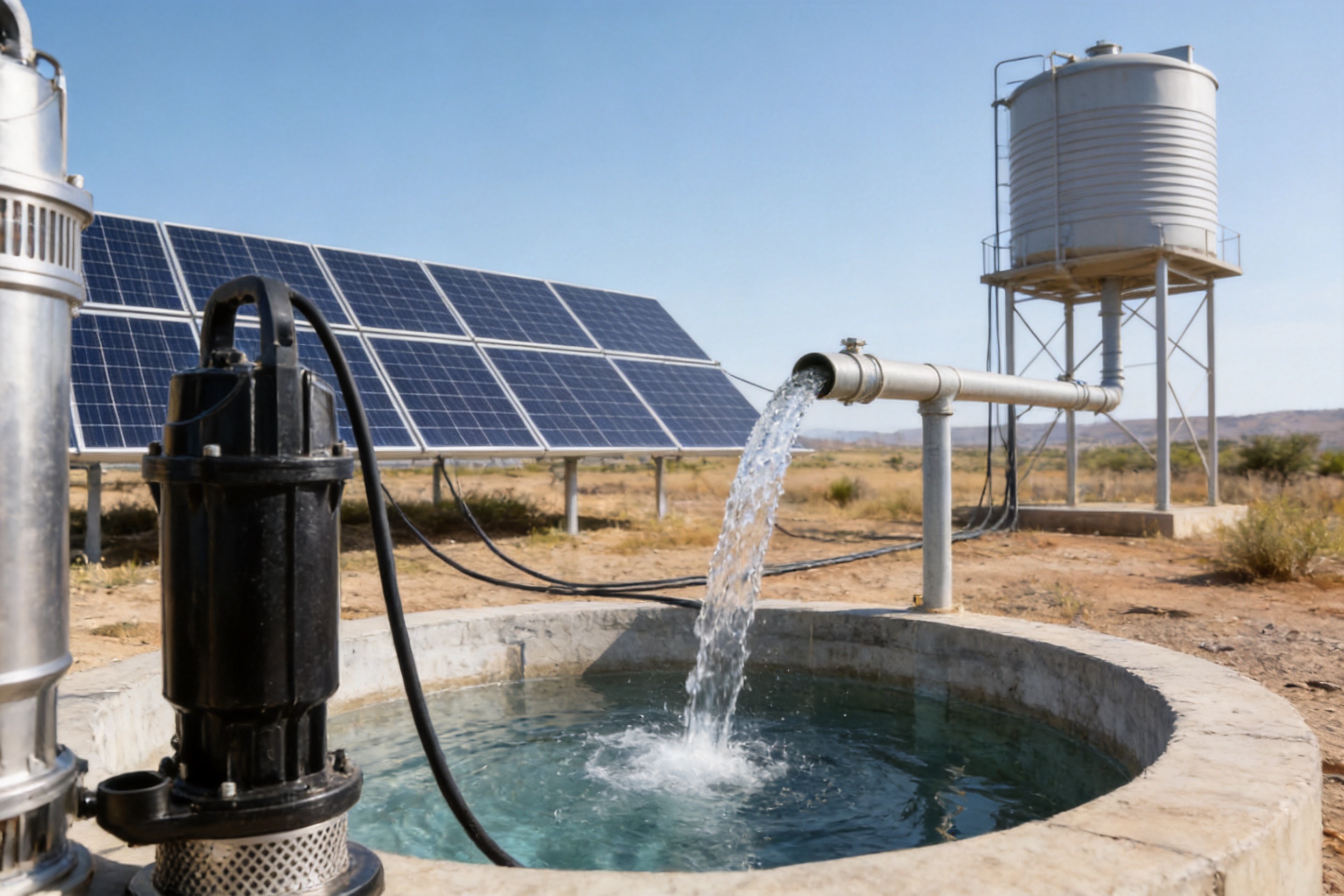
The manufacturer, Taizhou Edwin Electric Co., Ltd., was founded in 2008 and operates as an integrated manufacturing enterprise focused on research and development, mass production, and global export. This structure is important for buyers seeking a stable supply of solar pumps rather than a one-time equipment transaction.
An integrated manufacturer can coordinate product development, component selection, assembly, performance evaluation, packaging, and order fulfillment within a connected business system. This may improve communication between engineering and production teams and can support more consistent product updates.
The company’s product portfolio includes deep well pumps, submersible pumps, domestic booster pumps, circulation pumps, solar water pumps, and intelligent booster pumps. Experience across several pump categories can support a broader understanding of hydraulic design, motor systems, water-supply applications, and market requirements.
Mass-production capability is another important strength. Solar projects may involve multiple pumps for farms, housing developments, water-storage networks, or distribution programs. A manufacturer with established production planning can better support repeat orders, model consistency, and procurement schedules.
Global export experience also matters because international pump projects often involve different electrical systems, installation practices, packaging requirements, and shipping arrangements. The company has developed foreign-trade and procurement-service capabilities through related business entities established to support order tracking, cross-border delivery, and customer coordination.
The manufacturer has invested in new-energy and intelligent technologies since 2018. This direction is relevant to the HVQD Series because solar pumping requires more than a conventional motor placed in a pump housing. It requires attention to variable electrical input, energy availability, control behavior, and system integration.
Research and development in this field can include motor design, hydraulic optimization, electrical compatibility, protection strategies, and adaptation to different application environments. The wide-voltage brushless design reflects the need to align pump operation with the variable output of solar arrays.
For buyers, an active development capability can provide practical benefits when a project requires a specific flow range, outlet configuration, voltage arrangement, or installation method. The available model range already covers several combinations of power, flow, head, and outlet size.
Quality in a submersible pump depends on the combined performance of the motor, pump body, impeller, seals, cable, electrical connections, and assembly process. A weakness in any one component can affect reliability. An organized manufacturing process should therefore control incoming materials, machining or forming operations, motor assembly, hydraulic assembly, electrical testing, and final inspection.
The manufacturer’s integrated production model supports this type of coordinated work. Buyers should request the appropriate inspection documents, test records, product drawings, and operating instructions for their specific order. These documents help confirm that the delivered equipment matches the intended system design.
For commercial purchases, quality consistency is particularly important. A distributor or project contractor may need multiple pumps with matching specifications. A stable production system can simplify spare-parts planning, installation training, and maintenance procedures.
The company provides procurement planning, order tracking, cross-border delivery, and foreign-trade services through its broader business organization. This can be useful for international buyers who need coordinated communication between technical, commercial, and logistics teams.
One-stop procurement does not replace technical verification. Buyers should still confirm the pump model, voltage range, power rating, performance curve, outlet size, cable length, packaging, and required accessories before placing an order. Clear documentation reduces the risk of selecting a pump that does not match the site conditions.
Before installation, inspect the well, tank, or reservoir. Confirm the water depth, seasonal water-level variation, water quality, sediment content, and available clearance. The pump should remain adequately submerged during operation and should not sit directly in accumulated mud or sand.
The water should be clean enough for a closed-impeller pump. If the source contains suspended solids, install suitable screening or filtration and consider whether a different pump design is required.
The solar array must be matched to the selected pump model. The listed models require an optimum DC input voltage between 100 V and 350 V, depending on the model, while the solar-panel open-circuit voltage must remain below 450 V.
The recommended solar-panel power is at least 1.3 times the pump power. Based on the listed pump ratings, this corresponds to approximately 975 W for the 750 W model and approximately 1,430 W for each 1,100 W model. For the 1,500 W models, the recommended minimum is approximately 1,950 W.
These values are reference requirements from the product data. Actual array sizing should consider local solar radiation, seasonal conditions, panel temperature, cable losses, controller efficiency, and the desired daily water volume.
Measure the vertical lift from the lowest operating water level to the discharge point. Add pipe friction and the pressure required by the final application. This total determines the operating head that the pump must overcome.
Use a pipe diameter appropriate for the selected flow. Avoid unnecessary bends and restrictions. Install valves where needed for isolation, maintenance, and flow control. A non-return valve may help prevent reverse flow, water hammer, or repeated drain-back, depending on the system layout.
The pump should be suspended securely using an appropriate support arrangement. The power cable must not carry the weight of the pump or discharge pipe. Protect the cable from abrasion, sharp edges, excessive tension, and contact with moving equipment.
All electrical connections must be sealed against moisture and installed according to applicable electrical codes. High-voltage DC systems can be hazardous even when the pump is not operating. Isolation equipment, overcurrent protection, grounding, and correct polarity should be provided by qualified personnel.
Dry running can damage pump components because water normally provides cooling and lubrication functions within the submersible assembly. A level sensor, float switch, controller protection, or other suitable method should be used to stop the pump if the water level falls below the safe operating point.
Similarly, the delivery tank should be protected from overflow. A complete system may use source-level monitoring, destination-level monitoring, and a control device that responds to both conditions.
One advantage of the brushless solar design is reduced routine maintenance compared with systems that use mechanically brushed motors or fuel engines. Nevertheless, the pump should be inspected periodically to maintain safe and efficient operation.
Check the solar array for dust, shading, physical damage, and loose connections. Dirty or shaded panels can reduce available power and cause lower pump output. Inspect exposed cables and connectors for wear, moisture, or damage.
Monitor flow and delivery time. A gradual reduction in flow may indicate a blocked intake, sediment accumulation, worn hydraulic components, pipe obstruction, falling water level, or reduced solar output. Early diagnosis can prevent more serious damage.
Inspect the well or reservoir for debris and sediment. If the water source changes seasonally, adjust the intake position or cleaning schedule as necessary. The pump should be removed only by personnel familiar with submersible equipment and electrical isolation procedures.
At the end of a service period, record operating observations such as daily pumping duration, approximate water volume, solar conditions, and any alarms or interruptions. These records help identify changes in performance and support preventative maintenance.
For many agricultural and household systems, storing water is more economical than storing electricity. A sufficiently sized tank allows the pump to work when solar power is available and provides a reserve for periods of low sunlight.
This arrangement may reduce battery costs, battery replacement requirements, and control complexity. However, the tank must be sized according to daily demand, expected solar availability, and the required reserve period.
Solar conditions differ by season. A pump system designed only for peak summer sunlight may deliver less water during winter or extended cloudy periods. Designers should determine whether the project requires a guaranteed daily water volume or whether production can vary with available sunlight.
Where water demand is critical, the system may require additional panels, a larger storage tank, a backup power source, or a hybrid controller. The pump’s wide-voltage capability improves electrical flexibility but does not eliminate the need for adequate total energy.
The HVQD Series is intended for clean water. Water containing abrasive sand can accelerate impeller and seal wear. Water containing corrosive chemicals can affect aluminum and other wetted components. Installers should test the source when water quality is uncertain.
If the application involves wastewater, sludge, fibrous material, heavy sediment, or large solids, a pump specifically designed for those conditions should be considered instead.
Oversizing a pump can increase initial cost and may create unnecessary pressure or flow. Undersizing can lead to insufficient water delivery and extended operating times. The best selection is based on the actual operating point rather than only the maximum flow value.
For irrigation, calculate the required flow from the number and type of emitters or sprinklers. For household supply, calculate peak demand, storage volume, and delivery pressure. For tank filling, calculate the desired filling time and available head.
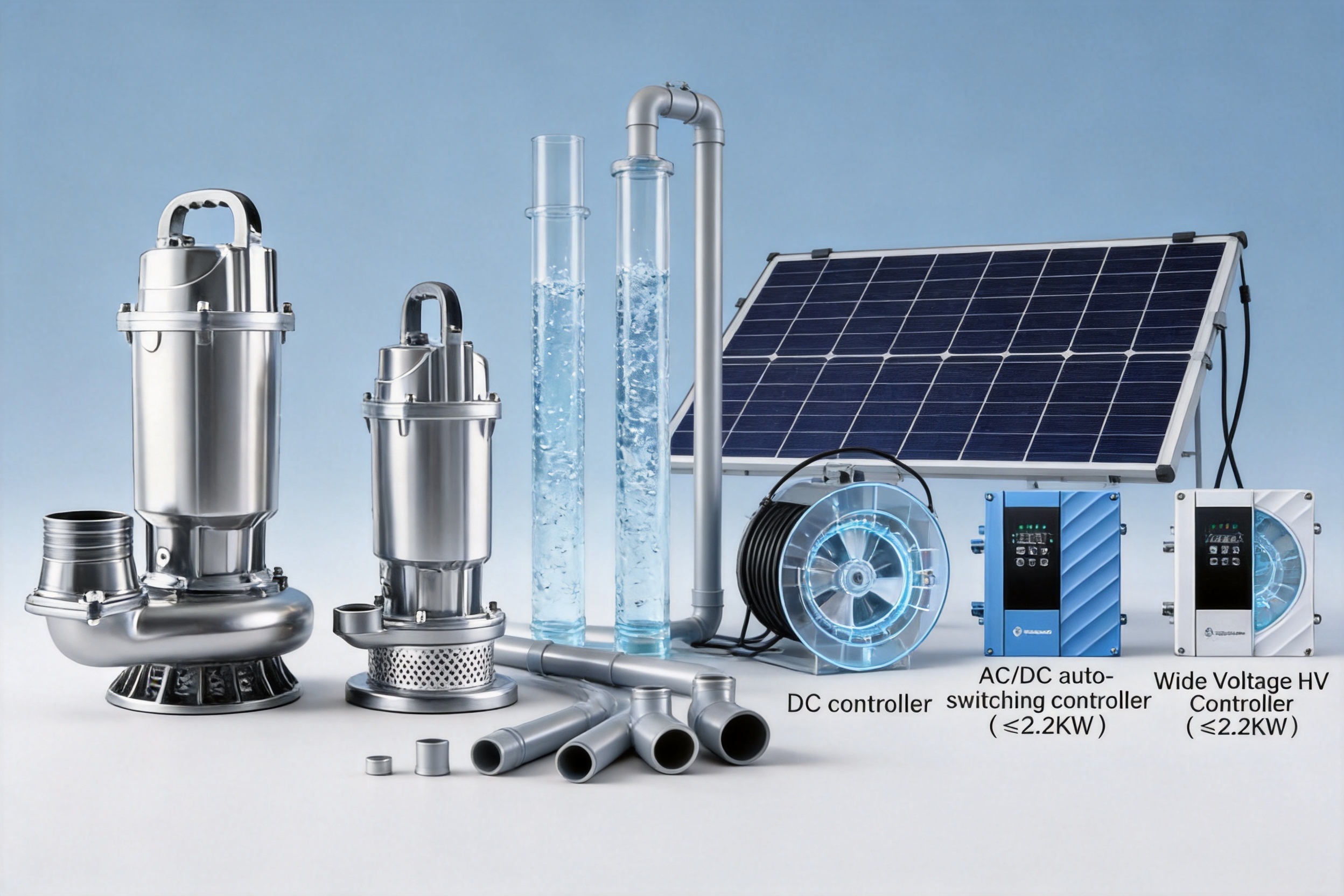
The HVQD Series combines several features that are valuable for commercial buyers and system integrators. Its wide-voltage brushless motor supports solar-system flexibility. Its aluminum construction reduces handling difficulty while providing a durable pump body. Its closed impeller is suited to clean-water transfer. Its model range supports different flow, head, and outlet requirements.
The series also comes from a manufacturer with experience in product development, mass production, international export, and multiple pump categories. This combination can simplify sourcing for buyers who need more than a single standard pump. It may also support project expansion, replacement planning, and related equipment procurement.
Compared with a conventional grid-dependent pump, the HVQD Series is better suited to remote and off-grid applications. Compared with a fuel-driven unit, it can reduce operational dependence on fuel and routine engine maintenance. Compared with a narrow-voltage solar pump, its wider electrical range gives designers more flexibility in solar-array configuration.
Its limitations should also be recognized. The product is intended for clean water, not heavy solids. Solar performance depends on available sunlight and correct panel sizing. Maximum flow is not available at every head condition. Installation must include suitable electrical and hydraulic protection. Understanding these requirements helps buyers achieve the advantages of the product in actual service.
The pump is designed for clean-water applications, including household water transfer, irrigation from relatively clear sources, wells, tanks, and reservoirs. Water containing substantial sand, sludge, fibers, or large solids may damage or obstruct the closed impeller.
Yes. The HVQD Series is designed for solar-powered systems and uses a wide-voltage brushless motor. It can be connected to a correctly sized solar array and compatible control equipment. The array must satisfy the required DC voltage and power specifications.
The stated requirement is at least 1.3 times the pump power. For example, a 750 W pump requires at least approximately 975 W of solar-panel power, while a 1,500 W pump requires at least approximately 1,950 W. Final sizing should also consider local sunlight, temperature, cable loss, and system efficiency.
It means the pump is designed to operate across a broader voltage range than a narrow-voltage motor. The listed models have optimum DC input ranges from 100 V to 350 V, depending on the model. The open-circuit voltage of the solar array must remain below 450 V.
The HVQD50-10-110-1500 model has the highest listed maximum flow at 50 m³/h. Its maximum head is 10 m, so it is intended for high-volume, relatively low-lift applications rather than deep high-head pumping.
The HVQD12-30-110-1100 model has the highest listed maximum head at 30 m. The HVQD30-28-110-1500 model provides a maximum head of 28 m, while the HVQD7-26-72-750 model provides 26 m.
It can be suitable for deep-well clean-water applications when the selected model can meet the total required head and the well dimensions allow safe installation. The complete head calculation must include elevation and pipe friction, not only the water depth.
No. The closed impeller is intended to support smooth flow in clean-water applications and offers some protection against external debris. The water source should still be screened and kept free from sand, stones, fibers, and large solids.
Control may include a suitable solar controller, level sensor, float switch, or other compatible protection device. The exact arrangement depends on the solar array, storage tank, water source, and project requirements. Professional installation is recommended for high-voltage DC systems.
Yes, provided the selected model can overcome the total head between the water source and the tank, including pipe losses. A tank-level control can stop the pump when the tank is full, while a low-water protection device can prevent dry running at the source.
The brushless motor eliminates routine brush replacement, but the pump still requires inspection. Solar panels, cables, intake screens, water levels, pipework, and electrical connections should be checked periodically. Performance should be monitored for changes in flow or operating behavior.
Buyers should provide the required flow, total head, water source, water quality, well or tank dimensions, desired outlet size, solar-array voltage, daily operating schedule, destination country, and any required accessories. This information helps the supplier recommend the most appropriate model.
The HVQD Series wide-voltage brushless motor solar aluminum submersible pump offers a practical combination of solar compatibility, clean-water hydraulic performance, compact submersible installation, and low-maintenance motor technology. Its six listed configurations cover a broad range of flow and head requirements, from 7 m³/h at 26 m maximum head to 50 m³/h at 10 m maximum head.
The product’s principal advantages are its broad DC operating range, brushless motor, lightweight aluminum pump body, closed impeller, and suitability for remote water systems. These characteristics make it a strong option for household supply, irrigation, storage-tank transfer, off-grid projects, and community clean-water infrastructure.
Its performance depends on correct engineering. The solar array must be matched to the pump, the hydraulic system must be calculated accurately, and the water source must be clean enough for a closed-impeller design. With suitable installation, level protection, electrical safety measures, and routine inspection, the pump can form the core of an efficient solar water-supply system.
Backed by a manufacturer with experience in research and development, mass production, global export, and multiple pump categories, the HVQD Series is positioned not only as an individual pump but also as part of a broader procurement and project-support capability. For buyers seeking dependable solar pumping equipment, the series provides a flexible starting point for designing efficient and sustainable clean-water systems.
1. Product technical information for the HVQD Series wide-voltage brushless motor solar aluminum submersible pump.
2. Manufacturer-provided performance data, model ratings, voltage specifications, outlet sizes, cable length, and solar-panel requirements.
3. Manufacturer company information regarding research and development, mass production, export operations, and water-pump product categories.
4. General principles of photovoltaic water-pumping system design, including solar-array matching, hydraulic head calculation, storage-tank integration, and dry-running protection.
5. General guidance for submersible pump installation, clean-water source management, electrical protection, cable handling, and preventative maintenance.
edwina@edwin-pump.com
+86-13586290903 (WhatsApp)
Xuri Gongliang Cutting Tool Entrepreneurship Park, Wenqiao Town, Wenling City, Taizhou City, Zhejiang Province, China

High Performance Smart Pump Factory


 English