
edwina@edwin-pump.com

View All Products
en
A self-priming jet pump is designed to make water transfer easier by reducing the need for repeated manual priming. This feature makes it popular in residential water supply, garden irrigation, agricultural applications, and small water systems. However, some users experience a frustrating problem: the pump starts normally but later stops delivering water, or it fails to draw water after being restarted.
This situation often means the pump has lost its prime. A self-priming structure can remove air from the suction line under suitable conditions, but it still depends on proper installation, airtight connections, correct water levels, and suitable operating parameters. A reliable Easy Installation Self-Priming Jet Pump simplifies setup, yet understanding the reasons behind prime loss remains important for stable operation. Common causes include air leakage, excessive suction lift, blocked inlet pipes, and insufficient water supply.
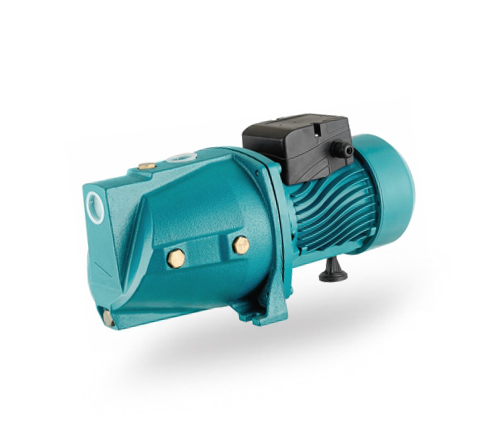
Unlike standard centrifugal pumps that require the suction line and pump chamber to be filled with water before operation, self-priming models are designed to handle a certain amount of air mixed with water during startup.
The basic working process includes:
This design improves convenience, but the pump still requires a sealed suction system. Air entering through damaged pipes, loose fittings, or faulty valves can interrupt the priming process.
Loss of prime is usually not caused by the self-priming function itself. The issue often comes from external conditions that prevent the pump from maintaining a continuous water column.
Air leaks are among the most frequent reasons behind prime loss. Unlike discharge-side leaks, suction-side problems may not produce visible water leakage. Instead, air is pulled into the pipeline during operation.
Possible leakage points include:
Even a small amount of air entering continuously can prevent the pump from creating stable suction.
The suction pipeline plays a critical role in self-priming performance.
Installation problems may include:
| Problem | Possible Effect |
| Pipe diameter too small | Higher flow resistance and reduced suction ability |
| Too many pipe bends | Increased pressure loss |
| Loose connection points | Air entering the system |
| Incorrect pipe slope | Air pockets inside the pipeline |
| Damaged suction hose | Loss of vacuum condition |
A properly designed suction line allows the pump to remove air efficiently and maintain stable water flow.
A self-priming jet pump has a limited suction lifting capability. A changing groundwater level or an incorrectly positioned suction pipe can cause the pump to lose contact with the water source.
Common situations include:
Manufacturers commonly recommend checking suction lift limitations because excessive lifting distance reduces the pump’s ability to maintain prime.
An easy installation structure can reduce many setup mistakes, but it cannot overcome unsuitable working conditions.
A well-designed Easy Installation Self-Priming Jet Pump may include features such as:
These features improve user experience, but correct system matching remains essential.
Users often focus on motor power, but several technical specifications affect whether a jet pump can maintain stable suction.
| Parameter | Typical Range | Impact |
| Motor Power | 0.37 kW–2.2 kW | Determines pumping capacity |
| Maximum Suction Lift | 5–9 meters | Affects water source distance |
| Maximum Head | 30–60 meters | Controls pressure delivery |
| Flow Rate | 20–100 L/min | Determines water supply volume |
| Protection Grade | IP44–IP55 | Improves motor protection |
| Liquid Temperature | Up to 40°C–60°C | Defines application range |
This is one of the most common questions from users.
A pump may operate normally immediately after manual filling because the internal chamber contains enough water. However, after several hours of operation or a shutdown period, hidden problems may appear.
Typical causes include:
Checking the prime condition before investigating other components is a common troubleshooting approach recommended in pump manuals.
Several practical steps can help maintain stable performance:
Users can identify prime-related issues through several operating symptoms.
| Symptom | Possible Cause |
| Motor runs but no water output | Lost prime or air entering suction line |
| Weak water pressure | Partial air blockage or restricted inlet |
| Frequent restarting | Pressure instability or leakage |
| Noisy operation | Air mixture or cavitation risk |
| Pump casing becomes hot | Insufficient water circulation |
A self-priming design provides clear advantages for users who want easier installation and convenient operation. However, self-priming capability should not be misunderstood as a guarantee that the pump can operate under any condition.
The performance of an Easy Installation Self-Priming Jet Pump depends on proper pipe layout, correct suction conditions, suitable water source depth, and regular inspection.
A self-priming jet pump losing its prime does not always indicate a product quality problem. Many cases are related to air leakage, suction limitations, valve conditions, or installation details.
Modern easy-installation designs make setup more convenient, but reliable water delivery still requires correct system planning. Understanding how prime is maintained allows users to solve problems faster and achieve longer operating stability from their pumping equipment.
edwina@edwin-pump.com
+86-13586290903 (WhatsApp)
Xuri Gongliang Cutting Tool Entrepreneurship Park, Wenqiao Town, Wenling City, Taizhou City, Zhejiang Province, China

High Performance Smart Pump Factory


 English