
edwina@edwin-pump.com

View All Products
en
Solar-driven pumping systems operating in corrosive groundwater environments face a persistent challenge: material degradation under long-term exposure. A Solar Pump With Stainless Steel Pump construction is often promoted as corrosion-resistant, yet field data shows that “stainless” does not automatically mean immune to chemical or electrolytic attack. Performance depends heavily on water chemistry, manufacturing grade, and electrochemical conditions inside the system.
Reports from field applications and user reviews highlight cases where surface rust or internal pitting appears within a short operational window, especially in mineral-rich or coastal water sources. These failures are typically linked not only to material selection but also to coating quality and galvanic interaction between mixed metals.
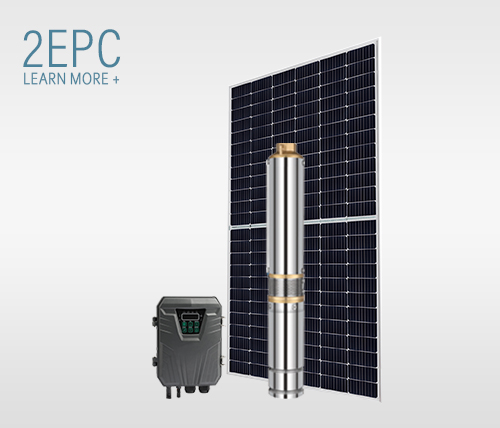
Stainless steel pumps rely on a passive chromium-oxide layer to resist oxidation. This layer remains stable under neutral conditions, but breaks down under specific stress factors.
Common corrosion triggers include:
Once the protective layer is compromised, localized corrosion begins, often appearing as pitting or crevice attack rather than uniform rusting. These localized failures are more dangerous because they progress internally without obvious external warning signs.
Even within stainless steel systems, galvanic reactions can occur when stainless components interface with carbon steel fasteners or aluminum housings, accelerating degradation in confined zones.
Marketing descriptions frequently simplify material composition, but actual pump assemblies often combine multiple alloys. A system labeled as stainless may still include:
Field observations show that partial stainless construction can still experience visible corrosion on exposed surfaces within weeks in aggressive water conditions. This is typically not structural failure at onset, but it signals coating breakdown or material incompatibility in auxiliary parts.
Pump corrosion is rarely caused by material alone. The surrounding hydraulic environment amplifies degradation speed.
Key accelerating factors:
Scale formation is particularly critical because it traps moisture and dissolved salts against metal surfaces, creating micro-environments where corrosion cells develop more rapidly.
Solar pumping systems introduce an additional layer of stress: electrical fluctuation. Variable irradiance causes motor speed changes, which indirectly affect hydraulic pressure stability.
This dynamic behavior can contribute to:
These effects do not directly “cause” corrosion but significantly shorten the protective lifespan of surface treatments and weak alloy sections.
Another often overlooked factor is cavitation. Under unstable suction conditions, vapor bubbles form and collapse near impeller surfaces. The repeated implosion effect produces micro-jet impacts that strip protective layers.
Common consequences:
Once cavitation damage starts, corrosion accelerates even in relatively mild water chemistry because fresh reactive metal is constantly exposed.
Corrosion prevention in solar stainless pump systems is typically multi-layered rather than relying on material alone:
Each layer reduces one form of stress, but long-term reliability depends on how consistently the system maintains hydraulic and electrical stability.
Observed failure cases often follow a recognizable progression:
This pattern suggests that corrosion is rarely sudden; instead, it develops through cumulative exposure combined with mechanical stress cycles.
Stainless construction improves resistance but does not eliminate chemical vulnerability. The long-term behavior of a solar pumping system depends on a combination of metallurgy, water chemistry, hydraulic design, and electrical stability.
Reliable operation emerges when these variables are balanced rather than relying on material grade alone. In real-world applications, corrosion prevention is less about choosing a “rust-proof pump” and more about controlling the environment that drives electrochemical reactions.
edwina@edwin-pump.com
+86-13586290903 (WhatsApp)
Xuri Gongliang Cutting Tool Entrepreneurship Park, Wenqiao Town, Wenling City, Taizhou City, Zhejiang Province, China

High Performance Smart Pump Factory


 English