
edwina@edwin-pump.com

View All Products
en
A residential water supply system needs to provide sufficient water pressure while maintaining a stable flow across different household activities. A shower running upstairs, a washing machine filling water downstairs, and a kitchen faucet operating simultaneously can place considerable demands on the same plumbing network. A pump that performs well under a single-outlet condition may struggle during these periods of overlapping consumption.
At Edwin, we understand that properly configured residential water pump systems depend on more than motor power or maximum discharge pressure. Flow demand, building height, pipeline resistance, incoming water pressure, and operating frequency all influence the required pump capacity. Our approach is to evaluate these factors together before recommending a booster pump configuration.
This article explains how homeowners, plumbing contractors, distributors, and project purchasers can assess household water requirements and identify the technical information needed for pump specification.
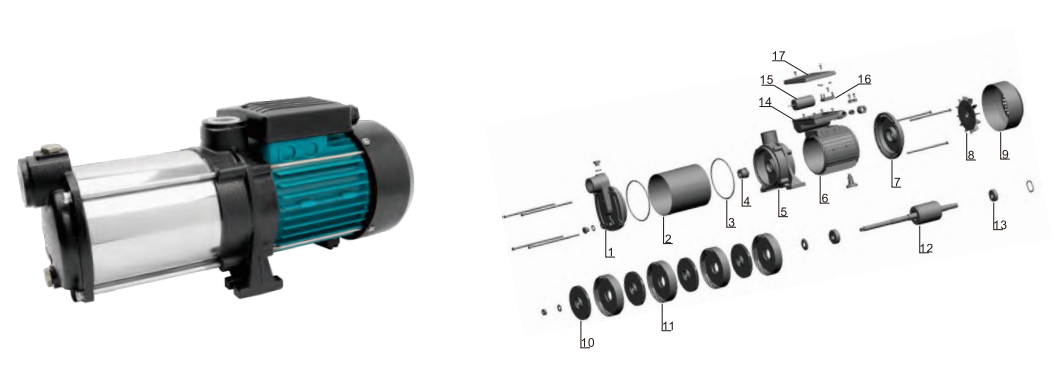
The required flow rate represents the volume of water a pump needs to deliver within a specific period. Residential consumption changes throughout the day, so calculating capacity from a single faucet or average daily consumption may produce an inaccurate result.
We recommend preparing a fixture inventory before evaluating pump capacity. Different household outlets have different flow requirements, and several may operate simultaneously.
The next step is to estimate how many outlets may operate together. A family with several bathrooms may experience higher peak demand during morning routines than a household with the same number of occupants but fewer water-consuming facilities.
Adding the rated flow of every fixture can significantly overestimate actual household demand. A more practical approach is to establish a realistic simultaneous-use scenario.
| Household Water Outlet | Illustrative Flow Rate | Unit |
| Shower | 7–10 | L/min |
| Washbasin Faucet | 4–6 | L/min |
| Kitchen Faucet | 5–8 | L/min |
| Washing Machine | 5–10 | L/min |
| Garden Hose | 8–15 | L/min |
Note: These figures are illustrative planning values rather than fixed plumbing standards. Actual consumption depends on fixture design, water pressure, flow restrictors, and equipment specifications.
Consider a household where two showers and one kitchen faucet may operate simultaneously. Using estimated values of 8 L/min, 8 L/min, and 6 L/min, the combined demand is:
8 + 8 + 6 = 22 L/min
This equals approximately 1.32 m³/h. The selected pump should therefore be evaluated against this operating flow rather than its advertised maximum flow rate alone. Additional capacity may be necessary depending on pressure losses and other operating conditions.
Flow rate describes how much water the system needs, while pressure determines whether that water can reach the intended outlets with sufficient force. Both values must be considered together during residential pump sizing.
Water requires additional pressure to travel vertically from the pump installation point to an elevated outlet. A useful engineering conversion is approximately 0.098 bar per meter of vertical elevation, or 0.433 psi per foot.
For example, a pump supplying water to an outlet located 12 meters above the pump must overcome approximately:
12 × 0.098 = 1.176 bar
This value represents static elevation head only. It does not include pipeline friction or the pressure required at the outlet.
Water loses pressure as it travels through pipes, elbows, valves, filters, and other components. The amount of resistance depends on pipe diameter, material, total length, water velocity, and the number of fittings.
We recommend checking the following details during system assessment:
Total Dynamic Head (TDH) combines the major energy requirements of a pumping system. A simplified calculation for a residential installation can be expressed as:
TDH = Static Head + Friction Head + Required Residual Pressure Head - Available Suction Head
For a closed or pressurized household water network, the calculation must also account for the actual inlet and outlet pressure conditions. Available incoming municipal pressure should be measured under flowing conditions rather than relying exclusively on static pressure readings.
The following example illustrates a simplified pressure-boosting scenario:
| Calculation Item | Illustrative Value |
| Vertical Elevation Difference | 12 m |
| Pipeline Friction Loss | 4 m |
| Required Outlet Pressure Head | 15 m |
| Available Incoming Pressure Head | 5 m |
| Required Pump Head | 26 m |
Based on these assumptions, the required pump head is 12 + 4 + 15 - 5 = 26 meters. The actual specification should be checked against the manufacturer's performance curve at the required flow rate.
A common purchasing mistake is comparing pumps by maximum flow or maximum head without checking whether both values can be achieved simultaneously. These specifications describe different operating conditions and should not be treated as a single performance point.
A centrifugal pump performance curve illustrates the relationship between flow rate and total head. As flow increases, the available head generally decreases under a fixed-speed operating condition.
We recommend examining the following parameters before confirming a residential pump specification:
The preferred operating point should be reasonably close to the pump's Best Efficiency Point (BEP), subject to the manufacturer's recommended operating range. Operating too far from the intended range may increase vibration, noise, energy consumption, or mechanical stress.
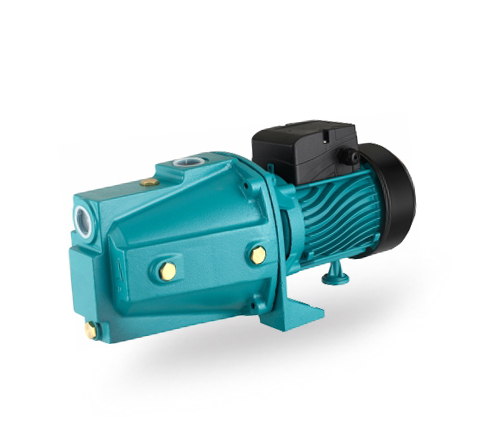
Different residential applications may require different pump arrangements. Our product evaluation process considers the installation environment and the pressure requirements of the entire water network.
| Pump Configuration | Typical Application | Key Consideration |
| Single-Stage Booster Pump | Small houses and localized pressure boosting | Moderate head requirements |
| Multistage Booster Pump | Multi-story houses and higher pressure requirements | Higher head within a compact arrangement |
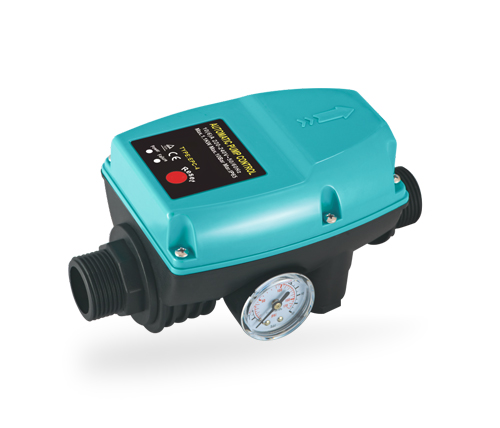
| Automatic Booster Pump | Household systems with variable water usage | Automatic start and stop control |
| Variable-Speed Booster System | Homes with changing simultaneous demand | Adjustable motor speed and pressure regulation |
The actual configuration should be determined through performance data, installation conditions, and the required control strategy rather than the pump category alone.
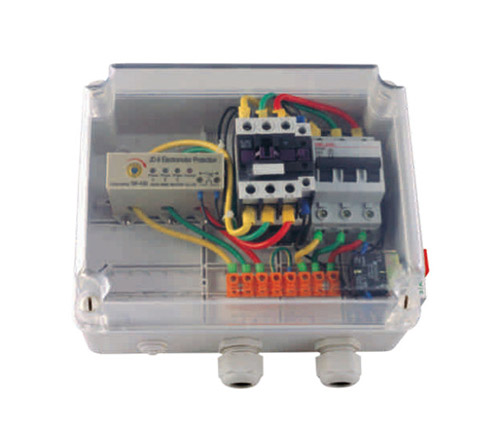
Correct hydraulic sizing is only part of the system design. The control arrangement also affects how frequently the motor starts, how consistently pressure is maintained, and how the pump responds to changing water consumption.
A pressure switch monitors system pressure and activates the pump after pressure falls below a preset cut-in value. The pump stops after reaching the configured cut-out pressure.
A commonly used residential pressure setting is 40/60 psi, approximately 2.76/4.14 bar. However, this is an illustrative configuration, not a universal recommendation. Actual settings must remain within the pressure ratings of the pump, tank, pipes, and household fixtures.
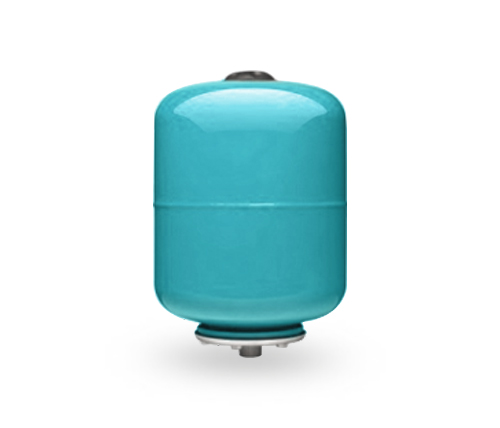
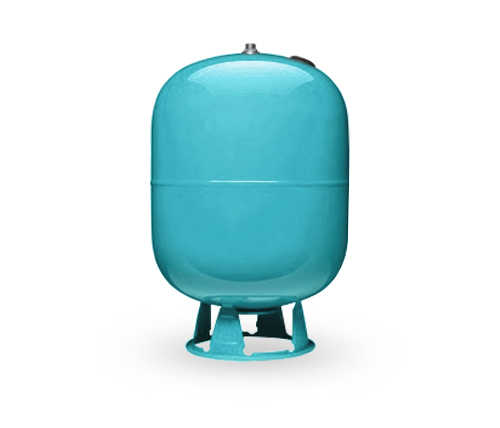
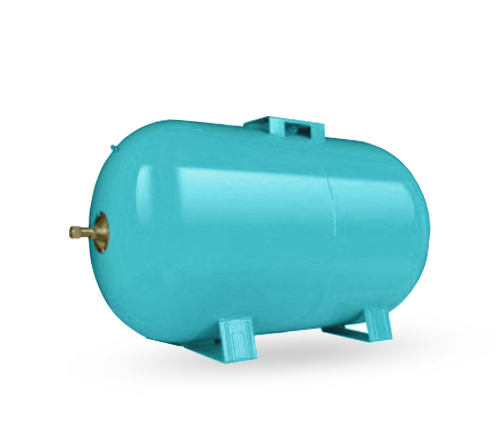
A pressure tank stores a volume of pressurized water and helps reduce unnecessary motor starts during small or intermittent demands.
Flow-controlled booster pumps respond to water movement through the pipeline. Opening a faucet creates a flow signal that activates the pump, while closing the outlet allows the system to stop after the configured delay.
This arrangement can simplify household operation, particularly for compact installations. However, the activation flow threshold, minimum operating flow, and protection functions should be checked before purchase.
Variable Frequency Drive (VFD) technology adjusts motor speed according to changing demand. A pressure transducer provides feedback, allowing the controller to regulate pump output as household consumption increases or decreases.
For residential water pump systems serving several bathrooms or multiple floors, variable-speed control may provide useful pressure regulation. The actual benefits depend on the demand profile, pump characteristics, motor compatibility, and controller configuration.
Incorrect specifications can affect water delivery, operating costs, and equipment service life. Based on the technical considerations we use when evaluating booster pump applications, several issues deserve particular attention.
A higher motor power rating does not automatically mean better household water supply. Pump head, flow rate, impeller design, and hydraulic efficiency determine the actual delivery performance.
A booster pump cannot compensate for every problem in an undersized or restricted incoming pipeline. Insufficient suction supply may cause unstable operation, excessive pressure reduction at the inlet, or inadequate discharge flow.
An oversized pump may operate outside its intended performance range, producing excessive pressure or unnecessary cycling. Additional pressure can also place greater stress on plumbing connections and household appliances.
Voltage, frequency, rated current, motor insulation, and electrical protection should match the installation environment. Common household supplies include 110–120V or 220–240V, depending on the destination market and local electrical standards.
Buyers should also confirm whether the pump requires overload protection, dry-running protection, thermal protection, or other safety functions.
Accurate application information helps us evaluate the hydraulic requirements and recommend a suitable product configuration. At Edwin, we encourage distributors, contractors, and household water equipment purchasers to prepare the following details before discussing a project.
| Required Information | Details to Provide | Why It Matters |
| Building Type | Detached house, townhouse, apartment, or villa | Defines the general supply arrangement |
| Number of Floors | Total floors and vertical delivery height | Determines static head requirements |
| Water Consumption | Number of bathrooms and simultaneous outlets | Helps estimate peak flow |
| Incoming Pressure | Measured dynamic inlet pressure | Identifies the additional pressure required |
| Pipeline Details | Pipe diameter, length, and material | Supports friction loss estimation |
| Electrical Supply | Voltage and frequency | Confirms motor compatibility |
| Control Preference | Pressure switch, flow sensor, or VFD | Determines the control arrangement |
These details also help us assess whether a standard booster pump can meet the application requirements or whether a customized configuration deserves consideration.
At Edwin, we focus on matching pump performance with actual water supply conditions. Our booster pump product range supports household water pressure applications, and we consider the technical requirements of each project during product discussions.
Several product and engineering details deserve attention during the purchasing process:
We also recommend reviewing product drawings, technical data sheets, and performance curves during supplier communication. These documents provide a clearer basis for comparing models and confirming whether a pump meets the intended duty requirements.

edwina@edwin-pump.com
+86-13586290903 (WhatsApp)
Xuri Gongliang Cutting Tool Entrepreneurship Park, Wenqiao Town, Wenling City, Taizhou City, Zhejiang Province, China

High Performance Smart Pump Factory


 English