
edwina@edwin-pump.com

View All Products
en
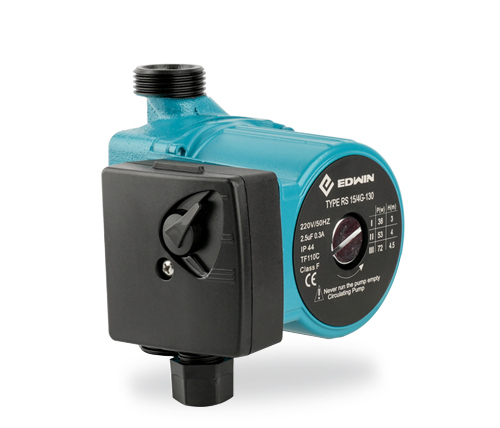
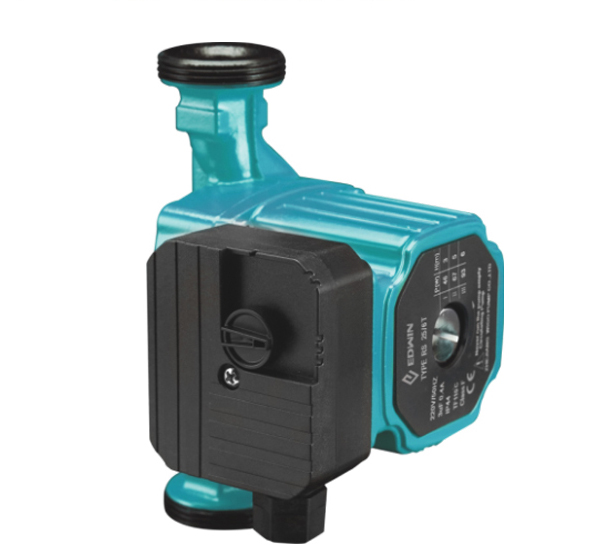
A circulation pump may operate for long periods in heating loops, cooling systems, hot-water recirculation, industrial process circuits, and other fluid-handling applications. Unlike equipment used only occasionally, a continuously running pump must maintain stable hydraulic performance while its motor, bearings, shaft, seals, and impeller remain under constant operating loads.
At Edwin Pump, we look at continuous-duty reliability as a combination of hydraulic design, mechanical construction, motor configuration, and operating conditions. A pump does not become suitable for continuous use simply because its motor can run for extended periods.
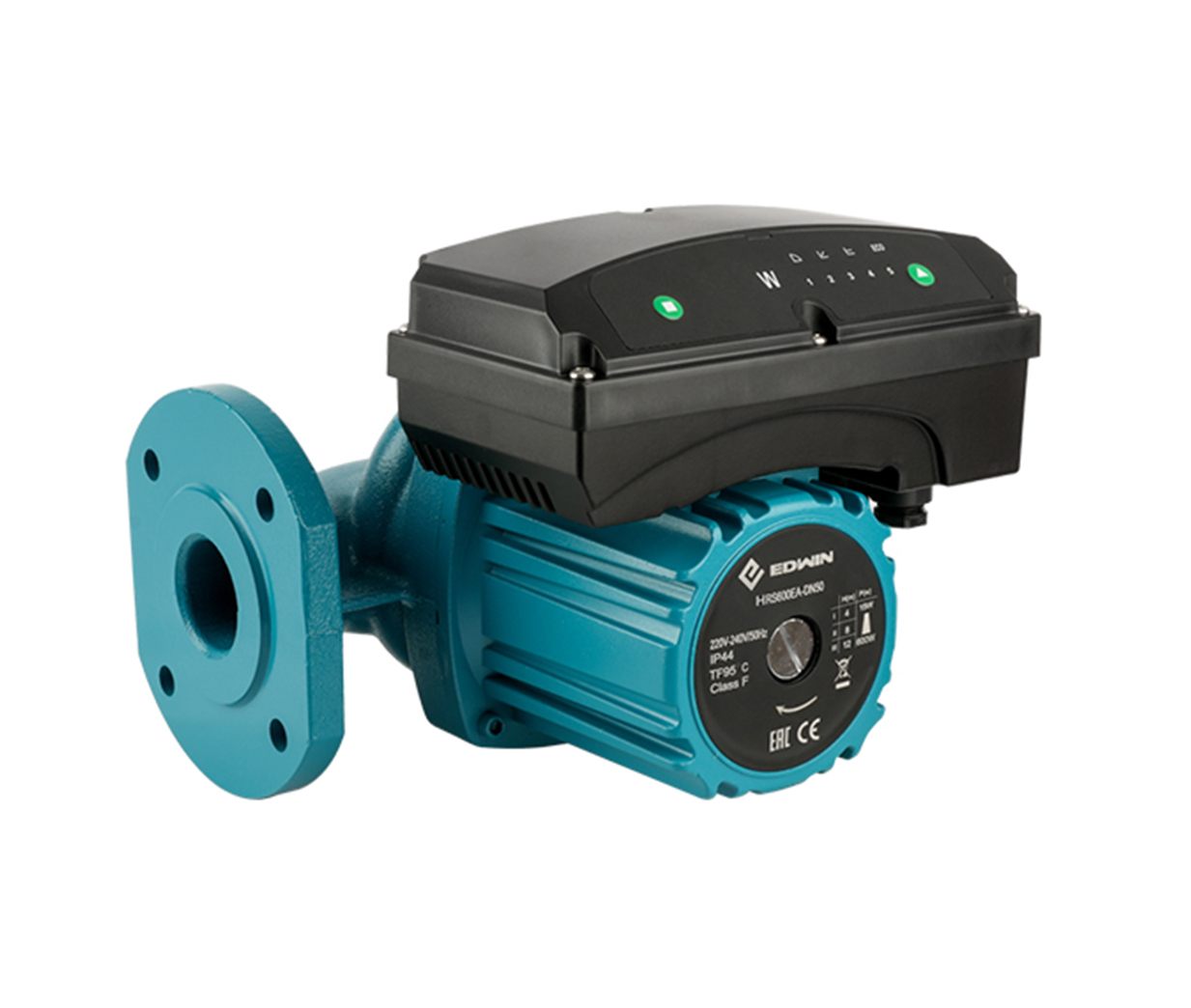 tability Sets the Foundation
The operating point of a circulation pump depends on the relationship between the pump curve and the system curve. Flow rate and head need to correspond with the actual requirements of the piping network, heat exchanger, radiator loop, chiller circuit, or process system.
The Best Efficiency Point, or BEP, represents a key reference on the pump curve. Operating close to the intended region can reduce hydraulic imbalance, vibration, and mechanical loading. The Hydraulic Institute describes the Preferred Operating Region as the flow range around BEP where efficiency and operational reliability are not substantially degraded.
| Performance Parameter | Why It Matters |
| Flow Rate | Determines the volume of fluid circulated through the system |
| Head | Represents the pressure capability required by system resistance |
| Motor Power | Must correspond with the hydraulic duty and operating point |
| Speed | Affects flow, head, vibration, and power demand |
| BEP Position | Provides a reference for stable hydraulic operation |
Continuous operation places sustained thermal and mechanical demands on the motor. An appropriately configured motor should provide sufficient power without being unnecessarily oversized for the application.
Variable-speed operation can add another layer of flexibility. A speed-controlled pump can adjust its operating point according to system demand rather than relying entirely on throttling valves. Grundfos, for example, describes speed control for circulators used in heating, cooling, and chiller applications, with speed adjustment helping maintain required flow or head.
Bearings and shaft seals may appear to be small components, but their operating conditions can influence the service life of the complete pump. Continuous rotation means that alignment, lubrication, temperature, shaft loading, and hydraulic balance all deserve attention.
Operation far away from the intended hydraulic region can increase radial thrust, vibration, heat, and stress on bearings and seals. Wilo notes that continuous operation outside the preferred region can increase the risk of premature component problems.
Seal configuration also depends on the fluid and temperature. A hot-water loop, chilled-water circuit, and industrial process system may require different material combinations.
A circulation system does not always transport water at room temperature. Heating systems may operate at elevated temperatures, while cooling systems can expose pump components to much lower fluid temperatures.
| Application | Typical Design Considerations |
| Heating Water | Temperature resistance, seal compatibility, thermal expansion |
| Chilled Water | Condensation control, insulation, material compatibility |
| Hot-Water Recirculation | Continuous duty, temperature rating, corrosion resistance |
| Industrial Process Fluid | Chemical compatibility, solids content, sealing requirements |
Material selection therefore needs to consider both mechanical loading and fluid conditions rather than focusing solely on pump capacity.
A pump curve provides more information than a simple flow and head rating. It can also show efficiency, power requirements, speed, impeller diameter, and operating limits.
At Edwin Pump, we recommend reviewing the complete operating point before specifying a circulation pump. A system designed around 5 m³/h at 20 m head, for example, requires a pump curve that can deliver that duty within an appropriate operating region rather than simply a model carrying a similar nominal capacity.
A dependable circulation pump is the result of several design decisions working together. Hydraulic stability, appropriate motor sizing, suitable materials, mechanical support, temperature compatibility, and a realistic operating range all contribute to continuous-duty performance.
At Edwin Pump, we focus on matching pump construction with the actual circulation requirement. By considering flow, head, fluid conditions, operating temperature, motor configuration, and system behavior together, buyers can build a circulation solution designed for sustained operation rather than treating continuous use as simply a longer version of intermittent pumping.
edwina@edwin-pump.com
+86-13586290903 (WhatsApp)
Xuri Gongliang Cutting Tool Entrepreneurship Park, Wenqiao Town, Wenling City, Taizhou City, Zhejiang Province, China

High Performance Smart Pump Factory


 English