
edwina@edwin-pump.com

View All Products
en
Access to groundwater has become an important part of water supply planning in both rural and industrial environments. As surface water sources become more variable in some regions, underground extraction systems are used more frequently. In this context, the Borehole Pump plays a central role in moving water from deep underground to usable surface systems.
Unlike shallow well systems, borehole setups are designed to reach deeper aquifers, where water is stored under natural geological layers.
Groundwater provides a stable alternative to surface water in many regions. It is often used for irrigation, residential supply, livestock watering, and industrial cooling systems.
A Borehole Pump is installed inside a narrow drilled shaft that can extend far below ground level. This setup allows water to be lifted from depths that standard surface pumps cannot reach.
In many installations, borehole systems are chosen when:
These conditions make underground pumping systems practical in both rural and developing urban areas.
A Borehole Pump works by being placed directly inside the borehole, usually submerged below the water level. The pump pushes water upward through a connected pipe system rather than pulling it from above.
This design helps reduce energy loss during water movement and allows steady extraction from deeper sources.
Typical system components include:
Each part works together to maintain continuous water flow under varying depth conditions.
Agricultural use is one of the most common applications for a Borehole Pump. Farms located in dry or semi-arid regions often rely on groundwater for crop irrigation.
Instead of depending on rainfall patterns, farmers can access consistent water supply throughout planting cycles. This helps support irrigation systems for crops such as grains, vegetables, and orchard plantations.
In larger agricultural operations, multiple boreholes may be used across different field zones to distribute water more evenly.
Beyond agriculture, borehole systems are also used in industrial environments. Construction sites may require temporary water access for mixing concrete, dust control, or equipment cooling.
A Borehole Pump provides a self-contained water source that does not depend on municipal supply systems. This can be useful in remote project locations or areas with limited infrastructure.
Industrial facilities may also use groundwater for cooling processes or cleaning operations, depending on local regulations and water availability.
Selecting a borehole system requires understanding underground conditions. Depth of water tables, soil composition, and required flow rate all influence pump selection.
A Borehole Pump must match both the depth of the well and the expected daily water demand. If the pump capacity is too low, water supply may not meet operational needs. If it is too large, energy consumption may become inefficient for the system design.
Installation also requires proper sealing to prevent contamination from surface water entering the borehole.
Regular maintenance is important for long-term operation. Over time, sediment buildup, mineral deposits, or electrical wear may affect pump performance.
A Borehole Pump system often includes periodic inspection schedules to check motor function, pipe condition, and electrical connections. In some environments, water quality testing is also part of maintenance planning.
Proper maintenance helps maintain stable water flow and reduces unexpected interruptions in supply.
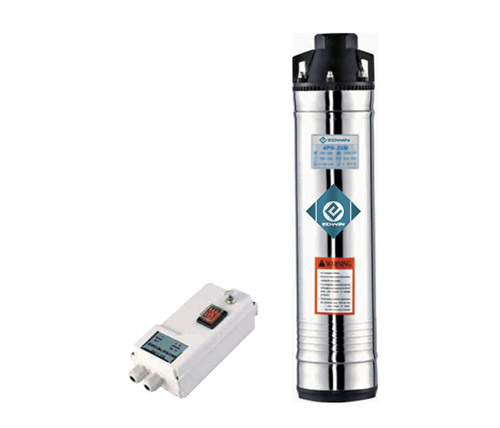
Groundwater extraction continues to play a practical role in water supply systems across different sectors. The Borehole Pump supports this process by enabling access to deeper water sources that are not available through surface systems.
As water demand grows in agriculture, construction, and rural development, borehole-based systems remain a widely used solution for independent and stable water access in diverse environments.
edwina@edwin-pump.com
+86-13586290903 (WhatsApp)
Xuri Gongliang Cutting Tool Entrepreneurship Park, Wenqiao Town, Wenling City, Taizhou City, Zhejiang Province, China

High Performance Smart Pump Factory


 English