Modern hydronic systems increasingly rely on adaptive control logic instead of fixed-speed operation. An Intelligent Circulation Pump is built around variable frequency drive (VFD) architecture, pressure feedback loops, and embedded algorithmic regulation. Instead of running at constant RPM, it continuously recalculates flow demand based on system resistance, temperature feedback, and internal sensor signals.
Troubleshooting discussions across HVAC and fluid systems show that most “unexpected behavior” cases are not mechanical failure, but control interpretation issues—especially in sensor calibration drift, signal noise, or misaligned PID parameters.
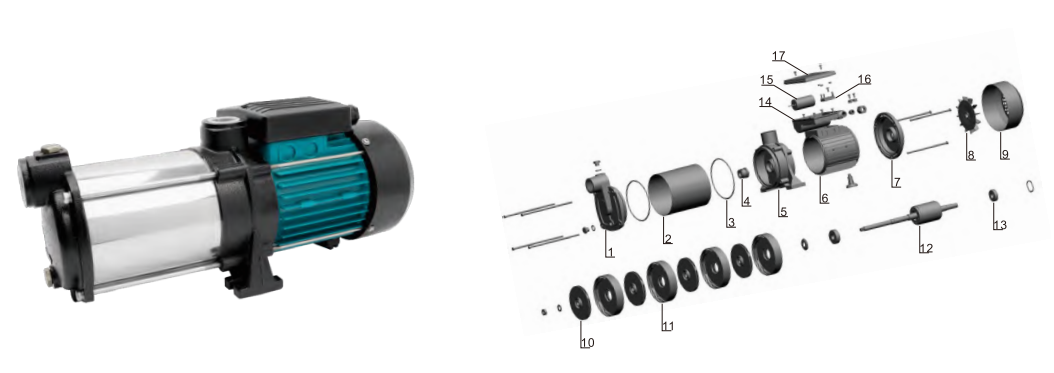
Adaptive Control Logic Behavior
Intelligent circulation units commonly rely on three-layer control structure:
- Pressure differential sensing across pump body or system loop
- Temperature or flow estimation inputs from auxiliary probes
- Embedded PID algorithm adjusting motor frequency
Instead of static operation, the pump reacts to demand fluctuations by modifying speed in real time. A typical operating range may shift between 800 RPM to 4800 RPM, depending on system load and pipe resistance.
Observed “self-adjustment” is often intentional. However, instability occurs under certain conditions:
- Oversensitive pressure transducers generating noisy signals
- Incorrectly tuned proportional gain in PID loop
- Communication delay between controller and sensor module
Research in fault detection systems shows that modern pump controls can misclassify operational states when input data becomes inconsistent, especially under partial system knowledge conditions.
Sensor Drift and Feedback Confusion
A frequent root cause behind erratic behavior is sensor degradation or misalignment.
Key technical issues include:
- Pressure sensor offset drifting beyond ±0.2 bar tolerance
- Flow estimation errors during low-load circulation
- Temperature probe lag causing delayed correction signals
When feedback signals lose synchronization, the Intelligent Circulation Pump compensates aggressively. That compensation often appears as “self-adjusting instability,” such as:
- RPM oscillation between two operating bands
- Sudden speed ramp-up without demand change
- Frequent modulation despite steady system pressure
Field troubleshooting data shows that circulator systems under unstable control often exhibit constant running states due to relay or signal miscommunication rather than hydraulic failure.
Variable Frequency Drive Interaction
VFD-driven pumps are highly sensitive to parameter configuration. A small deviation in control mapping can significantly affect output behavior.
Typical configuration parameters:
- Minimum frequency: 25–35 Hz
- Maximum frequency: 50–60 Hz
- Acceleration ramp: 3–15 seconds
- Deceleration ramp: 5–20 seconds
Unstable self-adjusting behavior may appear when:
- Ramp time is too short, causing abrupt speed changes
- Minimum frequency set too low, leading to stall recovery cycles
- Load curve mismatch between pump and pipeline resistance
In many installations, sensorless control logic is also used, relying on internal motor estimation instead of external flow sensors. While efficient, it increases sensitivity to modeling errors.
Communication Layer and Control Delay
Some intelligent pump systems are integrated into building automation networks or proprietary control panels. In these cases, response timing becomes a critical factor.
Common issues include:
- Delayed Modbus/BACnet updates
- Packet loss between controller and drive
- Firmware mismatch between pump controller and interface module
Even a 1–2 second delay can create oscillation loops where the system repeatedly over-corrects flow speed.
This behavior is often mistaken for mechanical instability, but it originates in digital control latency rather than hydraulics.
Power Quality and Electrical Influence
Electrical supply stability directly impacts intelligent pump consistency.
Key influencing factors:
- Voltage fluctuation beyond ±10% rated input
- Harmonic distortion from nearby industrial loads
- Grounding resistance exceeding recommended threshold (<4 ohms in many systems)
Variable frequency drives interpret power irregularities as load changes, triggering compensatory speed adjustments. That creates the impression of autonomous pump correction behavior.
System Design Mismatch
Not all instability originates inside the pump itself. Hydraulic mismatch is a major contributor.
Common mismatches:
- Oversized pump relative to pipeline volume
- Excessively low system resistance causing hunting cycles
- Incorrect bypass valve configuration affecting differential pressure reading
In low-resistance loops, the pump struggles to stabilize because pressure feedback lacks meaningful variation. That leads to continuous micro-adjustments rather than steady-state operation.
Field Diagnostics Approach
Practical evaluation typically follows a layered process:
- Verify stable power input and grounding integrity
- Confirm pressure sensor output consistency under static conditions
- Inspect PID control parameters for excessive gain values
- Compare RPM curve against expected hydraulic load curve
- Temporarily isolate automation controller to test standalone pump stability
Industrial maintenance data shows that isolating control layers often immediately clarifies whether the issue is hydraulic, electrical, or algorithmic.
Operational Interpretation
Self-adjusting behavior is not inherently abnormal. In advanced systems, it represents continuous optimization. The challenge appears when feedback loops amplify noise instead of stabilizing flow.
A properly tuned Intelligent Circulation Pump should:
- Maintain steady modulation without oscillation
- Respond gradually to demand changes
- Avoid frequent full-range RPM swings under constant load
Deviation from these patterns indicates control imbalance rather than mechanical breakdown.
Intelligent pumping systems are shifting from mechanical devices to hybrid electromechanical control platforms. That transition introduces new diagnostic complexity where behavior cannot be interpreted through mechanical logic alone. Understanding sensor interaction, control algorithms, and feedback timing becomes essential for interpreting why a pump appears to “self-adjust” under normal operating conditions.





 English