
edwina@edwin-pump.com

View All Products
en
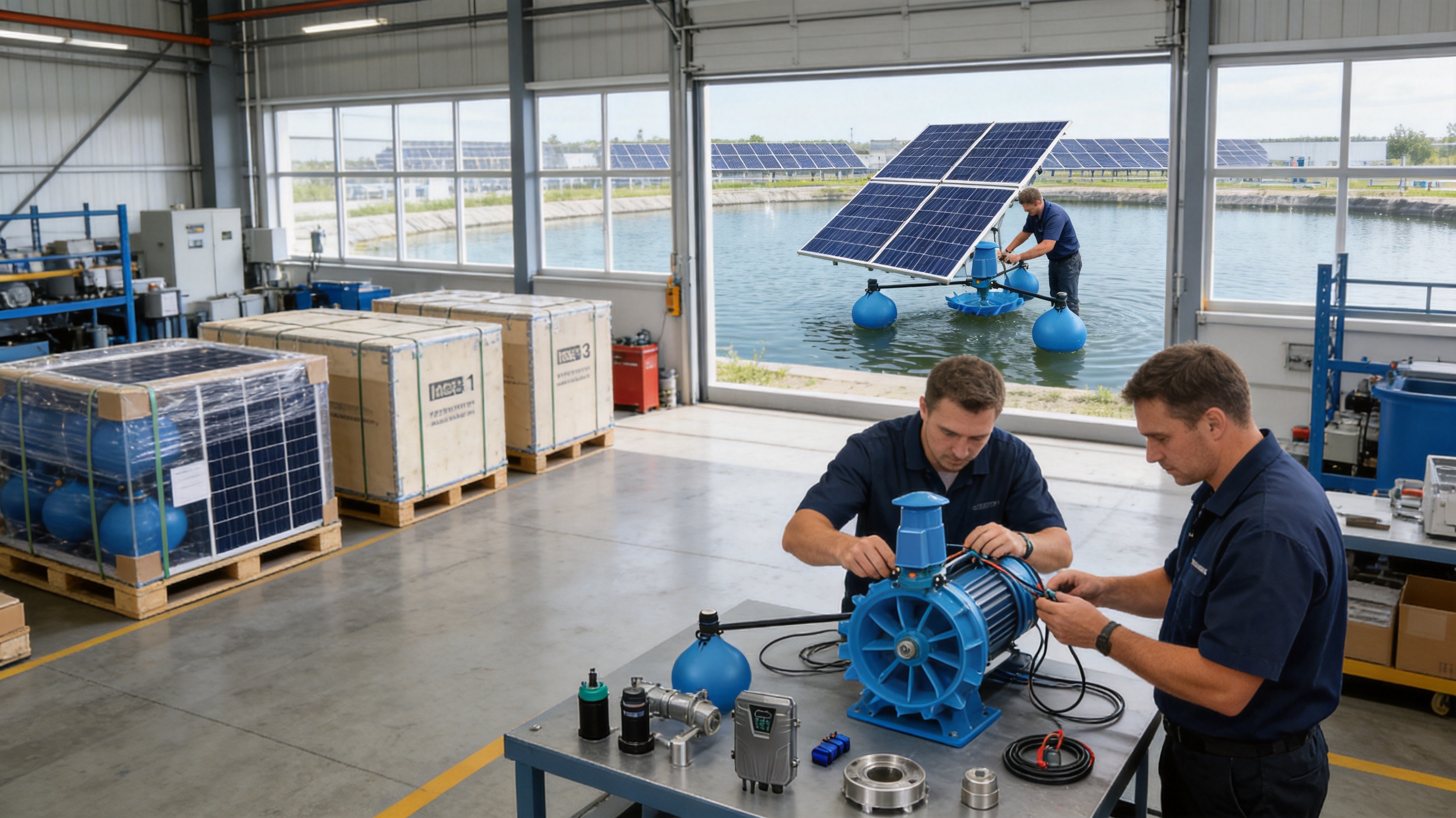
Reliable dissolved oxygen management is one of the most important requirements in fish farming, shrimp production, and ecological aquaculture. As stocking densities increase and climate conditions become less predictable, aquaculture operators need aeration equipment that can deliver consistent oxygenation while controlling energy consumption and operating costs. The ESIA Series Brushless DC Motor Solar Impeller Aerator is designed to address these needs through a combination of high-speed impeller aeration, brushless direct-current motor technology, and solar power integration.
Unlike basic surface aerators that primarily disturb the upper layer of a pond, an impeller-type aerator is designed to push water upward, create bubbles, and encourage circulation between different water depths. This operating principle can help improve oxygen distribution throughout the water column and support more uniform water quality. The result is an aeration solution suitable for fish ponds, shrimp ponds, and ecological aquaculture farms that require long operating periods and dependable equipment performance.
The ESIA Series is available in three configurations: the ESIA-48-750, the ESIA-72-1100, and the ESIA-110-1500. These models cover power levels from 750 watts to 1,500 watts, with oxygenation rates from at least 1.1 kilograms per hour to at least 2.3 kilograms per hour. Their recommended solar input systems are matched to each motor rating, allowing users to select a configuration according to pond size, desired oxygenation capacity, and available solar resources.
Manufactured by Taizhou Edwin Electric Co., Ltd., the product reflects the company’s broader experience in pumps, solar water systems, intelligent booster pumps, and other water-handling technologies. Since its establishment in 2008, the company has developed an integrated business structure covering research and development, manufacturing, export, procurement planning, order tracking, and international delivery support.
This article explains the working principle, technical specifications, advantages, applications, manufacturing strengths, installation considerations, and selection process of the ESIA Series Brushless DC Motor Solar Impeller Aerator.
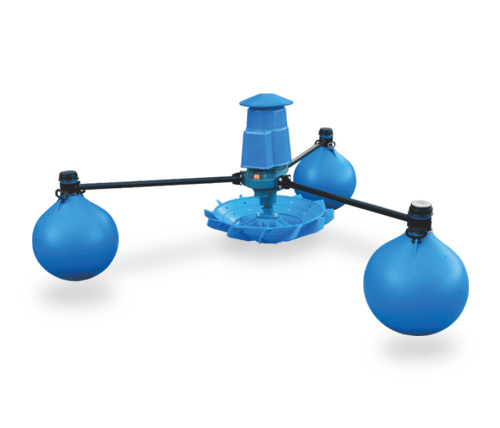
ESIA Series Brushless DC Motor Solar Impeller Aerator
Dissolved oxygen is the oxygen available in water for fish, shrimp, aquatic organisms, and beneficial microorganisms. It is not the same as the air above the pond. Water must absorb oxygen from the atmosphere or receive oxygen through mechanical aeration before aquatic life can use it.
In an aquaculture pond, oxygen is consumed by several processes. Fish and shrimp use oxygen for respiration. Microorganisms consume oxygen while decomposing organic matter, leftover feed, and biological waste. Aquatic plants and algae may produce oxygen during daylight, but they can also consume oxygen at night. This can create significant fluctuations in oxygen concentration between daytime and nighttime.
Oxygen levels can also vary by depth. The upper water layer may receive oxygen from wind and surface contact, while deeper areas may become oxygen-deficient because sunlight, air movement, and natural mixing do not reach them effectively. In heavily stocked ponds, this difference can become more pronounced.
Low dissolved oxygen can reduce feeding activity, weaken aquatic animals, slow growth, increase stress, and create unfavorable conditions for disease. Severe oxygen deficiency may lead to significant losses. For this reason, mechanical aeration is often used to supplement natural oxygen transfer and improve water circulation.
An effective aeration system should do more than produce visible surface movement. It should transfer oxygen into the water, encourage circulation, reduce stagnant areas, and operate with suitable energy efficiency. The ESIA Series addresses these objectives through impeller-driven water movement and solar-powered brushless DC operation.
The ESIA Series uses a brushless DC motor to drive an impeller at high speed. The rotating impeller moves water upward and creates bubbles at the water surface. This process increases the contact area between air and water, supporting oxygen transfer from the atmosphere into the pond.
At the same time, the upward movement of water creates circulation. Water from lower areas can be drawn toward the upper region, while oxygen-rich water can move outward and downward. This circulation helps reduce the separation between upper and lower layers and can improve the overall distribution of dissolved oxygen.
Impeller aeration differs from simple agitation. Agitation may disturb only the surface, while the impeller is intended to generate a stronger vertical movement of water. This makes the product particularly suitable for ponds where depth and water stratification are important considerations.
The aerator is powered by a solar power supply system. Solar panels convert sunlight into direct-current electricity, which is delivered to the motor within the recommended voltage range. Because the motor is a brushless DC design, it can operate directly with a DC solar energy system without requiring the same type of mechanical commutation used by brushed motors.
The solar input requirements are matched to the motor power. The specified solar panel power should be at least 1.3 times the pump or motor power. This design recommendation allows the solar array to provide a practical operating margin under changing sunlight conditions, including periods when solar irradiance is lower than the rated testing condition.
The impeller’s high-speed rotation transfers mechanical energy into the water. As the impeller moves, it pushes water upward and promotes turbulence near the surface. Turbulence breaks the water into smaller streams and bubbles, increasing the interface between air and water.
Oxygen transfer depends on several variables, including bubble size, contact time, water temperature, water movement, organic loading, and the difference between the oxygen concentration in the water and the surrounding air. The impeller mechanism supports this transfer by combining surface disturbance with vertical circulation.
The product’s stated oxygenation performance is at least 1.1 kilograms per hour for the 750-watt model, at least 1.6 kilograms per hour for the 1,100-watt model, and at least 2.3 kilograms per hour for the 1,500-watt model. Actual field performance can vary according to water quality, pond depth, temperature, altitude, stocking density, solar availability, and installation conditions.
Water stratification occurs when differences in temperature, density, and oxygen concentration cause water layers to remain partially separated. In a pond with limited circulation, oxygen may be higher near the surface and lower near the bottom. Organic matter may also accumulate in areas with weak movement.
By pushing water upward and encouraging vertical movement, an impeller aerator can support mixing between these layers. This does not replace good pond management, but it can complement water exchange, biological treatment, and other operating measures.
The ability to promote deeper circulation is one of the important differences between an impeller aerator and a basic paddle-wheel aerator. Paddle wheels are widely used and can be effective for surface oxygen transfer, but an impeller configuration may be more suitable where the operator wants stronger upward flow and circulation through deeper water.
The ESIA Series is offered in three voltage and power configurations. Selecting the correct model requires consideration of the pond’s coverage area, desired oxygenation rate, solar resource, and electrical system design.
| Model | Rated Voltage | Best Input Voltage | Power | Oxygenation Rate | Covering Area | Solar Panel Open-Circuit Voltage | Recommended Solar Panel Power |
| ESIA-48-750 | 48 V | 60 V to 90 V DC | 750 W | At least 1.1 kg/h | 666 to 2,000 square meters | Below 120 V | At least 1.3 times motor power |
| ESIA-72-1100 | 72 V | 90 V to 120 V DC | 1,100 W | At least 1.6 kg/h | 2,000 to 2,665 square meters | Below 170 V | At least 1.3 times motor power |
| ESIA-110-1500 | 110 V | 110 V to 150 V DC | 1,500 W | At least 2.3 kg/h | 2,000 to 4,000 square meters | Below 220 V | At least 1.3 times motor power |
The coverage figures are reference ranges rather than universal guarantees for every pond. A pond with heavy stocking, high organic loading, warm water, limited natural circulation, or substantial depth may require a different arrangement from a pond with lower biological demand.
The ESIA-48-750 is a practical option for smaller ponds or installations where a lower power level is preferred. With a rated output of 750 watts and a stated coverage range of 666 to 2,000 square meters, it can be used where the aeration requirement is moderate and the solar array must remain compact.
The ESIA-72-1100 provides increased power and oxygenation capacity. Its 1,100-watt motor is specified for an oxygenation rate of at least 1.6 kilograms per hour and a reference coverage range of 2,000 to 2,665 square meters. It may be suitable for medium-sized ponds or operations that require greater circulation than the lower-power model can provide.
The ESIA-110-1500 is the largest configuration in the series. Its 1,500-watt power rating and minimum oxygenation rate of 2.3 kilograms per hour make it suitable for larger reference areas of up to 4,000 square meters, subject to site conditions and the operator’s aeration plan.
The brushless DC motor is one of the central features of the ESIA Series. In a brushed motor, physical brushes and a commutator transfer electrical current to the rotating assembly. These components experience wear over time and can generate friction, heat, and electrical noise.
A brushless motor uses electronic control instead of mechanical brushes for commutation. This reduces the number of wear components inside the motor and supports longer service life. The design is especially useful for solar applications because direct-current power can be applied through an appropriate control system without depending on a conventional alternating-current supply.
Lower mechanical friction can contribute to improved energy efficiency. In a solar aeration system, efficient energy use is important because the available power changes throughout the day. A motor that produces the required water movement with controlled energy consumption can make better use of the solar array.
The brushless design also supports reduced maintenance requirements. There are no motor brushes that need regular replacement, and the reduced mechanical contact can help limit wear-related service issues. Maintenance is still necessary for the impeller, protective structures, electrical connections, and surrounding installation, but the motor itself is designed to reduce routine wear.
Another benefit is operational stability. A suitable brushless motor controller can regulate motor operation according to the available DC input and system requirements. The product data identifies a best input voltage range for each model, which gives installers a defined electrical operating window.
Solar-powered aeration can reduce dependence on grid electricity or fuel-powered generators. This is especially valuable for ponds located in rural areas, remote farms, or new aquaculture developments where grid connection is expensive or unavailable.
The energy advantage is not limited to the absence of a monthly electricity bill. A solar system can also simplify deployment by reducing the need for long power cables from a central electrical room. When the pond is distributed across a large agricultural site, localized solar aeration can provide a practical alternative.
Efficient operation remains important even when sunlight is free. A smaller energy requirement may reduce the required solar panel capacity, support longer daily operating periods, and improve the use of available sunlight. The brushless DC motor and direct solar input arrangement are therefore aligned with the needs of off-grid and low-energy aquaculture installations.
The brushless structure reduces a common source of motor wear. Combined with a suitable installation environment and proper operating practices, it is intended to support long-term use. The ESIA Series is supplied with a three-year warranty, providing an additional level of protection for users and distributors.
Warranty coverage should always be reviewed together with the supplier’s terms, installation requirements, operating conditions, and exclusions. Correct wiring, proper solar voltage selection, adequate mechanical support, and routine cleaning are essential to achieving reliable performance.
Aeration equipment should be selected according to the pond’s biological demand and physical conditions. No single technology is ideal for every site. However, the ESIA Series offers several practical advantages when compared with conventional equipment that depends on grid electricity, fuel, or basic surface agitation.
Paddle-wheel aerators use rotating paddles to strike the water surface and create splashing. They are widely recognized in aquaculture and can provide effective surface aeration. Their visible water movement can be useful for rapidly mixing water near the surface.
The ESIA Series uses an impeller rather than a paddle wheel. Its operating principle focuses on pushing water upward and encouraging circulation between upper and lower layers. This makes the product suitable for applications where the operator wants to address deeper water movement as well as surface oxygen transfer.
Impeller operation can also provide a different water-flow pattern. Instead of relying mainly on horizontal splashing, the equipment creates upward flow and bubble formation. Depending on pond geometry, this may help distribute oxygen more broadly through the water column.
The most appropriate choice depends on pond depth, stocking density, desired circulation pattern, available energy, and the number and location of aerators. In some large farms, different aeration technologies may be used together.
Grid-powered aerators can operate when utility electricity is available, but they may require permanent wiring, electrical infrastructure, and recurring energy costs. They may also be difficult to deploy in remote locations.
The solar-powered ESIA Series can be installed as part of an independent energy system. This reduces reliance on utility availability and can be useful for farms that are far from substations or located in areas with unstable grid service.
Solar operation does require proper system planning. Panel size, open-circuit voltage, cable selection, protection, mounting orientation, and daily sunlight must be considered. When these factors are correctly matched, the system can provide a practical renewable-energy solution.
Fuel-driven aerators may provide power where electricity is unavailable, but they require fuel storage, regular refueling, engine maintenance, and exhaust management. Fuel prices can also make operating costs difficult to predict.
A solar-powered brushless motor system has no combustion engine and does not require fuel delivery during normal solar operation. This can reduce routine operating complexity and eliminate local exhaust emissions from the aerator itself.
Solar equipment may be especially attractive for farms seeking to reduce the environmental impact of routine pond operations. It can also support quieter operation compared with many engine-driven alternatives, although actual sound levels depend on the motor, impeller, support structure, and water conditions.
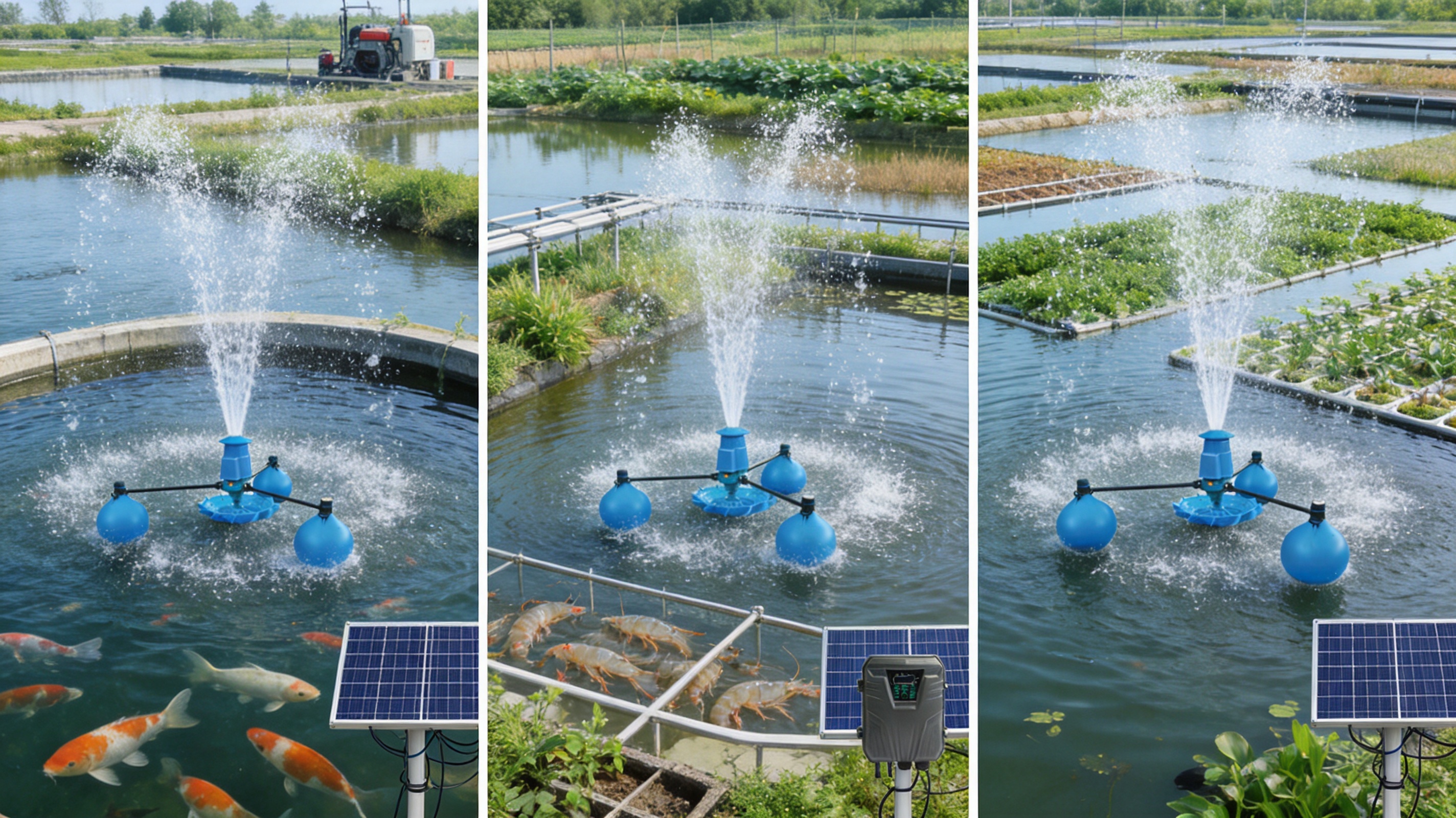
The ESIA Series is designed for fish ponds, shrimp ponds, and ecological aquaculture farms. Its function can be adapted to different production environments, provided that the selected model matches the water volume and biological demand.
Fish ponds can experience oxygen depletion during hot weather, cloudy periods, nighttime hours, and periods of increased feeding. As fish grow, their oxygen demand increases. Organic matter may also accumulate as a result of feed residue and biological waste.
An impeller aerator can provide supplementary oxygenation and promote circulation. Operators may use the equipment during periods of high oxygen demand or integrate it into a scheduled daily operating program based on farm conditions.
Placement should be considered carefully. The aerator should be located so that its water movement reaches a broad portion of the pond rather than repeatedly circulating only one small area. Multiple units may be positioned to reduce stagnant zones in larger or irregularly shaped ponds.
Shrimp farming requires careful control of water quality because shrimp may be sensitive to changes in oxygen concentration, temperature, salinity, and organic loading. Aeration supports respiration and can assist with the movement of water through the culture environment.
The impeller mechanism can be used to promote circulation while adding oxygen at the water surface. The correct model and operating schedule depend on pond size, shrimp density, feed management, water depth, and local environmental conditions.
Because shrimp ponds may contain salt or corrosive water, users should confirm that the installation materials and protective components are suitable for the particular site. Routine inspection is important in any environment where water, salt, sediment, and biological growth may affect mechanical or electrical components.
Ecological aquaculture systems often aim to balance production with responsible resource management. These systems may combine fish, plants, microorganisms, water reuse, and natural treatment processes.
Aeration can support biological activity and improve circulation within these systems. By helping distribute oxygen, the ESIA Series may complement filtration, microbial treatment, sediment management, and water exchange practices.
Mechanical aeration should not be viewed as a substitute for complete water management. Feed control, stocking density, pond cleanliness, water testing, and disease prevention remain essential. The aerator is one part of an integrated operating strategy.
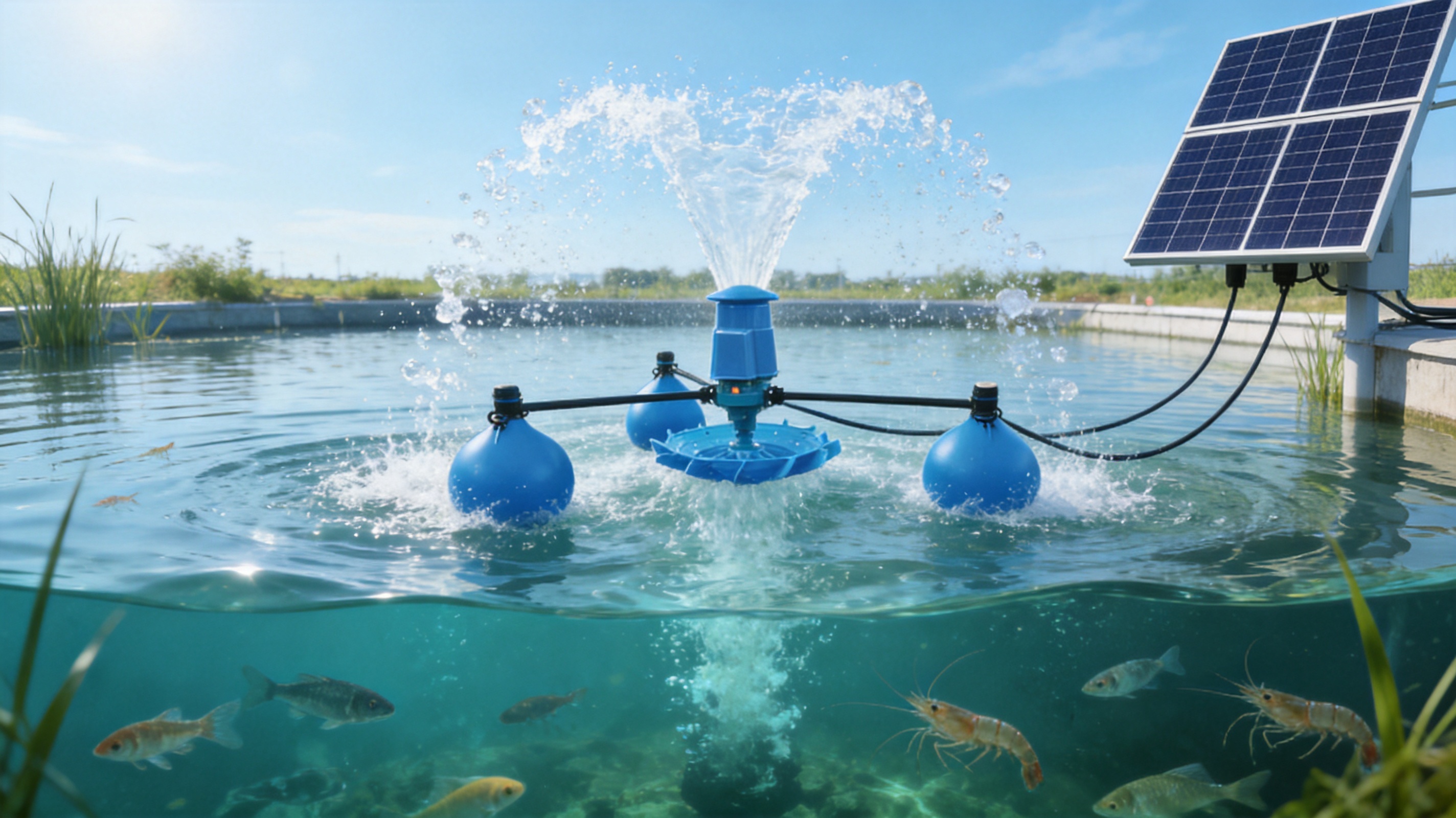
The performance of an aerator depends not only on its specification sheet but also on the manufacturer’s engineering capabilities, process control, component selection, and after-sales support. Taizhou Edwin Electric Co., Ltd. operates as an integrated manufacturer with capabilities in independent research and development, mass production, and global export.
Founded in 2008, the company has built experience across deep well pumps, submersible pumps, domestic booster pumps, circulation pumps, solar water pumps, intelligent booster pumps, and related water-handling products. This product background is relevant to the ESIA Series because aeration combines motor technology, fluid movement, electrical design, and water-environment requirements.
Independent research and development enables a manufacturer to adapt product structures to different application requirements. For a solar aerator, engineering work may involve motor efficiency, impeller geometry, controller compatibility, voltage range, solar array matching, sealing, mechanical balance, and operational durability.
The ESIA Series reflects this type of system-level approach. It is not simply a motor connected to a rotating component. The product is specified around a solar input range, a recommended solar panel power ratio, an oxygenation rate, a reference covering area, and multiple voltage configurations.
Development work also supports product diversification. Different aquaculture sites have different pond sizes and energy resources. Offering 48-volt, 72-volt, and 110-volt configurations allows users to select a system that better fits their power planning rather than forcing every installation into one standard size.
Mass production can provide consistency when appropriate quality-control procedures are applied. Repeatable manufacturing processes help maintain consistency in motor assembly, electrical connections, impeller installation, housing production, and final testing.
For international buyers, production capacity is also important. Commercial aquaculture projects may require several units, spare parts, or repeat orders across different locations. A manufacturer with established production and export capabilities can support more predictable procurement and delivery planning.
Production scale does not eliminate the need for inspection. Buyers should still confirm model specifications, packaging, testing procedures, spare-part availability, and documentation before placing an order. However, an established manufacturing structure can make these activities easier to coordinate.
Edwin Pump’s wider product portfolio includes deep well pumps, submersible pumps, surface pumps, booster pumps, circulation pumps, garden pumps, pool and spa pumps, commercial multistage pumps, end-suction pumps, pipes, valves, and pump accessories. This product range indicates experience across different hydraulic applications and customer requirements.
Such experience can support the development of aeration equipment because water movement is central to both pumping and aeration. Knowledge of motor systems, fluid flow, operating environments, and export standards can help a manufacturer design products for practical field use.
The company established Taizhou Haipai Import and Export Co., Ltd. and Golden Falcon Industrial Co., Ltd. in 2012 to provide procurement planning, order tracking, cross-border delivery, and foreign trade services. These capabilities can be valuable for international distributors, aquaculture equipment suppliers, contractors, and project buyers.
One-stop procurement can reduce the administrative burden of sourcing water equipment from multiple suppliers. Depending on the project, customers may require solar pumps, booster pumps, submersible pumps, pipes, valves, or accessories in addition to aerators. A supplier with a broad portfolio can help coordinate a more complete package.
International project support also involves communication, documentation, packaging, logistics coordination, and after-sales response. These factors can influence the total value of a product just as much as its initial purchase price.
Reliability in an aquaculture aerator involves more than motor life. The complete system must tolerate continuous exposure to moisture, sunlight, vibration, water splash, sediment, and changing outdoor temperatures. Electrical connections must be protected, mechanical components must remain correctly aligned, and the solar supply must be matched to the motor requirements.
The brushless DC motor reduces the wear associated with motor brushes. However, impeller systems still require inspection. Foreign objects, algae, sediment, or biological growth may affect water flow. Loose supports or unbalanced rotating components may increase vibration. Solar panels may lose output if covered by dust, bird droppings, or other debris.
The ESIA Series includes a three-year warranty. This provides a defined warranty period for users and demonstrates the manufacturer’s commitment to product support. Buyers should request complete warranty terms, including coverage conditions, recommended installation practices, service procedures, and the treatment of consumable or externally damaged components.
For commercial farms, the warranty should be considered alongside spare-parts planning. Keeping appropriate replacement components and maintaining a basic inspection schedule can reduce downtime during critical production periods.
A successful solar aerator installation begins with correct electrical matching. The recommended input range for the ESIA-48-750 is 60 to 90 volts DC, while the ESIA-72-1100 is specified for 90 to 120 volts DC. The ESIA-110-1500 is specified for 110 to 150 volts DC.
The open-circuit voltage of the solar panel system must remain below the specified limit for the selected model. The maximum stated open-circuit voltage is below 120 volts for the ESIA-48-750, below 170 volts for the ESIA-72-1100, and below 220 volts for the ESIA-110-1500.
The solar panel power should be at least 1.3 times the motor power. This means that the 750-watt model should be paired with solar panel power of at least approximately 975 watts. The 1,100-watt model should use at least approximately 1,430 watts of solar panel power, while the 1,500-watt model should use at least approximately 1,950 watts.
These calculations are based on the stated ratio and should be confirmed with the supplier or system designer before final configuration. Local solar conditions, panel tolerances, cable loss, temperature effects, controller requirements, and daily operating objectives may justify additional capacity.
The aerator should be placed where it can circulate water effectively without interfering with pond walls, nets, walkways, feeding equipment, or other machinery. The water outlet and impeller movement should have sufficient clearance for safe and unobstructed operation.
For larger ponds, more than one unit may be required. Multiple units should be arranged to encourage broad circulation rather than opposing flows that create unnecessary turbulence in a limited area. The best arrangement depends on pond shape, depth, water inlet and outlet locations, and prevailing wind direction.
Solar panels should be mounted in an open area with minimal shading during the main solar production period. The mounting structure should be stable and resistant to local wind and weather conditions. Panels should also be accessible for cleaning and inspection.
Cables should be routed to reduce the possibility of mechanical damage, water accumulation, animal interference, or accidental contact. Electrical work should be completed by qualified personnel using protection appropriate to the DC voltage of the system.
The best operating schedule depends on the pond’s oxygen demand and the available solar energy. Oxygen levels often decline overnight because photosynthesis stops while fish, shrimp, plants, and microorganisms continue to consume oxygen. In some applications, energy storage or a hybrid power system may be considered if nighttime aeration is required.
Where the aerator operates directly from solar power, production will naturally vary with sunlight. Operators should consider whether the system is intended for daytime oxygenation, scheduled operation during peak solar hours, or integration with batteries and other power sources.
Routine maintenance helps preserve aeration performance and extend equipment life. The impeller and surrounding structure should be inspected for algae, weeds, ropes, plastic, sediment, and other material that could restrict movement.
Solar panels should be inspected and cleaned when necessary. Dust and biological deposits can reduce solar output and may prevent the motor from receiving enough energy during lower-light periods. Cleaning methods should follow the panel manufacturer’s recommendations.
Electrical connections should be checked for looseness, corrosion, water entry, or damaged insulation. Because the system uses DC voltage, technicians should follow appropriate safety procedures and isolate the power supply before servicing.
Operators should also observe changes in noise, vibration, water flow, bubble production, and motor temperature. A sudden change may indicate an obstruction, mechanical imbalance, electrical problem, or altered water condition.
Pond water should be tested according to the farm’s management plan. Dissolved oxygen, temperature, pH, ammonia, nitrite, salinity, and other parameters may influence the required aeration level. Mechanical equipment cannot compensate for every water-quality problem, so aeration should be combined with responsible feeding, stocking, water exchange, and biological management.
Model selection should begin with the pond area and biological demand. The stated covering areas provide a starting point, but operators should avoid selecting equipment based only on surface area. Pond depth, stocking density, species, feed quantity, water temperature, organic loading, and expected growth must also be considered.
The ESIA-48-750 is appropriate for lower-power requirements and reference coverage from 666 to 2,000 square meters. The ESIA-72-1100 offers a larger oxygenation capacity for reference areas from 2,000 to 2,665 square meters. The ESIA-110-1500 is designed for the highest capacity in the range, with a reference coverage area from 2,000 to 4,000 square meters.
If a pond has unusually high oxygen demand, it may be more suitable to install multiple smaller units or multiple larger units according to the farm’s circulation plan. Distributed aeration can provide operational flexibility and redundancy. If one unit is stopped for maintenance, other units may continue supplying some aeration.
The electrical system must also be considered. A buyer should verify the available solar space, panel configuration, open-circuit voltage, cable length, controller requirements, and expected sunlight. An unsuitable solar array can prevent the aerator from reaching its intended operating performance.
The commercial value of the ESIA Series extends beyond its rated motor power. Solar operation can reduce dependence on utility energy and fuel, while the brushless motor can reduce certain maintenance requirements. The impeller structure can support both oxygenation and water circulation, potentially reducing the need for separate circulation equipment in some applications.
For remote farms, the ability to generate operating power on site can simplify expansion. New pond areas may be developed without waiting for a grid connection. For established farms, solar aeration can supplement existing grid-powered equipment and reduce peak energy demand.
Commercial buyers may also benefit from the manufacturer’s broader pump portfolio. When a project requires deep well pumps for water supply, submersible pumps for drainage, booster pumps for distribution, or pipes and valves for installation, coordinating procurement through an experienced water-equipment supplier can improve project organization.
The three-year warranty can support financial planning by providing a defined period of manufacturer-backed protection. The final return on investment will depend on equipment price, solar installation cost, local electricity and fuel prices, operating hours, maintenance, pond productivity, and the value of reduced production risk.
The ESIA Series competes through a combination of application-focused design and manufacturer support rather than through a single feature. Its main advantages include brushless DC motor technology, solar compatibility, impeller-based circulation, multiple voltage options, a stated solar sizing ratio, three power levels, and a three-year warranty.
Compared with a conventional surface aerator, the impeller configuration is intended to provide stronger upward water movement and support circulation between upper and lower water layers. Compared with a grid-dependent aerator, the solar configuration can be used in locations where utility electricity is limited or expensive. Compared with a fuel-powered system, it can reduce fuel handling and engine maintenance requirements.
The product also benefits from the manufacturer’s experience in pumps and intelligent water systems. The company’s development since 2008, its mass production capability, and its international procurement and export structure provide support for both individual buyers and commercial distributors.
For customers seeking a complete aquaculture water-management package, the broader product range may be an advantage. A supplier that can coordinate pumps, accessories, pipes, valves, and related equipment can help reduce the complexity of sourcing multiple components from different manufacturers.
It is a solar-powered aeration system that uses a brushless DC motor to drive a high-speed impeller. The impeller pushes water upward, creates bubbles, and promotes circulation between upper and lower water layers. It is designed for fish ponds, shrimp ponds, and ecological aquaculture applications.
The impeller creates upward water movement and surface turbulence. This produces bubbles and increases contact between air and water, supporting oxygen transfer. The resulting circulation can also distribute oxygen-rich water through a larger portion of the pond.
A paddle-wheel aerator mainly agitates and splashes the water surface. The ESIA Series uses an impeller to push water upward and encourage vertical circulation. This makes it suitable for applications where movement between deeper and upper water layers is an important objective.
The available models are the ESIA-48-750, rated at 48 volts and 750 watts; the ESIA-72-1100, rated at 72 volts and 1,100 watts; and the ESIA-110-1500, rated at 110 volts and 1,500 watts.
The ESIA-48-750 has a stated oxygenation rate of at least 1.1 kilograms per hour. The ESIA-72-1100 has a stated rate of at least 1.6 kilograms per hour. The ESIA-110-1500 has a stated rate of at least 2.3 kilograms per hour.
The solar panel power should be at least 1.3 times the motor power. As a reference, this corresponds to approximately 975 watts for the 750-watt model, 1,430 watts for the 1,100-watt model, and 1,950 watts for the 1,500-watt model. Final system design should be confirmed according to site conditions and supplier guidance.
The best input voltage is 60 to 90 volts DC for the ESIA-48-750, 90 to 120 volts DC for the ESIA-72-1100, and 110 to 150 volts DC for the ESIA-110-1500. The solar panel open-circuit voltage must remain below the specified maximum for the selected model.
The aerator is designed around a solar power supply system. Direct solar operation depends on sunlight, so nighttime operation generally requires an appropriately designed battery system, hybrid power supply, or alternative electrical source. Buyers should discuss nighttime operating requirements during system planning.
Yes. The product is suitable for shrimp ponds when the selected model, materials, installation, and operating schedule match the pond’s conditions. Salinity, sediment, stocking density, and organic loading should be considered before installation.
Maintenance includes checking the impeller, removing obstructions, inspecting supports, cleaning solar panels, checking electrical connections, and observing changes in vibration, noise, water flow, and bubble production. Routine pond water testing should also be part of responsible operation.
The product is supplied with a three-year warranty. Customers should confirm the detailed warranty terms, installation requirements, service process, and coverage conditions before purchase.
The ESIA Series is manufactured by Taizhou Edwin Electric Co., Ltd., also known as Edwin Pump. The company was founded in 2008 and specializes in research and development, mass production, and global export of pumps and related water-treatment products.
The company’s product categories include deep well pumps, submersible pumps, surface pumps, booster pumps, circulation pumps, garden pumps, pool and spa pumps, commercial multistage pumps, end-suction pumps, pipes, valves, pump accessories, solar water pumps, and intelligent booster pumps.
The answer depends on pond shape, depth, oxygen demand, available solar space, and the desired circulation pattern. Several units may provide better distribution and redundancy, while one larger unit may simplify installation. A site-specific layout should be prepared before purchase.
The ESIA Series Brushless DC Motor Solar Impeller Aerator provides a practical approach to aquaculture oxygenation by combining high-speed impeller water movement, brushless motor efficiency, and solar power operation. Its design is intended to create bubbles, increase dissolved oxygen, and improve circulation between upper and lower water layers.
With three power configurations, the series can serve different pond sizes and operating requirements. The ESIA-48-750 offers 750 watts of power and a minimum stated oxygenation rate of 1.1 kilograms per hour. The ESIA-72-1100 provides 1,100 watts and at least 1.6 kilograms per hour. The ESIA-110-1500 provides 1,500 watts and at least 2.3 kilograms per hour.
The product’s main competitive strengths include reduced brush wear, direct compatibility with a solar power strategy, vertical water circulation, multiple voltage choices, a recommended solar power margin, and a three-year warranty. Its suitability is further supported by the manufacturer’s experience in pump development, mass production, international export, and one-stop procurement services.
For best results, operators should select the model according to pond conditions rather than area alone. Correct solar voltage, sufficient panel capacity, suitable placement, regular inspection, and responsible water-quality management are all essential. When these factors are addressed, the ESIA Series can become an important part of a reliable and energy-conscious aquaculture operation.
1. Product performance data for the ESIA Series Brushless DC Motor Solar Impeller Aerator, including voltage, power, oxygenation rate, covering area, and solar input requirements.
2. Manufacturer-provided technical description of impeller aeration, brushless DC motor operation, solar power integration, and aquaculture applications.
3. General aquaculture engineering principles concerning dissolved oxygen, mechanical aeration, water circulation, pond management, and oxygen transfer.
4. General photovoltaic system design principles concerning solar array sizing, open-circuit voltage, DC wiring, and renewable-energy equipment installation.
5. General maintenance principles for outdoor motor-driven equipment, solar panels, rotating impellers, and water-treatment systems.
edwina@edwin-pump.com
+86-13586290903 (WhatsApp)
Xuri Gongliang Cutting Tool Entrepreneurship Park, Wenqiao Town, Wenling City, Taizhou City, Zhejiang Province, China

High Performance Smart Pump Factory


 English
