
edwina@edwin-pump.com

View All Products
en
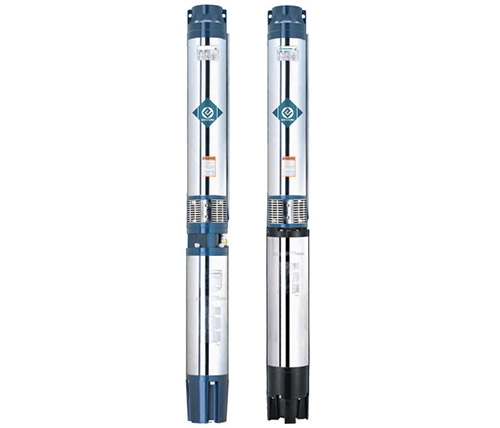
Water drawn from deep underground plays a key role in agriculture, industry, and residential supply. Behind this process is a Deep Well Pump Factory, where pumps designed for high-pressure and long-distance lifting are manufactured. These factories focus on durability, stable performance, and consistency, helping ensure that water can be delivered from deep sources in a dependable way.
Deep well pumps are used when water levels are far below the surface. Unlike shallow pumps, they must operate under higher pressure and handle extended running times. A Deep Well Pump Factory designs equipment that can work in narrow wells and withstand challenging underground conditions. This requires careful engineering and attention to material selection, as even small issues can affect long-term operation.
Production usually begins with machining pump components such as impellers, shafts, and casings. These parts must fit together precisely to maintain balance and reduce wear. In a Deep Well Pump Factory, components are assembled step by step, with inspections at each stage. Electrical motors are matched to pump bodies to ensure stable output without unnecessary energy loss.
Materials play a major role in pump lifespan. Stainless steel, cast iron, and corrosion-resistant alloys are commonly used depending on application needs. A Deep Well Pump Factory evaluates water conditions, such as sand content or mineral levels, when selecting materials. This helps reduce corrosion and abrasion, especially in agricultural or industrial environments where water quality can vary.
Before leaving the factory, pumps are tested to confirm flow rate, pressure handling, and sealing performance. Many factories use test wells or simulation systems to check real-world operation. A Deep Well Pump Factory typically runs pumps for extended periods during testing to identify vibration, noise, or overheating issues early. These checks help reduce installation problems later on.
Deep well pumps are used in farming irrigation, municipal water supply, mining, and industrial processes. Because needs vary, factories often offer customization options such as different motor ratings, pump lengths, or outlet sizes. A flexible Deep Well Pump Factory can adjust designs to suit different well depths and water demands without altering the basic structure of the pump.
Managing pump production requires coordination between machining, assembly, and testing teams. Clear workflows and trained technicians help maintain steady output. Automation may be used for repetitive tasks, while skilled workers handle assembly and inspections. This balance allows a Deep Well Pump Factory to maintain consistent quality across production batches.
Deep well pumps are used worldwide, from rural farming areas to growing urban regions. Factories producing these pumps support water infrastructure by supplying equipment that meets local standards and operating conditions. A reliable Deep Well Pump Factory helps distributors and project contractors meet timelines without frequent replacements or adjustments.
Manufacturing deep well pumps involves more than assembling mechanical parts. It requires an understanding of water conditions, materials, and long-term operation. Through careful design, controlled production, and thorough testing, a Deep Well Pump Factory delivers equipment that supports steady water access across various applications. This behind-the-scenes work plays an important role in keeping water systems running smoothly in many parts of the world.
edwina@edwin-pump.com
+86-13586290903 (WhatsApp)
Xuri Gongliang Cutting Tool Entrepreneurship Park, Wenqiao Town, Wenling City, Taizhou City, Zhejiang Province, China

High Performance Smart Pump Factory


 English