View All Products
en
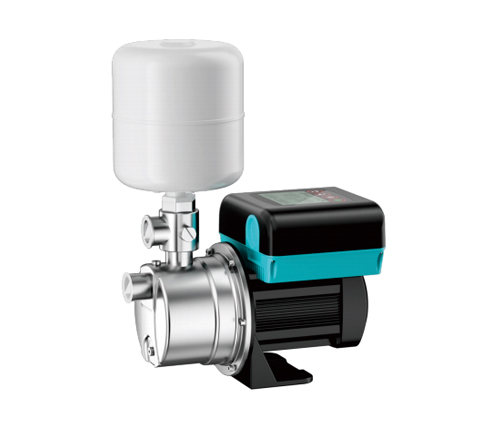
A Self-Priming Intelligent Booster Pump is an advanced system that combines autonomous operation with the ability to self-prime, automatically removing air from the suction line to re-establish a liquid prime without manual intervention.
Its smart features, driven by integrated controllers and sensors, enable it to monitor real-time flow and pressure, adjusting pump speed to maintain consistent output while optimizing energy use.
Key components, such as a built-in air-water separation chamber for the self-priming function and a high-efficiency permanent magnet motor, ensure reliable dry-run protection, quiet operation, and effective performance in applications with variable suction conditions.
This makes it a versatile, efficient, and user-friendly solution for automatically boosting pressure in residential, commercial, and industrial water systems.

A Submersible Pump is a critical tool for moving water and other fluids from wells, tanks, or reservoirs. Unlike surface pumps, submersible...
READ MOREAccess to groundwater is a critical concern for agriculture, residential use, and industrial operations. A borehole pump is designed to ext...
READ MOREA Deep Well Pump is designed to draw water from wells that are significantly deeper than standard household sources. These pumps are widely...
READ MOREWater management is an essential part of agriculture, and efficient irrigation systems depend on reliable pumps. An Irrigation Pump Factory...
READ MOREA submersible pump factory is responsible for producing pumps that operate fully underwater while maintaining stable performance. These pump...
READ MOREMaterial selection in self-priming intelligent booster pumps is based on durability, corrosion resistance, hydraulic efficiency, and cost considerations. The main components include the pump casing, internal hydraulic parts, and motor-related elements.
The pump casing is typically made from cast iron, stainless steel, or high-strength engineering plastics. Cast iron is commonly used in standard residential booster pumps due to its mechanical strength and vibration-damping properties. To improve corrosion resistance, cast iron casings are often coated with epoxy or anti-corrosion paint.
Stainless steel, especially grades such as 304 or 316, is used in applications requiring enhanced corrosion resistance or improved hygiene, such as potable water systems. Stainless steel casings also offer a smooth internal surface, which helps reduce hydraulic losses and supports stable flow.
In compact or lightweight designs, reinforced thermoplastics are sometimes used. These materials provide good corrosion resistance and electrical insulation, although they are generally applied within defined pressure and temperature limits.
Internal hydraulic components are critical to pump efficiency and reliability. Impellers are often manufactured from stainless steel, brass, or engineering plastics. Stainless steel impellers provide strength and corrosion resistance, making them suitable for continuous operation. Engineering plastic impellers reduce weight and are resistant to scaling in clean water applications.
The pump shaft is usually made from stainless steel to resist corrosion and mechanical wear. This ensures accurate alignment and long-term stability under continuous rotation.
Diffusers and internal flow guides are commonly made from precision-molded plastics or stainless steel, depending on pump design and performance requirements.
The motor housing is typically constructed from aluminum alloy or coated steel to provide effective heat dissipation. Aluminum housings are lightweight and support efficient thermal management, which is important for variable frequency operation.
Mechanical seals are commonly made from combinations of carbon, ceramic, and elastomers such as NBR or EPDM. These materials provide reliable sealing performance under varying pressure and temperature conditions.
Electronic control components, including sensors and control boards, are housed in moisture-resistant enclosures to protect against condensation and accidental water exposure.
The 2-IN-1 water pressure booster pump is designed to integrate multiple functions into a single compact unit, improving convenience, efficiency, and system compatibility. The core concept is to combine pressure boosting and intelligent control within one integrated assembly.
One key design feature is the integration of the pump and control system. Traditional booster systems often require a separate pump, pressure switch, expansion tank, and control unit. In a 2-IN-1 design, pressure sensors, electronic control logic, and protective functions are built directly into the pump housing. This reduces installation complexity and minimizes external wiring and fittings.
Another important aspect is automatic operation with adaptive response. The pump continuously monitors system pressure and flow. When water demand is detected, the pump starts automatically and adjusts its output to maintain a preset pressure level. When demand stops, the pump slows down or shuts off, preventing unnecessary operation.
The self-priming capability is also central to the design concept. The pump is engineered to remove air from the suction line and establish water flow without manual intervention. This feature improves reliability in systems with variable inlet conditions, such as rooftop tanks or shallow wells.
Space efficiency is another design objective. By combining functions into one unit, the 2-IN-1 booster pump occupies less installation space than traditional systems. This makes it suitable for apartments, small pump rooms, and retrofit projects.
From a user perspective, the design emphasizes ease of use and protection. Built-in protections such as dry-run prevention, overcurrent protection, and temperature monitoring help safeguard the pump and connected piping. Simple user interfaces or indicator displays provide basic operating status without requiring complex configuration.
+86-13586290903 (WhatsApp)
Xuri Gongliang Cutting Tool Entrepreneurship Park, Wenqiao Town, Wenling City, Taizhou City, Zhejiang Province, China

Self-Priming Intelligent Booster Pump Manufacturer


 English