View All Products
en
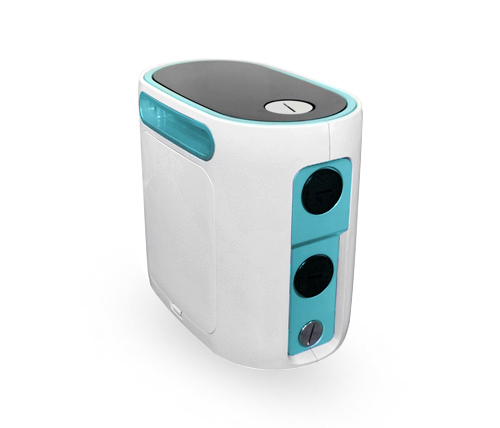
A water-cooled self-priming multistage intelligent booster pump is a high-performance, integrated system designed for demanding pressure-boosting applications.
It combines efficient water-based cooling for continuous operation, a self-priming capability that allows it to automatically evacuate air and start without manual priming, and a multistage impeller design to generate high pressure output.
Its intelligent control system automatically adjusts the pump's speed and monitors its status, ensuring optimal, energy-efficient performance and reliable protection under variable conditions.
This makes it ideal for applications requiring robust, automated, and high-pressure water supply, such as in industrial processes, high-rise buildings, or extensive irrigation systems.
A Submersible Pump is a critical tool for moving water and other fluids from wells, tanks, or reservoirs. Unlike surface pumps, submersible...
READ MOREAccess to groundwater is a critical concern for agriculture, residential use, and industrial operations. A borehole pump is designed to ext...
READ MOREA Deep Well Pump is designed to draw water from wells that are significantly deeper than standard household sources. These pumps are widely...
READ MOREWater management is an essential part of agriculture, and efficient irrigation systems depend on reliable pumps. An Irrigation Pump Factory...
READ MOREA submersible pump factory is responsible for producing pumps that operate fully underwater while maintaining stable performance. These pump...
READ MOREThe pursuit of efficient and reliable water pressure solutions has led to the development of a diverse range of pumping technologies. While some systems are designed for ubiquitous daily use in homes and businesses, others are engineered for more demanding, specialized applications. Similarly, within the realm of modern pressure control, certain configurations have become standard due to their balance of performance and practicality.
Water-cooled self-priming multistage intelligent booster pumps are highly specialized pieces of equipment. Their specific combination of features—self-priming ability, high-pressure multistage design, intelligent variable-speed control, and a water-cooled motor—means they are not "widely used" in typical daily life scenarios such as residential homes, small shops, or standard commercial buildings. Their application is generally reserved for demanding industrial, agricultural, or municipal settings where duty cycles and challenging operating conditions are the norm.
The defining characteristic, the water-cooled motor, is the key indicator of their specialized role. Unlike common air-cooled motors that rely on a fan and ambient air, a water-cooled motor circulates water through a jacket around the motor housing. This design is implemented for two primary reasons: to manage extremely high heat generation during continuous, heavy-duty operation, and to allow the pump to function reliably in environments with little ventilation, high ambient temperatures, or where explosive dust or gases make air-cooled motors with external fans a safety hazard. An example would be a deep mine dewatering application, where a pump must run continuously, be self-priming to handle variable suction conditions, generate high pressure to lift water over great vertical distances, and operate safely in a confined, potentially hazardous space.
Therefore, while the individual features—self-priming, multistage pressure, and intelligent control—are increasingly found in daily life applications (like in some advanced well systems or industrial processes), the integration with a water-cooled motor significantly narrows the scope. For the vast majority of daily life pressure-boosting needs, such as improving shower pressure in a home or supplying a small commercial building, air-cooled intelligent booster pumps are far more common, cost-effective, and practical. The water-cooled variant remains a critical but niche solution for the strenuous and specific technical challenges outside the sphere of common daily experience.
Variable Frequency Drive (VFD) technology has become the standard for efficient and stable pressure control in modern pumping systems. By varying the electrical frequency supplied to the motor, a VFD allows the pump speed to be precisely adjusted to match demand. Several common configurations dominate the market, each suited to particular applications.
+86-13586290903 (WhatsApp)
Xuri Gongliang Cutting Tool Entrepreneurship Park, Wenqiao Town, Wenling City, Taizhou City, Zhejiang Province, China

Water Cooled Self-Priming Multistage Intelligent Booster Pump Manufacturer


 English