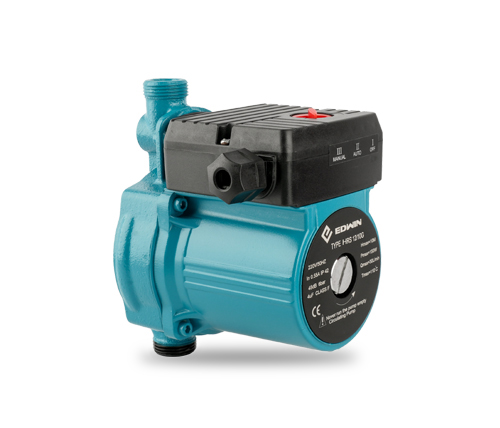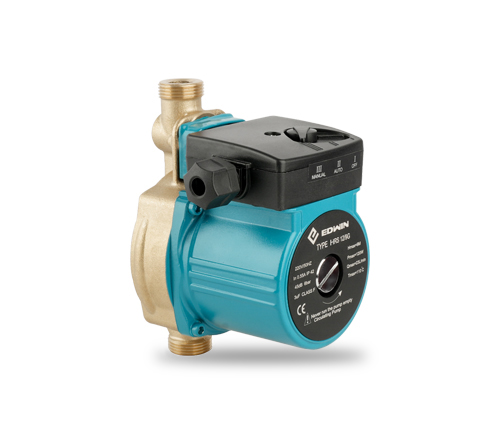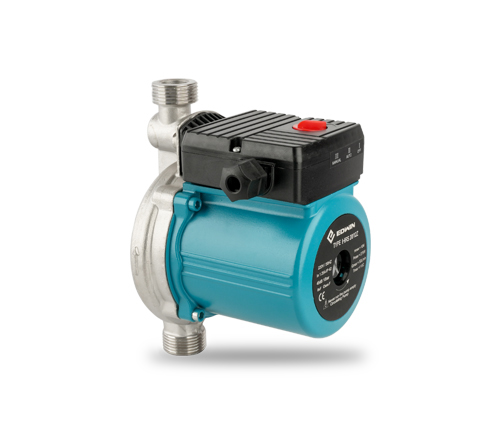
View All Products
en
Booster pumps are designed to work in conjunction with a main pumping system, which provides the initial supply of fluid to the booster pump. The booster pump then takes in this fluid, increases its pressure, and sends it out to the desired location. This process is repeated continuously, ensuring a consistent flow of fluid at the desired pressure. There are several types of booster pumps available, including centrifugal pumps, positive displacement pumps, and regenerative turbine pumps. Centrifugal pumps work by using a rotating impeller to generate a flow of fluid, while positive displacement pumps work by trapping a fixed volume of fluid and then compressing it to increase its pressure. Regenerative turbine pumps work by using a high-speed rotating impeller to generate a flow of fluid. One of the main advantages of booster pumps is their ability to increase the pressure of fluid within a closed system. This makes them ideal for applications where a high-pressure flow of fluid is required, such as in water supply systems and irrigation systems. Additionally, booster pumps are highly efficient and can be used to provide a consistent flow of fluid over extended periods of time. Another advantage of booster pumps is their versatility. They can be used in a variety of applications, including residential, commercial, and industrial settings. Furthermore, they are designed to work with a wide range of fluid types, including water, chemicals, and other liquids. This makes them versatile and useful tools in many different industries.

A Submersible Pump is a critical tool for moving water and other fluids from wells, tanks, or reservoirs. Unlike surface pumps, submersible...
READ MOREAccess to groundwater is a critical concern for agriculture, residential use, and industrial operations. A borehole pump is designed to ext...
READ MOREA Deep Well Pump is designed to draw water from wells that are significantly deeper than standard household sources. These pumps are widely...
READ MOREWater management is an essential part of agriculture, and efficient irrigation systems depend on reliable pumps. An Irrigation Pump Factory...
READ MOREA submersible pump factory is responsible for producing pumps that operate fully underwater while maintaining stable performance. These pump...
READ MOREA booster pump should not run continuously under normal, properly configured circumstances. Continuous operation would bring about excessive wear, higher energy consumption, and potential system damage. Instead, these pumps are designed to activate only when a demand for water is detected and the existing pressure is insufficient. The pump's operation is governed by a control mechanism, with the common being a pressure switch or a flow sensor. The choice of control system significantly influences how the pump cycles on and off.
|
Control System |
Activation Trigger |
Typical Operation Cycle |
Ideal Use Case |
|
Pressure Switch & Tank System |
When pressure in the storage tank falls below a preset "cut-in" level (e.g., 40 PSI). |
The pump runs to refill the pressure tank until a "cut-out" pressure is reached (e.g., 60 PSI). It then shuts off. Water is drawn from the tank until pressure drops again, restarting the cycle. |
Whole-house systems where frequent, short cycling is to be avoided. Provides a buffer for small, quick demands. |
|
Flow-Sensor Activated System |
When a sensor detects a threshold of water flow (e.g., 0.5 gallons per minute). |
The pump starts al instantly when a tap is opened and runs for the duration of the demand. It shuts off shortly after the flow stops. |
Point-of-use or whole-house systems aiming for immediate pressure response and energy savings by eliminating a tank. |
|
Variable Speed Drive (VFD) |
Responds dynamically to both pressure drop and flow rate. |
The pump's motor speed adjusts in real-time to match the exact demand, running only as fast as needed to maintain a constant preset pressure. |
Advanced whole-house systems where energy efficiency, quiet operation, and precise pressure control are priorities. |
While a pump may run for extended periods during high, continuous demand (like filling a large tub), its standard operation is characterized by intermittent cycling. Proper sizing and configuration are crucial to prevent short cycling, which can occur if the pump is too large for the demand.
The fundamental working principle of a water pressure booster pump is to add kinetic energy to incoming water, thereby increasing its force and flow potential. It operates on the same core mechanics as centrifugal pumps. The process begins when water from the main supply line enters the pump's inlet. Inside the housing, an impeller—a rotating disc with curved blades—is spun at high speed by an electric motor.
As the impeller rotates, it imparts kinetic energy (energy of motion) to the water. The water is flung outward from the center of the impeller due to centrifugal force, causing it to move at a higher velocity. This high-velocity water then enters the pump's volute, a gradually widening spiral casing surrounding the impeller. The design of the volute converts the water's high velocity (kinetic energy) into higher pressure (potential energy). This conversion follows Bernoulli's principle, where a reduction in fluid velocity results in an increase in pressure.
The now-pressurized water is discharged from the pump outlet and into the home's plumbing system. A critical component governing this process is the pressure switch. It monitors the system pressure downstream. When a faucet is opened and pressure drops below a preset , the switch closes, activating the pump motor. The pump then runs, adding energy to the water until the system pressure rises to a preset maximum, at which point the switch opens and the pump shuts off. This cycle ensures pressure is boosted only when necessary, maintaining a stable and adequate supply throughout the home's fixtures.
Residential booster pumps can be categorized by their installation point and scope of application. The three primary categories are point-of-use pumps, inline whole-house pumps, and integrated tank systems.
Point-of-Use Booster Pumps:
These are compact, single-stage pumps designed to serve a specific appliance or a limited set of fixtures. They are installed directly at the water line feeding the problematic area, such as under a sink to boost pressure for a single bathroom or at the inlet to a tankless water heater. Their primary advantage is a lower cost and simpler installation for targeted problem-solving. They are typically less powerful than whole-house systems and are controlled by a simple flow sensor that activates the pump when the fixture is turned on.
Inline Whole-House Booster Pumps:
This category includes the common solution for generalized low pressure throughout a home. These are multi-stage pumps (containing multiple impellers in series) installed on the main water line where it enters the house. Each impeller stage incrementally increases the pressure, allowing these pumps to achieve a more significant boost than single-stage models. They are often paired with a small pressure tank or a pulse damper to minimize rapid on/off cycling (short cycling) and ensure smoother operation. They are controlled by a standard pressure switch, providing consistent pressure to all fixtures simultaneously.
+86-13586290903 (WhatsApp)
Xuri Gongliang Cutting Tool Entrepreneurship Park, Wenqiao Town, Wenling City, Taizhou City, Zhejiang Province, China

Booster Pumps For Home Price


 English