
View All Products
en
Vertical multistage pumps are an essential component in various industrial and commercial applications. These pumps are designed to handle high-pressure water or fluid transfer, making them an ideal solution for various applications like high-rise building water supply, water treatment plants, power plants, and more. The vertical multistage pump comprises multiple impellers and stages to achieve high pressure and flow rates, making them highly efficient and reliable. One of the significant advantages of vertical multistage pumps is their compact design. Unlike other traditional pump designs, the vertical multistage pump is a space-saving solution that can be easily installed in areas with limited space. The vertical design allows for easier maintenance as well, as the pump can be disassembled and serviced without the need for removal. The multistage design of these pumps also means that they are capable of producing higher pressure than single-stage pumps of the same size. The multiple stages work in sequence to increase the fluid pressure, which makes it an ideal solution for high-pressure applications. Another advantage of vertical multistage pumps is their versatility. These pumps can handle a wide range of fluids, including water, chemicals, and other liquids, making them suitable for use in a variety of industries. Additionally, the vertical design of the pump allows for a variety of configurations, including in-line, end-suction, and between bearings, allowing them to be used in a variety of applications.
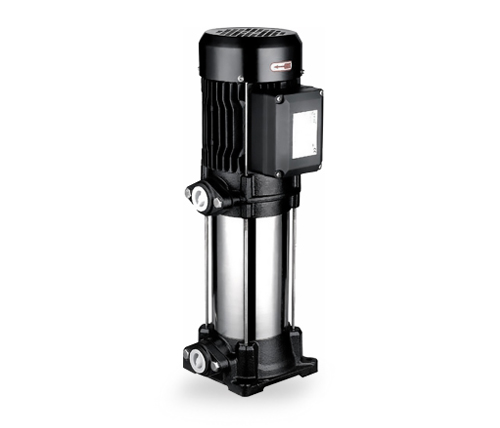
serieswatershortageprotectionvoltagestabilizationstainlesssteelverticalmultistagepump.jpg "EVR(S) Series Water Shortage Protection Voltage Stabilization Stainless Steel Vertical Multistage Pump")
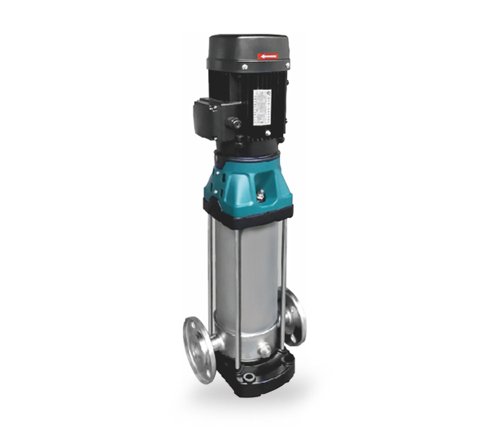
aseriesnoisereductiondesignacid-baseverticalsurfacepump-1.jpg "EV(F)A Series Noise Reduction Design Acid-base Vertical Surface Pump")
A Submersible Pump is a critical tool for moving water and other fluids from wells, tanks, or reservoirs. Unlike surface pumps, submersible...
READ MOREAccess to groundwater is a critical concern for agriculture, residential use, and industrial operations. A borehole pump is designed to ext...
READ MOREA Deep Well Pump is designed to draw water from wells that are significantly deeper than standard household sources. These pumps are widely...
READ MOREWater management is an essential part of agriculture, and efficient irrigation systems depend on reliable pumps. An Irrigation Pump Factory...
READ MOREA submersible pump factory is responsible for producing pumps that operate fully underwater while maintaining stable performance. These pump...
READ MOREA vertical multistage pump is a centrifugal pump designed with multiple impellers stacked in series along a vertical shaft. Its operating principle is based on converting mechanical energy into hydraulic energy through successive pressure increases.
Key aspects of the working principle include:
Vertical configuration
The pump shaft is installed vertically, allowing the pump to occupy a smaller footprint compared to horizontal pumps. This design is particularly suitable for installations with limited floor space.
Multiple impellers in series
Each impeller represents one “stage.” As fluid passes through each stage, its pressure increases incrementally. The total discharge pressure is the sum of the pressure added by each impeller.
Centrifugal force generation
When the motor drives the shaft, the impellers rotate at high speed. Fluid entering the impeller eye is accelerated outward by centrifugal force, increasing its velocity and pressure.
Diffusers or guide vanes
After leaving each impeller, the fluid flows through a diffuser. The diffuser converts velocity energy into pressure energy while directing the fluid smoothly to the next stage.
Axial flow path
Fluid typically enters from the bottom or side of the pump and flows upward through successive stages before exiting at the discharge outlet near the top.
Motor and coupling arrangement
The electric motor is usually mounted on top of the pump, connected by a rigid or flexible coupling. This arrangement simplifies alignment and protects the motor from contact with the pumped fluid.
Sealing and bearings
Mechanical seals prevent leakage at the shaft, while radial and thrust bearings support axial loads generated by multiple impellers.
They are commonly used in water supply systems, pressure boosting, boiler feed, HVAC circulation, reverse osmosis systems, and light industrial processes where constant pressure is required.
Advantages include high efficiency, compact installation, smooth flow, low vibration, and the ability to achieve high pressure without increasing pump diameter.
Yes. These pumps are generally less suitable for fluids with high viscosity, large solid content, or abrasive particles. They are primarily designed for clean or slightly contaminated liquids.
Maintenance is moderate. While mechanical seals and bearings require periodic inspection, the vertical design often simplifies access to the motor and upper components.
When correctly sized and operated near their better efficiency point, vertical multistage centrifugal pumps can be energy-efficient, particularly in pressure boosting applications.
Vertical models save space and are often preferred for installations with limited room. Horizontal pumps may be easier to service in some facilities but require more floor area.
Yes. When paired with variable frequency drives (VFDs), they can adapt to changing demand, improving energy performance and reducing mechanical stress.
In fire protection systems, pumps must meet strict reliability and performance standards. Vertical multistage pumps are used primarily in auxiliary or pressure-maintenance roles rather than as the main fire pump.
Common types include:
These pumps maintain system pressure in fire sprinkler networks by compensating for small leaks or pressure drops. Their stable output and low flow capability make them suitable for this role.
Inline designs allow direct installation into the piping system, reducing the need for additional fittings. They are often used in secondary fire water circulation or pressure support applications.
For fire systems using treated or corrosive water, stainless steel constructions provide improved corrosion resistance and longer service life.
In tall buildings or large facilities, multistage vertical pumps may be used as booster units to support fire zones located at higher elevations.
These are commonly used where reliable electrical power is available and where compliance with fire protection standards permits their use for auxiliary functions.
It is important to note that main fire pumps are typically end-suction, split-case, or vertical turbine pumps certified under relevant fire protection standards. Vertical multistage pumps complement these systems by ensuring pressure stability and operational readiness.
+86-13586290903 (WhatsApp)
Xuri Gongliang Cutting Tool Entrepreneurship Park, Wenqiao Town, Wenling City, Taizhou City, Zhejiang Province, China

Vertical Multistage Pump Manufacturer


 English