View All Products
en
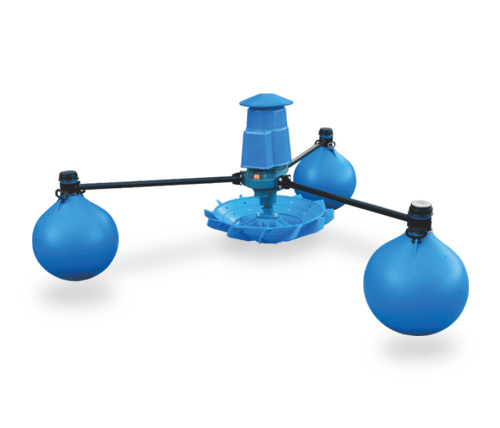
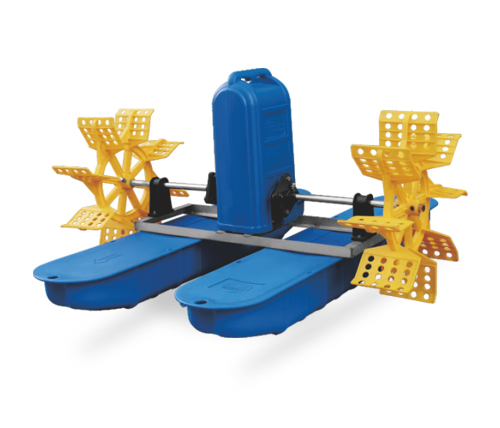
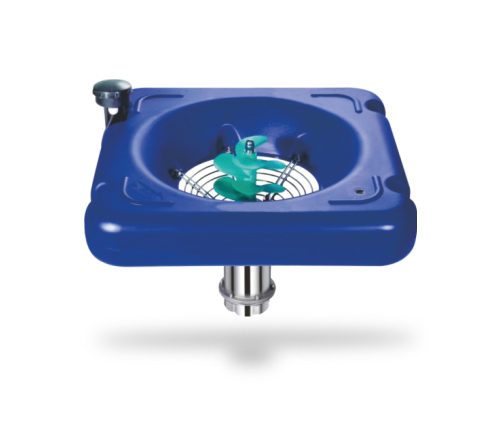
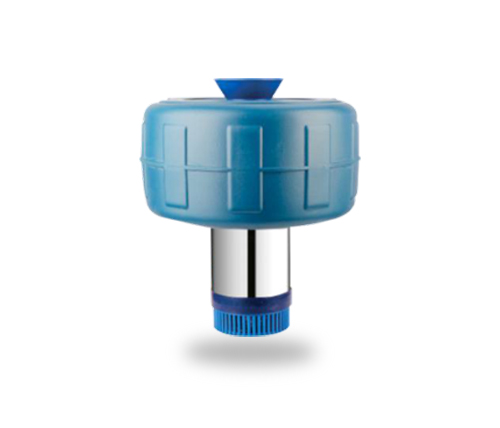
The AC/DC Solar Aerator series is a hybrid power supply aeration system developed by our company for continuous aeration applications. It automatically switches to AC power when solar power is insufficient, ensuring uninterrupted 24-hour operation.
This series is particularly suitable for high-density aquaculture ponds, landscape lakes, and water environment treatment projects requiring stable dissolved oxygen levels.
• Dual power supply design ensures all-day operation: Through direct solar power and intelligent AC power switching control, it achieves stable aeration even with fluctuating light intensity, without interruption due to cloudy days or nighttime. Equipped with overload, reverse connection, and short-circuit protection modules, effectively enhancing system safety.
• Intelligent management of operating status: The built-in high-efficiency controller can adjust pump speed, system voltage, current, and power in real time, and an optional remote communication interface is available to meet the centralized management needs of large water areas.
• Reinforced structure for complex environments: The aerator features a corrosion-resistant metal bracket and an anti-aging float structure, suitable for long-term outdoor immersion and high-humidity environments. Optimized heat dissipation design effectively reduces component temperature rise and extends the overall system lifespan.
Water management is an essential part of agriculture, and efficient irrigation systems depend on reliable pumps. An Irrigation Pump Factory...
READ MOREA submersible pump factory is responsible for producing pumps that operate fully underwater while maintaining stable performance. These pump...
READ MOREA borehole pump manufacturer plays an important role in water supply systems, especially in areas where surface water is limited. Borehole p...
READ MOREWater drawn from deep underground plays a key role in agriculture, industry, and residential supply. Behind this process is a Deep Well Pump...
READ MOREEfficient irrigation plays a key role in modern agriculture, landscaping, and water management projects. An experienced Irrigation Pump Fact...
READ MOREAn AC/DC solar aerator refers to a system designed to operate primarily on direct current (DC) power from solar panels but incorporates the capability to also use alternating current (AC) from a grid or generator backup. This dual functionality is typically managed by an intelligent controller. The core aeration device—often a diaphragm air pump or a circulator pump—is usually a DC motor for direct solar compatibility. The "AC" aspect denotes the system's inclusion of a battery bank and an inverter, or a hybrid inverter/charger, allowing stored solar energy (as DC in batteries) to be converted to AC for powering the pump or for other uses, and enabling AC power to charge the batteries when solar is insufficient.
The primary advantage is uninterrupted aeration. Ponds, especially those with high fish stocks, require constant oxygen. A pure, direct-drive solar system stops at night or during prolonged cloudy weather. An AC/DC system with batteries ensures 24/7 operation, which is critical for fish health. A secondary benefit is system flexibility and resilience. The integrated charger allows the batteries to be topped up via a grid connection or generator during periods of low solar insolation (e.g., winter, consecutive rainy days), guaranteeing system reliability regardless of weather. It also allows users to leverage grid power at night if desired, potentially reducing the size and cost of the required battery bank.
This configuration introduces greater complexity and cost compared to a simple, direct-drive solar aerator. It requires additional components: a deep-cycle battery bank, a charge controller, and an inverter or hybrid unit. These components need proper housing, maintenance (particularly periodic battery replacement), and protection from the elements. The energy conversion steps (DC to DC for battery charging, then DC to AC for the pump if using an AC pump model) also incur small efficiency losses. Therefore, while offering reliability, an AC/DC system represents a larger initial investment and requires more involved setup and upkeep.
Sizing is a critical step based on pond volume, water quality, biological oxygen demand (e.g., fish load), and climate. A general rule is to provide a minimum of 1 to 2 horsepower of aeration per surface acre for a typical recreational pond, but heavily stocked or nutrient-rich ponds need more. For the solar component, a professional assessment calculates the pump's daily watt-hour consumption, then sizes the solar panel array and battery bank (for AC/DC systems) to meet this demand based on the site's average peak sun hours, with a reserve for cloudy days.
A Brushless DC (BLDC) solar aerator utilizes a motor that, as the name implies, operates without physical brushes. Instead of a mechanical commutator with brushes that transfer power to the rotating armature, it uses an electronic controller to precisely sequence power to the motor's stationary windings, causing a permanent magnet rotor to spin. This design, when paired with a solar power system, offers distinct benefits.
The significant advantage is greatly enhanced energy efficiency. The elimination of brush friction reduces mechanical energy loss and heat generation. The electronic commutation allows for magnetic field alignment, meaning more of the electrical input from the solar panels is converted into useful mechanical work (air compression or water movement). This efficiency allows for a smaller solar array to achieve the same aeration output as a brushed motor alternative. Furthermore, BLDC motors are notably more durable and require less maintenance. Without brushes that physically wear down and require periodic replacement, the motor's operational lifespan is substantially extended. They also generate less electrical noise (EMI) and, due to lower friction, tend to operate more quietly and with less vibration, which is beneficial for both the equipment and the pond environment.
The integration of a BLDC motor into a solar aeration system is inherently streamlined. These motors are designed to run on DC power, making them a natural partner for solar panels. They are typically driven by a dedicated solar pump or motor controller that serves two key functions. It incorporates Maximum Power Point Tracking (MPPT) technology, which optimizes the energy harvest from the solar panels by constantly adjusting the electrical load to draw power at the panels' efficient voltage/current point, especially valuable under variable light conditions. Second, the controller provides the precise electronic commutation signals the BLDC motor requires to operate.
+86-13586290903 (WhatsApp)
Xuri Gongliang Cutting Tool Entrepreneurship Park, Wenqiao Town, Wenling City, Taizhou City, Zhejiang Province, China

AC/DC Solar Aerator Manufacturer


 English