
View All Products
en
The DC Submersible Solar Pump is composed of three main components: solar panels, a pump controller, and a submersible pump. The solar panels convert sunlight into electricity which is then stored in batteries for use when the sun is not shining. The pump controller regulates the flow of electricity from the batteries to the submersible pump, ensuring that the pump receives the correct amount of power to function optimally. The submersible pump is responsible for pumping water from a well, pond, or another water source, and delivering it to the intended location. One of the key benefits of the DC Submersible Solar Pump is its cost-effectiveness. Since it relies on solar energy, it eliminates the need for expensive grid connections, reducing the overall cost of installation. Furthermore, solar energy is a free and renewable resource, meaning that once the initial investment has been made, the system can run indefinitely without incurring any additional costs. Another advantage of the DC Submersible Solar Pump is its versatility. This system can be used in a wide range of applications, including irrigation, water supply for livestock, and even water supply for households. Additionally, it can be used in remote locations where grid power is not available, making it an ideal solution for communities in developing countries.
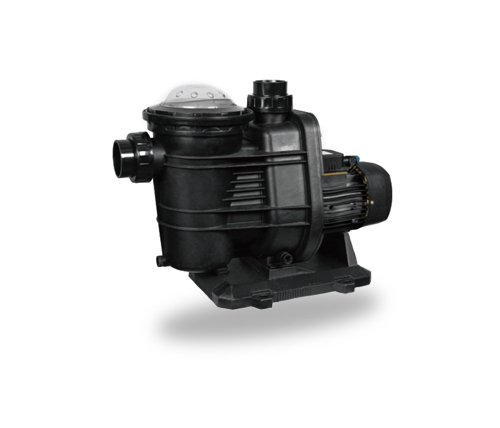
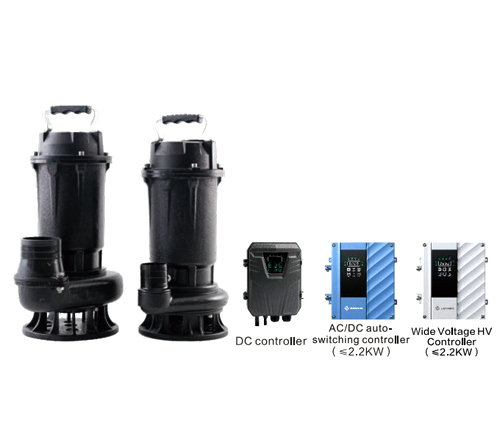
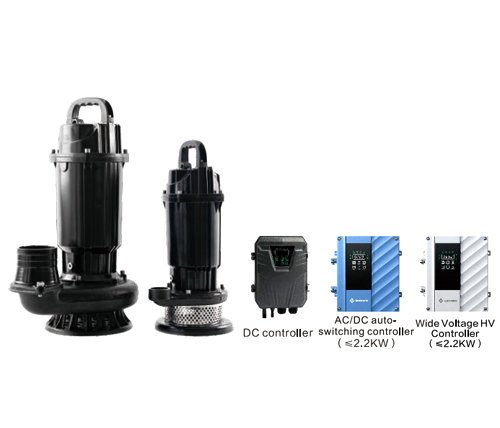
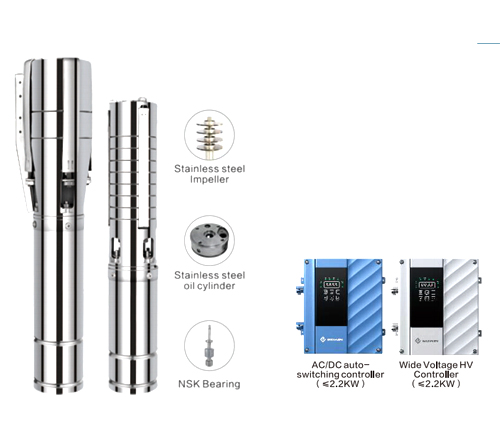
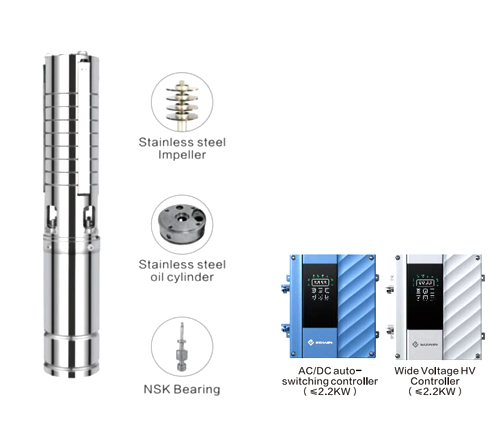
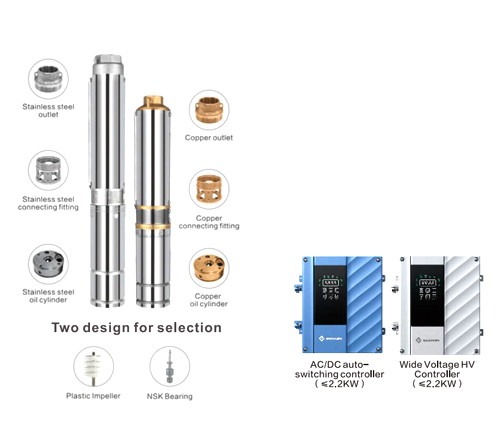
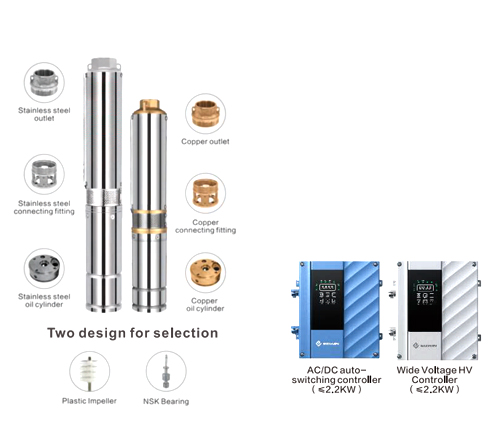
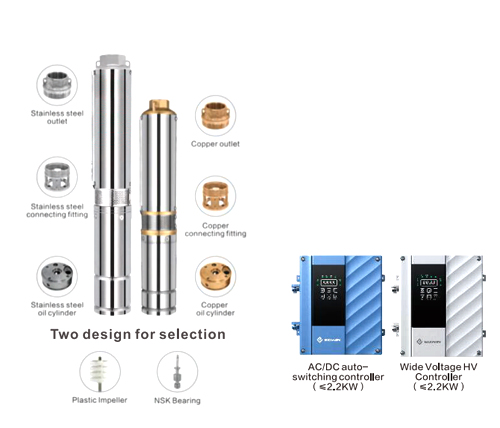
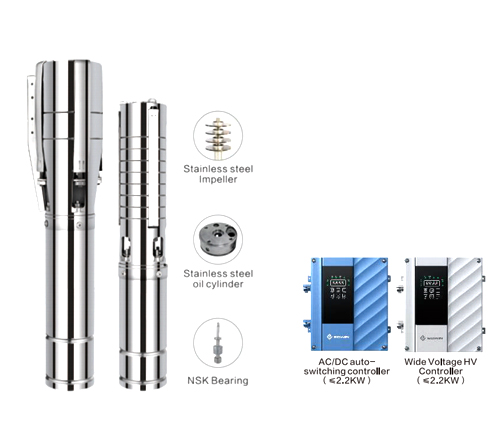
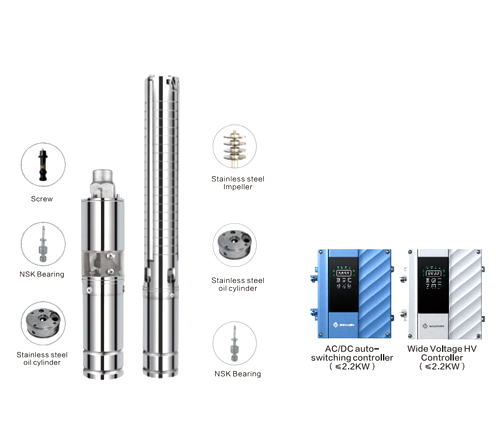
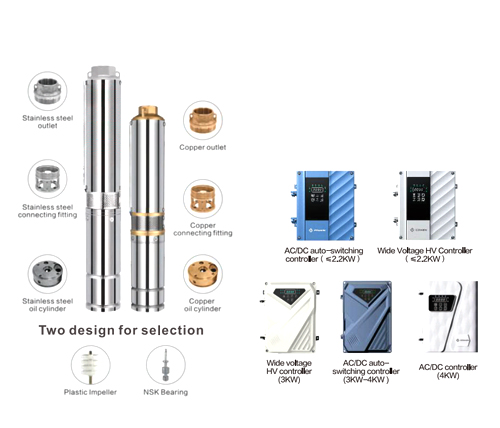


A Submersible Pump is a critical tool for moving water and other fluids from wells, tanks, or reservoirs. Unlike surface pumps, submersible...
READ MOREAccess to groundwater is a critical concern for agriculture, residential use, and industrial operations. A borehole pump is designed to ext...
READ MOREA Deep Well Pump is designed to draw water from wells that are significantly deeper than standard household sources. These pumps are widely...
READ MOREWater management is an essential part of agriculture, and efficient irrigation systems depend on reliable pumps. An Irrigation Pump Factory...
READ MOREA submersible pump factory is responsible for producing pumps that operate fully underwater while maintaining stable performance. These pump...
READ MOREA properly functioning DC submersible solar pump, particularly those utilizing brushless motor technology, operates with minimal noise. The primary source of any operational sound is the vibration generated by the high-speed rotation of the pump's impeller within its housing. However, several factors contribute to making these pumps notably quiet, especially when compared to their AC-powered or surface-mounted counterparts.
The pump is entirely submerged in water. The surrounding liquid acts as a highly effective natural dampener, absorbing and dissipating the vibrations and sound waves produced by the motor and impeller before they can travel through the air. This submersion significantly mutes the operational noise. Second, modern solar pumps commonly employ brushless DC (BLDC) motors. These motors eliminate the friction and electrical arcing associated with traditional brushed motor commutators, which are sources of both wear and audible hum. BLDC motors run more smoothly and with less mechanical noise.
Consequently, in a typical installation, the pump itself is virtually inaudible from the surface. What little sound may be present is often a low hum or whirring that is difficult to detect over ambient environmental noise. The noticeable acoustic element of the system is usually not the pump but the water itself—the sound of it flowing through the discharge pipe or splashing into a storage tank. Therefore, concerns about noise pollution are generally minimal with these systems, making them suitable for use near living areas or in tranquil settings without causing a disturbance.
Selecting the appropriate solar DC brushless submersible pump requires a careful assessment of several interdependent factors to ensure the system meets its intended purpose reliably. A thorough evaluation prior to purchase helps avoid underperformance or premature failure.
The fore consideration is the hydraulic requirement, defined by the total dynamic head (TDH) and the required flow rate. TDH is the total height the pump must lift water, plus the friction losses in the piping. It is critical to match the pump's performance curve to these figures. A pump with insufficient head capacity will not deliver water to the desired point, while an oversized pump may operate inefficiently. Equally important is the solar resource assessment. The system must be sized based on the available peak sun hours at the installation site, ensuring the solar array can generate enough power to meet the pump's needs, especially during critical periods like midday when water demand and solar intensity may align.
The water source characteristics must also be evaluated. This includes the well or borehole diameter, which must accommodate the pump's physical size, and the water quality. Pumps intended for clean water may malfunction if used with sandy or sediment-laden water; in such cases, a pump designed for abrasive liquids is necessary. Finally, the system components beyond the pump itself warrant attention. The quality and wattage of the photovoltaic panels, the type of solar controller (a dedicated pump controller is standard), and the need for water storage (to provide water during non-sunny hours) are all integral parts of a functional system. Investing in a pump with built-in protections against dry running, overload, and low voltage can also enhance longevity and reduce maintenance needs.
Ultra-slender solar pumps, designed for narrow boreholes, are efficient but can experience issues typical of solar pumping systems. A logical, step-by-step diagnostic approach can resolve many common problems.
+86-13586290903 (WhatsApp)
Xuri Gongliang Cutting Tool Entrepreneurship Park, Wenqiao Town, Wenling City, Taizhou City, Zhejiang Province, China

DC Submersible Solar Pump Manufacturer


 English